Category Archives: History

Jack Rabbit Tamales

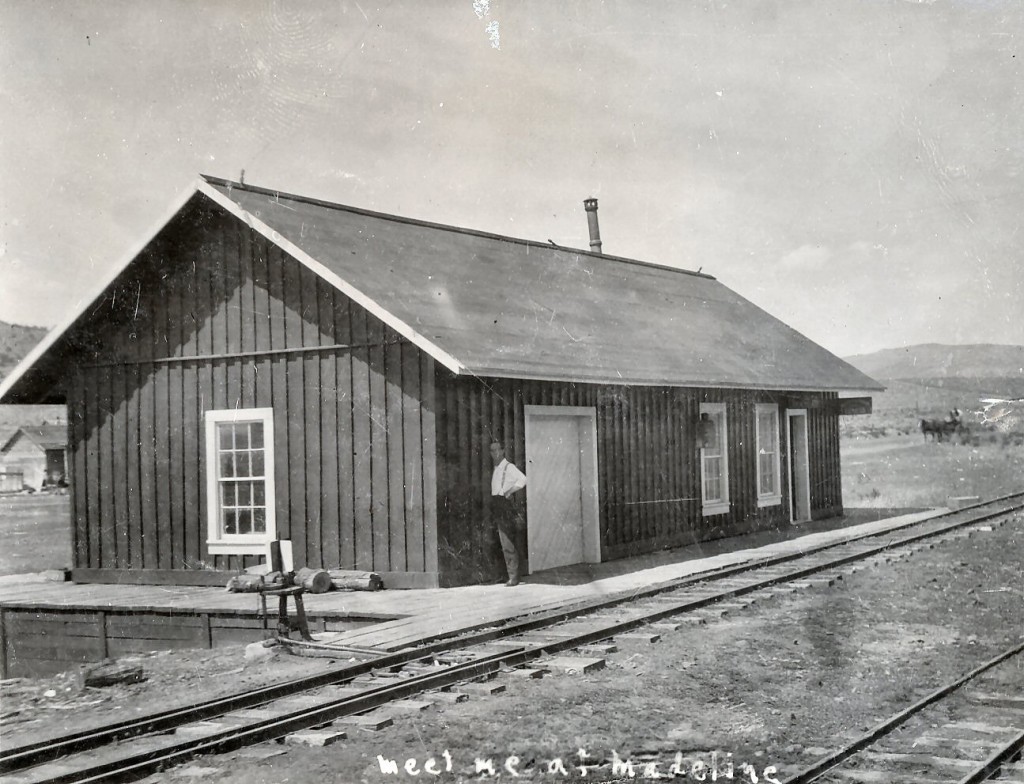
Madeline Depot
NCO Depot, Madeline 1910

In the early 1900s the Madeline Plains was home to numerous desert homesteaders. It turned out for many to be a hardscrabble existence, not what they were promised by the developers.

Life on the plains can be challenging. A menace there were jackrabbits. In 1920, the residents wrote their Congressman John E. Raker for assistance and explained the situation. They reported: “As soon as the crops are up and making good progress the rabbits begin work on them.  The heaviest damage is done during August.  One rancher reported losing 100 acres of wheat last summer.  They take this crop in preference to oats and rye.  It was reported that 70 tons of rabbit meat [to make tamales] had been shipped last season to the San Francisco market.  It appears that the animals cannot be killed fast enough in this region to furnish relief to the ranches.” That is not a typo, 70 tons—the rabbit population had to be epic.

Now to the tamale part. It is not clear who came up with idea of jackrabbit tamales. Don Garate in his history of the Madeline Plains wrote: “Oh they did not make any great deal of money by hunting jackrabbits, but it made a little cash for spending. What they did was to kill the creatures and ship them to the Crown Commission Company in San Francisco, where they were made tamales out of them. The Crown Commission Company paid as high as four dollars a dozen for them. After shipping and handling charges had been taken out by the railroad that left the hunter about two dollars a dozen.

“Two dollars a dozen does not sound like much, but money was real scarce in those days and it did not take long to knock over a dozen of jackrabbits. They would shoot the animals, gut them and put them in gunny sacks. The rabbits would freeze solid in the sacks. Then when they had enough, or after awhile when someone was going to town, they would haul them to the railroad depot.

“The sacks full of rabbits would pile up on the dock at the depot until there was enough to make a shipment on the train. After a couple of weeks, a check would come back in the mail from the Crown Commission Company for each person who sent in a shipment of jackrabbits.”
Never miss a story, click here to subscribe.

Harvey Railroad Logging Line

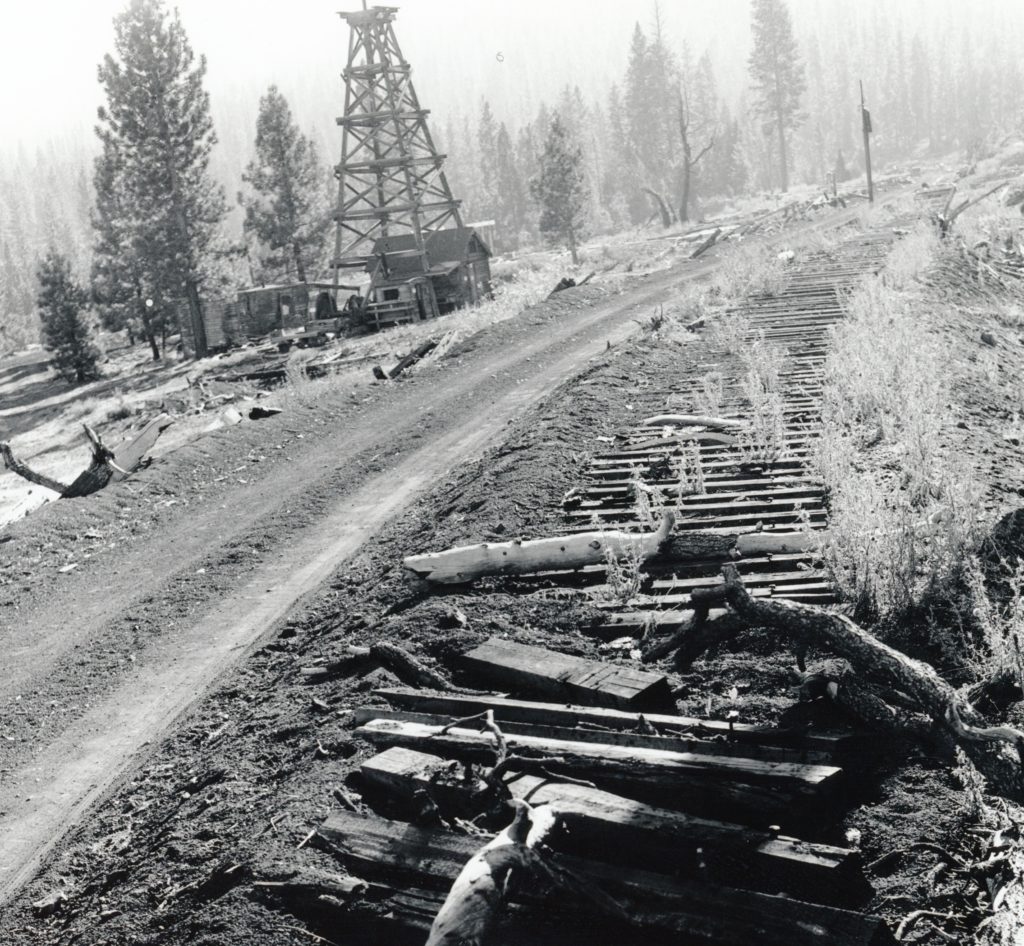
The railroad bed converted into a road at Camp Harvey. Courtesy of Hank Martinez

In 1942 this railroad logging line had its origins at Halls Flat, near Poison Lake, headed into an easterly direction towards Harvey Mountain. By 1949, its entire length was just a bit over forty miles ending near Slate Mountain. When the culinary workers at the two logging camps along the line—Harvey and Stanford—went on strike in the spring of 1949, Fruit Growers Supply Company who operated the line decided to shut it down permanently. It was not a drastic action as it appears. They were approaching the end of their timber. In addition, company officials, stated the remaining timber could be removed from and shipped from its Camp 10 line as it approached Upper Gooch Valley. After all, the Harvey line and Fruit Growers Main line that serviced Camp 10 were within two miles of each other.

Never miss a story, click here to subscribe.

Roop Street versus Weatherlow Street

North Roop Street, circa 1914. Courtesy of Phil Long

This is just one of those random thoughts to invade my mind during my recovery. It has to do with when a town plat for Susanville that was made in 1863. Roop and Weatherlow Streets need to be reversed. This has to do with logic. Captain William Weatherlow lived at what became the end of North Roop Street. On the other hand, Isaac Roop who laid out the town originally resided on what became North Weatherlow Street.

Never miss a story, click here to subscribe.

Where are we – Observation Peak

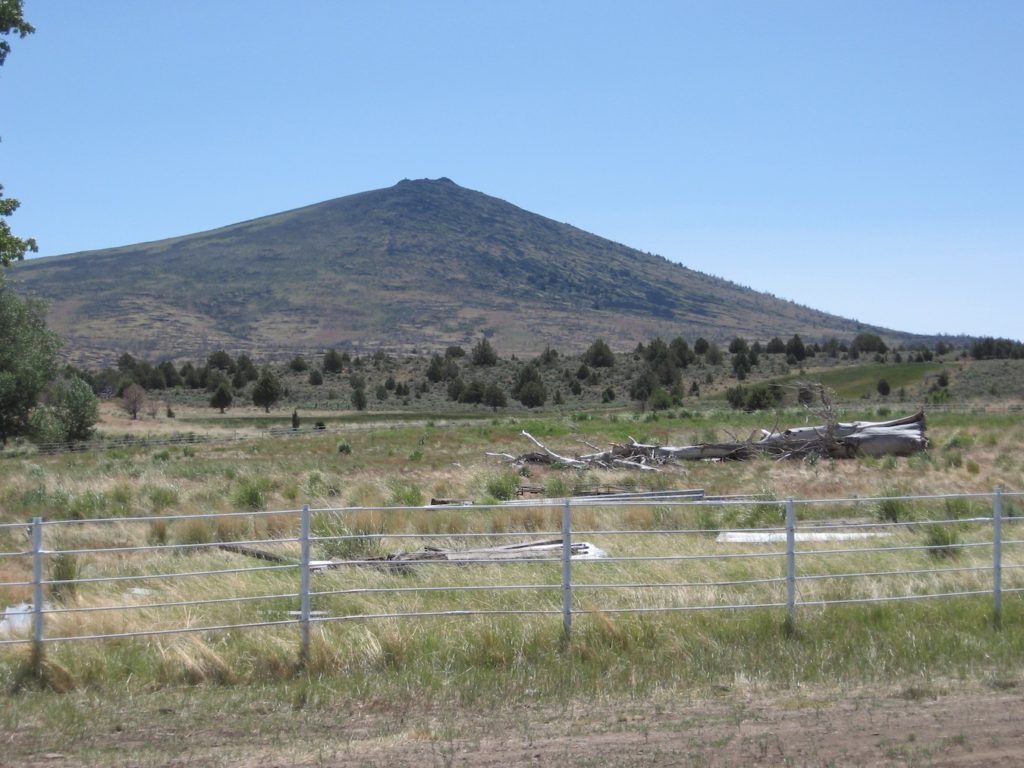
Observation Peak. June 2001

Located on the south side of the Madeline Plains, the Paiute Indians referred to it as Toka kudzi ni roughly translates into Black Peak.

Observation Peak, elevation 7964’, was so named for the views afforded from there. On September 29, 1850 J. Goldsborough Bruff and Isadore Meyerwitz climbed to the top. Atlas Fredonyer had visited there in the summer of 1850 and noted the peak by its name. On June 22, 1854, members of Lt. E.G. Beckwith’s party in search of a transcontinental railroad route climbed the peak. The mountain is sometimes referred to as No. 7. On the southwest flank there is a volcanic rock formation in the shape of the number seven that can be seen clearly as far away as Leavitt Lake.

Never miss a story, click here to subscribe.

Another Landmark Gone

Lassen Flour
The Lassen Flouring Mill, 1901. Courtesy of the A.J. Mathews family.

In September 1918, M.A. Taylor of Oakland purchased the old flour mill known to many as Hall & Synder. It was built in 1864 and was the center piece of Johnstonville. Taylor had no interest to operate it. Due to World War I machinery was scarce and that what was his intention for the acquisition. For the old timers seeing the landmark dismantled was one of the many changes the region experienced during its transition into a major lumber manufacturing center.

Never miss a story, click here to subscribe.

McCoy Flat Dam Breached!

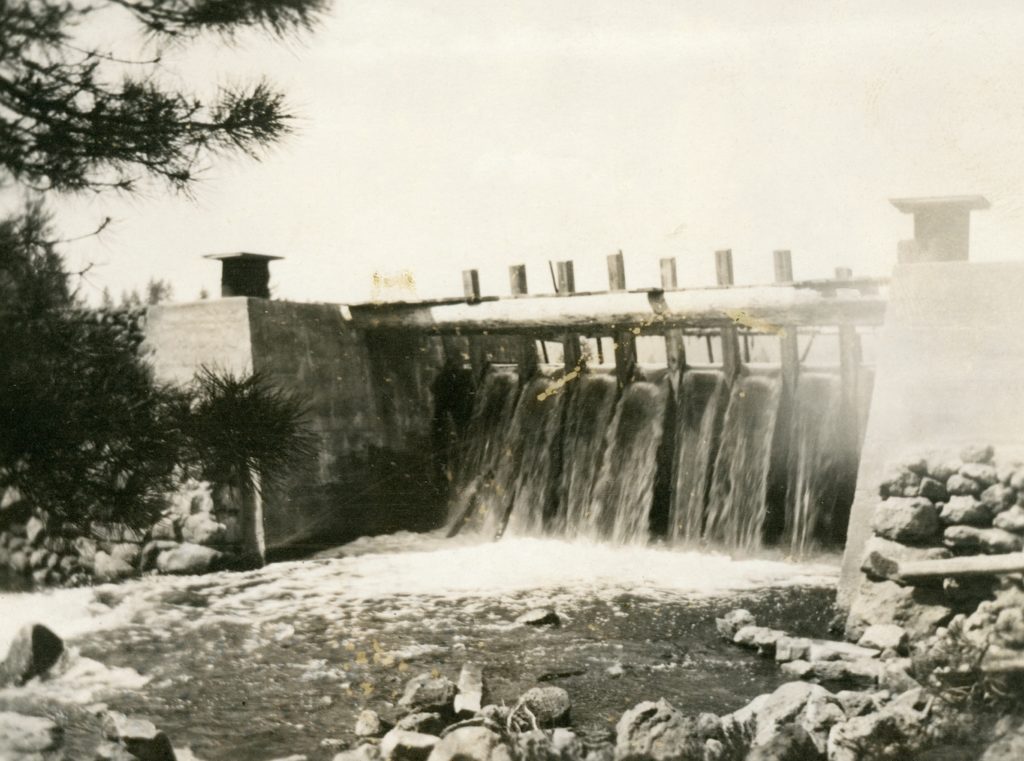
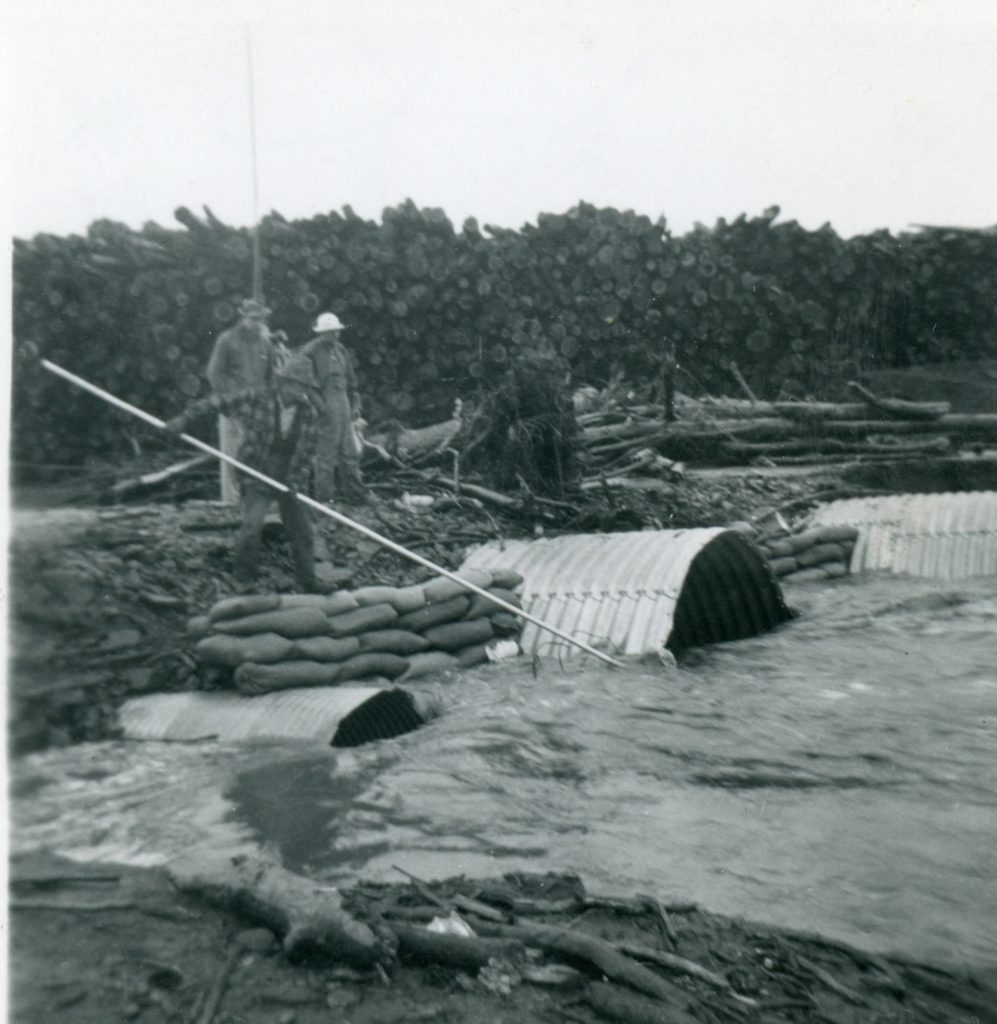
McCoy Flat Reservoir dam, 1915. Courtesy of Alphozene Terrill, granddaughter of Ben H. Leavitt

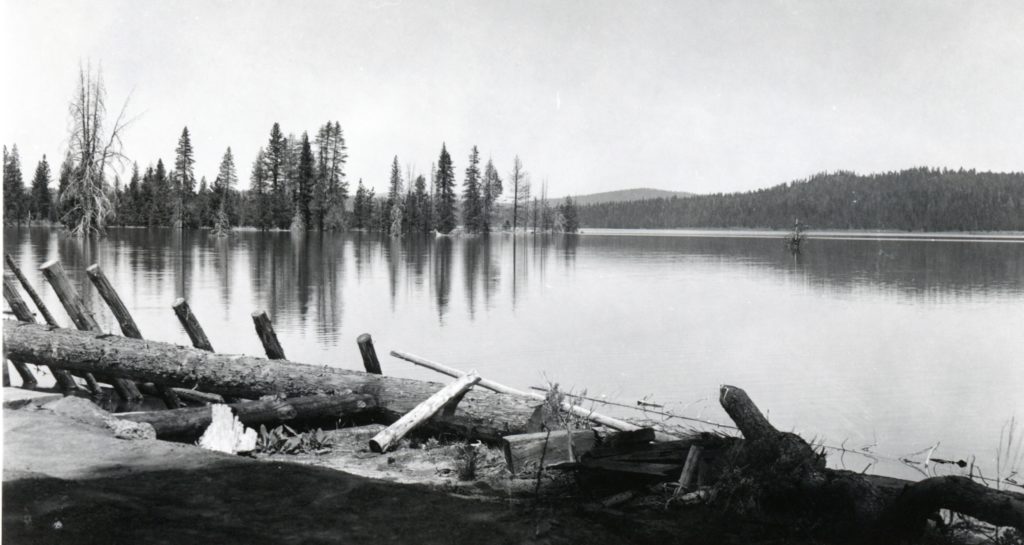
The winter of 1937-38 was one for the record books. There was a lot of wide spread flooding in the spring, including the breach of the Said Valley Reservoir. By mid-April 1938, Susanville attorney and a Director of the Lassen Irrigation District Hardin Barry released a statement that regarding the rumors circulating that McCoy Flat and Hogs Flat reservoirs were on the brink of collapse. As to Hogs Flat, Barry stated that it was so constructed that when full, surplus waters will flow through a natural depression in the direction of Worley Ranch. As to McCoy Flat it was pointed out that only nine feet of the thirteen feet of flash boards were installed and there was no imminent danger to the dam. Yet, to ease everyone’s fears the district hired a watchman at McCoy. It should be noted that Lassen Irrigation District owned the two reservoirs. Barry concluded that in 1932 that the State Water Resources Board had inspected the dams and deemed they were safe to use.

Hog Flat Reservoir, April 1940. Courtesy of Lola L. Tanner

Never miss a story, click here to subscribe.

Susanville Stone Quarry

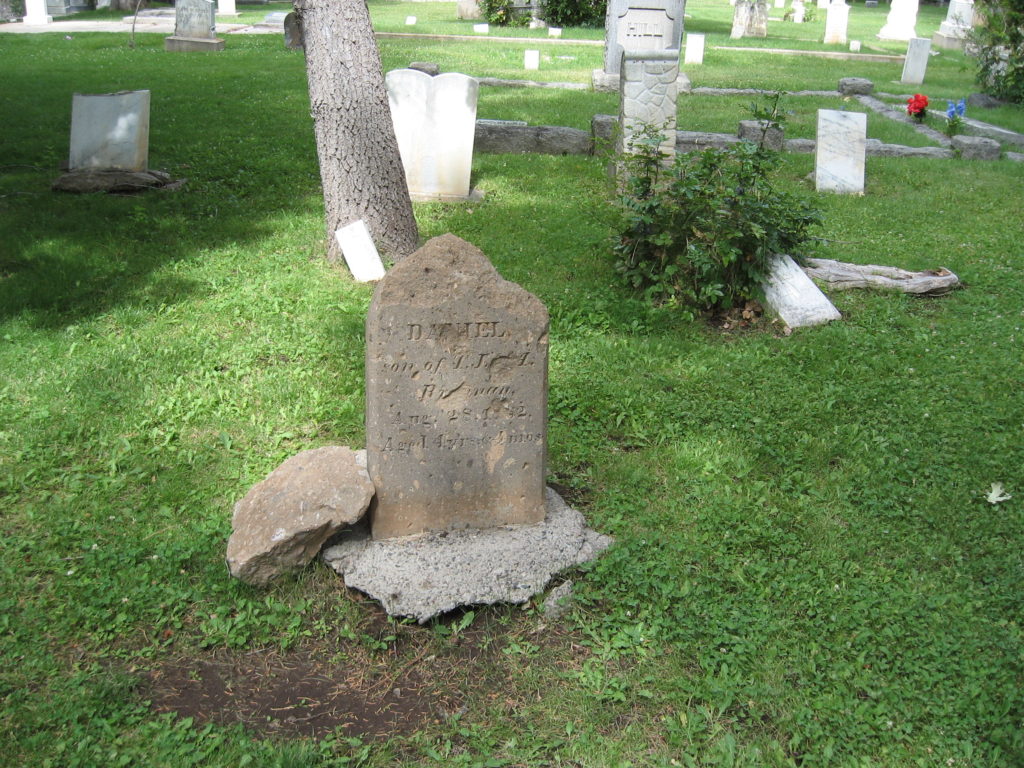
The headstone of Daniel Brannan made of rhyolite tuff has not weathered well. Susanville Cemetery, July 26, 2019

Located at the west end of Susanville is Quarry Street, so named for a stone quarry there that was discovered in 1860. The bluff at that part of town, better known as Inspiration Point, is fault block caused by volcanic upheaval. That upheaval created a deposit of rhyolite tuff. This was an ideal material in which was used in many of town’s native stone buildings.

However, during the mid-1860s the rhyolite tuff was used to make headstones. It appears that H.F. Thompson was the only stone mason to make the headstones. Some are quite elaborate such as Capt. William Weatherlow’s monument and others quite modest such as John Anderson. Thompson also made stones that are found in the Janesville and Long Valley cemeteries.

Never miss a story, click here to subscribe.

Four Long Blasts

Riverside Drive, Susanville, December 1955

The City of Susanville, even before it became a municipality, always sought ways to alert the residents of a disaster. In the late 1800s, the most effective means was the ringing of the bell at the Methodist Church. Fast forward to January 19, 1938 at a special meeting of the City Council to devise a new plan when disaster strikes, as what had recently happened with a surprise flood. It was members of the Thomas Tucker Post of the American Legion who sought to address the issue. After some debate, it was decided that four long blasts from the city’s fire siren would be used to alert the citizens of a disaster.

Subscribe

Susanville Safeway Opens, 1928

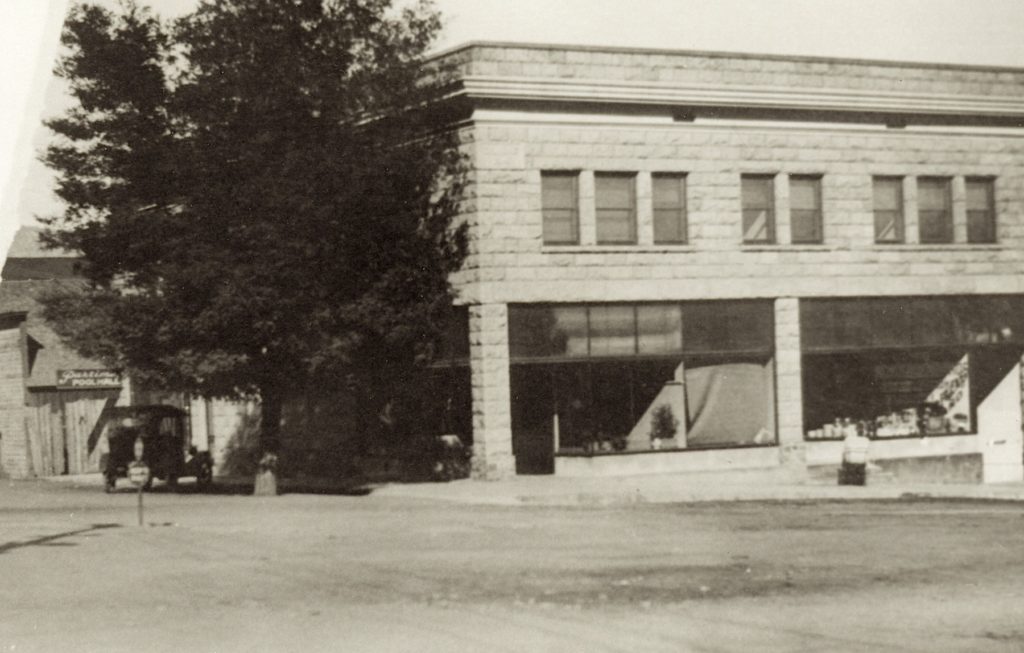
T.H. Long Building aka The Telephone Building. Courtesy of Phil Long

In the 1920s, Susanville’s retail community was undergoing many changes, due to a number of factors. Slowly creeping in where chain stores, many who thought they were a menace to the community. One of the many concerns with chain stores, that there would be a loss of individuality. Whatever the case may be, there was nothing any one could do to prevent the chain stores encroaching in the community.

It was on December 15, 1928, that Safeway opened a grocery store in Susanville. They found a place readily available in the Telephone Building, located on the northeast corner of Main and Gay Streets. It had recently been vacated by Stones Cash & Carry, another chain grocery store. To manage the store, S.F. Christensen of Carson City took over the reins and T.R. Mitchell from Sacramento was in charge of the meat department. The company made sure that it was duly noted that Skaggs’ Safeway boasted that it had 1500 stores in 15 western states, so they could stock more items than any store in town.

Support