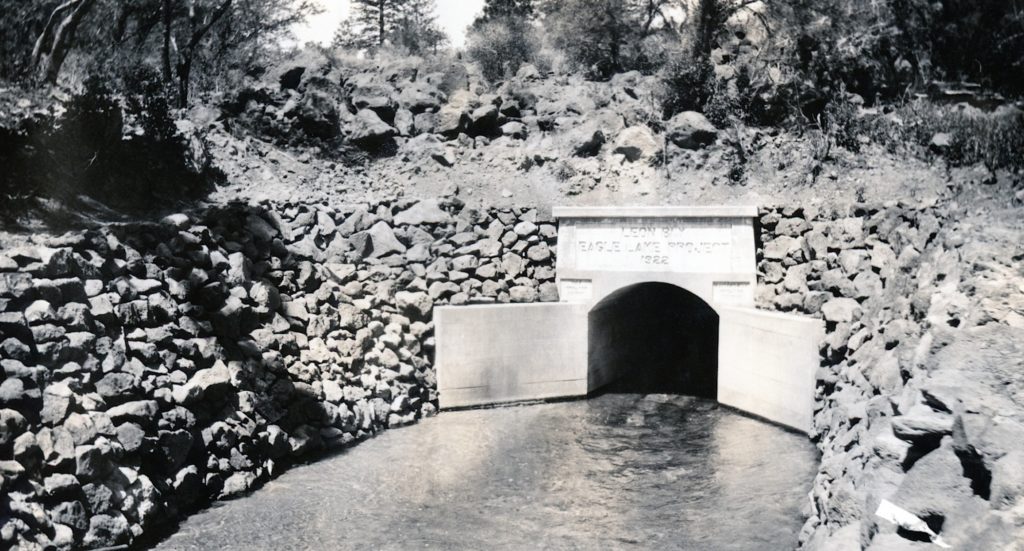
Outlet of the Bly Tunnel, 1924. Courtesy of Lola L. Tanner
In the fall of 1921, construction began on Leon Bly’s Eagle Lake Tunnel. The mile and a half long tunnel purpose was to convey water to Honey Lake Valley for irrigation. Water from the tunnel began flowing in the spring of 1923. The tunnel has a long complicated history. In 1986, the tunnel’s inlet was sealed. The outlet, in a somewhat remote location remains intact, but water no longer flows through the tunnel.
The outlet as it appeared in 2012. Courtesy of Barbara White
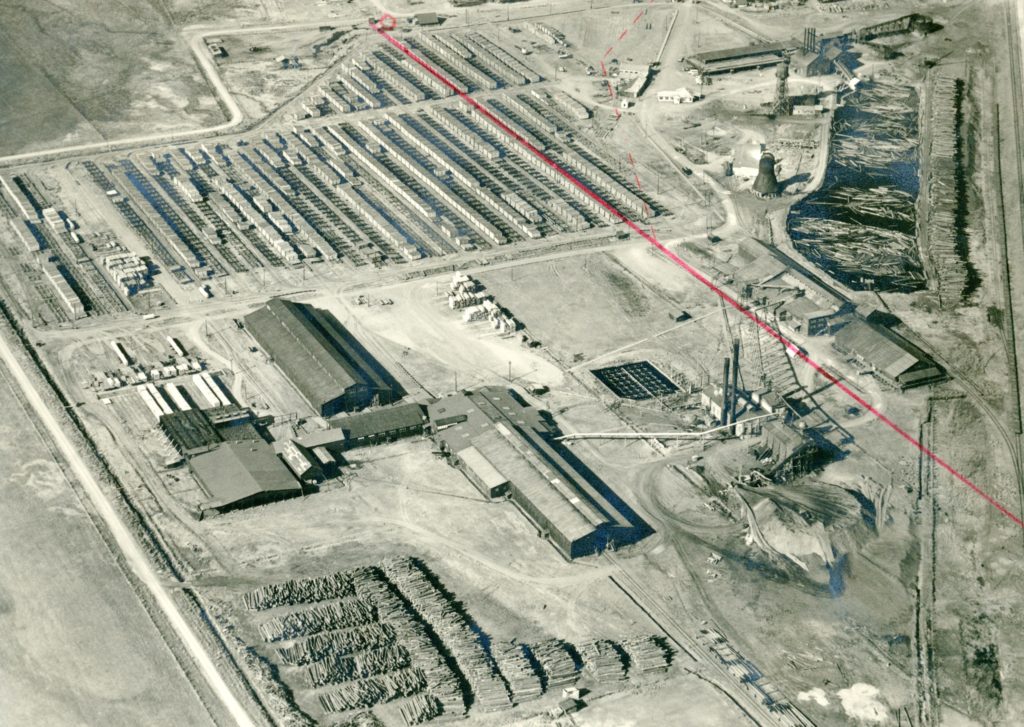
In the spring of 1952, the Lassen Lumber & Box Company began liquidating its assets. This involved a sawmill, box factory, 100 acres of land along with 9.9 million board feet of timber, 7.7 million board feet of logs and almost a million board feet of box shook.
They found an unlikely suitor in its neighbor, the Fruit Growers Supply Company. Fruit Growers purchased it all for $1,425,000. While researching the history of Fruit Growers this transaction puzzled me. With the need of box shook declining why a need for another mill with a box factory? Fruit Growers was keen in exploring future venues to protect the citrus growers needs. Lassen Lumber & Box Company had one asset that Fruit Growers needed—-water. If at some point, Fruit Growers wanted to manufacture cardboard cartons, the purchase of the Lassen Lumber & Box Company gave them the water supply needed to convert their Susanville mill into a paper/pulp plant.
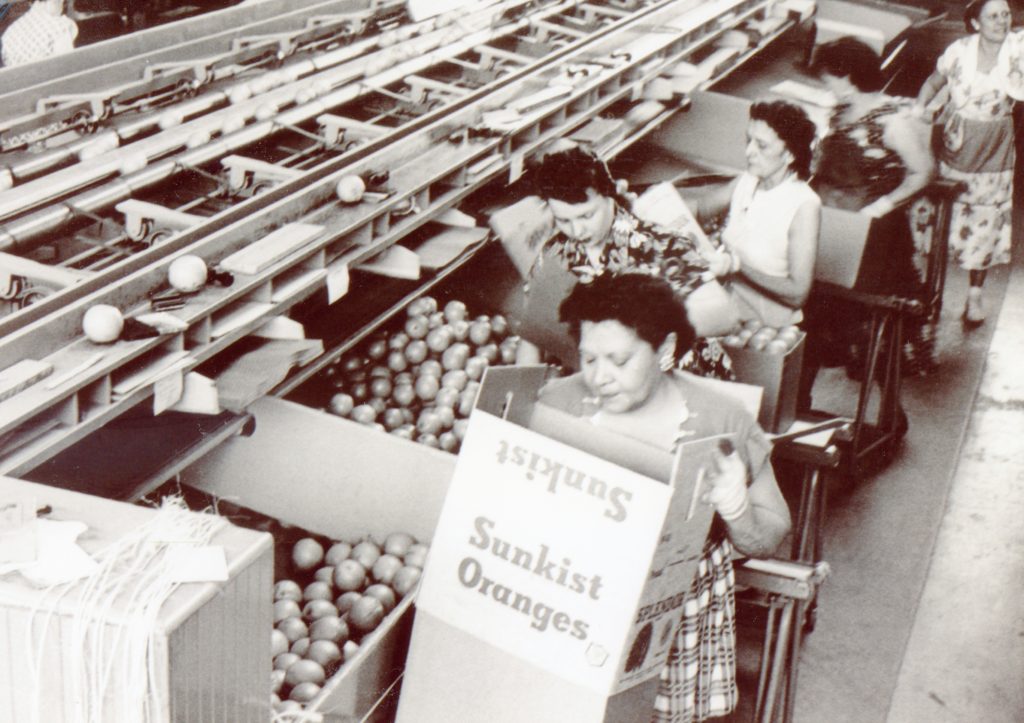
A packinghouse using cardboard boxes—-Sunkist Growers, Inc.
While the cardboard box has been around for over 150 years, when it came to shipping fruit and vegetables it would take many decades of refinement before the growers made the switch from wood to cardboard. During World War I the growers did make an attempt to use cardboard containers, but was deemed a failure. Those early boxes had two major flaws, they were not durable, and with no ventilation the produce quickly spoiled.
During the critical lumber shortage during World War II, the War Production Board asked the citrus industry to work with the Container Corporation of America, experimenting with the cardboard carton as a substitute shipping container. The growers complied, despite the far greater cost. They also experimented with mesh bags. Neither, however, proved satisfactory. The lack of proper ventilation in the cartons resulted in considerable spoilage and the lack of protection from the bag resulted in bruised fruit.
After the war ended, however, paper companies continued to refine the cardboard carton. The new containers were called half cartons because they were half the size of the standard wooden box. Grocers preferred them because they were easier to handle—-and empty cartons made great “carry home boxes” for customers.
Some citrus growers by the early 1950s had met with success with the cardboard boxes. Fruit Growers Supply Company, along with its parent company Sunkist Growers were still reluctant. One company official thought cardboard was just a passing fad. A fad it was not, and on November 1, 1955 Sunkist adopted the cardboard carton the package of choice, and the wooden box was now a part of history. Fruit Growers Susanville box factory curtailed production but continued making wooden picking boxes until 1961.
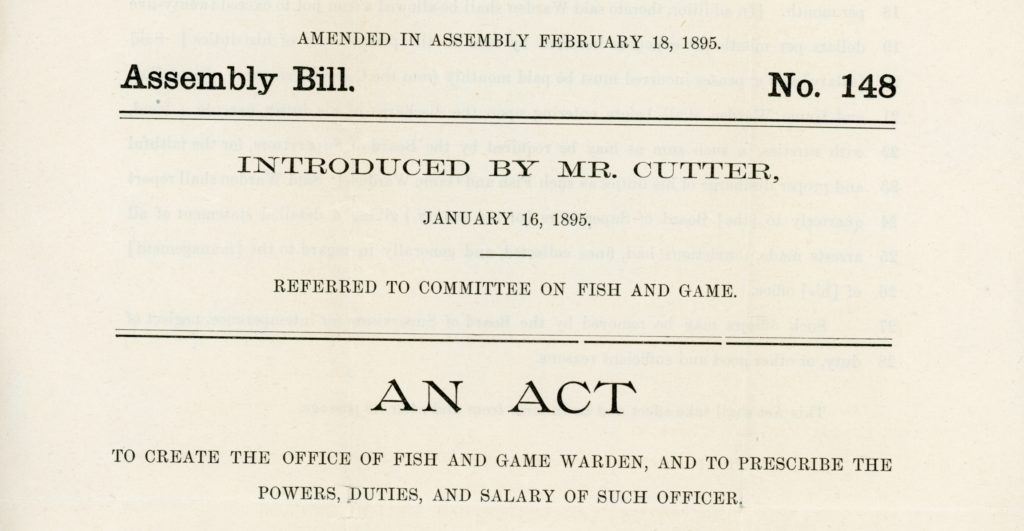
We are now in prime time hunting season, so I thought this would be a appropriate topic. Many may not realize there was a time when Fish & Game Wardens were a appointed county employee. In 1895, California Assembly Bill. No. 148 was passed that the Board of Supervisors of each county may appoint a Fish & Game Warden, to serve a two-year term. Depending on the county’s classification determined the salary. For most of the state the salary was fifty dollars a month. One of the requirements is that the game warden provide quarterly reports to the Board of Supervisors giving a detailed statement of all arrests made, convictions had, fines collected and any other matters. Frank P. Cady served as the Lassen County Fish & Game Warden for many years. However, I have never come across the quarterly reports. Yet, on the other hand I have located County Horticultural Reports, Medical Officers Report. After World War I Assembly Bill 148 was repealed, wherein the local game warden was done through the State.
Spread the word, and encourage a friend to subscribe
Clover Valley Lumber Company was headquartered in Loyalton in nearby Sierra Valley. In its prior life, it was the Marsh Lumber Company. In 1917, Clover Valley formed and it was typical mill/box factory operation. By 1955, Clover Valley had 54 miles of railroad line. Some of these spur lines still can be seen on the west flank of Thompson Peak. Noted, railroad historian, David Myrick stated it had the largest railroad logging operation in Plumas County. I beg to differ on that, as the Red River Lumber Company had an extensive railroad logging system in northern Plumas County. In 1957, Clover Valley sold, its new buyer began dismantling the railroad logging line in 1958—the last of its kind in this part of California. The Loyalton mill would later be acquired by Sierra Pacific Industries.
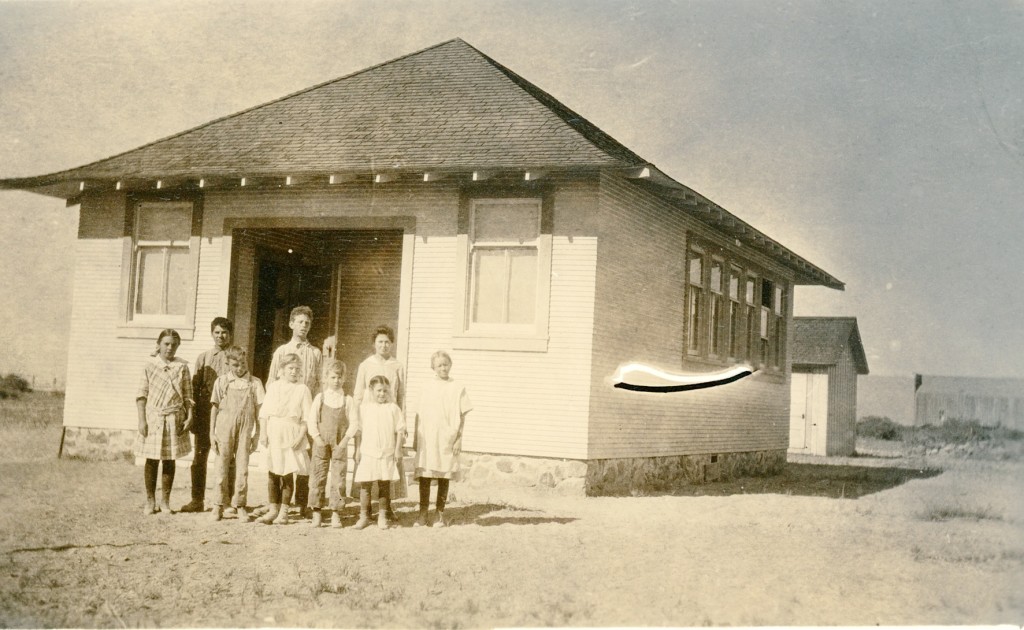
It was a long time coming but on Saturday, September 23, 1916 the Amedee School house held a dedication with ninety-one people attending. The school district had been established in 1893, but it never had a school building to call its own.
On April 7, 1916 a $1,500 school bond election was held. It passed by a large margin with a voter turnout of 100 percent—16 yes and four no votes. The bungalow style building was built by J. C. Thornburg and was located a block north of the Hotel Amedee.
The life span of the school was short. In a few short years the region would experience a major de-population. In 1922, the school was closed and operations moved to Wendel. In 1936, Maybelle Johnson purchased the building, moved it eight miles to the east and converted it into a private residence. It stands today in a dilapidated state.
Spread the word, and encourage a friend to subscribe
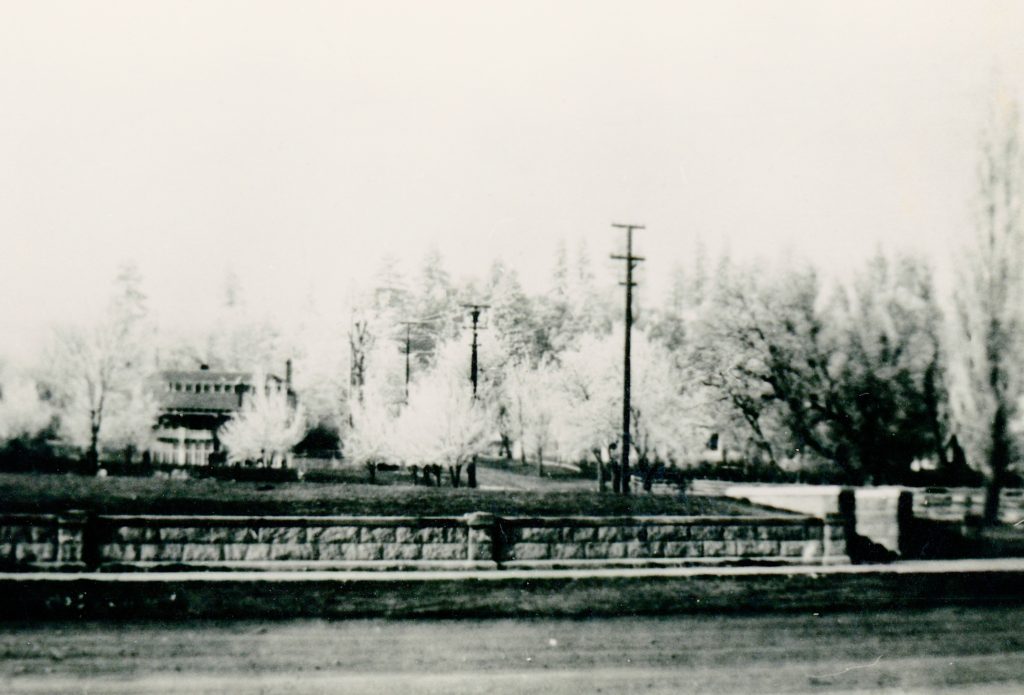
North side of the Lassen County Courthouse., 1920 during a pogonip.
In the 1920s, golfing became all the rage nationally and locally. In the 1930s, two other sporting activities came to the forefront—skiing and tennis. In the past, we have explored how the ski areas of Coppervale and Willard came to be.
In 1935, the local 20-30 club, a civic organization whose focus was on youth development and leadership saw the need for public tennis courts. They approached the County of Lassen with a request to use property on the courthouse square near the intersection of Roop and Mill Streets. It would not cost the county, and the county obliged. The club held fundraisers and by the fall of 1935, the tennis courts became a reality.
This topic, also falls under the elusive photograph category, as I have never come across any. How, long the tennis courts remained, is not clear, but in 1962, the courthouse annex was built on the site.
Goodrich crossing and reservoir in 1914. Minnesota Historical Society
Any one who has travelled between Susanville and Westwood on Highway 36 since the fall of 2019 are well aware of the Good Fred project. The project consists of a realignment over Fredonyer. A second realignment is at Goodrich Creek. Further upstream from the existing bridge will be a new replacement bridge. Now for your history lesson for the day. This is not the first time, the highway changed the location of the crossing of Goodrich Creek. The first came in 1929, when the highway was being constructed, and the highway department did not care for the original wagon road crossing, and relocated to the current site.
Now, you have a little historical trivia to impress your friends.
Spread the word, and encourage a friend to subscribe
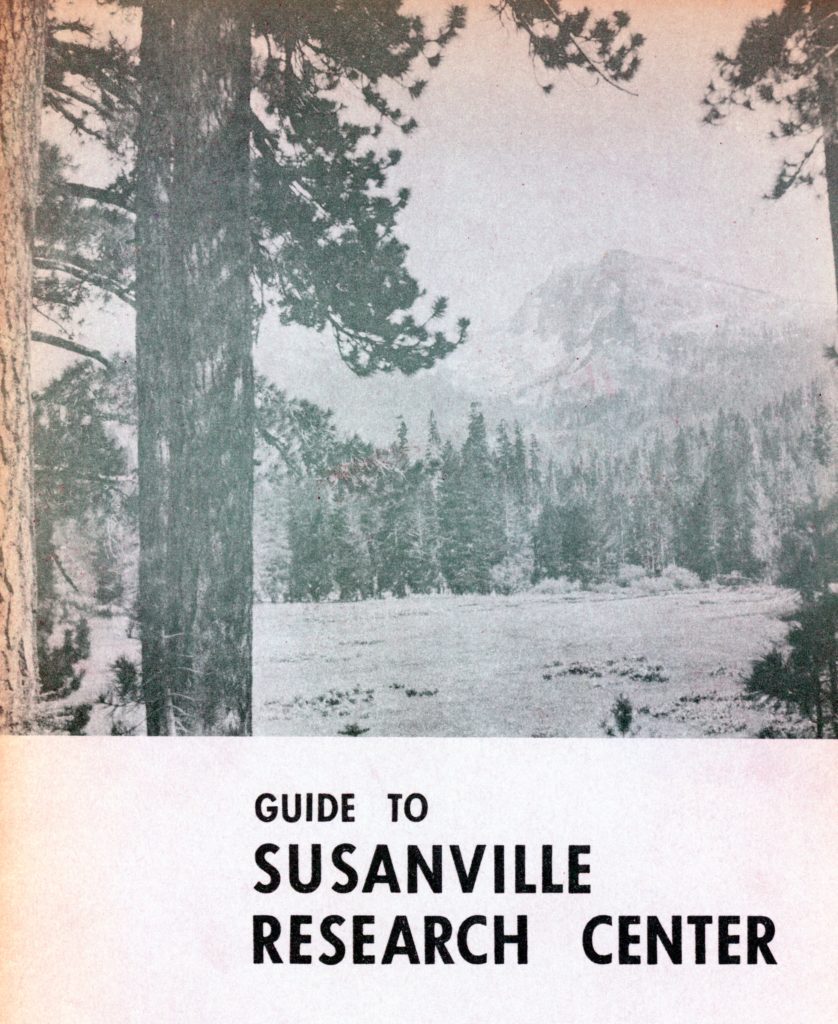
The Susanville Research Center was established in 1956. It was a unit of the Pacific Southwest Forest and Range Experiment Station, headquartered in Berkeley. It was one of nine maintained by the U.S. Forest Service throughout the United States.
Research work in the area had been well under way with grazing experiments in Harvey Valley in 1936 and more about that in a future post. In addition, there was the Blacks Mountain Experimental Forest near Halls Flat that was established in 1937. The latest addition was the Swain Mountain Experimental Forest, north of Westwood. An item of focus at Swain was the management of red and white fir forests. It should be noted that originally fir had no economic value, but with the depletion of pine trees, thinking had to be adjusted.
The center’s research covered a variety of aspects including watershed management to wildlife habitat improvement.
Lassen County has many times displayed its “can do spirit.” An interesting example occurred in the fall of 1929 with its exhibit at the Los Angeles County Fair. Lassen County had a two pronged exhibit. What generated considerable interest among fair attendants was a very large relief map depicting the various landmarks of the eastern portion of Lassen Volcanic National Park, located in Lassen County. The judges took notice and the exhibit won a silver medal.
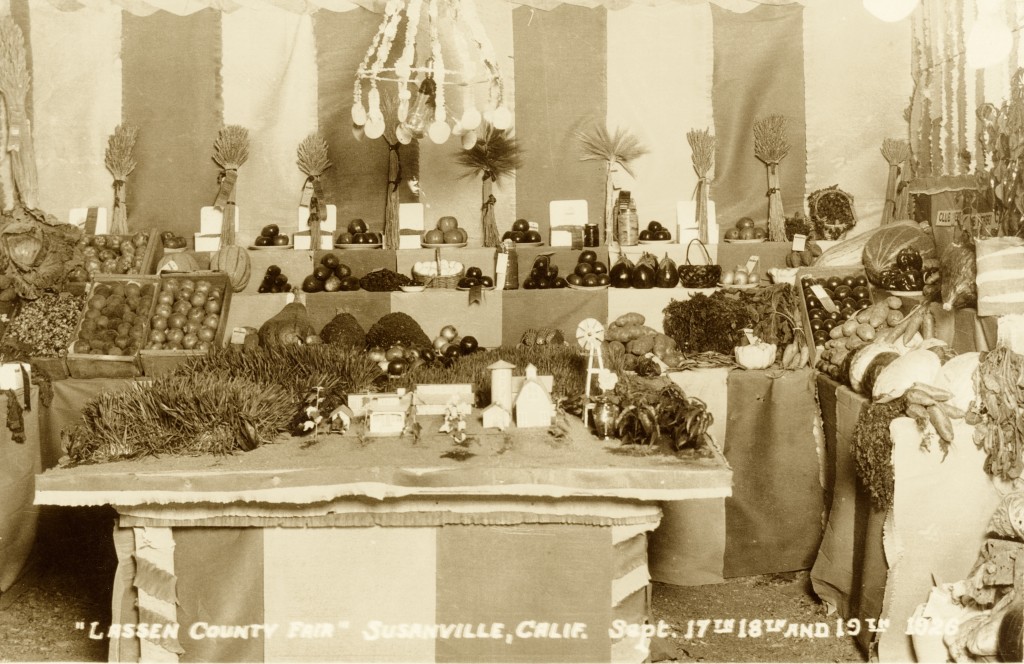
Produce exhibit Lassen County Fair, 1926.
The other half of the display featured a wide variety of produce from the Honey Lake Valley. The crops displayed came from the following farmers: T.D. Woodham (Litchfield), George Bigelow (Litchfield), Mark Stewart (Standish), Charles January (Janesville), Will Dill (Wendel), Clark Bros. (Susanville), J.H. Lambert (Standish) and J.H. McClelland, (Standish).