Category Archives: History

The naming of Janesville

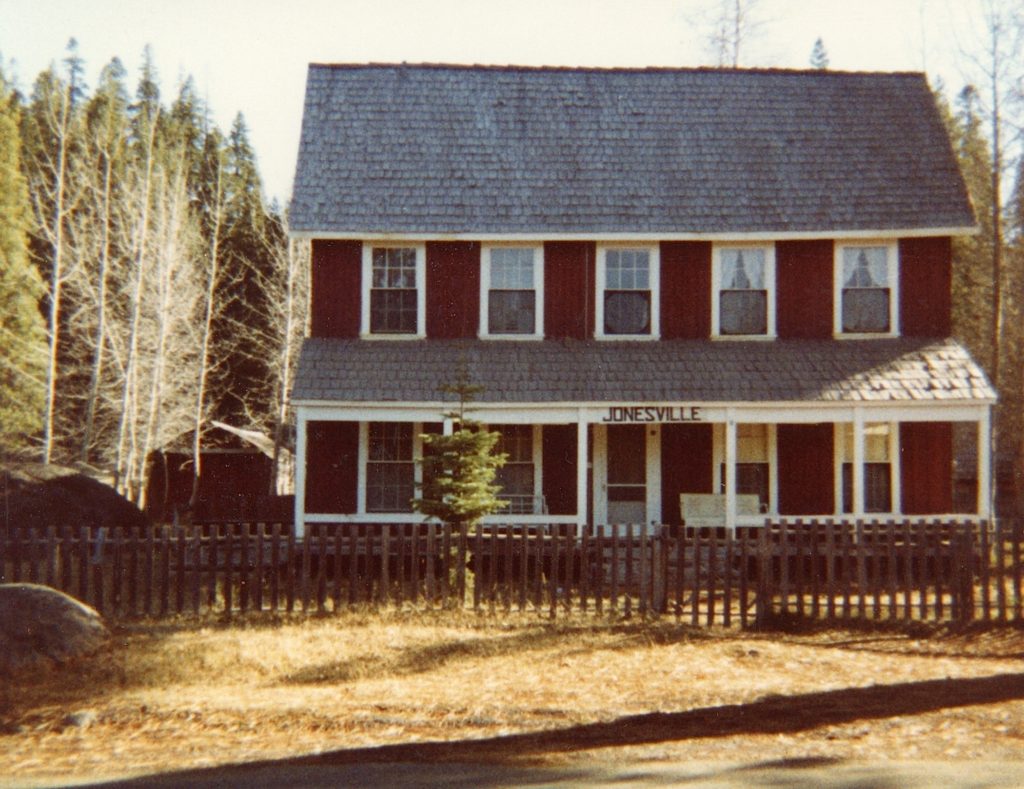
The Janesville Hotel when it was owned by Justus R. Bailey, circa 1880.

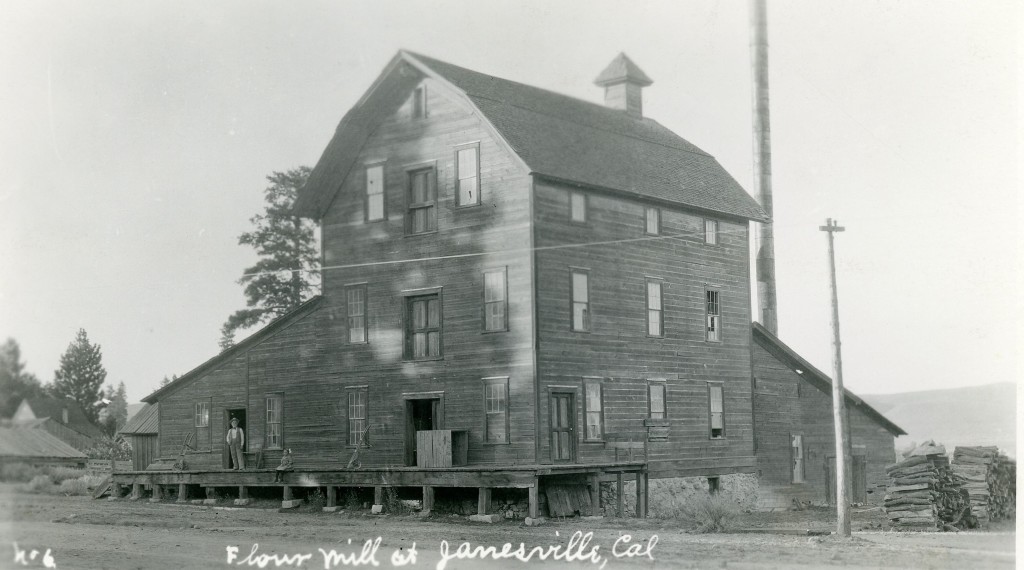
This actually a tale of two Janes. In May 1857, Malcolm Bankhead bought the claim of Thomas Mitchell. He built a two-story log-house and offered public lodging. It remained until 1872, when Dennis Tanner tore it down and constructed the two-story wooden frame building known for many years as the Janesville Hotel.

Malcolm was soon joined by his wife, Jane and four children. I 1858, Smith Hill built a house nearby. In 1861, Henry Lomas established a blacksmith shop there at the same time, Smith Hill opened a combination saloon and shoe-shop. The village was initially known as Bankhead’s. Some accounts have it that at that time it became known as Janesville, in honor of Jane Bankhead. It should be duly noted that Malcolm and Jane’s daughter, Susan, married Smith Hill on June 13, 1859. On May 17, 1862, the Hill’s daughter, Jane Agnes was born, a first in the village. Some state the town was named for her, being the first child born there. On June 15, 1864, the name Janesville was official with the establishment of the post office. Whatever the case may be, the naming of Janesville was a family affair.

Never miss a story, click here to subscribe.

An Annual Ritual

A 1931 Advertisement.

Long before the Earth Day movement, spring cleaning inside and outside of one’s home was the de riegeur of the day. Personally, I got a head start during the winter sorting through and tossing stuff, since it was one of the few things I could do during my recovery.

Anyhow, long before there was even a municipality of Susanville, by the early 1870s there was always a movement on hand for the residents to clean up the outside of their homes. Most of the residents complied. However, there was no public dumping ground. It would not be until that the City of Susanville acquired a forty-acre parcel for public dumping ground. This dump remained in use until the mid-1960s. Fast forward many years later, the site was cleaned up and is now part of Skyline Park.

Support

Throw Back Tuesday

Lassen County Times, May 17, 1994

Note: While beginning in March, I had announced scaling back to six days a week, Tuesday being a blackout day. I had an inquiry about shoe trees, so here is the original post from 2016.

A most unusual phenomenon that can be found throughout the region and no longer just in Lassen County. The original shoe tree was located at Mud Flat, along Highway 395. In the 1930s, Jud Foster, of the California Highway Department, planted numerous cottonwood trees across Mud Flat. It was hoped that these trees would absorb and stabilize the roadbed so that it would not become so muddy. Only one tree survived and it grew to maturity. In 1979, when the highway was widened, officials considered removing the tree, but later reconsidered. Instead, the highway department made an impromptu turn out next to the tree. This turn out along a desolate stretch of road, where there are no trees, became a popular stop for travelers. Shortly thereafter, someone tossed a pair of shoes onto a tree limb. Slowly, through time, more and more shoes were found dangling from the tree. In the early hours of May 14, 1994, an unknown person(s) cut down the tree.

Never miss a story, click here, and support the site, too!

The Winning Forestry Essay

Baxter Creek, circa 1950s, with Thompson Peak in the background.

In 1935, Emma Lou Dakin, a Lassen Junior College student won that year’s contest. The Dakin name may be familiar to some, as her old home is now the Dakin Unit of the Honey Lake Wildlife Refuge.I am only publishing a small excerpt, but this will help to explain why so much of the Diamond Mountain range is privately owned. Once upon a time farmers were allowed to file for a 160 acre federal timberland patent. This provided the farmer wood for cooking/heating, fence posts etc. With that in mind, Emma Lou uses that as an example.

“Each one of us farmers own a little piece of timber land where we get our wood, fence posts and logs. There’s an old saying that ‘You can’t teach an old dog new tricks.’ My father is one of those old fashioned ranchers, but somehow for some unknown reason he did sell some logs to the Lassen Lumber & Box Company in 1929. From 300,000 feet of lumber we cleared $1,050, while in the same year from ninety head of cattle we got $3,000, but half of the $3,000 was put back into the cattle for feed, while nothing but our annual tax of $4.16 came out of our timber money. Besides making $1,050 we had enough slash left to furnish us wood for two years. From this experience I began to notice the economic value of the forests were to us people in Lassen County.”

Subscribe

Thank You Uncle Boyd

Main and Gay Streets, Susanville, 1924–Courtesy of Uncle Boyd Benham

Some may recall last month about the story of building the current Masonic Temple in Susanville. That article contained a rare photograph of the building under construction. At that time, I gave the photo credit to Uncle Boyd, but I knew nothing about him, or even a last name.

It was in that same month, Dr. Greg Boomer was cleaning his office in preparation of his successor. Boomer came across five professional photographs taken in 1924. They were attributed to Greg’s wife, Connie’s family. When the Boomer’s opened practice in Susanville, Connie’s Aunt Hazel Benham sent them in case they might want to use them. Hazel was married to Boyd Benham. To make a long story short, in September 1924 Boyd’s father, Ed Benham moved his family to Susanville when he assumed the role of manager of the Liberty Theater. A member of the Benham clan was a professional photographer from Marysville who took the photographs while on a visit.

The reason for this account, is that from time to time, I am asked how I locate various historical photographs. This is one of many examples.

Also, a big thank you to Connie & Greg Boomer for sharing the photographs.

Spread the word, and encourage a friend to subscribe.

A Carcass of Another Kind

Remains of E.C. Brown’s tugboat used on Honey Lake, circa 1940. Courtesy of Margaret Nye

Recently, some one inquired what happened to the commercial boats that were on Honey Lake. It should be duly noted that were two major commercial boats on the lake. The first one, was built in 1895 by Jake Yanner and George Clark. They based their operation at the Joe Decious ranch near Milford. The boat was first built with a propellor, but did not function properly. They modified it into a side wheeler. The boat was 60 feet in length  and had a load capacity of 30,000 pounds. It was used primarily to transport lumber and freight between Amedee and Milford. By 1902, the lake was too shallow for boating and in 1903, the lake went dry. The vessel remained docked at the Decious place for many years. During the winter of 1937-38 the high waters of Honey Lake washed it away from its moorings. The boat drifted down shore for about 175 yards where it fell apart.

In 1907, Spoonville resident, E.C. Brown landed a contract to supply one million board feet of mining timbers to Goldfield, Nevada. As the timber and sawmills were on the west side of the Honey Lake Valley and the railroad on the east side, he needed to resolve the transportation problem. Brown purchased a tugboat that the U.S. Customs used on the San Francisco Bay. Brown had a special barge made for hauling the mining timbers across the lake. A year later, the contracts fulfilled the boat was docked at Barham’s near the mouth of Baxter Creek. In 1912, Brown sold the boat to Nevada millionaire, George Wingfield who converted into a pleasure craft. In 1915, it was docked for the last time near Baxter Creek. During the 1930s, unknown parties removed the engine for scrap metal. Remains of the hull were still there in 1987 when I participated in an informal sailing regatta held near there.

Subscribe

The Perils of a Family Enterprise

Lakeshore Creamery, Milford, 1903.

Some family businesses thrive and others do not, after all there are a lot of dynamics involved. One very short-lived business venture was the Wemple Brothers of Milford. For a brief time they operated the Lakeshore Creamery. As David Wemple recalled that the main trouble with the creamery was too many bosses and too few laborers. They had put a lot of money into the buildings, a creamery and a milking shed, that they built. David was also under the impression that it was their father, Joseph C. Wemple who probably subsidized the short-lived venture that lasted at most of two years from 1903-1904..

Subscribe

Those plucky bondholders

Grant Smith’s tunnel works, Eagle Lake, 1922–Courtesy of Lola L. Tanner

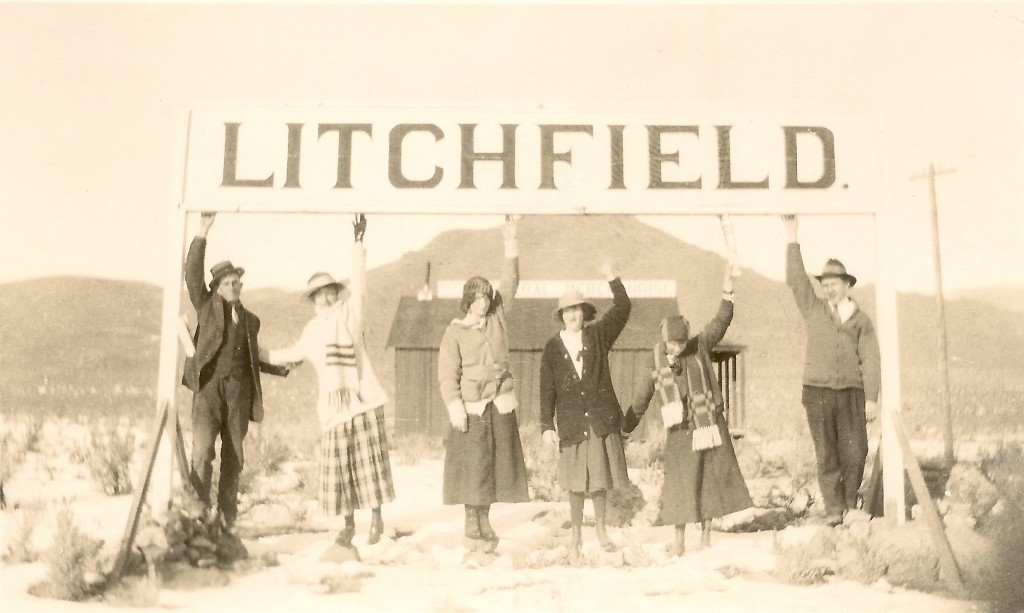
A month had not even passed since the grand celebration held at Litchfield for the completion of the Bly Tunnel at Eagle Lake, that things were not good. Grant Smith & Company of Seattle, Washington was the contractor to build the tunnel. In June 1923, the company asked for a special meeting with the Baxter Creek and Tule Irrigation Districts who financed the $1.25 million project with bonds. Grant Smith informed those gathered they experienced a number of problems during construction and requested that they leave and return in the fall after irrigation season to correct the defects. The bondholders said no. They sensed if they allowed Grant Smith to even leave temporarily, the odds of them returning were nil. The situation would turn real ugly over the next year with some startling revelations that would in part doom the whole irrigation enterprise.

Subscribe

What a Difference A Year Makes

Pine Creek Fish Trap Dam, April 10,, 2020

This is an interesting metaphor considering what and how we moved about and lived a year ago. This is a bit of diversion. Pine Creek, Eagle Lake’s main tributary, can be raging torrent or almost non-existent. The comparison of 2019 and 2020 run-off is a perfect example.

Pine Creek Fish Trap Dam, April 4, 2019

Forestry essays of the 1930s

A set of Red River “Big Wheels” —Courtesy of Hank Martinez

During the 1930s, as part of a education tool in the local schools a special Forestry Essay Contest was held. In the literature provided its goal: “This contest was started with the view of stimulating a greater interest in forestry and a broader appreciation of the values which Lassen County’s forests contribute toward the stability of our communities.”

A wide variety of community organizations sponsored the contest ranging from the Monticola Club, the Rotary Clubs of Susanville and Westwood, to the local Veterans of Foreign Wars. In addition, the American Forestry Association furnished bronze medals for the winners.

Next week, will be an excerpt from one of the winning entries.

Subscribe