This cross marks the graves of the soldier’s buried at Camp Smoke Creek
Two interesting questions were posed, which I will address in separate posts. The first is Fruit Growers Supply Company’s “Sunkist Lodge” on the south shore of Eagle Lake. It just happens to be for sale.
As to the military of the 1860s, is an interesting topic. I already have two posts scheduled. The military encampment at Smoke Creek served two purposes. An interesting facet of that operation was to prevent gold bullion from leaving the State of California, on the suspicion that it might be used aid the Confederacy. Of course, there is some interesting political drama with these military encampments. Stay tuned.
Tim
P.S. I just realized I had done a lot of research on Camp McGarry, located at Summit Lake and Soldier Meadows in far northwestern Nevada.
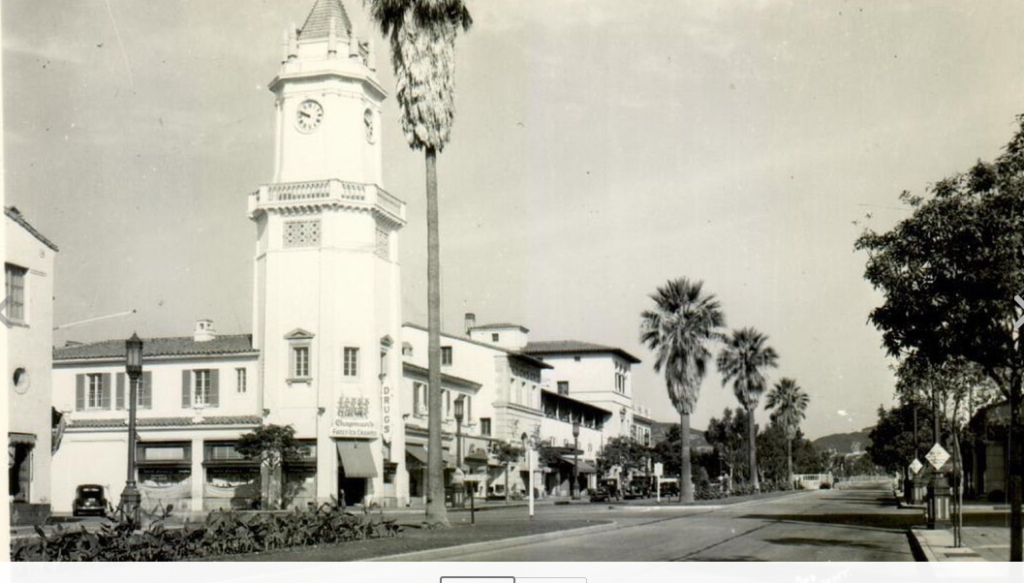
Since someone asked, there is a Westwood in Southern California, but not an actual community per se. In the 1920s a subdivision known as Westwood Village was created in Los Angeles. Over time the neighborhood was referred to as simply Westwood. This would be the same equivalent as the Milwood Tract of eastern Susanville. Now, for some, you may know how Milwood Florist was so named.
Now back to the other Westwood. It would become home of University of California, Los Angeles (UCLA) and that of UCLA’s Medical Center. There have been times when it creates confusion. From time to time, the Lassen County Recorder will receive a request for death certificate of a person who died at the UCLA Medical Center, Westwood. Since there is no official designation for that Westwood, the only official Westwood is the one Lassen County. The Lassen County Recorder then explains the situation to the applicant and instructs the person to contact the Los Angeles County Recorder.
Some readers may recall awhile back when I wrote about the 1913 Suppression/Control Burns at Clear Creek. Forest officials who attended documented that event, whether those records exist is not known, discussion about that a little bit later.
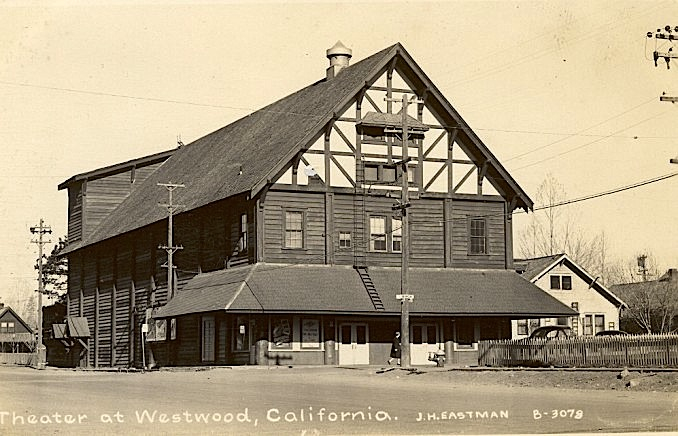
The other day, while reviewing the Lassen Mail, one of two Susanville newspapers, in the Westwood section contained a very short piece concerning news reels doing an educational piece about forest fires, one in particular filmed at Westwood. For those of a younger generation or two, newsreels, which were short educational/documentary pieces previewed in movie theaters and schools. They would eventually go by the wayside with the advent of television.
Anyhow, the Lassen Mail reported on April 30, 1926 12;3 – Fire Pictures for News Reels—One of the news reel companies have a company in Westwood this week making pictures of methods of fire fighting used in the timber industry. A fire was set in order on Wednesday and the fire train rushed to the scene, pictures of various operations being secured.
Westwood’s Fire Train courtesy of Doug Luff
Do the films exist, is an interesting question. I am aware of numerous movies filmed in the region during the 1920s and 30s, but each of those film’s existence has been problematic to locate. Then again, I am aware those who filmed the Westwood Strikes of the 1930s, and offered to share them, but that never panned out. Another instance, Leslie “Les” Mastolier, for seasoned residents founder of Susanville’s Leslie’s Jewelry, was an avid photographer, but also cinematographer. Les filmed everything from skiing down Diamond Mountain in the 1930s, to numerous wildlife studies and interesting community events for decades. His son, Gary, a Alaska resident, contacted me that he had his father’s collection of films and offered the films. That never materialized, so who knows the fate of those films. The bottom line is you just never when and where some interesting archives will surface.
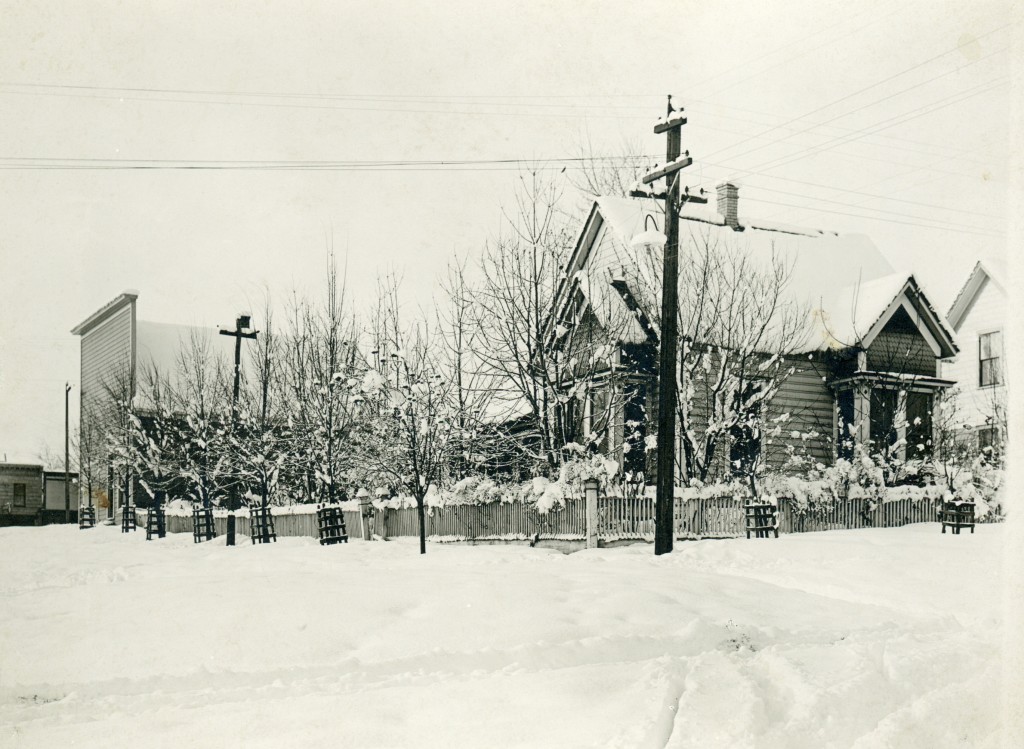
50 North Gay Street as it appeared in 1919. Courtesy of Leona F. Byars
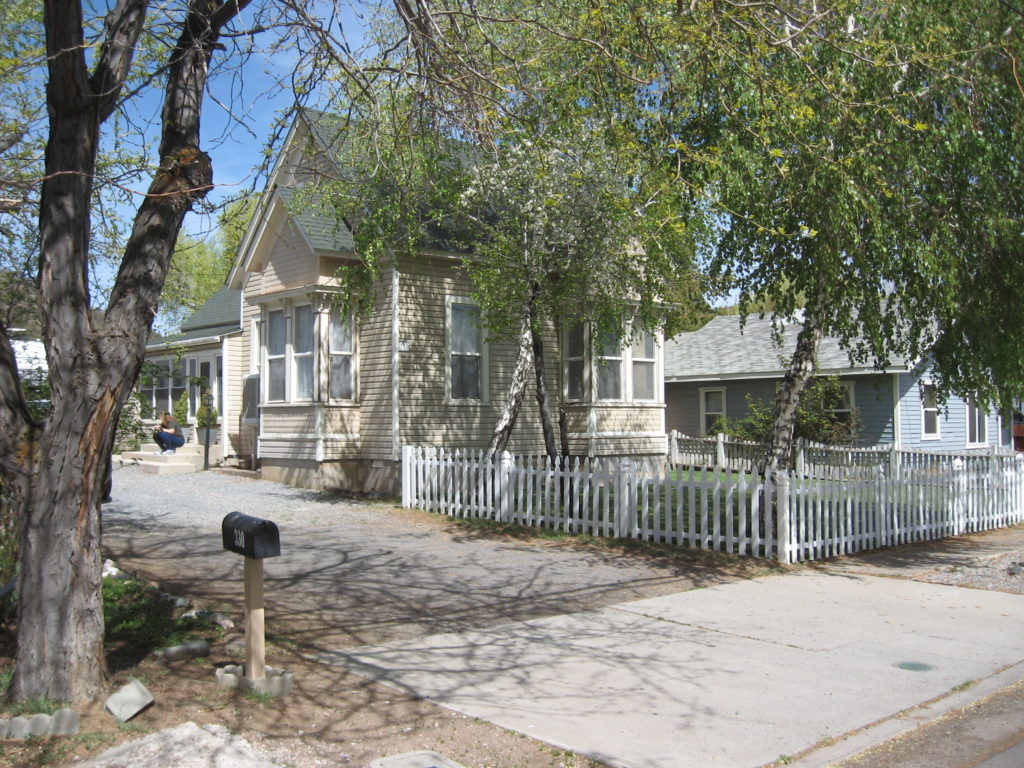
This home built in the mid-1880s at the southwest corner of Nevada and Gay Streets, had numerous owners, my great great grandmother Franceska Murrer Neuhuas, was one of them. In 1978 the property was purchased by Bank of America where they would build a new Susanville Branch office. The house, fortunately was not demolished but moved a few blocks away to 330 North Roop Street.
W.H. Weeks architectural rendering for the Lassen County High School. .
In 1892, California passed a progressive piece of education legislation enabling counties to establish public high schools. Many California counties, while embraced the concept, were slow to implement due to the financial crisis of 1893, which certain regions took decades to recover.
In the spring of 1902, Lassen County Superintendent of Schools, O.M. Doyle embarked on an ambitious campaign to form a Lassen County High School. He succeeded. On November 4, 1902 the voters approved the measure—637 Yes and 295 Opposed. The opposition came mainly from Big Valley, Madeline Plains and Long Valley, since there was no doubt the high school would be located in Susanville, and they resided such a great distance from there, it would not be beneficial in their opinion.
On September 14, 1903, the first session of the Lassen County High School was held. In attendance were approximately forty students, with two instructors, George Barton and F.C. Schofield, the latter also served as principal. In the summer of 1905, construction began on a high school, at a cost of sum $30,000. That iconic building on Main Street was torn down in 1968 and replaced with the current structures.
In 1874, Merrick Cheney and George Ford opened a stage-stop in Grasshopper Valley to take advantage of the traffic generated by the Hayden Hill mines. On September 16, 1875, the Madeline Post Office was established there with Ford as postmaster. Why Ford selected the name Madeline is not known. The post office closed on October 17, 1882 and in the following year Ford sold his Grasshopper holdings to William T. Summers. This location is where Slate Creek enters Grasshopper. However, an 1893 U.S.G.S. map indicates the location at the lower end of Grasshopper.
The current town of Madeline came into existence in 1902 when the Nevada-California-Oregon Railroad extended its line through the region. On October 9, 1902, the Lassen County Board of Supervisors accepted the Madeline townsite. For the next fifteen years, prosperous times were to be found at Madeline. The advent of World War I and the subsequent depression of the 1930s had a dramatic impact, not only to the town of Madeline, but to the Plains as well, as seventy percent of its population left the area.
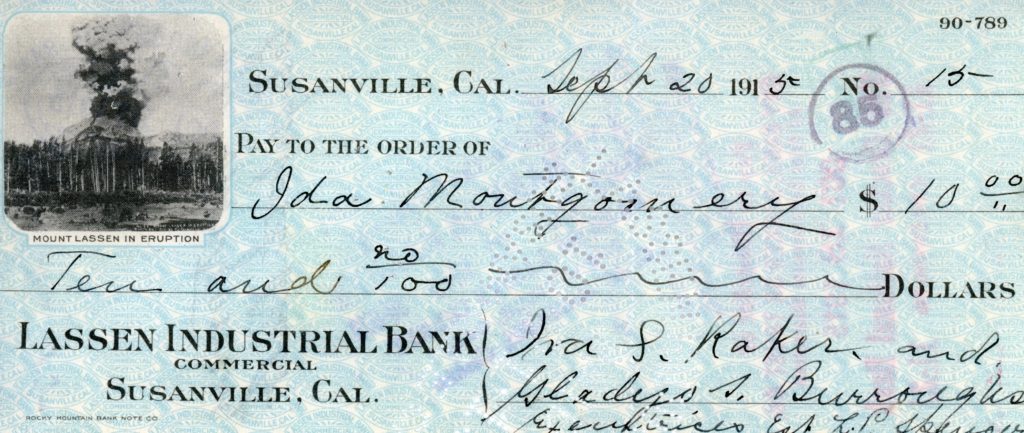
Note how the bank featured the eruption of Lassen Peak on their checks.
Believe it or not, bank fees have been around for a long time. In 1926, the Lassen Industrial Bank introduced a “service charge” on checking accounts. The bank’s reasoning that it was meant to provide better service. The bank stated: “For the past decade the cost of conducting the banking business with higher wages, higher taxes and higher cost of check books, stationery and supplies has increased greatly. The rate of income realized by the bank has not advanced with the increasing cost of doing business.”
Of course this did not go over well with its customers in the greater Susanville area. It should be noted that the bank also had branches in Bieber and Fall River Mills, and those folks registered their dissatisfaction.
A shallow lake, along Highway 44, with water that was found to be unfit to drink by the emigrants on the Lassen Trail. The travelers also found that Lassen’s Trail was not “fit” for travel either. According to the journal of Gorham Gates Kimball who was driving sheep to Idaho in 1865, it mentioned that Poison Lake ‘was so named from the effect of the bites of small red spiders which frequented the surface of the water.’ Apparently, merely washing your face and hands was enough to receive bites and experience red inflammation.
In 1916, William L. Wales, an engineer hired by the Honey Lake Valley Irrigation District, took the above photograph, as part of his exhaustive study to seek water. He proposed diverting annually 33, 962 acre feet from Butte Lake, (no one had ever filed a water right claim to it) . A canal would be constructed from Butte Creek to divert it to Poison Lake, thence onto to Pine Creek to Eagle Lake, through a tunnel there and onto the Honey Lake Valley. Very clever. However, the district was plagued with so many problems in the beginning that it never went past the initial study phase.
Spread the word, and encourage a friend to subscribe
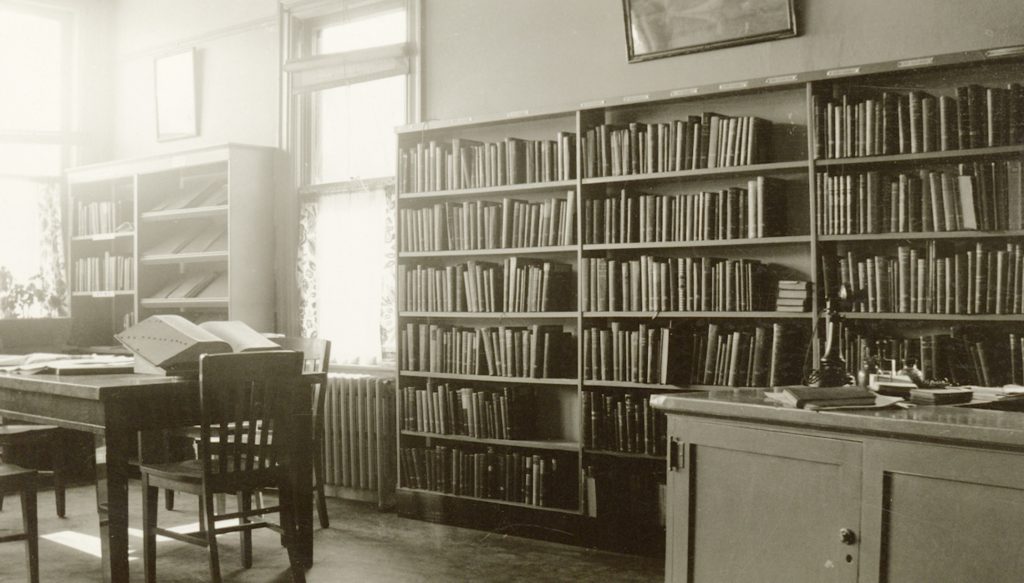
In 1915, the Lassen County Free Library was established. In 1917, Lenala Martin was hired as County Librarian, a post she would hold for four decades.
Lenala was bound and determined to make the library and its branches accessible to all Lassen County residents. Besides the main library in Susanville in 1921 there were a total 76 branches—42 in elementary schools and 34 community branches. The community branches were held in individual homes, such as the A.J. Hall family in Doyle. The custodians of these branches received a salary of $2.50 a month. The library had a total of 17, 171 bound volumes.
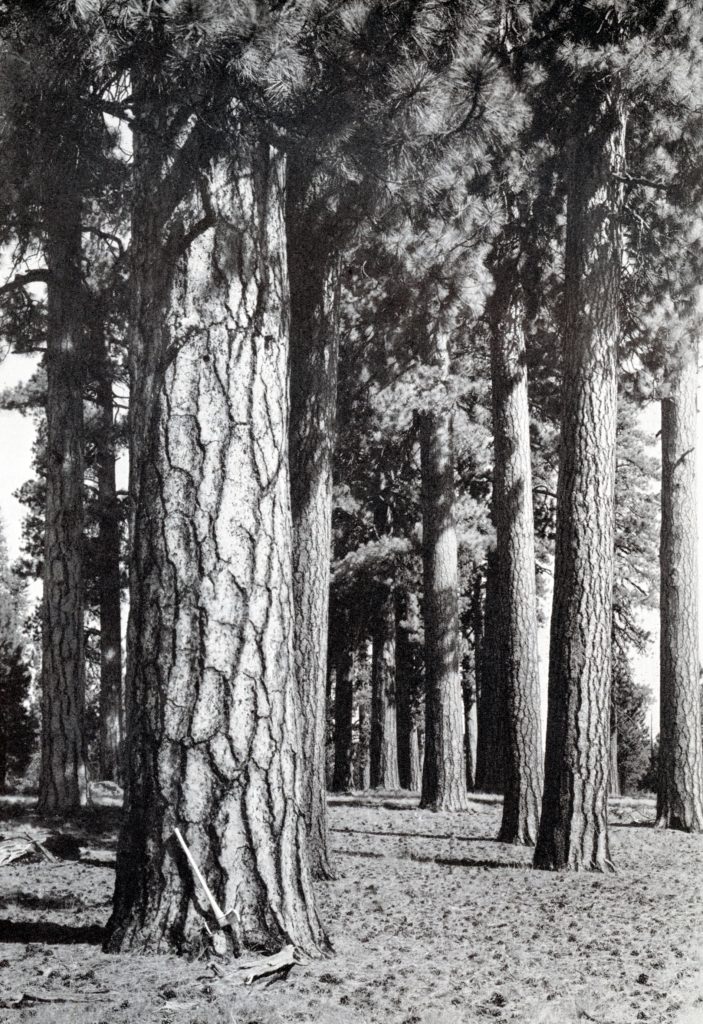
On October 7, 1907 citrus owners organized the Fruit Growers Supply Company, as a co-operative purchasing agent for the growers. This was due in part, as the growers were having a difficult time securing wooden boxes to ship citrus. Little did they know that within a few years they would be operating a sawmill and box factory at Hilt, Siskiyou County. This turned out to be beneficial. In 1919, with difficulty securing wooden boxes due in part of the conditions of World War I, they expanded and bought 41,000 acres of timberland in Lassen County and established a mill and box factory at Susanville.
In their 1947 annual Fruit Growers report they noted that Hilt had produced 896,824,000 board feet of lumber and the box factory consumed 729,445,000 board feet of lumber. At Susanville the total cut. was 1,597,990,000 feet of lumber and the box factory consumed a total of 902,128,000 feet of lumber.
An indicator of growth with their successful marketing of the Sunkist brand, in the first year they needed 6,628,000 boxes. Forty years later the number of boxes had escalated for 40 million.





In 1916, William L. Wales, an engineer hired by the Honey Lake Valley Irrigation District, took the above photograph, as part of his exhaustive study to seek water. He proposed diverting annually 33, 962 acre feet from Butte Lake, (no one had ever filed a water right claim to it) . A canal would be constructed from Butte Creek to divert it to Poison Lake, thence onto to Pine Creek to Eagle Lake, through a tunnel there and onto the Honey Lake Valley. Very clever. However, the district was plagued with so many problems in the beginning that it never went past the initial study phase.
Spread the word, and encourage a friend to subscribe