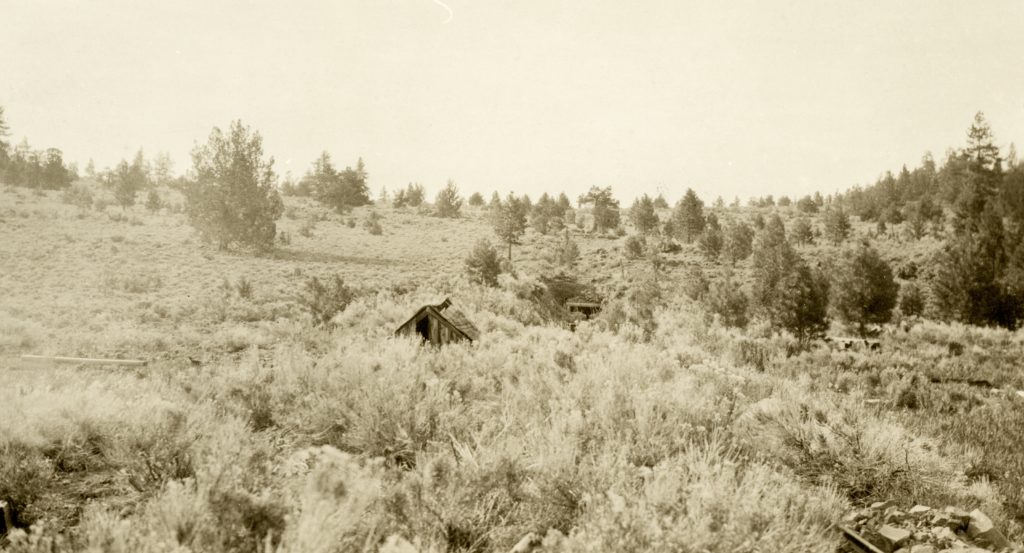
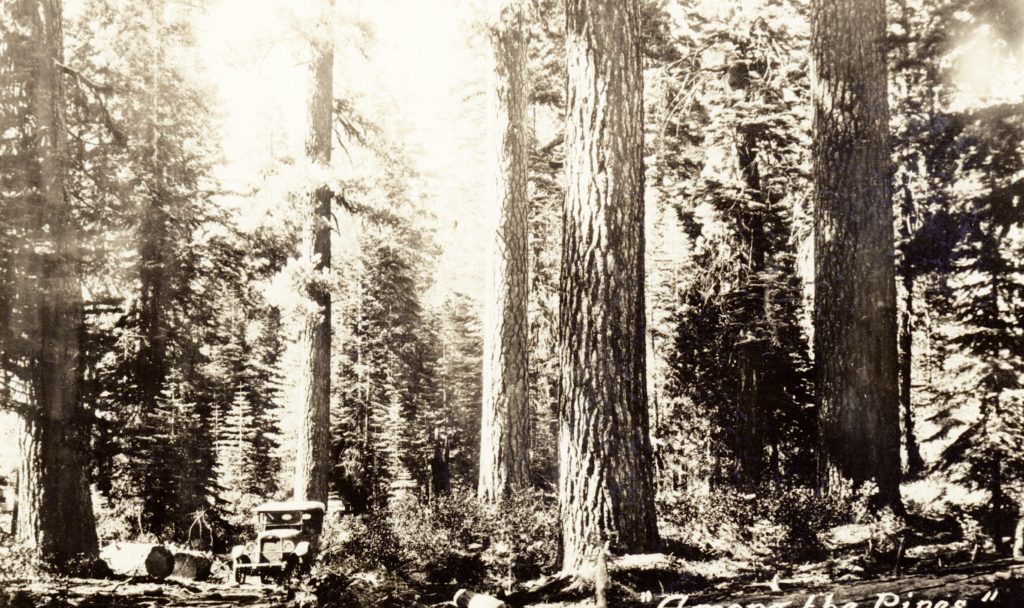
Merrill Tunnel, 1917. Courtesy of Betty Barry Deal
In the spring of 1920, W.G. Devereux, a consulting engineer was hired by a San Francisco construction firm, the latter was interested in submitting a bid for Leon Bly’s tunnel at Eagle Lake. Not only did Devereux inspect the proposed tunnel, he examined Merrill’s old tunnel. This would prove somewhat beneficial of the geological formation. He stated that had Merrill’s tunnel been completed it would have been a complete failure, as it was so poorly planned.
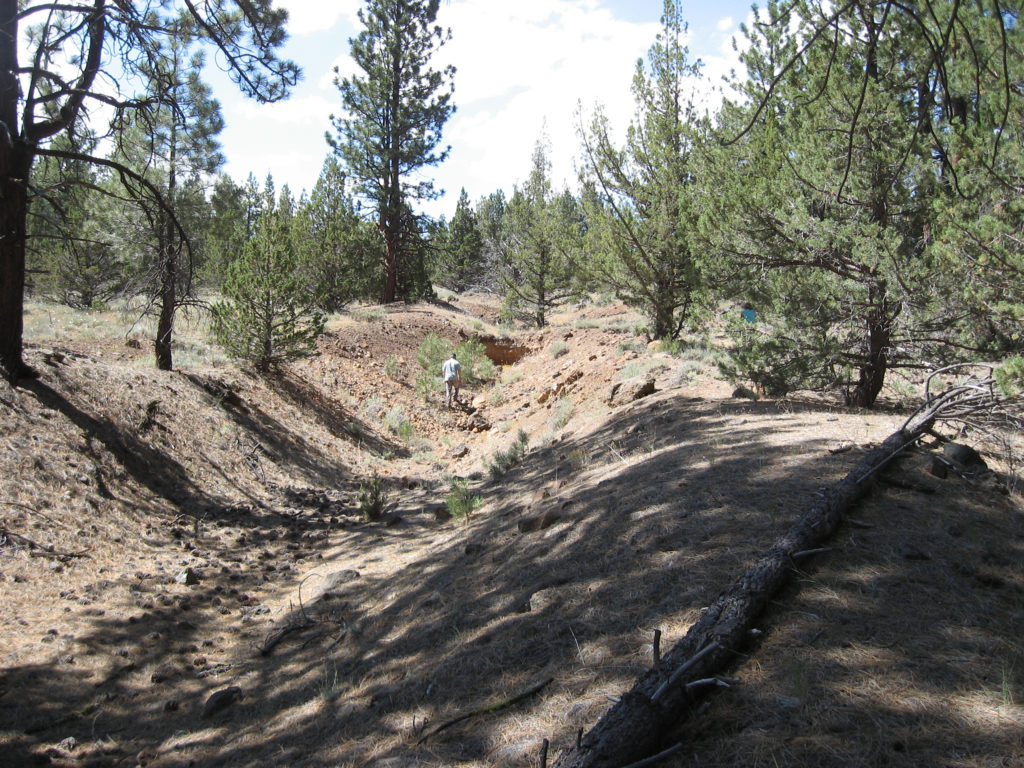
Merrill Tunnel, July 7, 2016
As to the Bly Tunnel, Devereux wrote: “The proposition is feasible and while under the present high price of labor and material the work will be expensive. It can be constructed within a reasonable time and the people interested in getting the water on their lands are very fortunate in being able to secure these proposed works at the price per acre agreed upon.”
His observation was a bit off. One it took a lot longer than expected to construct it, only to discover different geological features not found in the Merrill Tunnel.
Granville Pullen first came to Lassen County in 1870 and worked at various jobs. In the 1880s he located to Sonoma County, but made frequent visits to Lassen County to see his sister, Susan Goumaz. In 1901, he moved back to Lassen County and bought a ranch near Janesville. In 1914, at the age of 76, he retired from ranching and bought a house in Janesville.
Pullen had been collecting various artifacts and curios for over forty years. Not to be idle he opened a small museum in Janesville to display his collection after he had sold his ranch. People fascinated by his collection began donating items to him. In 1920, Granville and his wife Mary, moved to Susanville and bought a home on South Roop Street. Next to his new home, he had a small concrete building built to house his museum. On June 18, 1921, he opened the museum to the public. When he passed away in 1926, his wife kept the museum open for awhile, but she did not have the same passion as her husband. Over the years, she donated a portion of the collection to Lassen County. The items were displayed for a number of years in the Veteran’s building, and over time slowly disappeared.
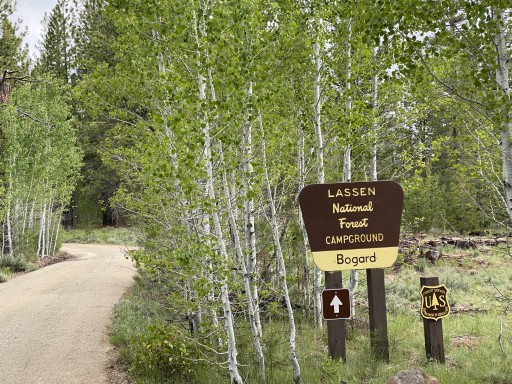
Traveling west on Highway 44, once you reached Pine Creek Valley, one cannot miss the Bogard Buttes. Located near the base is the Bogard Ranger Station and Rest Area. Nearby, is the hidden gem of the Bogard Campground.
So who was Bogard? Like so many natural features in western Lassen County, are named for Tehama County livestock operators, who used the region for summer grazing. John Jasper Bogard (1851-1895) was one of them. In the 1870s, Bogard had a camp at the base of the Buttes. On January 21, 1884 he sold this property to George Hoag for $600. On a final note, Bogard, while serving as Sheriff of Tehama County, died in a train robbery incident at Marysville, California in 1895.
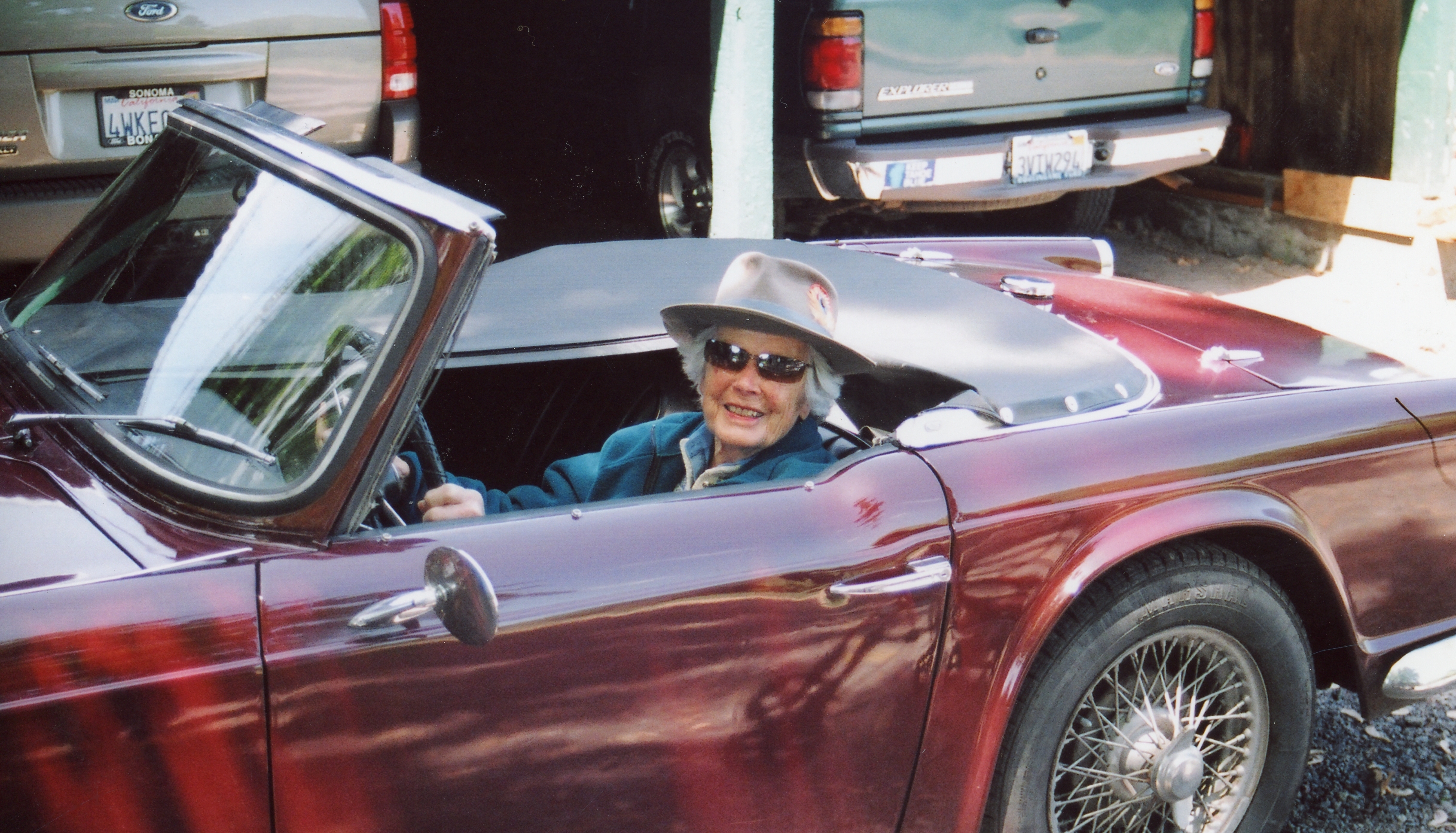
In 2003, on one of my visits to see Harriett, at her Rising River place, when she spotted my 1964 TR4 Triumph, she wanted to sit in the driver’s seat. After all, she was 100 then, so driving was not an option. Harriett, like her father, Clinton loved cars, and she had a special affinity for sports cars in her younger days.
Over the decades I have interviewed countless people on a plethora of topics. A lot of wonderful friendships were made along the way. During work on the Red River series, I enjoyed some wonderful lunches with Harriet Walker Henderson, daughter of Clinton and granddaughter of the founder of Red River, Thomas Barlow Walker, who preferred his initials, T.B.
Beginning in the late 1890s, Clinton and T.B. would spend years in California inspecting and purchasing timberlands. In 1909, the Walkers purchased 1,000 acres which included Clear Creek The crystal clear springs were a popular summer camping spot. Clinton Walker was also charmed by Clear Creek and routinely set up camp there while doing timber surveys of the region. Clinton’s daughter, Harriet, recalled many pleasant memories as a child camping there. Harriet stated at times they all got tired of eating fish caught from the springs. Then one day, her father surprised everyone when he returned to camp with a “mountain calf.” I was befuddled, after all I have spent my entire life in this country and part of an old ranching family and I had never heard of such creature. So I asked what was a mountain calf, Harriett replied in a whisper “Bambi.”
Operating a bath house to a full scale resort utilizing hot springs has in my perspective is a risky endeavor. When times are good, they are real good, but same applies to bad times, and in many instances its the low points where the operation shuts down. Some times revived and some times not.
Indian Valley Hot Springs at Greenville is a perfect example. Greenville was a thriving mining community during the late 1800s. The hot springs became a popular attraction and bathing place. As the mining activity dwindled by 1900, the bath house fell into disrepair and closed.
In the spring of 1926, B.C. Johnson decided to see if he could make a go of it. He spent six weeks in getting the property in shape. Johnson highlighted the fact, that not only could a person have an enjoyable soak, but one could also “soak” in the natural beauty of Indian Valley. How long Johnson operated it I do not know.
A partial view of Indian Valley in the 1960s.
For those interested, awhile back it was on the market with an asking price of $4.95 million. With last year’s devastating Dixie Fire that destroyed a large segment of Greenville, the value might have dropped.
A century ago, usually during the second or third week of April, the President of the United States would proclaim American Forestry Week. It was a venue to bring public awareness for the preservation of forest growth and the prevention of forest fires on public domain. Today, in the month of July is National Forest Week which promotes public awareness of national forest issues.
For instance, in 1924 California experienced a very severe drought and along with its worst forest fire season to date. It was noted that over a million and one-quarter acres were burned over by fires, most of which was caused by careless campers.
Locally, as the timber industry played such an important role in the region’s economy it was observed. It was a topic found at many civic organizations, as well as in the schools.
Sunflower demonstration on the A.F. Babcock Ranch, Bieber, 1923
During the 1920s, the Lassen Farm Bureau published weekly all the agricultural news of the county. All the rural communities had their own “Farm Center,” that held regular meetings to discuss a wide variety of topics. M.D. Collins who was the farm advisor then, kept very busy. Here are two items, that some may find of interest.
May 1926 – J.H. McClure, assistant freight and passenger agent for the Southern Pacific with offices in Reno, spent two days in Lassen County this week. Mr. McClure states they are now giving Lassen County service in freight that has never been excelled. Freight leaving Reno in the evening arrives in Susanville the next morning. Mr. McClure states that an iced car is leaving Susanville twice a week to carry Lassen County products to the lower country markets. The service is being pushed to the highest possible degree of efficiency and the farmers will be able this season to ship out their products under better conditions than of former years. The rate on potatoes was reduced last fall.
May 1926 – Jack Menser, Arthur Kenyon and Peter Gerig, committeemen for the Big Valley flour mill, report that the money is being paid quite satisfactorily and it is hoped the larger portion will be collected in the near future. Alfred Jacks is ready to make the mill purchase as soon as the money is available.
August 1926 – The Big Valley flour committee has collected $2,450 of the $2,500 required to get the mill. The mill is being ordered by Alfred Jacks who is constructing the new building in which to house the machinery. Big Valley will have another flour mill for operation this fall.
September 1926 – The Red River Lumber Company has built a new hay barn near the dairy buildings which has a capacity of 1000 tons of hay. The barn is practically full of hay at the present time. Other improvements have been made around the dairy barns and the market milk station. New corrals for the dairy cows and feed racks are being installed.
When the trustees of Lassen Union High School made the decision to a build a new school, time was of the essence. Glenn Wemple, who was on the board, informed me that they did not want to make the same mistake as what happened to the Orland High School. These types of school hold a tremendous amount of emotional attachment in their respective community. Orland moved slow and it created a great deal of anger and resentment.
Akol & Associates of San Francisco were hired as the architects for the new school. The estimated cost to construct a new campus on site of the existing was $2,317,410. It would be done in two phases. For Phase One, bids were required to be submitted no later than April 12, 1967. Five bids were received and initially the trustees took no action. A week later, the trustees rejected all bids. New bids were solicited for no later than May 15. On May 16, 1967 the trustees accepted the bid of C&J Construction Company of Reno, Nevada. On Friday afternoon, June 23, 1967 a groundbreaking ceremony was held behind the main school building.
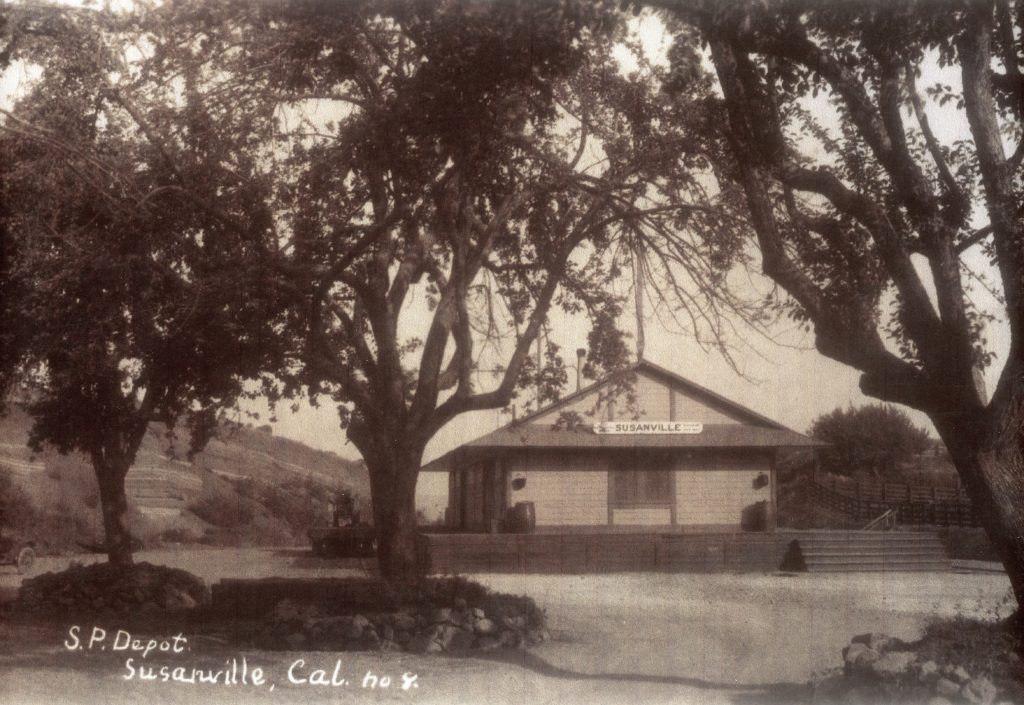
In the spring of 1913, the mighty iron horse finally arrived in Susanville and the community rejoiced. It was a long time coming, ever since the early 1880s they had done all they could to attract a railroad, citing its untapped timber resources as an incentive. For awhile there was a glimmer of hope that the NCO Railroad would extends its line to Susanville on its journey north to Oregon. That was shattered when the railroad in 1887 decided to bypass Susanville and build its line along the east side of the Honey Lake Valley.
With the arrival of the Fernley & Lassen Railroad, in 1913, the residents wondered what kind of depot they would have. As far as the Southern Pacific, owners of the line, were concerned it would be a modest structure, since in their opinion, Susanville was a small community that had no industry. A wooden 26 foot by 62 foot depot was built, being part passenger depot and part frieght shed. It opened to the public on September 14, 1913 with C.B. Morton’s the first depot agent.
P.S. For those who want to know, yesterday the cast came off and pins removed, too. It will take time to fully function again, but its a start in the right direction. Thank you Dr. Mark for everything and for most pleasant and memorable office visit yesterday.
In January 1926, the barbers of Susanville, not to be confused with the famed Barber of Seville, had an interesting get together. The barbers consisted on Ray Ashton, E.M. Lamson, Andrews & Thurmond and the Kester Brothers. They agreed to charge a uniform price. As of February 1, 1926, all haircuts would be 65 cents; children under the age of 12, 50 cents and shaves 35 cents. In 1900, a Susanville barber charged 25 cents for a hair cut and 5 cents for a shave.
Fast forward to 1941 when the barbers of Lassen and Plumas Counties organized a Journeymen Industrial Union of the AFL. The rates they charged were the same as the ones set by the Susanville barbers in 1926.