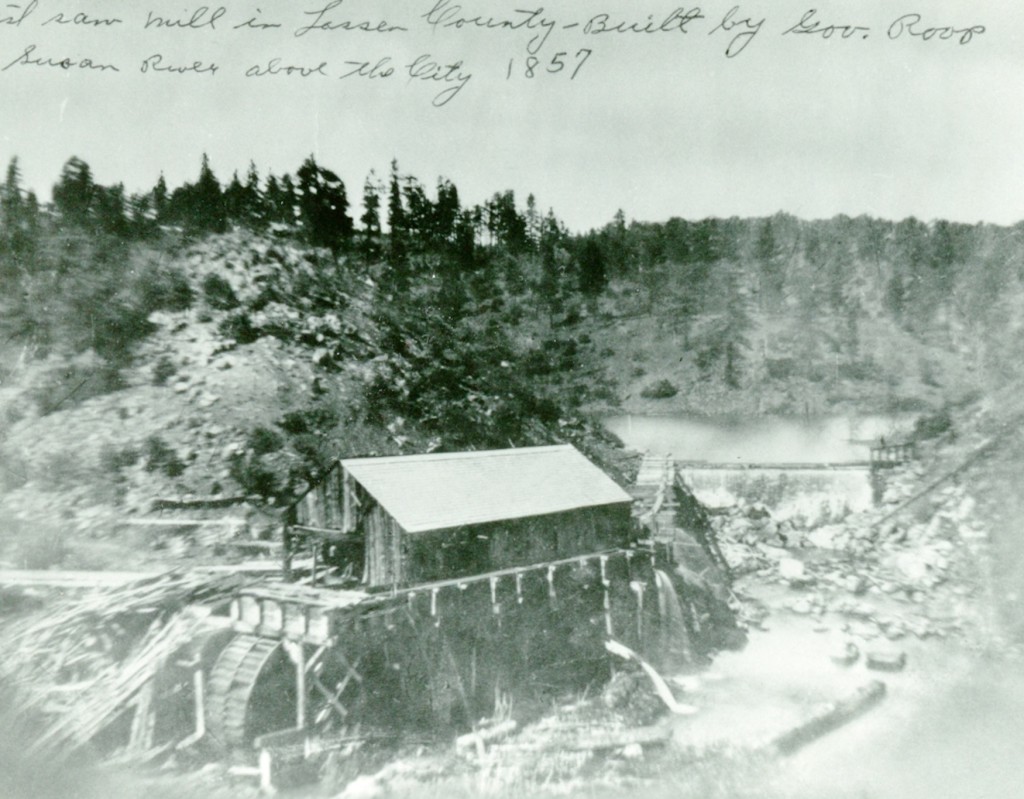
Some one wanted to know about dams on the Susan River in the canyon. The first dam was constructed in the spring of 1857and was located just below the current site of Hobo Camp. The dam powered a sawmill. The mill caught fire in the spring of 1868 and was destroyed, as well a portion of the dam.
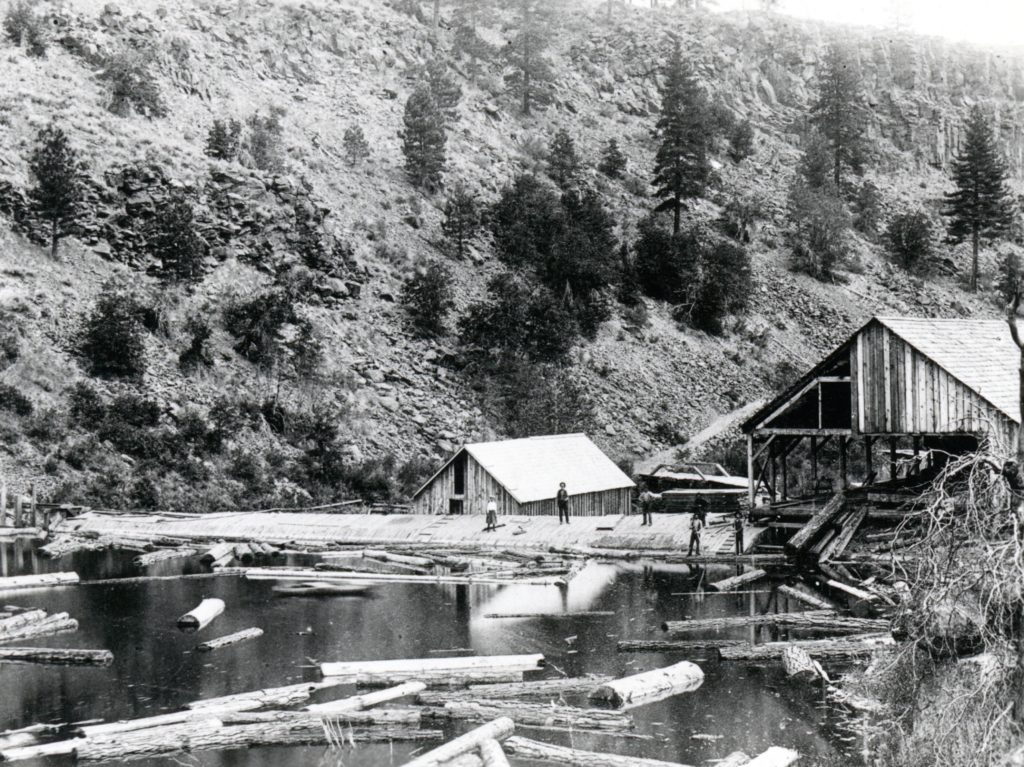
Bremner sawmill, Susan River Canyon, 1891. Courtesy of Betty Barry Deal
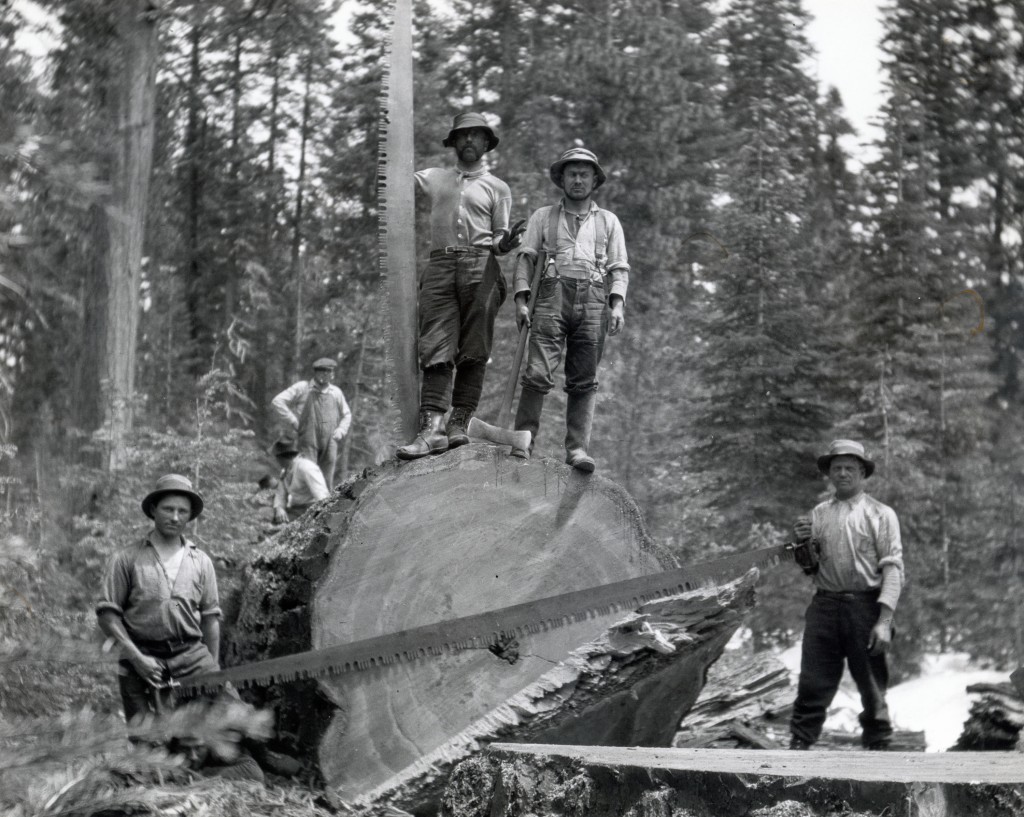
The Bremner dam was constructed in 1886 on the Susan River about a half-mile above Hobo Camp. It was an impressive structure being 250 feet long and 25 feet high. It created a reservoir in which water was backed up over a mile. The dam was constructed to provide waterpower for a sawmill, and later a power plant was added. These were destroyed by fire in 1894. The sawmill was never rebuilt and the power plant located downstream where a flume from the dam provided the waterpower. By 1900, this too, had gone by the wayside, and residents were concerned about a possible dam failure, flooding people downstream. In 1906, some unknown party attempted to blow up the dam with explosives, but not familiar with them, did little damage. Between the railroad construction, in 1913, along with time the dam slowly deteriorated. During the drought of 1977, the foundations of the dam were revealed.
This was an interesting gathering of Honey Lake Valley pioneers. Seated Left to Right: Robert Johnston, Loyal Woodstock, Frank S. Strong, William H. Jenison, Frank Thomas, Alexander T. Arnold and Eber G. Bangham.
Standing Left to Right: John Garrett, Wright P. Hall, John Davis, Abraham L. Tunison, Ephraim V. Spencer, William B. Long, Thomas Montgomery and Dr. R.F. Moody. Photograph circa 1892.
Many years ago, I visited with Eleanor Vandeburgh who was a volunteer at the William H. Pratt Memorial Museum in Susanville. We had a. discussion about those who came west. Eleanor commented that the weak in mind never contemplated to endure the hardship to travel west; those who were weak physically died along the way and only those of a strong mind and physical traits survived. It is an interesting concept. Eleanor, however, left out another factor. Continue reading Those Hardy Pioneers→
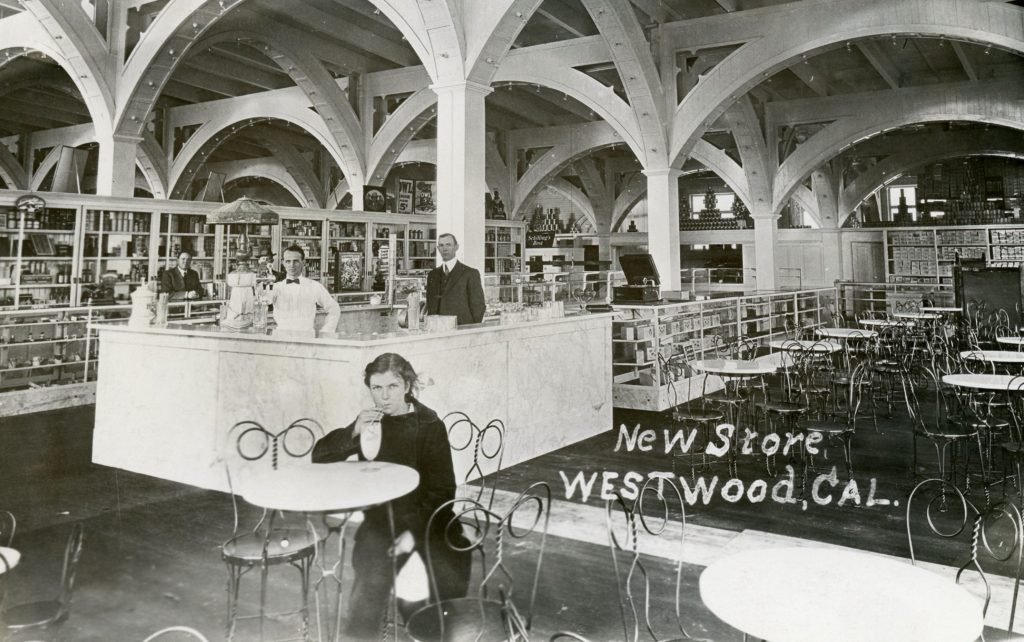
The soda fountain in the Big Store. Westwood, circa 1917
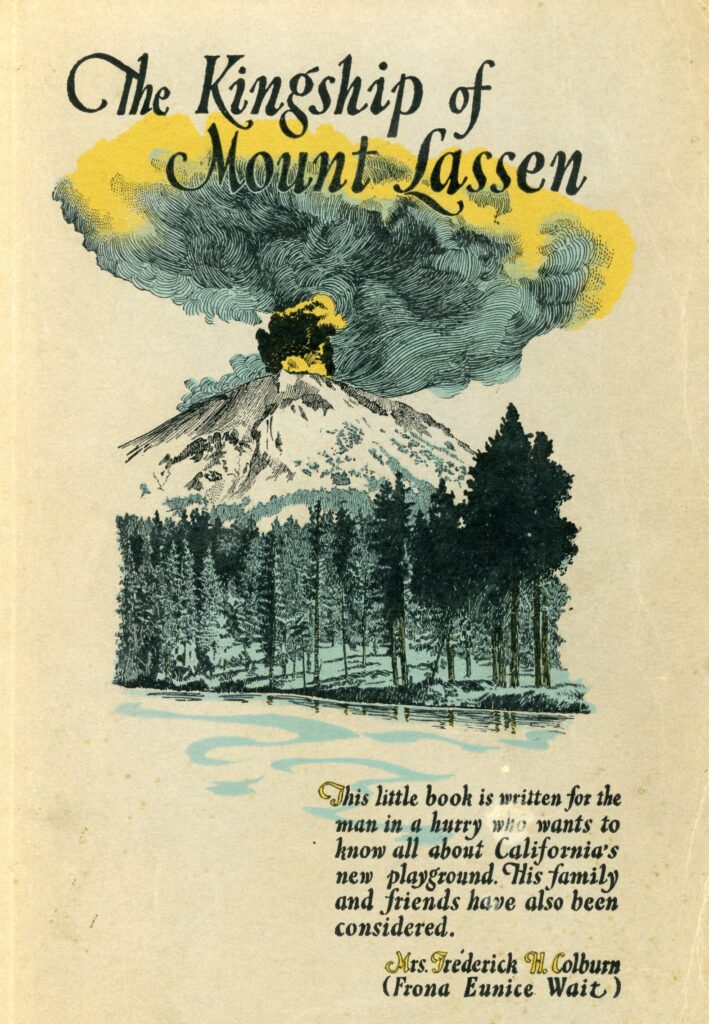
Awhile back I wrote about Frona Colburn’s’ 1922 book The Kingship of Mount Lassen. As promised from her book, is her account of Westwood.
”Like a trip on the magic carpet is the transformation wrought at Westwood, a model town in Plumas County, set in the heart of a virgin pine forest skirting the southern base of Lassen Peak. All about one clean, sweet smell of newly cut pines, and the whole atmosphere is one of humming activity among an intelligent and contented populace. The five thousand inhabitants live in modern homes in a natural forest park. An eye for the beautiful has left the big white pines standing wherever possible, even along the graded streets, and the approach roadways leading into and out of town.
“It was the author’s good fortune to arrive at Westwood at noon, hot, thirsty and covered with volcanic dust. Imagine the surprise and joy of finding an up-to-the-minute department store—large, airy and cool—where a delicious crushed pineapple ice cream soda all but saved one’s life. And the price, fifteen cents! This drink was served with all the daintiness of a metropolitan soda fountain, by a chap in white coat and apron spotlessly clean, and with manners to correspond.
Westwood has just ‘growed up’ in the heart of the woods, sixty miles from Nowhere, and is the last word in a logging camp. What gave it impetus? The constructive imagination of its founders.
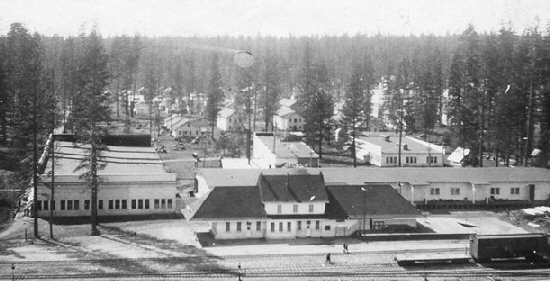
Westwood, 1915. Courtesy of Leona F. Byars
“It is the pride and glory of the Walker family to have a nearly a perfect plant as it is possible to create and this desire includes evrything connected with the industry of lumbering. The whole atmosphere of Westwood is one of work. No loafers are permitted to stay long enough to breed dissensions. Every person bears his or her share of the work to be done, consequently there are no paupers and no destitution. Nor is there a shack in the town.
”Westwood baseball teams are not only natty in appearance but they can and play ball. Like the neatly-uniformed band they are an inspiration to all the surrounding countryside. Westwood musicians are in demand wherever good music has an appreciative hearing. The men at the head of the Red River Lumber Company not only know how to live themselves, but are willing that others may share in benefits derived from an intelligent, constructive attitude toward a big problem—that of pioneering in and out-of-the-way neck of the woods. The situation at Westwood would have delighted the soul of Peter Lassen, who was something of a sawmill man himself, and had a true woodsman’s love of trees.
“The Red River Lumber Company gives the following as their attitude toward the industry:
”It is our hope, by forestry practice, to so conserve the trees spite of our cutting (the largest of its kind) the actual amount of timber will never grow less but will remain forever a permanent thing of beauty, a field of labor and a source of supply.”
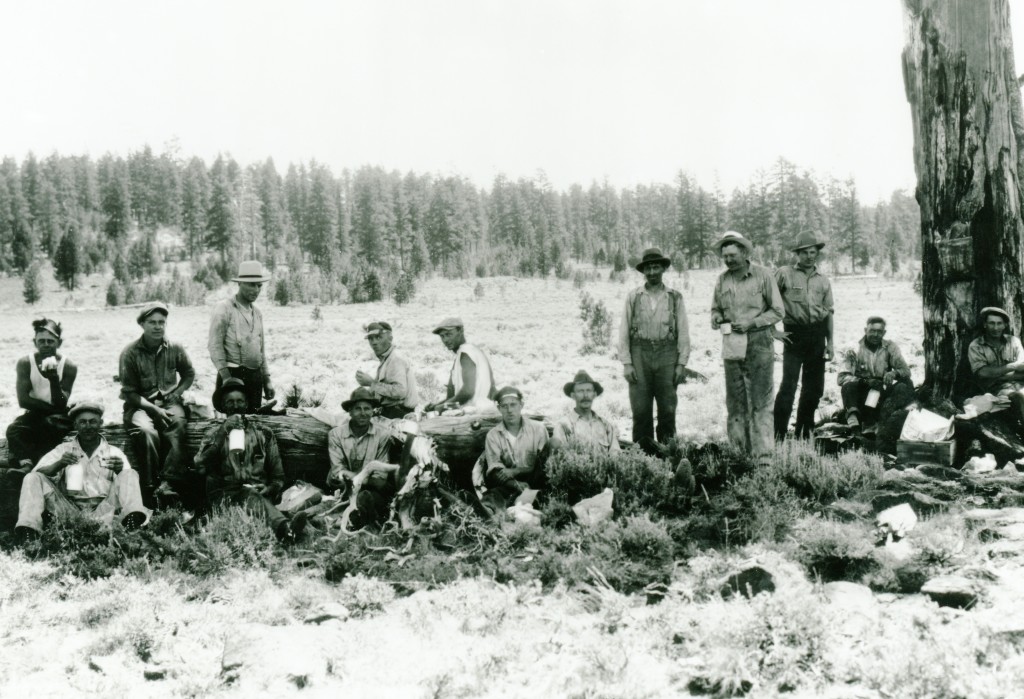
Loggers having lunch, 1932. Courtesy of the Fruit Growers Supply Company
The most important component to logging camps of yore was food. It could make or break a camp. After all, loggers worked long hours in a very labor intensive environment. Food was one item they looked forward. If it was not up to par, they quickly moved on to another logging camp. Breakfast and dinner were legendary. These meals were served in the logging camp dining hall.
What about lunch? It was not practical to bring the loggers back to camp to feed them lunch. Leonard Uhl, who worked at Fruit Growers Camp 10 in the 1940s, provided insight as how lunch worked. Just off the end of the main dining hall there were tables loaded with packaged food. After breakfast each man would get up and grab a brown bag (or two or three) and build his lunch to suit himself Uhl said.
”One table had three different kinds of sandwiches which were always excellent (with the exception of the ones with thin sliced bologna but you didn’t need to take them if didn’t want to). Another table had all kinds of pastry. made fresh by the camp baker, who was an artist at his trade. There were two or three different kinds of pie, fresh baked glazed or sugar doughnuts and cookies, cake etc. On the third table were different kind of appetizers and knickknacks such as pickles, olives, pickled peppers, bananas, oranges, apples and whatever fruit might be in season. There sure was no way a logger could go to the woods with a lunch he didn’t like without blaming himself” according to Uhl.
California did not know what to think of T.B. Walker and his Red River Lumber Company timber acquisitions in Northern California during the early 1900s. Walker at times was coy with the California newspapers about his intentions. This was due in part that the California operations would be run by his sons, and not by him.
Conservationists and farmers of the Sacramento Valley were concerned should Walker use the same timber practices as employed in Minnesota as it would be detrimental to the environment. They were concerned of the climate change effect when the mountains were denuded of trees, impacting snowmelt and erosion.
To calm the public fears, Walker stated: “I will make my timber a perpetual resource. When I begin to manufacture lumber, my saws will cut timber only as fast as nature reproduces it.” When questioned why he did not follow the same practice in Minnesota, Walker stated: “Conditions are far different there. Their excessive taxation forced me to cut the timber as fast as possible. Minnesota land is worth more for agricultural purposes after the timber has been cut off. In Shasta County, the timberland is not worth 50 cents an acre after the timber is cut off.” In conclusion, Walker stated he could do a better job conserving his vast timber holdings than the government.
A native of Vermont, William Herbert “Herb” Edwards came to Susanville in 1868 with his parents at the age of 13. As a young man, in 1886, he ventured out on his own to Los Angeles. While there he worked briefly for the Los Angeles Police Department. After that he opened a butcher shop. In1887 he contracted tuberculosis. Due to his poor health he returned to Susanville to recover. In 1888, he married a young Milford woman. by the name of Marion True.
The young couple made their home in Susanville, where he opened a butcher shop. In the summer of 1900 there was a strong movement to incorporate Susanville. In August five city trustees (known today as council members); a city clerk; a city treasurer and a town marshal were elected. Edwards was that marshal making him the town’s first law enforcement officer. It was a two-year term and he won re-election in 1902. He did not run again and in 1904, he carried on with his own private business activities, though at times he did stints as the town’s nightwatchman.
By 1911, the effects of tuberculosis had so damaged his lungs, that he became an invalid. He passed away in 1914 and is buried in the Susanville Cemetery.
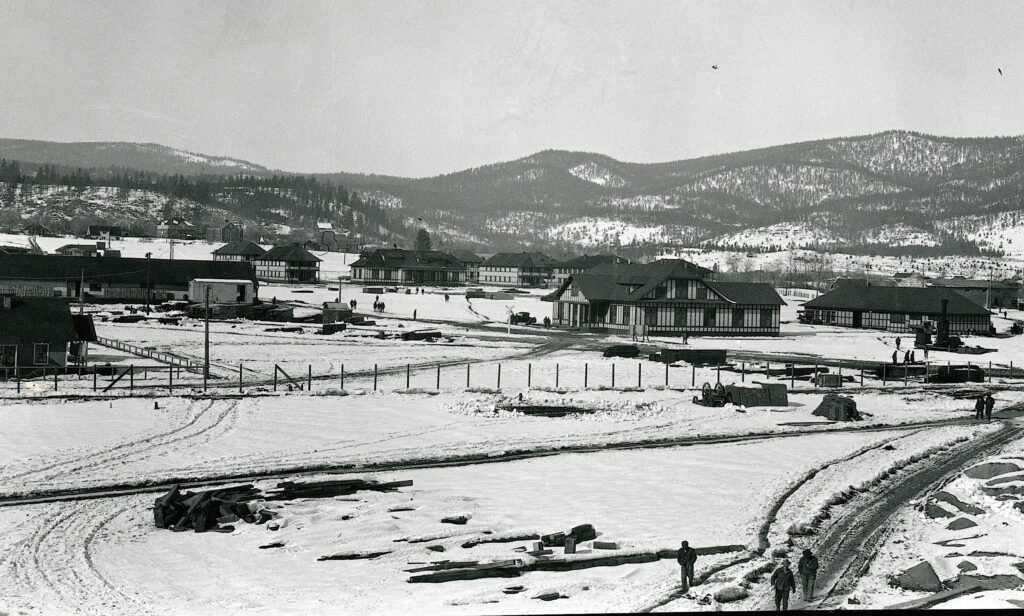
This is something a little bit on the lighter side. Personally, I happen to like this view of Fruit Growers Supply Company of its office/residential section, prior to the construction of its famed three-story Story Club. From the angle it was taken, and probably from the mill’s smokestacks, there is no indication in the background that Susanville exists. Today, the site is best known as Riverside Park.
This is Mrs. Frederick Coburn’s (nee Frona Eunice Wait)1922 book about Lassen Volcanic National Park, which she dubbed as “California’s Newest Playground.” It is a somewhat whimsical account about the Lassen Peak region, while interspersed with some dubious historical claims, it is an interesting read nevertheless.
While writing about Peter Lassen she raises the age old question, “Who killed Lassen?” She includes some interesting citations on that topic. In 1917, she was also a participant at the new Lassen Monument dedication that she provides an interesting account of that event, not found elsewhere.
Towards the end of the book, she provides her experience as a visitor to Westwood. That excerpt will appear in a week or so.
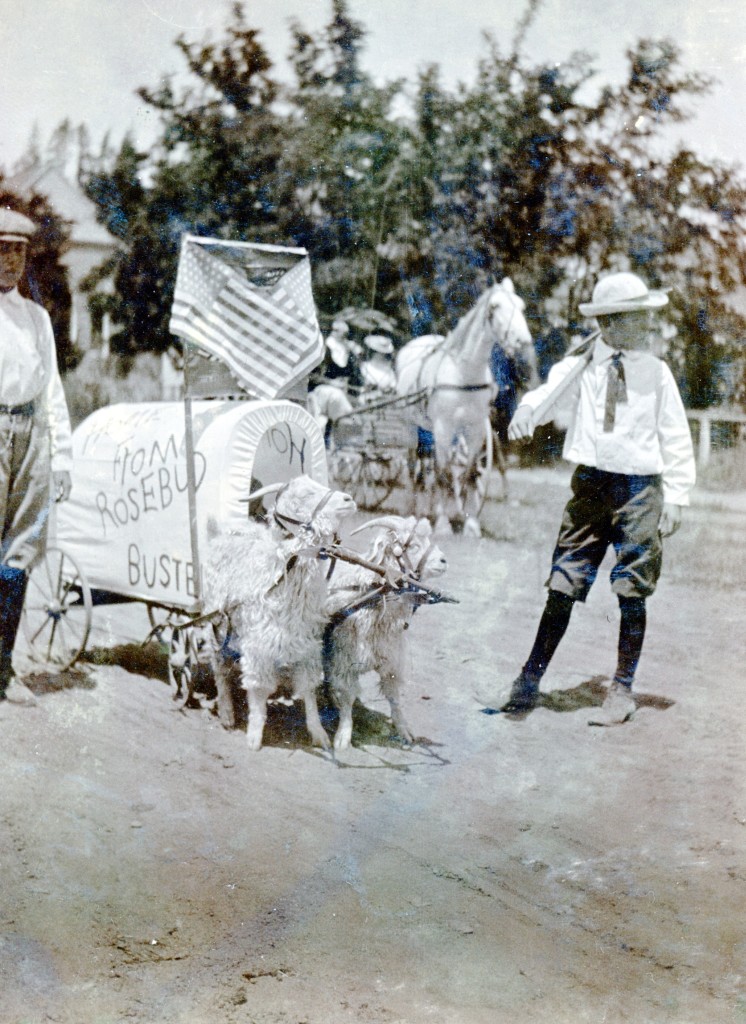
A 4th of July 1908 entry in the parade held in Susanville. Note the writing on wagon “Home from Rosebud Busted” Courtesy of Lola L. Tanner
In 1906, for the first time since the 1860s, Honey Lakers were excited about mining in Nevada. Of course, one Honey Laker, E.C. Brown had done very well in Goldfield. It was not the new mining discoveries of Goldfield and Tonopah, but one due east of the Honey Lake Valley on the eastern edge of the Black Rock Desert–Rosebud, in Pershing County.
It all began in August 1906 when three prospectors from Goldfield, Nevada discovered a gold vein in the Kamma Mountains that purportedly assays ranged from $1,500 to $30, 000 per ton. A mineral report issued from Humboldt County would later state: “This was followed by a senseless boom, in which, as usual, folly played eagerly into the hands of fraud.” Continue reading Rosebud, Nevada→
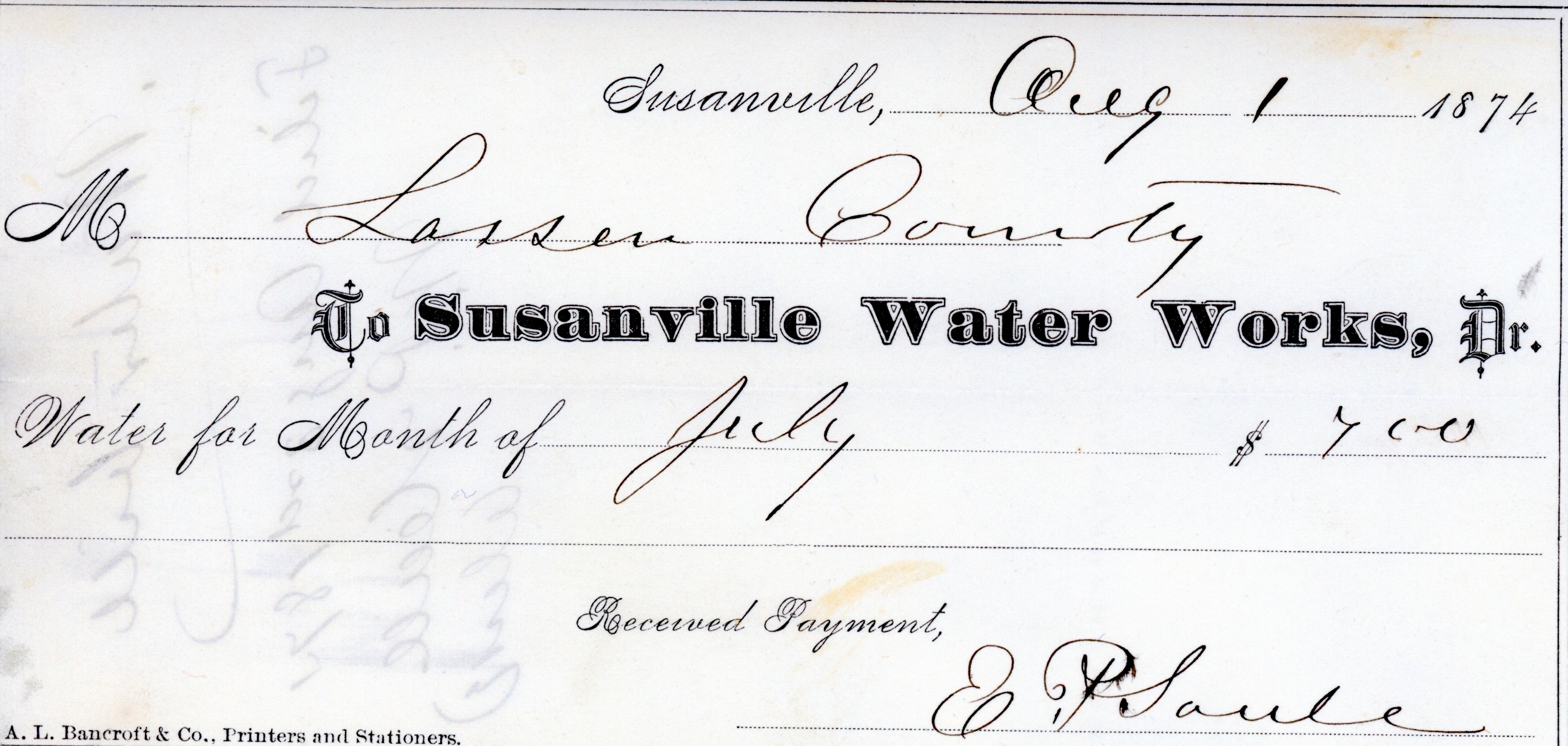
In 1928, it was announced that Minneapolis firm W.B. Foshay Company was in negotiations to by Susanville’s municipal water company. This, of course, brought up the usual debate that the City should own it. The town’s water supply was a hot topic. What is interesting, the Lassen Mail published an account on the origins of the water supply. The newspaper did not cite an author or source. However, I found it of interest, and thought others would too.
”The first attempt of supplying the settlement with water was made by Governor Roop, who constructed a rude system by laying pipes from Piute Creek to a tank located near the center of population. The ‘pipes’ were the trunks of trees bored out after the fashion then employed in the mining operations and in other settlements of the state. Those who needed the water went to to the tank and took what they needed. For this service they paid a small rental—when the governor thought about collecting it, or unless the user gave him a hard luck story and begged off.”