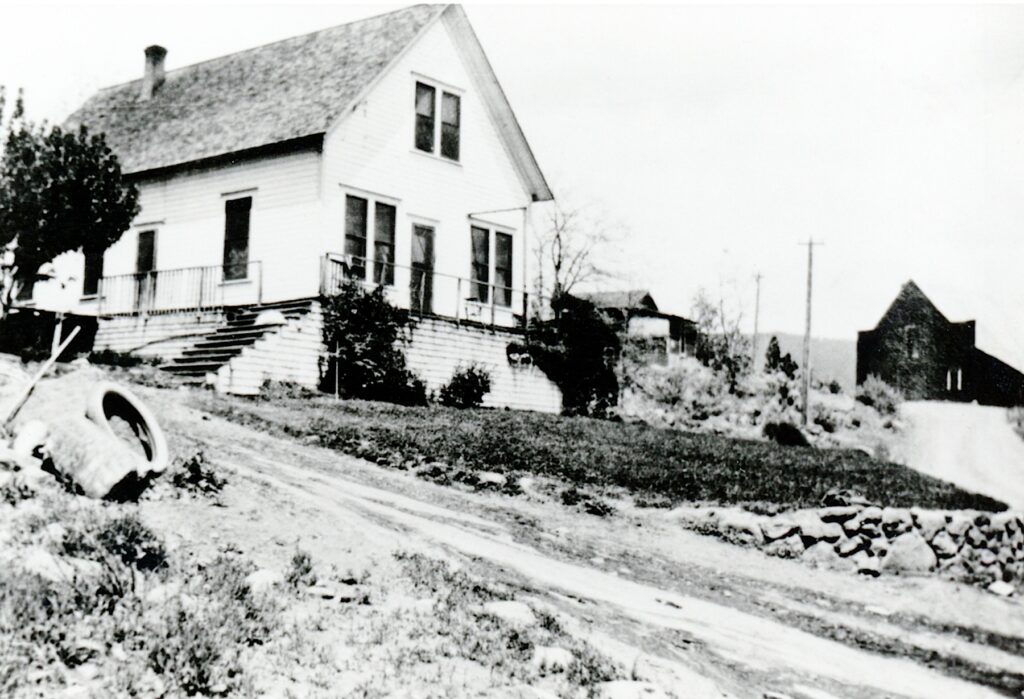
160 North Pine Street, Susanville, 1921–Lola Tanner
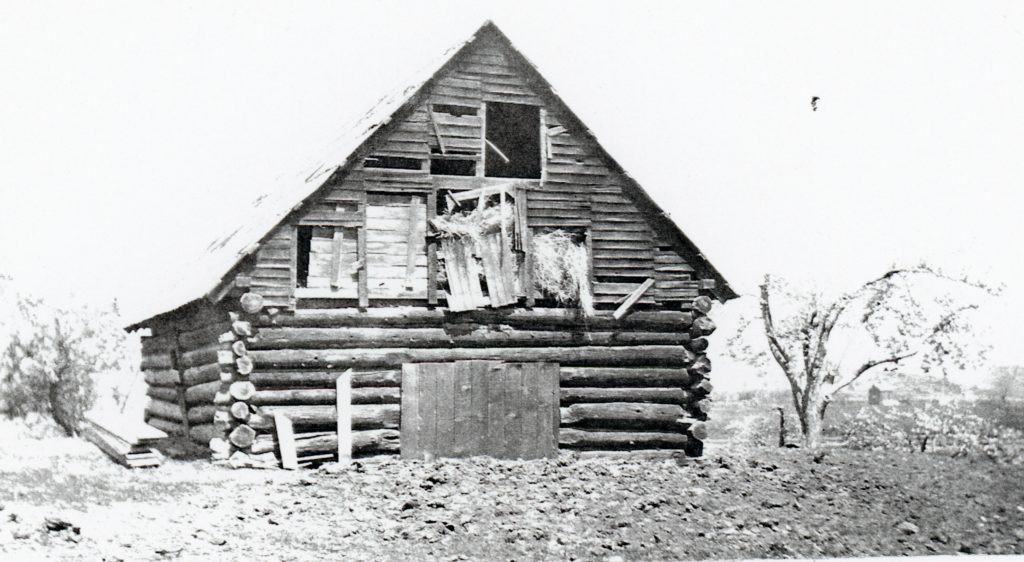
For the remainder of the month of August, I have selected a random bunch of photographs for the Tuesday Tidbit feature.. The house at 160 North Pine Street, Susanville is situated at the intersection of Pine and North Streets. It is so situated that the view from the house looks directly down North Street. It was the original home of George B. Long and in the 1990s it was still owned by descendants. Of course, something that is a century old does experience modification. While that is the case with this residence, it still retains its original integrity.
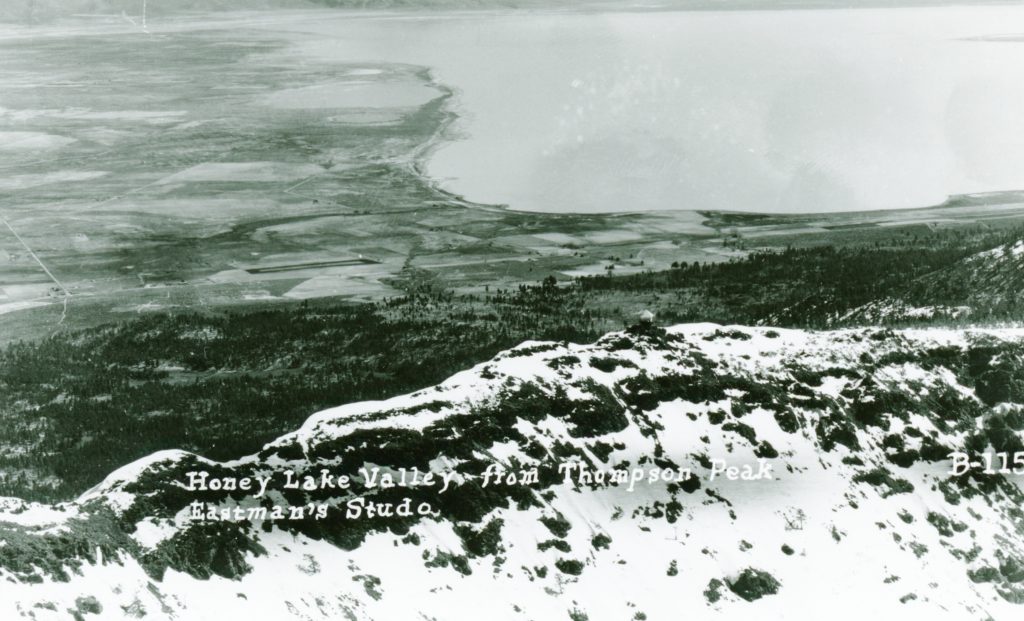
Awhile back I received an interesting question about Honey Lake and the latest theory why the lake goes dry. More on that later.
In 1859, the settlers of Honey Lake were taken back when Honey Lake went dry. After all, in 1856, Isidore Meyerwitz and his Indian wife drowned in the lake while boating. Of course, various folks came up with theories as how this natural event came to be. One was a mythical creature Guyas Cutas that swallowed up the lake. The Quincy newspaper the Plumas Argus stated it was remarkable a lake 20 miles wide and 40 miles long should disappear in such a “inexpressibly short time.” Many agreed that the most logical one was the water sunk into vast fissure under the lake caused by an earthquake. It is interesting to note that no earthquakes had been reported in the area.
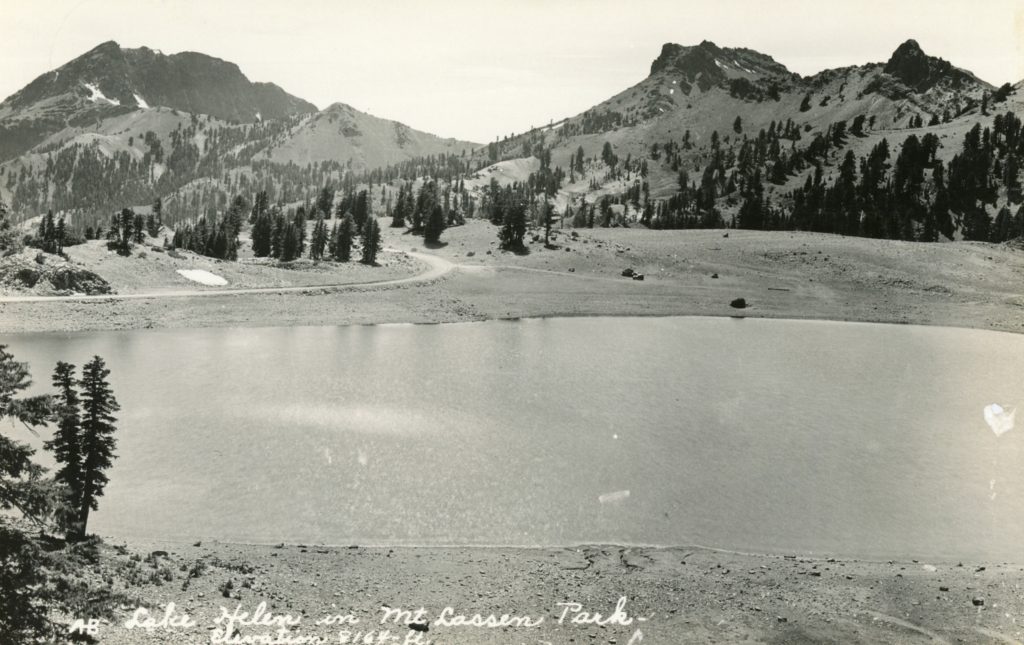
Honey Lake, June 26, 2021—Larry Plaster
This brings us full circle as to the latest theory I was told.by a former Herlong resident of the 1960s who was told the eruption of Mt. Lassen sucked Honey Lake dry. This is a new one for me.It should be noted that during the eruptions of 1914-1917 Honey Lake remained full. Then, of course, Chester residents believed that the filling up of Lake Almanor caused Mt. Lassen to erupt in the first place.
In reality, in wet years the lake is full and dry years, well the lake goes dry.
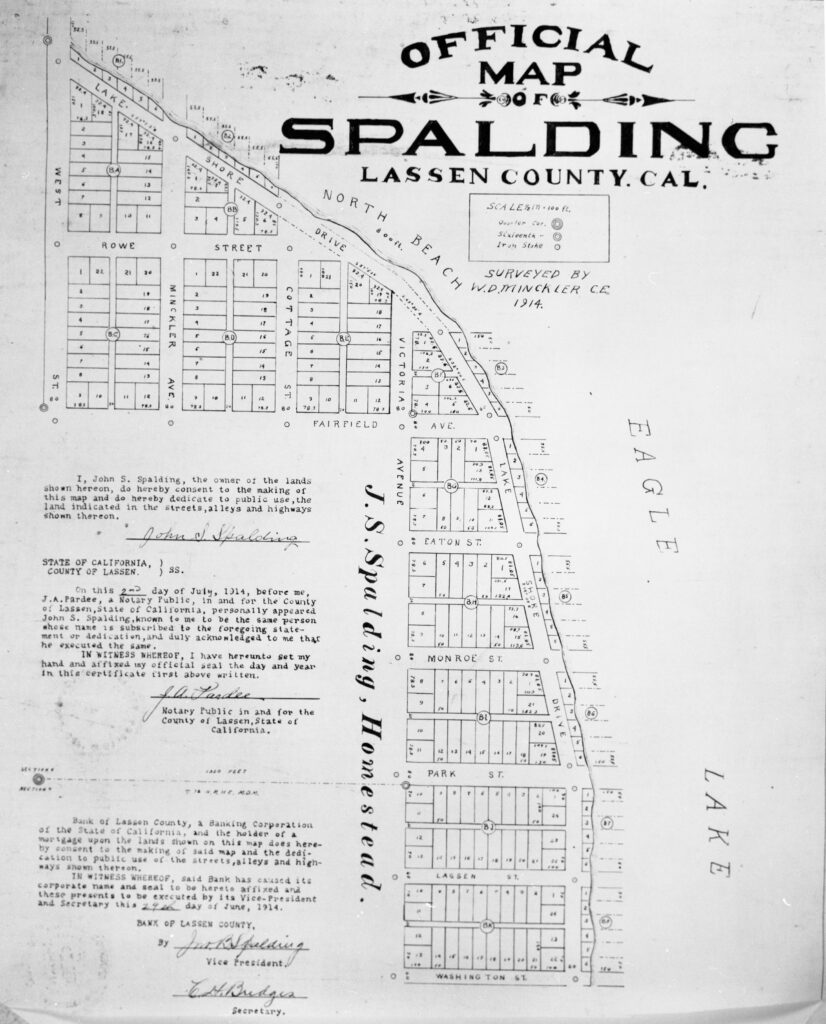
The town of Spalding was the predecessor of today’s Spalding Tract. In February 1914, John S. Spalding announced his intention to subdivide his 420-acre ranch on the west shore of Eagle Lake (near Pine Creek) for a summer resort and town.
William D. Minklcer surveyed and plotted the new 200-acrre townsite of Spalding and recored his map with the County of Lassen on July 6, 1914. Streets and alleys in the town were dedicated to the County of Lassen, with Spalding obtaining a performance bond as required.
The interest generated by Susanville newspapers made it appear as though the lots would be sold out quickly. To the contrary, only one lot was sold in the Town of Spalding. On July 10, 1914 John S. Spalding sold Lot 1, Block Q to Susanville resident Asa M. Fairfield for $10.
For whatever reason, all the hoopla regarding the new Town of Spalding subsided as quickly as it began. It should be noted that there was a lot going on with the new establishment of the mill town of Westwood and the Mt. Lassen eruptions. In 1917, John Spalding sold his holdings to hid daughter and son-in-law Zella and Ben Yeakey. In 1920, the Yeakeys transferred the property to Will and Hazel Spalding, brother and sister-in-law of Zella.
In the fall of 1924, Spalding filed a petition in the Lassen County Superior Court to dissolve the townsite. It was granted. Will Spalding had other plans for a much larger subdivision that we known today as Spalding Tract.
The Park Fire has crossed Highway 172 in upper Mill Creek and south of Lassen Park. Information about damages or even general particulars are scant.
State Highway 172, is not that well known to many. It is also a very short highway. It is really an old remnant Highway 36. When the highway was realigned over Morgan Summit, the old route became Highway 172.
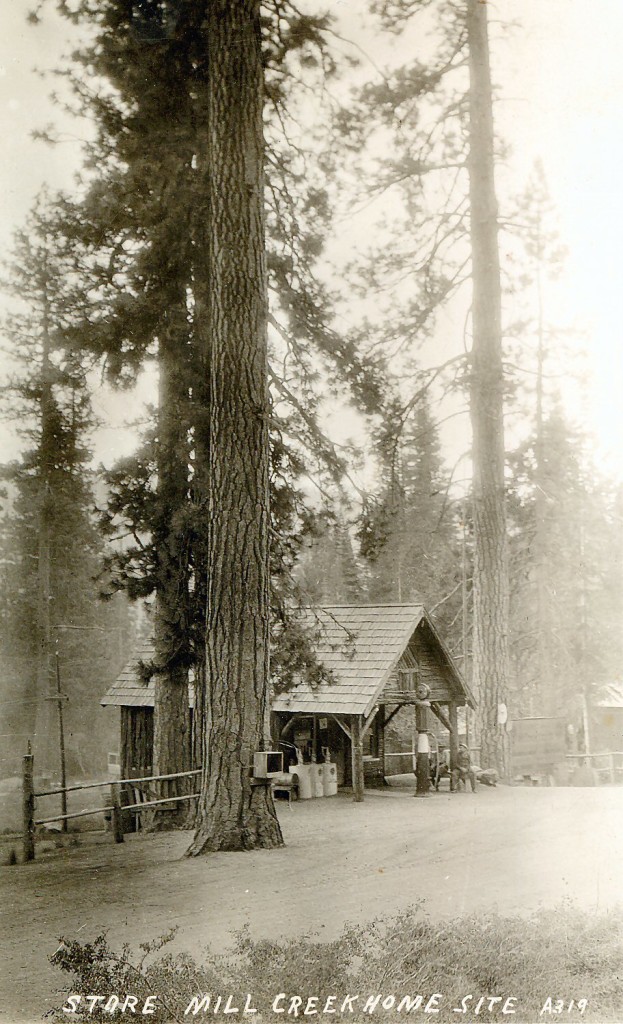
Those who do take the route, usually are headed to the Mill Creek Resort, that is popular dining spot for locals. The resort originated as the Mill Creek Campsite by the Lassen National Forest. In 1924 the forest service surveyed for a planned 25 summer homesites, a store and resort. E.J. Foster and Leon Cordy of Cottonwood (Shasta County) built a store and several cabins. The forest service would expand the summer homesites to 118.
Being at the right place at the right time makes a big difference. The same goes in the opposite direction with bad timing. Lassen Volcanic National Park’s creation on August 9, 1916 was a perfect example of bad timing. Before the park observed its first anniversary the United States was at war with Germany, which affects set off World War I. Park funding, especially a new one was not high priority. In 1919, at the conclusion of World War I an economic crisis was looming on the horizon—a recession. It did not help matters, that with exception of Lassen’s volcanic eruption few people in Congress knew anything about the place. At least the park had a friend by the name of California Congressman John Raker. Raker lobbied hard to obtain the needed appropriations for Lassen Park and by the mid-1920s the spigot finally opened and money for park development finally came forth. In 1925, Raker led a special congressional delegation to visit the park and a stay at Drakesbad. It was successful, but Raker never lived long enough to see the fruition of his hard work, as he passed away in 1926.
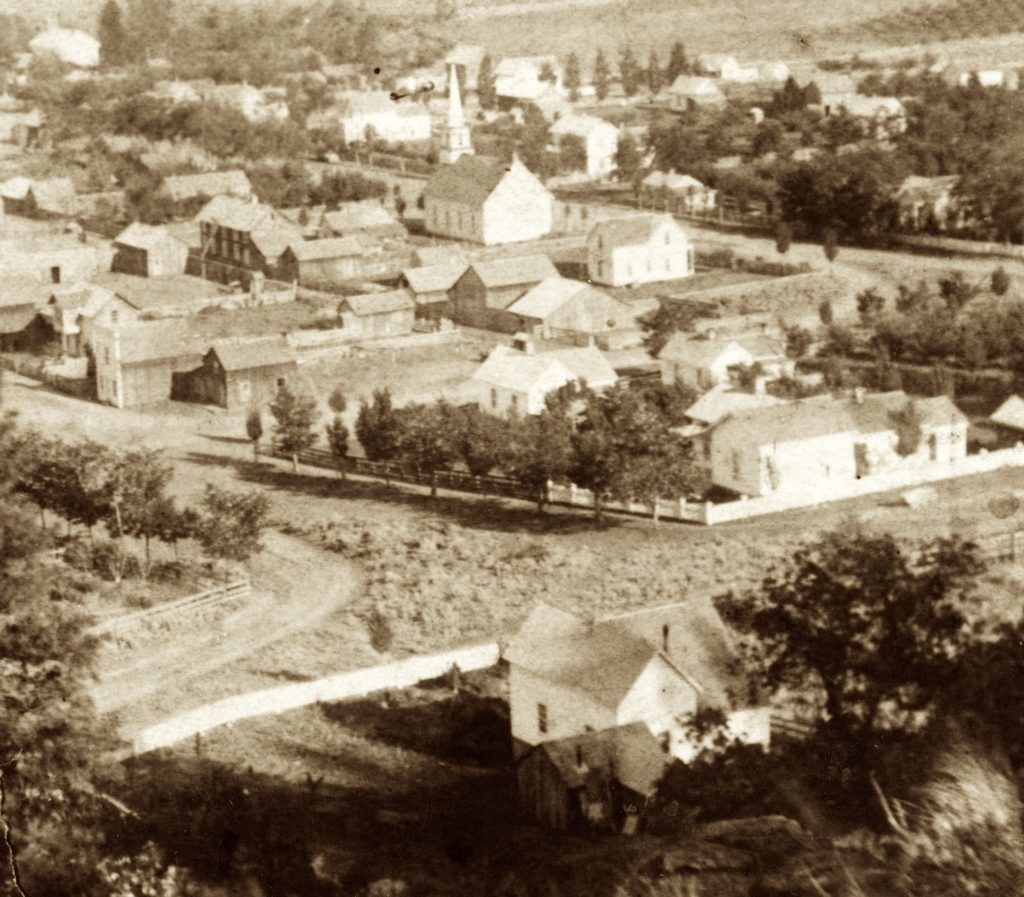
Before the City of Susanville was incorporated, it went through its own evolution. First as a trading post, then a village. There were some citizens that were not pleased that the Lassen County Board of Supervisors dictated what the town could or could not do. Fire protection was a major concern, especially after the 1882 fire that destroyed a large portion of the town’s business district. The citizens wanted to form a fire protection district. To do so, an actual township needed to be created with a set of boundaries and a population count. With proposed boundary set, Susanville’s first special census was enacted. On April 8, 1884 a census was held and revealed there were 586 inhabitants. Thus, the foundation was laid for what eventually would become the incorporated town of Susanville in 1900.
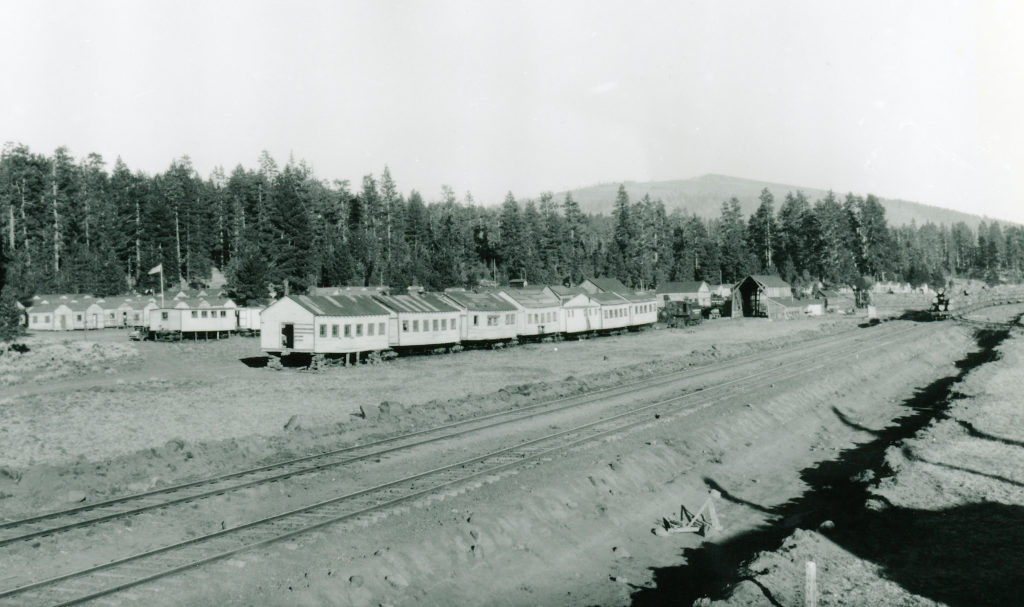
Fruit Growers Supply Company, Camp 10, Pine Creek Valley, 1932.
Fruit Growers logging Camp 10 is unique that it lasted over twenty years and did not shut down until the end of the 1952 logging season. The camp was located at the northern end of Pine Creek Valley, near the creek. An interesting note, its water supply came from Bridge Creek Springs.
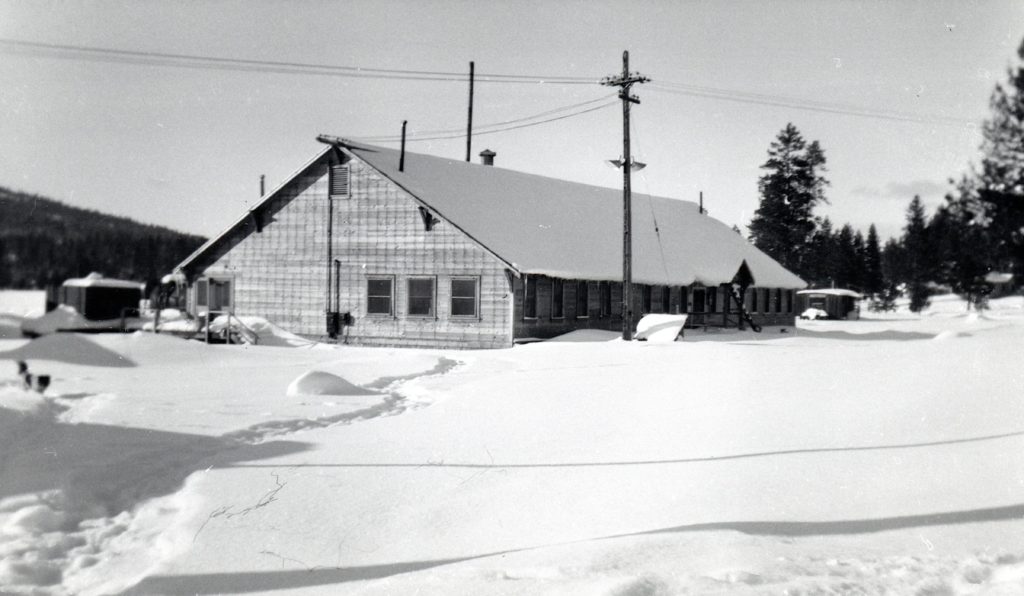
Camp 10, Cookhouse, December 15, 1950.
Camp 10’s remnants differed from that of Camp Harvey. One distinction is the camp was situated on both private and public lands. Also, due to the fact of its longevity there was bound to be lasting impacts. While there are structures at Camp Harvey, there are none to be found at Camp 10. Foundation remains of other residue are present.
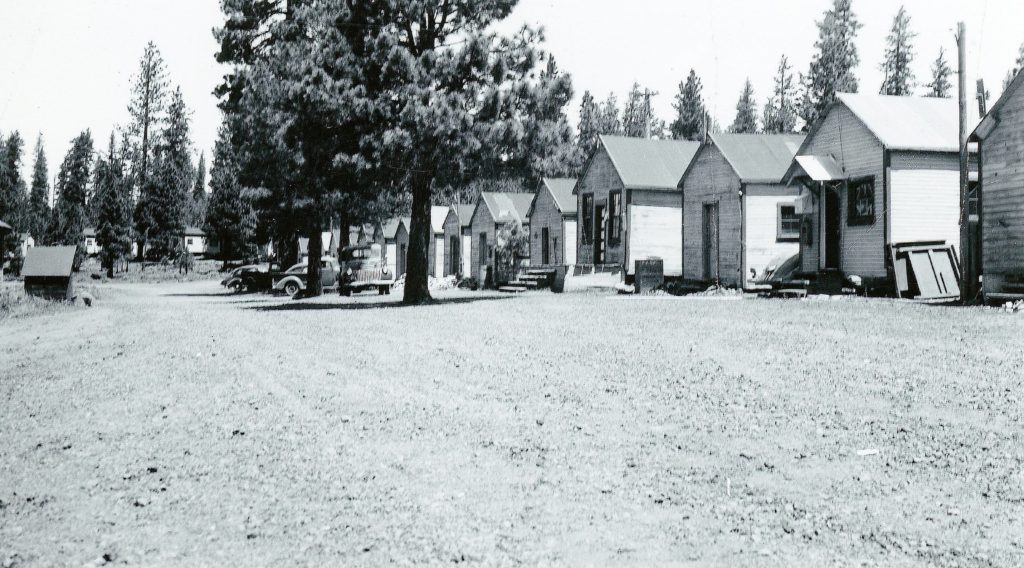
Camp 10, 1950. The family cabins can be barely seen in the background.
The cabins were brought into Susanville and sold. There are a few that can still be spotted around town. Seasoned residents may recall a row on such cabins near Piute Creek and Roop Street that Dan Marmo rented. Dubbed by some as ‘wino shacks’ they had no plumping or heat. Some may know the location as the residence of Al and Joy Robbins, 713 Cherry Terrace, Susanville.
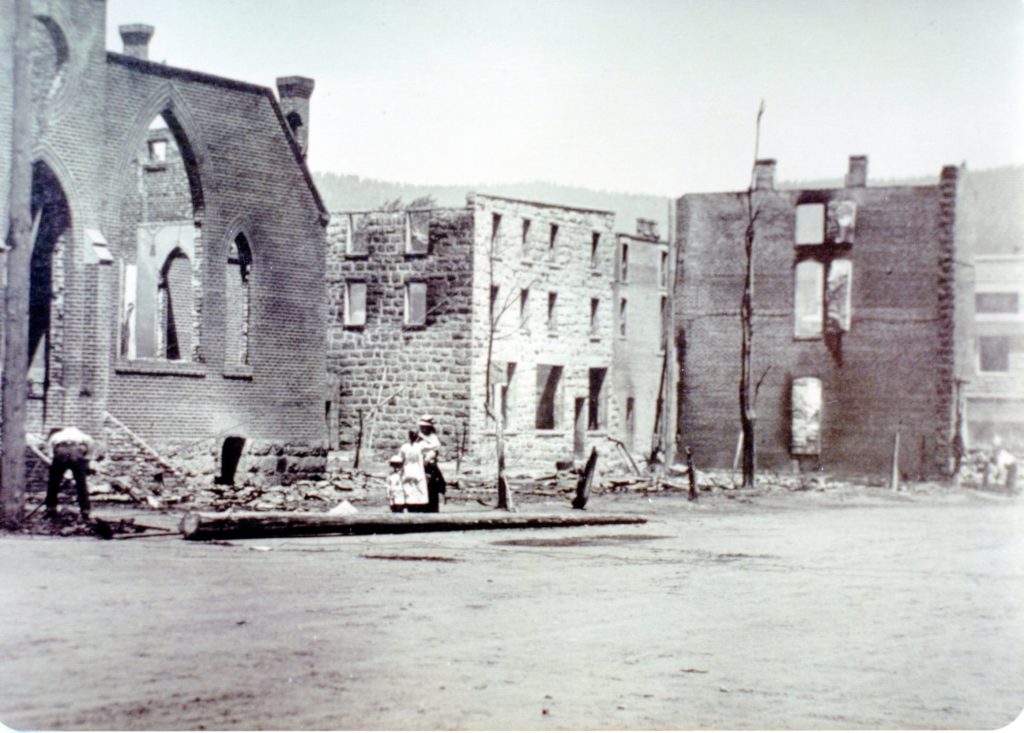
The ruins of the Methodist Church and Emerson Hotel, August 6, 1915
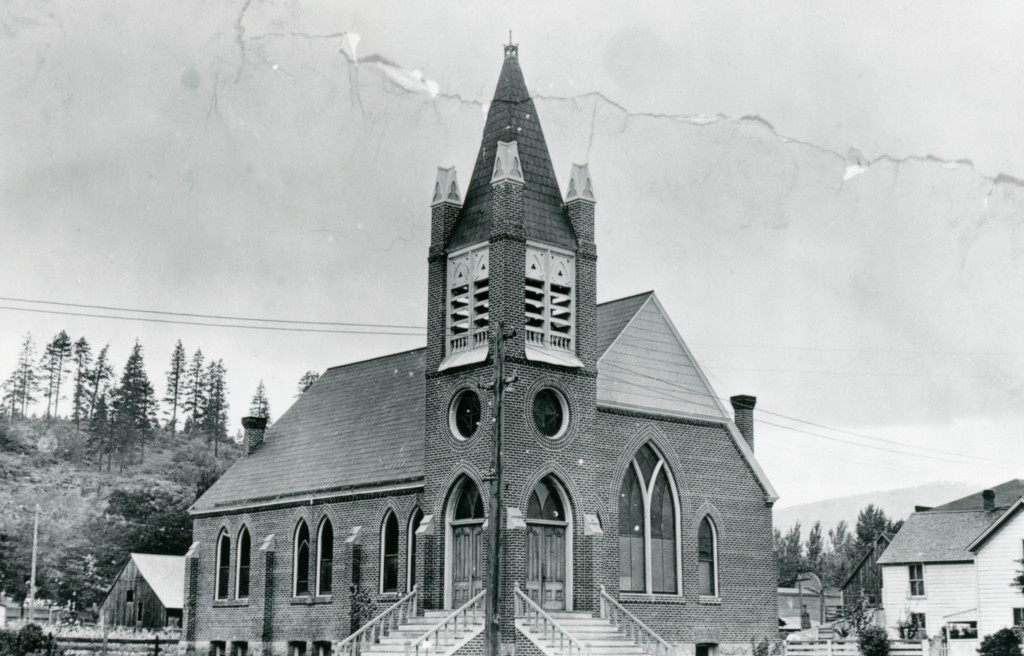
On August 5, 1915 a devastating fire destroyed the Emerson Hotel, Hyer House Hotel and the Methodist Church. between Main and and Cottage Streets. The three-story Emerson Hotel would not be rebuilt. The Methodist Church on the other hand were able to salvage the burnt out hull of their building.
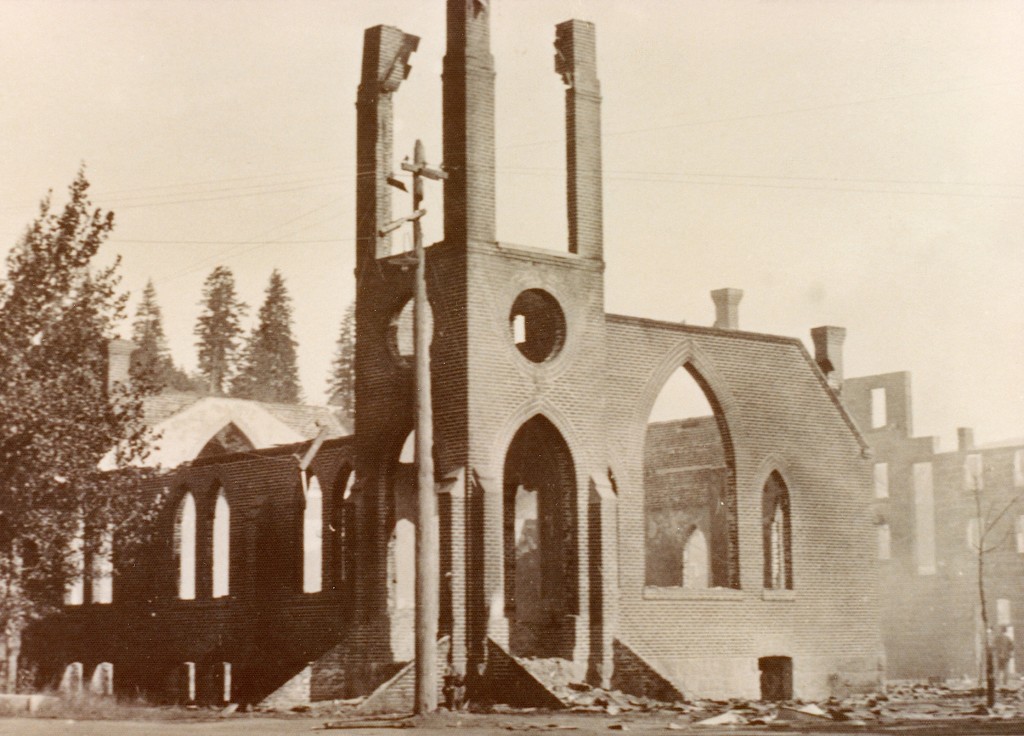
The aftermath of the 1915 fire.
It would be a slow tedious process. Due to financial constraints the church did not want to take on any more debt. In 1917, the church was completed and fully functional. The one alteration was that the steeple was not replaced.
The application of “fort” to this landmark is somewhat of a misnomer. It had no military affiliation. It started out originally as a trading post on the Nobles Emigrant Trail.
In 1863, the abandoned structure became the focal point in the skirmish known as the Sagebrush or Boundary War. The Honey Lakers fortified themselves in the log cabin during a short battle with Plumas County authorities. Hence the “fort” appellation. The building is sometimes referred to as Fort Defiance.
The so-called war was a political dispute between Plumas County officials and the residents of the Honey Lake Valley. At issue was who had jurisdiction over the region—Nevada Territory or the State of California. While it was known that California’s eastern boundary from the Oregon border to Lake Tahoe was the 120th meridian. The problem was no one knew where it was. For a complete version see Sagebrush War.
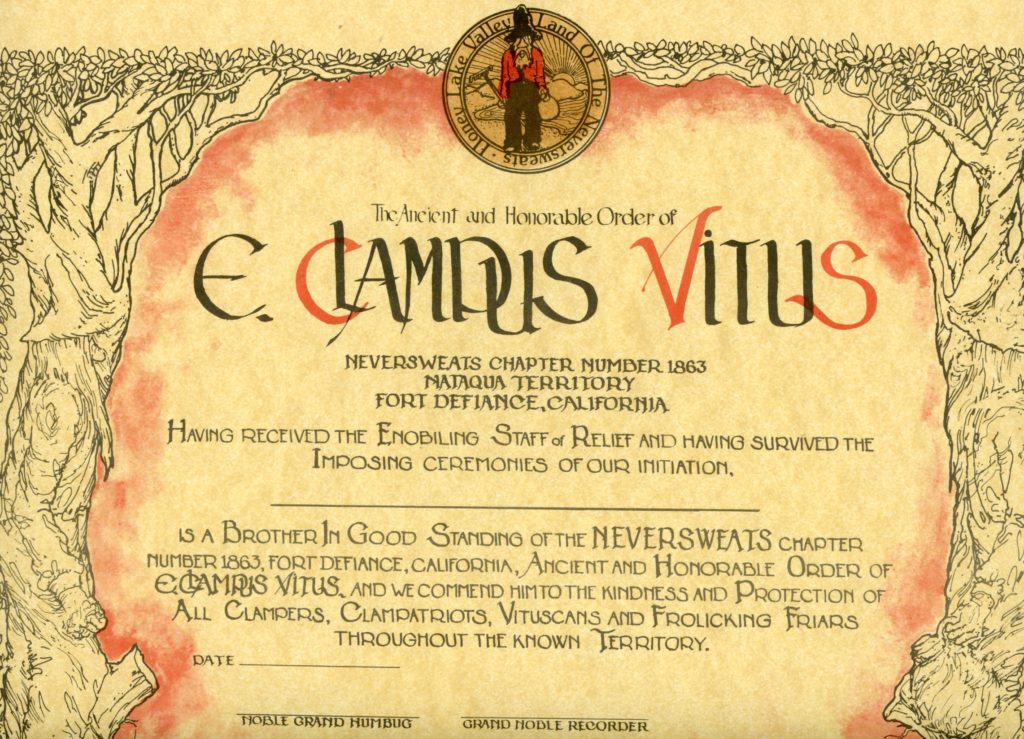
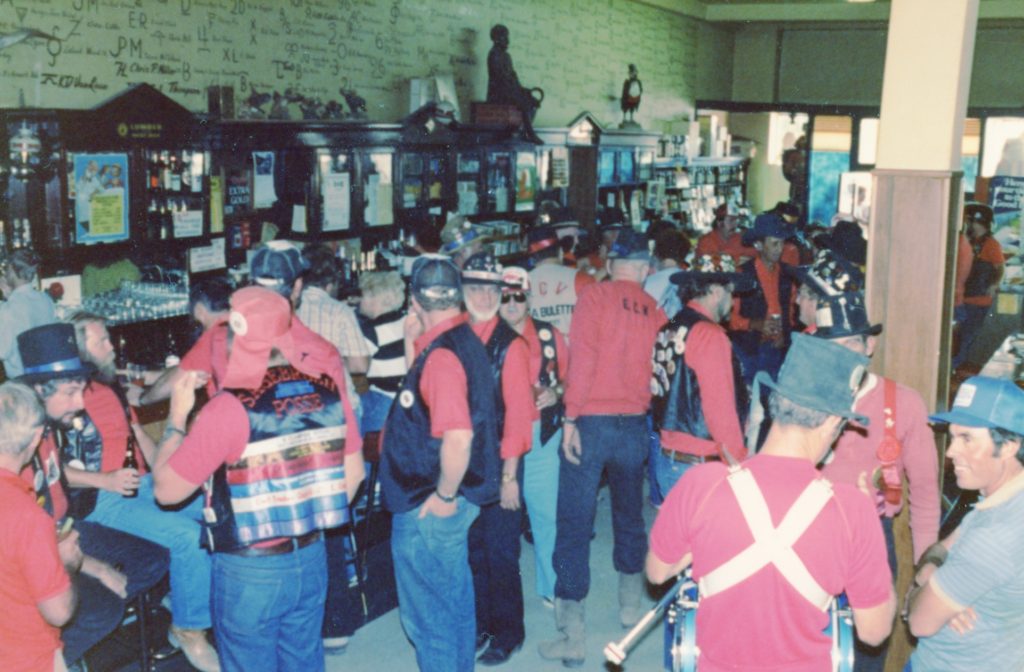
On August 4, 1984 some 500 members of the fraternal organization known as E Clampus Vitus descended upon Susanville. The occasion was the chartering of the Neversweat Chapter #1863 of the E Clampus Vitus and the dedication of the Pioneer, the oldest establishment in Northeastern California. The organization has been around since days of the California gold rush, and was a spoof on the more refined fraternal organizations of the day. In the 1930s it went through a revival and focused on marking historical sites and having a good time while doing so. The Neversweat Chapter was not the first for Susanville, as a lodge existed in 1868. In the early 1880s there were several lodges in Modoc County.
Neversweats chartering festivities at the Pioneer, August 4, 1984.
Back to that day at hand, the Lassen Advocate summed it by reporting, “By 7:30 a.m. most area residents were awakening for breakfast and routine Saturday tasks, the revelry at the Pioneer was already in full swing. Clampers were 3 to 4 deep at the bar, the beer was flowing and festive mood in the air. The celebrants began arriving at 6:00 a.m. and spilled from the sidewalk into the eastbound lanes of Main Street. Traffic was undoubtedly light during the early morning celebration.”
Never miss a story, click here to support and subscribe.