Sacred Heart Church On The Move

Sacred Heart Church
Sacred Heart Church, 1910, at the Union Street location.

In 1908, the Susanville rumor mill circulated that the catholics wanted to build a new church. Thats kind of odd, since the existing Sacred Heart Church had just only been built 1892. In reality, they wanted to move its existing church to a new location from its Richmond Road site. Since that location was somewhat out of the way, and it was prone to vandalism.

Antone Bantley was designated to locate and negotiate the purchase inside the Susanville’s City limits. Bantley found a site on the corner of Nevada and Union Streets. The church purchased it for $325 from the L.C. Stiles Estate.

On May 26, 1909 the Lassen Weekly Mail reported, “The work on moving the Catholic Church is progressing. It will be a week or ten days before it is finally landed on the new site, judging from the progress already made. “ During this era, the church did not have a resident priest and relied on a circuit rider. On October 24, 1909, Father Thomas Horgan celebrated Mass at the new location.

To Support, Please Subscribe 

Susanville’s McDow Street

L.D. McDow Residence. Courtesy of George McDow, Jr.

In 1875, Lafayette D. McDow constructed a house on what would later become of the southwest corner of Main and McDow Streets. McDow came to Lassen County in the 1860s, where he spent much of his time either operating a sawmill or mining on Diamond Mountain.

In 1920, McDow’s son, George and Russell Brownell subdivided property in the eastern portion of Susanville to be known as the Milwood Tract. Of course, McDow took the liberty to name the street after his family. His partner, Brownell did the same, when a street was named after him—Russell Avenue.

On June 28, 1928, the former McDow home was destroyed by fire. At that time, it was occupied by the J.A. Metz family. For Metz, the house was convenient, as he worked as the janitor of the nearby Lincoln School. This particular fire did not go unnoticed. It once again raised the annexation issue, since the outlying areas of Susanville were without fire protection. The battle was lost before it was begun, since opposition mounted with the main factor to become part of the city would raise taxes.It was not until 1947 when that area was annexed into the city.

Support

Amedee Hot Springs, Lassen County

Amedee Bath House
Amedee Bath House courtesy of John M. Gibson

In the 1840s, Hudson Bay fur trappers referred to the Honey Lake Valley as Hot Springs Valley. This was due to hot springs on the east side of Honey Lake.

The springs were originally referred to as Upper and Lower Hot Springs. In the 1880s the Lower Hot Springs  were also known as Brubeck Springs, for the owner of the property, L.W. Brubeck. The name was changed to Amedee with the establishment of the town. A unique feature of the springs was a geyser. In 1854, Lt. E.G. Beckwith, during his exploration of a transcontinental railroad route visited the hot springs and noted that the geyser consisted of a column of water twenty inches in diameter.

The hot springs came into prominence when NCO Railroad extended its line and established the town of Amedee. As previously mentioned, the geyser became quite an attraction when the town was established. Amos Lane, bartender and inventor, devised a clock to measure spurts of the geyser that rose and fell at intervals of 38 seconds. At times the geyser would shoot as high as eight feet. The geyser ceased to exist in May 1893, as the ground around the springs cracked and allowed the steam to escape. The town’s newspaper was aptly named the Amedee Geyser.

The springs were heralded for their curative properties and the first public bathhouse opened in 1892. In 1900, Arthur Holland appeared on the scene to transform Amedee into a health resort. Holland dubbed his enterprise the “Karlsbad of America,” a bold attempt to associate it with the famed Czech resort. Holland’s venture never materialized in the grandeur he desired and he abandoned the project within a years’ time. Yet, people would still come to Amedee for the specific purpose to take mineral bath. This practice continued through most of the 1930s.

Amedee Bath
Amedee Bath House courtesy of Tom Armstrong

         In 1984, Matti Ripatti and California Hydro Systems recognized the geothermal potential of the springs. They applied to the Lassen County Planning Department for a permit to construct a geothermal plant there. The permit was granted and in 1988 the power plant was constructed.

To Support, Please Subscribe 

The Naming of Ravendale, California

Early day Ravendale. Courtesy of Dorothy Capezzoli

There were three communities on the Madeline Plains, Madeline, Ravendale and Termo. All three owed their existence to the Nevada California Oregon Railroad, which the arrived on the plains in 1899 and created Termo and a few years later Madeline.

It was reported that the end of February 1910,  that a new NCO station was rapidly being built five miles south of Termo. Dame rumor had it that it was to become a division point for the NCO railroad.  It was also stated that J.H. Williams and G. Horton were surveying a town plat.

So much for speculation. William B. Edwards, locally known as Uncle Billy had formed the Western Land & Power Company to entice homesteaders to eastern Madeline Plains. The best stopping off point was the homestead of Jim and Laura Coe. They agreed to subdivide their land, and the NCO also agreed to establish a station there.  On November 15, 1913, the official town plat of Ravendale, was recorded with the Lassen County Recorder. According to Madeline Plains historian, Don Garate, the name Coeville had been suggested for the new town, but Laura Coe already chosen a name—Ravendale. Why she chose that name is not clear.

To Support, Please Subscribe 


Victor Robinson—An NCO Railroad Tragedy

Robinson’s Coroner’s Inquest Verdict

Unfortunately, when it comes to the history of the Nevada-California-Oregon Railway (NCO) the majority of published accounts cover the basics. Yet, there is a tremendous wealth of material that remains untouched in a variety  of records, which researchers have neglected and this is just one example.

Today’s post is a perfect example of such research. The material comes from the Lassen County Coroner’s Inquest that involved a NCO train collision at Horse Lake. On February 23, 1915, Victor Robinson boarded a NCO passenger train at Lakeview, Oregon  bound for Reno, on his way to Sacramento. According to E.G. Ryder, the Traveling Freight and Passenger Agent for the NCO that the passenger train had stopped at Horse Lake Station and was just starting again when a NCO livestock train, consisting of fourteen cars loaded with cattle, also heading south, struck the passenger train. Ryder was in the caboose of the stock train, so he was not sure of all the details. Ryder stated, “That Robinson was caught between the two cars on the passenger train. There were two coaches and Robinson was between the two coaches on the platform.” When the collision occurred Robinson was ejected from the platform died immediately from injuries. The account is rather confusing, but I shared it with a person familiar with the NCO cars and he was under the impression that Robinson was thrown under the wheels between the two coaches upon impact.

Horse Lake Station, 1915. Courtesy of Nevada Historical Society

Ryder was the only person to testify at the inquest. The twelve men summoned for the coroner’s jury and this was their conclusion, “The Jury came to the verdict that death was caused by a collision of passenger and extra stock train through the negligent neglect of employees in charge of trains operated by the NCO.”

To Support, Please Subscribe 


Fruit Growers Logging Railroad Network

Fruit Growers logging train, Pine Creek Valley, 1940–Russell Gilbert

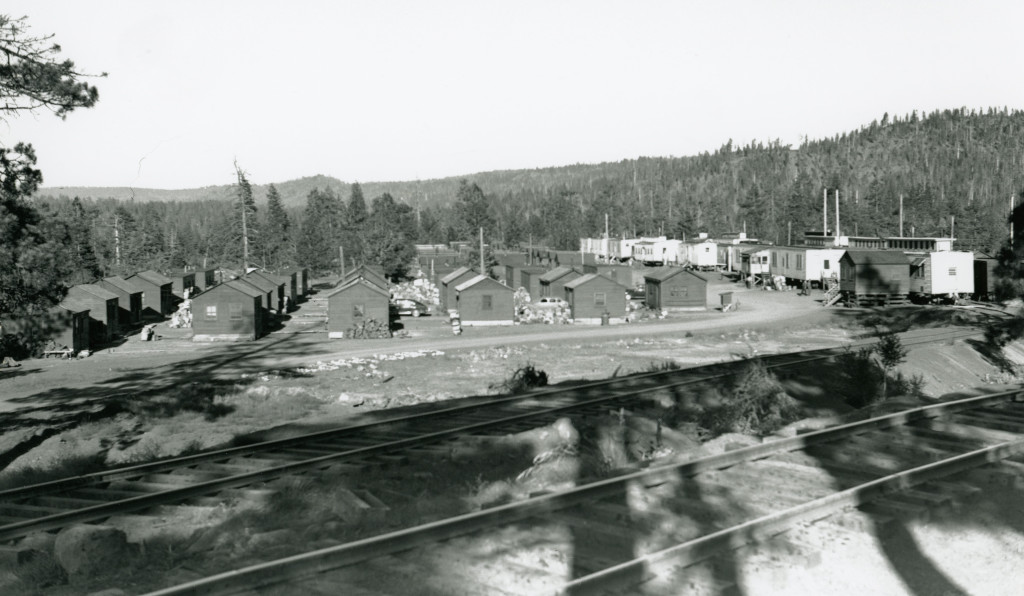
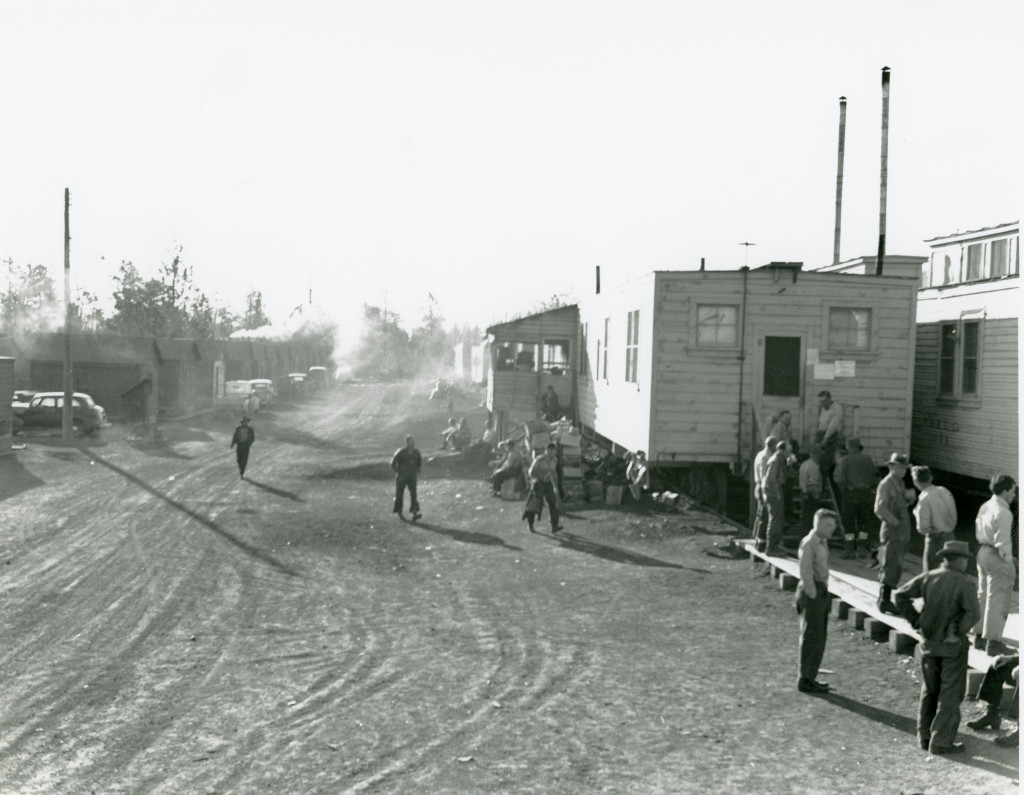
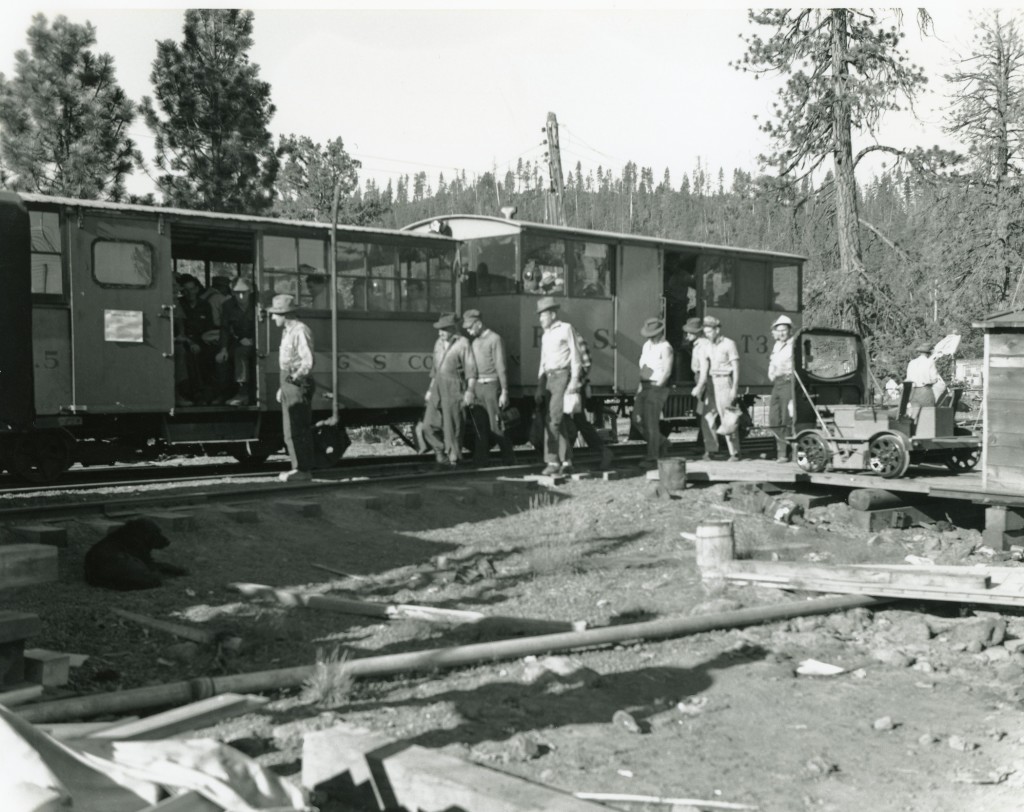
If you ever spent much time exploring the region west of Eagle Lake, you probably have encountered remnants of Fruit Growers logging railroad system. From 1920 through 1952 Fruit Growers railroad logged, and like many operations, finally converted to truck logging.However, it should be noted railroad  and truck logging worked in tandem—transfer stations.

It was one of those days, that I had a lapse of better judgment should have, but did not take a picture of Shay’s Hole. However, about a mile down the road, we stopped to take pictures of these old railroad ties still in place, August 18, 2016.

In the future this will be a topic we will explore.

Tim

Our Interesting Milestone Dates

Lassen County Courthouse, circa 1890s. Assembled are county officials, along with the grand jury.

Today, is April Fool’s Day. In 1864, on that date Lassen County was created. Our neighbor to the east, the Battle Born State of Nevada was created on Halloween in1864. That also coincided with a shared birth date of Peter Lassen in 1800.  Susanville’s  founder, Isaac Roop died on Valentines Day 1869 of pneumonia. Hayden Hill’s namesake, Joseph W. Hayden died there on Christmas Day 1884.

There are score of local events that happen to occur on interesting holidays. Personally, however, that Lassen County and Nevada created in the same year, that then and now have so much in common, and the they share unique anniversary dates. It should be duly noted Nevada Day is no longer observed  on Halloween. What a shame, because back in the day and I can attest fun times were bountiful. On a final note, California no longer formally observes  its Admission Day of September 9, and government workers who had the day off then, traded it for Friday  after Thanksgiving.

Tim

Black Rock Toll Road Company

Black Rock Road
Stockton’s recorded map of his proposed toll road.

Early toll roads were just not feasible around these parts. One could easily make a short detour to avoid paying fees. Where attempts to put one in, the road network was already in use by the public. This did not stop Lassen County resident, H.C. Stockton to propose a Honey Lake/Black Rock Toll Road. His one page description of his road was quite vague to say the least.  A portion of the route consisted of the Nobles Emigrant Trail. He did propose a new section of road starting at Wall Spring, and instead of following the old road and going around the base of the Granite Mountains, much like today’s road, he dreamed up some route over these rugged mountains. It should be noted he filed his claim and that was recorded in Humboldt County, Nevada on March 2, 1866.  Nothing ever materialized.

Stockton dabbled in many things in the Honey Lake Valley. In 1865 he built the first Milford Schoolhouse, which still stands, as a converted residence. He operated a sawmill, as well as a flour mill. Seasoned residents may have known two of his great grandsons—Abe Jensen and Jud Jensen.

Support

.

Lassen’s So Called Mobile Home Culture

Sacred Heart Church
Sacred Heart Church on Richmond Road, 1905. In 1909 it was moved to Union Street.

This post has nothing to do with manufactured homes. This, being Holy Week, my intent was to write the 1909 story of moving Sacred Heart Church to a different location, i.e. making it “mobile.” Numerous structures, locally, and mainly residential were moved from one location to another. This practice to this day, goes on nation wide.

Moving a house from South Lassen Street to. Foss Street, 1976

How it works today. A property owner has an old house, which is in the way of a planned development.  Instead of a paying costs for demolition, offers the house for sale, usually one dollar. Of course, there is a catch. To buy the house at that price, one has to pay the cost to move the structure to a new location.

Happy Easter to my friends, Hannah who lives in a 1920s mobile home and my friend Scott, with his architectural expertise, has to deal with my definition—eye roll please. Not intentional, but it may torment Scott, since I send a occasional message with a photograph of such structures.

Tim

Exploring Lassen County's Past