Those Dry Januarys

A view looking at the former Ridenour property with the Sella dairy in the foreground, which was located at the lower end of Gold Run, 1950s. In 1924, it was the first. gold course in the area. Courtesy of Wendell V. Loughead

Here it is, the first day of February 2026 and. It has been over three weeks since the area received precipitation. There have been dry Januarys before. Some might enjoy this editorial that appeared in the Lassen Advocate of January 15, 1926.

Winter May Come Yet.  While a great deal has been said lately about the lack of water for the State of California there is still plenty of time left for real heavy snowfall.

According to some old residents of Lassen County there have many winters similar to the present one when the entire month of January was void of any storms and in February plenty of snowfall. About seven years ago over five feet fell on January 7th. While with a late snow it will not last as long as the early snow, but will mostly go off with the early spring weather and cause high water in the Sacramento Valley, still it will assure this county of water sufficient for its needs.

“A sudden drop in the barometer yesterday morning presaged the advent of a storm and according to present weather the storm will materialize. A light trace of snow fell yesterday afternoon. Just how severe this storm will be and how long it will last are for conjecture only.

“But regardless, it is too early to worry yet. Other points in California are advertising their sunny days. Lassen County might take a leaf from their book and advertise a mountain county where golf is played in January.. But with good weather that Lassen County has been enjoying has been probably taken and much needed repairs and other work afford on the farm.”

Of note, Susanville received a very wet slushy show near the end of January. Things did not improve in February the two-month total of precipitation was 5.48″
Support

Congressman John E. Raker’s Funeral

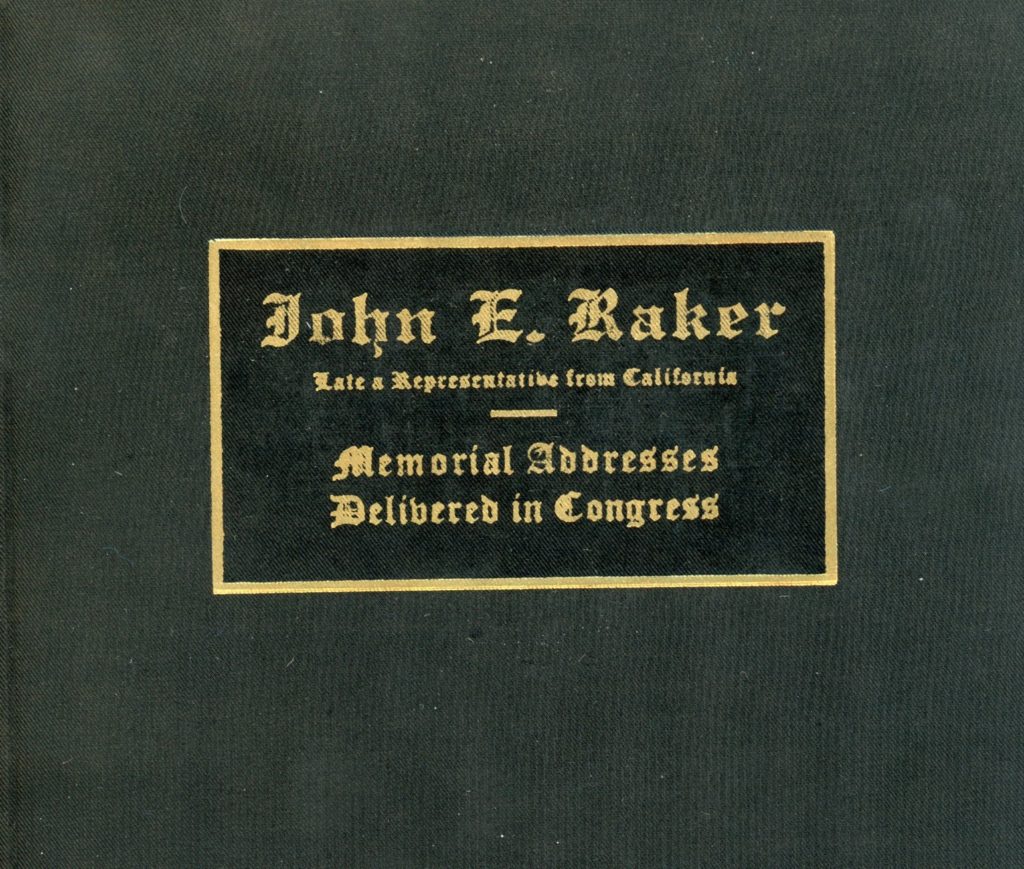
Cover of the published memorial addresses.

It is the 100th anniversary of Congressman Raker funeral, who represented the California First District since 1911.

John Edward Raker was born in Illinois in 1863, at the age of 10, came to Lassen County with his parents. In 1885, he passed the bar examine, and moved to Alturas to practice law.  He eventually went into partnership with his father-in-law, E.V. Spencer. Raker went on to being elected Modoc County District Attorney and then Modoc County Superior Court Judge. In 1910 he decided to run for the California’s First  Congressional District seat  and won by a slim margin of 141 votes. Raker continued to serve as Congressman until his death on January 22, 1926 at Washington, D.C..

Raker was buried in the Spencer family plot in Susanville. The services were held on Sunday, January 31, 1926–an impressive. affair. The body arrived by train at noon at Susanville, which also consisted of a number of Congressmen, along with a contingent of forty-seven people from Alturas.

As the Lassen Mail noted: “The procession was an imposing one, as it slowly and solemnly wended its way along the slush covered streets. When the first automobile reached the Methodist Church, the line was still moving at the depot. The line of march was along Richmond Road to Weatherlow, north on Weatherlow to Main, up Main to Lassen and thence to the church.”

The night before the region was hit with a heavy snowstorm, making the roads a big slushy mess. Twenty-five members of McKea Post, American Legion, attended but it took them two and half hours to make the trip from Westwood. Had the weather been more favorable there would have been an even larger turnout.

Support

The Big Snow of 1952

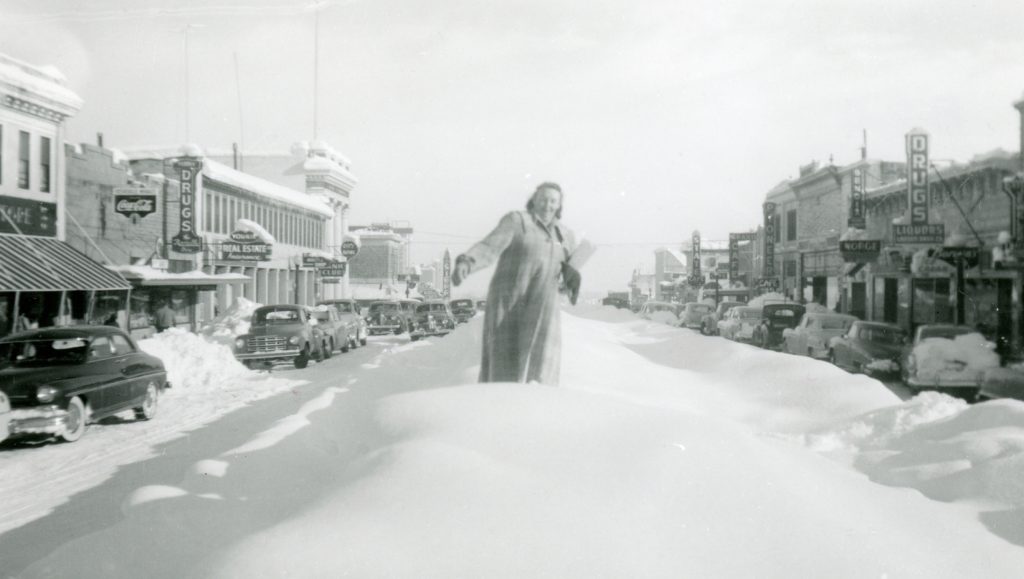
Main Street, Susanville, 1952.

The big snow made its debut on January 12, 1952. Three days later Susanville was covered with a blanket of five feet of snow. On the other side the mountain, at Westwood eight feet had fallen. The storm was followed by unusually strong gusty winds. Not only did the winds disrupt electric power but drifting snow created highway blockades. These drifts ranged between seven and nine feet. They. were no match for regular snow removal equipment. Clearing them necessitated use of rotary snowplows. While they were efficient, it was a slow process. To clear a single highway lane of thirteen miles between Chester and Westwood took the rotary plow three days, working around the clock.

Elks Lodge, Susanville, 1952

The “big snow” showed how much life had changed. The residents were no longer self sufficient like the pioneers before them. Many relied grocery stores. After three days of the highway blockade, the grocery stores were depleted of their stock. In Susanville. a shipment of yeast was dropped by plane for the Sunrise Bakery so there would be a supply bread. Officials at Westwood and Chester made arrangements for an air drop of food and medical supplies. It was cancelled on January 18th, when the snowplows made it to Mineral. There a convoy of trucks laden with food, fuel and other supplies made its way along the one-lane highway. While the worst over, traffic was limited to emergency vehicles until two lanes were cleared. On January 31st balmy temperatures arrived in Susanville, with a morning low of 42 and a daytime high of 50.

Support

The State Railroad Tax

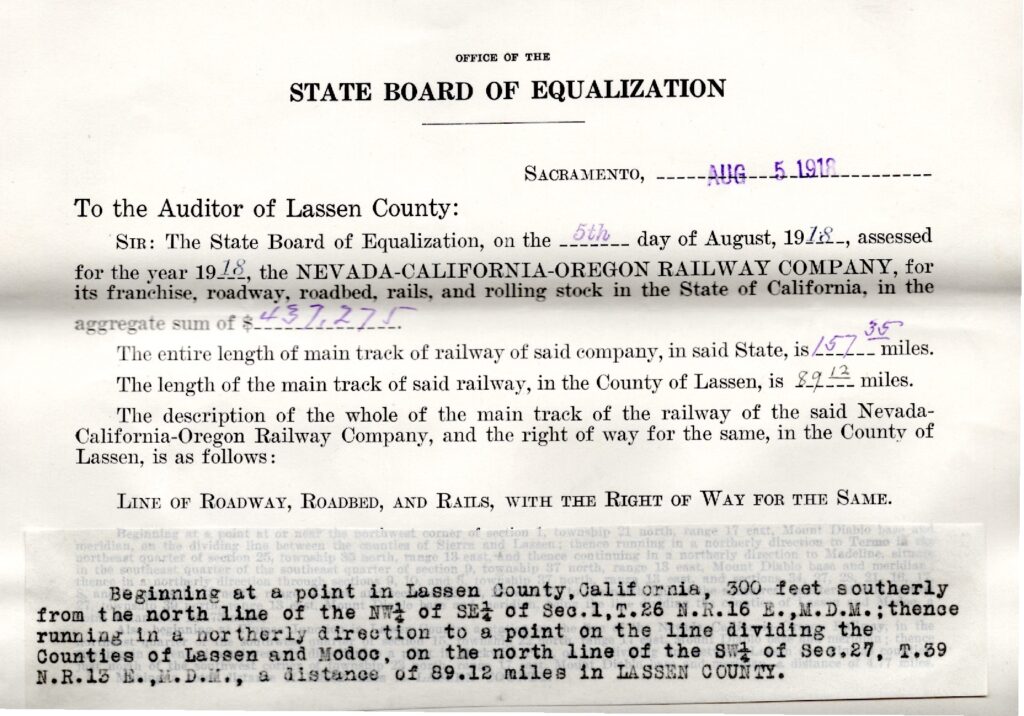
A portion of the NCO’s 1918 report

The State Board Equalization is a wealthy repository for information. When it came to taxing railroads, the Board compiled information about each railroad, and was broken down by trackage and the shared assessed value. The taxes collected would be distributed to counties to fund roads and schools. Here is some information of the 1918 reports for the NCO and Western Pacific.

The NCO had 89.13 miles of main railway track in Lassen County and 157.35 in the State of California. The assessed value in the county was valued at $247,664.

The Western Pacific had 44.44 miles on railroad in Lassen County and 417.5 miles in the State of California. The assessed value in the county was valued at $888,800.

Tim

The Harvest Festival Arch

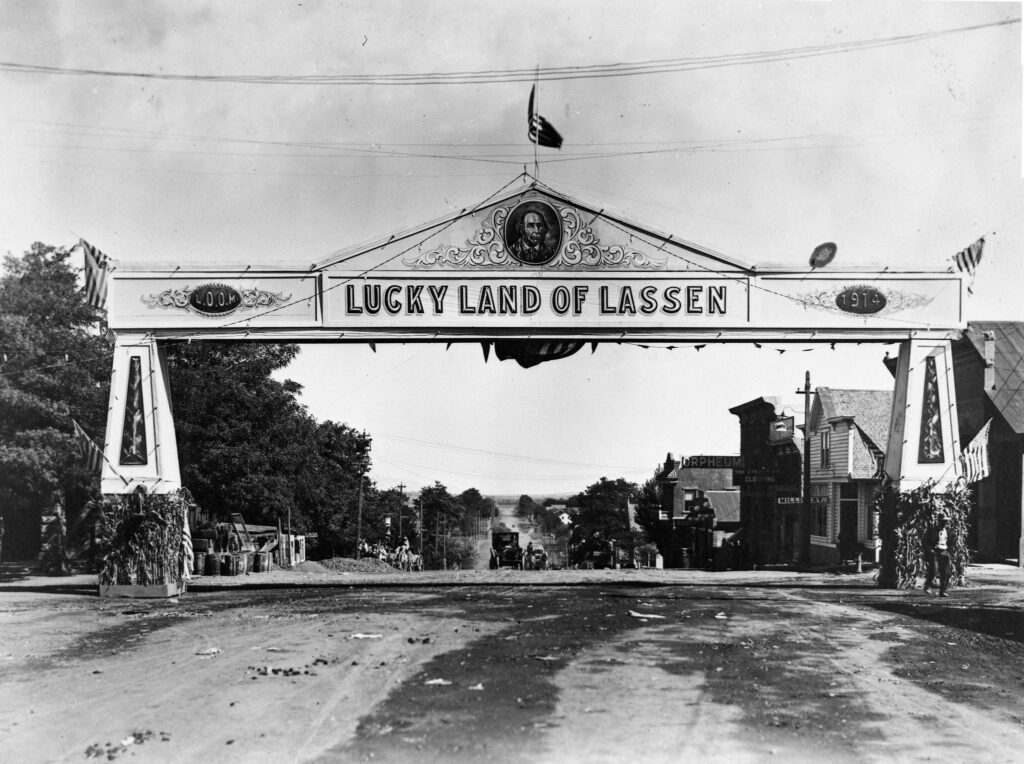
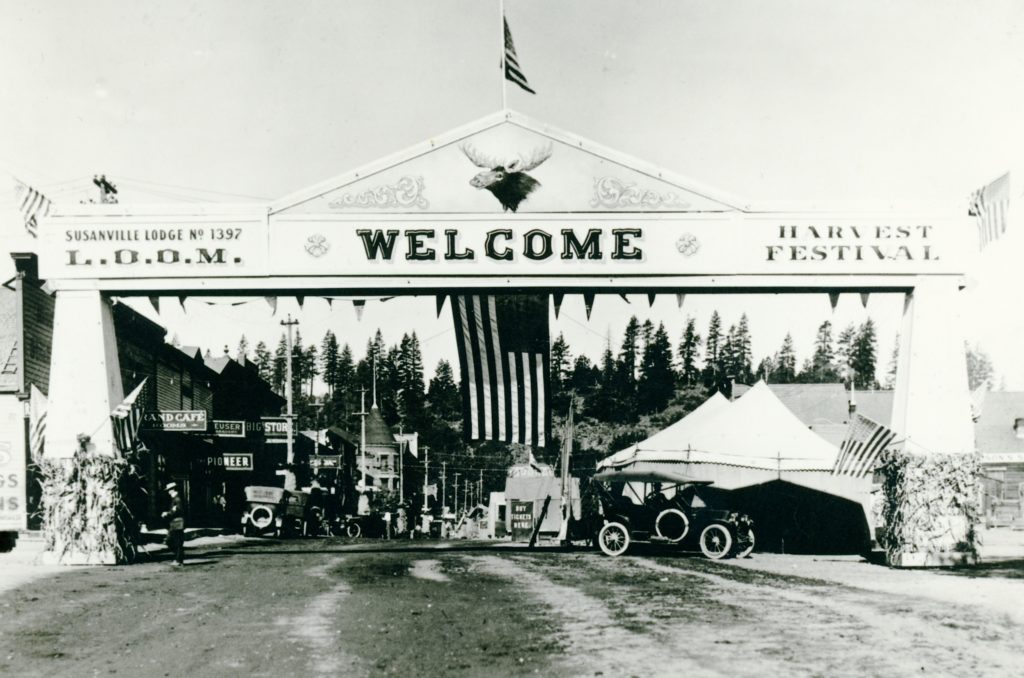
The Harvest Festival Arch, 1914

While we have explored the Harvest Festival of 1914, this post is with the emphasis about the arch constructed during the festivities. As noted, the four day event was a sponsored the local Moose Lodge. It is interesting to note that it coincided with California’s Admission Day, September 9.

The arch was a temporary affair, and a windstorm two weeks later, blew it over.

Some community arches, like Reno, were to be permanent. This was not case of the Moose Lodge arch located at Main and Gay Streets. The lodge duly noted that its arch was a temporary, but no one knew when it was to be dismantled. Mother Nature intervened. On September 18, 1914, a particularly strong windstorm hit the region. It did considerable damage and toppled the arch.

Tim

Red Rock Ranch & Rancho Haven

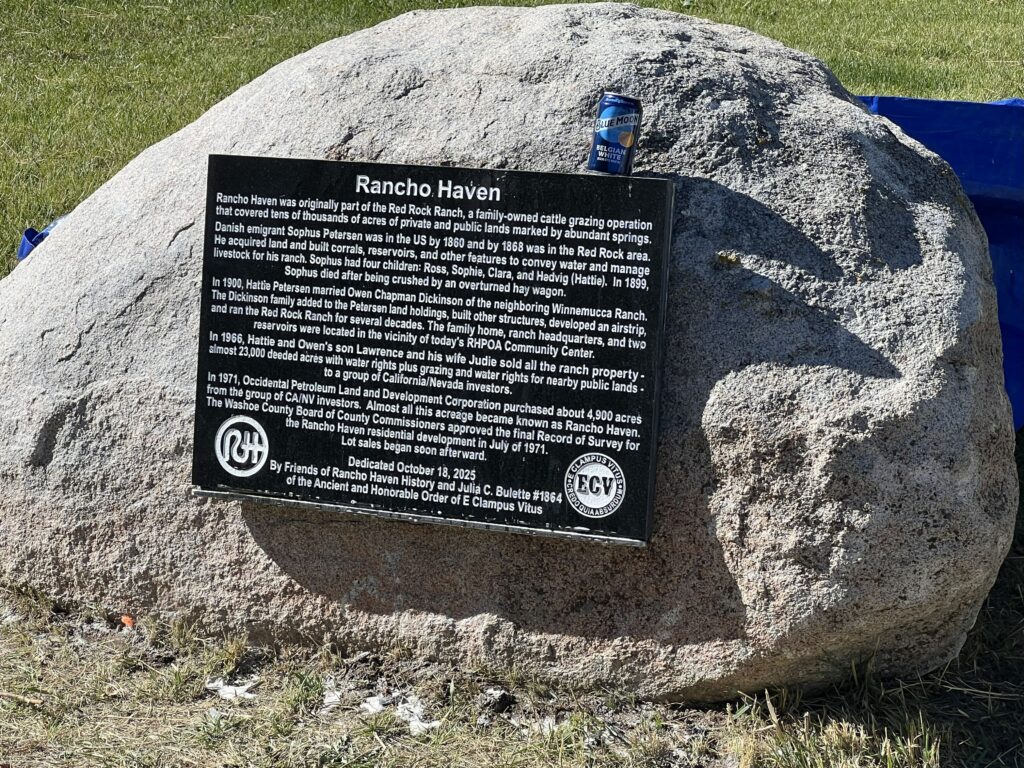
Rancho Haven Historical Plaque Dedicate, October 18, 2025-Courtesy of Pat Davison

Red Rock is a common name for landmarks in the American West. Today’s featured Red Rock is located in Washoe County, Nevada, north of Reno and south of Doyle. In 1867, Thomas Pearson and John Sutherland left Red Rock to relocate to Lower (Amedee) Hot Springs on the east side of Honey Lake. The following year, they planned to return to Red Rock, but were victims of what is known as the Pearson Massacre.

Sophus Petersen who had been in the Long Valley area, located on the abandoned Pearson & Sutherland property. Petersen, it should be noted was first married to Barbara Ross, whose father William and his brother Albert Ross ranch would eventually become Constantia.

On October 18, 2025 a historic plaque dedication was held at Rancho Haven Community Center to commemorate the history of the Petersen family and Red Rock. The pace reads as follows:

“Rancho Haven was originally part of the Red Rock Ranch, a family owned cattle grazing operation that covered tens of thousands acres or private and public lands marked by abundant springs.

“Danish emigrant Sophus Petersen was in the US by 1860 and by 1868 in the Red Rock area. He acquired land and built corrals, reservoirs and other features to convey water and manage livestock for his ranch. Sophus had four children: Ross, Sophie, Clara and Hedvig (Hattie). In 1899, Sophus died after being crushed by an overturned hay wagon.

“In 1900, Hattie Petersen married Owen Chapman Dickinson of neighboring Winnemucca Ranch. The Dickinson family added to the Petersen land holdings, built other structures, developed an airstrip an ran Red Rock Ranch for several decades. The family, ranch headquarters, and two reservoirs were located in the vicinity of today’s RHPOA Community Center.

“In 1966, Hattie and Owen’s son, Lawrence and his wife Judie sold all the ranch property almost 23,000 deeded acres with water rights, plus grazing and water rights for nearby public lands to a group of California/Nevada investors.

“In 1971, Occidental Petroleum Land Development Corporation about 4,000 acres from the group of CA/NV investors. Almost all this acreage became known as Rancho Haven. The Washoe County Board of Commissioners approved the final Record of Survey for the Rancho Haven residential development in July of 1971. Lot sales began soon afterward.

“Dedicated October 18, 2025 By Friends of Rancho Haven History and Julia C. Bulette #1864 of the Ancient and Honorable Order of E Clampus Vitus”

Support

The Gallatin Photograph Collection

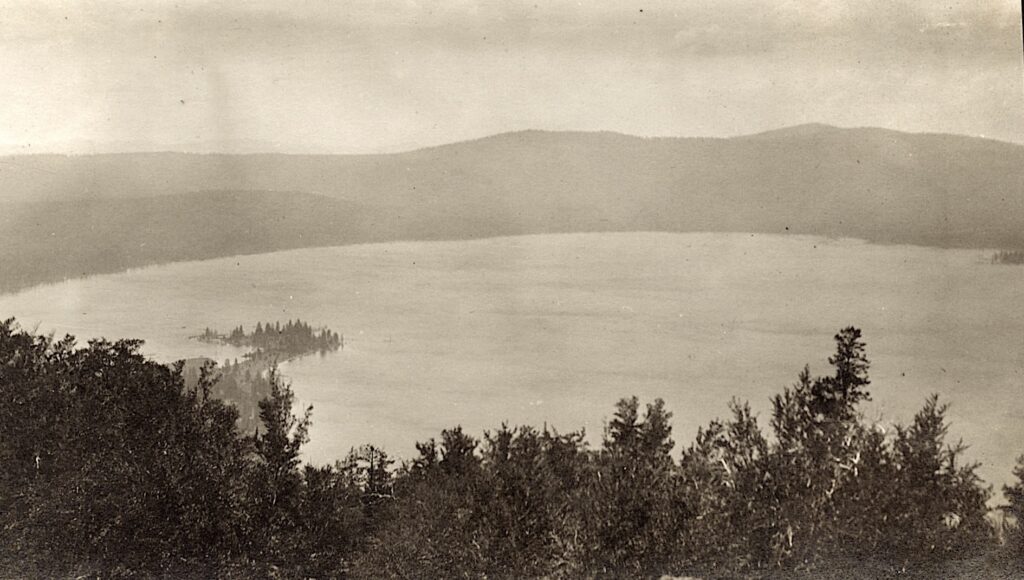
South shore, Eagle Lake, 1917-Gallatin/Wachhorst Collection

In 1913, Malvena Gallatin built the first summer home at Eagle Lake. For the next ten years her family, especially her granddaughter Norma Virginia, spent the summers there. The bulk of these photos  were taken between 1917 and 1920, when Eagle Lake reached its historic high levels. I recently scanned few and I can post various scenes if there is an interest. It should be noted that there are some 200 photographs.

Tim

An Unremarkable Postcard

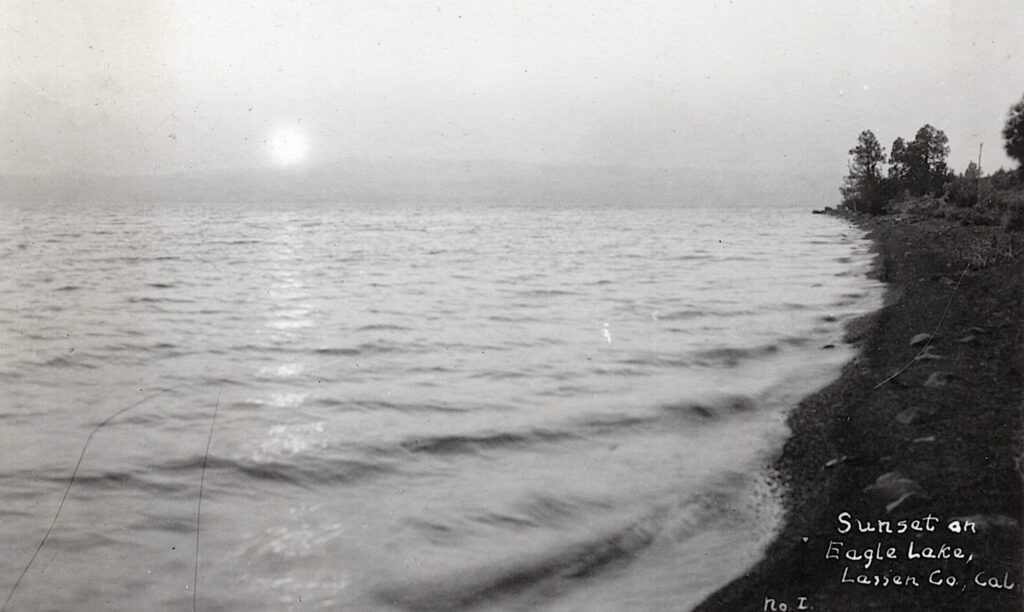
Eagle Lake Sunset postcard, 1916-B.R. Zimmerman Collection

During the 1910s there were only a handful postcards produced featuring Eagle Lake. First and foremost, there was no market. After all the majority of the south shore was privately owned, and there was one small seasonal resort. In all my years of research and I have come across two of the above pictured Sunset at Eagle Lake, circa 1916.

It was not until the early 1960s with development of forest service campgrounds and marina, that there were be quite of few Eagle Lake postcards produced. Those images are noteworthy reflecting on the change of the lake level elevation.

Tim

Willow Creek Valley – Lonkey Ranch

Lonkey Ranch, 1911. C.R. Caudle Collection

Some ranches retain their original name, after the owner is long gone. A perfect is the Bare Ranch in Surprise Valley. In 1864, Thomas Bare established the ranch, sold it in 1880, and it is still known over a century later as the Bare Ranch.

The Lonkey Ranch is not one of those ranches. It was originally known as the San Francisco Ranch, the owners were from that city. Lonkey was in the middle, followed by Five Dot. For those not familiar, this ranch is located approximately twelve miles north of Susanville in the Willow Creek Valley. Continue reading Willow Creek Valley – Lonkey Ranch

Westwood’s El Solano

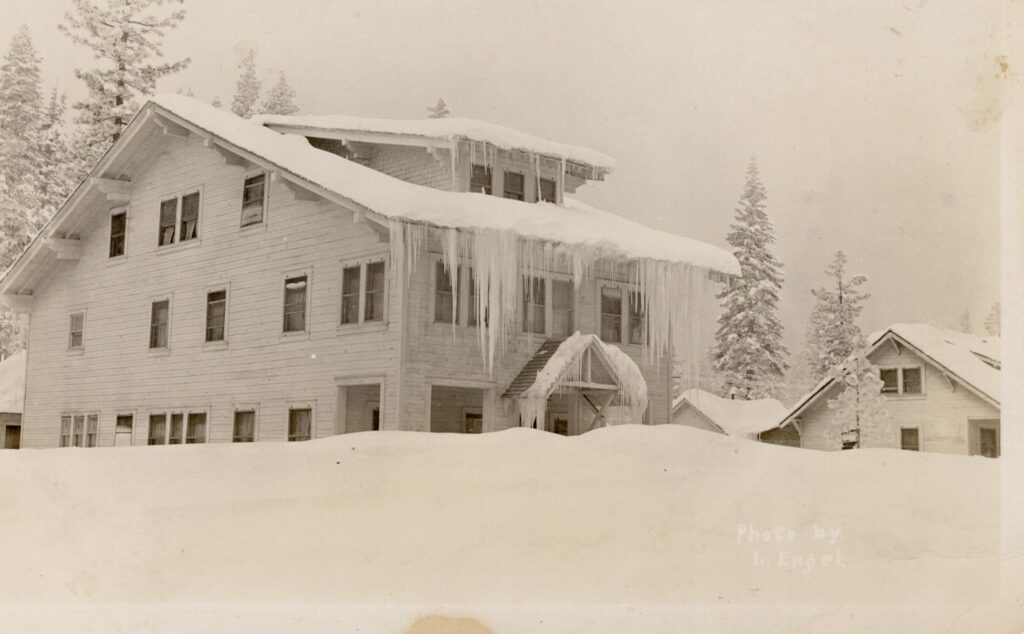
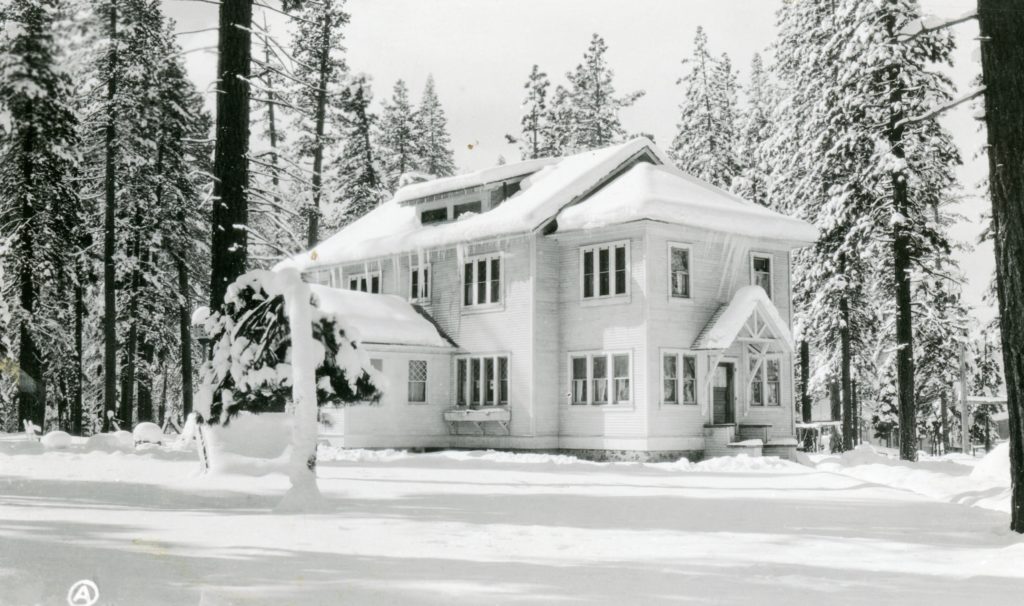
El Solano, Westwood, circa 1916 – Courtesy of D.B. Martin

One of the peculiar oddities back in Westwood’s early history there were no accommodations for the traveling public. The Red River Lumber Company who controlled the town wanted it that way. This would hinder any “undesirables” to try infiltrate the town, i.e., such as union organizers. However, Red River needed to provide some sort of accommodations for people visiting on official business with the company. Red River constructed the El Solano at 501 Birch Street to meet those needs.

The El Solano, circa 1916. Courtesy of Leona Jackson.

In the 1930s, during Red River’s financial crisis, the company converted its American Legion Hall into a hotel known as the Blue Ox Inn, and thus the El Solano diminished in status. It would later be converted into apartments. In the fall of 1965 the Assembly of God Church renovated the building, and the second story removed. Today, it is a private residence.

Support

Exploring Lassen County's Past