This is a special Tuesday Tidbit to compensate for Sunday’s rant. The Odette family were carpenters and they operated sawmill. When they had a printer print invoices, the said printer misspelled their name, leaving off the “e” at the end of name. It should be noted that the family patriarch Charles Odette was builder of the Leonard residence at the west end of Main Street that became the local Elk’s Lodge for nearly a century.
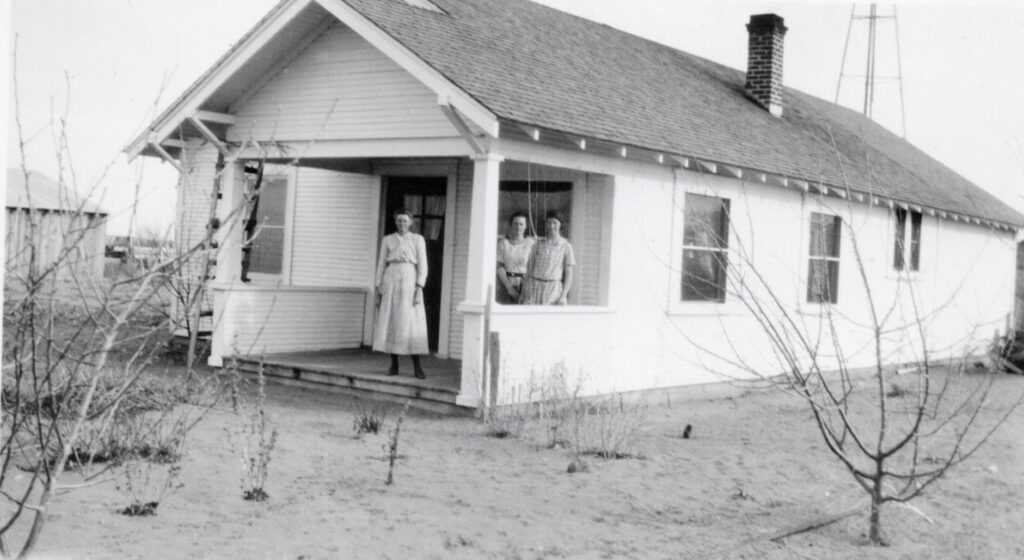
This was the Tanner ranch house on what would become CapezzoliLane, 1928.
This is a topic we have not addressed. While not common, it was not unheard of where mutual parties exchanged properties. Government entities engaged in this practice.
For starters we begin with the Capezzoli/Tanner swap of the Standish/Tule District. Both ranches were approximately the same size between 450=500 acres each. Lena Capezzoli stated that in the 1920s, the property was jinxed as her father died there in 1915 and her brother, while coming home was involved a fatal car crash on Bass Hill in January 1928. Later, in 1928, the deal between the Capezzoli family and John and Lola Tanner was consummated.
The original Capezzoli house now Tanner Ranch, January 26, 2020
Over time, the Tanners acquired surrounding small ranches like Stampfli and Whitehead. When the family sold it in September 2025, the acreage was 1550.
September has been memorable one, though for me in an unusual way. The other day, Ryan Fisher of Reno telephoned me about Constantia. It seems his research skills is pretty elementary and he use Chatgbt. He was bewildered that Chat told him that I had a file on Constantia, and that it could not locate any historical information. This conversation did not go well. Fisher asked who I obtained the file from. I am informed him that I have been doing historical research of the area since the 1970s and that I created the file.. I do not think he liked that answer.
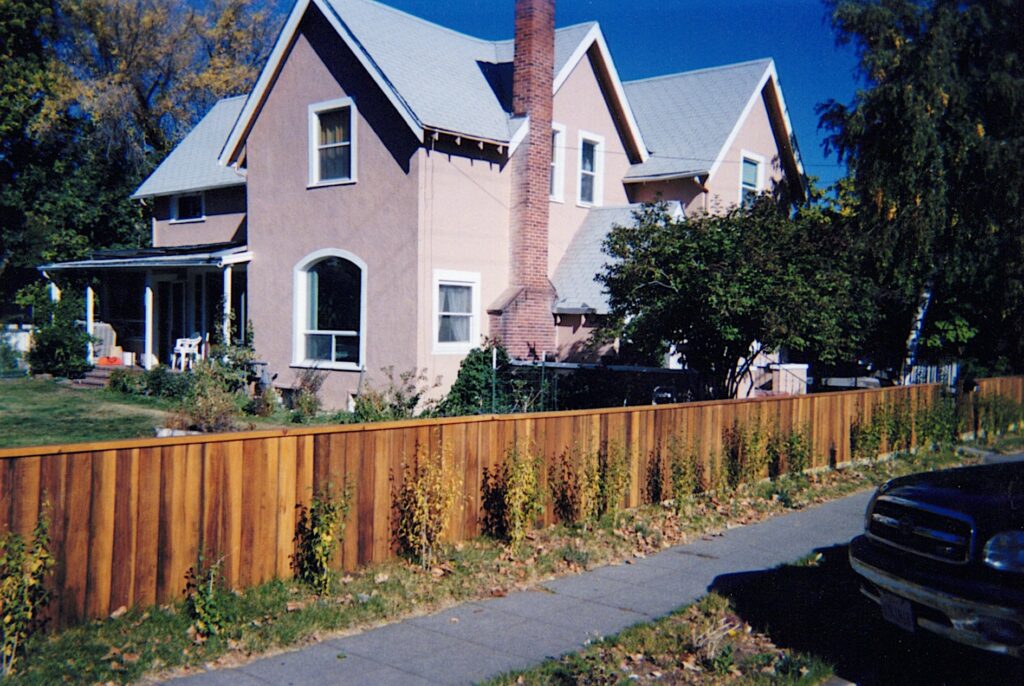
160 North Lassen Street, Susanville, 2002
Closer to home,Charity Moore of Susanville questioned my research about the history of her house, that was built 1887, but she was informed the date was in the 1930s. Of course these people always demand that I provide them with all information.
Anyhow, I receive countless inquiries and about 90% of time I bend over backward to accommodate. The other 10% with an attitude problem , i.e. better than thou, they are on their own. Enough said.
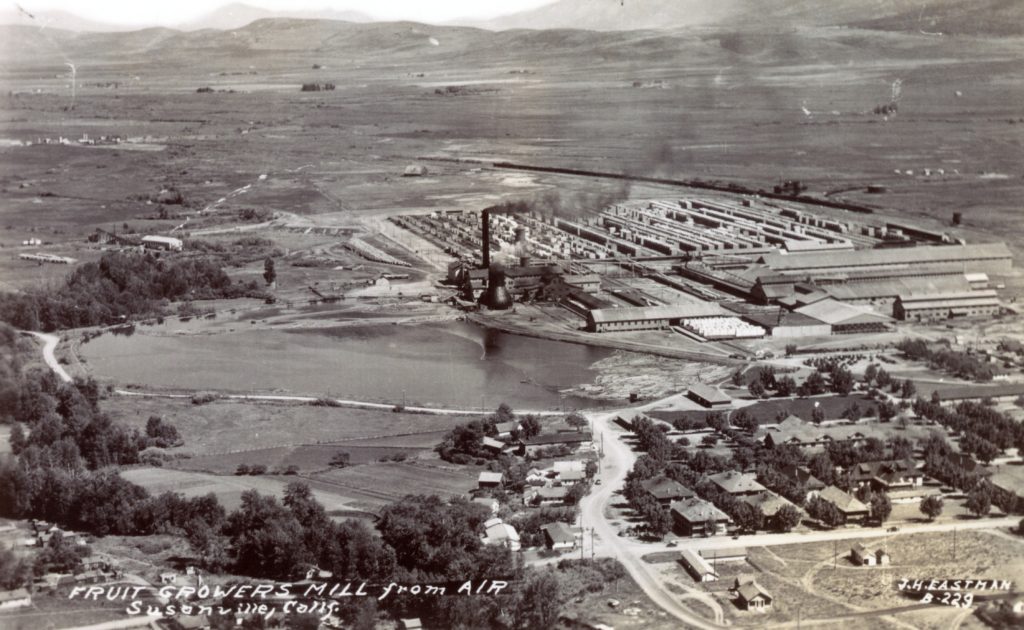
When Fruit Growers Supply Company embarked on the establishment of its Lassen Operation it was a costly affair. It required a four million dollar investment. They did this with a bond measure. When the growers established the operation in 1919, they agreed assessed themselves two-cents per box. In addition, for every 1,000 board feet lumber sold, four dollars was budgeted to pay off the bonds, generating $300,000 annually.. In 1934, Fruit Growers paid off their debt, two years ahead of schedule.
On the other hand Red River created its own financial crisis delaying their bond payments, with the kick can down the road approach. In the early 1930s, there was a day of reckoning with banks and bondholders that forever changed the company.
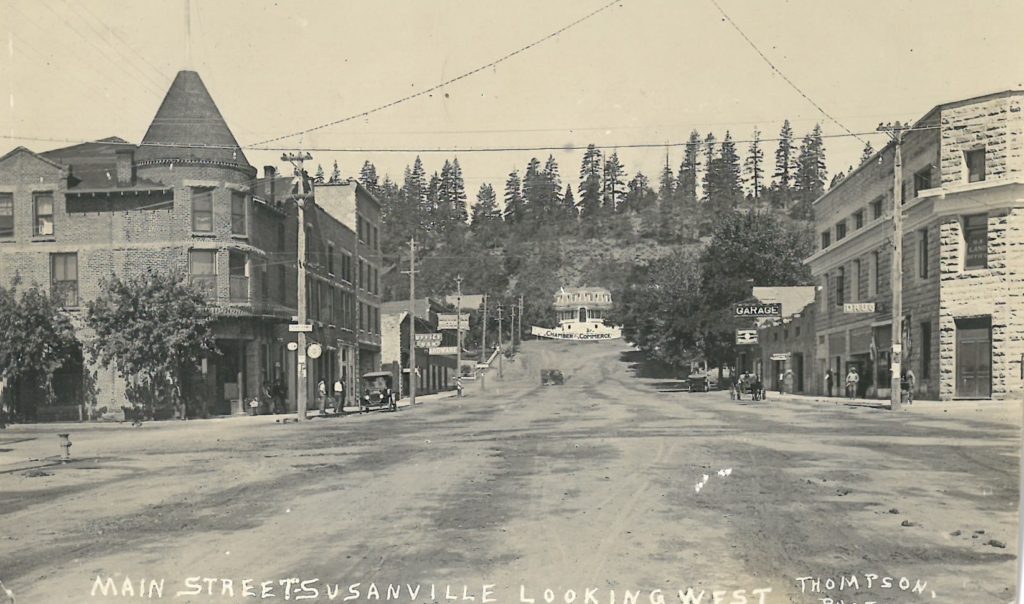
In February 1913, Peter Julian “Jack” Thompson opened his photography studio in Susanville. He had relocated from Loyalton where applied his trade for a decade. While in the Sierra Valley he had a penchant of capturing images of the local Native American community.
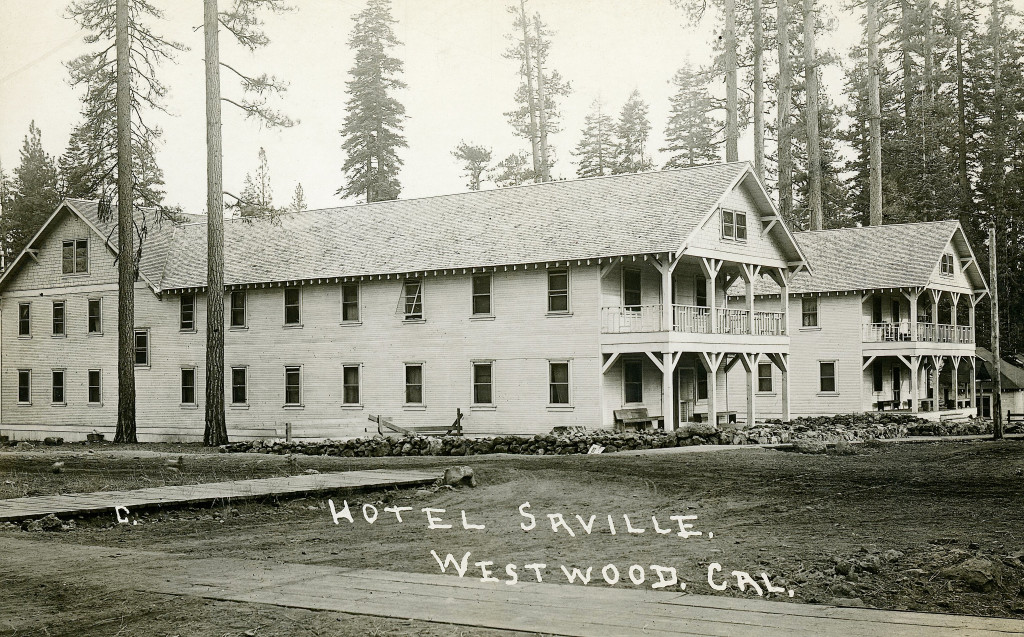
Hotel Saville, Westwood, circa 1914. A Thompson postcard
Upon his arrival in Susanville, there were lively times to be had with the arrival of the railroad and that of Red River Lumber Company establishment of its mammoth sized mill and company town of Westwood.
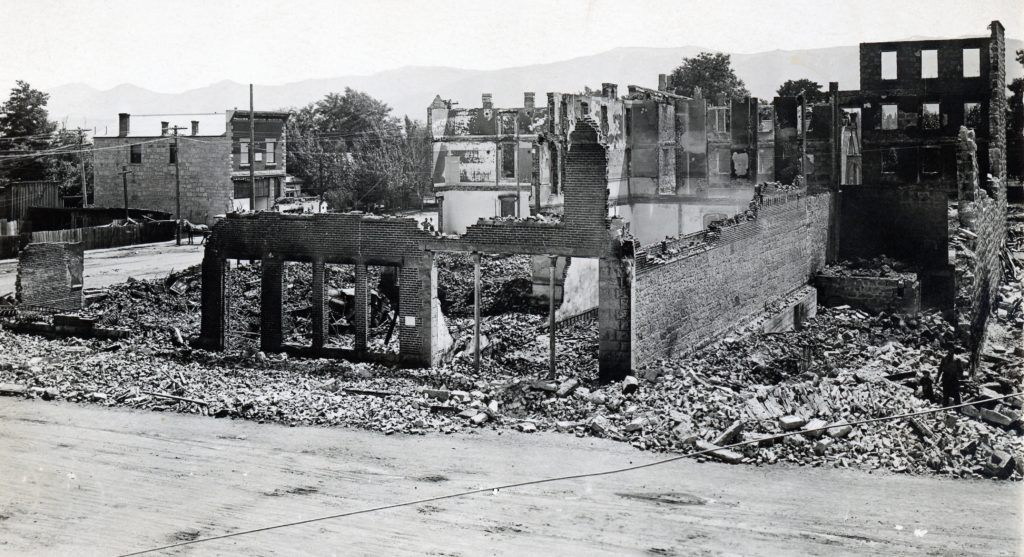
The Emerson Hotel ruins, 1915. A Thompson postcard.. Courtesy of Vivian Hansen
Of course, Thompson recorded events, some joyful and others tragic, such as scene above of the ruins of the Emerson Hotel in August 1915.
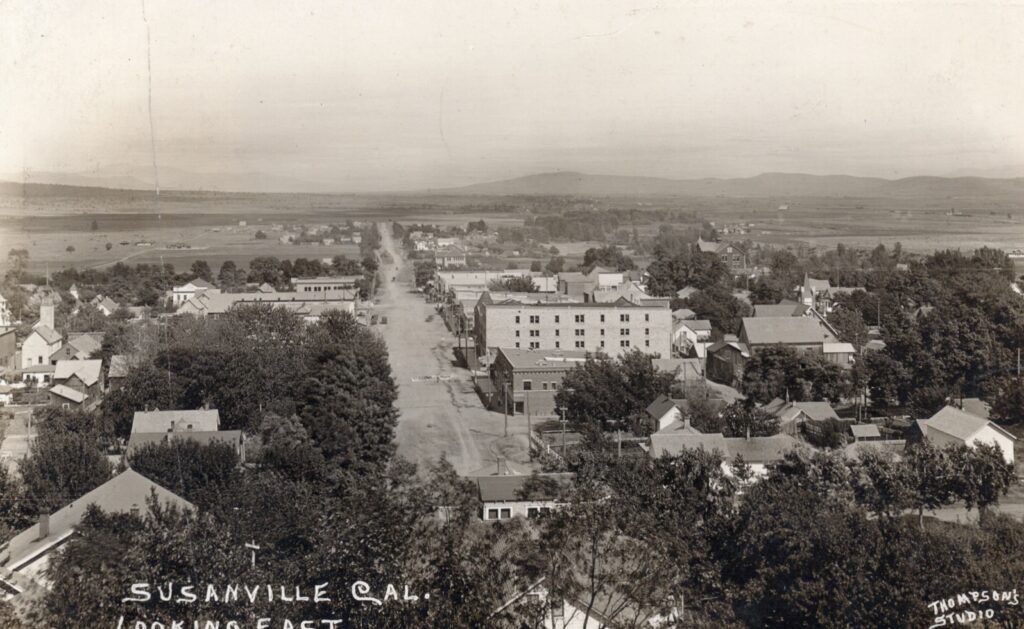
A view of Susanville, 1915
For me, I am constantly on the lookout for his work, Recently, I purchased the above postcard for $8.00 off of Ebay from a paper dealer in Teaneck, New Jersey.
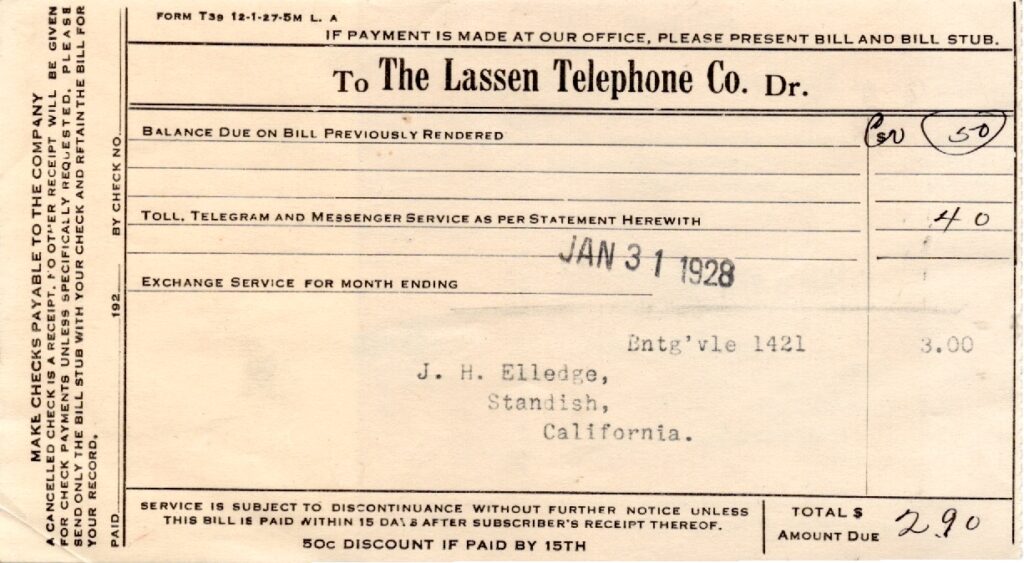
Utilities such as electricity and telephone service to the residents of the Honey Lake Valley presented many challenges.* It was the telephone prevailed years before electricity would be available to residents. On July 10, 1911, the Honey Lake Valley Mutual Telephone Association incorporated as a co-operative. Its headquarters, was the hamlet of Buntingville. In 1924, the group had over 200 subscribers from Standish, Janesville, Milford, and Richmond. Plagued with financial problems, it was taken over by the Lassen Telephone Company on July 21, 1924. Eventually, the Buntingville office was shuttered and transferred to Susanville. Lassen Telephone was later acquired by Citizens.
Tim
*By1900, Chinaman Joe Folsom had developed a private telephone system in Wiilow Creek Valley. Likewise, Carey Sturgess did the same for Long Valley.
When the new Lassen County Hospital was completed in 1916, the Lassen County Board ofSupervisors took a proactive role in its initial management . The old hospital was at the mercy of the board appointed county physician. After with new facility with its amenities such as a up-to-date operating room which could compete with hospitals found in larger cities. They embarked on an advertising campaign with a focus on Modoc County. After all, it was the consensus of the board that the hospital should pay for itself. Initially, it worked well, due in part of the population surge generated with the establishment of the Lassen Lumber & Box Company. In 1921, there was competition with newly established Riverside Hospital. Then along came Potter’s Maternity Home, which did not help either. Thus, the county hospital was relegated to those indigent means.
This continued until the early 1960s, when the county built another new hospital. Timing can be everything. When Lassen Memorial Hospital opened its doors, Potters and the Riverside were winding down. Plus the local economy got a boost with newly opened prison, the California Correctional Center.
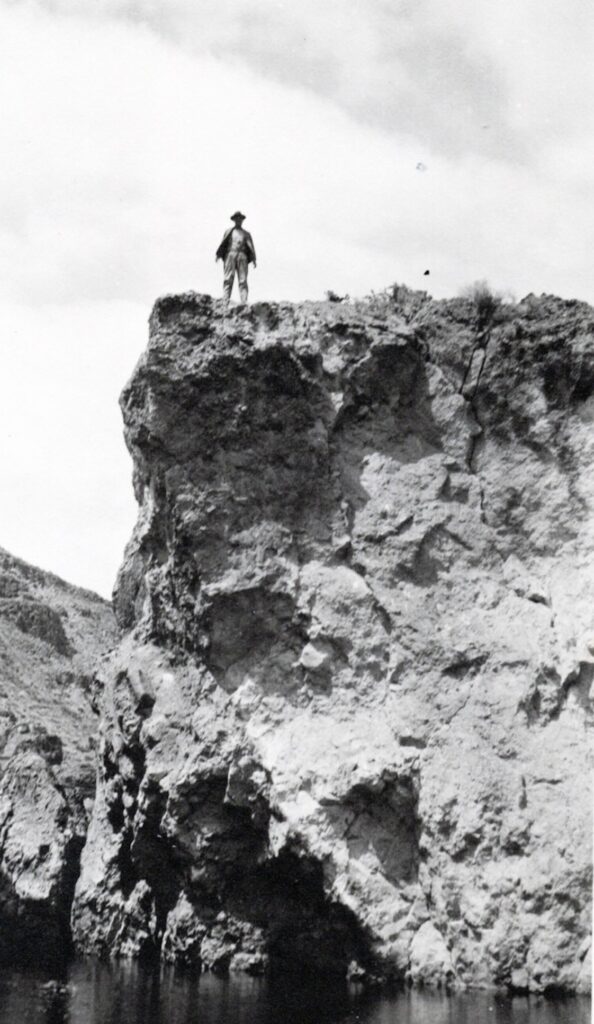
Marvin Caudle, Skedaddle Creek, 1922 – C.R. Caudle Collection
While working on the 2027 Calendar I came across this photograph. Marvin Caudle (1874-1935) who resided near Stacy from about 1910 until his death in 1935. He is buried at the Honey Lake Cemetery near there.
The Tuesday Tidbit will return in late October that will include some interesting real estate listings from the 1950s.
This is World Gratitude Day and I am grateful for a lot things. Two unsung heroes are Tandy and Michael. Tandy and I go way back, he was the one that created this website for me in 2015. Tandy would later voluntarily recruited Michael for assistance. So when I have technical problems, they are the first people I turn to. Fortunately, I have not had those issues of late.
607 Cottage Street as it appeared in the winter of 2005 and my former home was upstairs.
However, this spring was different matter, with my hospitalization and move. Curtis, Jim and Roby came to my aid to assist with packing in my absence. They now know first hand to some extent of the archives, though they were spared with a large amount still in storage. Last, but not least, my niece’s family the Valdovinos for all things that they do for me.
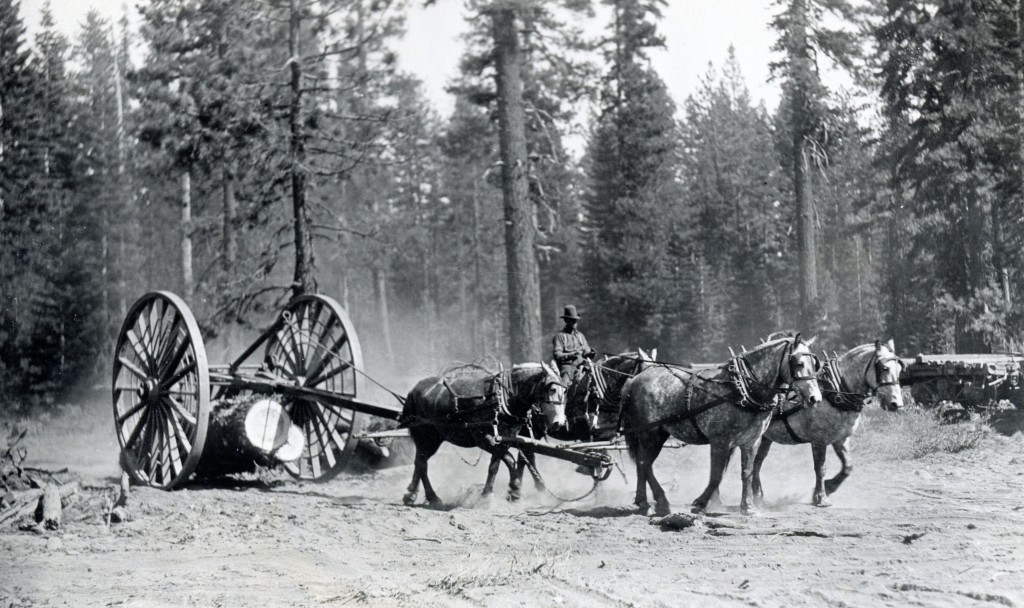
Horse logging with big wheels, at Fruit Growers Camp B, north of McCoy Flat Reservoir.
When Fruit Growers inspected the Collins timber tract west Eagle Lake, they were not only impressed by the timber, but the terrain. It was estimated that 80% of the tract could be horse logged with big wheels versus steam donkeys. Caterpillar tractors were in its infancy stage of development, but would accelerate during World War I. Horse logging had its drawback as it labor intensive. This was due to the fact that they required “swamper.s” Swampers were men hired clear brush and other debris to clear a path to reduce injuries to horses legs. While steam donkeys were used in terrain not suitable for horses had their drawbacks. Sparks from the steam donkeys were a fire hazard. By the late 1920s, both Fruit Growers and Red River converted entirely motorized tractors logging. It would take several decades to convert from railroad to truck logging.
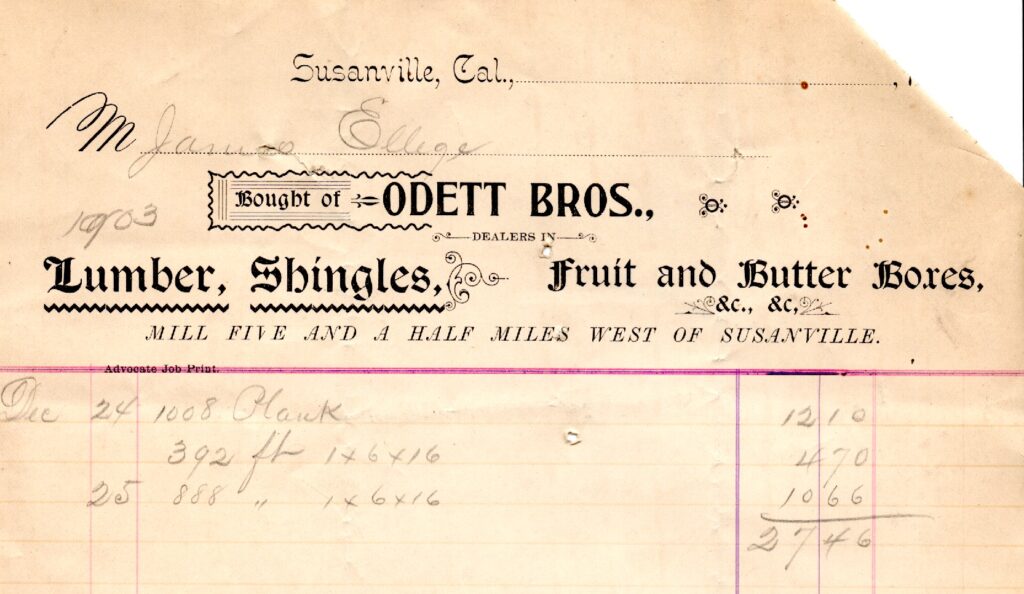 This is a special Tuesday Tidbit to compensate for Sunday’s rant. The Odette family were carpenters and they operated sawmill. When they had a printer print invoices, the said printer misspelled their name, leaving off the “e” at the end of name. It should be noted that the family patriarch Charles Odette was builder of the Leonard residence at the west end of Main Street that became the local Elk’s Lodge for nearly a century.