Catfish Tales

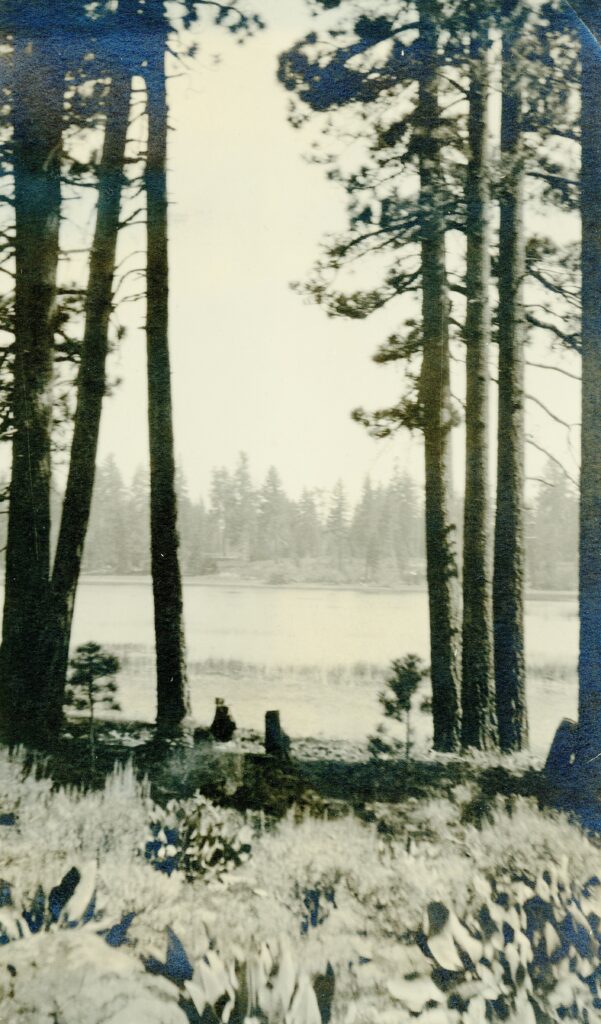
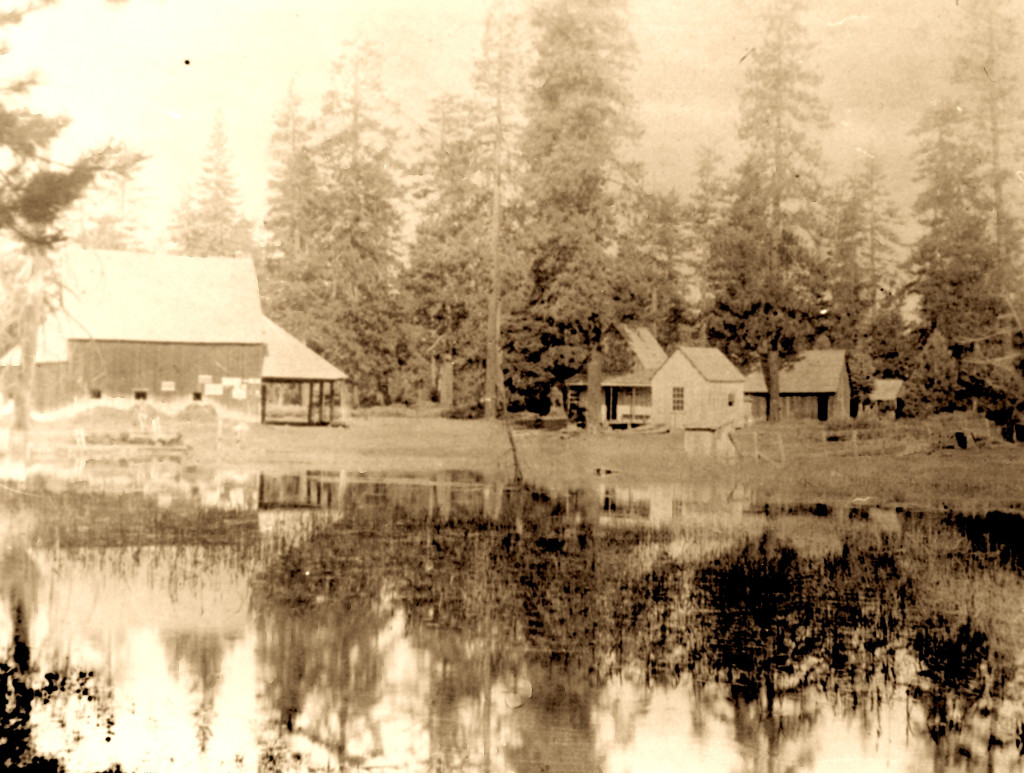
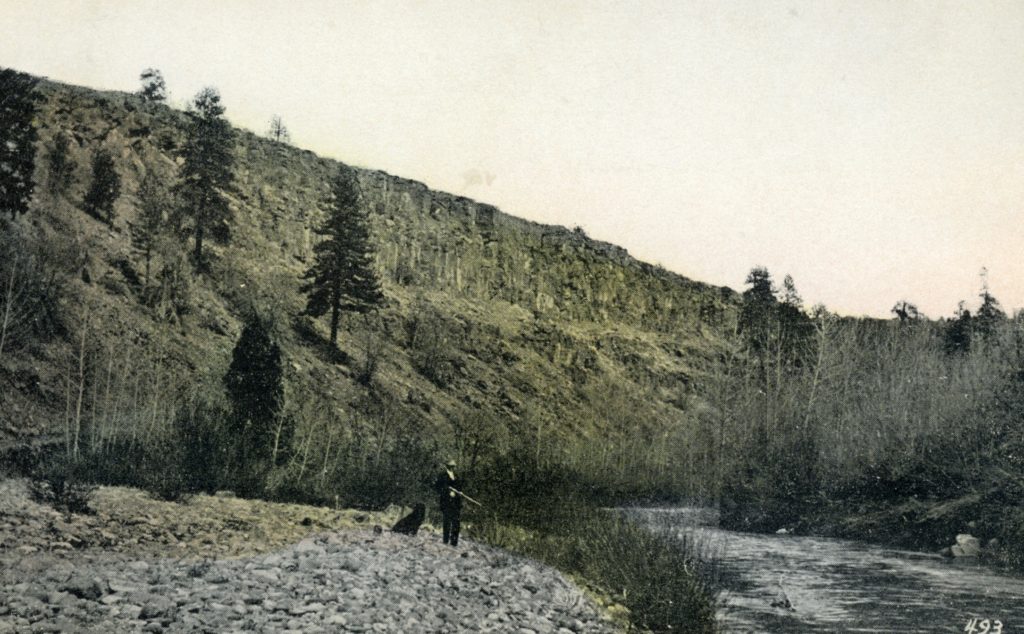
Susan River, circa 1914

In the late 1870s ,the California Fish & Game Commission began experimental fish plantings in Northeastern California. One of these so-called exotic species, or non-native, was catfish. They thrived. Below is account from the Reno Evening Gazette of January 10, 1883:  “The Susanville correspondent relates the following regarding the catfish that were planted in Lassen County waters three years ago. M. Marstellar caught a fine string of catfish in the Susan River, the largest of which weighed 12 pounds. These fish, or their progenitors were planted in the Susan River by the State Fish Commission, four years ago. His deputy T.B. Sanders, has planted fish in the waters of Eagle Lake, Willow Creek, Honey Lake and Piute Creek, on several different occasions during the past three years. Sanders recently a caught a catfish which was stranded on a sand bar in Piute Creek, that weight 14 pounds.”
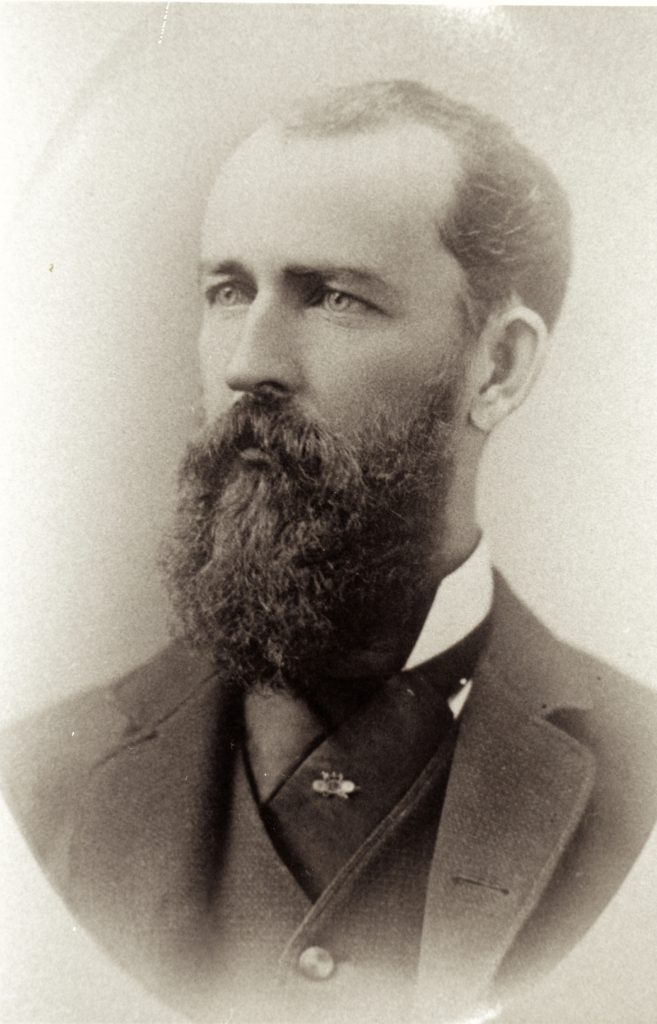
Thomas B. Sanders. Courtesy of Gilbert Morrill

While the catfish thrived in Honey Lake, the fish would subjected to harsh conditions. Herewith is an account from the Lassen Weekly Mail of 3 January 1913 – It is said that thousands of catfish have died in Honey Lake recently, the dead fish in some places covering the shore to a depth of five and six inches. Some ascribe the mortality to the fact that the lake has been frozen over in several instances.”

Subscribe

Ten Years And Counting . . .

Golden Eagle
Golden Eagle Mine,  Hayden Hill, 1909. Courtesy of Dallas & Joyce Snider

It was ten years ago when I launched this site. My book sales had dwindled and the last three tanked, leaving me in the red. I decided to take a chance on the internet and thus this web site was born. Learning how to post and maintain it came with learning difficulties, and to some extent it still does. I am one of those technology challenged people.

The Belfast Sunrise Chamber. summer solstice, 2025

A few weeks ago, a reader complimented me for not only the website’s content, but that it was advertising free and no annoying pop ups. While I have been approached to sell add space, I reluctantly declined. While they were quality offers and would help with the rising costs associated with the site, I just felt it was not a  good fit.

Therefore, it should be noted. that I am so grateful to volunteer subscribers, that if was not your support, the site would have ceased to exist.  Thank you.

Tim

LMUD To Lower Rates

Lassen Mail, November 15, 1935

The Lassen Municipal Utility District (LMUD) that we know, came into existence in 1986. The original LMUD was  created in 1931 on the premise to lower electric rates. Susanville residents complained that their electric rates then were exorbitant–some of the highest rates in the state. A revolt was born to form a municipal utility district to reign in the rates. When the voters approved it, the next order of business was to take over the Republic Electric Company and the battle lines were drawn. The takeover failed. LMUD’s board of directors decided to build its own power plant and transmission lines. They were unable to convince the voters to pass a bond measure to proceed. Many cited the area just too small to support two electric companies. In 1937, the original LMUD was dissolved.

Subscribe

Mahogany Lake, Lassen County

Mahogany Lake, 1920-Wyn Wachhorst

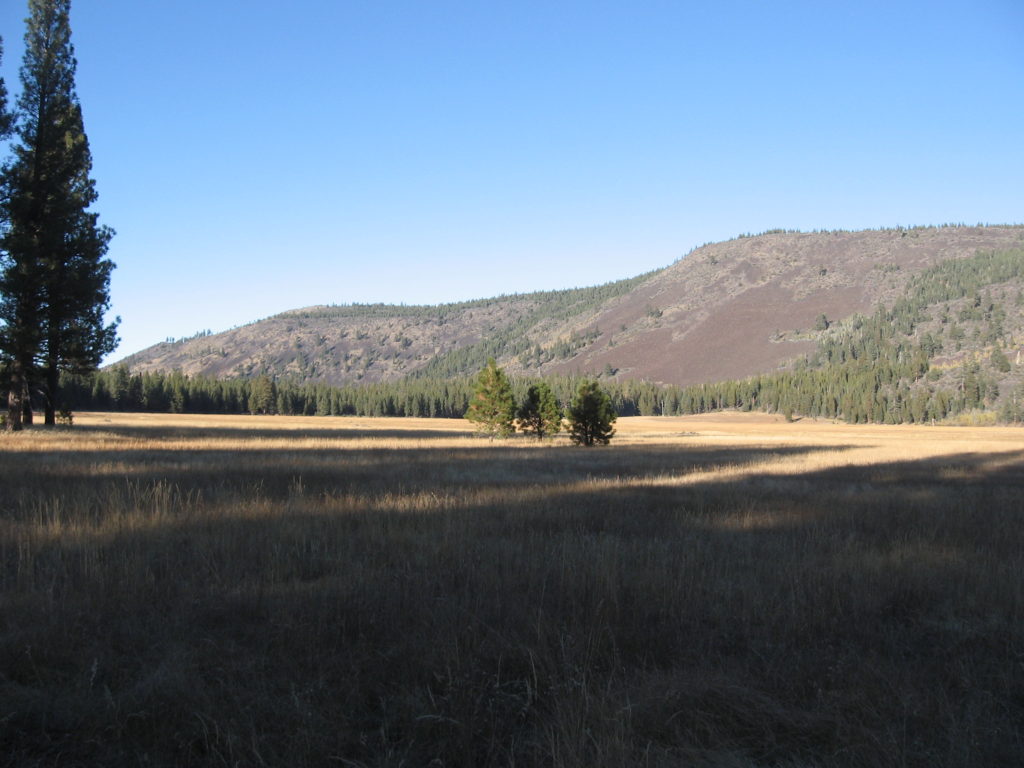
Mahogany Lake is a small twenty-acre  shallow body of water, more or less, that is situated on Mahogany Ridge east of Eagle Lake. Since it has no inlet or outlet it is susceptible of going dry. When that it occurs it appears to be  a grassy meadow.

Papoose Meadows, with Mahogany Ridge in the background October 13, 2017

The lake was originally named Walters. after George William Walters (1865-1923). Walters was a one-time employee of Albert Gallatin who used Eagle Lake for summer livestock grazing. In 1887, Walters sold the 40 acre parcel that encompassed the lake to Gallatin for $300. The property remained in the Gallatin family’possession for decades. In 1947, the Lassen National Forest Service acquired the Gallatin property. It is quite possible that forest service changed the lake’s name.

Tim


A Yard Sale Find

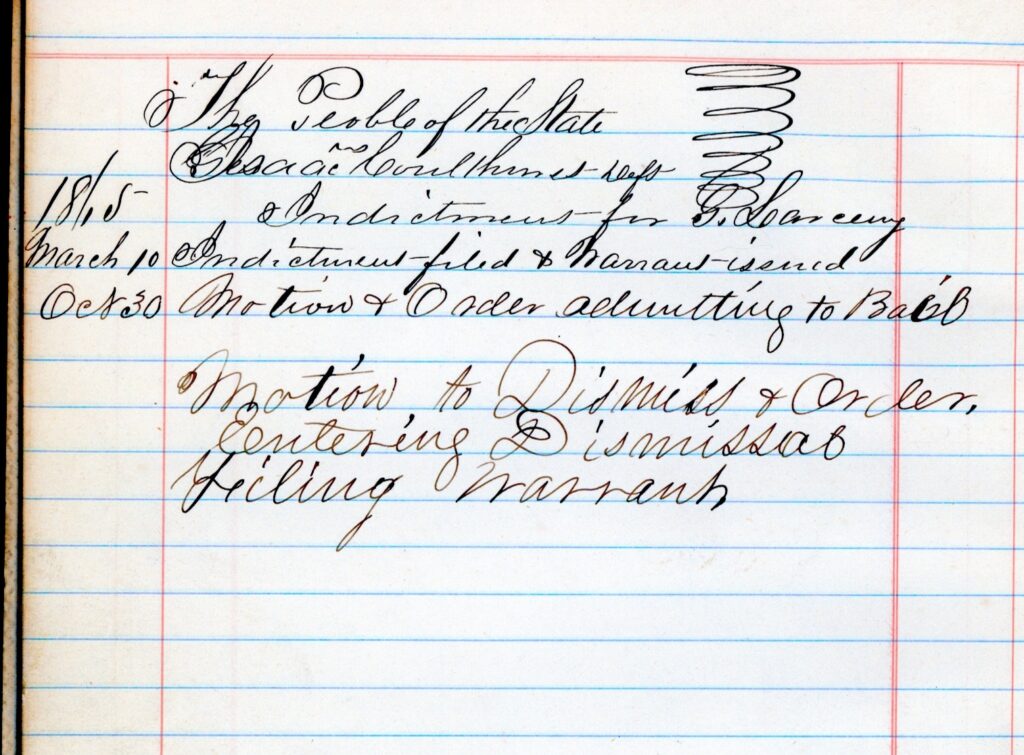
A example of the docket page

This goes under of not quite Dumpster Dive Tales While searching through archives I spotted this file. it is Lassen County District Docket of 1865. In 1869, it surfaced at a Reno, Nevada yard sale The person who bought it, knew Eslie Cann, who at the time worked at the Nevada Historical Society. Eslie alerted me, and she passed on small docket me for safe keeping. It should be noted that the voters of California in 1879, adopted a new state constitution. The District Court system was replaced with the Superior Court system we have today. Anyhow, the moral story is one never knows how records were dispersed and when they may appear again.

As a researcher court docket books and court minute books, while they are a relic past, can provide much information. This especially true when the court file does not exist, as it has been transferred to another county due to other circumstances. Whether the Lassen County Superior Court when it moved into its current facility retained these records I do not know.

Tim

An Early Research Endeavor

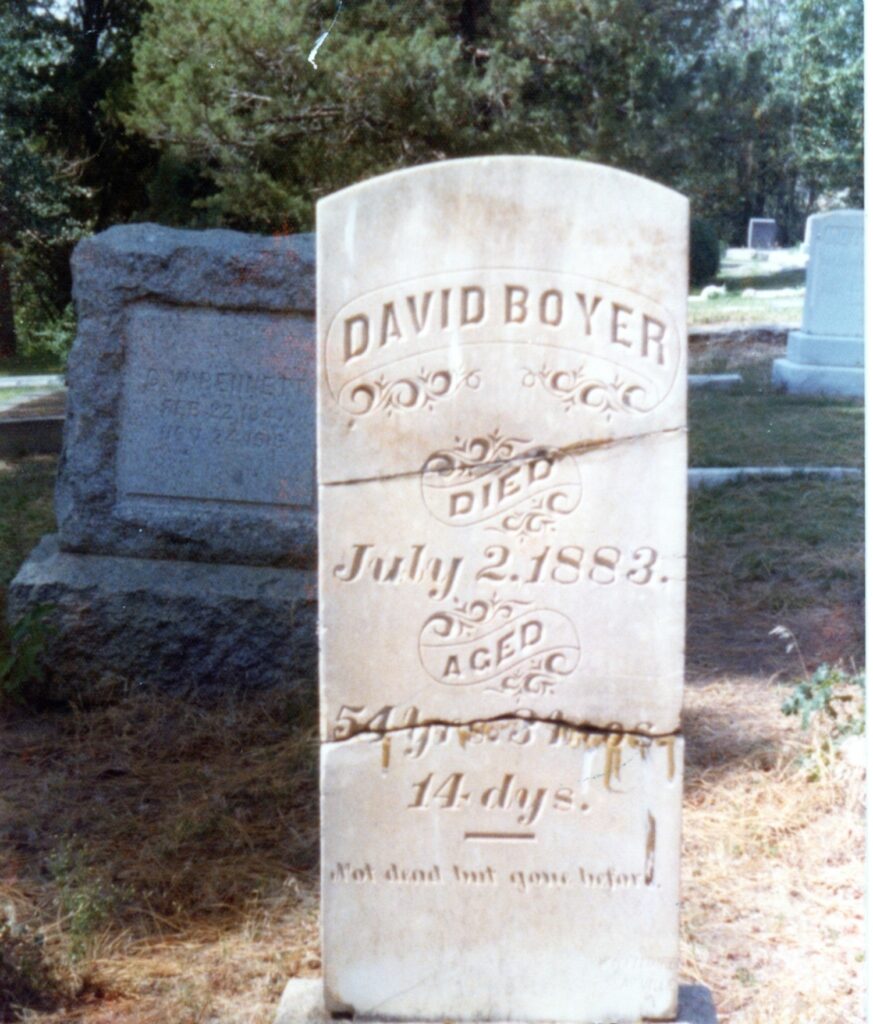
The grave of David Boyer, Susanville Cemetery, 1978

One of my favorite No Trespassing Signs was the Baccala’s at Soldiers Meadows, Plumas County.  It succinctly though I might not remember it verbatim, but it you get the drift: “If we see hanging you see around  hanging today, you will be hanging tomorrow,” and poster was illustrated with a hangman’s noose.

When I began my research I was at “hanging” a lot at the Lassen County Courthouse. Needless to say, while they did the courthouse staff did not threaten my fate to the gallows, they put me work instead. From to time to time either County Clerk or County Recorder would receive a letter from individual doing genealogy.  They would give me the letter to answer.

One of those early request came from Callie Quint seeking information about her grandfather David Boyer who died in 1883 at Mountain Meadows and buried at Susanville. Boyer, a Pennsylvania native, migrated to California in search elusive of proverbial pot of gold. Like so many others before and after him it was elusive and resulted in a hardscrabble existence. In 1875, he briefly operated a saloon at Prattville, Plumas County. The town catered to tourist trade that escaped the heat of the Sacramento Valley in the  summer to what is now known as Lake Almanor. Boyer feeling pinched, pulled up stakes that winter and moved to Susanville. He soon learned the grass was not greener on the other side. He leased a boarding house, but that it did work out. An opportunity at operating a saloon at Janesville seemed promising, but it was not. Back to Susanville. His endeavors as an innkeeper or a bar keep just was not was in the cards to sustain liveliehood was not forthcoming. The paper trail disappeared. In the spring of 1883 he moved his family to Mountain Meadows, though what he did there is not that known. On July 2, 1883, David Boyer died of heart attack at the age of 53. He left a widow and four small children destitute. Amanda moved her family to Susanville did odd jobs, including a bakery to sustain her family. She left Susanville in 1885.

On a final footnote. This one instance helped me to develop my research and writing skills. For a time in the late 1970s, I penned a weekly history column for the Lassen County Times, and I wrote about Boyer.  This caught Lassen College instructor Bob Middleton’s attention. Bob urged to me to get a teaching credential in history, and I did. In the mid-1980s I taught a course of research techniques on local history at Lassen College.

Tim

An 1892 Bold Prediction

Lassen County Courthouse and Hall of Records, 1907. Courtesy of Gil Morrill

In the spring of 1892, Amedee was in its glory as a boomtown craze escalated. The regional newspapers proclaimed that Amedee would “kill” Susanville and that county seat would be moved to Amedee. It should be noted that many leading merchants of Susanville had opened stores in Amedee.

By fall, the talk of moving county seat had somewhat subsided. That would change. On July 18, 1893, the worst fire in Susanville’s history occurred. The entire business district had been reduced rubble. Certain segments of the population pondered whether to rebuild, and let Amedee prevail by moving county seat there. Of course it did not happen. While Susanville was slow to rebuild Amedee’s shine would fade. This was especially true in 1899, when the NCO Railroad began construction of extending the line to Madeline Plains, and Amedee was no longer was terminus.

Tim

A Sawmill’s Friend

LLB
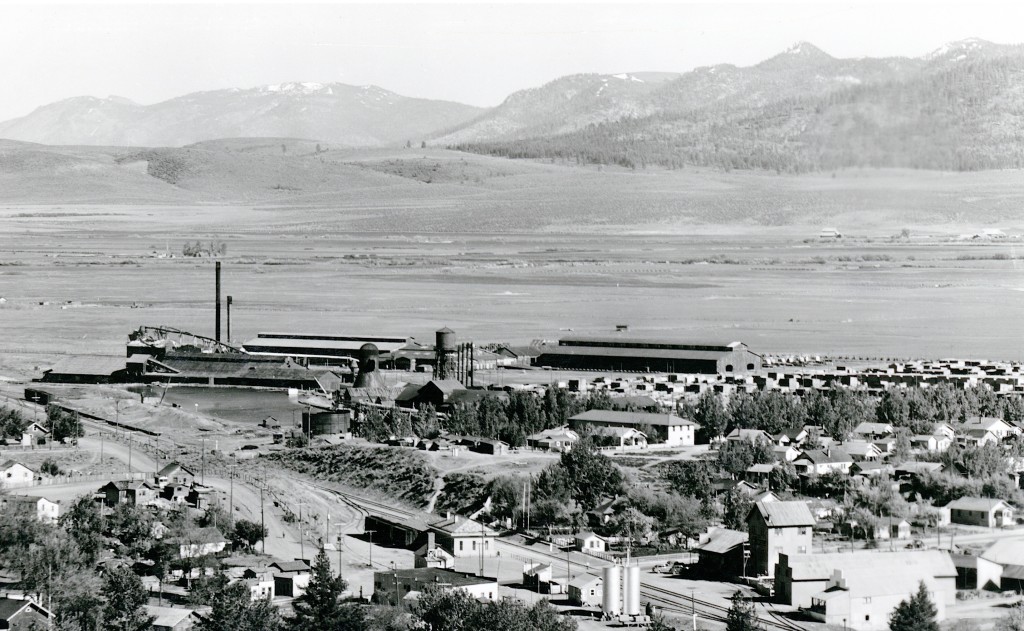
A 1930s view of Lassen Lumber & Box Company

I had hoped by now to have completed the tale of M.O. Folsom, a rancher turned capitalist. His story has been a challenging. While the Folsom name is not well known by many today, Folsom played a key role in Susanville’s development. Here is a bit a trivia, to go along, for many decades Hobo Camp on Susanville was known as Folsom Park and he also owned what is known as Memorial Park.

In October 1917, M.O. Folsom met Charles McGowan, R.D.Baker and C.E. Cotton. The men had inspected a timber sale proposed by the Lassen National Forest in the vicinity of Peg-Leg Mountain some twenty miles north and west of Susanville. They contacted Folsom for possible mill site. Folsom had rallied the Susanville business community A committee was formed, after was at stake was a sawmill and box factory that would initially employ 250 men. The community proposed to offer a 40-acre tract with water rights adjacent to the railroad and east of the Susanville depot,  along with a  $8,000 cash bonus. McGowan and Company accepted and they named their new enterprise the Lassen Lumber & Company.

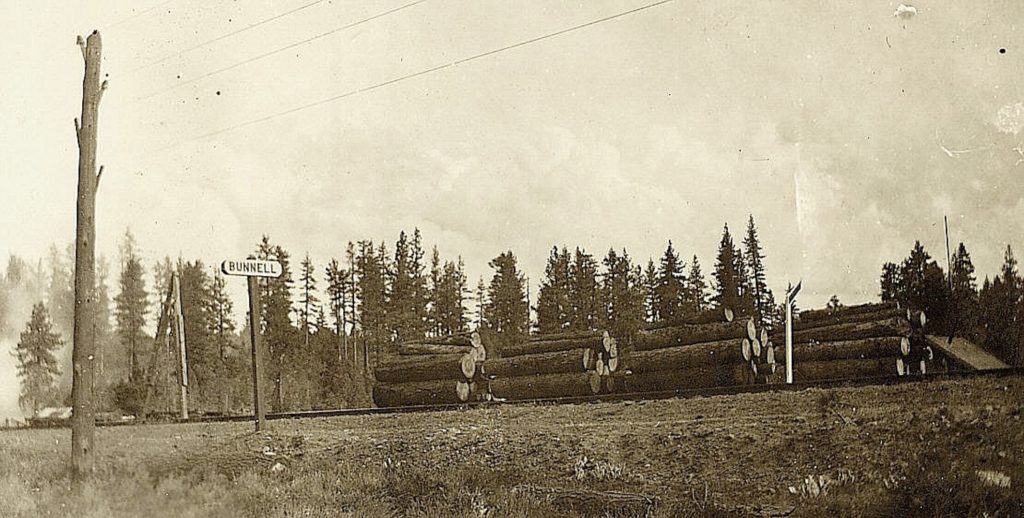
Bunnell siding, circa 1921. Courtesy of Lenala Martin

In 1919, James McNeen a Colorado lumberman contacted Folsom to assist a sawmill site west of Susanville. Folsom presented a site west of Devil’s Corral, along the railroad, and opposite the Bunnell Ranch. A deal was reached and McNeed built a sawmill with  average daily output of 30,000 board feet of lumber.  In that same year, Folsom was a member of Susanville’s Citizen Committee, and they secured Fruit Growers Supply Company to build its mill north of the railroad from tracks from Lassen Lumber.

Clear Creek
Clear Creek as it appeared in 1899, Mary Dale Folsom

Folsom had influence with the Red River Lumber Company. In 1892, Folsom’s father, Orman, had purchased Clear Creek from Hank Lands for an undisclosed amount. In 1909, M.O. Folsom sold it to Red River’s founder, T.B. Walker, for $6,500. At the same time, Walker acquired some 7,000 acres at Mountain Meadows, the remnants of the Goodrich Estate. Those acquisitions would result in Red River’s to establish their company town of Westwood.

Support by subscribing.

Tuesday Tidbit-Dixon’s

Doyle, 1931—Mary Dixon

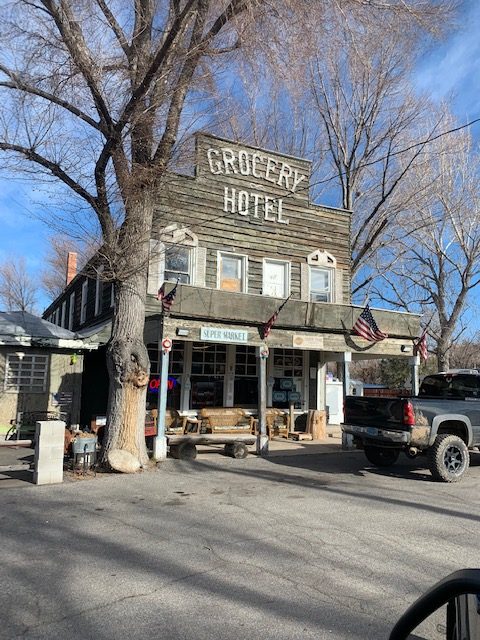
Last Saturday, I wrote about how Doyle evolved. At the conclusion I included a photograph one of the town’s landmark building now known as Winje’s, but for decades was known as Dixon’s. Some time around the late 1970s or early 1980s Winje’s purchased the building from Mary Dixon. Some time around 2021, Winje’s closed its doors. May be a reader might have some knowledge .

Winje’s Emporium, Doyle—January 25, 2020

Whenever my Dad, was in Doyle he would  stop by to see June Dixon. They would swap stories about prospecting on Fort Sage Mountain. In 1910, Orlando McNabb did extensive traipsing on Fort Sage looking for gold. From there on, it has attracted prospectors.

Tim

A Railroad With Many Names

NCO Freight Depot, Reno, 1905-Marie Gould

The Nevada-California-Oregon Railway (NCO) initially had several names. A reader chastised that an article I wrote and labeled it the NCO, though when in fact it was known as Nevada & Oregon. While guilty as charged, for simplicity I just refer to the railroad as the NCO.

To set the record straight here is origins of the multiple names and nicknames of the said railroad.  Established in 1879, its original name was the Nevada & Oregon Railroad Company. In 1885, the name was changed to the Nevada & California. In 1888, the name was changed to the Nevada-California-Oregon Railway. The former names were still; valid due to unpaid bonds under those names. On January 1, 1893 the Nevada-California-Oregon  (N-C-O) was officially adopted for the railroad properties.

These initials N-C-O became target for criticism of the railroad’s poor service. The N-C-O received such dreadful titles as the Narrow Crooked & Ornery, the Northern California Outrage, Never Comes Over and the Nevada-California Occasional. One of my favorites was peened the J.M. Tremain editor/publisher of Susanville newspaper the Lassen Weekly Mail. Tremain called the N-CO a tri-weekly. “It goes Reno one week and tries to return the next.”

Support by subscribing.

Exploring Lassen County's Past