Main Street – Then & Now

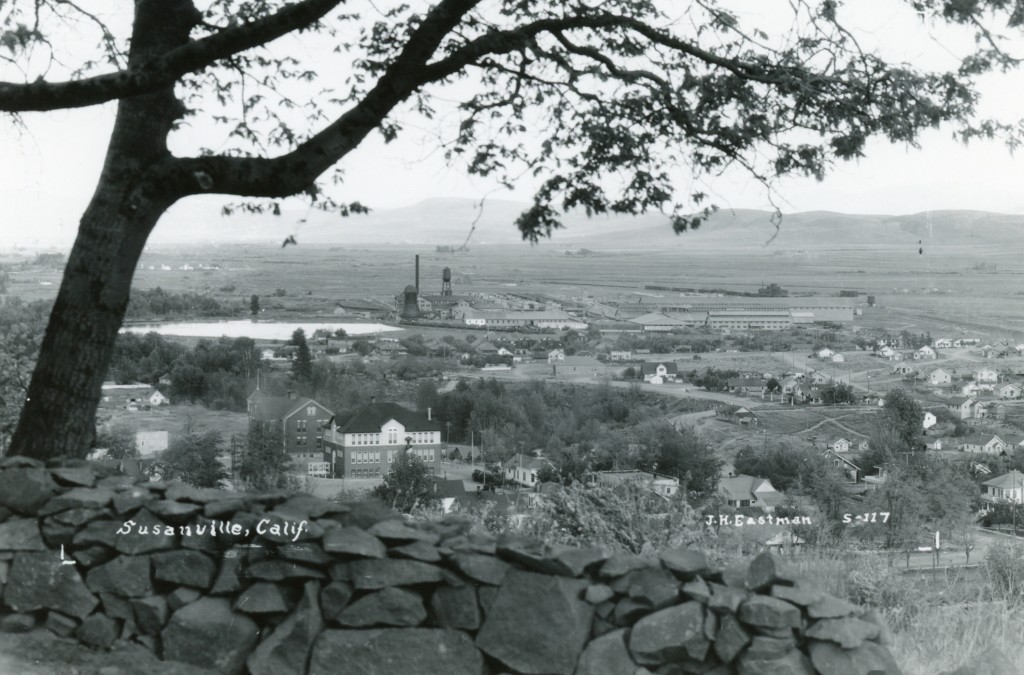
Looking east on Main Street, from Lassen High School, 1908.

Back in June I wrote about A Main Street Problem that involved filling in the gully area of Piute Creek. Since that time, I came across the above photograph, as the original post was taken on the knoll looking west. In an attempt to show the difference on Thanksgiving Day 2015 I took the below image for comparisons sake. For safety reasons, and my mobility a bit limited, I did not take the view from the center of the street for comparisons purposes.  However, the 1908 photograph was taken in front of the high school, and I did the same.

Main Street, Susanville. November 26, 2015

Never miss a story, support and subscribe, click here.


Honey Lake Heaven

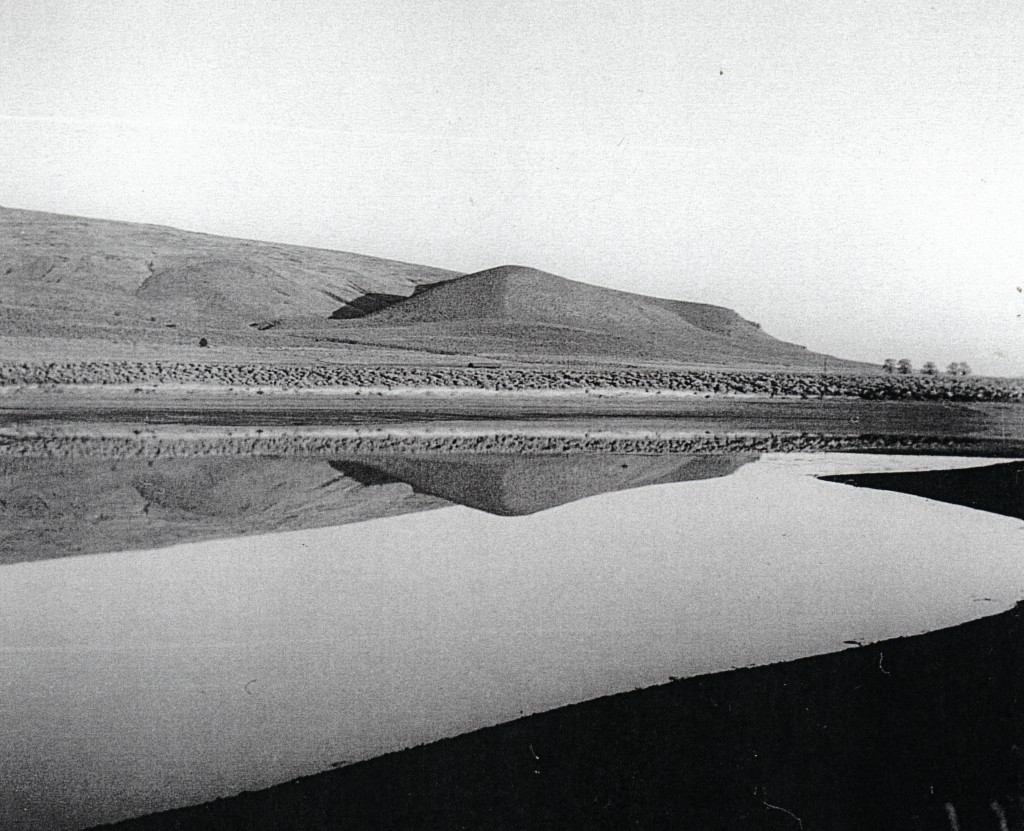
Honey Lake, from Tanner Ranch, 1997.

The first wave of Honey Lake pioneer retirees, which has something in common with those “snow birds” of today who flock to warmer climes such as Arizona for the winter, also sought the same.

By the early 1900s, Honey Lake’s grey hair crowd flocked to Pacific Grove on California’s Monterey Peninsula. Why the attraction? Methodism. Pacific Grove was founded as a Methodist retreat. By 1900, the Methodist Church was the predominat religion of the Honey Lake Valley, with churches at Janesville, Johnstonville, Standish and Susanville.

With so many old timers taking up residence there, some seasonal and some year round, Pacific Grove was dubbed “Honey Lake Heaven,” their last journey in life. Yet, it was not exclusive to the older crowd, as members of the DeWitt and Spoon families to name a few, found Pacific Grove more appealing than the Honey Lake Valley and raised their families there.

Never miss a story, click here.

Winter Solstice

Arnold Planing Mill, Richmond Road, Susanville, 1913.
Arnold Planing Mill, Richmond Road, Susanville, 1913. B.R. Zimmerman collection.

Today brings a smile to face, for it marks at least one turning point of the winter season, even though it takes a few weeks to actually see it progress.  One of the things I dread about winter are the short daylight hours and now knowing that the pendulum will start working its way to bring more daylight. Actually, for those serious folks, on December 15, the sunset locally not starts to get later, by a minute on that date. However, the sunrise keeps getting later, and does not reverse the trend until January 9.

Around these parts, historically the coldest and snowiest months are just ahead in January and February. Nearly all the record breaking snowfalls occur in mid-January. For those interested in forthcoming storms and especially the snow conditions I recommend The Tahoe Daily Snow. On a final note, most forecasters call for the first El Nino storms to begin sometime in the week of January 11.

Finally, those interested in Eagle Lake conditions can see the web cam at Spauldings here.

It is never too late, subscribe today and enjoy tomorrow with daily notifications. You can also surprise someone with a gift subscription.

Soldier’s Bridge Military Camp

Susan River, near the Soldier Bridge military site. November 19, 2015

During the late 1850s and early 1860s residents of the Honey Lake Valley requested military presence for their protection with the conflicts with the Indians. Most of the times, their requests were ignored. However, when Horace Adams was killed by the Indians on June 18, 1860, at Honey Lake Valley, this time their requested was granted. Continue reading Soldier’s Bridge Military Camp

Isaac N. Roop, Esquire

North Roop Street, Susanville, 1931. Courtesy of B.R. Zimmerman Collection

Susanville’s founder wore many hats, one being an attorney at law. There is the interesting tale when Roop was to take the bar examination for the Nevada Territory. At that hearing, a lawyer from Carson City attempted to provide Roop with some assistance. The bar examination was fairly simple and one of the more difficult questions was the definition of a corporation. The Carson attorney informed Roop that “A corporation is a creature of the law, having certain powers and duties of a natural person.” When Judge Gordon Mott, who presided over the examination asked Roop to define a corporation Roop replied, “A corporation is a band of fellows without any soul of whom the law is a creature, who have some powers and take a great deal many more, and entirely ignore the statutory duties imposed on them.” Thus, with that remark Roop was admitted to bar.

In 1865 Roop was elected Lassen County District Attorney and was re-elected to a second term in 1868. He never served the second term, as he did not post the required bond.

It is never too late, subscribe today and enjoy tomorrow with daily notifications. You can also surprise someone with a gift subscription.

Penmanship

Shinn Brothers bill for printing services to Lassen County
Shinn Brothers1880  bill for printing services to Lassen County. James Oliver Shinn excelled in spencerian script, no doubt influenced his mother, Louisa, being a school teacher. His two brothers, Al and Robert, who became attorneys had sloppy handwriting.

In education circles there has been a debate brewing over whether cursive handwriting should be taught.

By 1850, Spencerian Script had been widely adopted in schools as well as in the business community. With the advent of typewriters it began to fade away in the early 1900s. By the 1920s, schools began adopting the Palmer Method. It was considered more streamlined, less laborious and faster technique.

Of note, the Spencerian had some quirky traits, which one sees a lot in early documents of Lassen County. A double “s” such as Lassen, looks like a “p.”  This was evident in the short-lived Lassen Post Office in the Willow Creek Valley that only operated from June 19, 1874, to July 14, 1875.  Some records cite it as “Lapen,” due to the penmanship of Edward Bonyman, its first and only postmaster.

Become a supporter for just $5 a month to ensure quality history continues. Click here.

Standish – Wrede Hotel

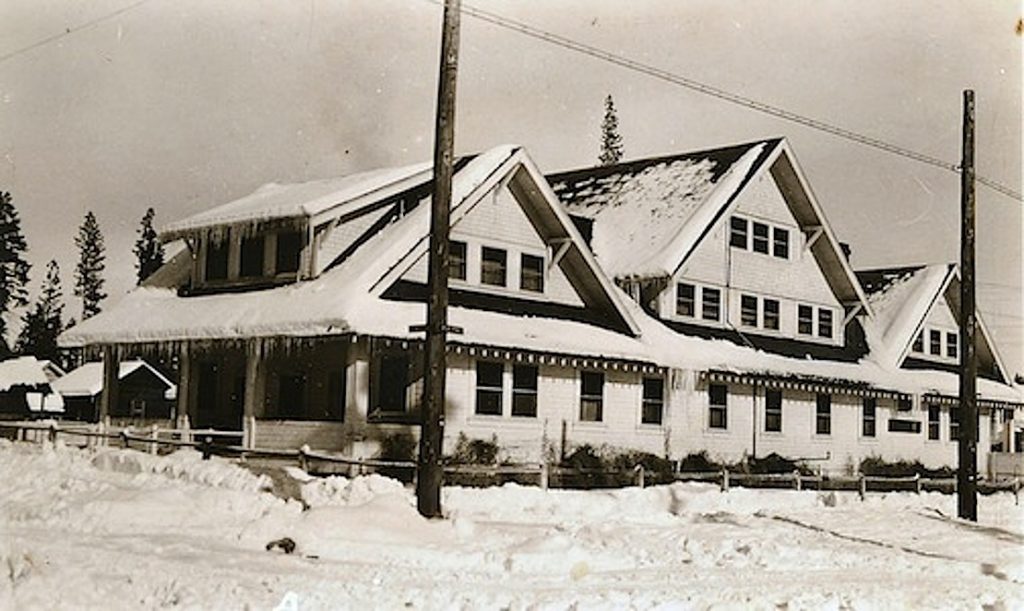
Wrede Hotel. Courtesy of Dorothy Story

In the summer of 1937, V.R. McClure announced his intentions to tear down the Wrede Hotel and replace it with a restaurant and bar.  For whatever reason, he procrastinated and did not do the demolition until the fall of 1942.

The structure was originally known as Pringle Hall. When it was built in 1898, it was the most substantial structure in the new town of Standish. The downstairs housed Mike Phillips general mercantile store, while the upstairs was a hall, used for a multiple purposes. This is where the initial church services were held until a church could be built. It was also used for dances and various lodges held meetings.

As Standish grew more facilities became available. Frank Wrede purchased the building from James Pringle and expanded it. The upstairs was converted into hotel rooms. The downstairs had a store, restaurant and a branch office of the Bank of Lassen County.

It is never too late, subscribe today and enjoy tomorrow with daily notifications. You can also surprise someone with a gift subscription.

Susanville Roundhouse

The Southern Pacific Roundhouse, Susanville, 1947. G. Dunscomb Collection

Yes, I must confess my ignorance on this topic. This railroad’s roundhouse is unique in the sense it was isolated.  It was not something a person would drive by, and it went relatively unnoticed unless you worked for the railroad or was involved with the nearby lumber mills.

Equally, puzzling is the rarity of photographs of trains along the Fernley & Lassen line. What makes that peculiar when one takes into consideration the large amount of tonnage shipped. During its existence, I would safely estimate some three billion board feet of manufactured lumber was shipped across these rails, that with the exception of the rails left at the Susanville Depot are all gone.

If anyone has information that they would like to share about the roundhouse, it would be greatly appeciated.

It is never too late, subscribe today and enjoy tomorrow with daily notifications. You can also surprise someone with a gift subscription.

Swamp Angel

Murphy Field, November 19, 2015

No this has nothing to done with some foul, slimy creature crawling out of a lagoon. There are a lot of  localized place names that over the years have been forgotten and abandoned. One example is Murphy field, where Bob Murphy and Finn Barry after graduating from college tried their hand at farming in 1916.  It did not take long for Finn to give up the farm and went on to become an attorney. Continue reading Swamp Angel

Susanville’s Thompson’s Photography Studio

Courtesy of Frances Wier
Thompson Studio, 1921. Courtesy of Frances Wier

It has been awhile since I wrote about the professional photographers of the area who left a valuable historical record behind.

In September 1912, Peter Julian “Jack” Thompson announced he was going to relocate his photography studio from Loyalton, which had been in operation there for ten years, to Susanville. However, due to some delays he did not open for business here until February 1913. Continue reading Susanville’s Thompson’s Photography Studio

Exploring Lassen County's Past