Roosevelt Pool Revisited

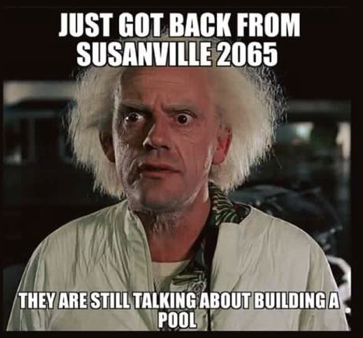
A meme making the rounds on the internet

Today, marks my first anniversary of a daily blog. That topic concerned the history of the Roosevelt pool, which had been demolished in February 2015. You can read the full account here.

The City of Susanville and County of Lassen created the Honey Lake Valley Recreation Authority. It is a five member board with two representatives each from the City and County and a fifth seat to a member of the public.  As a casual observer, while countless meetings have been held, plans submitted, yet nothing as far I can tell, I don’t see anything moving forward. May be I am bit cynical, but their latest news release contained who and how much people will be paid for their services, but still no concrete details when a pool might get constructed. Hence, some creative person provided the above illustration. No doubt, a member of the Authority will take me to task and so hopefully a year from now on my second anniversary we may know more.

Never miss a story, click here.

March Preview

Flooding near Standish, 1952. Courtesy of Betty Barry Deal
 Roosevelt Pool Revisited  3/1/16
Sacred Heart Church 3/2/16
The Lassen Mail and the Cook Era 3/3/16
Janesville Hotel 3/4/16
David Rosas 3/5/16
Susanville’s Loafer’s Society 3/6/16
Purdy’s Garage 3/7/16
Susanville’s Bordellos – Part II 3/8/16
W.N. Davis, Jr. 3/9/16
St. Patrick’s Cemetery Tour Update 3/10/16
Lake School – Then and Now 3/11/16
Susanville Street Names 3/12/16
Barry Reservoir 3/13/16
Westwood’s Paint Job? 3/14/16
Pioneer Barbershop 3/15/16
Skedaddle Creek 3/16/16
Bartlett Said, A Vagabond’s Journey 3/17/16
Buried Treasures 3/18/16
W.R. Harrison, Esquire 3/19/16
The Magnolia 3/20/16
Coyote Scalps 3/21/16
NCO Livestock Brand 3/22/16
The Shinn Family 3/23/16
Sierra Theater Preview 3/24/16
Diamond Mountain Guest Ranch 3/25/16
William S. Brashear 3/26/16
Sacred Heart’s Rectory 3/27/16
Roseberry House 3/28/16
Westwood’s LDS Church 3/29/16
Lassen High’s Block L 3/30/16
April Preview 3/31/16

Never miss a story, click here.

Menopause Manor

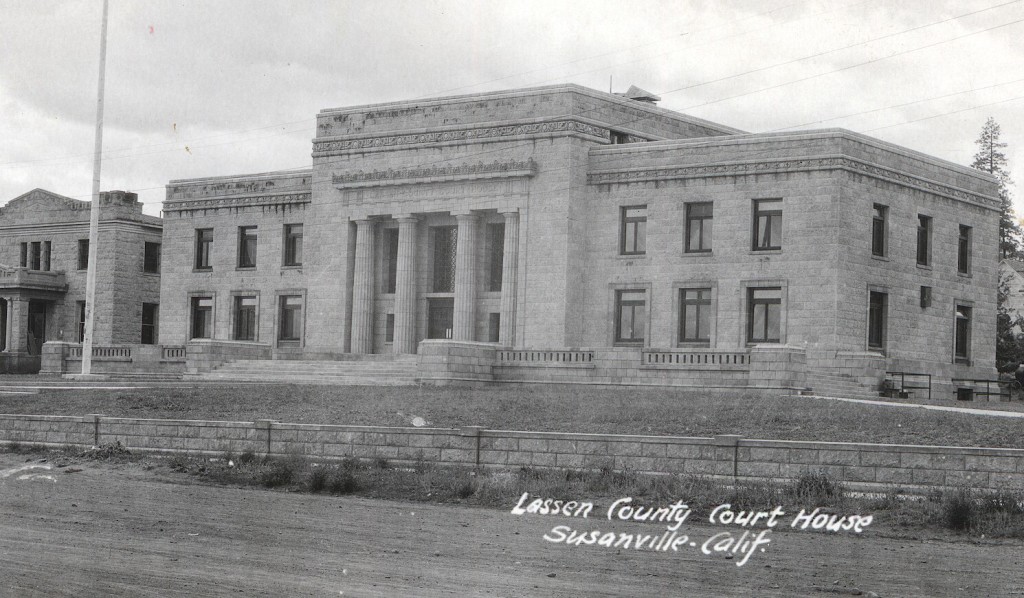
Lassen County Courthouse, circa 1920.

During the 1970s and early’80s the north wing of the second floor of the Lassen County Courthouse not only housed the County Clerk’s Office, but its occupants dubbed themselves the Menopause Manor, though an exception for their token male employee, Bruce D. Dyer.

These ladies—Sue Farstad, Jacquelyn Fuller, Betty Hibbs and June Nelson—were the nicest bunch of ladies that I had a privileged to be associated with. They provided me with an education that I could not obtain from an institution of higher learning. This was during a period wherein I truly started in earnest my research into local history and debunking many a myth. My favorite was when I made inquiries about local historical publications and trying to ascertain the source, would get that so and so provided the information, as the courthouse had burned down so there is no record. Lo, and behold on September 30, 1975 I made my first appearance at the courthouse and was overwhelmed by all the documents available, dating back to the 1850s, prior to the formation of Lassen County, no less! The tale the courthouse had burned down was just a lazy excuse for not doing the hands on, tedious research.

The ladies of Menopause Manor took me under their wings, and for the first several years I drove them nearly insane with my incessant questions. Yet, they patiently answered and explained everything, so in the end not only did I have a firm understanding of county government, but the workings of the court system and elections. I will always be grateful for everything I learned from the ladies of Menopause Manor. Yet, you the reader of this daily blog, or of my books, are the beneficiary of their contribution to my education.

Never miss a story, click here.

Acts of Kindness

Paul Harris436
Rotary

On February 25, 2016  yours truly was a recipient of Rotary’s Paul Harris Fellow Award. After forty plus years of not only preserving our region’s heritage but more importantly making it available in a variety of formats, it was nice to be recognized. Thank you Susanville Sunrise Rotary Club for the distinguished honor.

In a related matter every now and then some kind individual sends along a financial donation.  It is a heartwarming gesture, that is much appreciated.  It shows that people not only support the humanities, but understand and appreciate it. After all, there is a wide of variety of costs involved with archives.

Finally, thank you the subscriber for your support, it is truly appreciated in more ways than you can imagine.

How to support, click here.

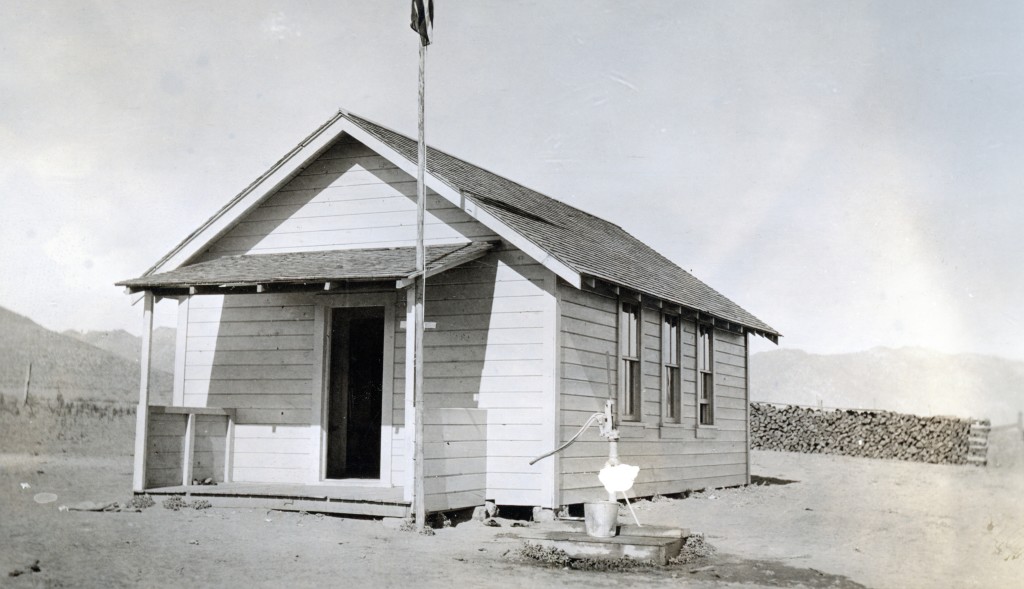
Constantia School

Constantia School, 1916. -- D.M. Durst Collection
Constantia School, 1916. — D.M. Durst Collection

In 1897 and 1898 the Warm Springs and Junction Schools were formally declared closed by the Superintendent of Schools. Due to that circumstance, no school existed in the extreme southern portion of Lassen County. In 1904, F.C. McDiarmid petitioned the County Superintendent of Schools, J.F. Dixon, to form a new school district in the southernmost portion of Lassen County. McDiarmid cited there were 21 school age children in the proposed district and that the majority of these children resided more than ten miles from the nearest schoolhouse. McDiarmid’s petition was submitted on March 14th and required urgent attention. State law required all new districts be formed before the 5th of April of any year. Dixon urged the Board of Supervisors to approve the District and noted that the Board would need to hold a special meeting to meet the State deadline. The Board of Supervisors held a special meeting on April 4th, with three members in attendance, and approved the formation of the Constantia School District. The District boundaries included the Constantia Ranch and all the territory south to the Sierra County line. Continue reading Constantia School

Technical Difficulties

Ouch, a story I never got to ask dear old Dad. Courtesy of Fred Lendman
Ouch, a story I never got to ask dear old Dad about this Purdy Brothers Logging episode. Courtesy of Fred Lendman

My computer is being overhauled today, new hard drive, etc.  This does not affect the website. However, I will not be able to respond to communications, such as comments and emails. Hopefully, all goes smooth and be up and running by mid-day.

Wingfield’s Meadowbrook Ranch

Wingfield's Meadowbrook Ranch circa 1911. Courtesy of Fred and Alyce Bangham
Wingfield’s Meadowbrook Ranch circa 1911. Courtesy of Fred and Alyce Bangham

On May 23, 1910, Nevada millionaire, George Wingfield purchased the 320-acre Clinton DeForest ranch at the base of Diamond Mountain to construct a summer home.  This, of course, was unheard by the local populace.

No time was wasted and construction of the $25,000 home, complete with at that time, modern electric and plumbing fixtures.  The house, was the project of Wingfield’s wife, Maude.

Besides the house, there was guest house, a greenhouse, blacksmith shop and two fish ponds, along with a wildlife preserve. In due time, Wingfield enlarged the holdings by another 1,300 acres. In one acquisition he purchased the timber holdings of the Lassen Mill & Lumber Company. Included was a tugboat used on Honey Lake. Wingfield which he converted the boat into a pleasure vessel and even had a special boathouse constructed on the shoreline of Honey Lake.

The landscaped grounds of Meadowbrook Ranch. Courtesy of Alphozene Terrill

On July 24, 1923, the Wingfields sold the property to the Lassen Mill & Lumber Company for an undisclosed amount. The latter’s sole interest was for the timber estimated at 20 million board feet. The following year the property was converted into the Susanville Country Club, but that is another story for another time.

Never miss a story, click here, and also support this site too.

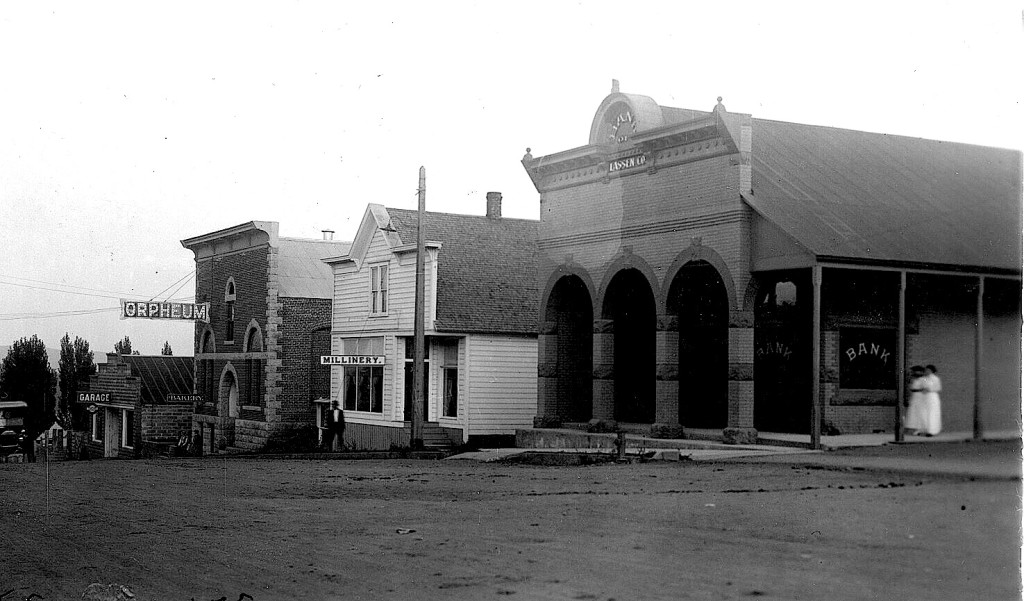
Orpheum Theater

The Orpheum.
The Orpheum as it appeared shortly after it was built. Courtesy of Mary Nobles

In 1913, Susanville’s first movie theater opened for business at 804 Main Street. It was a multi-functional building where dances and other social events were held. It should be noted that the first movies to be shown in Susanville occurred in 1907. When the Orpheum first opened, movies were shown usually two to three nights a week. Whatever the case may be, it became one of the most popular social hubs in town. It should also be noted, that the basement of the Orpheum housed a bakery.

In 1921, the Orpheum had competition when the Liberty Theater opened at the present site of Sierra Theater. The Orpheum adapted and at times had a skating rink and bowling alley. Many a civic organization held meetings and social fundraisers there. On May 16, 1963, Paul Langslet had the building demolished for a parking/used car lot.

Never miss a story, click here.

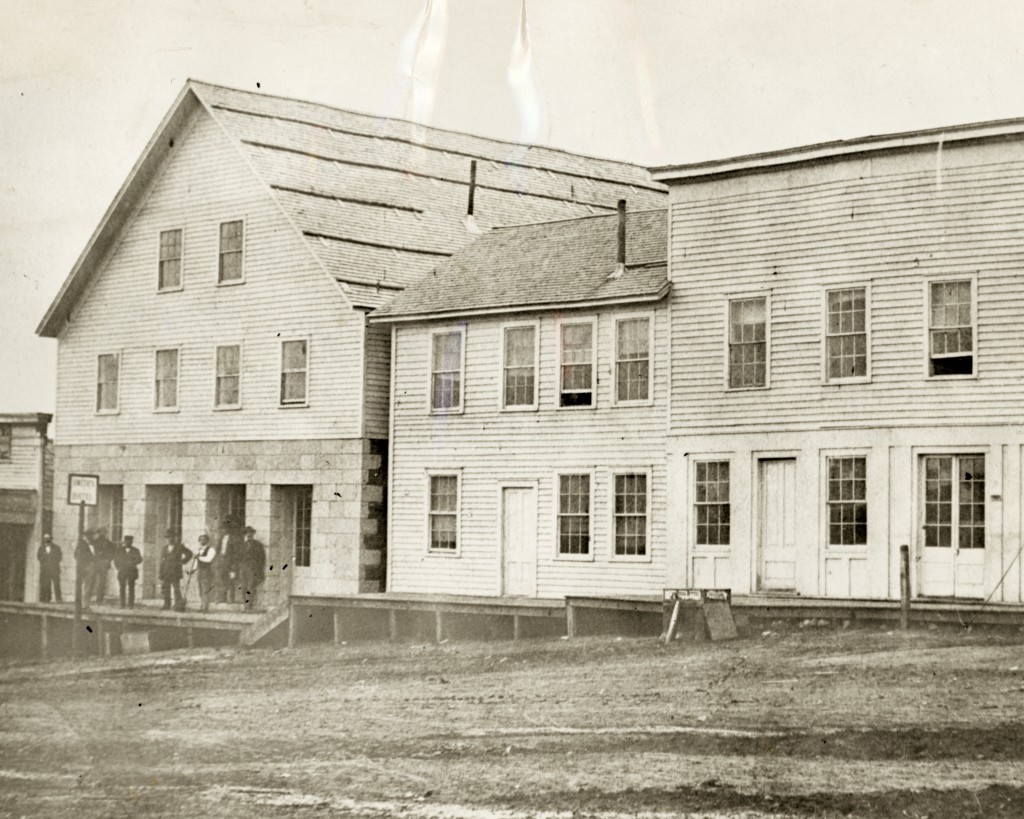
Susanville – Smith Hotel

Smith Hotel, circa 1880. Courtesy of Verna M. Wood

The Smith Hotel, I have found intriguing in the sense of the lack of records. Yet, it was one of the more substantial buildings in Susanville during its day.

The founder, Jacob Smith, a german immigrant whose true spelling of his last name was Schmitt, arrived in Susanville, in the fall of 1864.  Records about his early activities conflict.  According to Fairfield’s history, Smith operated a brewery from 1865 to 1872.  Yet in December 1868 the Lassen Advocate reported that Smith and Doctor R.F. Moody were partners in a drug store. Moody filled the prescriptions and Smith sold them. The Advocate in April 1869 reported that Smith sold his drug store to Dr. Z.N. Spalding and had returned to brewing beer.

In the summer of 1877, Smith begins construction of his “fire-proof” three-story hotel. However, only the first floor was made of stone.  It was also not fire-proof as it was destroyed in the big fire of 1882. Some records state that Smith, along with his wife, Sophia, remained in the hotel business and others he continued as a brewer. Dick Harrison, a great-grandson was under the impression that Sophia operated a boarding house, but not a full-fledged hotel.

When new material surfaces, this page will be updated.

Never miss a story, click here.

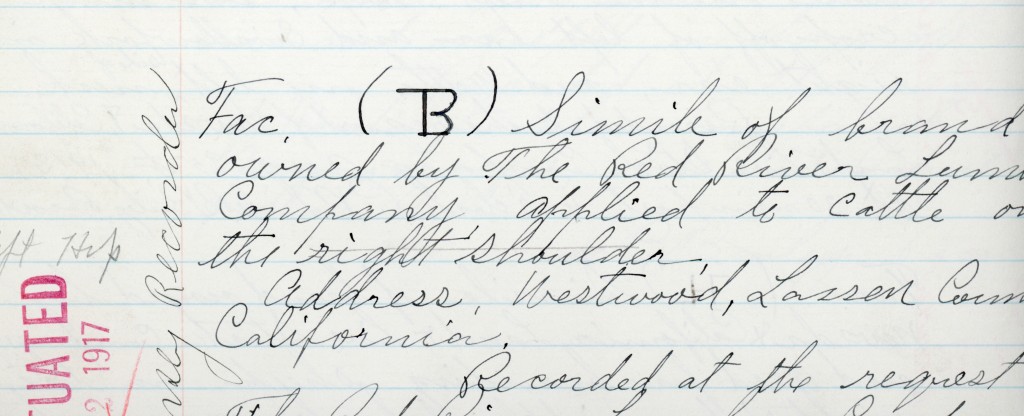
Red River’s Livestock Brand

RRLC Brand417

In today’s marketing world one of the most used terms is “brand.” However, the agricultural community, brands are more than a marketing gimmick.

One would not think a lumber company would have a brand for livestock. When Red River first set up shop in Mountain Meadows, Fletcher Walker’s goal that the entire operation would be self sufficient, as possible with certain limitations. It was an admirable goal.

Initially, Red River needed horses for logging, which they did not completely phase out until the late 1920s. Red River had its own dairy herd to provide for milk, etc which all was produced in its own dairy. Since Red River owned a sizeable portion of Mountain Meadows, they initially raised their own cattle. Due to the winter weather conditions there, the cattle had to be moved elsewhere. My grandfather, John Tanner, routinely during the 1920s would pasture a portion of Red River’s herd for the winter in the Honey Lake Valley.

It was only fitting that Red River’s used the initials of TB for its brand. For those not familiar with the company, the initials are of its founder, Thomas Barlow Walker, who routinely used his initials, “TB.”

Never miss a story, click here.

Exploring Lassen County's Past