In 1919, when the Fruit Growers Supply Company decided to locate its second lumber mill at Susanville, they thought that community would come forth to provide housing for its workforce. It kind of happen. Yet, Fruit Growers with over 1,000 employees for its Susanville operation, was too much for the community to handle. To be able to attract a stable workforce, Fruit Growers only option was to develop its own residential district next to the mill. Those streets all have names associated with the citrus industry, such as Sunkist.
For those not familiar with Fruit Growers, it is a purchasing agent for co-operative then known as the California Fruit Growers Exchange comprised of citrus growers. In 1907, the Exchange coined the brand Sunkist and in 1952, they renamed the Exchange to Sunkist.
Never miss a story, click here to support and subscribe.
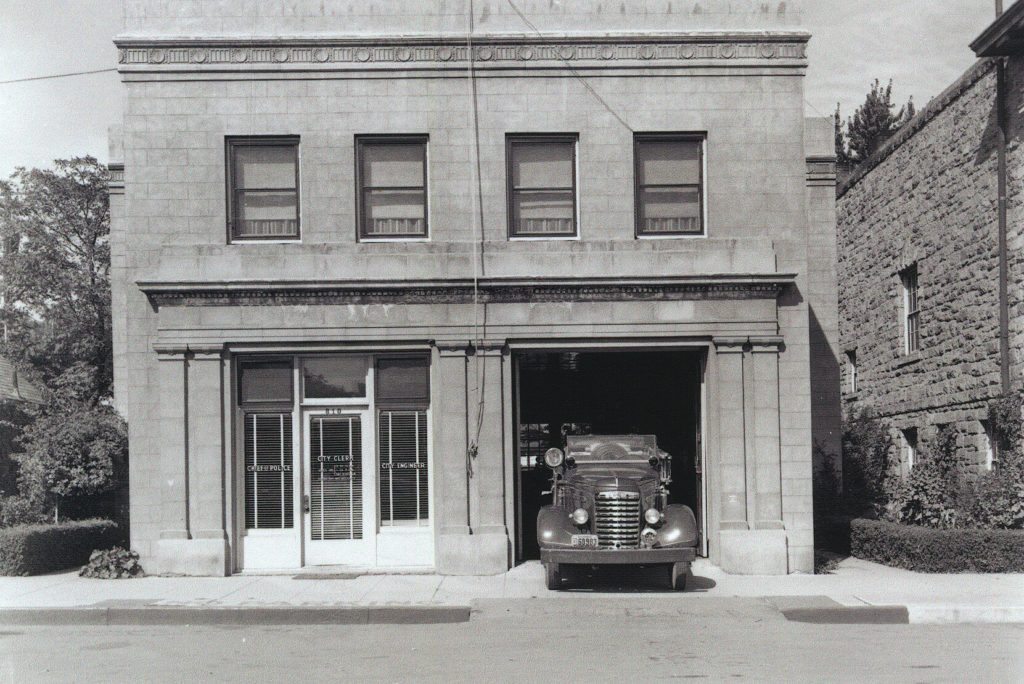
In November 1921, a fire started at the Native Sons of the Golden West Hall on the corner of Lassen and Nevada Streets. The two-story wooden structure quickly spread next door, which ironically housed the city’s fire hall, and it, too, was destroyed in the blaze. Continue reading Susanville’s City Hall→
During the late 1940s, the Red River Lumber Company was in the process of dissolution. They came to the conclusion the shoreline property they owned at Lake Almanor would be better for resort development and subdivisions that the expensive task for reforestation. To make the decision was a lot easier than to implement.
It was finally decided that they should sale to a developer than to undertake it themselves. Harriett Walker Henderson and Theodore S. Walker were designated by the family to sell the shoreline property at Lake Almanor, consisting of some 2,500 acres. They succeeded in quick order. On June 9, 1950, the property was sold to Lake Almanor Development Company for $160,000. The company was comprised of Seattle investors Warren Orr, Paul Block and Edward Clifford. In 1953, witnessed the initial development on the peninsula as the Lake Almanor Country Club.
Never miss a story, click here to support and subscribe.
Abe Jensen probably has the distinction of the youngest person to record a livestock brand, which event occurred on October 11, 1917, when he was only nine years old. Albert Abel Jensen, was a member of a pioneer family. He was the great- grandson of Henry C. Stockton, who was one of three original Lassen County Board of Supervisors appointed by the governor in 1864 to organize the newly formed county and was elected to that office on May 1,1864, serving one term. It should be noted that in 1863, Stockton settled to the west of Devil’s Corral, along the Susan River and operated a sawmill. The property still remains in the family, with Abe’s nieces and nephew in charge.
Abe was a Lassen High graduate of 1926, and continued his studies at Stanford where he graduated in 1930. He continued with the ranching activities like his father, Bert. It should be noted that Bert was instrumental in resurrecting the Lassen County Fair in 1922, and the property that is the current county fairgrounds belonged to Bert Jensen. Besides ranching, Abe served as the Lassen County Fair Manager from 1946 to 1968. In 1973, Abe, and his wife Adelaide moved to Reno, where he passed away in 1989.
Never miss a story, click here to support and subscribe.
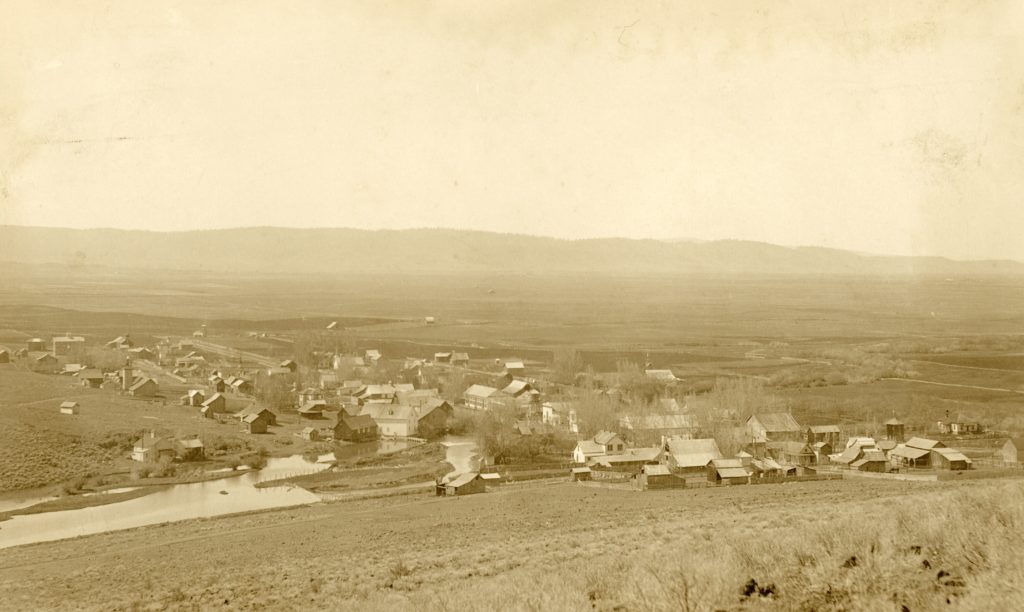
Located just a mile north of the Lassen County line in Modoc County, Adin benefited from Lassen County’s largest mining town of Hayden Hill, located twelves miles to the south.
As a matter of fact in the same year that Adin was founded in 1869, gold was discovered at Hayden Hill. It should be noted that one of Adin’s founders and its namesake, Adin McDowell, was a member of the prospecting party that discovered the gold at Hayden Hill.
When times were good at Hayden Hill, they were even better at Adin. By 1877, Adin was the largest town in Modoc County. In addition, it was only second to Susanville in the amount of business transactions conducted in Northeastern California.
For more information about the story of Adin, see this month’s issue of the Northern California Traveler.
Never miss a story, click here to support and subscribe.
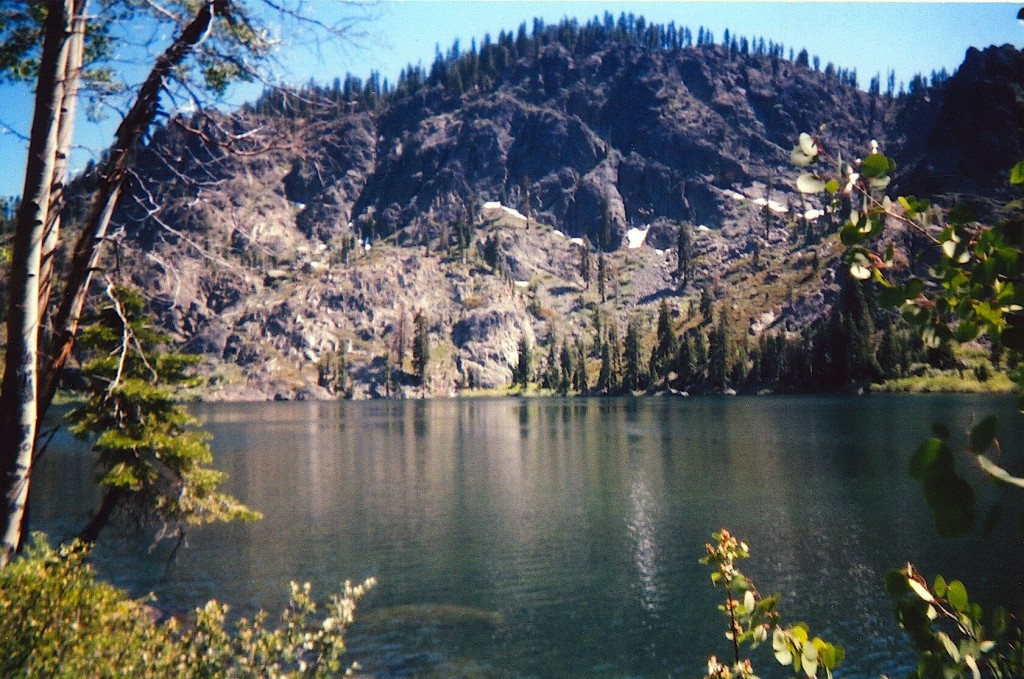
It is one of three lakes on Keddie Ridge, the other two being Hidden and Deerheart. The origin of the name is not known. On December 24, 1878, G.A. Chipman and J.D. Anthony referred to it as Moon Lake when they claimed its waters for use on their Rising Star Mine. By 1881, it was being referred to as Homer Lake. In 1916, Frank Cady, who was deputy fish and game warden, first learned of the lake, and had trout planted there that year.
It is never too late, subscribe today and enjoy tomorrow with daily notifications. You can also surprise someone with a gift subscription
For all practical purposes I thought some might enjoy a map of Lassen County as it appeared in 1907. This, of course, not only pre-Westwood time, but many the places noted on the map no longer exist.
4th of July Parade, Susanville, 1912. Courtesy of Leona Byars
In Susanville’s early years as an incorporated city, it was remarkable what the council did. One of their actions, I still support today, and that is the prohibition of fireworks. The first time they banned fireworks was in 1906, following the aftermath of the San Francisco earthquake and fire. It was also a nod to the insurance companies who suffered tremendous loss from that event. It was their belief, as well as many other communities, that this preventive measure would reduce the risk of fires. Continue reading Susanville Bans Fireworks→
Reclamation of the arid American west is certainly an interesting chapter in the nation’s history. Some of these projects were fraudulent, and others not.
Numerous individuals saw huge potential to reclaim the sagebrush lands of the eastern segment of the Honey Lake Valley. Some of these developers were passionate about their projects and would devote their entire lives and resources in hopes to see it come to fruition, but in many cases the projects never succeeded, for one reason or another. A perfect example was that of Capt. C.A. Merrill who saw the potential of Eagle Lake to reclaim the sagebrush plain of eastern Honey Lake Valley. He began his quest in 1875, and continued until his death 1901. Twenty-two years later, Leon Bly completed Merrill’s dream, only to see it end in dismal failure.
Promotion to entice settlers was a key component as providing an adequate and reliable water supply. When the Nevada-California-Oregon Railroad finally entered the Honey Lake Valley in 1888, it brought awareness of the possibilities. A second wave of publicity occurred during the 1906-1912 era with the construction of Fernley & Lassen and Western Pacific railroads through the region. This also just happened to occur during the dry farming movement, which was successful for a time locally with a string of ten years of higher than normal precipitation.
Of course, people from the eastern United States and Europe, as well, were easily lured with the thought of owning land at bargain prices. People from all walks of life arrived, some like Carl Caudle, a civil engineer, would spent the rest of their lives there and others after a couple years of a hardscrabble existence moved on.
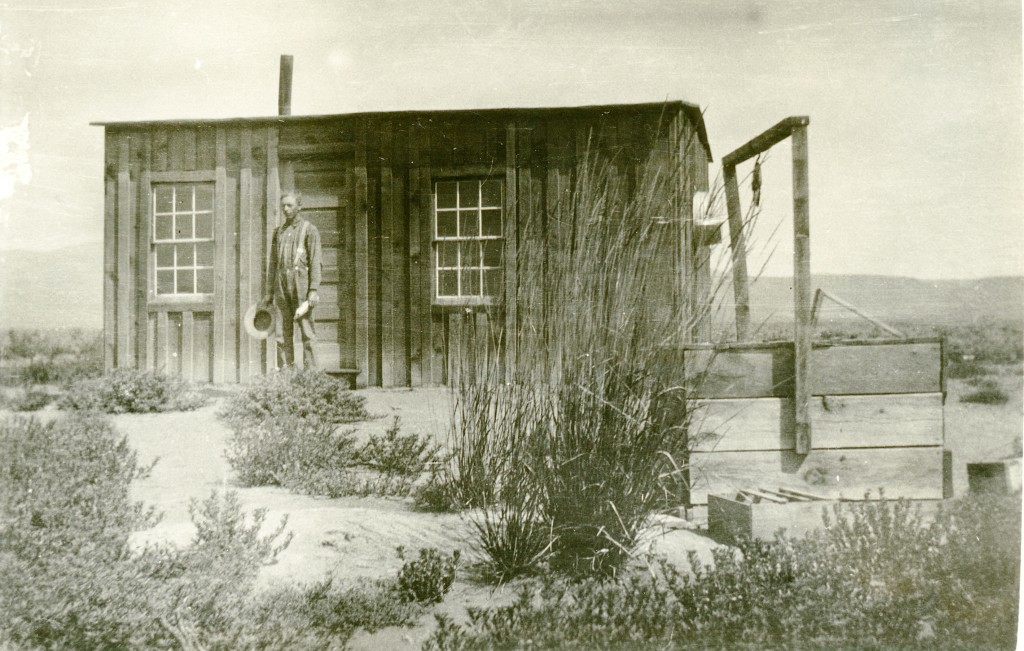
Sometime around 1915, Minnesota resident, Ferdinand Zarbock arrived in the eastern Honey Lake Valley and filed a desert homestead 160 acre claim adjacent to the railroad town of Stacy. He was joined for a brief time by his brother, Fred. In the spring of 1916, it was reported that Ferdinand had received a shipment of seed potatoes from Colorado to plant on his property. At this time, we do not know much about his activities there. In 1917, he did receive a federal land property for the property. However, there was something looming larger on the horizon, that had a major impact on the lives of so many. In 1918, Ferdinand was drafted in World War I. At that time, he deeded over his property to his brother Fred who had returned to Minnesota. After the conclusion of the war, his brother then re-deeded the property back to Ferdinand, who had returned to Minnesota instead of the Honey Lake Valley. This was a common practice for many individuals. Places like eastern Honey Lake Valley and the Madeline Plains were depopulated during the war, and those residents never returned, leaving abandoned homesteads scattered throughout the country. On a bright note for Zarbock, in 1920, he sold his homestead to W.R. Tait for $500. Many were not as fortunate and their abandoned properties were later sold for delinquent taxes.
In a related matter, I highly recommend Sarah Old’s homestead experiences adjacent to the Honey Lake Valley which her memoirs were published in a book entitled Twenty Miles from a Match. In Susanville, you can purchase it at Margie’s Book Nook.