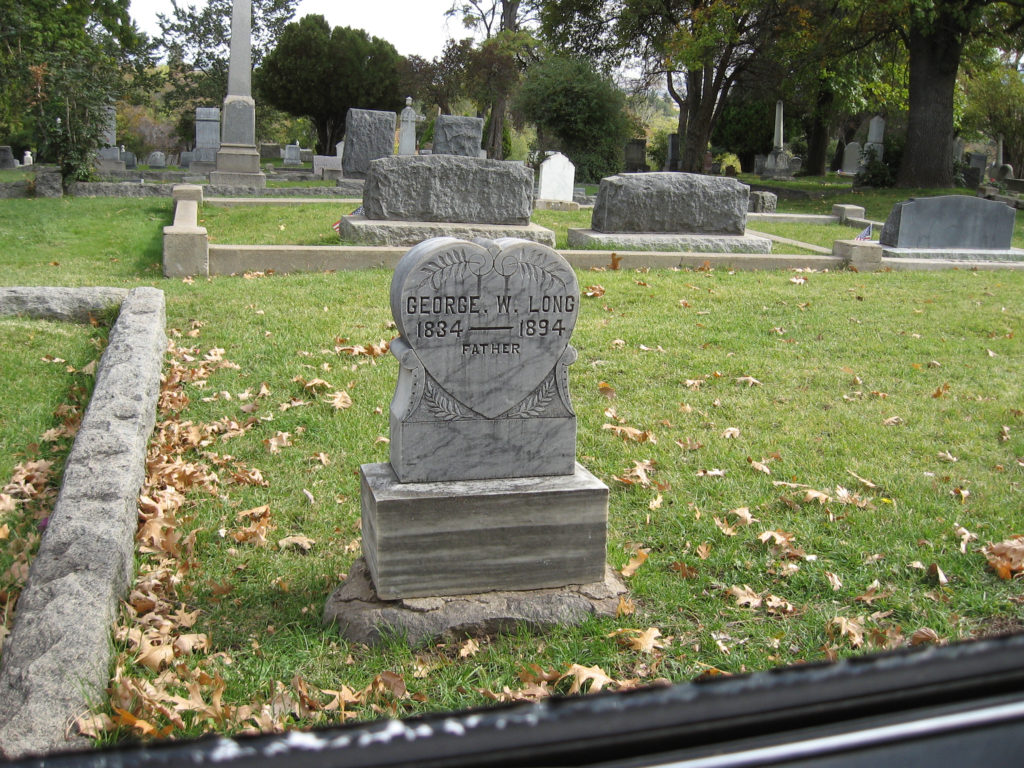
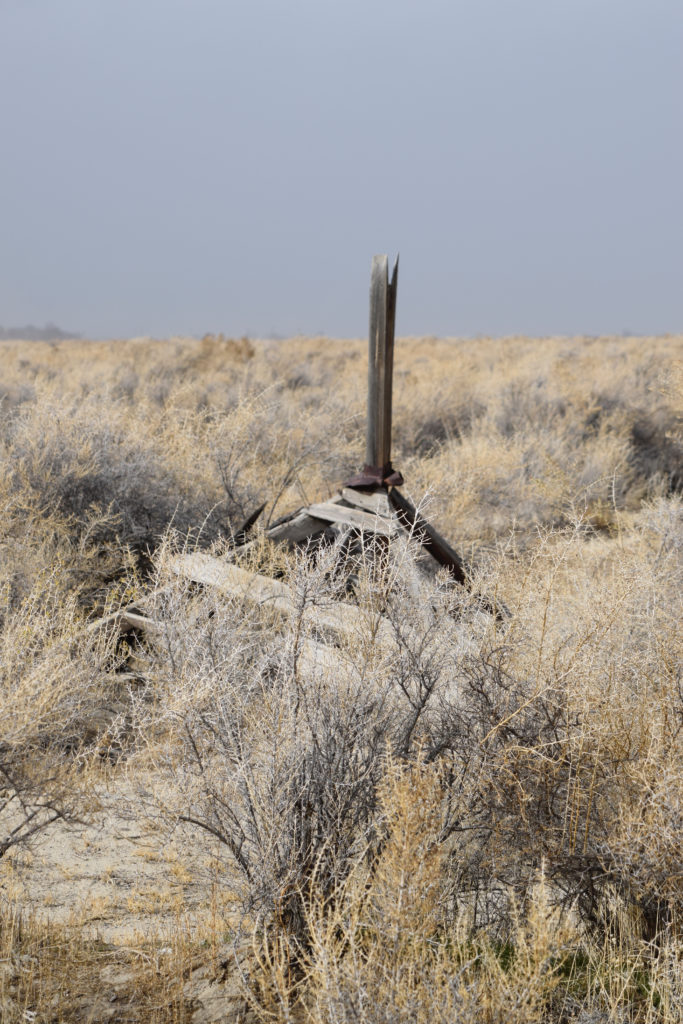
The grave of George W. Long, Susanville Cemetery, October 6, 2016.
A few weeks ago, I wrote an introduction to the Long family. Today, is the first of many stories of the multi-faceted families.
In 1863, Arkansas native, George Washington Long came to Lassen County and first settled on Atlas Fredonyer’s abandoned ranch in Mountain Meadows. Three years later, he located to Devil’s Corral and shortly thereafter married Ermina Wright. In the fall of 1869, George W. Long, Carson Wright, John W. Tuttle and Roscoe F. Gates filed land claims to Dixie Valley, in the northwestern portion of Lassen County, and were the first people to do so. The following year, Long sold his Devil’s Corral property to Morgan and William Williams for $2,300. In 1872, Long sold his Dixie Valley holdings for $5,350 and returned to Susanville. Continue reading The Saga of George W. Long→
Peter Lassen’s surname, as many are well aware has been widely applied throughout Northern California—including a county, national forest and a national park.
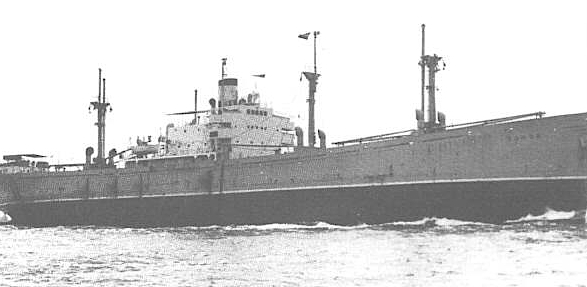
Did you know that a ship was named in his honor? During World War II, the United States constructed thousands of Liberty Ships. These vessels were named after individuals who had a role in the nation’s history. On April 7, 1944, the SS Peter Lassen was launched. In 1947, it was decommissioned and sold; and in 1968 scrapped.
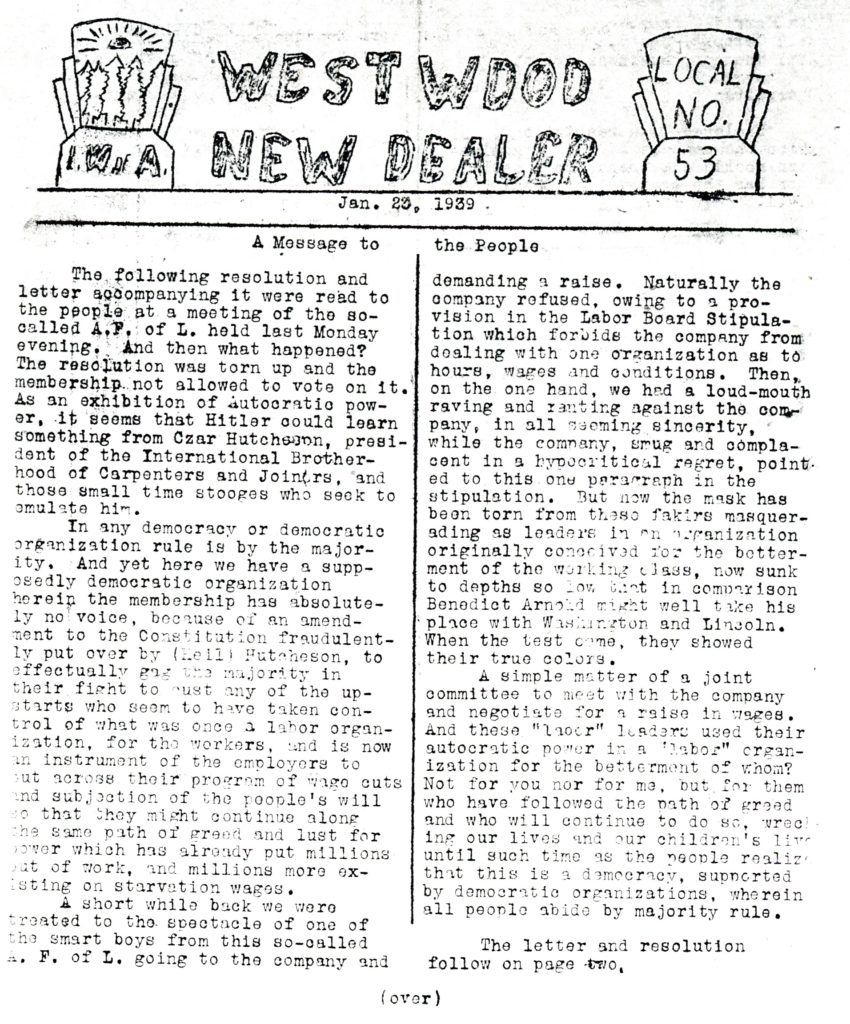
The front page. You can click to enlarge the image.
During the late 1930s, Red River Lumber Company was plagued with labor problems. There were be two major strikes, one in 1938 that caused the “purge” and a second the following year.
On January 23, 1939, the local union published a two-page newsletter called the Westwood New Dealer. In it they cited the January issue of the West Coast Lumbermen. This publication contained an article Best News of the New Year which stated that orders for western pine was up 47% from last year. This is turn meant there would be a substantial increase in logging and manufacturing, which the CIO interpreted as meaning that the lumber industry in general and more particularly Red River would see increased profits. They sent a letter to the local AFL with the following resolution, “That a joint committee of Local 53 and Local 2386 be formed to negotiate wage scale to be effected as soon as possible.”
Red River was not amused when they saw the first issue of the Westwood New Dealer. Clinton Walker thought not only it was imperative that they obtain copies of future editions, but equally important to designate someone to answer the “miserable statements” contained in it. Clinton noted that it was true that there had been an increase in orders, but the price for lumber had not increased.
Thus, the stage now set, and the second strike would shut down the mill for over two months. One can learn more about this and other labor issues in Red River: The Turbulent Thirties.
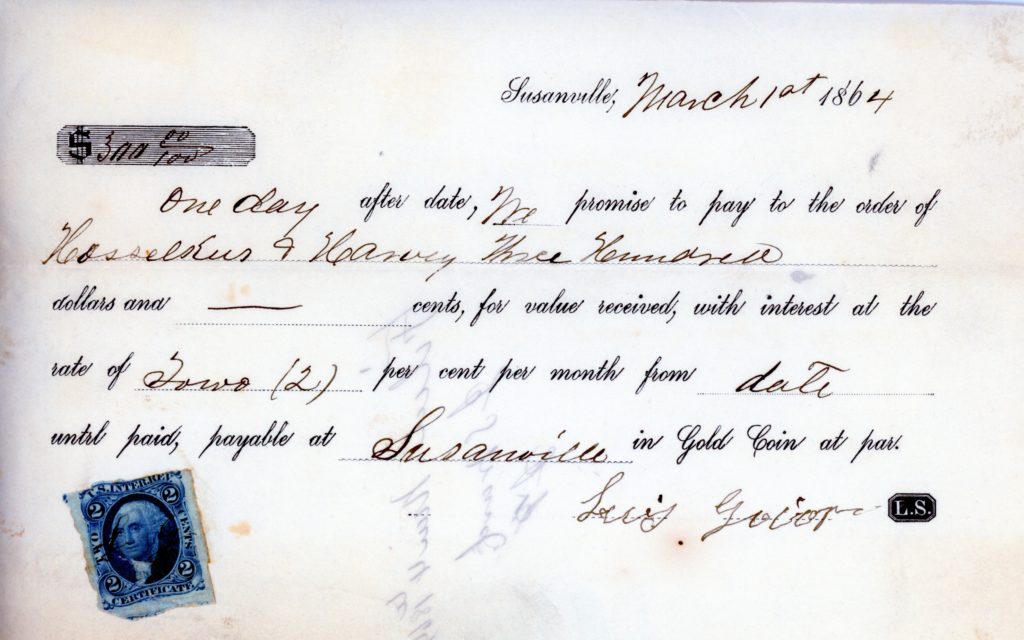
Prior to 1892, Susanville there were no banks of other type of financial institutions. In the course of time, residents quickly learned who had money to loan. In many instances, local merchants operated like a local bank. Loans were secured by promissory notes, as security. If the person failed, the lender would sue, and if the person owned real estate, an attachment placed on the property. Those who recall the article on Round Valley Reservoir it was owned for a time by Susanville merchant William Greehn, who acquired the property, by means of default on a loan that was not re-paid.
On the flip side, there were some fortunate folks who had to contend with the amount of money they had accumulated. This was pointed out during the Oktoberfest Cemetery Tour. In the mid-1860s, William Brockman, a blacksmith, recalled at one time he had $7,000 in gold coin buried in a corner of the shop, as there being no banks.
Believe it or not, it is a natural sink. According to the Government Land Office Survey designated it as Alkali Lake. It was still referred to as such as late as 1889. In 1875, Benjamin H. Leavitt constructed a small reservoir at that location. In 1889, the reservoir was enlarged. When construction was underway, Victor E. Perry, Leavitt’s son-in-law, worked on the dam. Perry planted a gold nugget there and when it was discovered it caused great excitement with the other workers. Leavitt informed the construction workers that they could keep whatever gold they might find, as long as it did not interfere with the construction. With that incentive, the men worked twice as fast to build the reservoir, in hopes of locating more gold.
The school steeple fell off when it was being moved and still sits in Murphy field all these years later as witnessed on November 19, 2016. Courtesy of Annie Henriques Blank
At one time, small schools could be found throughout Lassen County. After all, back in 1900, the two main requirements were there was at least ten school age children living in a proposed district, and the nearest school had to be more than five miles distant.
The Poplar School was located near the entrance of the present day Dakin Unit of Fish & Game in the Honey Lake Valley. This school was created on November 10, 1913. A bond election was held on June 6, 1914, at George Hartson’s residence, to approve $1,750 for the construction of a schoolhouse. All ten voters approved the measure. In June 1935, the school closed for lack of students. Orlo Bailey purchased the schoolhouse and moved it to his nearby ranch, converting it into a bunkhouse. The school was named for the abundance of poplar trees that had been planted by the Hartson family, though, like the school, the trees do not exist today.
The flooded culvert, 1938. Courtesy of Margaret Purdy
This is one of those instances, while researching something, I stumble along a gem. In 1914-15, work had begun to fill in the low land of Susanville’s Main Street between Weatherlow and Grand Avenue. One issue to be addressed was Piute Creek, which a bridge was in place. While not in the city’s jurisdiction at the time, Lassen County consulted with the city father’s as to a replacement for the crossing. It was mutually agreed in the fall of 1916, to replace the bridge with a metal culvert. This, of course, became a major problem for decades to come, as the culvert was too small to begin with and was prone to being blocked by debris that caused wide spread flooding.
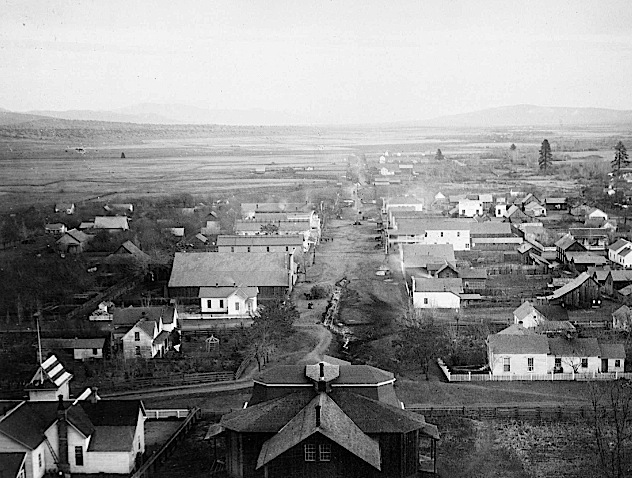
Main Street, Susanville, 1885. Courtesy of Betty Barry Deal
This is what the L.M. McKinney Lassen County directory had to say about Susanville in 1885:
The county seat of Lassen county, is situated about one hundred and fifty miles northeast from Sacramento, and ninety- five miles northwest from Reno, Nevada. The location itself is a peculiarly attractive one, lying as it does just at the base of the Sierra Nevadas, where the mountains give way abruptly to a comparatively level plateau and an unobstructed view over thirty miles is obtained, including almost the entire expanse of the Susan River Valley. The river itself rises in the mountains west of the town, flows past on the south side, thence in a southeasterly direction to its mouth, some twenty-five miles distant where it empties into Honey Lake. For about half of this distance (that part adjacent to Susanville) the land is thickly settled; small farms, well built and attractive residences, and large and commodious barns and outbuildings being the rule. The remaining portion of the valley will, with irrigation, unquestionably develop as well. The United States Land Office, located at this place, shows a record of 1694 cash, 1279 final homestead and 73 final desert entries, and there still remains within the limits of this district much valuable timber lands open to claimants, as well as so rated desert land which only needs irrigation to bring it up to a standard in fertility which will compare favorably with any land of the State. Susanville has one newspaper, The Lassen Advocate, weekly, which is the official county paper. It is ably conducted by Messrs, McKinsey & Hayden, proprietors. The school facilities of the town are fully up to the times; the Methodists and Congregationalists have fine and commodious church buildings, and the organizations are well sustained. Its hotel accommodations are amply provided for in two hotels, the Johnston House, a well conducted establishment, kept by Messrs, Dowling & Myers, being worthy of special mention, and among its business interests may be specially noted the Lassen Mills, with a capacity of forty-five barrels of flour per day, which is kept constantly running. Outside communications are had by daily stage line to Reno, twenty miles of this route on the end next to Reno being by rail. Two other lines are run during seven months of the year, one to a connection with the California and Northern Railroad to Oroville, and the other to Chico, connecting at that point with rail to all parts of the State. It has a money order post office, and Wells, Fargo & Co’s Express.
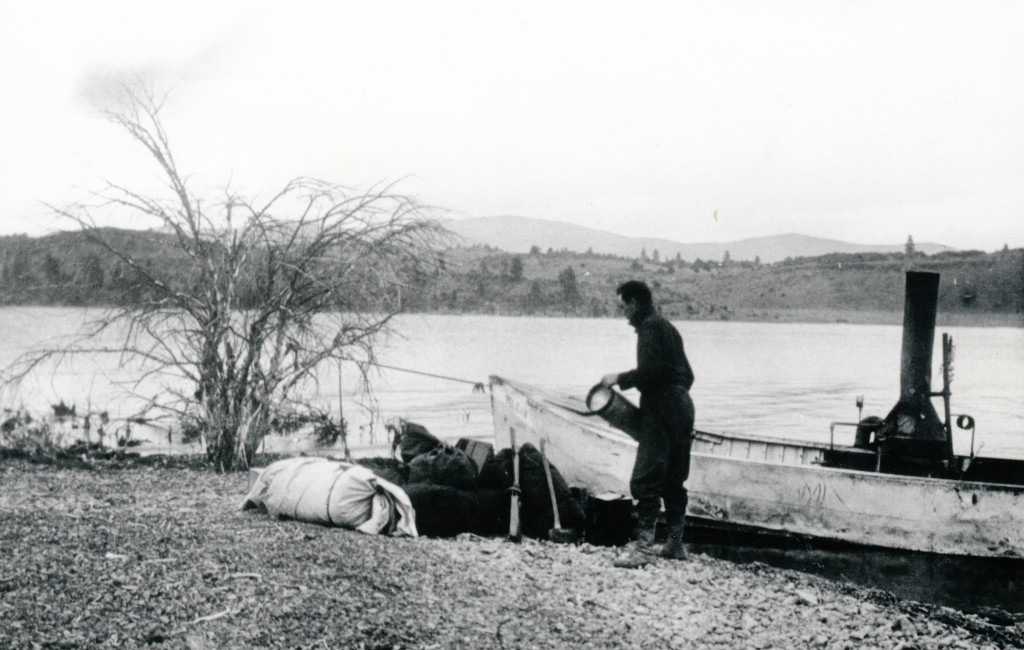
Leon Bly sounding Eagle Lake. Courtesy of Wyn Wachhorst
Leon Bly was born on March 6, 1877 at Chicago, Illinois. By 1908, he had located to Red Bluff, and became involved with many projects. In 1909, he was the engineer and founder of the Butte and Tehama Power Company. The following year he examined the potential development of Mill Creek for hydro-electric power which he sold the project to the Sierra Irrigation Company. Continue reading Leon Bly’s Early Years→