A winter weather forecast

A view of Diamond Mountain, from Lassen High School's agriculture fields, 1916. Courtesy of D.M. Durst Collection
A view of Diamond Mountain, from Lassen High School’s agriculture fields, 1916. Courtesy of D.M. Durst Collection

While compiling an article about winter weather for the December issue of the Northern California Traveler, I thought the following would be interest, since Diamond Mountain’s current dusting of snow.

In the local columns of Susanville’s  Lassen Advocate of October 22, 1909, the paper reported: “The weather prophets say if the thin coating of snow on the summit of Diamond Mountain lasts any considerable time without melting, we may expect a light snowfall this winter. Some of those weather prophets have been watching this indicator for thirty years or more, and ought to know.” Those prophets were correct in their observation, as it turned out to be a dry cold winter, most of the Honey Lake Valley was fogged in during the month of January.

As to my prediction, ask me in March.

Spread the word, encourage a friend to subscribe.

Father Moran’s Quest

The original Sacred Heart Church.

On April 9, 1939, Father Patrick J. Moran during his Easter Sunday service announced his intention that Sacred Heart Parish needed a new church. It was rather dramatic, since Moran had only been appointed to take care of the spiritual needs of Sacred Heart four months prior.

The old wooden church was built in 1892, and it was originally located on Richmond Road, adjacent to the bridge over Susan River. In 1909, the church was moved to the corner of Union and Nevada Streets.  However, the years had taken a toll on the wooden frame structure, and many parishioners complained that it was cold and drafty in the winter months, since the only heating was an ornate wood stove.

Moran, in his address, concluded that a new church would be built on the site of the current one. The following year, Moran received Bishop Robert Armstrong’s blessing. Shortly afterwards Sacramento architect Clarence C. Huff was awarded the contract to design the new church.

Sacred Heart Church
Sacred Heart Church,on Richmond Road 1905. Courtesy of Sacred Heart Church

However, Moran’s quest would take nearly ten years for it to come to fruition. More about that in a future post.

Never miss a story, click here to subscribe.

Missouri Bend School

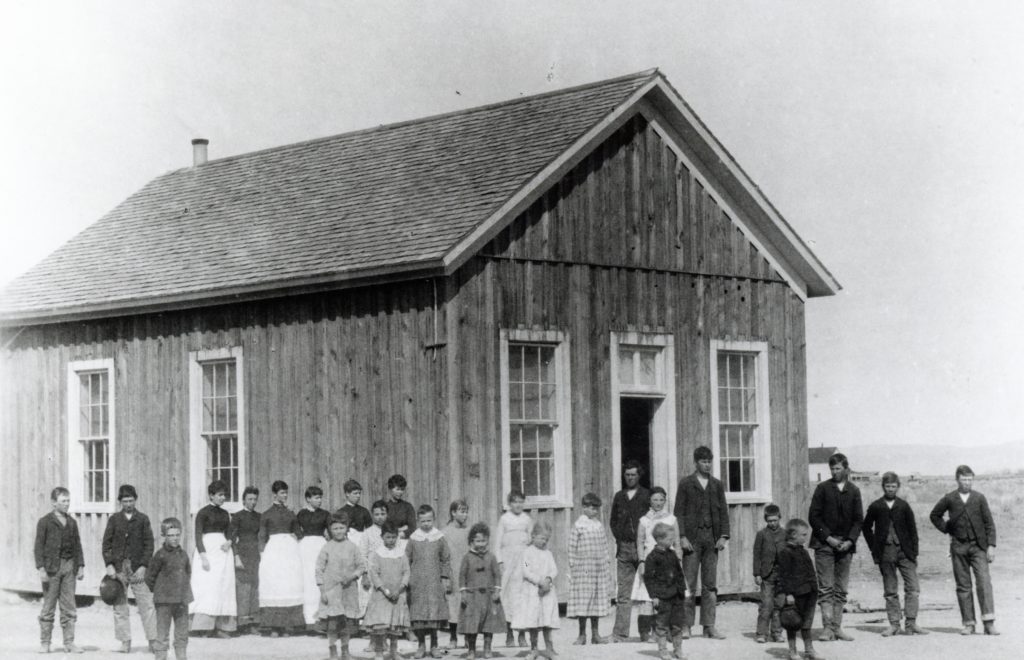
Missouri Bend School, 1886. Courtesy of Philip S. Hall

The school district was established on February 3, 1879 from the eastern portions of Janesville and Lake School Districts. Shortly thereafter, the residents built a schoolhouse without a bond measure. On May 31, 1884, Leonard Hicks donated the land for the school. On December 17, 1909, voters approved a $1,500 bond measure to construct a larger school. During the early 1950s, voters throughout the County were routinely asked for consolidation of school districts. In 1954, Missouri Bend merged with Janesville. This schoolhouse remains, and for awhile it was used as a private school, but now sits empty.

Never miss a story, click here to subscribe.

Where are we? – Fleming Unit F&G

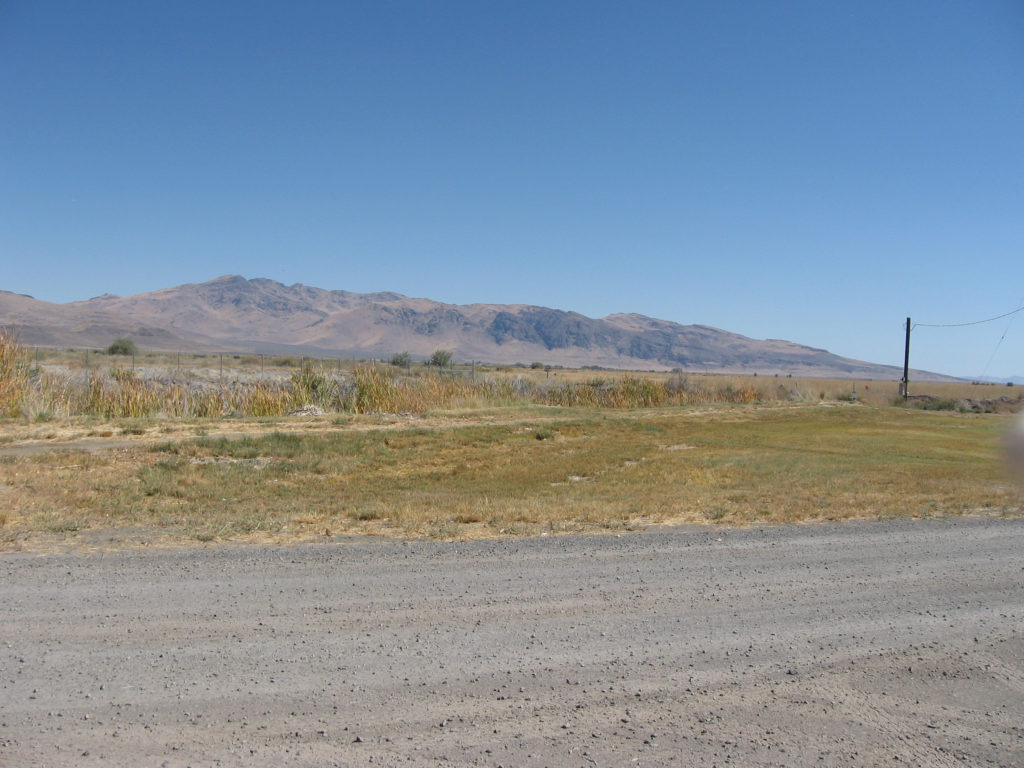
A view of the Skedaddle Mountains from the picnic area. September 28, 2016

In 1944, the Fleming Ranch adjoining Honey Lake was sold to the State of California and converted into the Fleming Unit, Wildlife Refuge, which the State had also acquired the nearby Dakin ranch.

In 1890, John James Fleming (1871-1941), a native of Scotland, came to the United States to Modoc County where he engaged in the sheep business. On October 5, 1910, John J. and his wife, Ora Lee (Moulton) Fleming, purchased the Honey Lake ranch from D. Grant and Edith Beale for $1,000. Fleming, along with his brother Robert, purchased extensive land holdings throughout Lassen County—in 1924, they purchased the Stanford Summer Range that consisted of 1,900 acres. In 1942, Ora Lee Fleming, then a widow, and Robert Fleming began the liquidation of their vast holdings—35,000 acres of rangeland and 6,000 acres of farmland.

Spread the word, encourage a friend to subscribe.

Your Topic

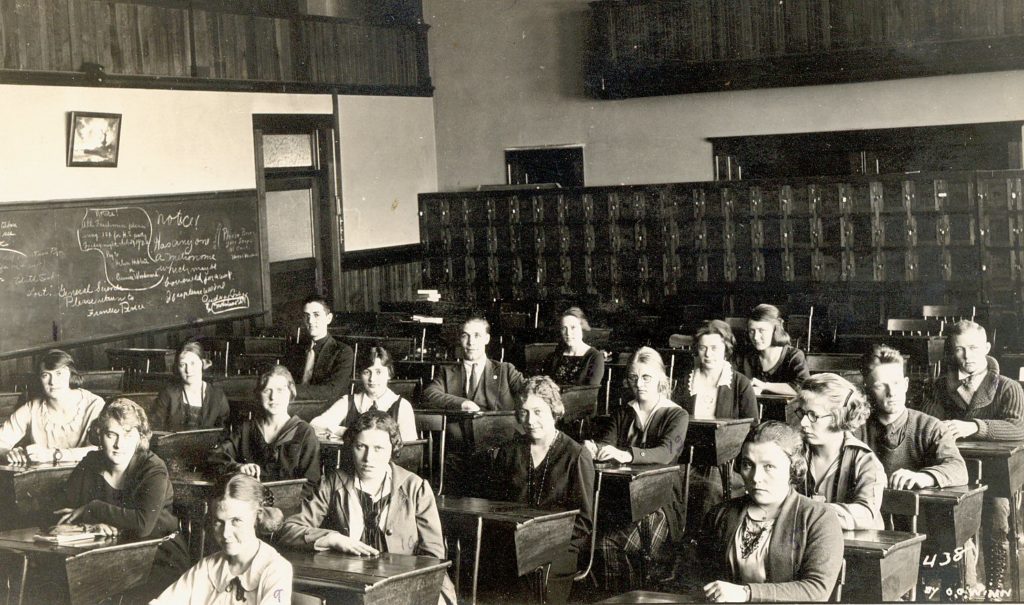
Lassen Union High School, 1922.

On a quarterly basis,  I ask you, the reader, if there is something you would like to learn more about or maybe its something you heard but question its validity.  So here is an opportunity to participate. I will do my best to answer any questions. It should be noted, it may take awhile for the answer to appear as a post. The primary reason, many of the daily posts are done nearly a month in advance.  So by the time you read this, I am already working on posts in the middle of December.  Whatever the case may be, I look forward to hearing from you. Of course, it should be noted that paid subscribers requests receive priority. In addition, you can always send an request at any time. Such is the case with the Bayley Creek Sawmill on the north side of Fredonyer Peak.

The topics readers wanted to learn about from the last inquiry are a wide range from Cy’s Dairy, and Grabel’s Hole and forthcoming in December are Willard Hill and Roxie Peconum.

Become a supporter for just $5 a month to ensure quality history continues. Click here.

Susan River Ranch

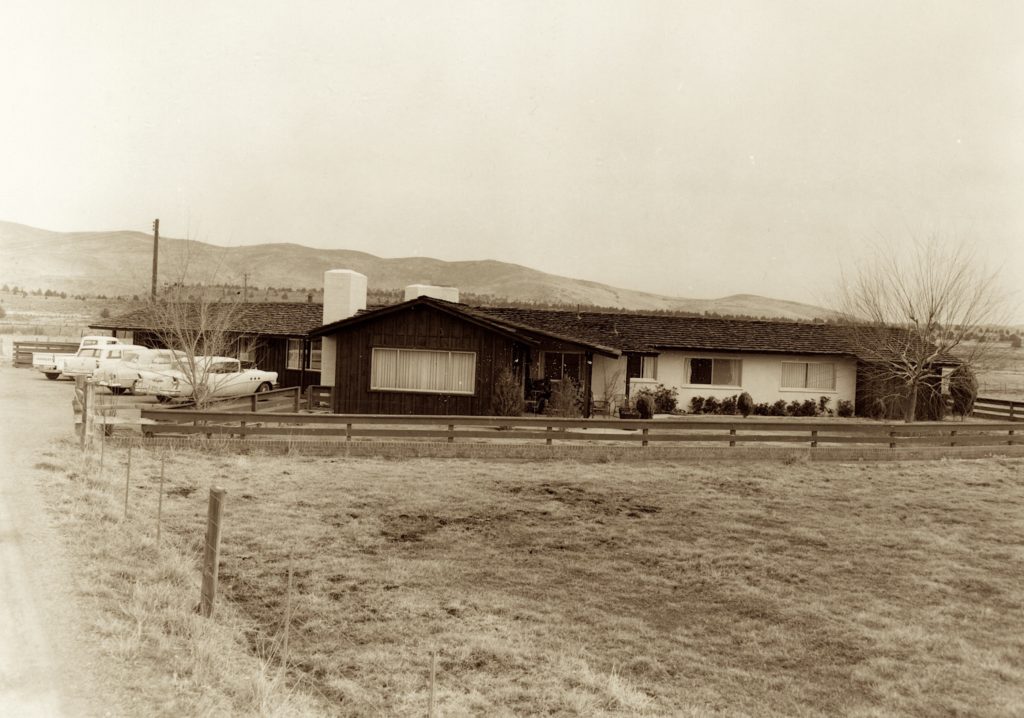
Susan River Ranch, 1958.

Some ranches retain their names long after the original owners sold. A perfect case is the Bare Ranch at the southern end of Surprise Valley. In 1880, Thomas Bare sold the ranch, though all these years it is still known by his name.

The Susan River Ranch appellation does not have that enduring name. The property located on Johnstonville Road a few miles east of Susanville. It was originally a part of the Bangham Ranch. In 1948 the property was acquired by Dale Soule. Construction of the house began in 1950 and over the course of time additional buildings were constructed. However, in time the property was too much for the Soules who had other business interests in Susanville to tend to. The next owner was Lawrence Holland and he owned until his death in 1969.

In 1973, Ray and Elberta Fraley purchased the ranch, who had spent many years in the Standish district. It was ideal for Ray as it just the ideal size for a semi-retirement ranch to raise his registered herd of Red Angus cattle. After Ray’s passing in 1979, Elberta sold the place. Its been through a number of owners over the years, though its no longer referred to as the Susan River Ranch.

Never miss a story, click here to subscribe.

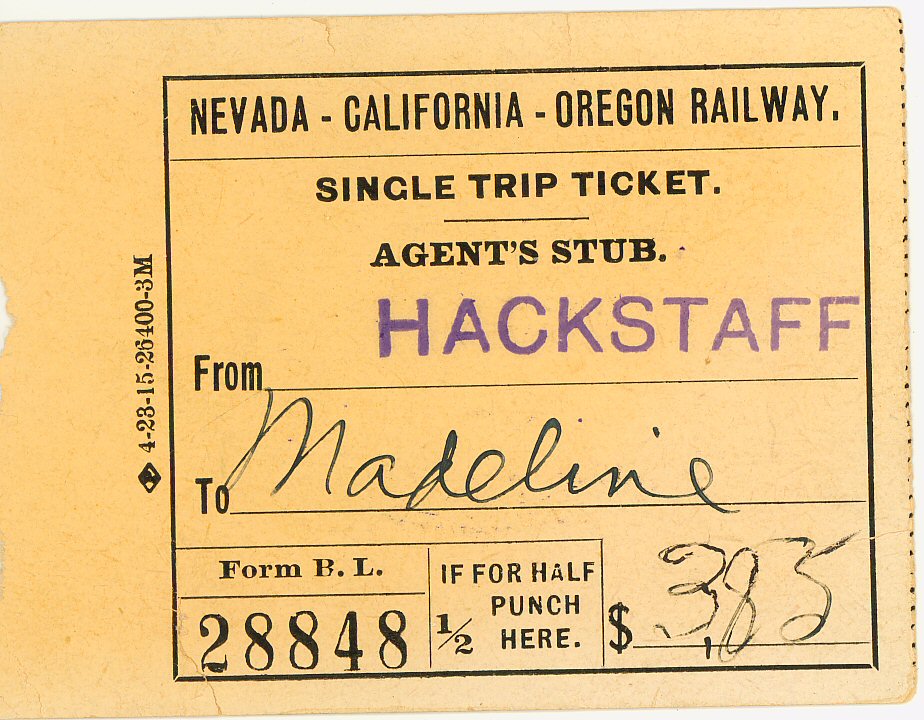
Hackstaff – Lassen County

Courtesy of Dorothy Capezzoli

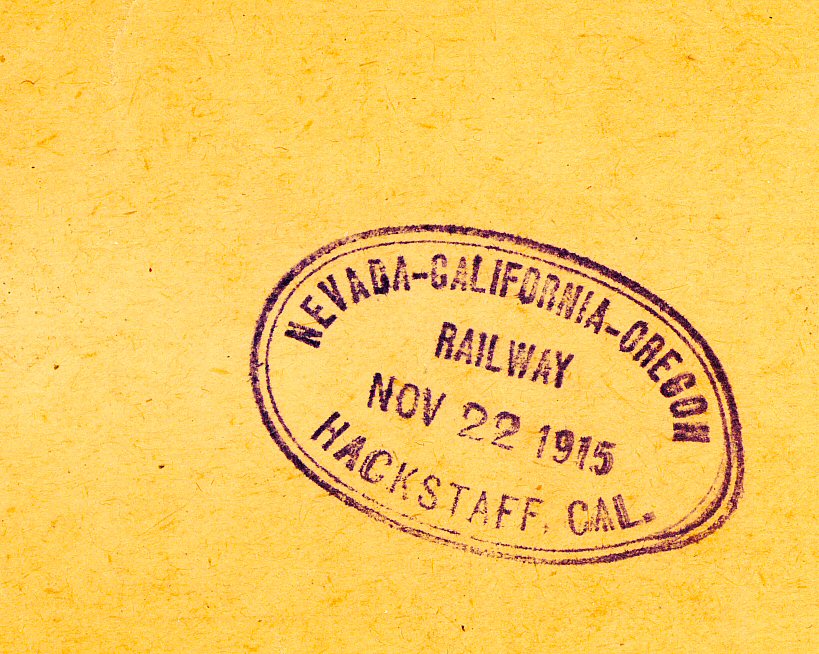
Known today as Herlong, and was the one-time junction of Nevada-California-Oregon (NCO) and Western Pacific (WP) railroads. In 1915, Stanley G. Rayl arrived on the scene. When Rayl petitioned to establish a post office, he proposed the name Rayl—the NCO opposed it. Charles Moran, President of the NCO, wanted the post office named Hackstaff—in honor of his mother-in-law, Clara Hackstaff Adams. After five months, the Postmaster General decided upon the name of Rayl, instead of Hackstaff. This delighted Robert M. Cook, editor and publisher of the Lassen Weekly Mail, Cook wrote: “ The NCO wanted a monument to an uncle of the wife of Moran, the New York capitalist behind the NCO. Hackstaff was never in Lassen County and no one here knows anything about him.” When Rayl left in 1921, he assigned the postmaster duties to Cyrus Helman. Those two men had a disagreement and fought that battle in court. In the end, the Rayl post office closed. On March 18, 1922, the Hackstaff Post Office was established with Helman as postmaster. It did not last long and the post office closed on December 30, 1922. In 1927, Hackstaff’s meager population was wiped out when the WP moved its section crew to Doyle. The location continued to be known as Hackstaff until the Sierra Army Ordinance Depot was established in 1942.

Ticketb
Reverse of the ticket stub.

Spread the word, encourage a friend to subscribe.

Dixon’s Eagle Lake Scheme

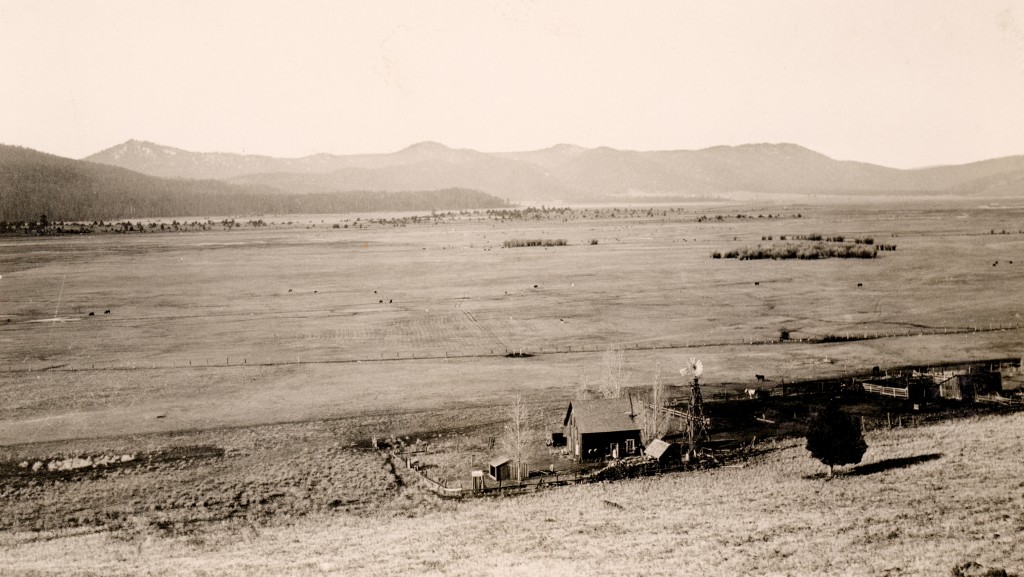
Lower portion of Willow Creek Valley, parts would have been flooded by the dam project, 1926. Courtesy of Lola L. Tanner
Lower portion of Willow Creek Valley (1926) , a portion  would have been flooded by Dixon’s dam project..  The government said no, stating it was impractical, since the water supply was not adequate  to fill the reservoir. Courtesy of Lola L. Tanner

A.F. “Frank” Dixon was the tenth person to tackle the tapping of Eagle Lake for irrigation in the Honey Lake Valley. Like those before and after him there were numerous obstacles to overcome. For every new enterprise, they had to become more creative, since the previous ones in many cases still had valid claims. Even so, it was not a deterrent.

One asset that Dixon possessed was during the 1890s  he served as Register of the Government Land Office in Susanville. Thus, he knew the procedures for obtaining rights-of-way across government land. However, what caught Dixon off guard is when he filed for his tunnel right-of-way across government land, the government did something they had never requested any one prior–an environmental analysis.  The government was concerned what damages would occur if the lake should be tapped.

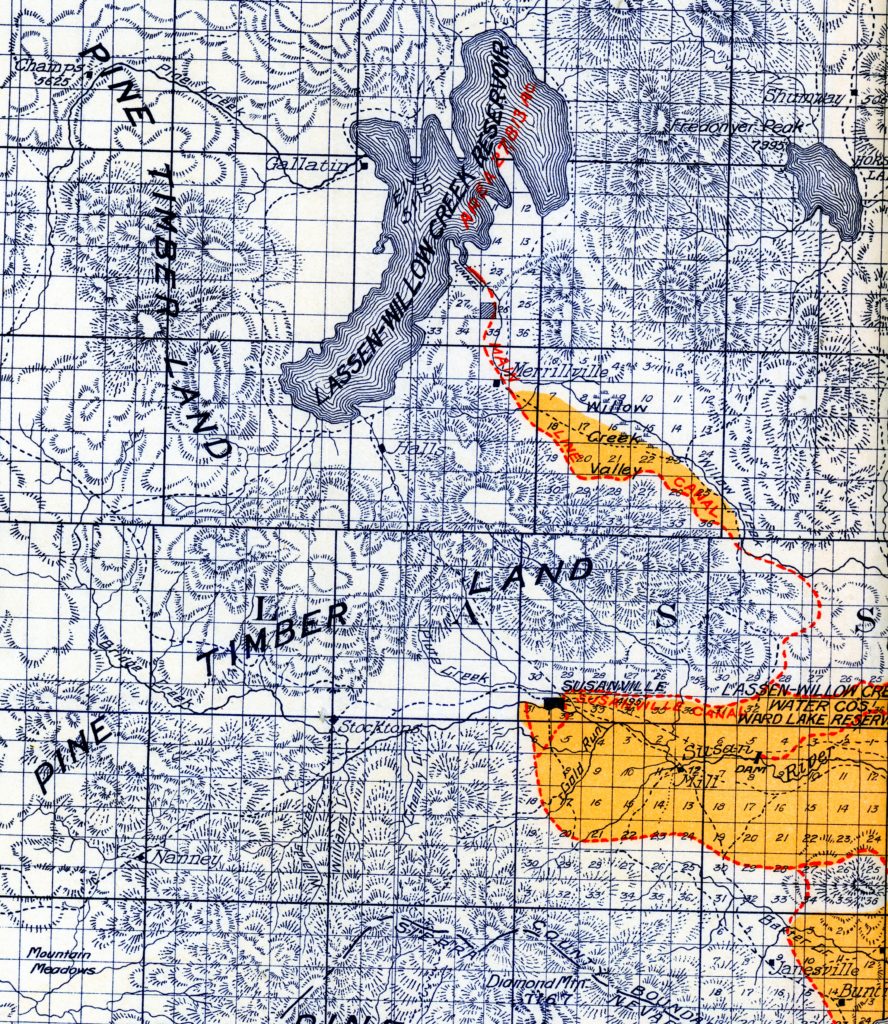
Partial map of Lassen-Willow Water Company's proposed project. Courtesy of Betty Barry Deal
Partial map of Lassen-Willow Water Company’s proposed project. Courtesy of Betty Barry Deal

The other situation, was Dixon was not alone in his conquest. It should be noted that Dixon filed for his right-of-way in December 1904. In the summer of 1905, the newly formed Lassen-Willow Creek Water Company, filed for a tunnel right-of-way, that was identical to Dixon’s.  Litigation ensued. In 1906, a gold discovery on the eastern edge of the Black Rock Desert lured Dixon away. Dixon would never learn of the outcome, he died in 1908. While Lassen-Willow Creek won in court, their enthusiasm fizzled and in 1910 sold their project to E.N. Prouty for $900.

Spread the word, and encourage a friend to subscribe.

Susanville – Pine Street

B.R. Zimmerman residence, 45 South Pine Street, circa 1890. Courtesy of B.R. Zimmerman Collection

One of Susanville’s original streets, when the town was surveyed in 1863 it was the most western street. So named for the pine trees that are on the western edge of town.  An odd thing about Pine Street, it initially went from Main south to the Susanville Cemetery. What is known as North Pine Street did not come into existence for a number years, and even then it only extended to North Street. For years it was known as Prattville Road, and this was route out of town, and the next town then in existence was Prattville, which the original town no longer exists as it demolished to make way for Lake Almanor in 1914.

North Pine Street, January 1916. Courtesy of Dolores Gasperoni

Spread the word, encourage a friend to subscribe.

Pat O’Dea – The Kangaroo Kicker

Pat O'Dea, Courtesy of the University of Wisconsin
Pat O’Dea, Courtesy of the University of Wisconsin

In 1919, Charles J. Mitchell arrived in Westwood like so many before and after him seeking employment. The Red River Lumber Company had high turnover in its workforce and always had openings. Little did Red River know their new hire was a famous football player. Then again, Mitchell used an alias. After all this was in an era, where few people carried any type of identification, and Social Security numbers were non-existent. Continue reading Pat O’Dea – The Kangaroo Kicker

Exploring Lassen County's Past