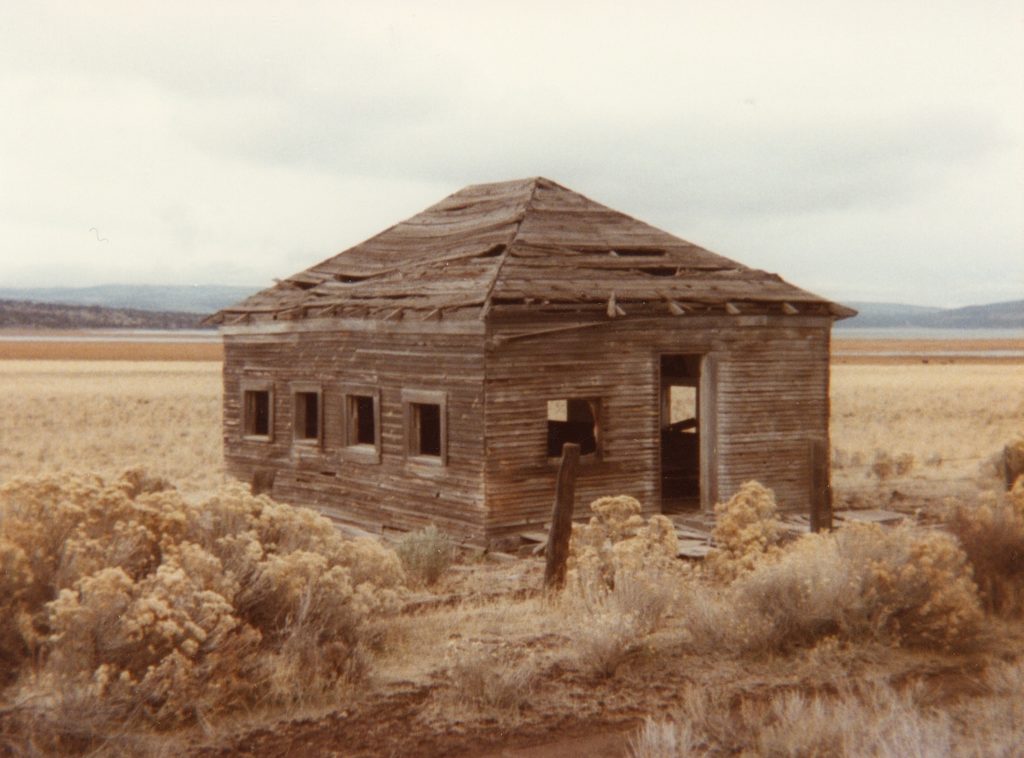
Eagle Lake School

Eagle Lake School554
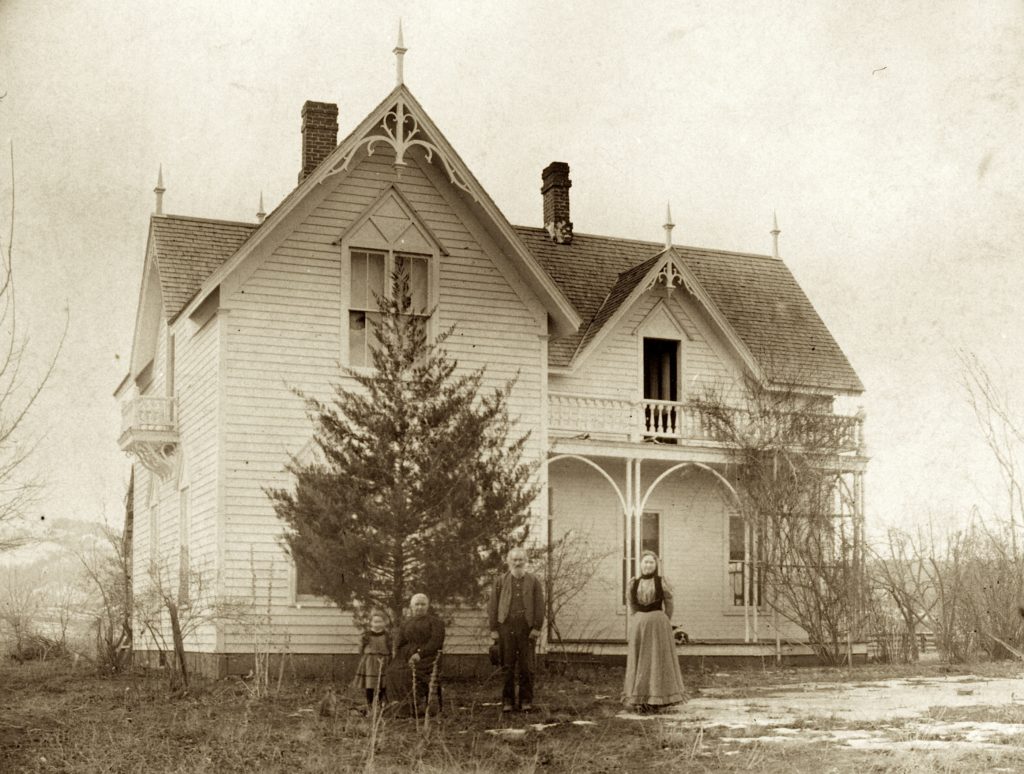
Eagle Lake School, November 17, 1984.

In December 1928, the eight students of the Eagle Lake School made table favors in the shape of tom turkeys made from pine cones. These were used for a rural education banquet in Chico  to honor Dr. Melvin Pittmann professor of rural schools in Michigan.

Miss Lola Willett, the teacher of the Eagle Lake School was commended for her work with her students throughout the year for the students cleverly made art work. In addition, a resolution was passed commending the school which also included a five pound box of chocolates, that was divided among the eight pupils. So it must have been a very sweet Christmas at the home of Coit and Laura Stone, whose children made up the bulk of the student population at Eagle Lake.
Subscribe!

The Floods of 1955

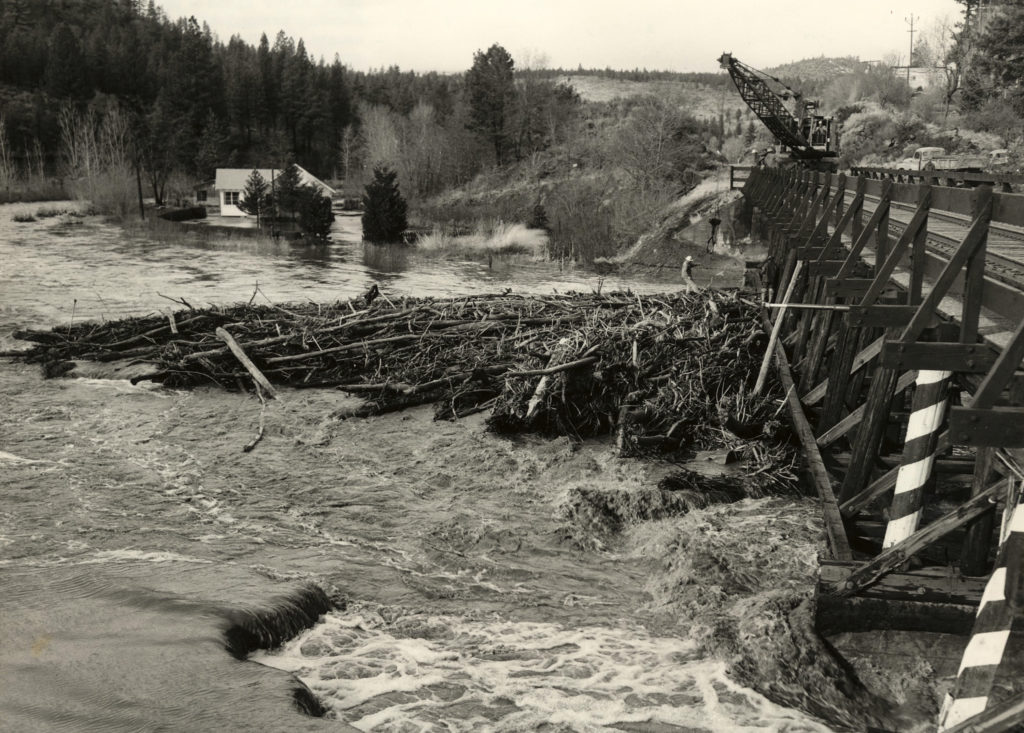
Southern Pacific's railroad trestle at South Lassen Street, December 1955.
Southern Pacific’s railroad trestle at South Lassen Street, December 1955.

The floods of December 1955, locally and throughout California was a notable event to say the least. It began with warm rains on December 15th and by December 20th, 4.41 inches had fallen in Susanville. The snow elevation remained high, and on December 20th there was  21 inches of snow on Fredonyer summit.  The rain continued turning the Susan River into a raging menace. Conditions worsened as the river brought assorted debris with the floodwaters. The debris became a major obstruction when it collided with the Southern Pacific’s railroad trestle at Susanville’s Lassen Street. On December 23rd Marvin D. Coltran, a member of Southern Pacific’s bridge gang fell into the water there. Efforts were made to reach him, but the river’s swift current swept him away. Continue reading The Floods of 1955

A Marysville Merchant

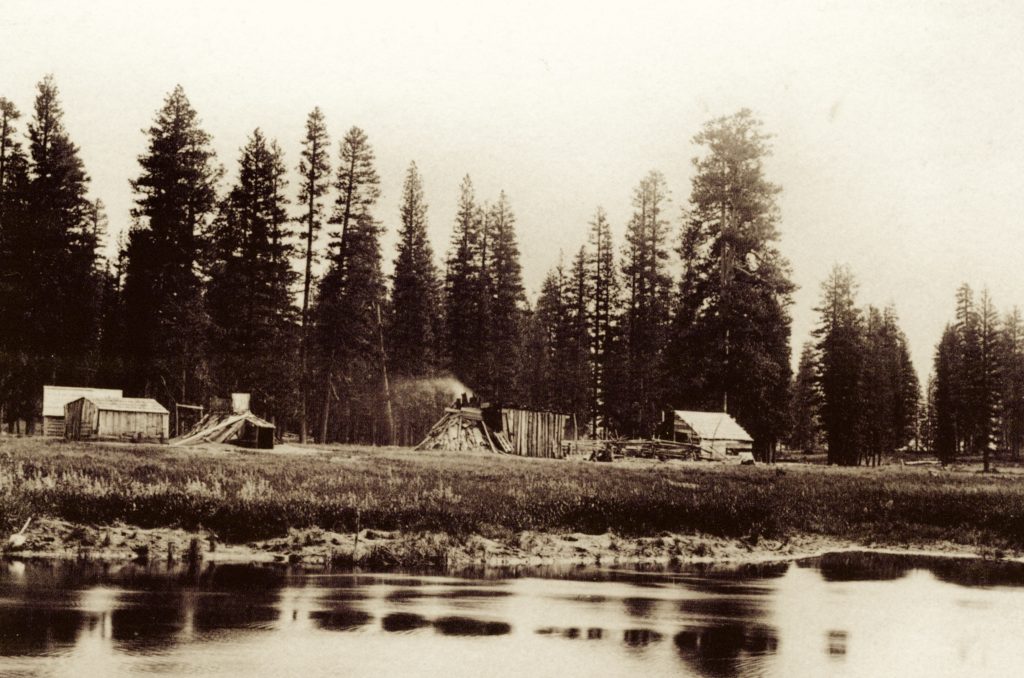
Big Meadows Maidu Camp, 1887. Courtesy of the National Park Service
Big Meadows [now Lake Almanor] Maidu Camp, 1887. Courtesy of the National Park Service
If there was a text book history of Lassen County, N.D. Rideout name would probably not show up, and if it did it would be an obscure footnote.  Yet, this Marysville merchant did exercise some influence on the region, especially when he became an investor in a short line railroad known as the Northern California. When T.B. Walker’s Red River Lumber Company began acquisition of timberland in Northern California, the two men became acquainted. After all, Walker was in need of a railroad to access his holdings, and Rideout owned one. In 1906, Rideout and Walker reached an agreement wherein the Northern California Railroad would build a line from Red Bluff to Fall River Mills, where Walker intended to build his first sawmill in California. However, in 1907, Rideout abruptly died, and everything came to a halt.

However, Rideout, also left a bit of legacy behind as he had an interest in photography. He was amateur photographer, long before cameras were common place. In 1887, he took several photographs including the one above, and also one of Drakesbad.

Subscribe!.

Susanville – McDow Street

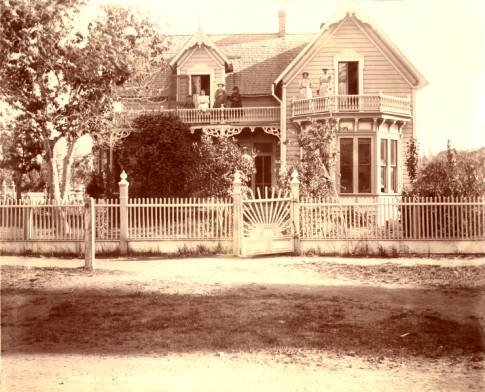
L.D. McDow Residence. Courtesy of George McDow, Jr.

In 1875, Lafayette D. McDow constructed a house on what would later become of the southwest corner of Main and McDow Streets. McDow came to Lassen County in the 1860s, where he spent much of his time either operating a sawmill or mining on Diamond Mountain.

In 1920, McDow’s son, George and Russell Brownell subdivided property in the eastern portion of Susanville to be known as the Milwood Tract. On June 28, 1928, the old McDow home was destroyed by fire, then occupied by the family of J.A. Metz. For Metz, the house was convenient, as he worked as the janitor of the nearby Lincoln School.

Spread the word, encourage a friend to  subscribe.

Who murdered Sam Shaw?

A portion of Looper's testimony in Shaw's coroner's inquest hearing.
A portion of Looper’s testimony in Shaw’s coroner’s inquest hearing.

Several weeks ago I wrote about the murder of Sam Shaw on the Madeline Plains. At that time, the sheriff was directed to launch an investigation as to who might have been the culprit. All fingers pointed to Shaw’s neighbor, Jim Looper, who was an employee of George Bayley. After all, Looper was supposed to claim the land where Shaw settled due a valuable spring. During the coroner’s inquest, Looper pleaded ignorance of even knowing Shaw, but when he questioned by authorities, he reversed his testimony. There was one problem with the whole puzzle, where was Shaw’s decapitated head? There were some who thought Looper was hired to murder Shaw, and when Looper died of a drug overdose in Susanville in 1888. Continue reading Who murdered Sam Shaw?

The Government Land Office

Susanville's Knoch Building, 1900. For many years it housed the Government Land Office. Courtesy of Philip S. Hall
Susanville’s Knoch Building, 1900. For many years it housed the Government Land Office. Courtesy of Philip S. Hall

The United States Government Land Office played an important role in the development of region locally, as well as across the western United States. It was through the Government Land Office (GLO) is where a person went to file for a federal and, in certain instance a state, land claim, once the region was officially surveyed by the government. Continue reading The Government Land Office

Buffalo Meadows Salt Works

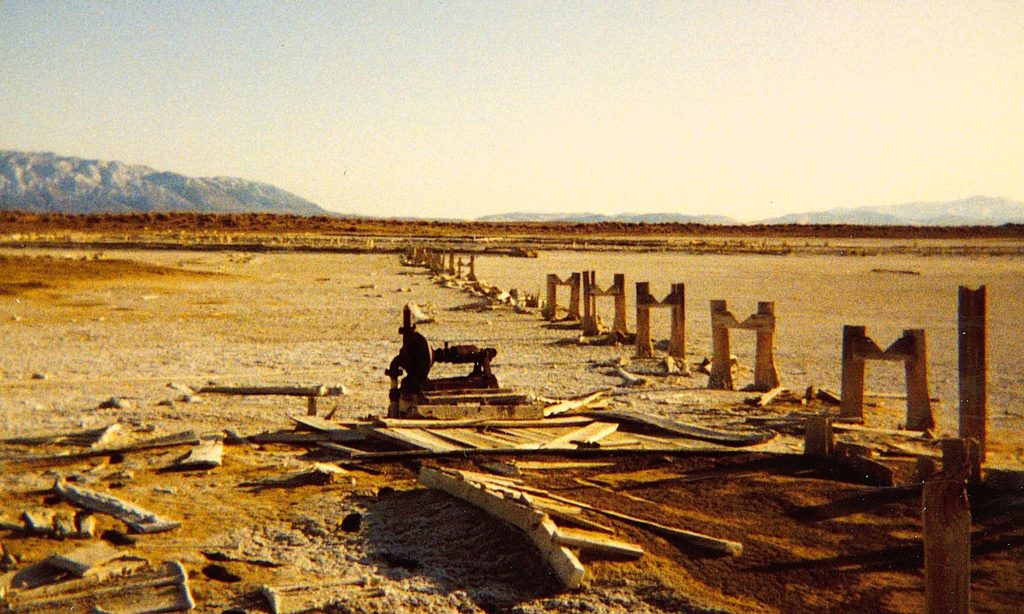
The salt works, January 1980.
The salt works, January 1983..

One of the most interesting enterprises around the region was the Buffalo Salt Works in the Smoke Creek Desert. It is so easy today to take many things for granted, but back in the early days of settlement of the mid-1850s, those hardy souls did not have that luxury.

First of all, it boggles my mind, how B.F. “Frank” Murphy and Marion “Comanche George” Lawrence discovered and claimed the salt marsh in the summer of 1864. For most of its existence Murphy was the main operator of the Buffalo Salt Works. Two types of salt was produced. The first being table salt that 99.8% pure. A lesser grade was sold to mining operators with a smelting plant that utilized the salt.  The salt was obtained from wells, the brine pumped into vats, and left to dry.  In 1888, it was reported that 200 tons of salt was produced annually. Continue reading Buffalo Meadows Salt Works

Bayley Creek Sawmill

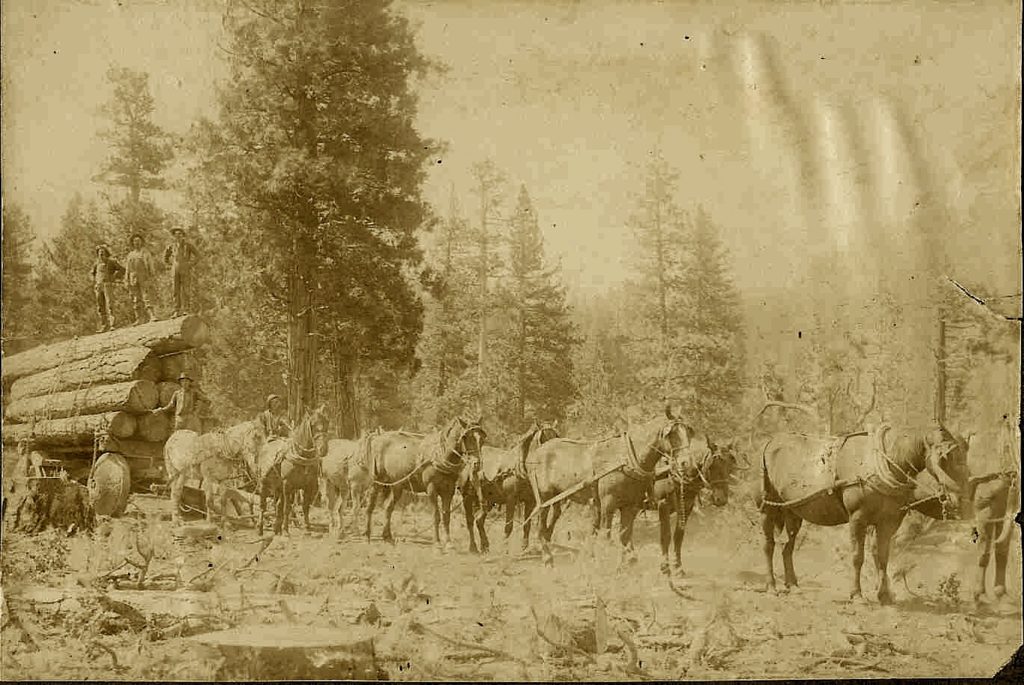
Logging at Bayley Creek, 1915.

There were two different sawmill operations on Fredonyer Peak, north of Eagle Lake. The first one was on the Horse Lake side operated by the Shumway family. The second one, and much later in time was on the north side near Bayley Creek reservoir, the  latter which was constructed in 1899. It should be noted, that many maps misspell it as Bailey, but it was so named after Likely rancher George H. Bayley.

In 1912, H. T. Risdon established the Eagle Lake Lumber Company and constructed a sawmill at Bayley Creek.  Risdon encountered problems finding skilled labor. In time he leased it to Thomas Coulter and Frank Spencer, who in 1919 bought it outright from Risdon. The mill remained in operation until 1942, when it closed for good.

Subscribe now a receive a free 2017 Calendar

Exploring Lassen County's Past