When the Fruit Growers Supply Company gave serious thought in locating a second mill in Lassen County they were initially perplexed as to where to locate it. The timber they examined was to the west of Eagle Lake. They wanted a mill in the center of the timber to reduce the freight costs. Continue reading Pine Creek Millsite?→
Lassen County Times, April 7, 1979.In the early 1920s, chain stores began to make their appearance in Susanville. Reactions, or course, were mixed. Many a consumer enjoyed the new shopping experience with not only a wider selection of goods, but they found the price right, too. There were the loyalist crowd, that remained with their old independent pioneer merchant, who took care of the, through good and bad times, the latter that merchant would provide a line credit. However, changes were inevitable, one either adapted or perished.
These new stores also changed the appearance of the town. In the spring of 1940, Cliff Gledhill, moved a historic 1870s residence from 30 South Roop, to the farthest end of that street. Shortly thereafter, construction began on a small concrete building on the vacant lot he created. On May 22, 1940, Gledhill opened the doors there to his new enterprise, a Western Auto Store. Over the years, the building has had many occupants. Seasoned residents will know it as the office of Dr. C.I. Burnett, and for the past few decades it has been the CPA office of Carol J. Curry.
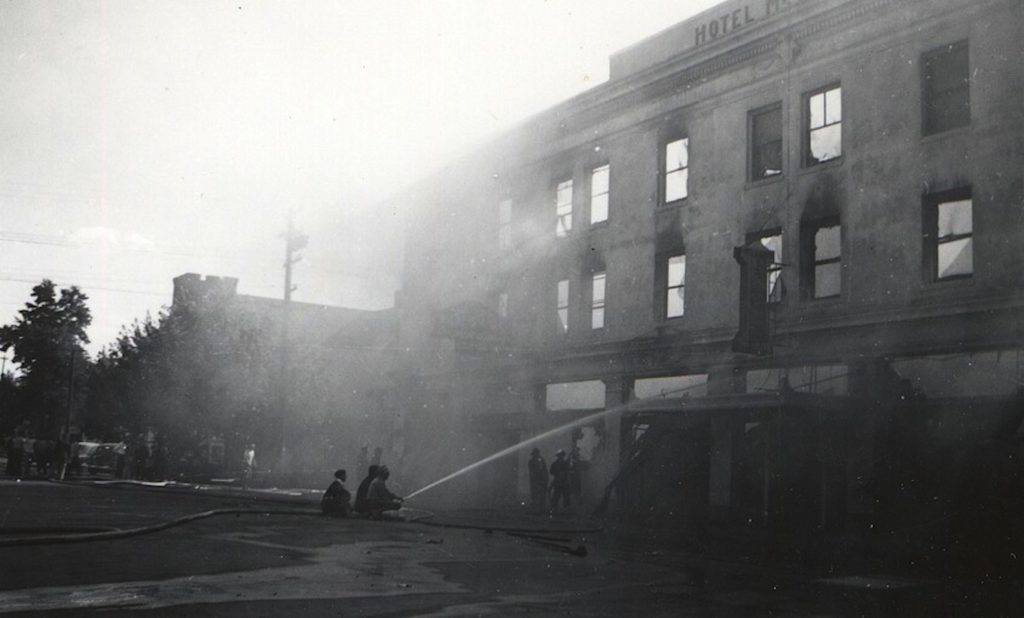
The aftermath. Courtesy of Margaret A. PurdyIt was seventy years today when the Hotel Mt. Lassen in Susanville was destroyed by fire. In 1902, Susanville passed an ordinance that all future buildings constructed in the business district be built of fire-proof material, whether brick, masonry or native stone. In time, this greatly reduced major fires. For nearly twenty years, the district did not experience any major fires, until one broke out in the basement of the Hotel Mt. Lassen on July 24, 1947. The building was completely gutted, two employees perished in the blaze and with damages at $700,000. It was the costliest fire to date in Susanville.
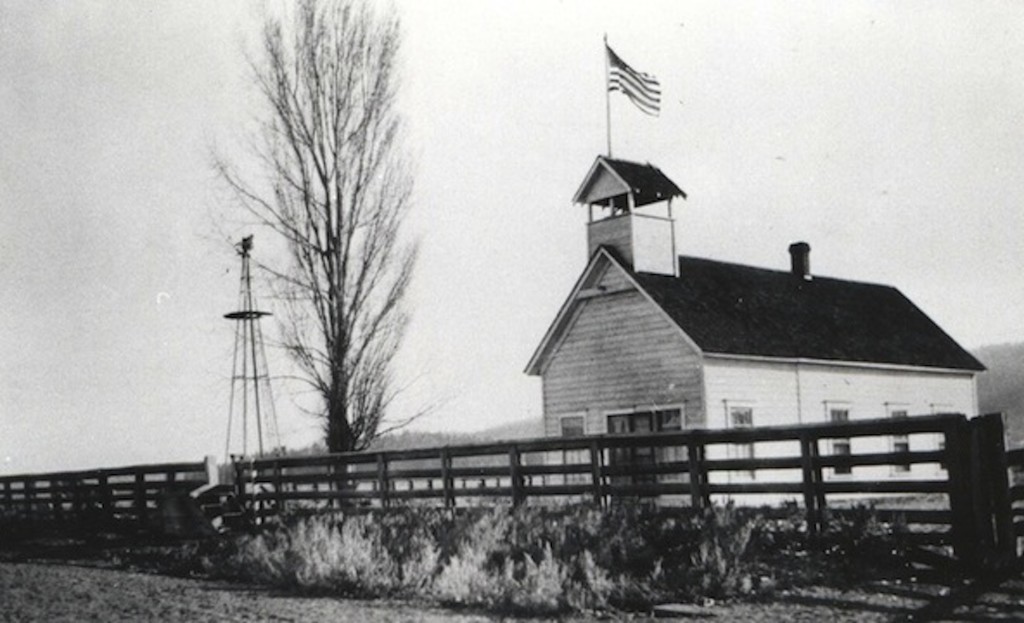
Willow Creek School, 1921. Courtesy of Lola L. Tanner
Just a follow up on some documentation. As noted in the post of the Eagle Lake School, it closed in 1937. It was not until 1940 when the school was annexed to nearby Willow Creek School District. That school closed in 1946, and in 1950 all that territory of the two districts were annexed to Susanville.
Over the course of time the region has seen a wide variety of barn styles. Some had lasted through time and others not, for one reason or another.
In 1864, a German immigrant, Jurgen Jensen located in Susanville, where entered into a partnership with William Brockman, to operate a blacksmith shop. In the ensuing years, the two men, went off on their own, each locating on property along Johnstonville Road.
In 1891, Jensen had a large three-story barn built on his ranch. On September 11, 1923, the barn was destroyed by fire and it was believed to be caused by spontaneous combustion. Stored inside was 200 tons of hay, valued at that time around $3,500. The barn was insured for $1,500, but it was not enough to cover the cost to replace it.
When Fruit Growers established their Lassen Operation they purchased two billion board feet of timber to the west of Eagle Lake. In 1921, Fruit Growers established its second logging camp, designated as Camp B. Many of their camps were portable in nature, in that once an area was logged, the cabins and other buildings could be conveniently be put on railroad cars and moved to the next location.
Train load of logs leaving Camp B
Camp B was unique as it was a mixture of both portable and permanent buildings. It was one of their largest camps that could house over 300 men. While the camp closed by 1926, its concrete foundations for the commissary, along with other remnants can still be seen today. Fruit Growers had a reputation of taking good care of their employees. This was evident at Camp B whereby motion pictures were shown. In addition, the logging camps even had their own baseball teams. This is rather amazing since these men who worked ten to twelve hours a day, six days a week still had the energy left to play ball.
In 1903, the first automobile traveled through Lassen County. Ten years later the car craze struck the region, as it did the rest of the state. These new car owners were anxious to travel, but the old wagons roads of yore, was not acceptable. In 1916, the voters of California passed an $18 million bond measure that led to the beginning of the state highway movement. Construction slowly began on Highway 36 and one of the momentous occasions occurred in 1923. It was the completion of the $45,000 concrete arch bridge over the Susan River at Devil’s Corral. In the summer of 1929, the last link of the highway between Red Bluff and Susanville was completed with a realignment of the roadway near Coppervale. The process to build the highway took nearly twelve years at a cost of a million dollars. The state initially designated as Highway No. 29 and in 1935 it was changed to Highway No. 36. Another important aspect when the highway was completed that state did snow removal to keep the highway open year around.
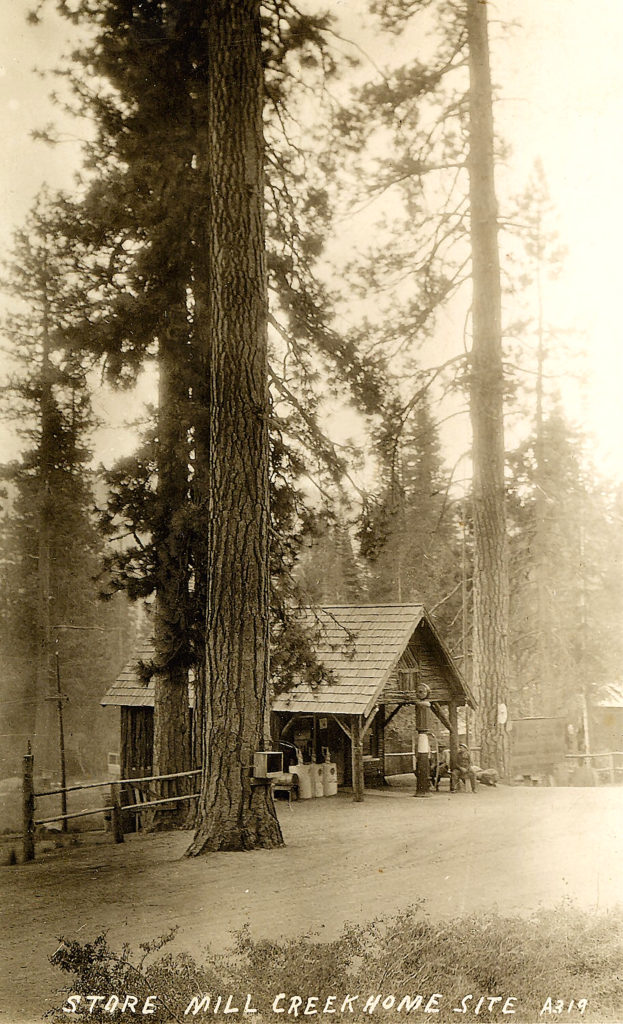
Mill Creek Store. Courtesy of Margaret A. PurdyLocated in neighboring Tehama County, it is better known as the Mill Creek Resort today. It was established some time in the 1930s, no doubt influenced with the various improvements at Lassen Volcanic National Park. I do not have much information, but at least I wanted to share the photograph. In addition, if any one has information about this place they would like to share, here is a perfect opportunity.
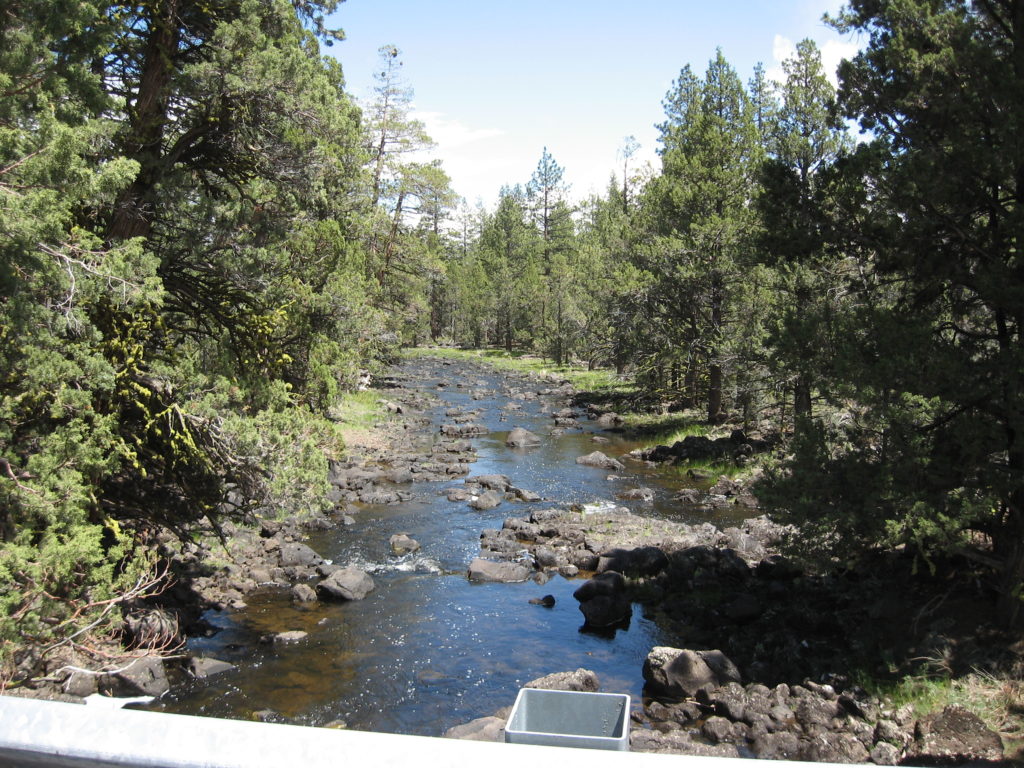
Pine Creek, June 9, 2017The responses were rather interesting with a near split between Pine and Willow Creek. Yes, it is Pine Creek, taken on June 9, 2017 at the bridge on County Road A-1. Prior to the Brockman Flat Law flow of some 125,000 years, Pine and Willow Creeks were one. A portion of this lava flow extends to the east side of the lake near Bly Tunnel. It created a natural dam, and thus Pine Creek began to flood the area known today as Eagle Lake.
Diamond Mountain Inn as it appeared in the 1920s and was located next to the Masonic Hall. It was destroyed by a fire in 1931.
In January 1920, LeRoy Pollock purchased the Diamond Mountain Inn, a 22-room two story hotel, along with 140 acres at Janesville from J.B. and Katherine Rice for $6,000. The Inn, was originally just known as the Janesville Hotel and was built in 1872 by Dennis Tanner. While the transaction was noteworthy, one of residents would later become well-known in the art world, Jackson Pollock. Continue reading Jackson Pollock→