Pike’s Point – Eagle Lake

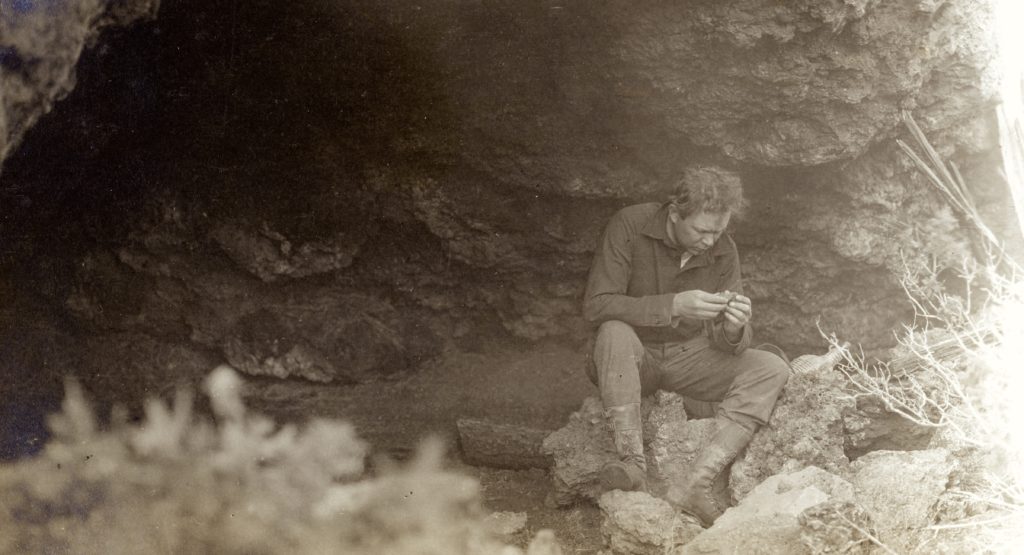
A view of Pike’s Point, Eagle Lake, circa 1917. Courtesy of Wyn Wachhorst
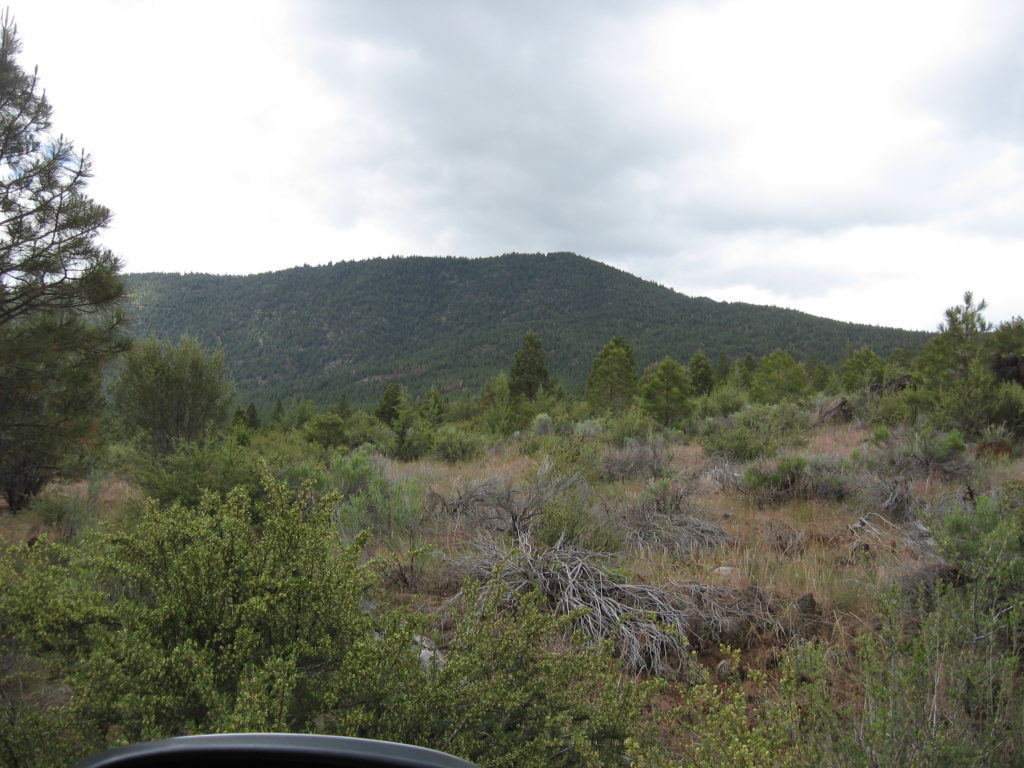
Thought many might enjoy this photograph of the south end of Eagle Lake during its high water mark of 1917-18. This is a part of the Gallatin/Wachhorst collection that I am slowly scanning. As to the origin of the name of Pike’s Point, is unknown to me, but documents indicate that it was so named prior to 1920. The 1979 Pikes Point Archaeological Report did not shed any light on the topic. Now is there any willing takers that want to locate approximately and take photograph of what the view looks like today?

Subscribe!

How high is Honey Lake?

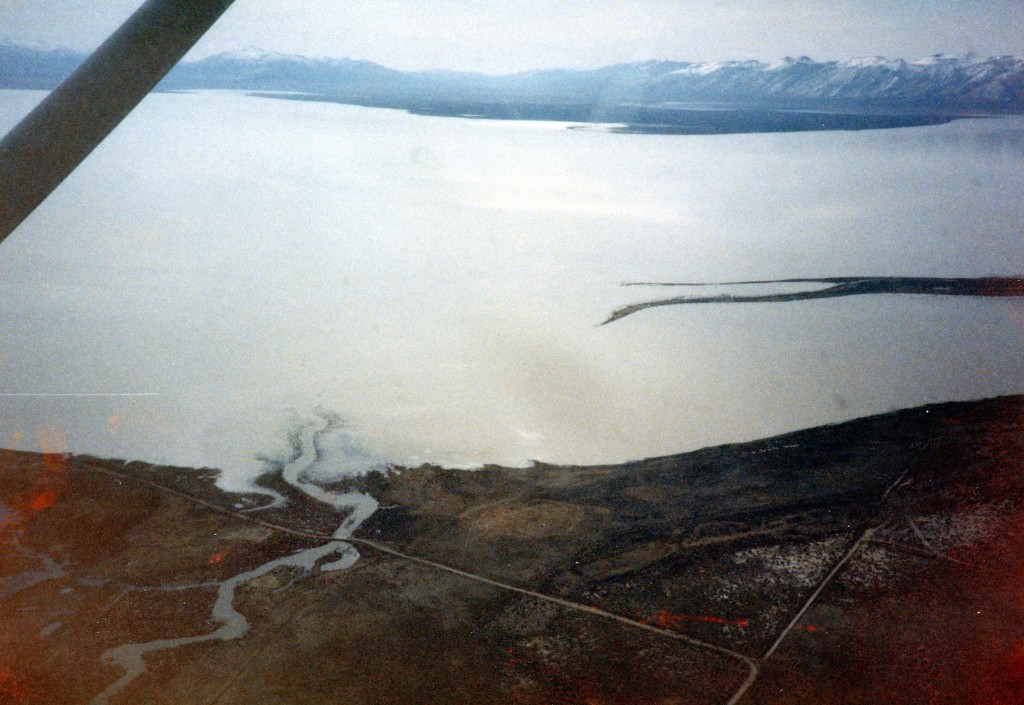
Honey Lake, 1984
Honey Lake, February 1984. To the right is the Hartson Sand Ridge. Photograph courtesy of Bob Sorvaag
There is no question that there is a lot of water in Honey Lake. For some it might seem something like a novelty, since the lake has been dry for so long. While levels of Eagle Lake are taken on a monthly basis, that is not the case with Honey. Anyhow, Honey Lake has been a lot higher, than it is presently.

The winter of 1906-07 ushered in a notorious wet cycle. March of 1907 was rather dramatic with over 12 inches precipitation—sometimes in the form and rain, and other times as snow. In January 1911, witnessed the first of two “big snows” wherein Susanville received 8 feet; Standish five feet, Wendel 8 feet. The lake flooded vast sections of land past Standish. This prompted B.F. Gibson of Litchfield to propose a canal from Honey Lake to Pyramid Lake as way to rid the area of excess water.

Support!
Some Cool Spots

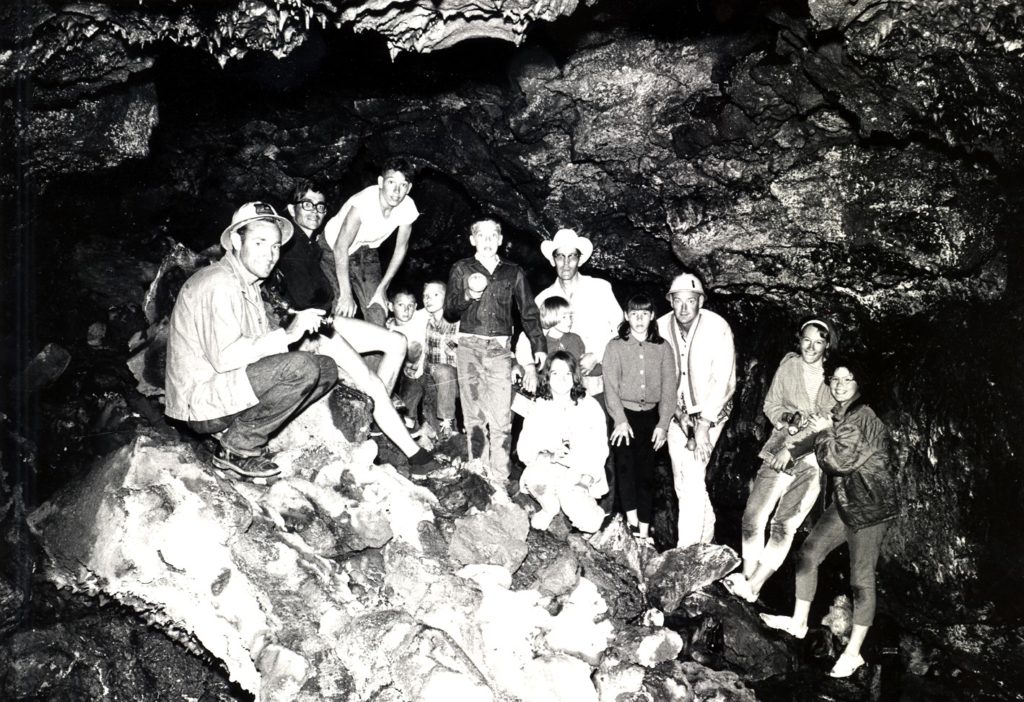
Interior view of an Eagle Lake ice cave, 1966.
With temperatures in Northeastern California to break the century mark this week, there are many places one, if they have the time and means, to beat the heat. For the adventurous there are places like Crater, Homer and Taylor Lakes, lest we not forget Caribou Wilderness. There is always the various Eagle Lake Ice Caves who want to do some exploring. Finally, with Lassen Park road open there is plenty of snow banks to cool off in. If you are wondering if it the heat will ever end, as a general rule by the end of this month, the region experiences a cold snap, just enough to drive the doves out of the area for opening day on September 1.

August Preview

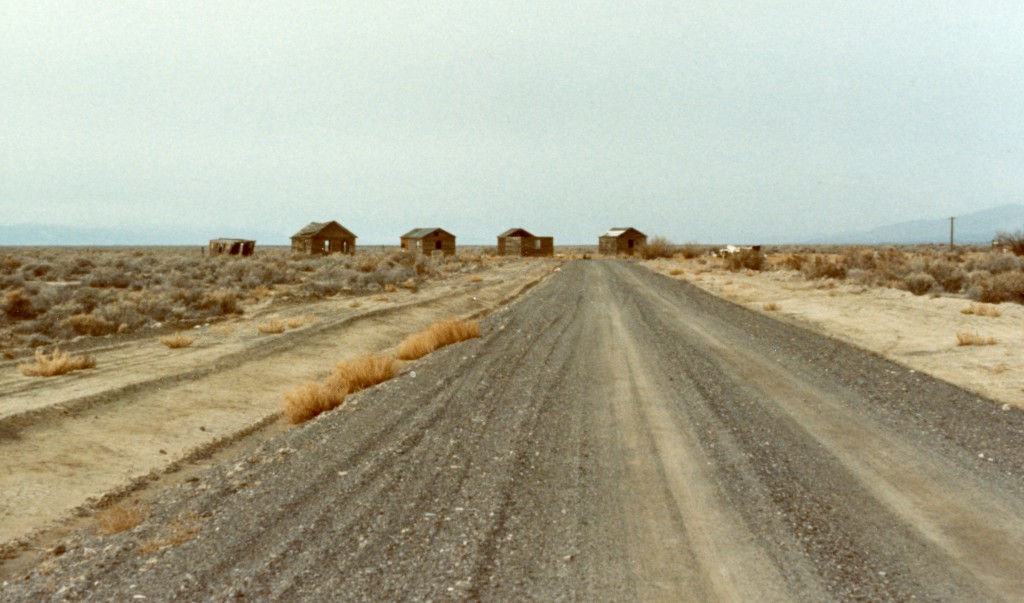
Flanigan, 1976
Flanigan, 1976, courtesy of Christopher Moody
After a very bumpy first seven months of this year, I am looking forward to some smoother sailing for the remainder of the year. Finally, I can focus more on my historical work, than tending to a multitude of “other” matters. I actually have a good line up for early August and with a little luck maybe I can tackle the legend of the Holden Dick Mine among other topics. After a very bumpy first seven months of this year, I am looking forward to some smoother sailing for the remainder of the year. Finally, I can focus more on my historical work, than tending to a multitude of “other” matters. I actually have a good line up for early August and with a little luck maybe I can tackle the legend of the Holden Dick Mine among other topics.

That Can Do Spirit!

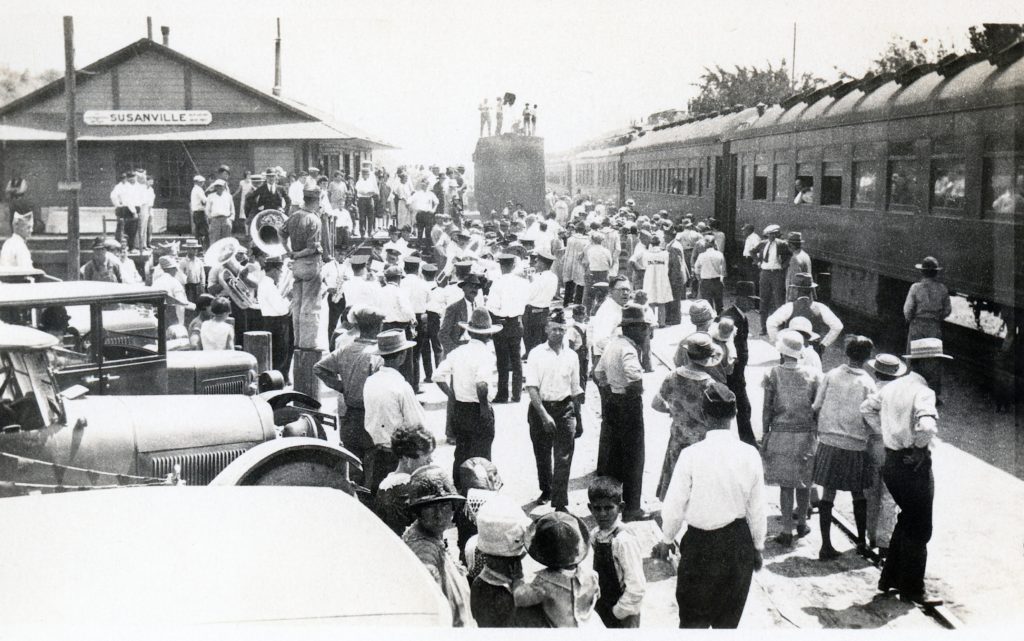
Convention delegates arriving at the Susanville Depot. Courtesy of Nellygrace Stoll.
The old time Honey Lakers were a resourceful lot. When they made up their minds to do something, they did it. In the near future, we will examine some of things they had taken on. One of the “biggies” was how a local bunch of legionnaires with the community support was able to land the California American Legion Convention in Susanville. This was no small feat and the competition was fierce. To this day, one can see many of the legacy’s from that 1926 convention.

Support!

The founding of Five Dot Ranch

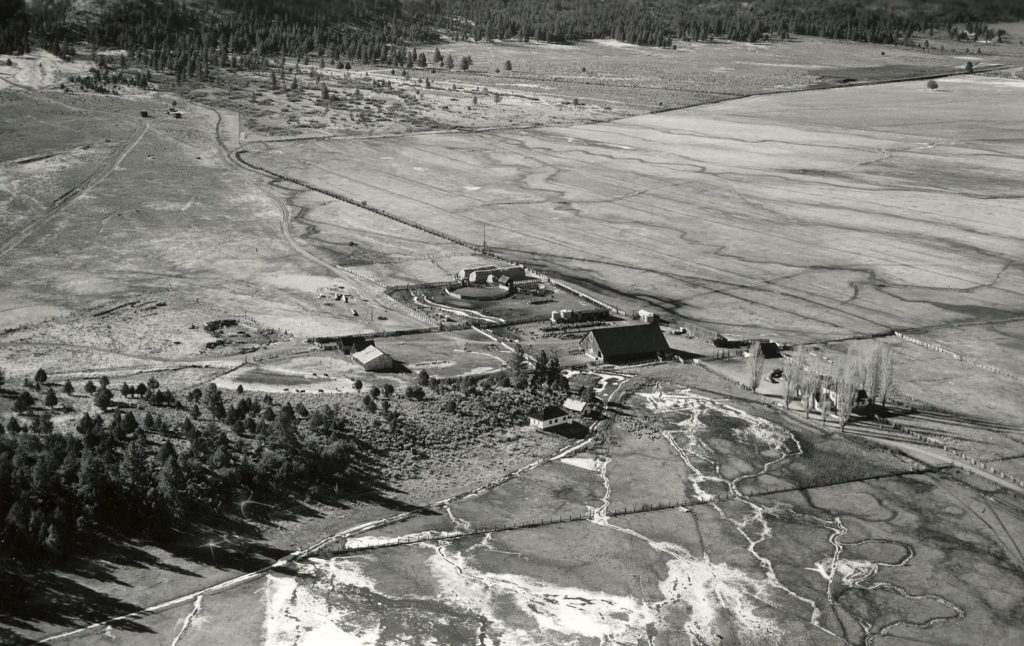
Five Dot Ranch, Willow Creek Valley, 1958. Courtesy of Wendell Loughead
Headquartered in Willow Creek Valley, this ranch, like so many others has a storied past. For the most part of the twentieth century it was known as the Lonkey Ranch. In 1939, the Lonkey’s found a buyer, W.C. Anderson, a banker from Galt, California. The ranch would change ownership several times and in the spring of 1949, two cousins, Ben Dyer and Arlyn Hughes from Gridley, California purchased the Lonkey Ranch. The two men needed financial assistance and brought in three partners: Marvin Kirk, Jack Hughes, and B.B. Hughes. They named their new enterprise the Five Dot Land & Cattle Company, with Arlyn Hughes operating the ranch. The partnership was brief and the ranch was placed on the market in 1958. In 1959, the Swickard Brothers, Jack and Tom of San Jose, purchased the Five Dot Land & Cattle Company for a reported $300,000.

Support!

Eagle Lake, 1915

An Eagle Lake ice cave, circa 1916. Courtesy of Wyn Wachhorst
This spring I wrote about the pamphlet entitled Lucky Land of Lassen that was produced and distributed at the Panama Pacific International Exposition that was held in San Francisco during 1915. At that time, I mentioned that we examine the material, and with that in mind, here is the first of two installments concerning Eagle Lake. The following is the earliest account concerning the lava beds and ice caves.
“To the west of Spalding lies what is known as the ‘Lava Bed county,” about seven miles long and three or four miles wide. This is the wildest region in this section, and excepting the vegetation, it is almost as when the lava first cooled. It is full of caverns, wells and cracks, one of the latter being five miles long and three to twenty feet wide. In one place it has been sounded to a depth of 160 feet and no bottom found. In this crack there is an ice cave where plenty of ice may be obtained any year until August and some years throughout the entire summer.”

Support!
It’s Official, It’s Open

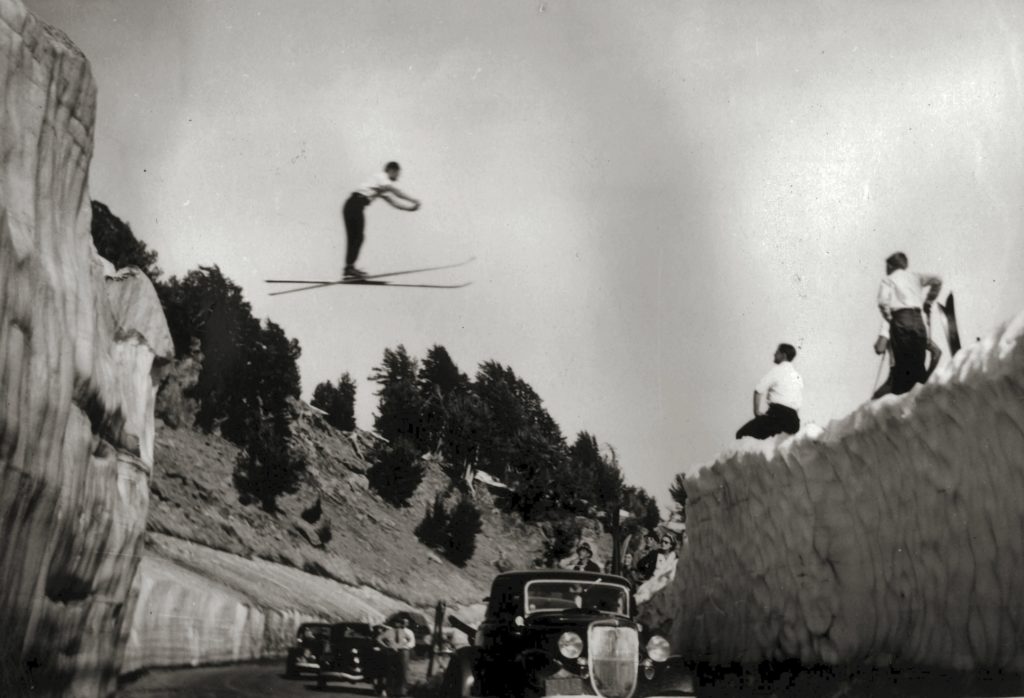
During the 1930s the park sponsored ski tournaments in the summer. Courtesy of National Park Service
The road through Lassen National Volcanic Park is now open, thanks due in part with assistance from Caltrans, otherwise it could have been delayed until August. It is the latest opening since July 21, 1995. So here is a perfect time to have some summertime fun in the snow!

Subscribe!

Exploring Lassen County's Past