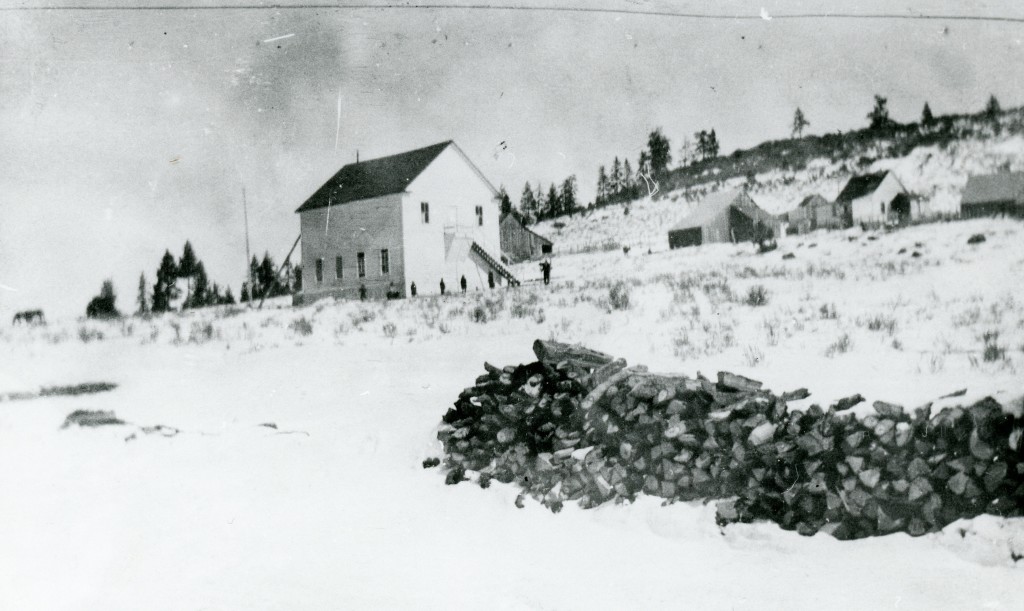
A reader asked about the current status of Hayden Hill. When Lassen Gold shut down in 1997, they began their reclamation process. As a member of the Lassen County Planning Commission we are briefed from time to time as to the status. It should be duly noted that the Lassen County Planning Department is the lead agency in the reclamation process. It should also be duly noted that there is no public access to the site and the property is fenced.
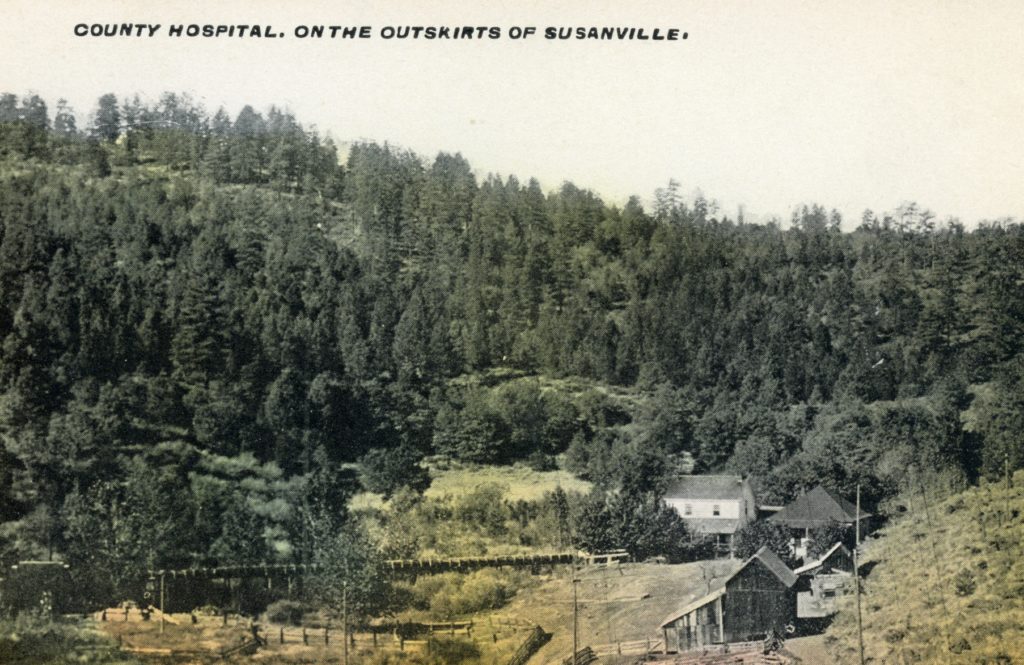
Just as there was a movement in the early 1900s to build a new courthouse, the same issue was applied to the Lassen County Hospital. The two-story, twelve-room facility was built in 1883 for $620. It was located next to the Susan River and far enough away from the town proper should a quarantine be necessary.
In essence over time the hospital devolved into a poor folks home. In the campaign to build a new hospital the Lassen Weekly Mail reported the following conditions of the facility in 1914: “The operating room is on the first floor—at least they call it an operating room. It must make a doctor’s hair stand on end every time he enters it. Septicemia stares a surgeon in the face every time he performs even a minor operation. When your mind thinks of a operating room of a hospital the picture presented to the mind is an airy room with tiled floors, enameled walls and ceiling and every facility for cleanliness, but if you have any such picture in your mind when you visit the operating room of the Lassen County Hospital it will be rudely shattered. The room is small, has a wooden floor and the walls are papered the ceiling an ordinary wooden ceiling. The operating table is an improvised one and of course lacks all conveniences which a surgeon should have in order to do good work. The room is kept clean as possible, but you speak of cleanliness in the operating room of a hospital it does not mean the mere absence of dirt visible to the naked eye. It means that every possibility of germs or any foreign matter that could by any possibility infect the patient are removed. In no possible way could the operating room at the Lassen County Hospital be put in condition that a surgeon would even consider safe.” The following year the voters approved a bond measure for a new courthouse and hospital.
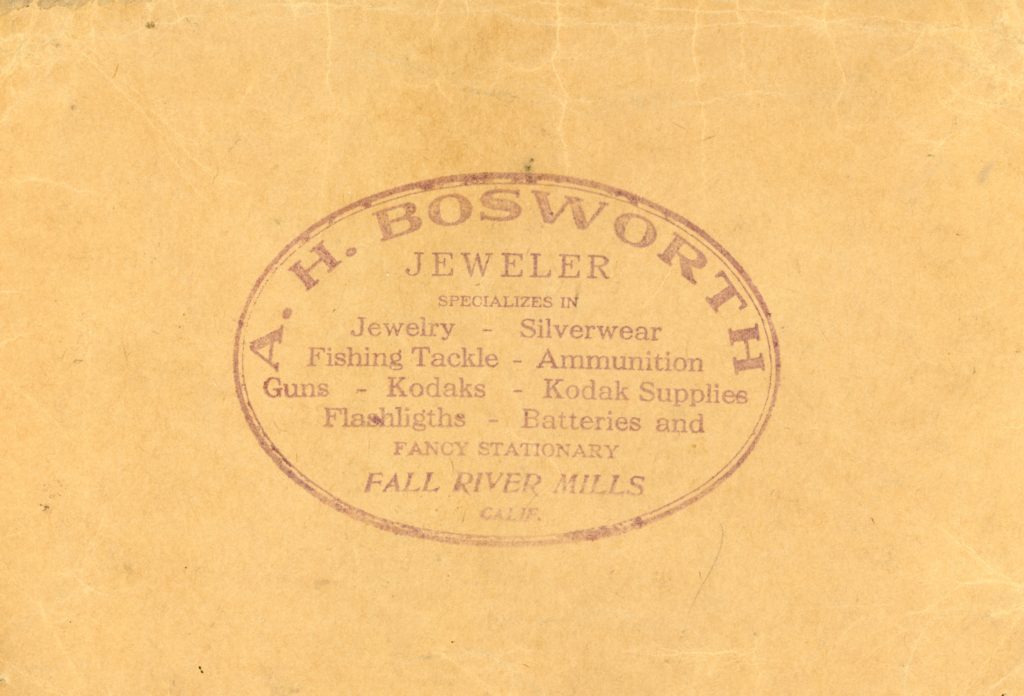
Negative envelope from A.H. Bosworth, a Fall River Mills merchant.
Every day is a new learning process and some times I grasp what is in front of me, other times it just takes a bit longer to learn something new. One of my quandaries for some time is the scanning of old photograph negatives. I mean old, not your typical 35mm or 2 1/4x 21/4. These negatives are 6 inches by 3 inches, plus some other sizes, from the 1910s and 1920s.
I have thousands of negatives from that time period. For example I have nearly 1,000 negatives of professional photographer O.O. Winn taken from 1920 to 1923 of the construction and initial operations of the Fruit Growers Supply Company. I have hundreds of Lola L. Tanner’s negatives from 1915-1925 of Eagle Lake and Willow Creek Valley. Recently, Richard Goudy of Chico asked for assistance with his family photographs of the time era mentioned that are of the Milford and Westwood areas.
My question is does any one have any experience with this, or know some one that has?
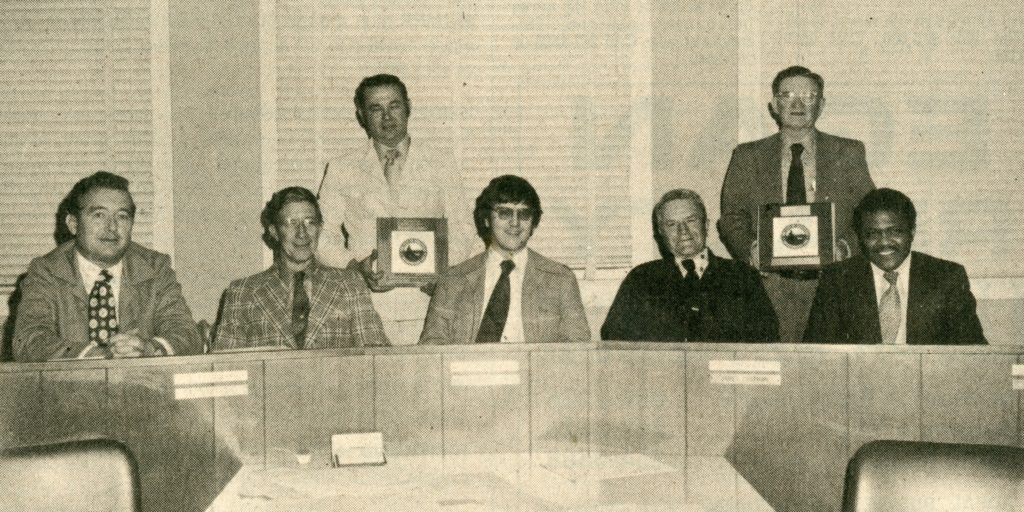
Seated left to right: Fred Metz, Mayor Pro Tem Charles Richardson, Mayor Jim Chapman, Dan Sanchez and Herman Walker. Standing outgoing city council members Ken Loflin and Ivor Lanigar.
At the Susanville City Council’s organizational meeting on March 9, 1976, Jim Chapman, at the tender age of 21, was made the Mayor of Susanville, the youngest person ever to hold that title. Chapman had aspirations that year and ran for Lassen County District Two Supervisor and won that seat in November.
It should be duly noted the city’s organizational meeting then was ceremonial, but not this time. The council rolled up their sleeves and went to work on the pressing issue of the day concerning the grandstand at Memorial Park.
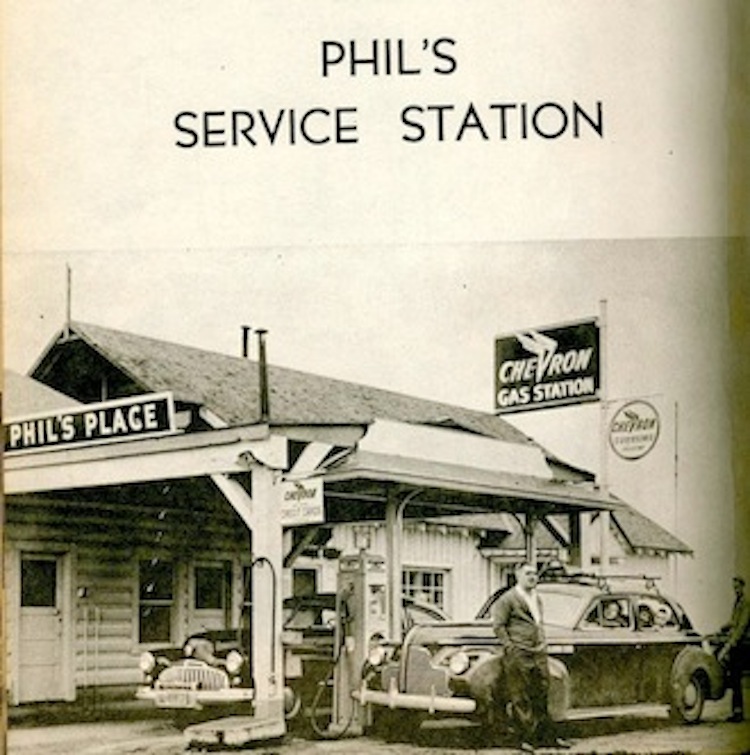
In 1976, Betty Pannell was the Westwood correspondent to the Lassen Advocate. She had a special feature entitled Yesteryear. The following is an excerpt of her interview with Lydia Schuldies, who with her husband operated a restaurant, bar, dancing floor and service station on Highway 36, near Goodrich Creek. Lydia recalls their place was not the only activity there, and now all that remains is the lone chimney.
“With the war and the advent of food stamps Lydia really had her hands full to run the restaurant at Phil’s. To arrange the menus as best as she could and for as long as possible. Then, when the food ran out, to close until she had more stamps. Lydia said she always tried to hire back the employees that had to be let off during these forced closures.
“There were many more buildings along the highway—next to Phil’s was a rooming house for the men working out there. Next to it an ice house with walls yay thick filled with sawdust for insulation to keep the ice. And back between the highway and Moonlight road was the airport. (This is where Cub Walker, one of Fletcher Walker’s son was killed in a plane accident.) On back in a beautiful spot on the meadow was the Home Ranch and during World War II when Victory—or vegetable gardens—were encouraged the Walkers set aside a good sized area for anyone to put in their own vegetables and the Walkers had a man to water it. Directly across the highway from Phil’s were the small house is, well that was the mess hall for the men. And there were was a dairy farm with big barns and the milk brought into Westwood by horse and wagon and sleigh.”
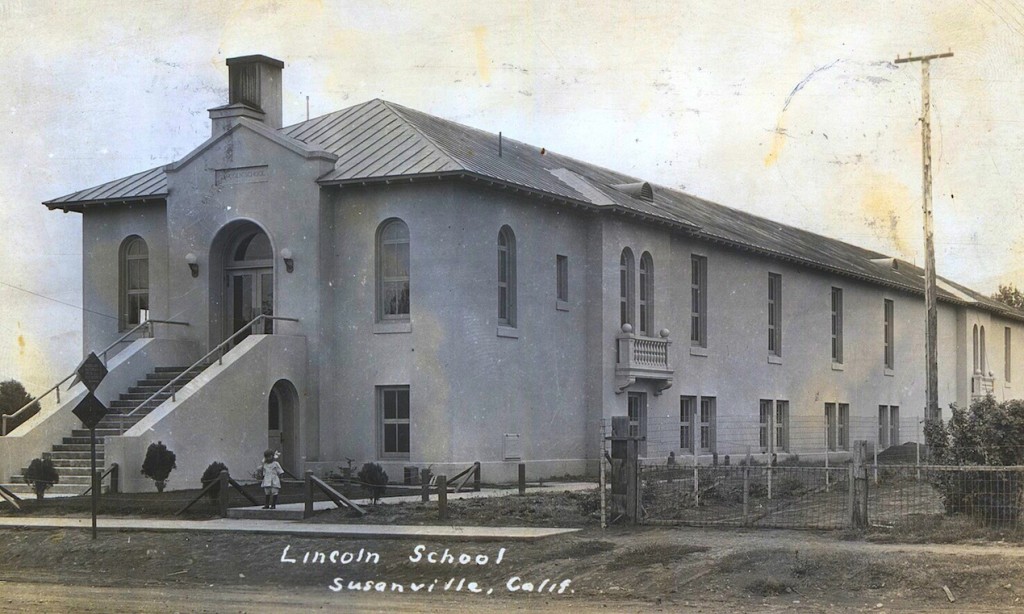
Lincoln School, 1924Today, there are frequent news reports about obesity in children and adults. This was not always the case. In January 1930, 682 students of the Susanville Elementary School District were weighed and measured and it was found that over one-fourth were under weight. This was considered an alarming figure and it was decided that the children be give proper rest periods after school. In addition, it was recommended the children be given milk and lunch at school.
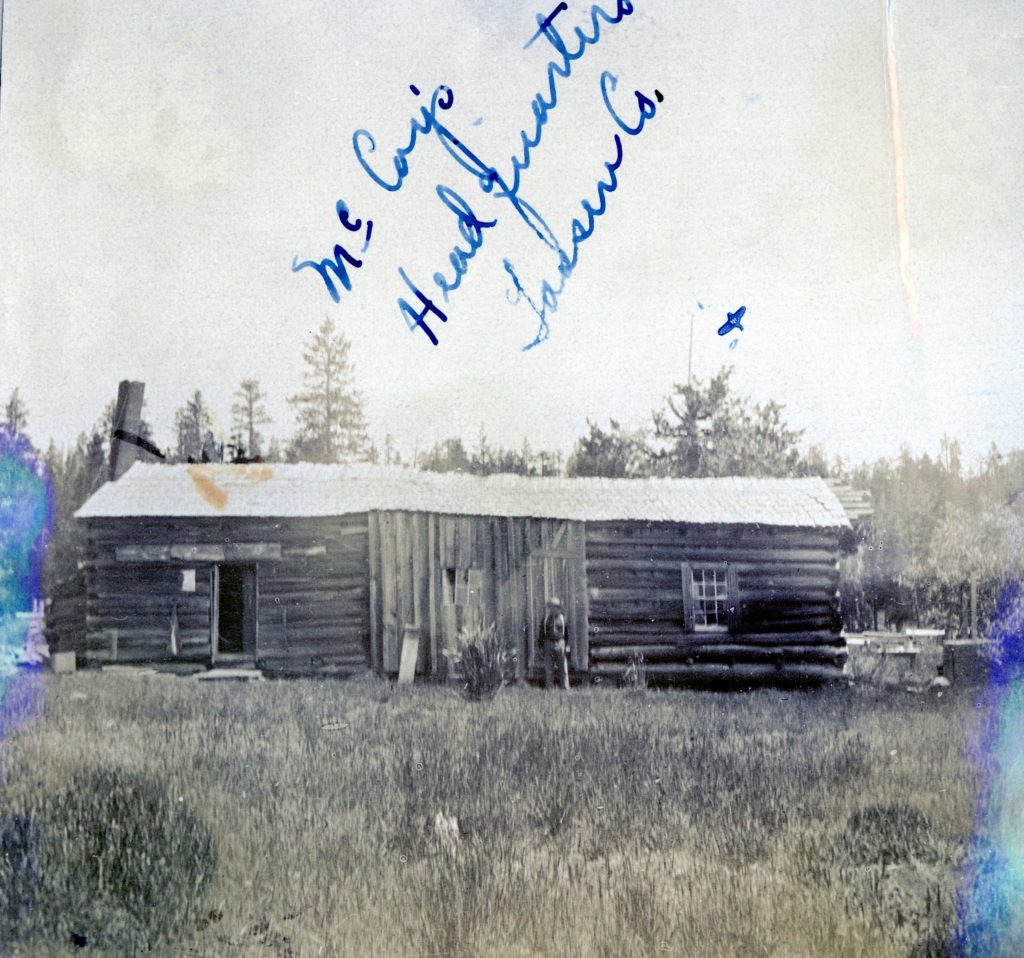
McCoy headquarters at Bridge Creek, circa 1906. Courtesy of the Worley/Crum family.
As mentioned about the story of the Worley Ranch, how the sheep industry played a prominent role in Lassen County. Many of these outfits used the region for summer range, returning to lower elevations for the winter. Many of these camps were rather primitive, usually just a log cabin. As shown above was the camp of Galen Clark McCoy whose headquarters was at Bridge Creek and for whom the nearby McCoy Flat Reservoir is named for. Stanford University had two sheep camps along Pine Creek, north of Camp 10, which was unusual. The majority of these camps were abandoned in the 1920s, and nature has reclaimed the sites.
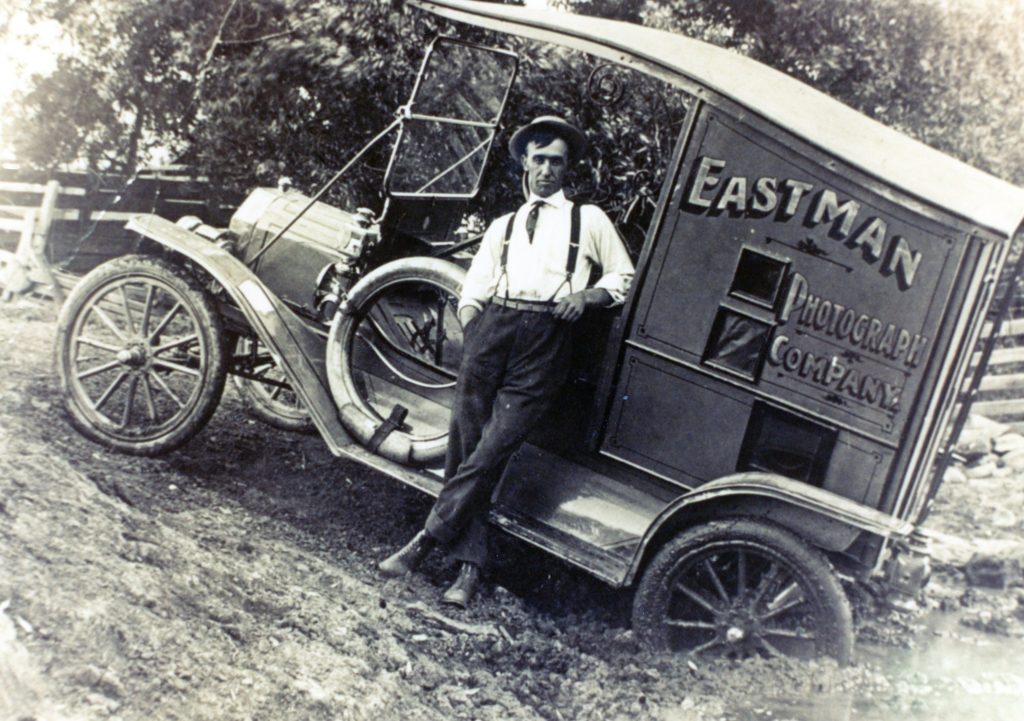
Susanville photographer Jervie Eastman was certainly in the slow lane the day this photograph was taken. Courtesy of Eleanor Vandeburgh.
As the old saying goes, “the more things change, the more they stay the same.” While doing some research, I came across this short, but interesting tidbit in 1930, that many people had hectic lifestyle.
“And you think we live in fast times. Its not the high speed of present day civilization that is causing many persons to die of heart disease. Such is the belief of Dr. George E. Bright of San Francisco, member of the state board of health. More persons die of this ailment he says because people are living longer than they formally did and heart disease an affliction usually associated with old age, carries them off.”
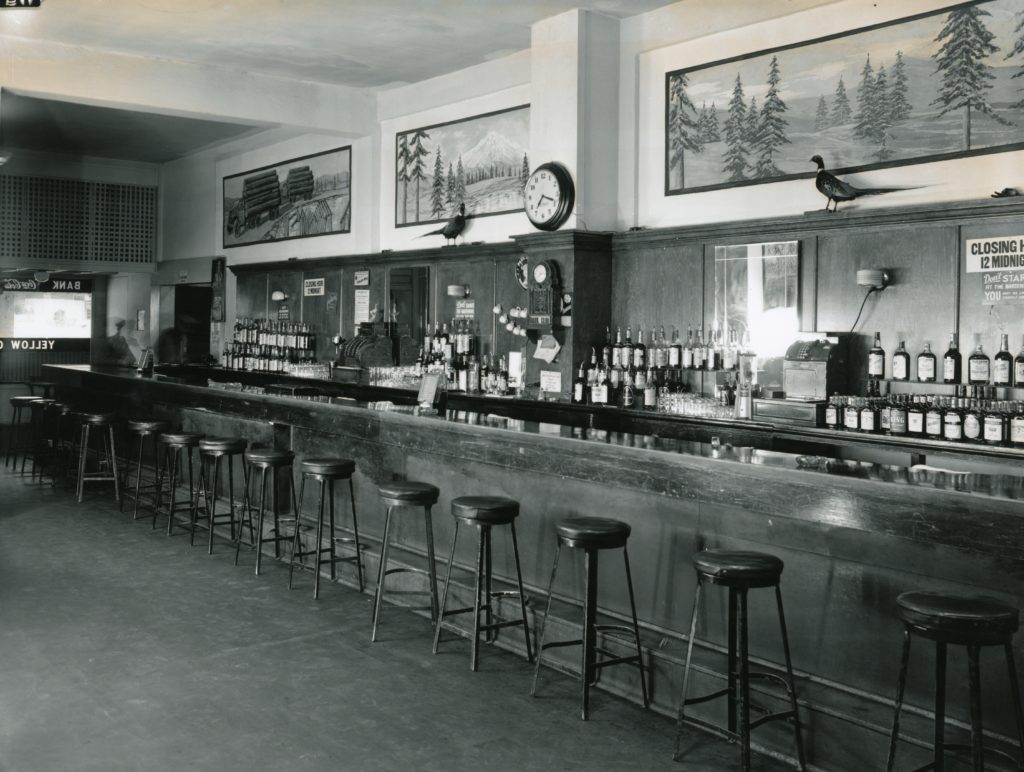
The Bank Club, Susanville. Courtesy of Hank Martinez
Yesterday, I duly noted the large number of gas/service stations, well there was a large concentration of bars in the uptown district. From Weatherlow Street to Roop Street there was: Manuel’s, Marion’s, Round Up Room, the 802, State, Pioneer, Western Room and the B&B. There was the Bank Club, but that was before my time. Then, if you wanted to be discreet, you could get a drink at the Grand Cafe. Today, there is only one, Lassen Ale Works at the Pioneer.
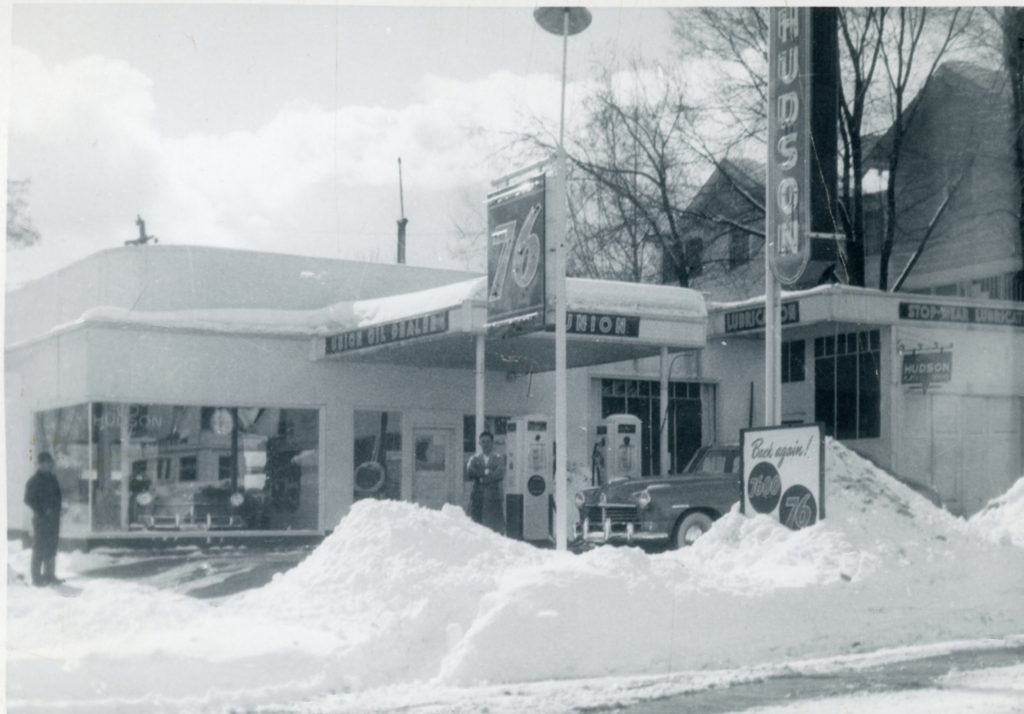
Hudson’s Service Station, 504 Main Street, Susanville, California.
Seasoned residents will recall that it seemed like there was a gas station on nearly every corner of Susanville’s Main Street back in the 1950s and 1960s. Actually, the proper term at that time was “service station.” If one approached Susanville from the west, one of the first items they would see, was not one, but two service stations at the intersection of Main and Roop Streets. At 504 Main Street was a Union 76 Station and kitty-corner and next to Doyle Motors was a Shell Station.