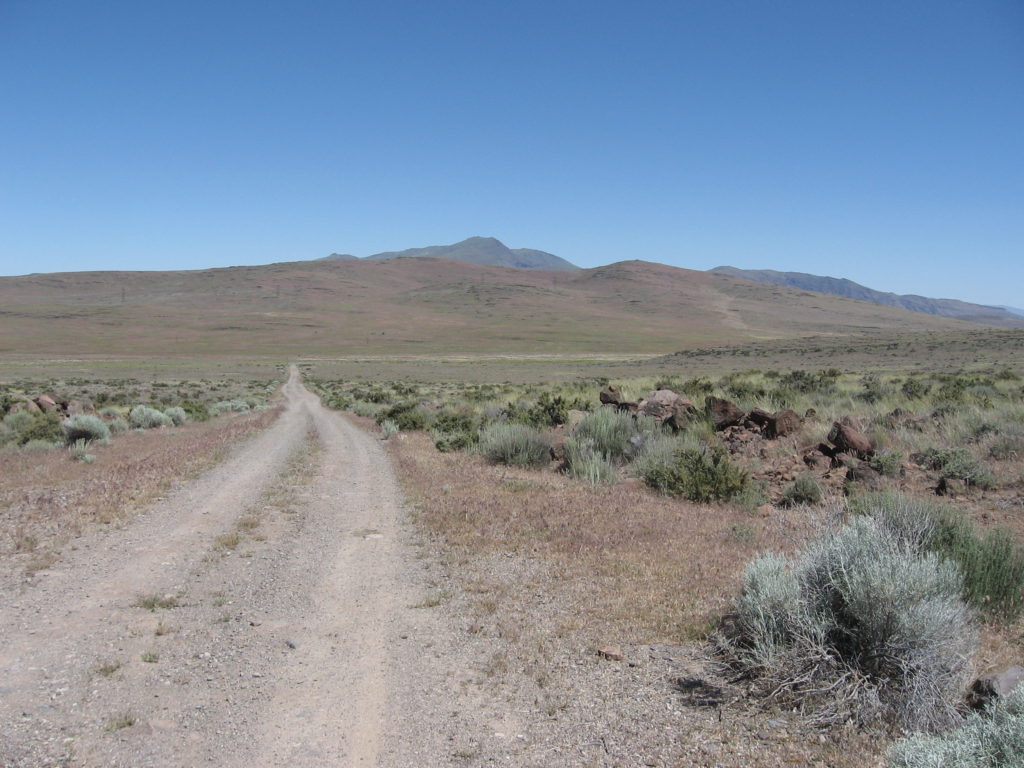
First of all, I am not sure if the low lying ridge in the foreground has a name. The peak behind it is, is rather prominent and can even be seen from the top of Lassen Peak.
First of all, I am not sure if the low lying ridge in the foreground has a name. The peak behind it is, is rather prominent and can even be seen from the top of Lassen Peak.

From time to time, the Red River Lumber Company struggled to keep up with the demand for housing. There was a lot of debate, especially the cost. Initially, the life-span of Westwood was to be twenty years. Fletcher Walker, the resident manager had different ideas.
On September 12, 1922, Fletcher wrote his brother, Gilbert, who resided in Minneapolis, to convince him for his support. Fletcher wrote: “Additional houses would very well materially build up the morals of the crew as it is a conceded fact men with families to support will take more interest in their work and in making good than single men who have gotten into the habit of wandering from job to job and no particular responsibility or care to work steadily. A campaign along the line to build 200 houses and as soon as they are completed build 200 more, if the demand still held out as we could fill 200 houses at this time, if we had them with men of family. Two hundred houses would add more than $200,000 to the annual sales of the mercantile departments as it is impraticable for an average family to get along on less than $1,000 a year. The $1,000 being less than a year’s salary and minimum pay and usually there is more than one employed out of each family.”
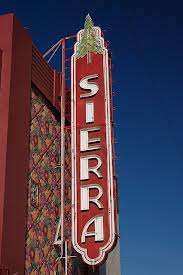
In February 1935, the residents of Susanville were astir as they watched the new neon sign being installed on the newly constructed Sierra Theater. Purportedly, when the sign was installed it was the largest neon sign installed in Northern California. More importantly, the residents were anxious for the new theater to open. The previous Liberty Theater was condemned by the City in August 1934. The Liberty was torn down in September to be replaced with the current Sierra Theater.

On July 8, 2015 the featured post that day was a “A Living Memorial.” In 1940 the local American Legion Post began a project that would result in two objectives. One was a beautification program for the Lassen County Courthouse property, that would serve a second purpose as a living memorial. They planted seventeen American sycamore trees, one each for every Lassen County man that perished in the “Great War” as World War I was referred to then. It was their intent that that at the base of each tree a plaque would be placed with that service man’s name. In the meantime, with so much focused on the war effort leading into World War II, that detail was put on the sideline, and like so many other community projects started in that era, were forgotten after the war ended.
Fast forward to the fall of 2018 and it is with great joy that the project has come full circle. Ryan Elison, as part of project to obtain the Eagle Scout rank with Boy Scouts completed the goal started seventy-eight years ago! Ryan, with some outside help, was responsible to place memorial markers at each tree as originally intended.
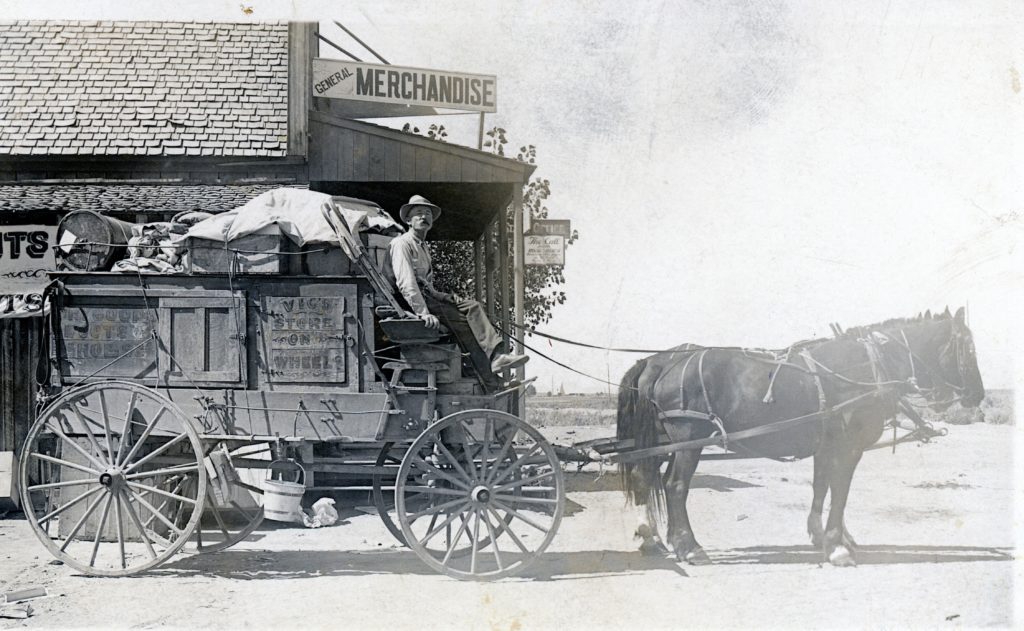
In the early 1890s, Johnstonville resident, Vic Perry saw a need and put into motion his traveling store. In the summer, when hay season was in full swing, which should be noted then was very labor intensive, one did not have the luxury to travel to town for supplies. It was not unusual, for a farm to have a hay crew of twenty people. Perry would travel from ranch to ranch, making a circuit selling his wares. When Standish was founded in 1897, Perry opened a general mercantile store there, but each summer he was busy with his “store on wheels.”
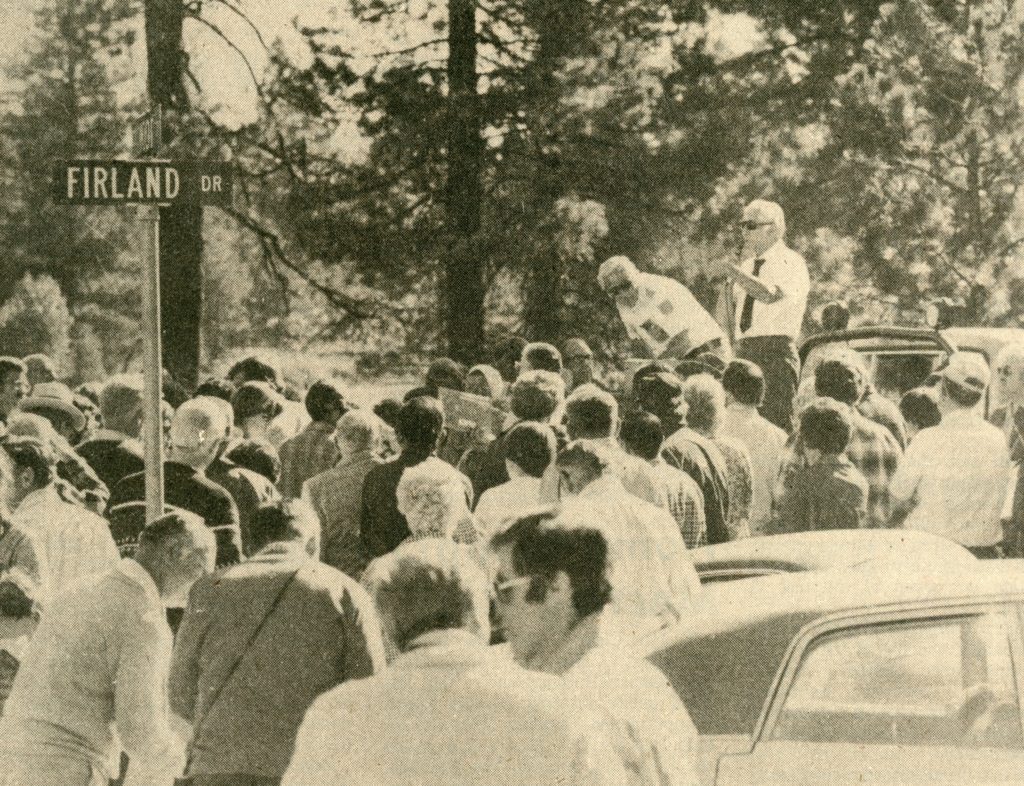
On September 12, 1956, the Fruit Growers Supply Company sold its Westwood operations, i.e., the mill and town to Milton Wershow and David Weiz of Los Angeles for $625,000. The two men operated a liquidation company and it was their original intent to attract other industries to Westwood. When the mill burned down unexpectedly on November 8, 1956 that changed their plans. To handle real estate sales they formed Greater Westwood Inc. After twenty years, on October 9, 1976 they held an auction to sell of the remainder of their Westwood properties. With several hundred people in attendance they sold 76 residential lots and 28 commerical lots.
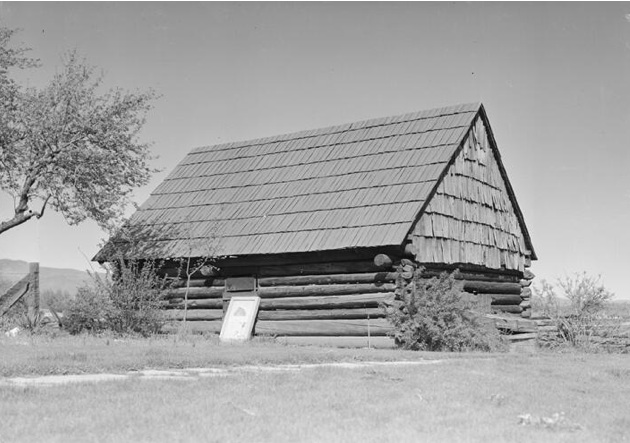
The 1930s were a financially difficult time for Med Arnold, the grandson of the town’s founder, Isaac Roop. In a desperate need of funds, on October 8, 1936, Arnold put Roop’s iconic landmark up for sale. This in turn spurred a grass roots campaign movement to raise funds. In May 1937, the City of Susanville purchased it. When the Shasta-Cascade Wonderland Association held its 1937 convention that fall in Susanville, one of its highlights of the meeting was the dedication ceremony of the landmark, with California Governor F.F. Merriam as the guest speaker. In 1974, Roop’s Fort was entered into the National Register of Historic Places.

In the early 1890s, real estate promoters at Amedee proclaimed the region ideally suited for citrus trees. Of course, there were a lot of skeptics.
In 1911, Standish resident Frank McKay came up with a new marketing campaign to make one of this crops stand out from the others. McKay offered for sale Honey Lake oranges. As it turned out the large orange orbs he had for sale, were in fact the standard pumpkin.
This being the month of October, means Wemple’s Pumpkin Patch at Milford is open. So if you are out and about that way, it is worth the stop.
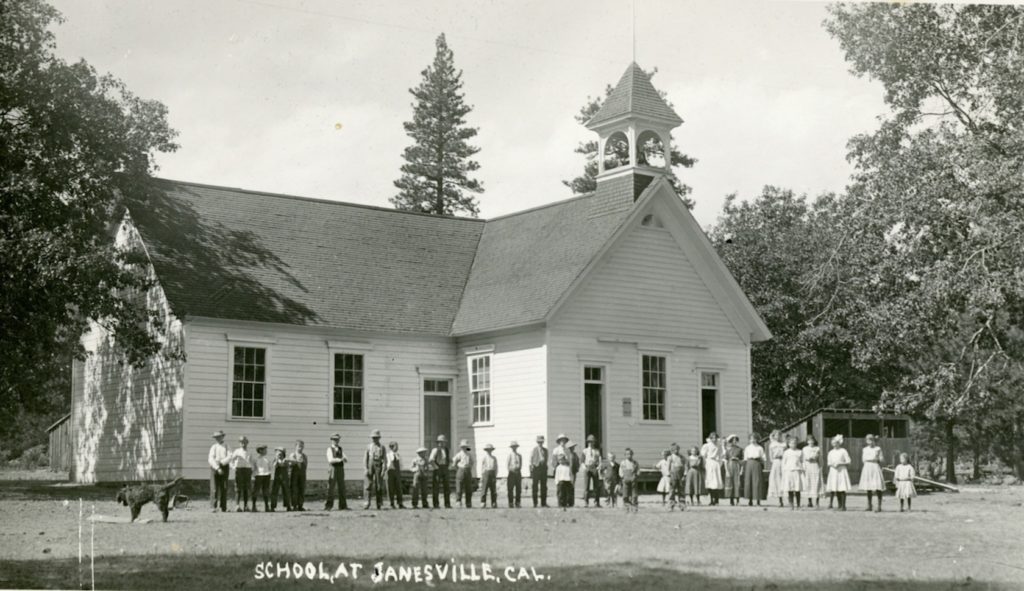
In the late 1940s and early 1950s witnessed numerous changes with the Lassen County schools. Not only there were numerous consolidation of school districts, but a lot of new schools were constructed then. In 1948, the voters of the Janesville School District approved a bond measure for a new school and it was approved. On November 3, 1951, Al Row, with his high bid of $380, purchased the old schoolhouse and he moved it to his property. However, the school trustees donated the old bronze bell that adorned the schoolhouse to the Janesville Fire Department.

While there has always been a lot of talk over the years of dividing up California, there is lesser known movement of annexing parts of California to Nevada. This, of course, is much more realistic than splitting the Golden State.
In 1907, Nevada took the lead to attempt to annex Alpine, Inyo, Mono, Lassen and Modoc Counties. Measures in support of the annexation passed in both the Nevada Assembly and Senate. It was their contention that the residents of those counties desired annexation to Nevada. In addition, they were tied to Nevada, geographicaly, socialy and politicaly, while they were ignored by California. Nevada requested that California allow the voters in the affected counties to vote on the annexation question. California said no.