Deep Hole Station Massacre, 1869

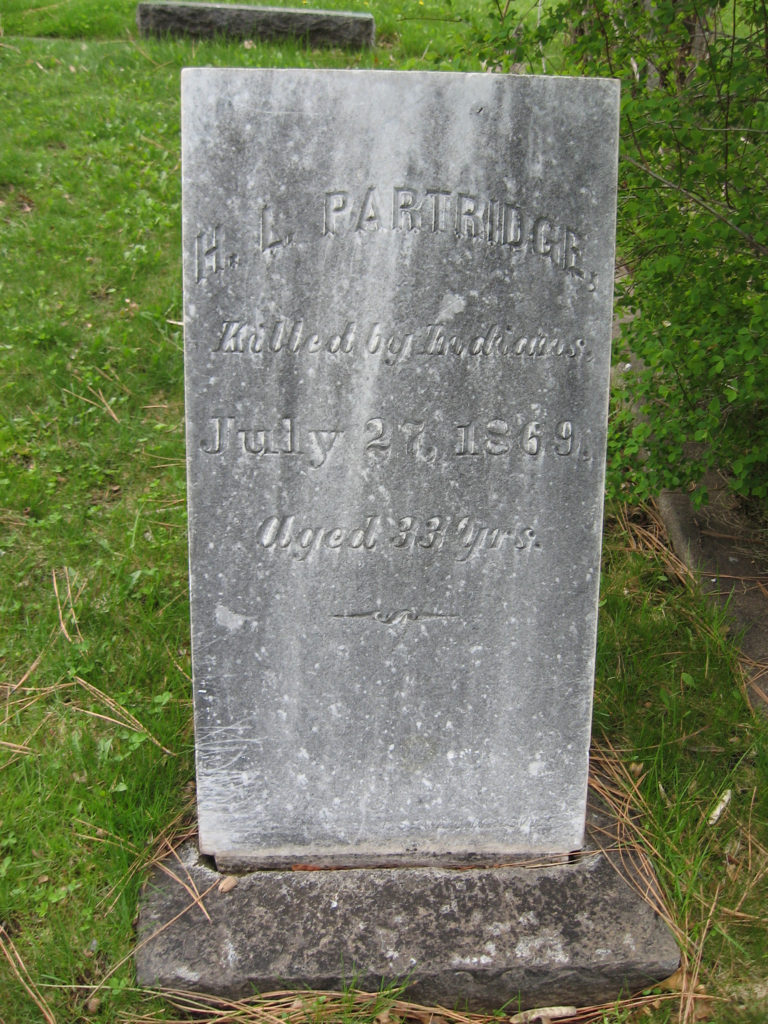
The grave of Hiram L. Partridge, Susanville Cemetery, April 24, 2018

The Deep Hole Station in the Smoke Creek Desert was one of several outposts on the Nobles Emigrant Trail. It was established in 1856 Ladue Vary, who spend the remainder of his life propsecting the mountains of northern Washoe County. In 1862, Thomas Bare sold the Deep Hole Station of Hiram Partridge. A few years later, Sylvester Coburn became a partner with Partridge in the station.

In summer of 1869, all seemed tranquil there. There was a small Indian encampment near the station, on the some of the Indians worked for Coburn & Partridge in cutting hay. The encampment disbanded and purportedly went to Summit Lake. On July 27, 1869 Coburn and Partridge went a mile or two from the station to cut sagebrush for fuel. Tranquility ended. When loading the wagon the initial attack began when Indians shot Coburn in the chest and ankle. Fear raced through Partridge who fled the scene on foot, but was soon overtaken. He was shot three times, in head, chest and ankle.

On August 4, 1869, John Partridge of Susanville and a cousin of Hiram, went to Deep Hole to retrieve the bodies. The following day the two men were buried in the Susanville Cemetery.
Subscribe

The “Villefacation” of the Honey Lake Valley

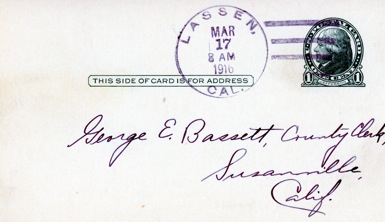
A Lassen (Janesville) postal cancel

In 1910, with no concrete substantial proof that a railroad would traverse the Honey Lake Valley, the Lassen County Chamber of Commerce remained positive that one day it would happen. In an attempt to be proactive, they approached the Susanville City Council to rename the town. It was their contention that the suffix “ville” carried on the conotation of a small village. They wanted something with a metropolitan flair. It was a sensitive issue, since the town’s namesake Susan Roop Arnold still resided in the community. The chamber wanted the matter placed on the ballet. The council said no, case closed.

In 1912, with the Fernley & Lassen Railroad a reality, the real estate community was in full force to rid the Honey Lake Valley of town’s ending in “ville.” The first victim was Spoonville, which became Edgemont. The next one, Janesville, was controversial. well. On July 2, 1914, the Janesville Post Office was renamed Lassen. This did not set well with many of the town’s residents. A petition was sent to the Postmaster General to restore the name, but it was denied. It led to confusion since the town was known as Janesville, but its mail designation was Lassen. In 1923, the residents once again petition the postal authorities to restore the name.  It was granted and on September 22, 1923, the Lassen postal designation was dropped.

Janesville Masonic Hall,circa 1912.

Support

Billiards

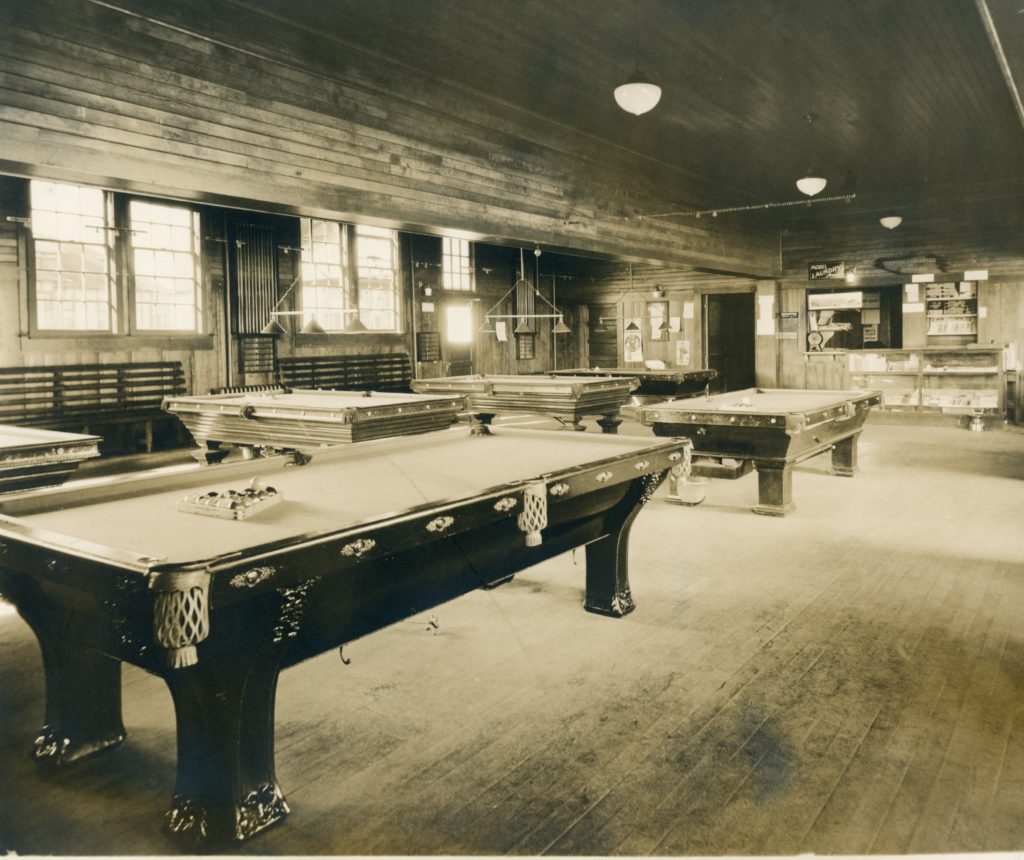
The billiard room, Story Club, Susanville, 1923. Courtesy of the Fruit Growers Supply Company

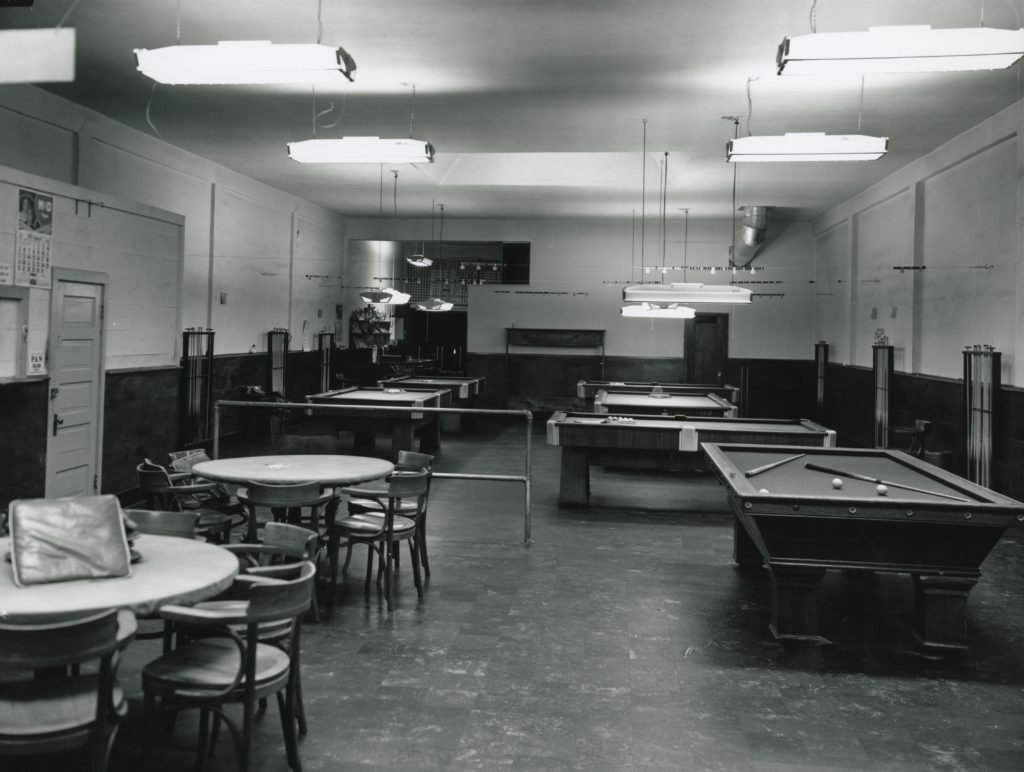
This seems to be a quaint blast from the past, at least locally. Billiards, whether it be a game of snooker or pool, was a popular past time since the late 1800s. Its popularity grew by leaps and bounds in the 1920s from the population explosion created by the lumber mills. By the mid-1980s, locally, it began a slow decline. Today, only a handful of establishments throughout the county even have a pool table. The mighty snooker table a relic of the past.

The back room of Susanville’s Bank Club, 1949. Courtesy of Hank Martinez

Subscribe

Roop’s Fort Fire

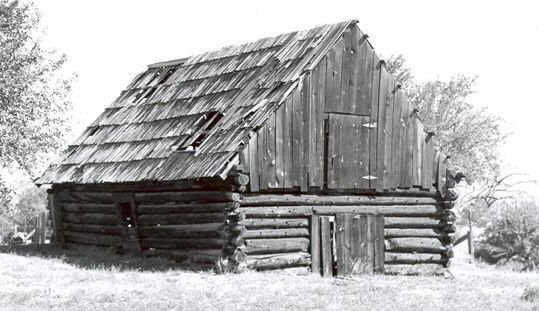
Roop’s Fort

On Sunday morning, July 3, 1927, fire officials were alerted that a fire was threatening Roop’s Fort, Susanville’s oldest structure on Weatherlow Street. When the fire department arrived they found a nearby shed and chicken coop in flames, that threatened the old fort nearby. Luckily, the fire was extinguished in the nick of time. It was determined that children playing with fireworks started the fire.

There are two interesting anecdotes about this incident. First a newspaper reporter was more focused on tomorrow’s holiday, as evident in the lead sentence: “Fort Weatherlow, the first building in Lassen County, built in 1854 by Peter Roop . . . “

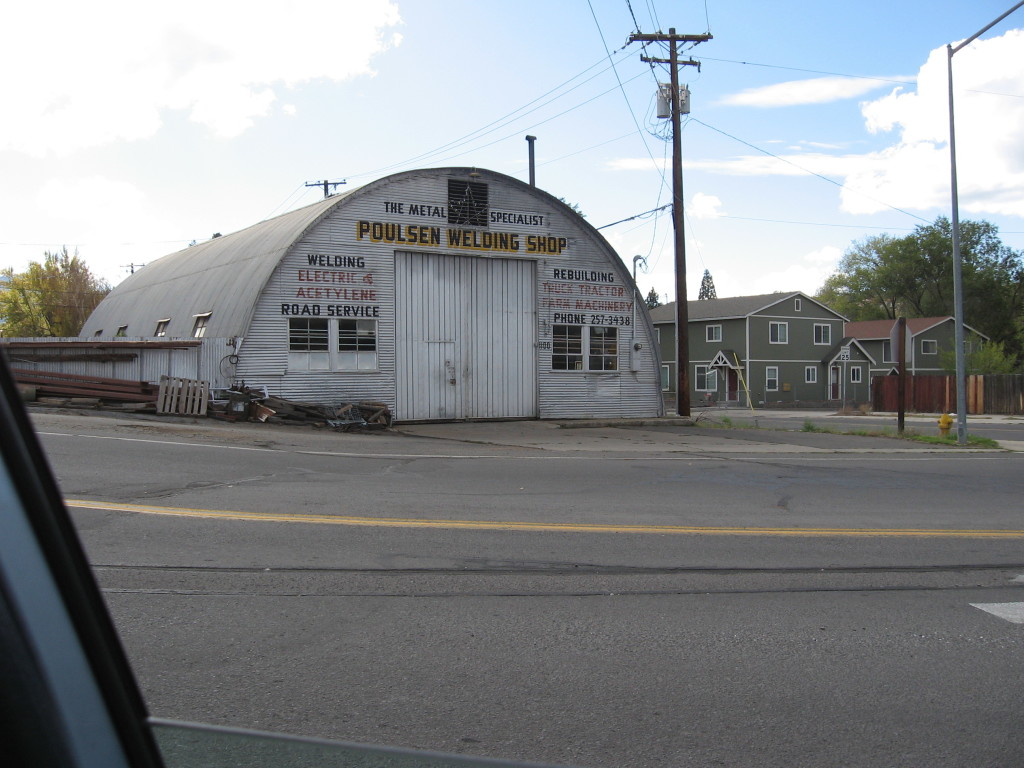
Roop’s Fort was barely located outside the City Limits back then, and the City fire department were prohibited to assist with any fire outside the city limits. In this instance they did. Fast forward to 1946 and a very similar episode. Poulsen’s Welding Shop caught fire, but the city did not respond, because it was just across the city boundary.

October 18, 2015

Subscribe

National Forest Receipts Program

Timber fallers, Lake Almanor, 1927. Courtesy of Roy Rea

Once upon a time, this program established in 1908, had a major impactof funding for local governments where national forests were located. Initially, twenty-five percent of timber sales were distributed to counties where government timber was sold. These funds were earmarked for roads and schools. For many decades in Lassen County it was a huge deal. For example in 1926 Lassen County received $33,886.28–the third highest amount in California. While that figure may seem small by today’s standards, that sum represented one-quarter of Lassen County’s budget.

Subscribe

Answers to your questions

Brochure of the Mt. Lassen Transit Company, Red Bluff, circa 1920. Courtesy of Margaret A. Purdy

The Mt. Lassen Motor Transit Company, located in Red Bluff, has been in operation for over 100 years. When Lassen Volcanic National Park was established, it coincided with the construction of State Highway 36. This placed the company in advantage to provide trips to Lassen Park, since the southern portion of the park was easily accessible. Whether they used Packards, I do not know.

Pumpkin Center is one of those great mysteries to me. For those not familiar It is a small district just southeast of Bieber. I have had asked a lot of knowledgeable people of Big Valley and it seems as no one knows.

Herlong High yearbooks do exist and the school maintains a collection. As to the the murder of Hiram Patridge and Sylvester Coburn at Deep Hole Station, in the Smoke Creek Desert will appear as a separate post.

A Eagle Lake Barbecue to Remember

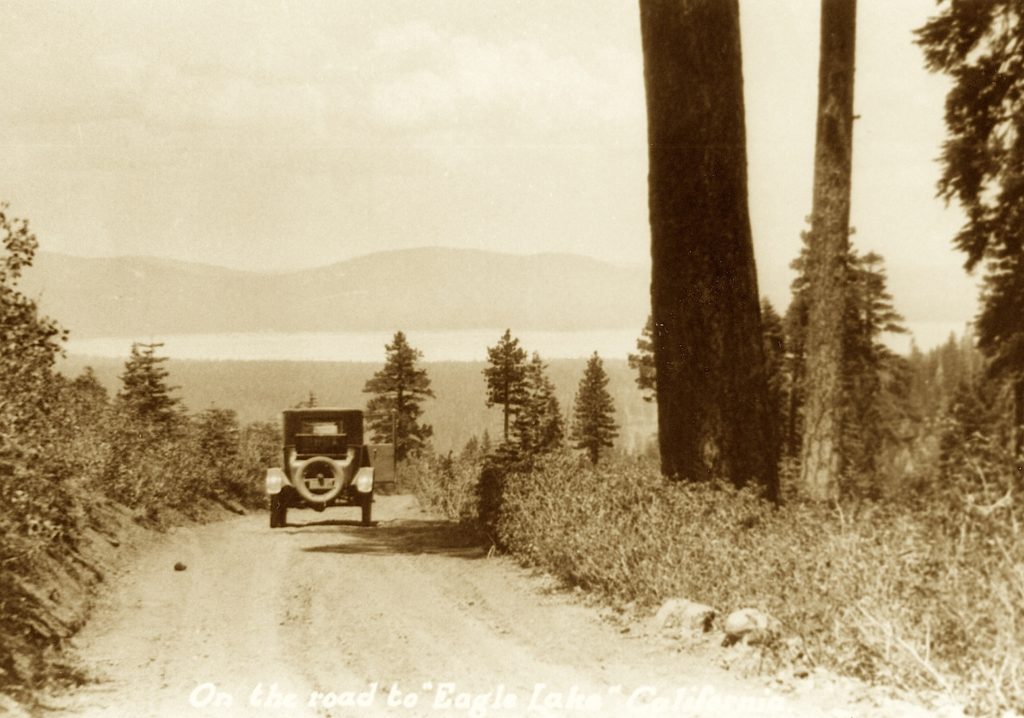
Eagle Lake Summit, 1923. Courtesy of Dick & Helen Harrison

The citizens of Susanville in August 1926, while hosting the California American Legion Convention, did everything they could to make it a memorable event. One of the many events they hosted was a barbecue at Eagle Lake. This was no small feat. It was a logistical nightmare to transport some 2,700 people to the south shore of lake. In addition, to bring all the food and related items to go with it had to been a daunting task. To feed a crowd of that size was more than they were prepared for. Long lines were endured for a serving of steak and beans. Most of the attendees took it in stride. “Happy” Wintz from the El Segundo delegation composed a little ditty he sang the next day at the parade in Susanville, a variation of the local legion’s slogan, “Eagle Lake, Eagle Lake, on the rocks and rills, of California hills. Eagle Lake, Eagle Lake, that’s where we got the belly ache.”

Subscribe

A Hollywood Star Moves to Susanville

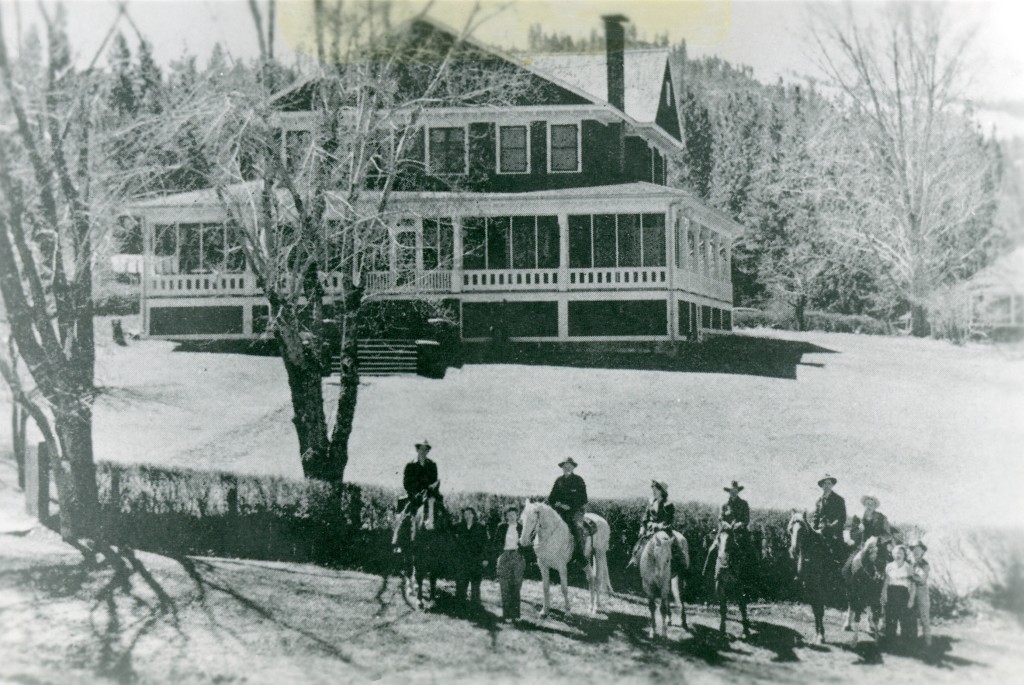
The Wingfield property as it appeared in the 1950s.

In the spring of 1942, Susanville residents were astir when the news broke that a famous western movie star purchased the old George Wingfield, south of Susanville, known today as Mountain Meadows Ranch. That star was none other than Buck Jones, who delighted movie goers since the 1920s. It was his desire to raise horses at the ranch. However, his dream was short lived. In November 1942, Buck Jones was killed in the horrific fire of the Cocoanut Grove nightclub in Boston that claimed 492 lives.

Support

Poison Lake Logging Operations

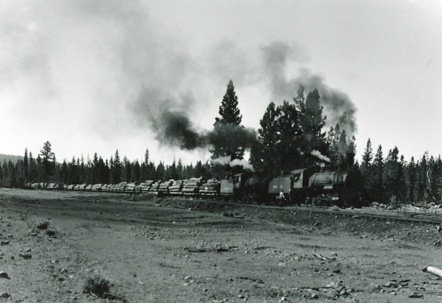
A Fruit Growers Supply Company logging train near Halls Flat, 1947

Poison Lake in western Lassen County was in essence the last frontier for railroad logging in the region. By 1940, the Red River Lumber Company had nearly exhausted its tributary timber around Westwood. It was also a critical time for Red River, not only dealing with a dwindling timber supply, but a younger generation of the Walkers having more influence in the operations.
With the nation already gearing up for the effort, demand for lumber increase, which in turn commanded higher prices.

While Red River was in crossroads about the future of Westwood, they were able to agree on item. With demand for lumber at an all time, and profits, too, it was best to carry on, with the hopes of finding a likely buyer during the good times.

The next destination to log was Red River’s Black/Harvey Mountains tracts some thirty miles north of Westwood. As an extra enticement, Lassen National Forest nine million board feet at Poison Lake. In 1941, Red River established Camp Bunyan at Halls Flat and started logging east towards Blacks Mountain. In 1944, they built railroad logging spurs around Poison Lake. While traveling along Highway 44 west of Poison Lake and looking on the south side of the highway these old railroad grades are still visible.

Subscribe

Exploring Lassen County's Past