A Healthy Climate?

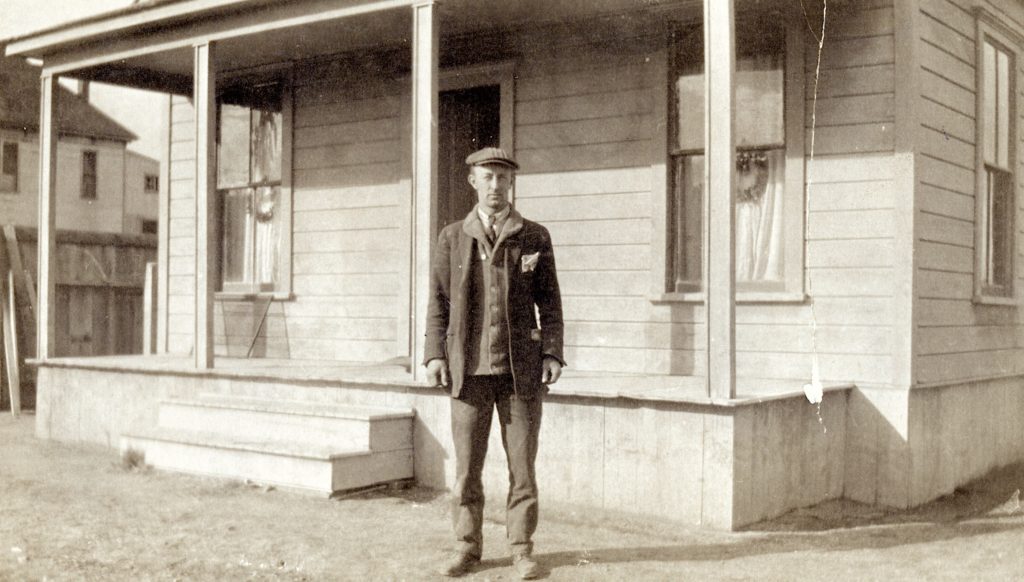
J. St. Clair Riesenman, Amedee, 1914

While the last two days were focused on Sylvester Daniels rodeo observation, it was duly noted that his sole purpose to be in the Honey Lake Valley was to see if this climate versus Iowa would be beneficial for his health. It was not long after the gold rush of 1849, that California possessed many virtues other than minerals—weather being one. For Daniels, he was a firm believer. After only spending a year in Northeastern California, he returned to Iowa, to move his family to Lake City, Modoc County. Daniels passed away at Lake City on January 20, 1908, at the age of 79.

There were others who were not so fortunate. For example, J. St. Clair Riesenmen. This Pennsylvania native was lured to California, in 1914, to the Lassen County town of Amedee, known for its hot springs and their supposed healing qualities, coupled with the dry climate would be beneficial. What he found was romance. On August 14, 1915, Riesenman married Alda Callahan, whose parents owned the Amedee Hotel.

In 1920, they moved from Amedee to Wendel and owned and operated the Wendel Cash Grocery. By 1922, whatever his health infliction had returned. He carried on for several years with a sunny disposition. Riesenman died on March 18, 1927 at the age of 39.

Subscribe

Sylvester Daniels First Rodeo

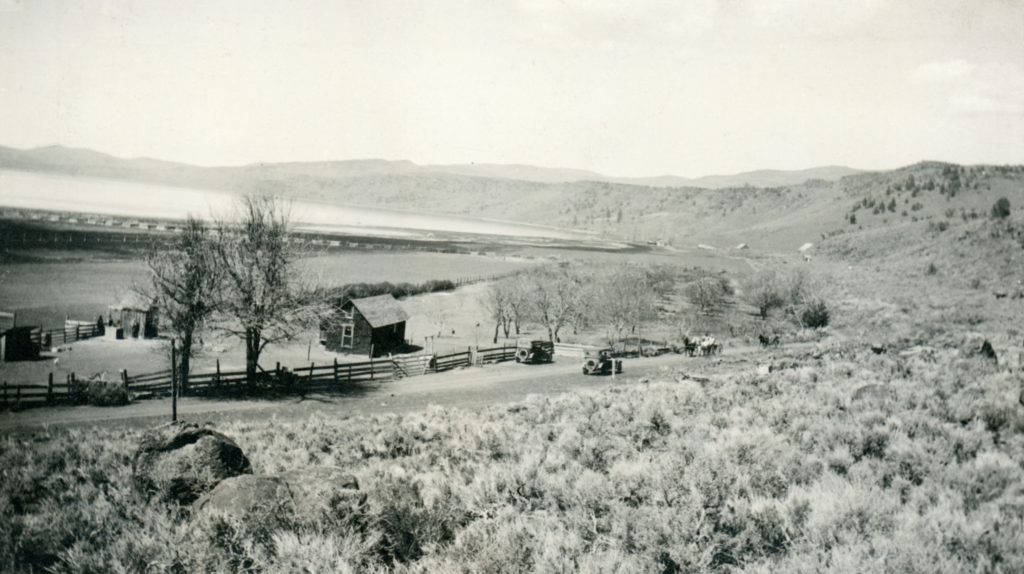
High Rock Ranch in eastern Honey Lake Valley was a popular gathering place for rodeos in the late 1800s. Courtesy of Madelyn Mapes Dahlstrom

Three days later, June 22, 1874, Daniels was able to witness his first rodeo and wrote: “They take wild colts, throw a rope over their neck and choke them down. Then they put a blind on them. They use a halter called a Hackamore, with a long rope to it. They don’t put on any bridle and the blind is a broad piece of leather with strings to tie it on so they can slip it down over their eyes or up so they can see. After these two things are on, they are let up. Then they slip the blind over their eyes and put the saddle on. The rope is tied so as to make a rein to hold on to. Then they are taken out of the corral and there is three to five men mounted to ride at each side and behind to keep them from running into the fence or any other bad place. One has a big whip, when the rider mounts the blind is raised and the show begins and it is a considerable show. One would think the horse would be tired out before the rider gets on, after all the horses had all ready been run through a round up and all. But they buck, pretty tall, and it takes a good rider to stay on. It jolts a man awful. The men did well today, none got thrown. They make them buck all they can. When they quit that, the fun is over. It is broke and turned out and another caught and the same performance again, with but little variation.”

It was interesting to note Daniels final observations. The reason for his attendance was his brother-in-law, Elisha Parks, was in search of stray livestock. Daniels noted that Parks’ three colts had been separated in the corrals, but never broken. Parks thought they could just drive them home. Daniels, wrote that did not happen, and the scenario was like driving deer, and the animals fled to the mountains.

Finally, Daniels was amazed about the difference in hospitality between Honey Lakers and those in Iowa. He noted the host of event fed everyone for free, and he recokened there were nearly forty men there. In summation, Daniels wrote, “Not many would do that in Iowa.”

Support

Rodeos of the past

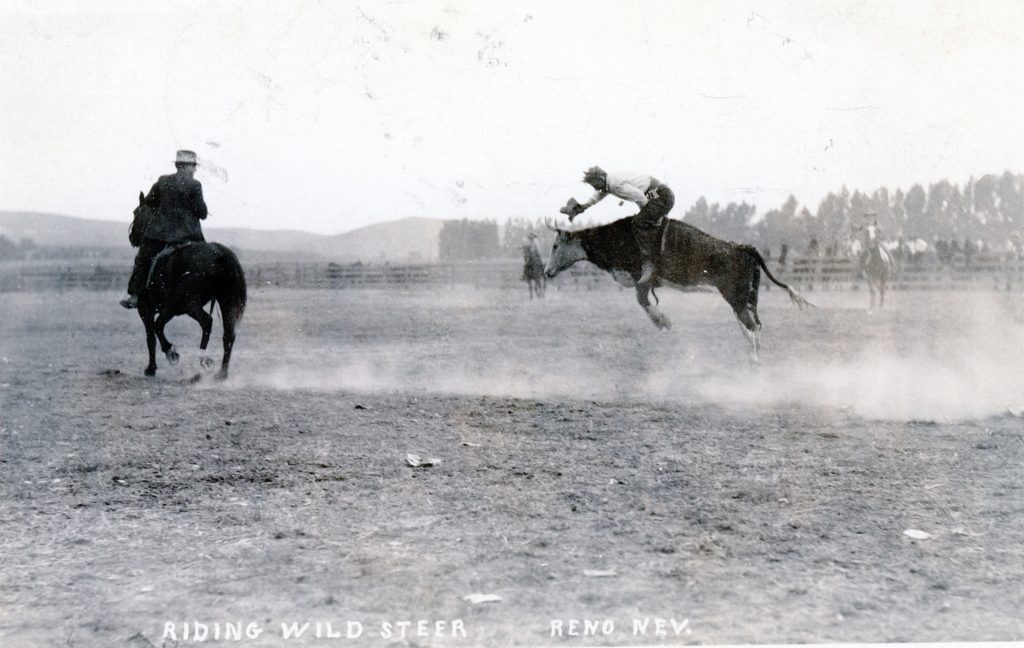
Reno Rodeo, 1926

Rodeos, like so many other events have evolved over the years. For instance, in this region, during the late 1800s, they usually occured in late spring to round up livestock that were allowed to graze freely during the winter months.

In May 1874, Sylvester Daniels arrived in the Honey Lake Valley from Iowa, to spend time with his sister, Polly Parks and her family, to see if the change of climate would be beneficial to him.

Daniels kept numerous descriptive journals during his stay. When one journal was finished, he would send it back to his family in Iowa to provide them with insight of what life was like on this new frontier.

On June 18, 1874, Daniels wrote: “Jerry Leaky came here and stayed last night. He is herding stock on the other side of the valley. It seems they have a great time every spring, Rodeoing, they call it. A lot of men having stock out together, camp out, sometimes as many as 150 men. They go around from one to place another and have all the stock gathered together that are in reach. Separate each man’s stock from the rest, get them in the yard (or corral as they call every place that they yard cattle or horses). They mark all of the calves, colts and stock that has changed owners. They have their Buccaroes, men with the Lasso to catch and hold the stock while they operate with hot irons. I should like to go and see the thing done, then I could tell more about it.”

Support

Adins Turns 150!

Adin 1879
Adin, 1879

If you have not made any plans for the weekend, you might want to head north to Adin for its 150th birthday celebration on June 29 and 30.

For those not familiar, Adin is located just a mile north of the Lassen County line in Modoc County, Adin benefited from Lassen County’s largest mining town of Hayden Hill, located twelves miles to the south.

As a matter of fact in the same year that Adin was founded in 1869, gold was discovered at Hayden Hill. It should be noted that Adin’s founder and its namesake, Adin McDowell, was a member of the prospecting party that discovered the gold at Hayden Hill.

When times were good at Hayden Hill, they were even better at Adin. By 1877, Adin was the largest town in Modoc County. In addition, it was only second to Susanville in the amount of business transactions conducted in Northeastern California.

Never miss a story, click here to subscribe.

Johnstonville Methodist Church

DM Creamery
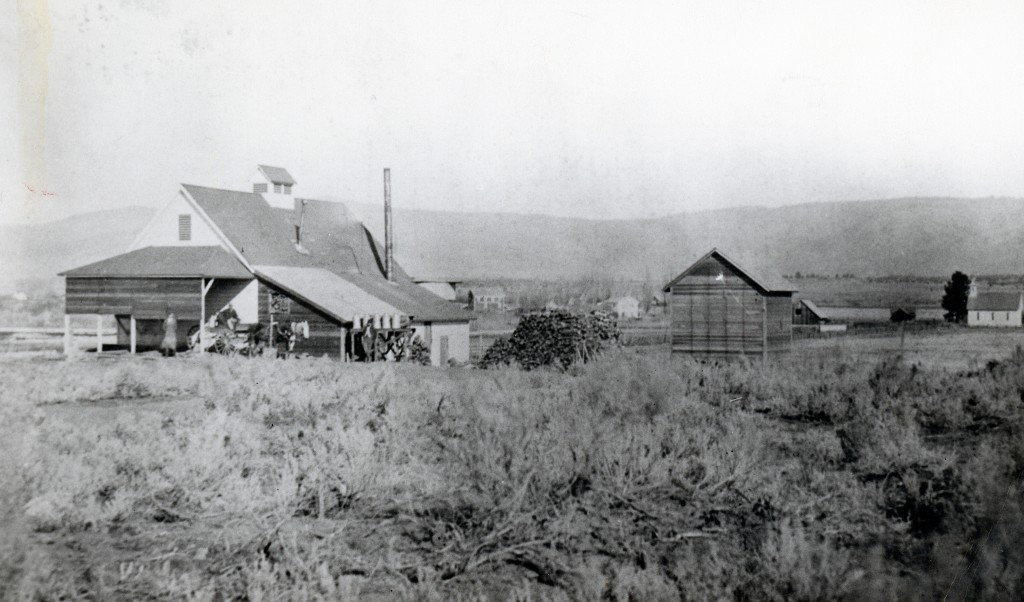
Diamond Mountain Creamery, Johnstonville, 1897. To the far right, the church is visible.

The Methodist Church at Johnstonville has been a challenge to research. Recently, I came across a transcribed letter dated January 19, 1961 that Ada Hart wrote to Gladys Bass that primarily focused on the history of the Baptist Church at Johnstonville. Thankfully, Ada briefly wrote about the nearby Methodist Church. She wrote that it was built in 1889, along the Susan River, east of the bridge on property owned by Peter Scholl. Ada recalled attending the church there, and that the Susanville pastor was in charge of the services that were held at three in the afternoon. How long it remained in operation and what became of the church, I do not know.

Subscribe

A New Susanville School

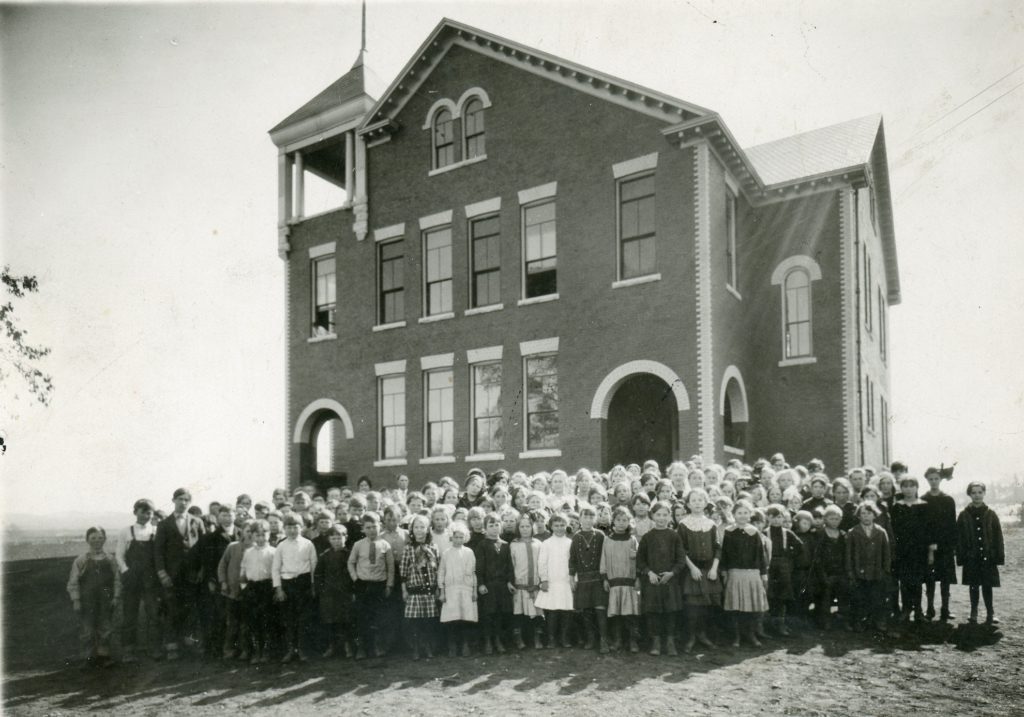
The grammar school, 1915. Courtesy of Royce Houston

On June 2, 1899, the voters of the Susanville School District approved a $12,500 bond measure to build a new school, to replace the existing two-story wooden structure built in 1873. It would be a slow process for a new school to become a reality. First, it took some time to find a buyer for the bonds. Then there was a question whether to retain the same location or move to somewhere else. In December 1899, it was decided to remain where the existing school was, but to purchase an adjoining vacant lot to enlarge the school grounds. In March 1900, the District awarded the contract to build a two-story brick building to Reno contractor, C.E. Clough. It is interesting to note, that four substantial brick buildings were constructed at the same time, the Emerson Hotel, Methodist Church and Oakes &Philbrook Furniture Store.

Subscribe

Eagle’s Peak Ski Resort

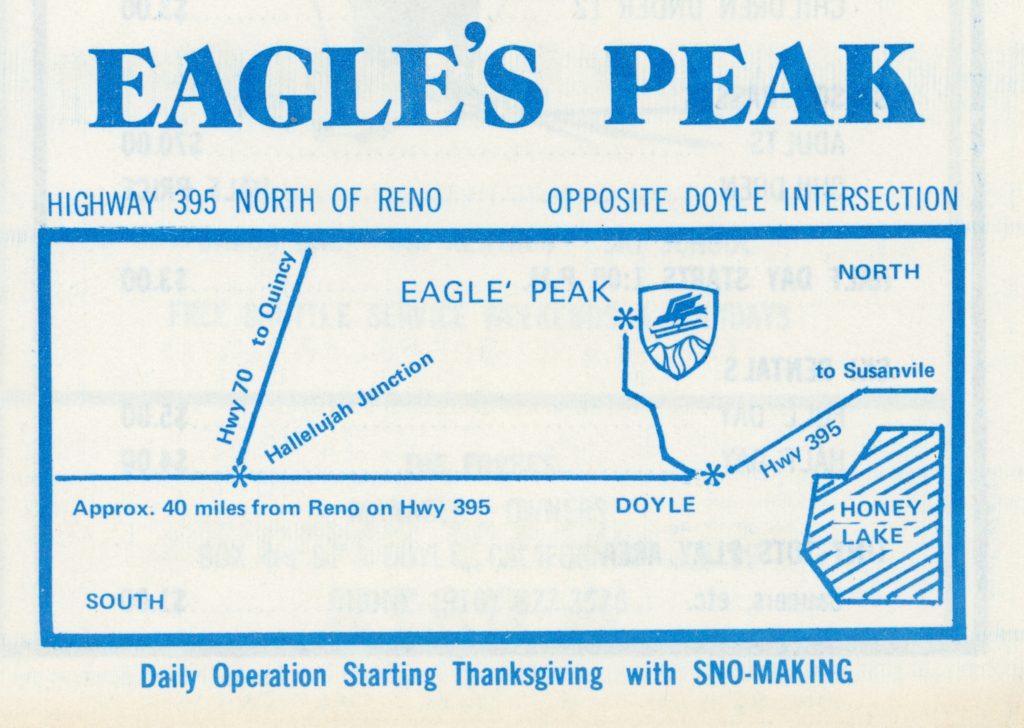
A portion of the resort’s brochure.

This short-lived ski resort was the brain child of Ernest “Ernie” Forbes, and Austrian skier. Forbes established Eagle’s Peak in 1971, in one of the more peculiar places, near Doyle. As the late Paul Herman informed me that Forbes always wanted his own ski hill. In a 1972 interview Forbes stated “Started a dream that is becoming more and more a reality everday.” He designed the entire operation with the first slope for beginner and intermediate skiers that according to Forbes to accommodate 150-200 skiers at a time. Of course, Forbes offered skiing lessons, since he had been a ski instructor at various resorts in the west. Other amenities included a snack bar, ski rentals and even a free shuttle service on weekends and holidays. Of course, Forbes had grandiose plans of a modern lodge, advanced ski runs and so forth, none ever materialized. Records are rather sketchy but it remained in operation until the early 1980s.

Subscribe

The Gallatin/Fritter Agitators

Gallatin Beach
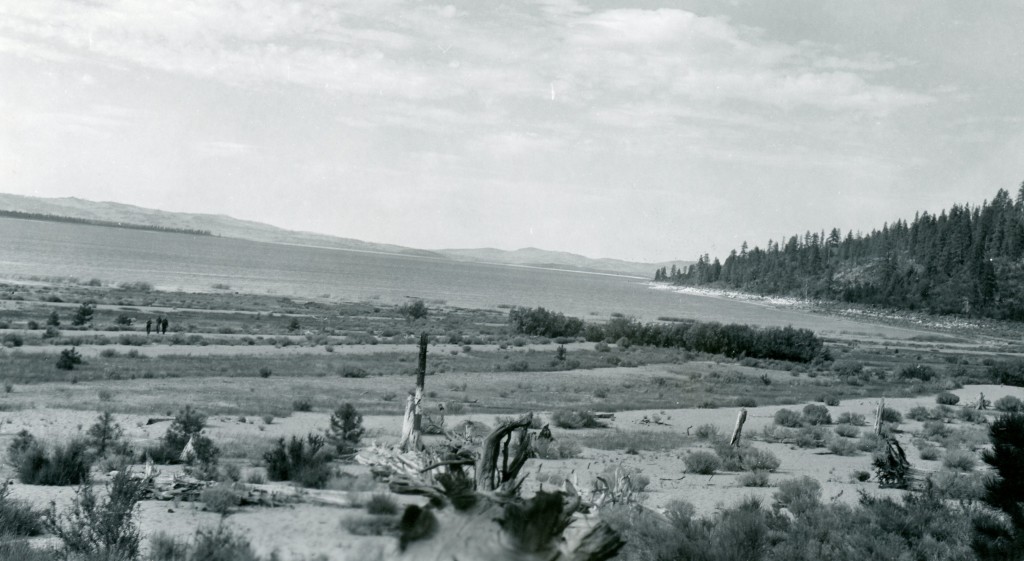
Gallatin Beach, Eagle Lake, 1940.

For a sixty-year period the Lassen County Superior Court routinely dealt with law suits involving Eagle Lake issues. Of course, the majority of these involved the various enterprises to tap the lake for irrigation. In the late 1920s, court filings were numerous as the local banks filed on foreclosures of the numerous ranchers of the Tule & Baxter Creek Irrigation Districts who defaulted on their loans on the failed Bly Tunnel.

It was in 1932 that witnessed an unusual lawsuit filed by Malvena Gallatin and James Fritter, both Eagle Lake property owners. Malvena was the leading figure and to give credence brought in Eagle Lake resident Fritter. In the complaint it alleged the districts were wasting Eagle Lake water, due to the leakage at the tunnel during the non-irrigation season. It was their contention that fifty percent of the winter run-off was lost through the tunnel, since the districts did not have properly installed head gates. Malvena stressed the recreational value of the lake would depreciate dramatically if the districts continued to waste the lake water.

Not divulged was Malvena had an ulterior motive. She had entered into agreement to sell her Eagle Lake property to a group who had plans to develop a million dollar resort at the lake, whereby Malvena would receive $500,000. A stipulation to the sale was that she had to guarantee that the districts would not lower the lake any further. She did not succeed. The litigation dragged on and the lake level dropped even more. When the judgement was entered on April 17, 1936, she had already lost her option to sell her property. In addition, she lost the case. The court cited that both Gallatin and Fritter had entered into agreements with Leon Bly that allowed the irrigation system to draw forty feet below the 1917 level of the lake, and when they commenced the action the lake level had only dropped twenty-four feet.

Fritter Ranch, Eagle Lake, 1921. Courtesy of Lola L. Tanner

Never miss a story, click here to subscribe.

Kings Creek Falls

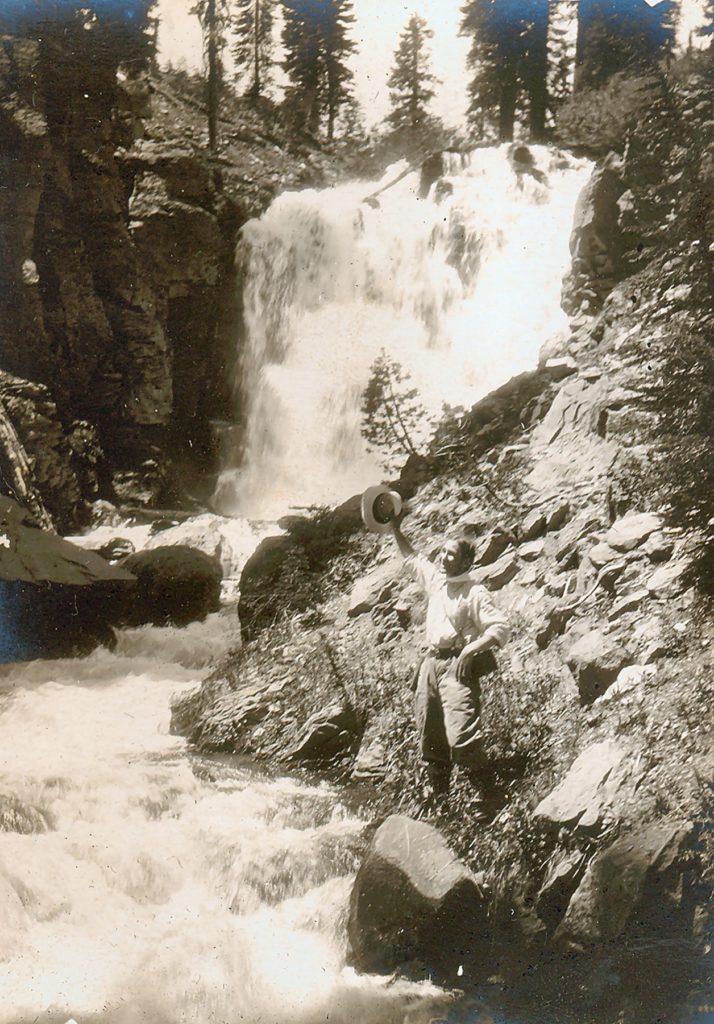
Kings Creek Falls, 1908–Sifford Collection

For those ambitious folks out there this summer you might want to include Kings Creek Falls in Lassen Volcanic National Park on your expedition list. Those familiar with Lassen Park, one of the major picnic areas on the Loop Highway is Kings Creeks Meadows. The creek, meadows and waterfall was so named for James and Jane King who in the 1870s had a squatters claim to the property, but never followed through the federal land patent process to acquire it. In 1879, their son Oscar was born at the meadows, making one, if not the first Anglo born child in what is known as Lassen Park today.

Never miss a story, click here to subscribe.

Exploring Lassen County's Past