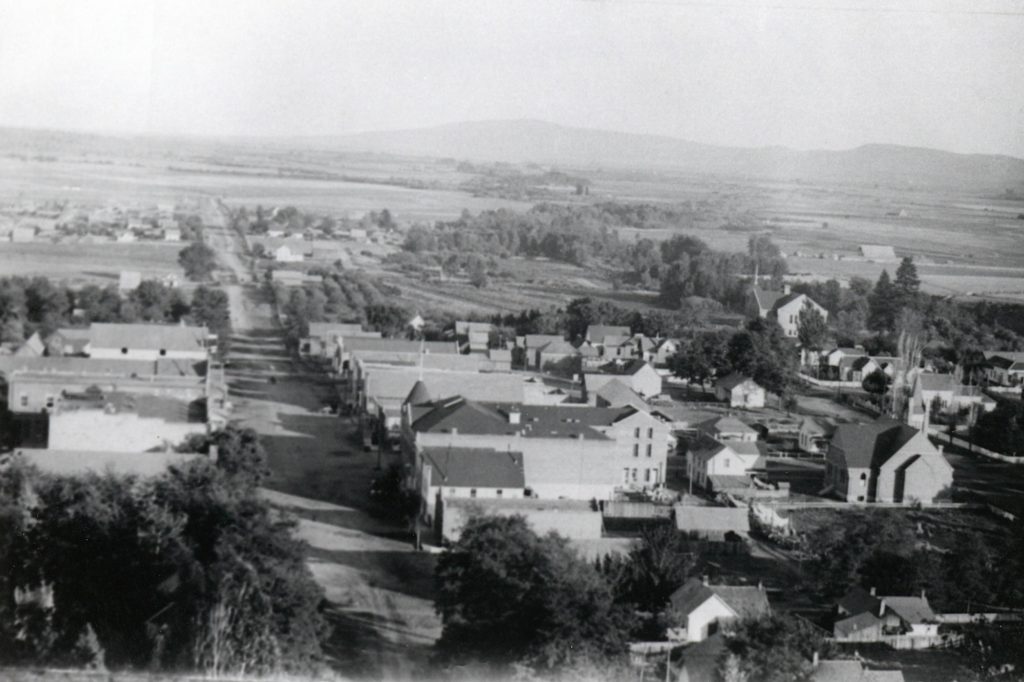
Susanville, 1905. Courtesy of Dick & Helen Harrison
In days of yore, there was no such thing as trick or treat that we know today. However, it was an opportunity for pranksters to have some fun. In 1898, Susanville’s Lassen Advocate reported: “Halloween hilarity was on a moderate scale than usual. There were some gates unhinged, a few wagons drawn into unfrequented places, a few ‘tictacs’ arranged to plague the rest of the peaceful folks—nothing very devilish—nothing very malicious.”
In October 1936 word was received from the Works Projects Administration approved the Susanville School District’s application to build a pool for Susanville. The movement to build a pool over the last few decades was about to become a reality. On Friday October 30, 1936 a groundbreaking ceremony was held on the grounds of the Roosevelt School where the pool would be built. Of course, there was the customary dignitaries on hand to make speeches. What was interesting was that most of Susanville’s businesses closed from 2 to 3 that afternoon in observance of the groundbreaking ceremony.
Halls Flat came to life in a big way starting in August 1941 when the Red River Lumber Company established Camp Bunyan. This camp was unique from other Red River logging camps. Not only did it have a name and not a number, it was their largest camp that consisted of both temporary and permanent buildings. At its peak, it was the home to some 350 loggers, making it one of the largest seasonal communities in Lassen County. From Camp Bunyan a railroad logging line was constructed to the east in the company’s Blacks and Harvey Mountain timber tracts. In 1943, a second logging camp named Camp Harvey was established. At the end of the following of year, a major change happened when Red River sold to the Fruit Growers Supply Company. At the end of the 1946 logging season Camp Bunyan had served its intended purpose and was shut down. Its location remained a hub of activity since the log trains from Camp Harvey, plus the additional Camp Stanford, went to the Camp Bunyan site to connect with the Western Pacific Railroad that relayed the loaded log cars to the Westwood mill.
In the spring of 1949,the hustle and bustle of the connections of the Harvey line connecting with the Western Pacific at Halls Flat came to a sudden halt. The cookhouse employees at Camps Harvey and Stanford went on strike over wages. With no end in sight with negotiations, Fruit Growers permanently closed down those logging camps and the railroad logging line. Thus, Halls Flat returned to its quiet existence.
For the casual observer who decides to make a detour off Highway 44, near Poison Lake in western Lassen County, to travel the dirt road north to Pittville, one will see a variety of sights along the way. One of the first encounters is that of Halls Flat, a small non-descript sagebrush covered flat surrounded by pine trees. Nothing to get excited about. In the late 1910s, Tehama County rancher, Walter Hall used this area for summer grazing—hence the name Halls Flat. Little did he know, that not too far in the distant future, this spot would be an amazing hub of activity.
It first began, in 1930, when the Interstate Commerce Commission approved the Highline or Inside Gateway that connected the Western Pacific Railroad from Keddie, California with the Great Northern Railroad at Klamath Falls, Oregon. This happen to coincide with the development of Lassen Volcanic National Park. The railroad would come close to the park’s eastern boundary. Lassen Park and Western Pacific had a courtship—the park was seeking a concessionaire, while the railroad hopefully would see increased passenger service.
Halls Flat could have played a pivotal role. Western Pacific would develop a resort at Manzanita Lake in the park. At Halls Flat a railroad station would be built. At this point, passengers would disembark and be shuttled by bus through the northern section of the park to their destination at Manzanita Lake to spend days recreating. To build the lodge at Manzanita along with other amenities was estimated at $275,000. Due to outside legal issues, the Western Pacific had to suddenly withdraw from the proposal.
While the proposed Lassen Park/Western Pacific Railroad deal did not pan out, the Western Pacific did not abandon Halls Flat. In 1931, when the Western Pacific constructed its Highline route they constructed a depot at Halls Flat. This was rather peculiar since not a single person resided for miles in the vicinity. Little did any one know that this would suddenly change and that in a few years there would be dramatic changes.
During the Great Depression of the 1930s, Lassen County would have two Civilian Conservation Camps, better known as the CCC. One was located at Halls Flat. The other was Secret Valley, northeast of Susanville. The Halls Flat CCC camp was established in 1933 and shut down in 1942. The camp provided a lot of manpower for the Lassen National Forest. Among the work done was grazing studies, range habitat improvement and some logging of pine beetle infested trees in the nearby Blacks Mountain Experimental Forest.
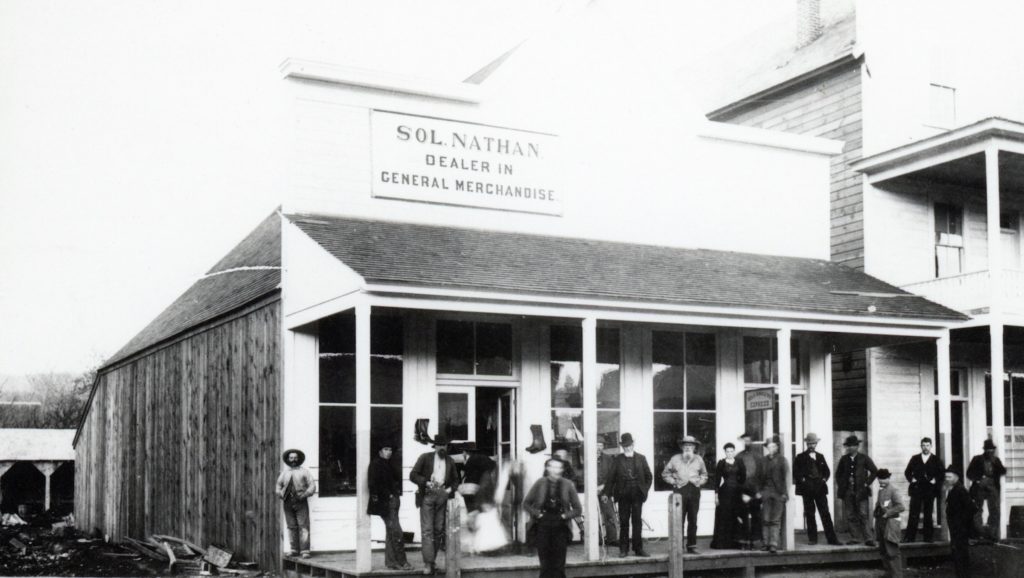
In late November 1918, the Nathan Store Company located at 700 Main Street, Susanville announced they were going out of business. What remaining stock was left would be auctioned off on December 2, 1918 by Buckwalter & Younie.
The store was founded in 1877 by Marcus Nathan. For a time there were two separate Nathan general merchandise stores. One operated by Sol Nathan and the other by Marcus. The two stores were on opposite sides of Main Street facing each other. The closing of Nathan Store coincided with the exodus of the town’s Jewish merchants. At one time they were a dominate force besides Nathan there was Alexander, Asher, Cohn, Greehn, Knoch and Schmidt. With Nathan’s closure the only remaining Jewish merchant left was Robert Jacobs.
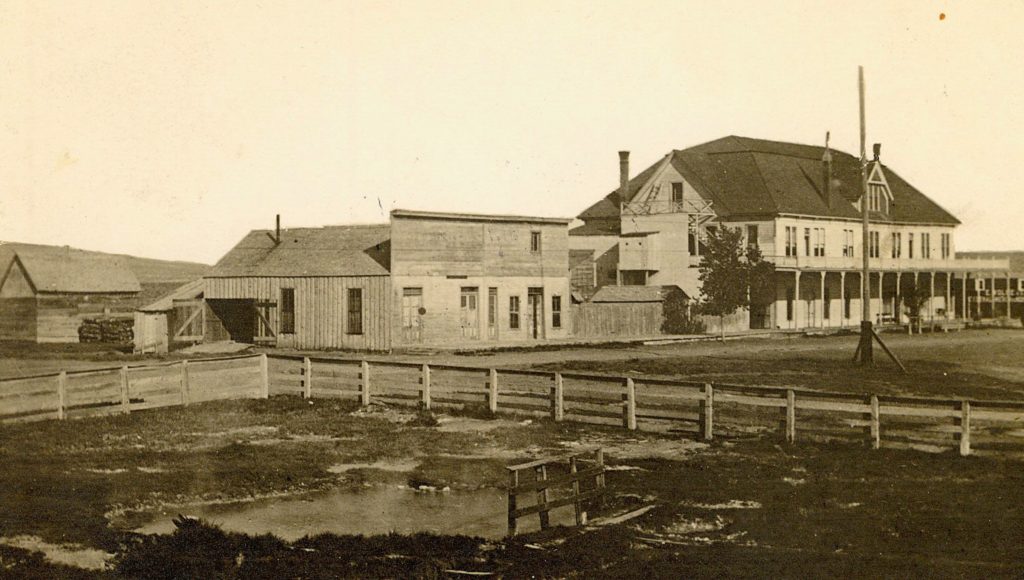
On April 3, 1916, the McKissick Cattle Company purchased the holdings of George Callahan at Amedee, which included the hotel, hot springs and several hundred acres of land. Courtesy of Marie H. Gould.
The Farmers Land Company was a short-lived operation, in 1916, that tried to bring new life to the Standish Water Company east of Amedee. That company had to planned to reclaim at least 4,000 acres of sagebrush lands, by using a pumping plant to pump water out of Honey Lake for its water supply.
Its promotional literature, was rather refreshing and it did get my attention. Here is a sample: “Do the trees obstruct your view of the forest? Silly question, eh? But not so silly when you ponder over it. It is a well known fact that years of daily contact with the same surroundings dulls a person’s appreciation of the things about him.
“Honey Lake Valley furnishes a striking example. People who have lived here for years in the valley have lost sight of the immense fertility of the great area of untilled land south of Amedee. We realized the possibilities of this the moment we saw it. The result is that settlers are now flocking to Amedee from all parts of the country and not long we will have the greatest and most prosperous settlement in the entire county.
“Wake up man and get out of this rut and make something of the possibilities around you! While our new colony will be known as Rosendale, will essentially be a Scandavian settlement, we welcome any man who has energy and determination to succeed. Come down and see us today. We are ready to help any man who has made up his mind to help himself.”
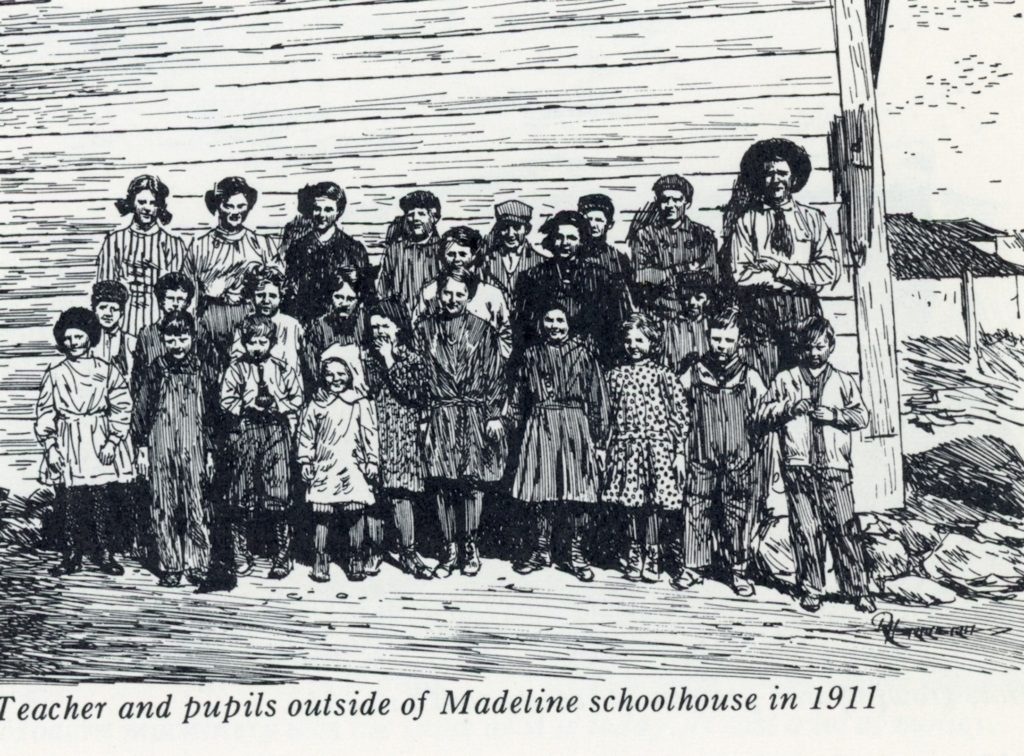
While the vaccination debate rages on, I thought I would share this early day observation from Margaret “Peg” Woodrich of the by gone days on the Madeline Plains. She compiled a small history, “The Early Days of California’s Madeline Plains.” She wrote: “The teaching methods of those times are long since forgotten. Each schoolroom had in its entry a bucket of water and a tin dipper from which all the youngsters drank, exchanging measles and whooping cough with democratic cordiality.”
In the early 1920s, after World War I, the nation was swept up with the golfing craze. The Susanville region was not immune. As a matter of fact the area, in 1923, could boast three golf courses! These were not the type of golf course we know today, but more of a glorified cow pasture.
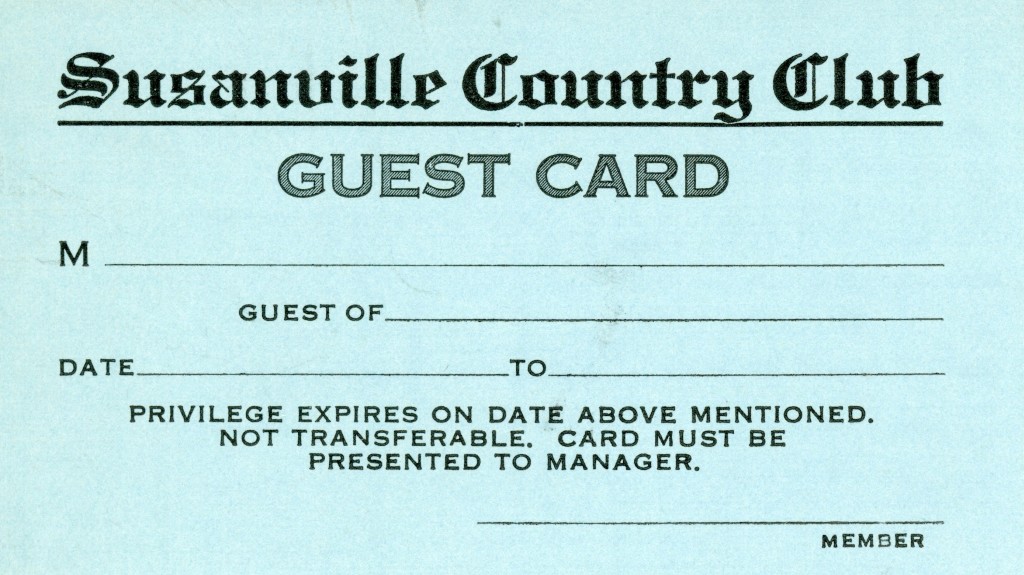
In 1924 things were about to change when a group of Susanville businessmen formed the Susanville Country Club. They had an ideal location, whether they could purchase it was another thing. What they sought was George Wingfield’s summer home on Wingfield Road, known today as the Mountain Meadows Ranch. Wingfield had recently sold it to the Lassen Lumber & Box Company. The company’s interest in the property was 1100 acres to timberland behind the home. A deal was struck and in the fall of 1924 the Susanville Country Club purchased the house, surrounding area, including the meadows for $20,000. With a grand residence to serve as a club house, and in time the meadows would be converted into an 18-hole golf course.
The landscaped grounds of Wingfield’s Meadowbrook Ranch. Courtesy of Alphozene Terrill
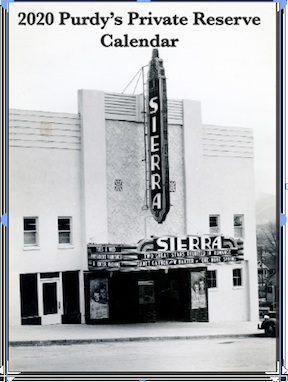
It is that time to slowly focus on a new year that is quickly approaching. As usual I have put together a 2020 calendar with a wide variety of historic scenes that include Camp Harvey Cookhouse, the Volcano Room of the Hotel Mt. Lassen, the Lassen Monuments, Paul Bunyan Lumber Company, Bly Tunnel inlet, the Sierra Theater to name a few. One has three options to purchase calendars:
1) Locally, you can purchase them at Margie’s Book Nook.
2) You can purchase direct online by clicking here
3) You can also email me to place your order, and it will be sent with an invoice.
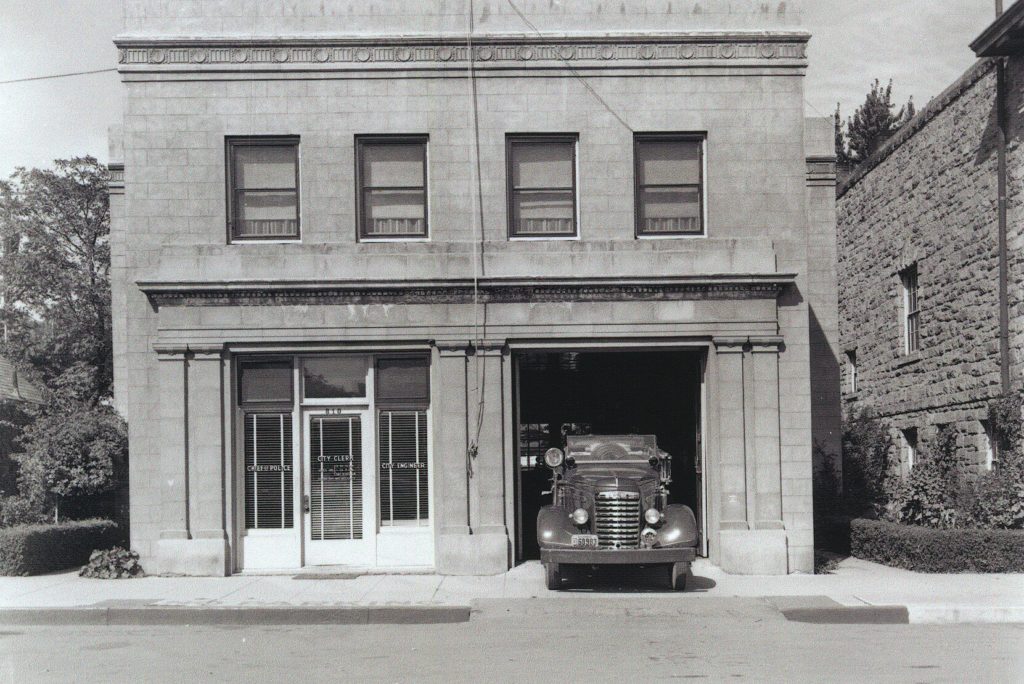
Some may recall that in the past I mentioned that the Susanville Fire Department was prohibited from leaving the city limits. The policy was adhered to, no matter what the circumstances. In case you are pondering why, it had to do with insurance rates.
On the evening of March 11, 1935 the Susanville City Council held a special meeting concerning the abandonment of a portion of Cornell Street. This was at the urging of Lassen High School, as part of their program to expand its athletic field between the school buildings and the Susan River. The meeting was interrupted when the fire alarm went off. It should be noted City Hall and its fire department were located in the same building. A brief recess ensued as Harry Riddell, served as City Clerk and Fire Chief. Before the firemen departed, Mayor E.P. Honsberger exclaimed, “Remember boys, the fire truck stays inside the city limits.” The fire was at the north end of Weatherlow Street, outside the city limits and the fire truck did not venture there. It was a house fire, and the building destroyed. The story does not end there. The house was owned by Mayor Honsberger who had it as a rental. When the news was relayed to Honsberger, he exclaimed, “What a life!”