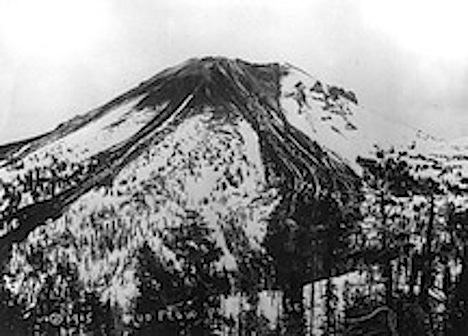
On the night of May 19, 1915 lava overflowed from crater of Lassen Peak. It was most acute on the northeast side. The lava in turn melted snow, causing a cascade of water, that was soon transformed of a stream of mud and debris headed towards Hat and Lost Creeks.
Around 11 o’clock that night, Harvey Wilcox who had a cabin on upper Hat Creek was first person to witness the catastrophic event. He was awakened by the sounds of horses running past his cabin. He ventured out to see what happened, and in the nick of time barely escaped the mudflow, only to watch his cabin swallowed up by the mud flow. His neighbor, Elmer Sorahan was awakened by his barking dog. He, too, escaped and alerted the Hall family downstream.
This was just a preview of things to come. On May 22, 1915 witnessed Lassen Peak’s greatest eruption.
Spread the word, and encourage a friend to subscribe
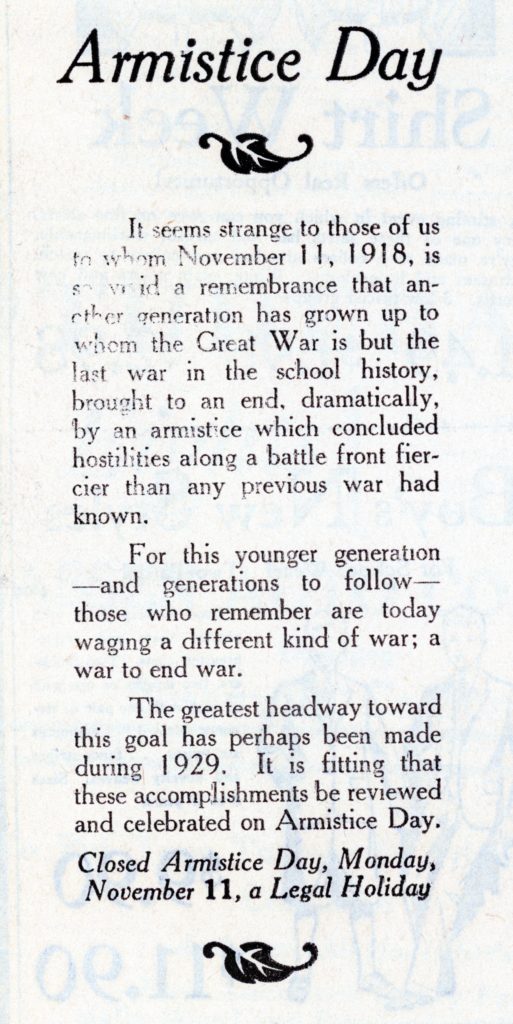
The above was an advertisement placed by the Bank of Lassen County. Using lingo from the newspaper writers of the past, for those of the younger set, Armistice Day is now known as Veteran’s Day. What caught my particular attention of this ad, it had only been eleven years since the ending of what was then referred to as the Great War (World War I) and they raised concern that a younger generation were unaware of it, and the sacrifices made.
Great Northern’s Tracklayer entering Big Valley, 1931. Courtesy of Orville Watkins
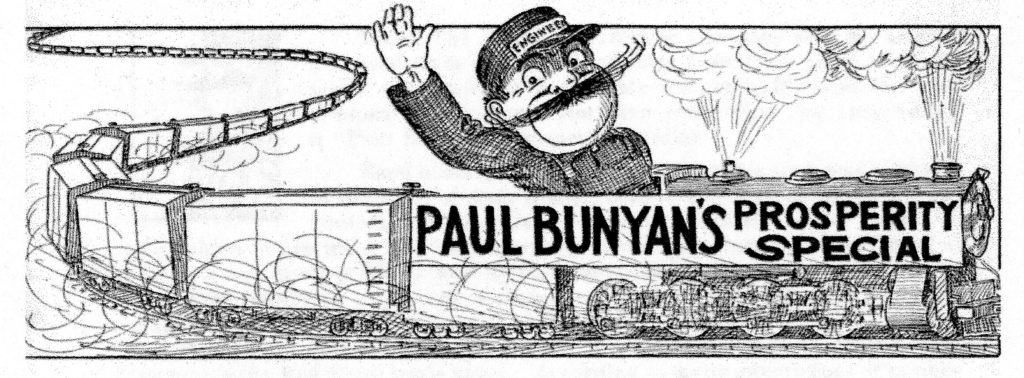
Yesterday, we explored the Paul Bunyan Prosperity Special. As mentioned everything revolved around the Golden Spike Ceremony at Bieber connecting the Western Pacific & Great Northern Railroads. In all, it was a successful event, though it was dampened by some extremely bitter cold weather.
After the crowds dispersed, tragedy struck. It should be noted, for a portion of the population it was just another work day and this was especially true for those employed by A.B. Guthrie, the construction contractor for the Great Northern Railroad. At approximately 5:30p.m. a railroad work crew were returning to NuBieber. Six men were riding on a flat bed trailer. Out of nowhere came a speeding touring car, which sideswiped the trailer, knocking two men off it—Dan Rogish and Charles McMahon. Rogish was dragged by the car and died from his injuries. The driver who hit the two men, sped away, it was estimated the driver was going 70 miles per hour and was not apprehended.
On November 10, 1931 was a historic day in many ways. A golden spike ceremony was held at Bieber to mark the completion of the Highline/Northern California Extension of the Western Pacific and the Great Northern Railroads.
The next morning at Westwood the festive mood from the day before continued. Red River unveiled its impressive Paul Bunyan Prosperity Special train. This was no ordinary train for it consisted of 171 carloads of manufactured lumber, along with six locomotives and a caboose. The Prosperity Special measured 8,325 feet long—one and six-tenths miles. It was, one of the longest, if not the longest string, of loaded cars ever handled in one train movement at the time. Equally impressive, it was the single largest shipment of lumber products ever made and that came from one plant—Red River. The train contained 4,350,000 board feet of lumber, box shook, plywood, sash & doors, etc.
There was a tremendous amount of logistics involved to make the event happen. Red River had to coordinate with its customers to place their orders at the same time and they had to agree on a specific date. This was a challenge since winter was fast approaching and the demand for lumber would decrease. Yet, their customers supported the effort, and orders came from twenty-one states—ranging from Arizona to Tennessee to New Hampshire. As Arthur Curtis James, Chairman of the Board of the Western Pacific proclaimed, “There never was a train like this before in all the world.” Willis Walker stated: “The movement of this unusual volume of lumber products at this time demonstrates confidence on the part of consumers and indicates that conditions have stabilized and that a considerable volume of building hitherto postponed, will now proceed.”
Three weeks later the train pulled into Castle Rock, Colorado, its final destination. However, when the train arrived in Denver, most of the railroad cars were split up and went to a multitude of destinations.
Spread the word, and encourage a friend to subscribe
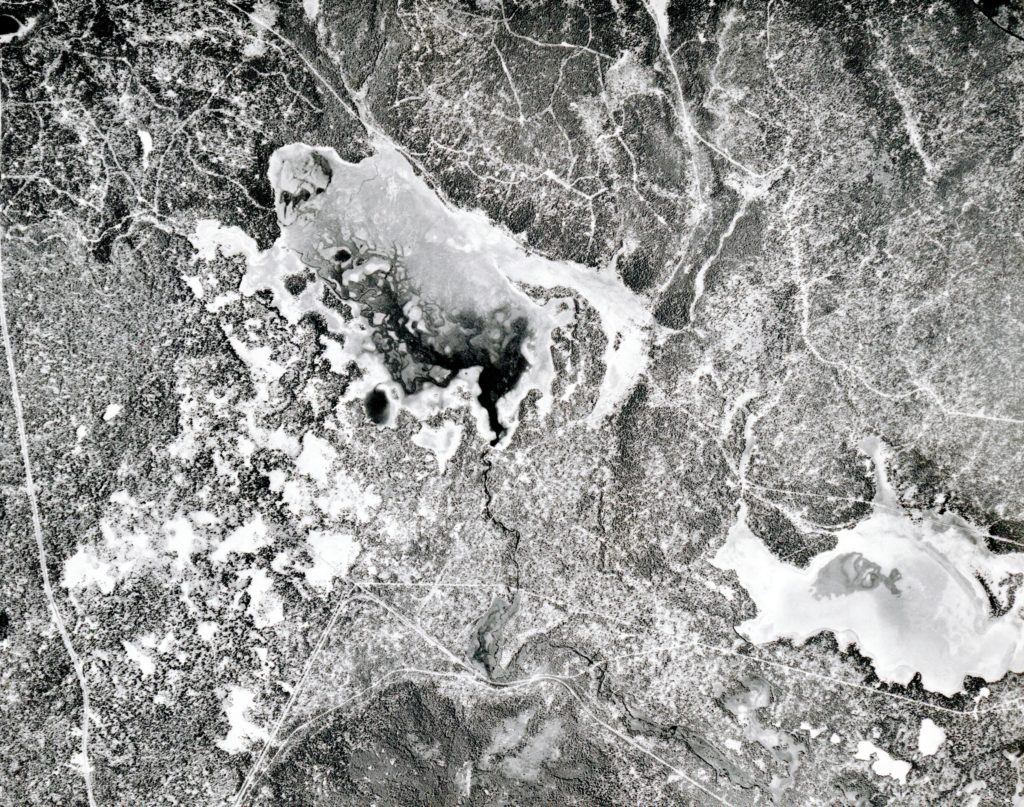
The Hog Flat and McCoy Flat reservoirs were constructed in 1889. It was part of a plan engineered by Benjamin Leavitt, who built his first reservoir on the Susan River watershed in 1875, known today as Leavitt Lake. These three reservoirs are owned and operated by Lassen Irrigation District.
Spread the word, and encourage a friend to subscribe
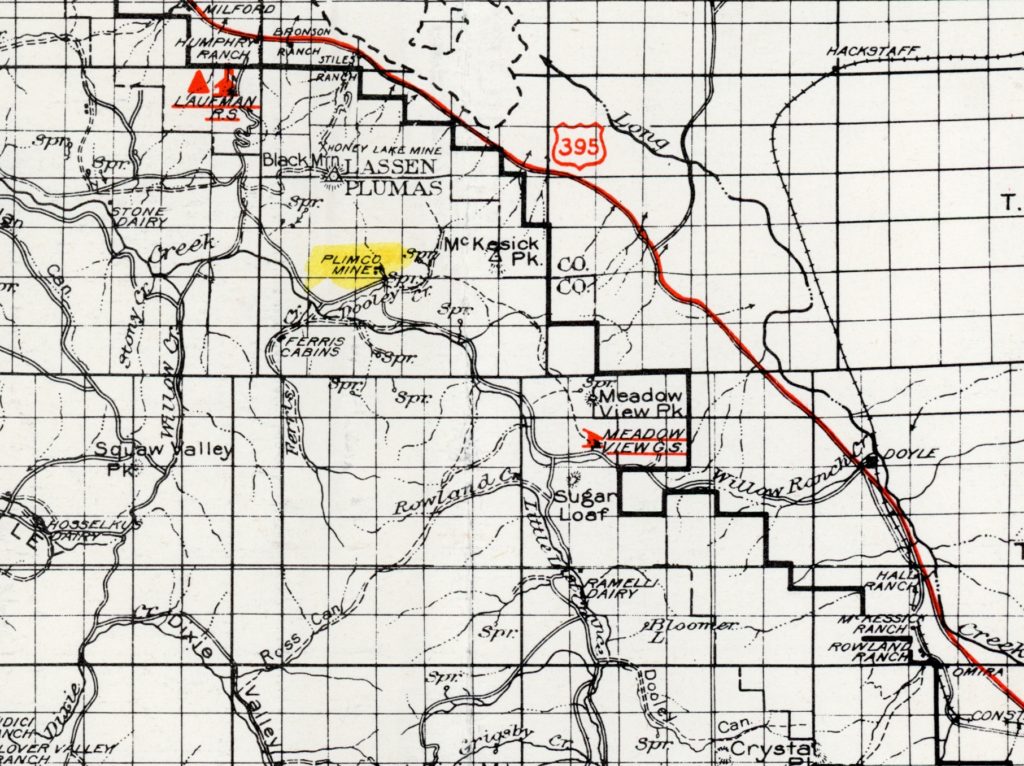
The mine appeared as a late as 1950 on this Plumas National Forest map.
The Plinco Mine was located in the Last Chance area of northeastern Plumas County. Doyle in Lassen County was in part beneficiary of the mining operations due to the access with the Western Pacific Railroad. From the mine to Doyle was approximately thirteen miles.
The initial mine was discovered in 1905 by Joseph Novak of Utah and Orlando McNabb of nearby Milford, an avid prospector. Attempts to develop the mine languished. In the fall of 1915, J.F. Cutler, a Midwest capitalist began an ambitious project to develop the Novak Mine. On November 2, 1915 Articles of Incorporation for Plinco Copper Mine were filed in the State of Nebraska. Cutler stated at that time he had ten men working on shafts and buildings investing some $16,000 in the venture. There does not appear to be much documentation about the Plinco mine. In late August 1919 a massive forest fire, to be named the Ferris Fire ravaged the Last Chance country and destroyed the Plinco Mine buildings. The operation then ceased to exist.
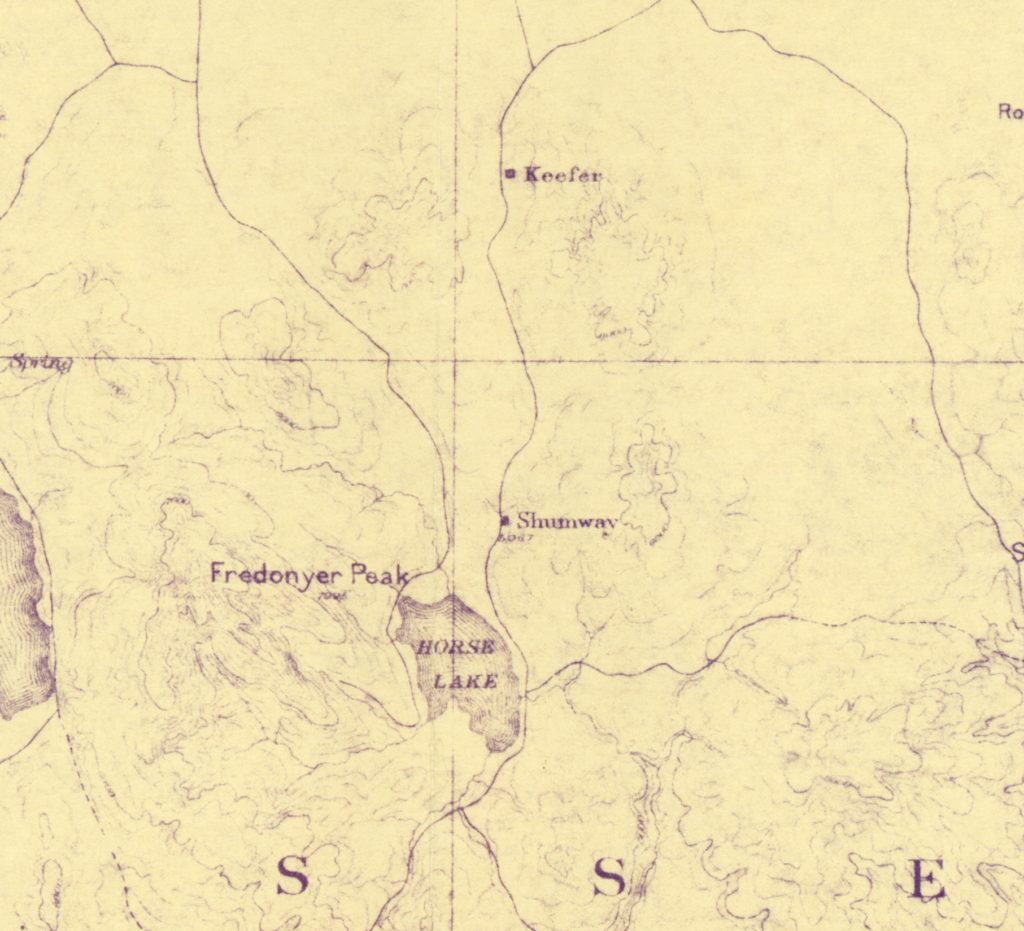
Keefer, on the edge of the Madeline Plains, was one of those lonely stage stations. In 1869, the most direct route to Alturas and Surprise Valley from Susanville followed a most interesting route. The road travelled north to Willow Creek Valley and onward to Horse Lake. It then veered straight north to the Madeline Plains. Let me inform the intrepid explorer, I traveled the route from Horse Lake to the Madeline Plains——its one of those roads you only do once.
On June 3, 1890, James Edward Keefer (1861-1916) purchased this stage station from Herman Knipping for $600. In 1898, the station had already been shuttered, and Knipping was residing at Vina, Tehama County when he sold the property for an undisclosed amount to Mahala Shumway. The station was also known as Knippers, Mud Springs and Long Hollow Camp..
Spread the word, and encourage a friend to subscribe
Lassen County Courthouse, October 1924–Boyd Benham/Connie Boomer
It is Election Day so hope every one votes. Having been a former election official, I can attest there is a great deal of work that goes on behind the scene to put on election.
Anyhow, something a little off topic for those political junkies. In December 1938, Senator Edmund R. Burke, of Nebraska introduced a constitutional amendment wherein it would limit future presidents of the United States to one six-year term. It was not a new idea. Burke cited that the Democratic national convention in 1912 placed a plank in its platform calling for a single term. Burke stated, “Six years would be sufficient for a president to place his program into operation. Such a term would remove the president, immediately upon his induction into office from consideration of a second term and could concentrate this energies.” In conclusion, Burke noted, it would remove the president from a dual responsibility—as the head of the nation and as head of the party which elected him.
In the fall of 1916, Lassen County’s new hospital was approaching completion. It should be noted it was funded by the same bond measure the voters approved the previous year to construct a new courthouse. The Lassen County Board of Supervisors who oversaw the operation adopted the following rates.
“The rates adopted are as follows: Private rooms, $25 per week; private ward, $17.50 per week; use of operating room, $10 for each procedure; anesthetic $5 for each procedure. It is made the duty of the head nurse to collect these in advance.”
How times have changed. It was a year ago, when I had my “fall from grace” and broke my leg. My room at Banner Lassen Hospital for two weeks was $25,000. The operating room was double of the room charge and I will let your imagination run wild as to all the cost incurred.
Spread the word, and encourage a friend to subscribe