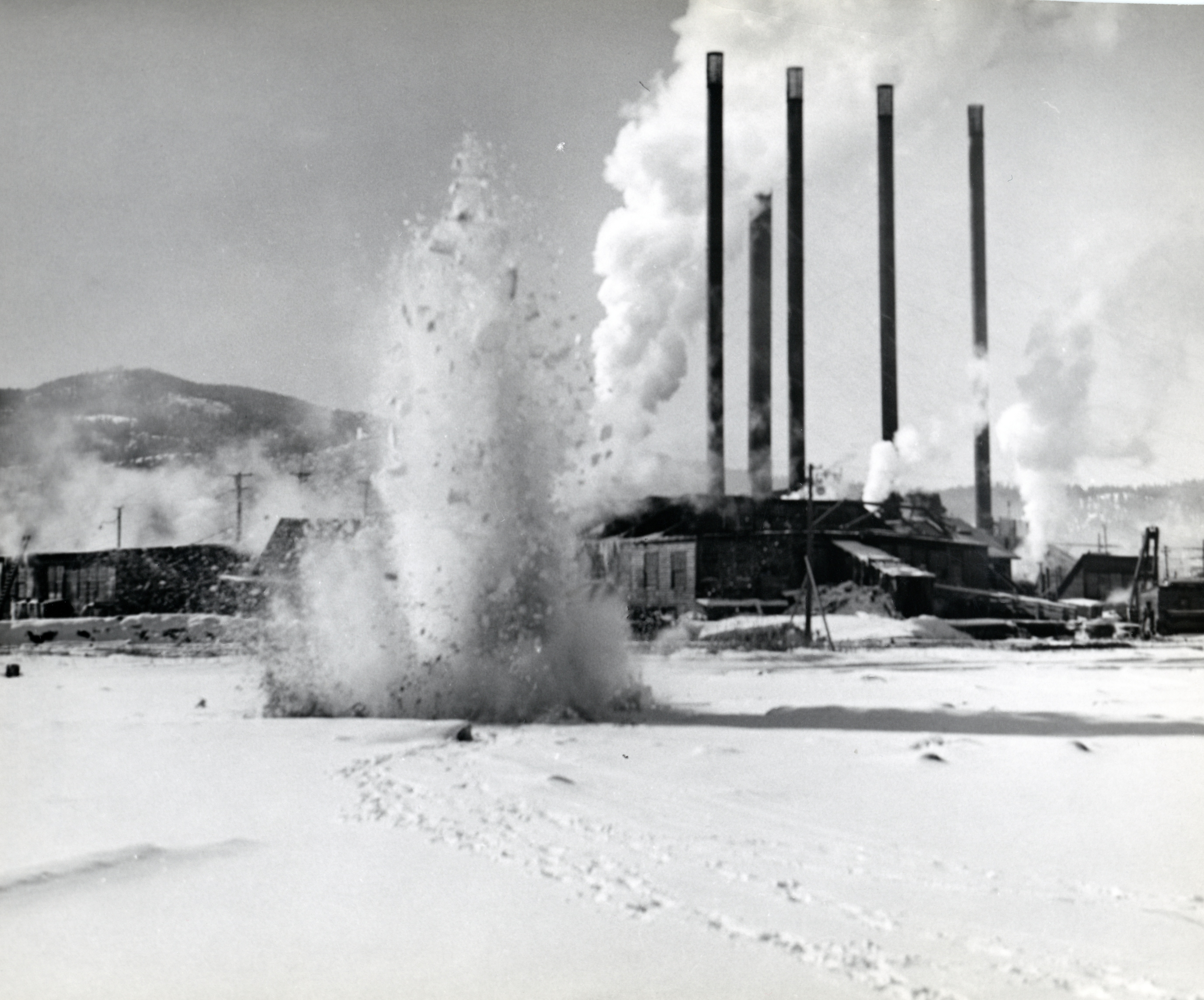
Dynamiting the Westwood millpond, January 27, 1949. Courtesy of Fruit Growers Supply Company
It has been some time since this region has experienced prolonged sub zero temperatures, which is fine with me. When it does get that cold things happen. In January 1949, the temperatures plummeted to nearly thirty degrees below zero at Westwood. The millpond froze. When the Red River Lumber Company designed the facility, they placed piping from the powerhouse that forced steam air directly into the millpond near the sawmill. This system was no match for Mother Nature. To keep the mill operating it was necessary to use dynamite to blast loose the logs in the millpond. Continue reading How Cold?→
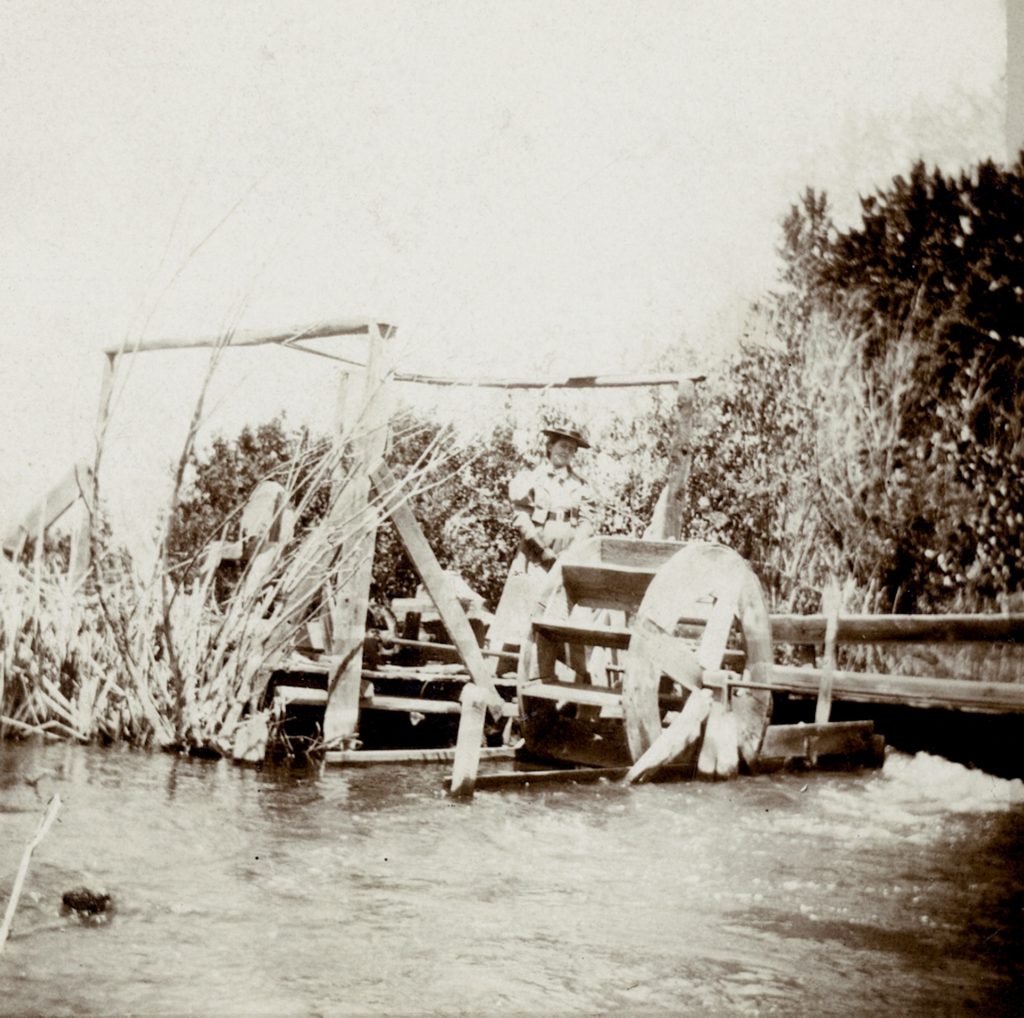
Fortunately, I happen to have a copy of Mary Eloise Sifford Thomas’ unpublished memoir, My Girlhood on the Ranch. She wrote this back in 1974 at the urging of family members. She was born on the family ranch on November 20, 1892, the oldest five. The Tom Sifford Ranch was in the vicinity of the intersection of Main Street and Johnstonville Road. She noted at the time of her birth, the family lived two miles from Susanville.
Anyhow, from her memoir, it is the only account about this water wheel. Mary wrote: “I will have to tell about our water wheel. It was in the branch of the Susan River that ran through our ranch, half-way between our place and Winchester’s. We loved the old water wheel. It turned a big drum with a heavy belt on it. It carried small galvanized buckets that dumped water into a wooden trough and it ran out into a ditch to irrigate the alfalfa. We used to take little picnic lunches out there and sit and watch the wheel turn.”
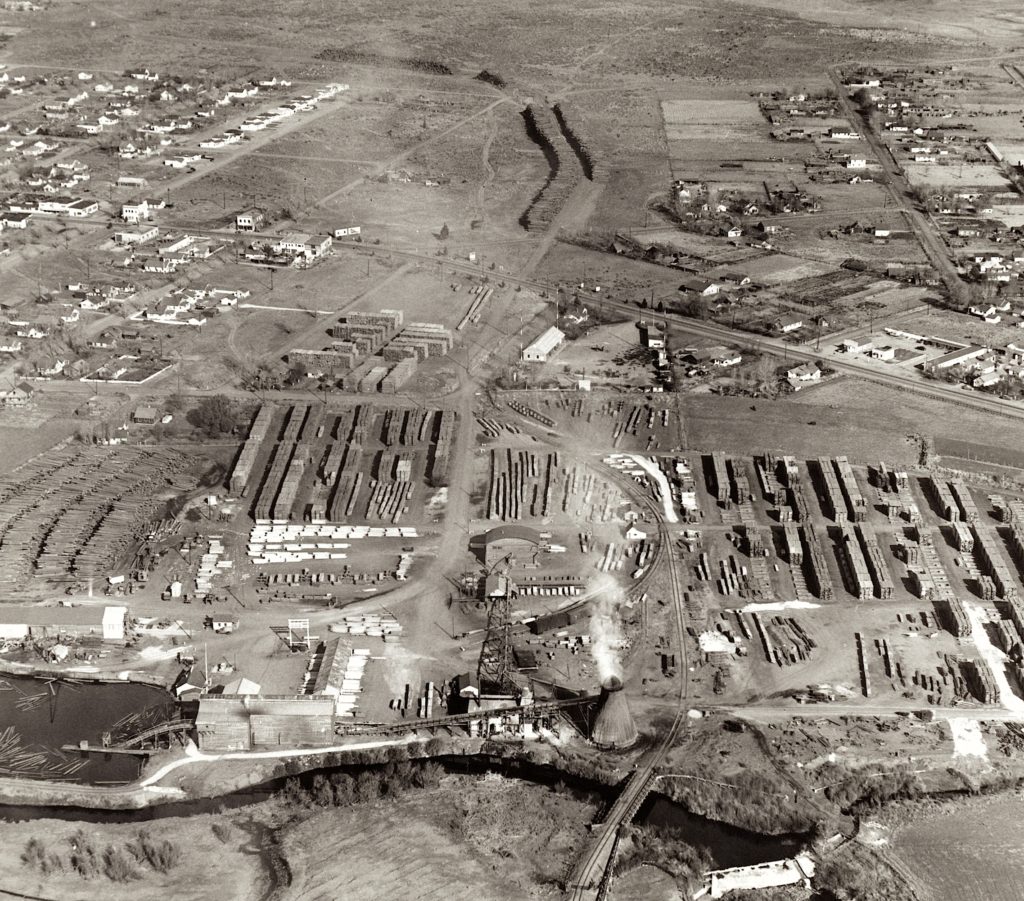
Paul Bunyan Mill is now the location of a shopping district and more on the eastern edge of Susanville.
This view of the east end of Susanville was taken in 1951. A lot of changes had taken place in the last seventy years. I know there are a few readers who have drones. If you happen to be one of them, and if you are up to the challenge to take a similar view, so. everyone can see the difference, that would be great.
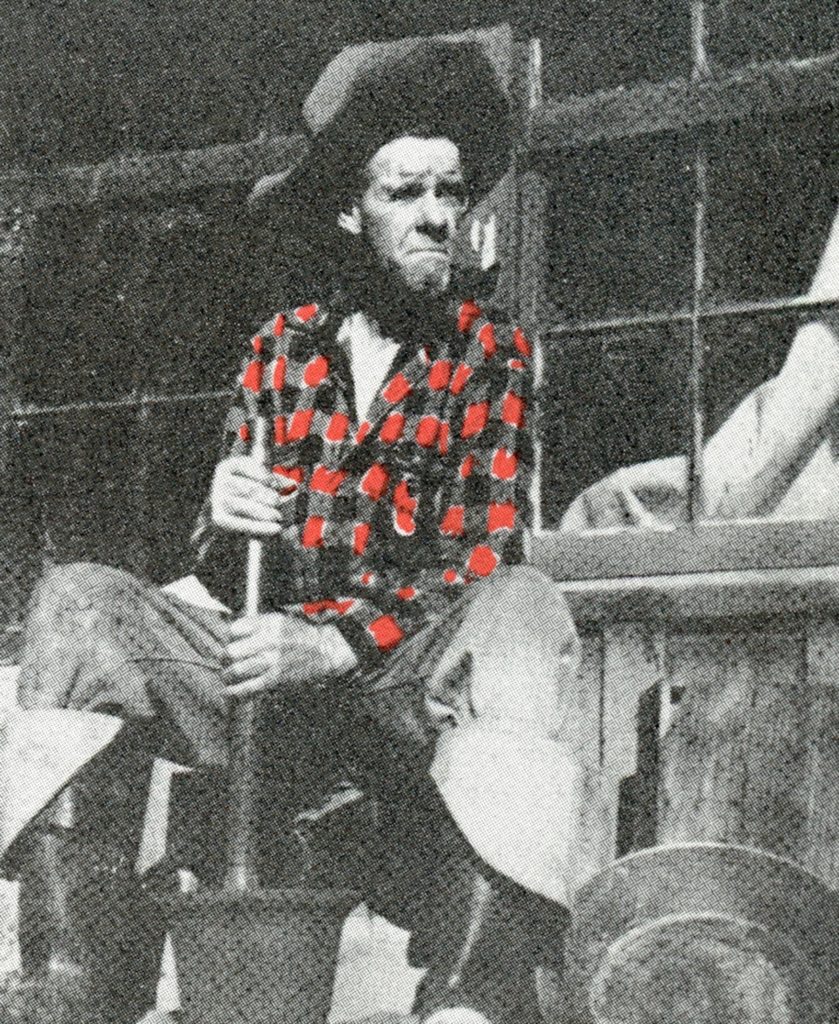
In 1964, Tex proclaimed he was the one time caretaker of Never Sweat Mine.
For whatever reason, the Honey Lakers embraced the monicker of Never Sweats. By the 1870s, visitors and new residents were perplexed by this name and some of them attempted to decipher its meaning. In 1878, one writer, who used the pseudonym of Rover, observed what a Never Sweat was not. “Honey Lakers are here designated Never Sweats.
Why not because of laziness, sickness or old age, nor previous condition of servitude, not for lack of possession of time or money; not from any physical imperfections, imaginary or real. It is no doubt a political or religious peculiarity.”
The term would drift in and out like the tides. However, when Asa Fairfield published his Pioneer History of Lassen County in 1916, he proclaimed Honey Lake Valley as the Land of the Never Sweats forever cementing the name in the area’s history. Since then, numerous organizations have used that name, and in 2000 in part of the City of Susanville’s Centennial used the slogan of Land of the Never Sweats.
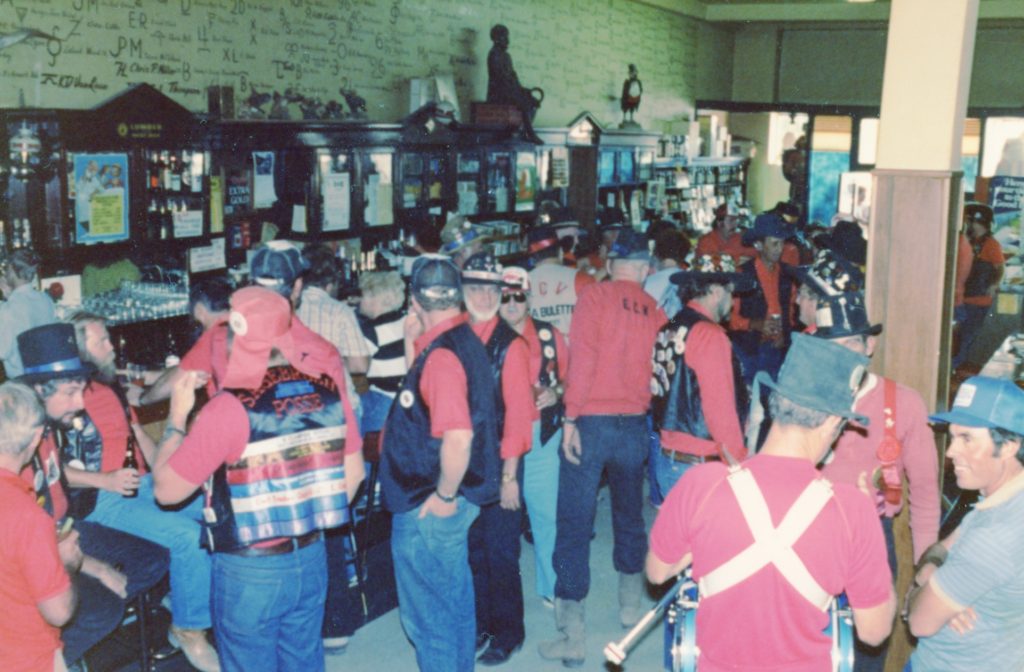
Neversweats chartering festivities at the Pioneer, August 4, 1984.
There is, of course, a landmark the Never Sweat Hills in eastern Honey Lake Valley on the Nevada side. Hopefully, one fine day I will make out there. It has best example of the lakeshore terrace effect from the receding waters of the ancient inland sea known as Lake Lahontan. Another feature near there, worth exploring again is Max’s Masoleum—another story for another time.
Spread the word, and encourage a friend to subscribe
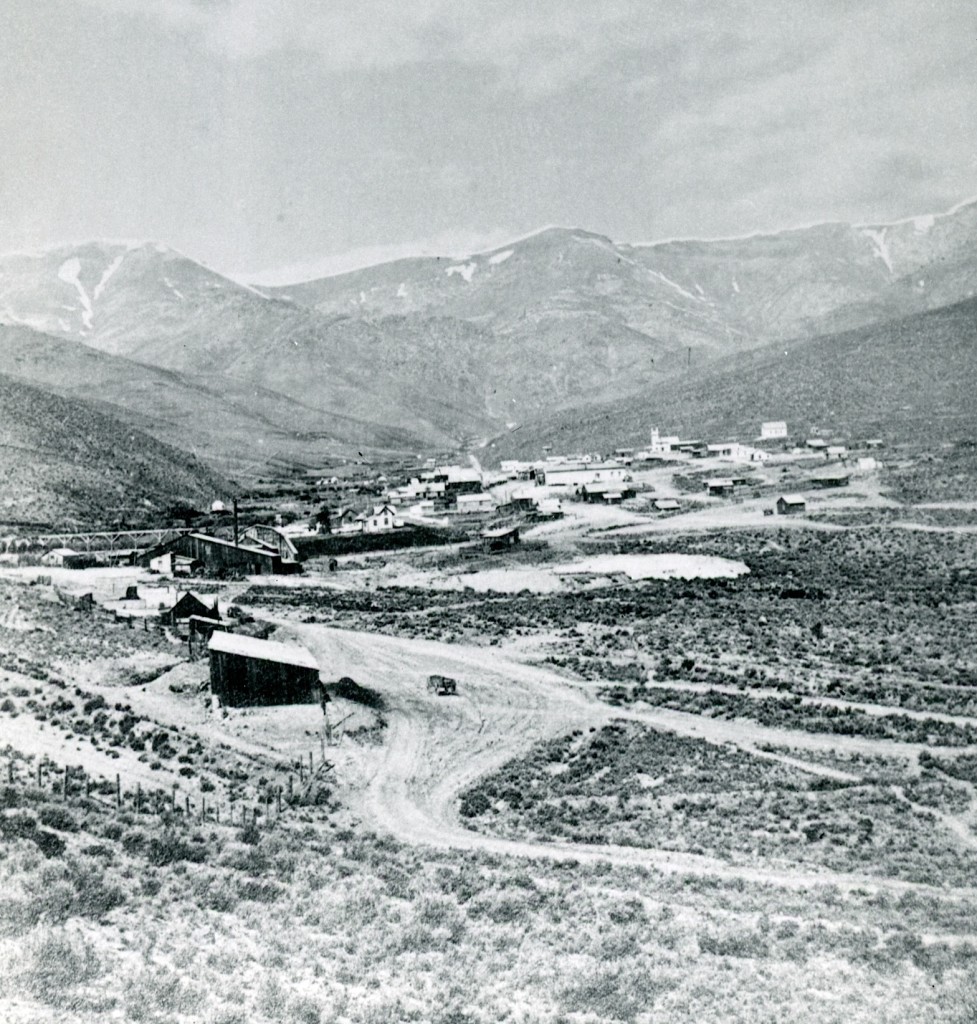
Unionville, Nevada, 1880—Nevada Historical Society
Whether you are an old timer, or a recent arrival, Honey Lake Valley is referred to the “Land of the Never Sweats.” Surprisingly, very few are aware of the origin of the name and its meaning. So as a public service I provide you with my research findings, that a visit to a museum in Victoria, British Columbia and some library research at Twin Falls, Idaho provided the following revelation.
For starters, it was an obscure mining term of the early 1860s. To be a Never Sweat was considered to be a non-conformist. In Nevada, for instance, one could hold an interest in a mining claim and not work it. One could wait for others to prove the claim. Should the prospects be favorable, the Never Sweat could recover his interest by paying an advance on the accumulated costs. In 1865, Nevada passed an “Act for the Encouragement of Mining.” That change in laws abolished the practice of a Never Sweat and the term faded into oblivion, with the exception of the bestowment on the Honey Lakers.
It was the Honey Lakers who used the Never Sweat practice in the political arena. A perfect example was in 1860, when the Honey Lakers petitioned California Governor M.S. Latham, requesting military assistance during the Pyramid Lake Indian War. Yet, at the same time, they refused to pay California taxes, claiming they were a part of the Utah Territory.
By 1863, the Honey Lakers were designated as the Never Sweats. The Humboldt Register of Unionville, Nevada of June 27, 1863, wrote about the Honey Lakers at the Prince Royal Mining District: “It is surpassing strange that these hard working callous backed gentlemen should answer the honest inquiry with a sneer and say there was a place somewhere in the mountains by the name of Prince Royal, but so little repute they had actually forgotten it for the moment. . .Because they were owned by a parcel of Honey Lake ‘never-sweats’! Ha! Ha! What a pity.”
Tomorrow: The terms enduring legacy
Spread the word, and encourage a friend to subscribe
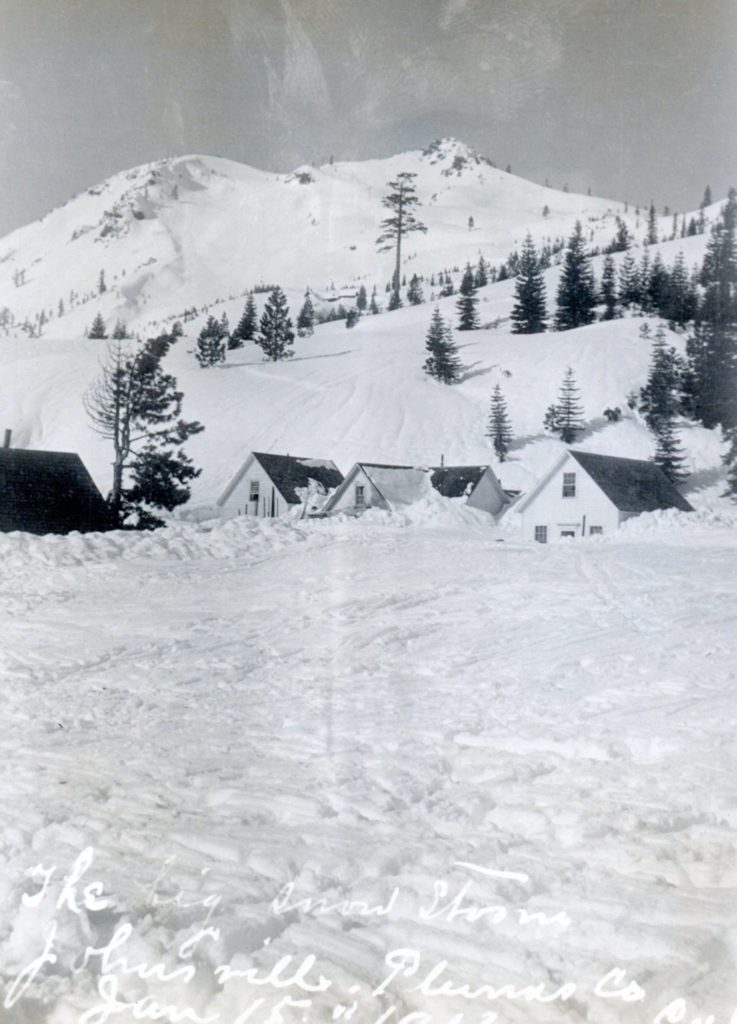
There is no doubt, a snowstorm like the region experienced in January 1911, would certainly disrupt life for a bit, but it would be great in the long run. Consider that this storm dumped eight feet of snow in Susanville; five feet at both Milford and Standish, and a whopping eight feet at Amedee.
Of course, over in Johnsville, Plumas County they were accustomed to an abundance of snowfall. As a matter of fact, it is considered the birthplace of skiing in the United States. It was in 1853 when Norwegian Charles Nelson introduced to the mining community long board skis This was intended as a functional purpose to traverse the snowy mountain terrain to access other communities. It was just a matter time, that to relieve the boredom of the winter doldrums, that in 1861 those miners held downhill ski races. Thus a new sport came into being. It should be noted that long board ski races are still held there.
On a quarterly basis, I ask you the reader, if there is something you would like to learn more about or maybe its something you heard, but question its validity. So here is an opportunity to participate. I will do my best to answer any questions. It should be noted, it may take awhile for the answer to appear as a post. The primary reason, many of the daily posts are done nearly a month in advance. So by the time you read this I am already working on posts for the middle of February, or at least I should be. Whatever the case may be, I look forward to hearing from you. Of course, it should be noted that paid subscribers requests receive priority. In addition, you can always send a request at any time.
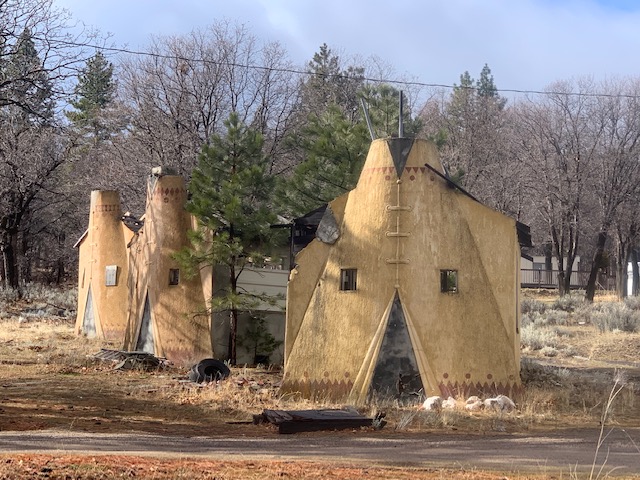
In case you missed it, an alert subscriber, Jane Hail, provided a bit of additional insight. After all, she has a family connection. Her husband, Roger Hail, is a nephew to the late Clyde Knox. According to the information Jane provided, it was a project of Clyde’s, though he never did get around to finishing them.
Now, my next Janesville research involves the demise of the town’s Methodist Church. I came across some of old notes of mine, that it was put up for sale in 1946. Stay tuned.
Antelope Grade on Highway on Highway 139 north leaving Susanville has undergone changes over the years. The grade first came into existence in 1867 when a crude wagon road was constructed. Crude was a very appropriate term. With the increased population growth in Big Valley, the traveling public clamored for improvements to the grade. In the fall of 1878, the Lassen County Board of Supervisors sent a survey crew to plot a new road on the mountain. The county estimated the cost of the new grade at $1,000. Of that amount individuals had already contributed $300 to the cause. The county budgeted $300. The county stated the balance would have come from donations. A campaign to raise the funds from Big Valley and Hayden Hill provided the balance. By the summer of 1879, most of the work was completed, with volunteer labor making up the workforce.
While new grade was superior to the original one, it was still a narrow, treacherous road. Of course, accidents were a rather common occurrence. In November 1890, for instance, Lewis Knudson was returning to his Willow Creek home accompanied by Dave Thomas. Half way up the grade, they encountered William Brockman’s freight team. Knudson pulled his brand new spring wagon over to the edge of road as safely as possible. As Brockman’s team passed by, it spooked one of Knudson’s horses where the animal bolted and jumped off the grade, dragging the other horse and wagon down the mountain. The sudden jolt, threw Knudson out of the wagon, but fortunately he did not sustain any injuries. However, Dave Thomas was not as lucky. It was not until the wagon crashed into a large boulder that it came to an abrupt stop. At the point of impact, Thomas was thrown from the wagon, his left shoulder struck a rock and was dislocated.
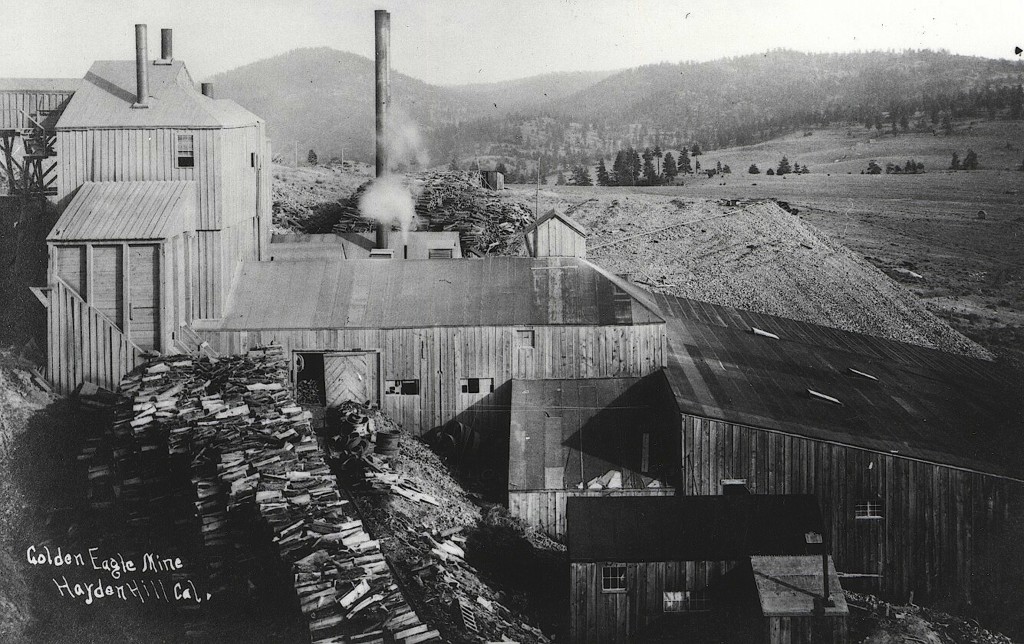
Golden Eagle Mine, 1909. Courtesy of Dallas & Joyce Snider
The Golden Eagle Mine was Hayden Hill’s largest gold producer. It was discovered in 1877 by William and Leonidas Hopkins and C.N. Nash. During its lifespan of operation in produced over $1,000,000 in gold, about one-third of all the gold extracted from Hayden Hill.