This may seem a bit premature since it deals with the 2022 Calendar. It is rapidly nearing completion, so it will be one less project out of the way, so I can get out and explore places with summer approaching.
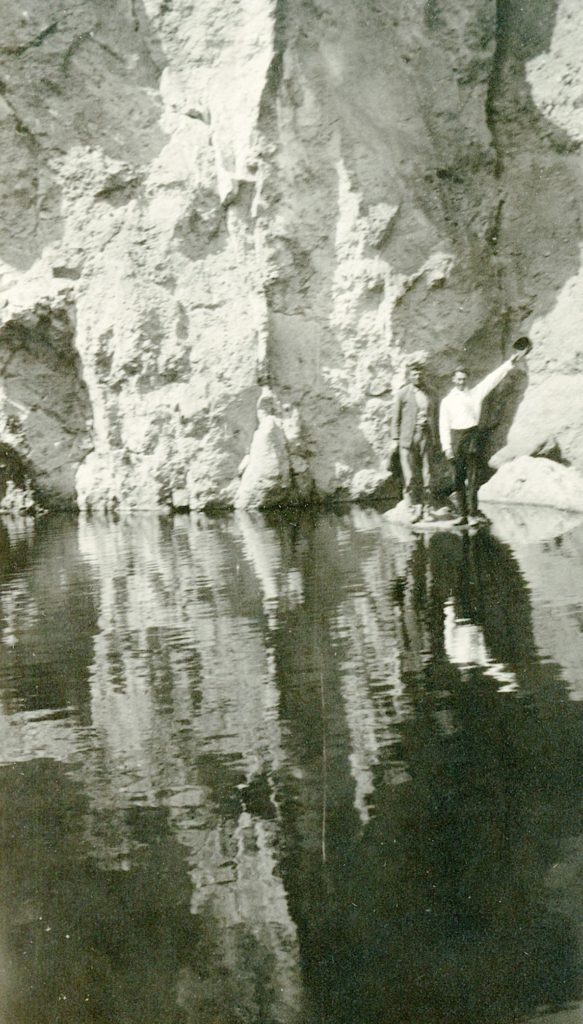
This particular photograph is giving me some trouble, so I am seeking opinions. It was taken in 1922, and quite unique. When I enlarge it to size needed for calendar, it looses some clarity, if you look at it up close. However, when one looks at it from a distance, like one would with a wall calendar, it looks just fine.
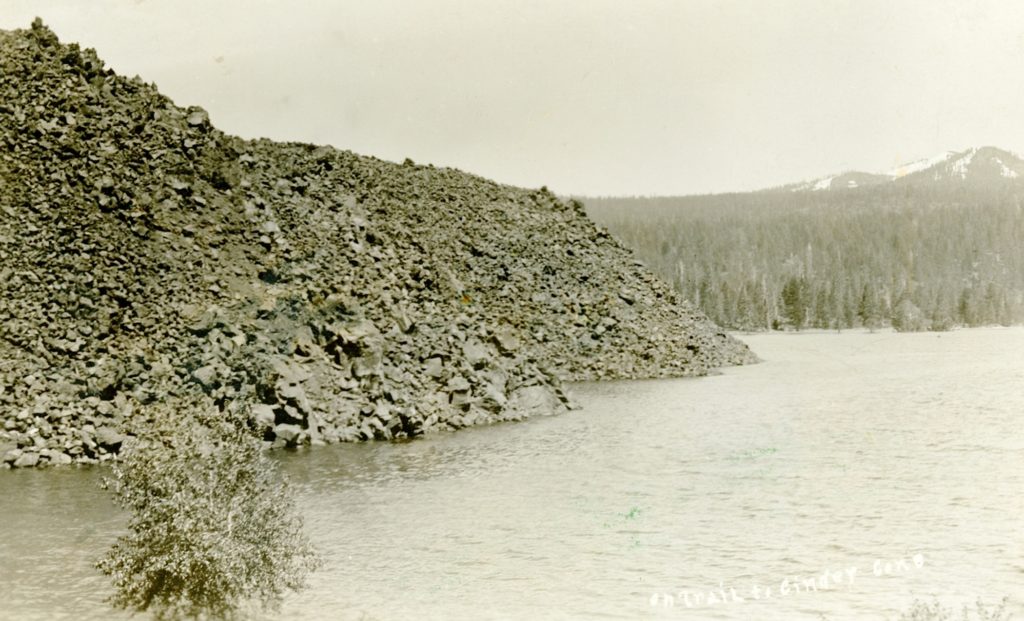
On the trail to Cinder Cone, 1911—B.R. Zimmerman Collection
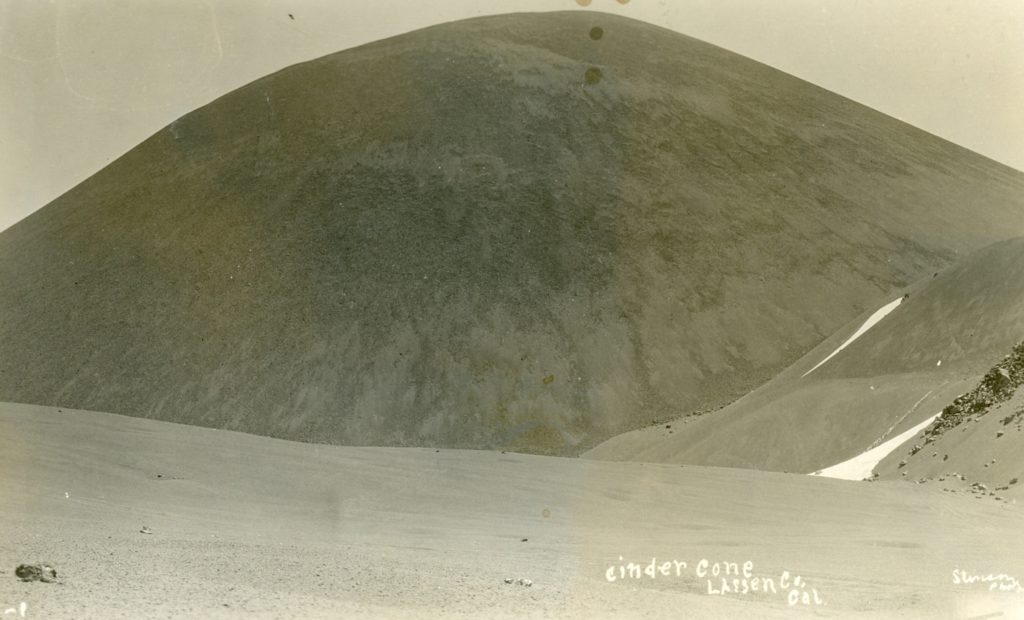
On May 13, 1926, Tom Massey, Joe Odette and John Solari invited Charles Adams on a fishing trip to Butte and Snag Lakes in the eastern segment of Lassen Volcanic National Park. Adams had no idea what kind of expedition this would be. After hiking around Butte Lake, then onto Snag Lake, something had to be done to look elsewhere since the fish did not seem to exist in these two lakes. It was decided to climb Cinder Cone in search of the wary trout. Needless to say it was a dry run, and Adams sighed that he would have been better off staying in Susanville.
Cinder Cone, 1911. Courtesy of B.R. Zimmerman Collection
In 1887, the movement for a pubic park for Susanville made its debut. While a mere hamlet of less than 200 souls, made this quite remarkable. It would not be an easy undertaking, as it would take sixty years to make it a reality. At that time, the residents offered to purchase an 80 acre tract for a park and fairgrounds for $5,000. It was their intent to turn it over to the County. They approached the Board of Supervisors to form a park district and assess a taxy levy for maintenance. The Board rejected the proposal.
In the spring of 1928 the local Rotary Club got on the park bandwagon. They set their site on the Folsom Tract behind the recently built American Legion Memorial Hall. While their intent was admirable, they just could not get the needed traction to move forward. It would not be until after World War II before a municipal park would become a reality. Again, the focus was on the Folsom Tract, now owned by Cyril & Eleanor Houghton. The asking price $7,000. In November 1946 a Park Planning Board had been created. By February 1, 1947 they had raised the money and on March 12, 1947, the property was now owned by the City.
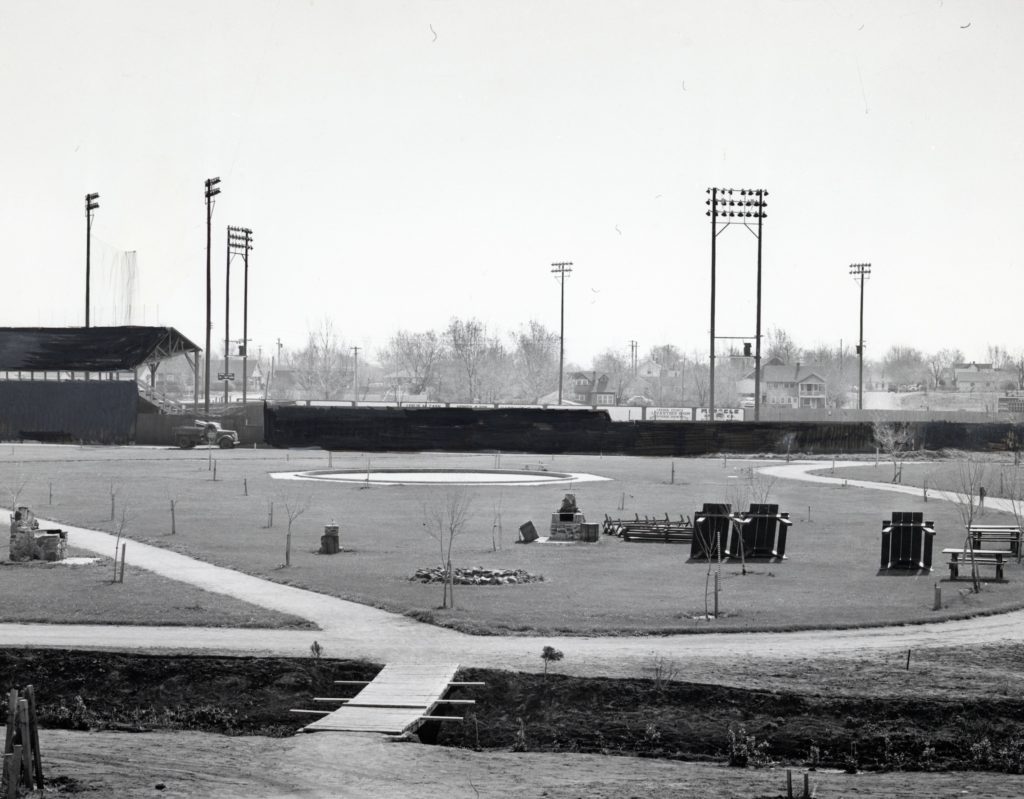
However, there was still another hurdle. The City did not have the funds to make the improvements. The community stepped up to the challenge to purchase trees, shrubbery, a children’s wading pool and of course to construct a grandstand to watch baseball games.
On July 3, 1949 dedication ceremonies were held for Susanville’s Memorial Park. As Judge Ben Curler, Lassen County Superior Court, as opening speaker, simply stated that is was a “truly community park” for the efforts made by the volunteers.
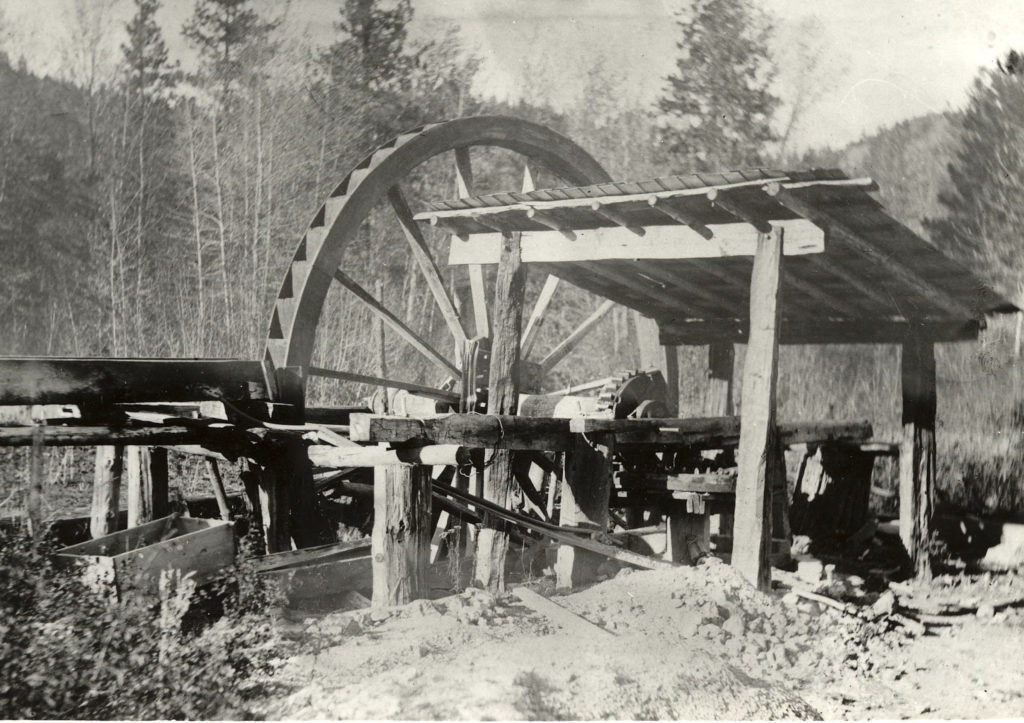
The Scottini’s arrastra mill, 1899. Courtesy of Mary Dale Folsom
First of all, if you go to the front page of the web site, in the upper right hand corner is the search feature, which you can find all kinds of things to keep you preoccupied.
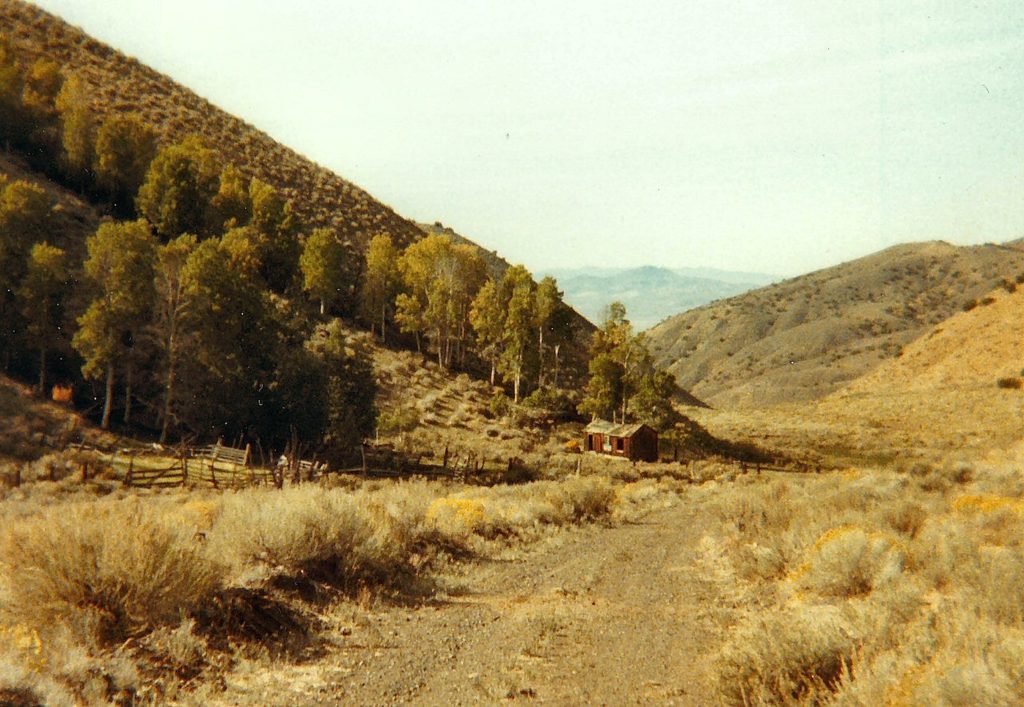
As to mining along Gold Run I have addressed this some extent. Such as Scottini’s Arrastra Millwhich was located just above the Satica Ranch. Then there is the story of the Wild Horse Mines in the Smoke Creek Desert. In 1910, the stamp mill from the Lone Pine Mine located along Gold Run, near present Amesbury Drive was moved to those mines.
Wild Horse Canyon, September 27, 1984
Now to the mining activity on Goodrich Mountain. That one is little trickier. Anything involving Red River or Walker in searches is the ultimate nightmare. Mining claims are recorded by either name of the claimant or the name of the mine. Besides the copper belt that starts near Mountain Meadows, the other mineral located in the area, was iron ore. That is the best that I can do for now, especially the mining claims are in storage due to the Lassen County Courthouse Renovation Project.
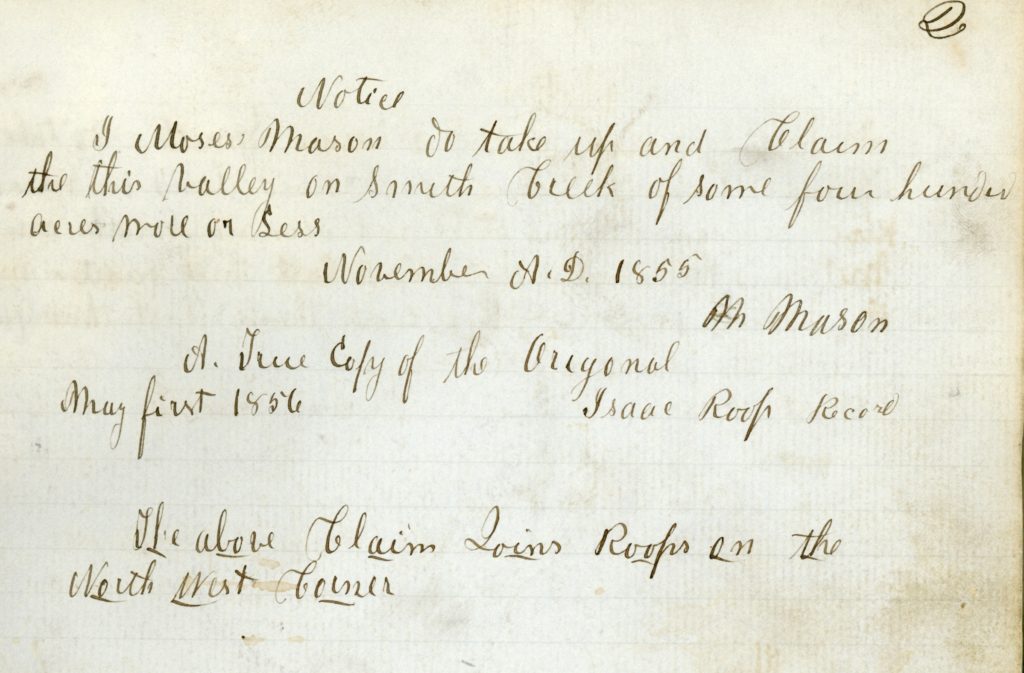
Moses Mason was the second claim recorded in Roop’s Land Register. He settled on present day Susanville Ranch Park and referred to Piute Creek as Smith’s Creek.
In the spring of 1856, with settlers arriving in the Honey Lake Valley they realized they needed to form some type of self-government. They did not believe they were part of California and did not want to be a part of the Utah Territory, there was no Nevada then. On April 26, 1856 a group of twenty-men assembled to form the Territory of Nataqua.
As to land matters, any male twenty-one years or older could claim 640 acres of land to be recorded with the Recorder, which Isaac Roop assumed that role. A number of claims had vague descriptions. Whatever, the case may be, it worked for them. In 1857, some individuals began documenting their claims or the sale of such in the form of a deed with the Plumas County Recorder. By 1859, a few hardy souls ventured all the way to Marysville to file a claim with the United States Government Land Office, the nearest one available. By 1861, the Roop Land Register was rarely used.
When Lassen County was formed in 1864, the original County Board of Supervisors did something unique. They paid Plumas County to transcribe all land transactions of Honey Lake and Long Valleys prior to the formation of the county. This is why Book A. Deeds, Lassen County starts in 1857.
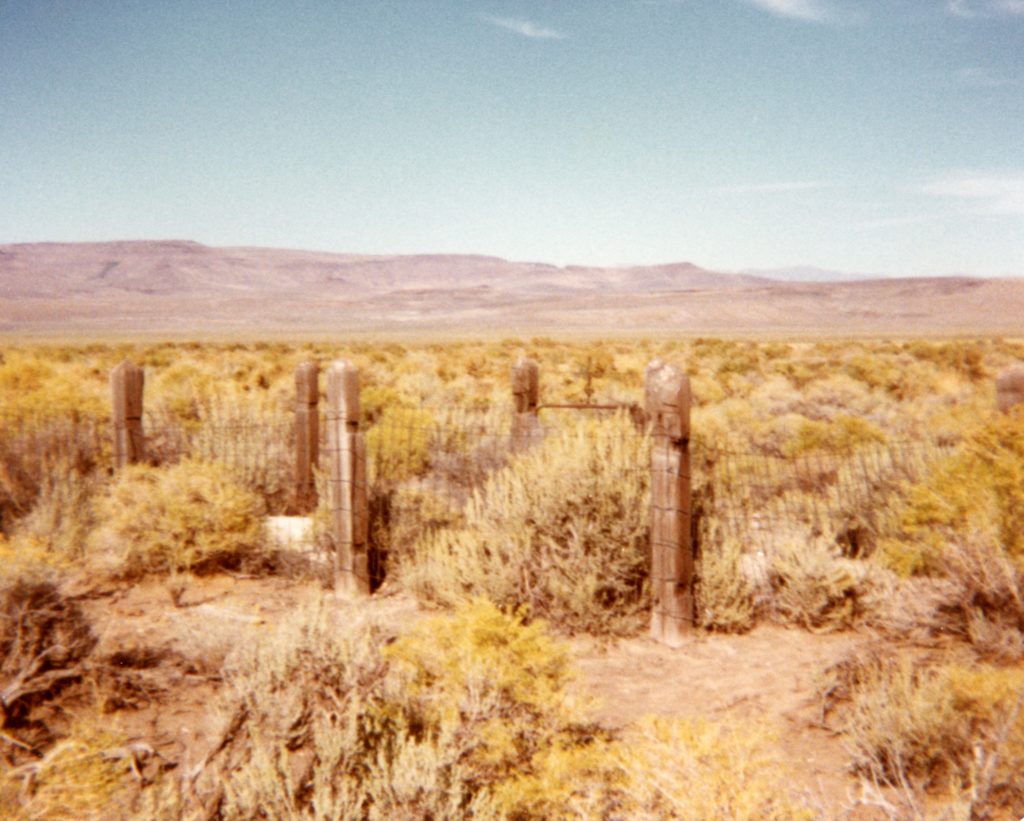
Buffalo Meadows Cemetery, Smoke Creek Desert, Nevada, 1984
After reading yesterday’s post, I realized that I neglected a third Susan for whom some thought Susan River was named for. According Asa M. Fairfield he noted that an immigrant girl by the name of Susan DeWitt died near the Buffalo Meadows Salt Marsh in the Smoke Creek Desert. She was buried near there, but whether her grave was incorporated into the Buffalo Meadows Cemetery, I do not know. Fairfield went on that some thought that it was this Susan for whom the Susan Riverwas named for. By the way, if anyone has information on this particular cemetery, I would certainly appreciate it.
While it is fairly common knowledge that the City of Susanville was named for the town founder’s daughter, Susan Roop, who later married Alexander T. Arnold. Many assume that the Susan River that flows through the community would also be named after Susan Roop. However, that is not the case, because the river was so named, prior to Isaac Roop’s arrival on the scene.
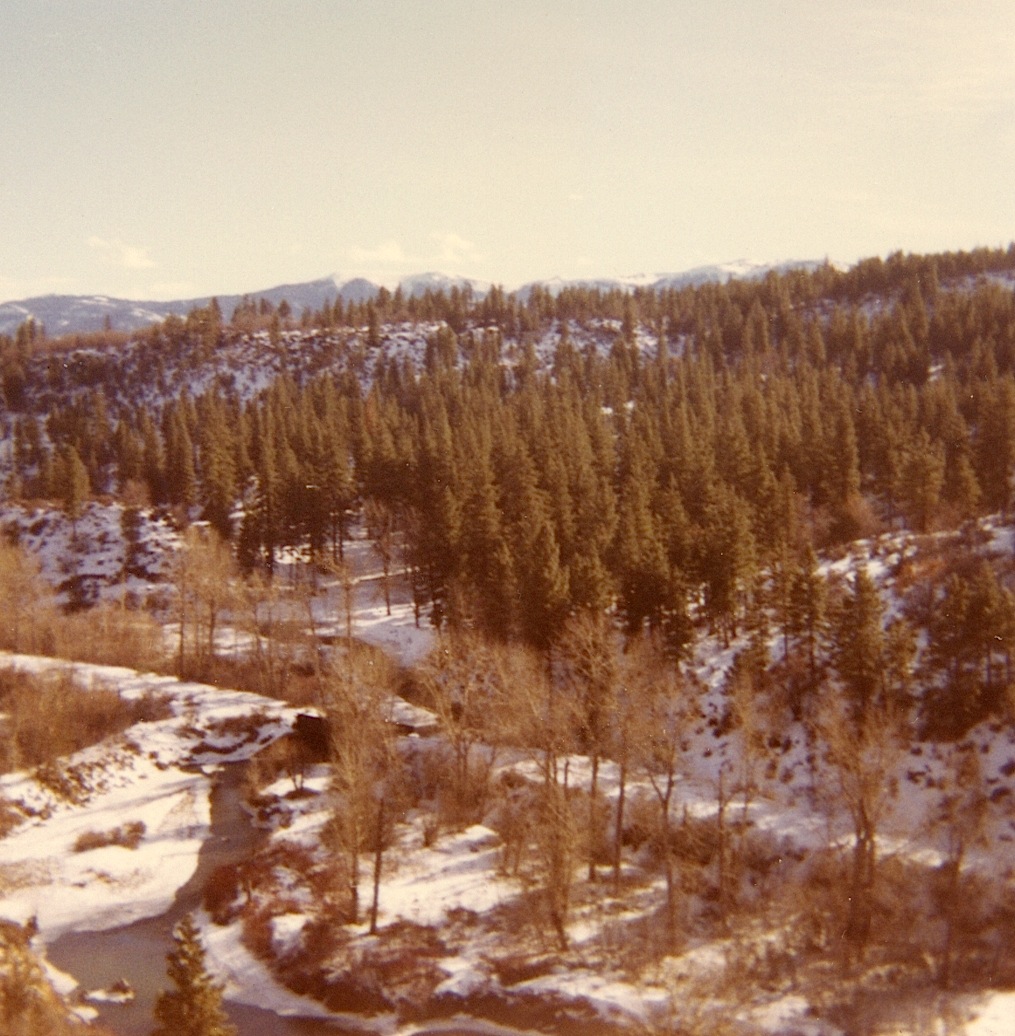
Susan River, February 1972
During the years 1851-1852, William H. Nobles located a new emigrant road from Shasta, California to Lassen’s Meadows, Nevada (Rye Patch Reservoir). This road passed through the Honey Lake Valley. Nobles named the Susan River for his wife, Susan Parker Nobles. While we know a lot about Susan Roop Arnold, very little is known about Susan Parker Nobles. She resided in Minnesota for the majority of her married life, moving to California after her husband died in 1876.
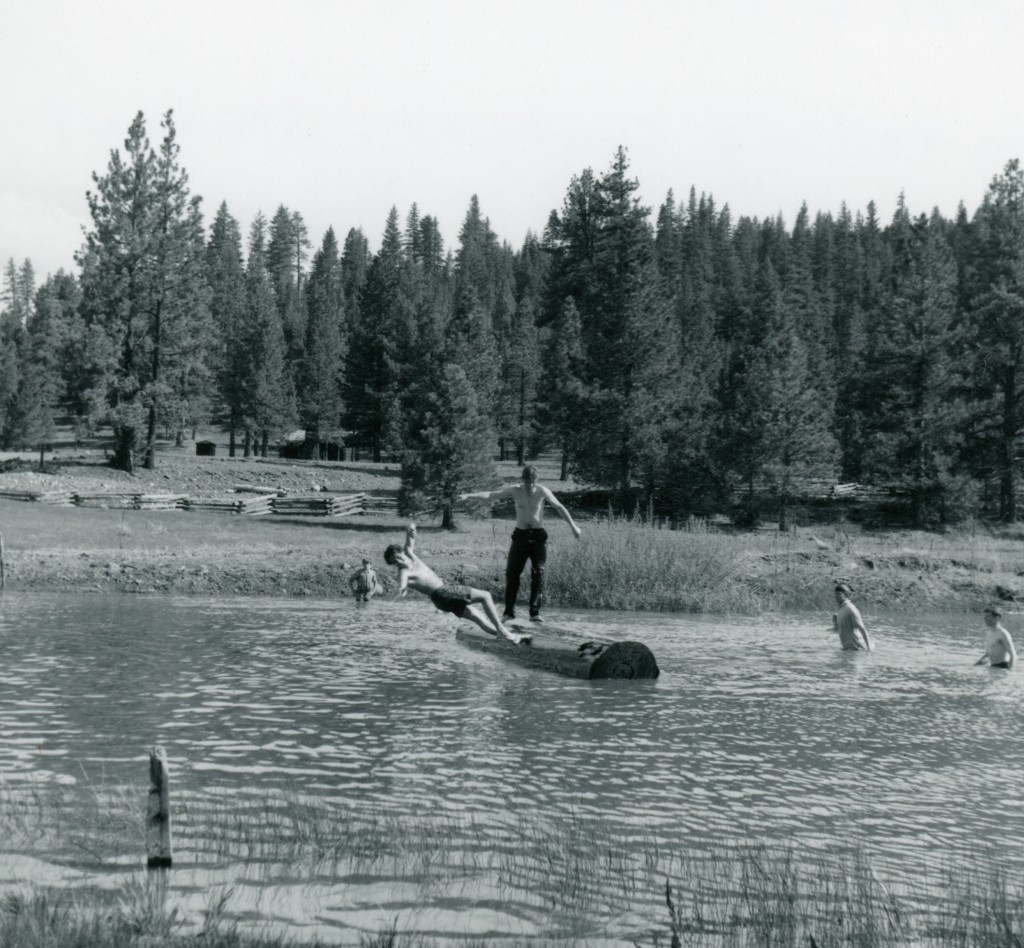
Log Rolling contest at Willard, 1970. Couresy of D.B. Martin
In the late 1940s, Paul Bunyan Days was a logging competition held not only at Lassen College, but other community colleges that had forestry programs. Tom Gilfoy who graduated from Lassen in 1951, said it was Ralph Throop who was instrumental in starting Paul Bunyan Days at Lassen. At that time it was held behind the high school, since the college was located on the same property. Tom stated they made an impromptu dam on the Susan River for log pond events that included log rolling. Other contests involved burling, pole climbing and two-man bucking saw., In 1950, Rex Coalson was the overall winner, followed by Ted Pankey in 1951.
Some time in the late 1960s, no doubt due in part with Lassen College separated from Lassen High School, Paul Bunyan Days was moved to Willard Creek. It was rather fitting since in 1938, it was the forestry students who developed the Willard Hill ski area, later converted into a sled hill. Mike Moyers who later taught at Lassen stated that around 1981 or 1982 was when the last Paul Bunyan Days was held. In 1984, the forestry program at the college was terminated due to lack of students.
This is something that definitely slipped underneath my radar. Last fall a historical railway society was organized for the preservation of the history of the Nevada-California-Oregon Railroad, more commonly referred to as the NCO. What was even more intriguing its headquarters is that of Alturas. In one sense it is a logical choice that Alturas is home to a NCO depot and also was railroads’s headquarters during its final days, after its departure from Reno.
For the un-initiated the NCO was one of the 20th century’s longest narrow gauge railroads that ran from Reno, Nevada to Lakeview, Oregon. As one observer put it, it was a railroad that went nowhere. Its original intent was to extend all the way to Columbia River with a terminus at The Dalles, Oregon. During its fifty year existence from 1879-1929, there were a lot of interesting characters involved in its operation.
For those who would like to learn more about this organization see their website at: NCO Railway
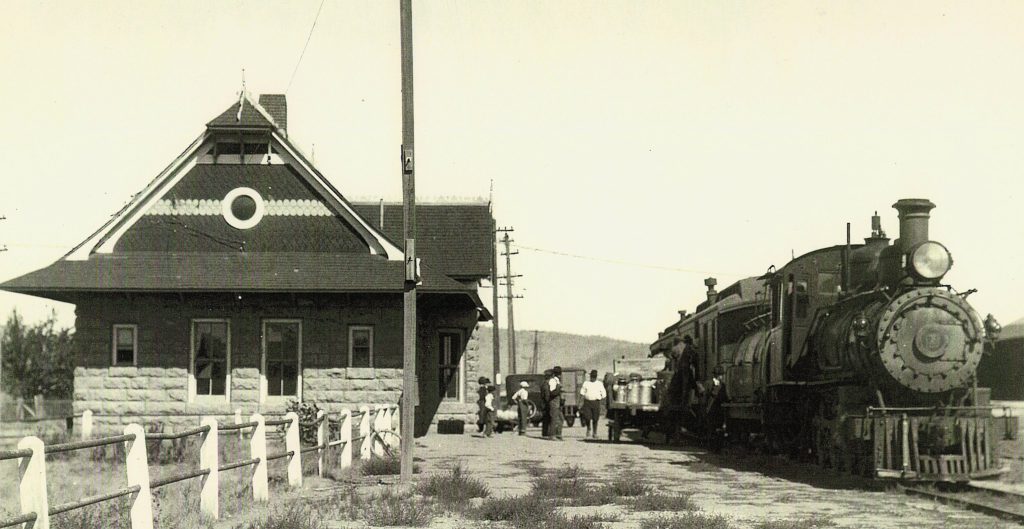
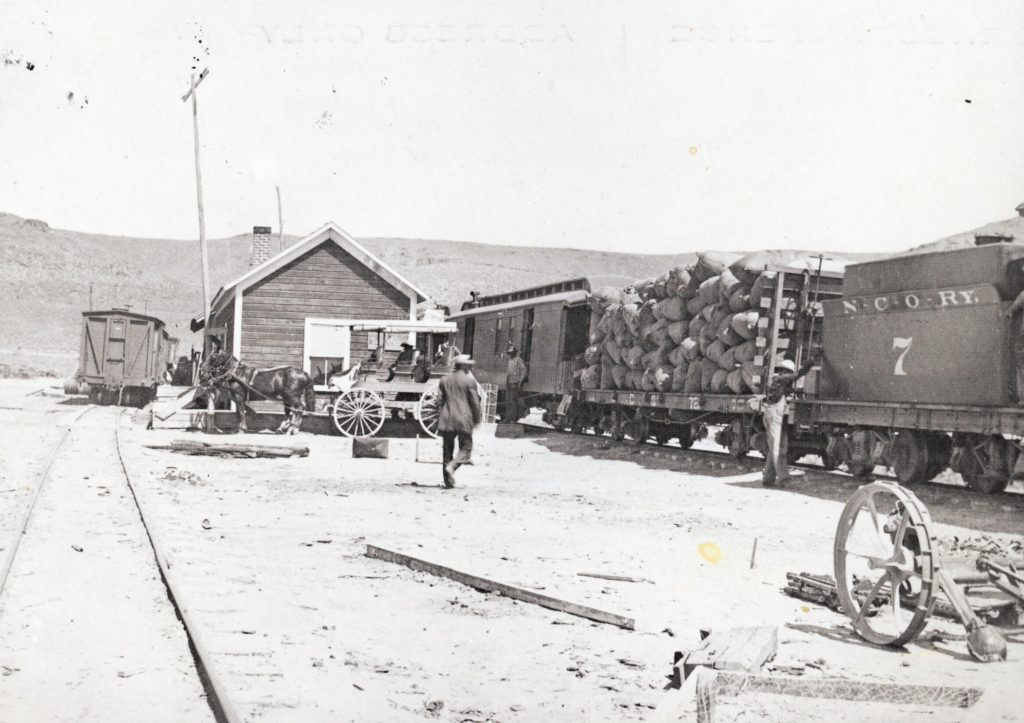
Hot Springs Station would later become Wendel. This scene is dated 1899–Tom Armstrong
No one would have ever thought that Amedee would be the terminus of the Nevada-California-Oregon Railroad (NCO) for nearly a decade. It certainly was not the railroad’s plan. However, the nation’s financial crisis of 1893 coupled with a national railroad strike brought a lot of activities to a screeching halt.
In January 1899, without any fanfare the NCO finally jump started its northern extension. Five miles to the north the railroad established its Hot Springs Station, known today as Wendel. Some had aspirations that it might become a new “Amedee.” However, that would not be the case. What Hot Springs did receive was a bunch of camp followers. This rag-tag group peddled alcohol, gambling and prostitution. By the time, the Lassen County District Attorney could crack down these activities, not only had the railroad continued to build north and the followers fled to more profitable locations. Hot Springs Station heyday did not arrive until after it became Wendel and the demise of the NCO. In 1927 the Southern Pacific Railroad began the conversion of the NCO from narrow to standard guage.