The Quirkiness of the Westwood Auto Club

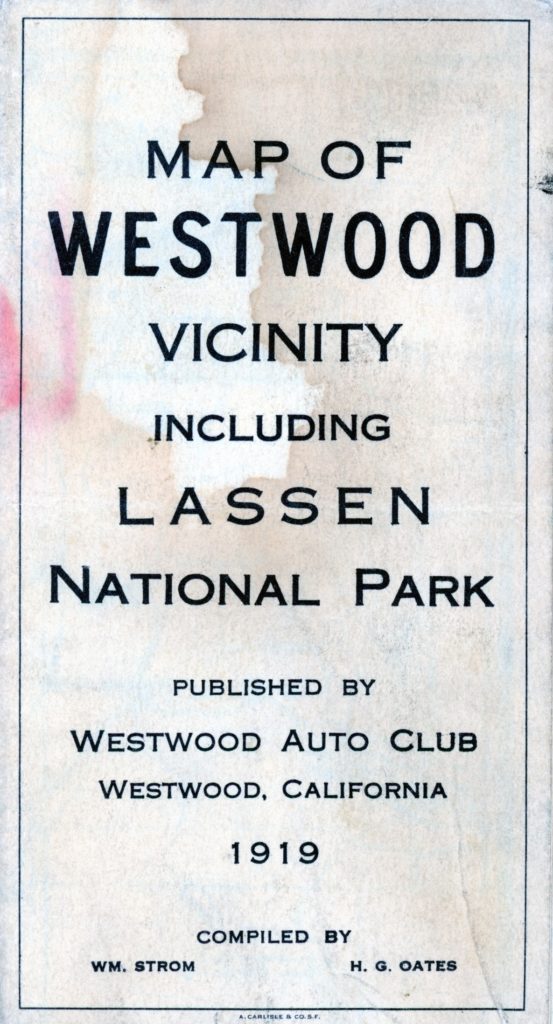
Cover of the Westwood Auto Club’s 1919 Map

The Westwood Auto Club  was the oddest creation of the Red River Lumber Company’s operation at Westwood. Since Westwood was created as a company town one would expect that the community as a whole functioned a bit differently. On the other hand, Red River wanted Westwood to assimilate like the surrounding communities. Enter the Westwood Auto Club. It served as Red River’s de facto chamber of commerce. The Auto Club served as a booster organization of Red River products and civic pride as well.

On February 14, 1916 the auto club held its organizational meeting. Its first goal was to open the road over Fredonyer to Susanville, after all this was prior to the state highway system.  On Sunday, April 9, 1916, the Auto Club organized a work party of one
hundred twenty-five to open Fredonyer, with Red River providing
equipment. A much smaller delegation from Susanville was recruited to work on the snow removal from their side of the mountain. The Susanville team was the first to reach the summit, for they had the added benefit that its side receives more sun exposure.  Being of goodwill, the Susanville crowd began snow removal on the Westwood down slope. Once the two groups connected, everyone regrouped to the summit to celebrate their achievement. This became an annual event for the next several years.

Within a few short years the Westwood Auto Club saw its membership swell to nearly five hundred.  Due to its size, the club felt they needed a place of their own. Upon due diligent search they found an empty building at 303 Ash Street, which had formerly housed kindergarten classes. On New Years Day 1921, after a complete remodel the club opened its doors to the membership.
The Auto Club was on a roll, and in the spring of 1921, it obtained a
lease from Red River to develop a park and campground at nearby Clear Creek. This was a popular picnic site, and the club maintained the park until the organization folded when Red River sold in 1944.

By the mid-1920s the organization had over 1200 members. Its biggest accomplishment came in 1929-30. The Auto Club lobbied hard with the California Division of Highways for the winter snow removal over Fredonyer.

Donate

Horse Lake Canal Company

Horse Lake, June 21, 2019

Horse Lake for the uninitiated, is a shallow high desert lake northeast of Eagle Lake and west of Ravendale. On the average in good years covers some 3,200 acres. Water is everything in this section and Horse Lake did not escape those seeking that precious resource.

The lake is an enclosed basin but prior to settlement and in wet winters it had a natural outflow that drained into Petes Creek.. Settlement around the lake began in 1868 and water was diverted from the lake to irrigate surrounding land, thus the outflow was intermittent. In 1893, William Harrison deepened a cut to allow water to flow into Petes Creek. In 1899, the Horse Lake Canal Company was formed and claimed 200,000 inches from the lake to irrigate the lands in the Tule District of the Honey Lake Valley. The next entity to propose a similar measure was the Tanner Slough Irrigation Association. In 1938, the Association actually diverted overflow from Horse Lake due to an exceptional wet winter. Then came along the lawsuit known as Fleming vs. Bennett which resulted in the adjudication of the Susan River and its tributaries thus putting an end to enterprises such as the Horse Lake Canal Company.

Tim

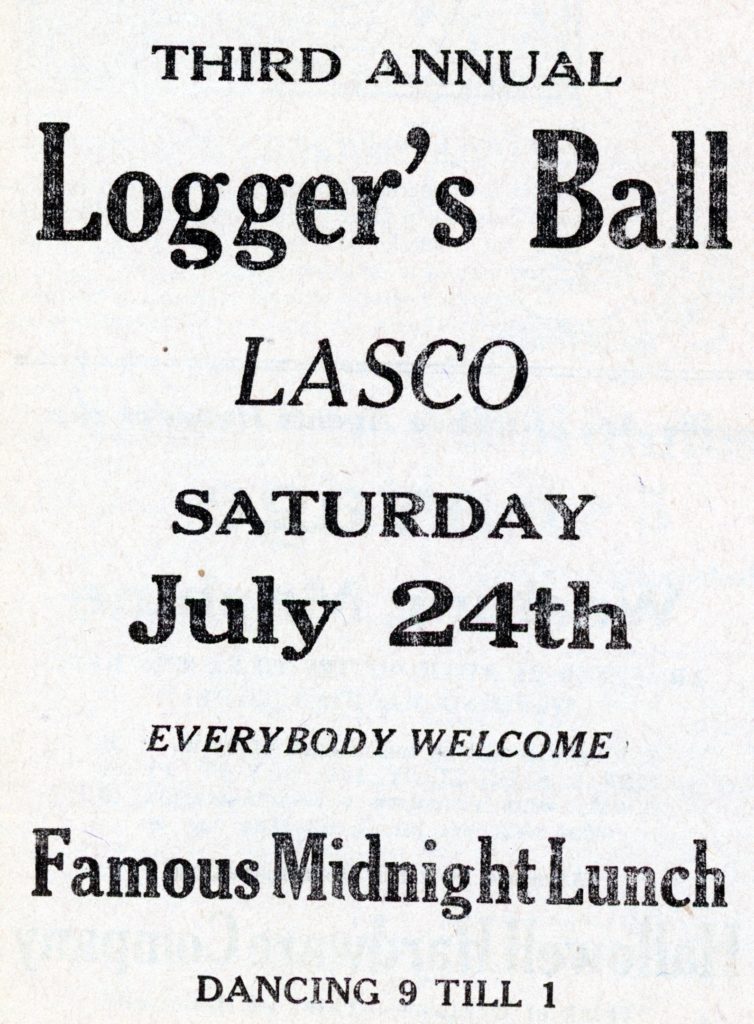
Lasco’s Loggers’ Ball

Lassen Mail, July 16, 1926

Lasco was the logging camp of the Lassen Lumber & Box Company during the 1920s. It was located at the northern base of Peg Leg Mountain. During the summer it was home to 250 loggers. They were a social bunch with special events on Saturday nights throughout the summer. One of their annual events was a Logger’s Ball held there on the last Saturday of July. Lasco’s de facto Mayor, Emille Frizzie always made it a point to welcome all visitors. One time  he made a public invite to everyone from Chester to Doyle, though he made it clear bootleggers were not welcomed.  As was customary then, a midnight meal was served and dancing continued into the wee hours of the morning.

Tim

Susanville Fire Department Turns 100!

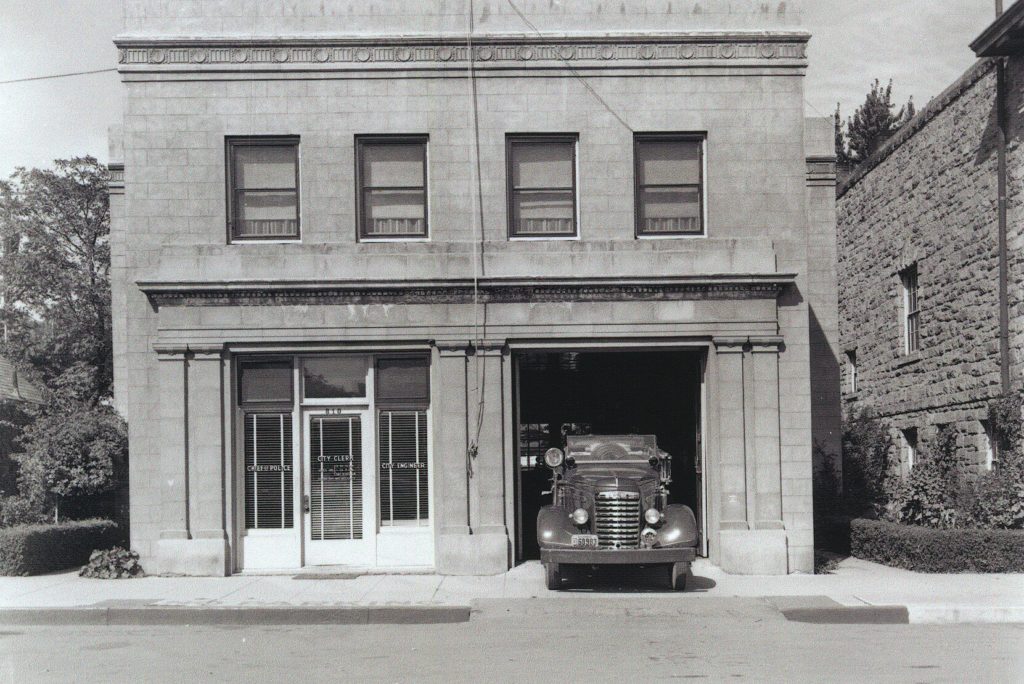
Susanville city/fire hall.

Fire and fire prevention played a pivotal role in the development of Susanville. It was fire after all, why the city was formed. The original city/fire hall was a tall wooden structure that was destroyed by fire on November 7, 1921.

At the same time the City Council was dealing with a pressing issue with Fire (Insurance) Underwriters had proposed a hefty increase for insurance premiums of property inside the city limits. The Underwriters two main concerns the water mains were insufficient and the lack of an adequate fire department. The City addressed and worked with Frank Cady, owner of the local water company, to fix that problem.

On May 9, 1922, a newly re-organized Susanville Volunteer Fire Department was created. It initially consisted of five men:  H.W. Wharton, Uel J. Travis, Ted Murphy, John Greig and Walter Agee. Baldwin was named fire chief. One of their first priorities was to recruit and train volunteers. More progress was made that year with the purchase of an American LaFrance Fire Truck.In addition,  a Gamewell fire alarm system was installed throughout the town

In the fall the Board of Fire Underwriters representatives came to Susanville for inspection. While they were pleased with the improvements, there was one additional requirement—a paid fireman. The City obliged and hire Walter Long at $125 a month. The hard work paid off, instead of an increase on fire insurance premiums they were reduced by 10 percent.

Support

.

Family Feuds

Henry L. Hoagland—Betty Gorbet

For many years I was involved with the legal system. One of my introductions was working for attorney Joseph B. Harvey, prior to him being elected Lassen County Superior Court Judge. His office, saw some potential in a young kid, and before I knew it, I was learning probate law. One of the first cases I worked on was a nasty fight over estate with very little value—but the opposing parties fought over everything including the the toilet paper! Who knew years later, that was important lesson learned, and came in handy dealing with my Uncle Jim Purdy’s estate.

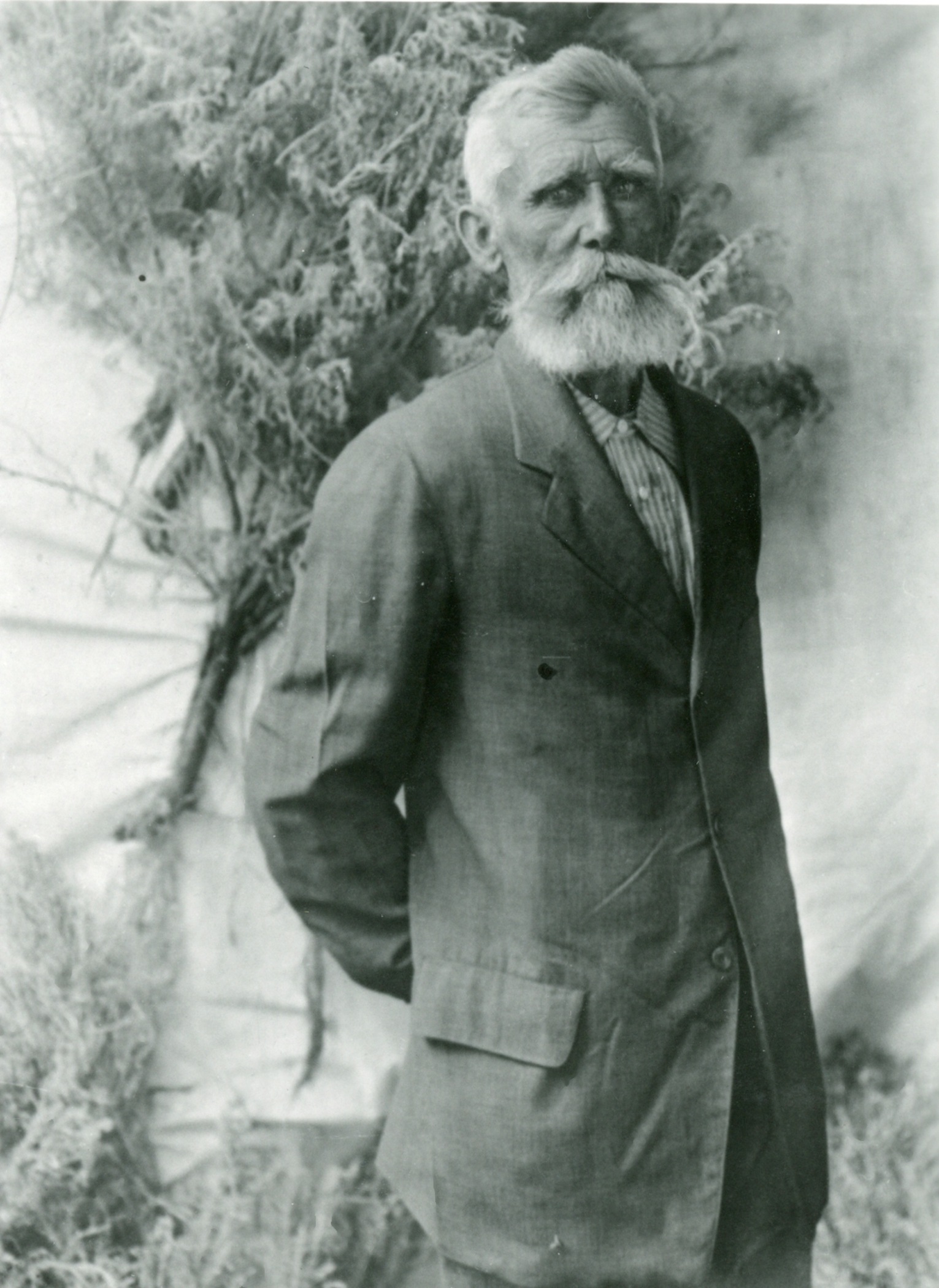
Over the years, while the way we live has changed, human nature has not. As usual, while researching one item, in the files, I came across other information, which some may find of interest. This is an 1892 Lassen County Superior Case Hoagland v Shearer.  Henry Hoagland sued his brother-in-law over the care of Solomon Shearer, who at the time was 88 years old. According to Hoagland, it was mutually agreed upon that he care for his father-in-law until April 1, 1891, and Josiah Shearer would pay Hoagland $25 a month. Josiah would take care of his father after the April date. That did not happen, nor did he ever pay Hoagland, hence the suit. A judgement by default was entered on September 10, 1892, but Josiah Shearer sold his Honey Lake Valley ranch and left the area, never paying Hoagland. As to Solomon Shearer, some how he made his way to Missouri where he died in 1902.

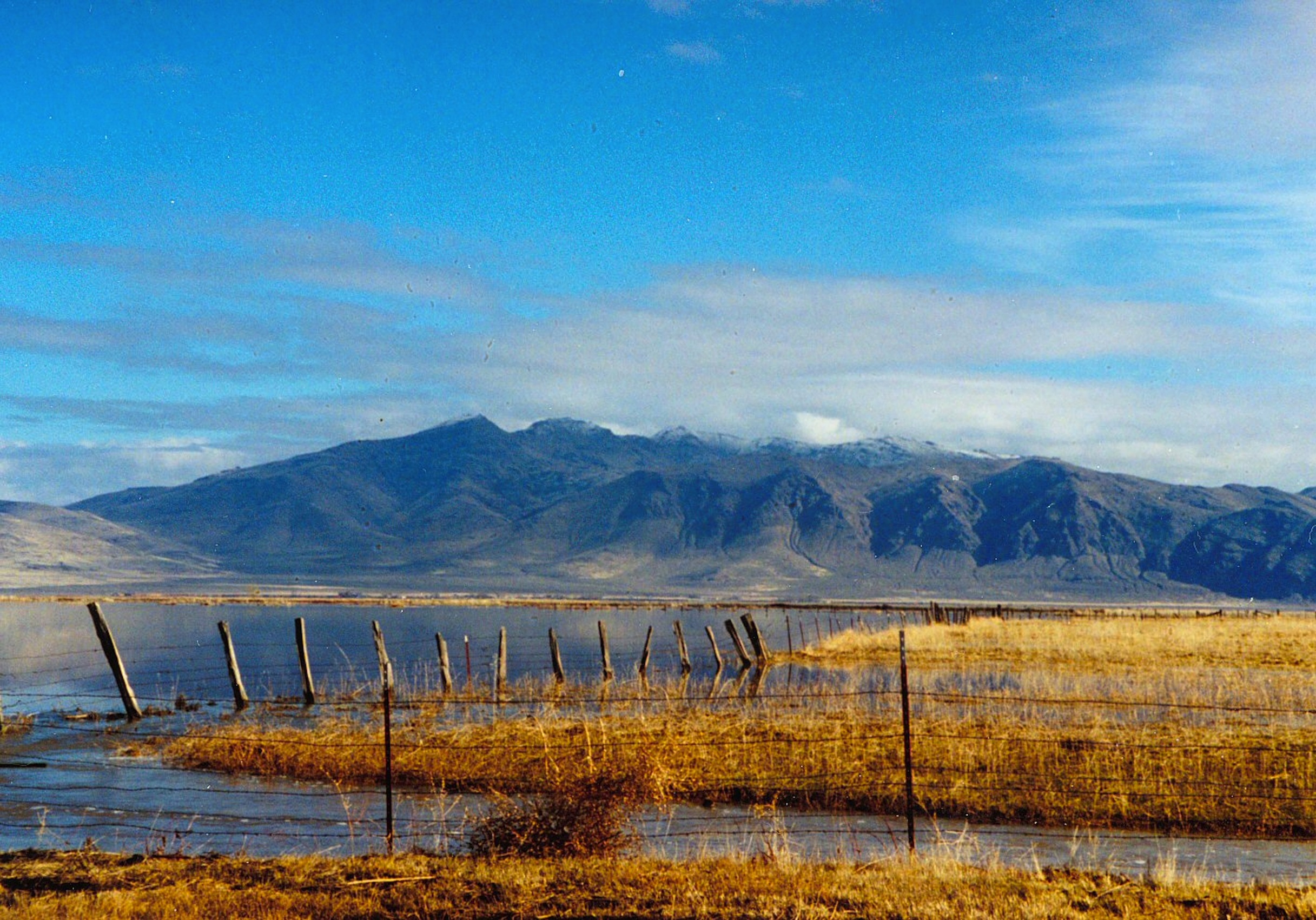
A portion of Josiah Shearer’s ranch along Honey Lake, 1997.

There is a irony later on with Hoagland. His family had him admitted to the Lassen County Hospital in 1919, as no one was able or wanted to care for him. The family agreed to turn over his Civil War pension to pay for his care, but they never did. A year had gone without payment to the County, thus the County notified the family he would be discharged. Before the issue was resolved, Hoagland passed away.

Support

A Susanville Chain Store Story

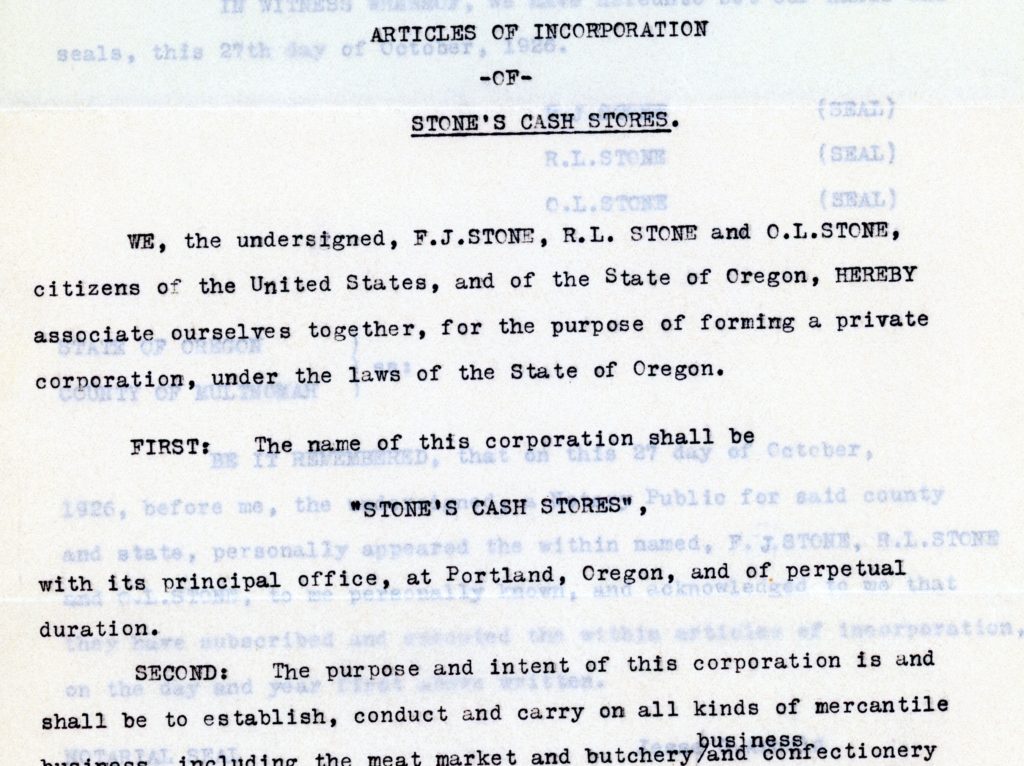
Articles of Incorporation

Many people are indifferent about chain stores, and then there are those who think they are wonderful, and the other camp that truly despises them. In the 1920s, with Susanville’s tremendous population growth, chain stores emerged on the scene. While the old established merchants were not thrilled, the Susanville consumer enjoyed a broader selection. The first chain store to enter the Susanville market, was a Wyoming outfit known as Stevens Store Company and in 1929 it became. J.C. Penney.

Enter R.L. Stone, who had a different approach for shopping in Susanville. Cash and Carry.  It should be noted it was rather customary of merchants, to allow their customers to charge their purchase. It was a risky endeavor at times for the merchant to recover those charged accounts. Stone’s concept a reduced price, but be paid in cash, no credit. It worked beyond expectations. It was in November 1923 when Stone opened his first store in the T.H. Long building. With his brothers they opened additional stores. By 1927, when they incorporated as Stone’s Cash Stores they had nineteen stores in California, Oregon and Washington. In 1929, Stones merged with another chain store MacMarr.   In 1934, Safeway acquired MacMarr.

Support


Was Westwood an Experiment?

First Train
First train to Westwood, February 21, 1914

By 1914, Red River Lumber Company’s new company town was open for business. For years there had be lots of speculation while it kept buying vast amounts of timberland in Northern California. The press was eager to pay a visit and write about it. The Chico Record in August 1914 published an interesting article which was titled:  “Is Westwood An Experiment? Away up in Lassen County, about twenty miles from Susanville, is the new town of Westwood, a city created within a year. It lies in the center of one of the largest and most valuable tracts of timberland in the United States, a tract of timber which until this year had never been touched by the ax or saw. Westwood is owned solely and exclusively by the Red River Lumber Company, which is but another name for Walker, the multi-millionaire of Minnesota, and his sons.

“Walker came into California a few years ago, and began to buy and
otherwise acquire timberlands in Shasta, Lassen, Butte and Plumas
counties, until it is said that he now owns one million acres of the
finest forests in the world. “With the building of the Southern Pacific railroad from Fernley into Lassen County came the opportunity to work these timber holdings and the Walkers grasped the opportunity. Alongside of a creek in the center of these holdings they established the town of Westwood, and are now completing their mills and factories. The mill is said to have the greatest capacity of any in the West, it being possible to cut one million feet of lumber a day, and at this rate it can be run for more than fifty years without exhausting the timber supply.

“Consequently Westwood is being built to endure. Water has been piped into the place from a point distant ten miles. A complete sewer system is being laid, streets and sidewalks built, streets well lighted, and several hundred residences built.

“Everything in Westwood is owned and controlled by the Walkers. No lots are sold and one cannot be bought. All the houses are rented to the employees, and the Walkers conduct a general merchandise store the equal of which is not found north of San Francisco. It contains everything for human needs from automobiles to a loaf of bread. An immense clubhouse is maintained, for Westwood has no saloons. A large moving picture theater is also conducted by Walkers, which on Sunday night is used as a church.  If there is any profit to be made in Westwood, it is made by the Walkers, for no one else can do business there. It is stated, however, by most of the residents that prices are no higher then in other places, and in most instances they are lower.

“It will be interesting to note whether this ‘one-man’ town can be
made a success. It already contains about three thousand people for the Walker’s have on their payrolls about fifteen hundred employees. No one is asked to come to Westwood; there is no chamber of commerce seeking immigration. There are no properties for sale, hence no real estate agents. There is not even a newspaper.

“Doubtless in time there will arise dissatisfaction, for we are so
used to the competitive system in human affairs, that the average one is likely to resent the obligation to work for a man or company and in turn be compelled to live as the man or company directs and turn back most of his wages into channels that will carry them back to their source, even though in doing so a fair share is retained by the wage-earner.”

Donate

The Jurgen Jensen Ranch

Jensen Family
Jurgen Jensen family: Left to right: A.R. “Bert”, Delia, Effie and Jurgen, . Courtesy of Abe Jensen

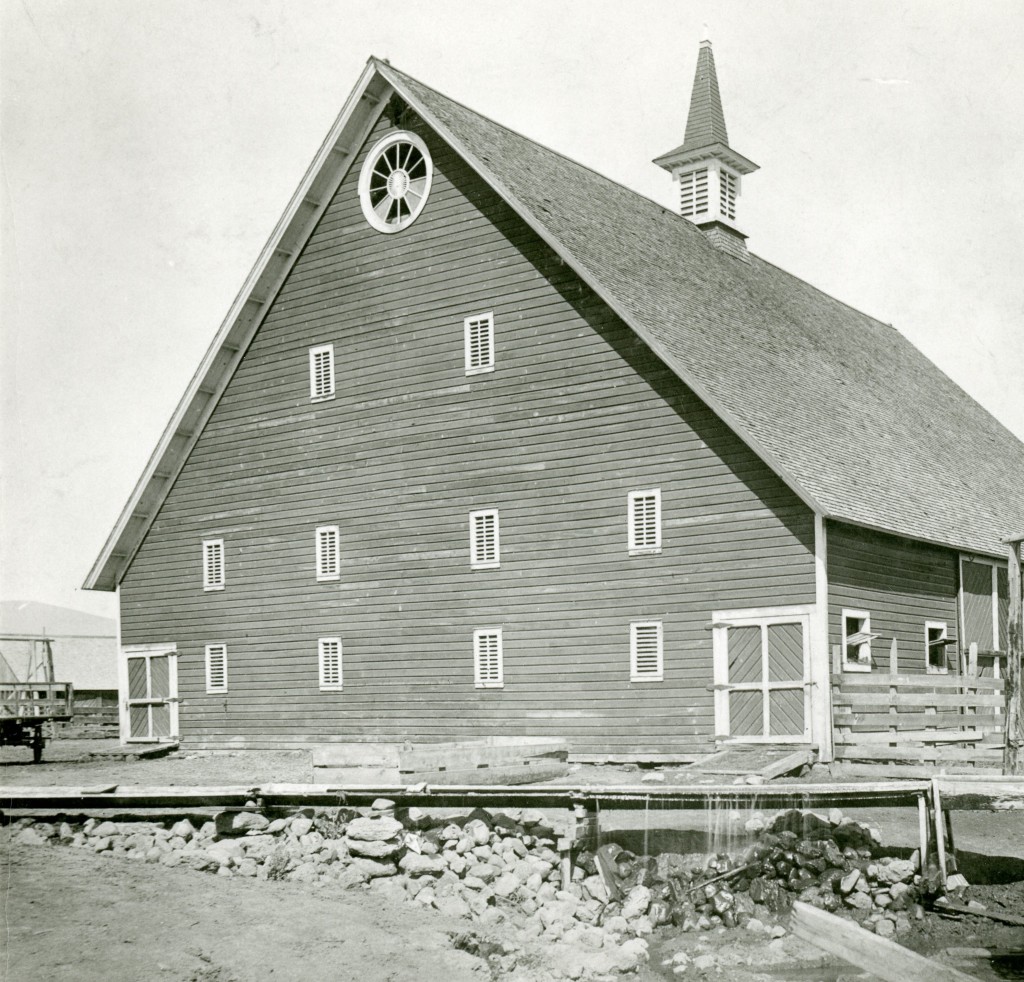
This is a follow up about comments posted about the Jensen Barn. The first comment, the person was. confused and thought the Jensen Ranch was on Highway 44. This property is known as Bunnells. For years it was owned by Georgia Bunnell Jensen. (1884-1976). Georgia was married to Albert “Bert” Jensen (1876-1964), son of Jurgen (1836-1900).. Georgia and Bert Jensen’s grandchildren still own the property, though it was devastated in 2020 Hog Fire.

The Jensen barn, 1900. Courtesy of Abe Jensen

The second comment was about the Jensen House and ranch. Jurgen Jensen’s house was some two miles east of present day intersection of Main Street (Highway 36) and Johnstonville Road. In 1908, Bert Jensen had a Queen Anne style home built near that intersection. In 1931, Johnstonville Road became Highway 36.  In 1966, the State Highway Department purchased the Jensen House from the owner of the time T.S. “Stan” Brown, Lassen County Farm Advisor. The house was moved to its current location as part of the realignment of Highway 36 between Susanville and Johnstonville that we know today.

Finally, on a personal note. One of the first people I reached out to in my very early days of historical research was Abe Jensen son of Bert and Georgia Jensen. Abe and his wife, Adelaide, were just the kindest, gracious people to meet. I have been very fortunate over the years that I have done historical research to meet so many wonderful folks who shared their knowledge with me. For that I will be forever grateful. One more note, Bert Jensen was the organizer of the Lassen County Fair and in 1922 sold twenty acres which is the current Lassen County Fairgrounds. Abe Jensen was the Lassen County Fair Manager for a number of years and for whom Jensen Hall is named for.

Support

This Day in History—Stone Ranch

The ranch house at Stone’s was torn down in 1965.

It was on May 4, 1961, when the Stone family sold their ranch at the north end of Eagle Lake to the Five Dot Land & Cattle Company. In 1926, Coit and Laura Stone had purchased the ranch from William and Roseanna Troxel. Apparently, none of the Troxel’s three sons wanted the Eagle Lake property.

It should be noted the Stone family retained their shoreline property on the northwest side of Eagle Lake. In October 1961 Stone’s Subdivision Unit 1 was placed on the market. The entire Stone’s Subdivision comprises 270 acres divided into 244 lots.

Tim

Coming Attractions

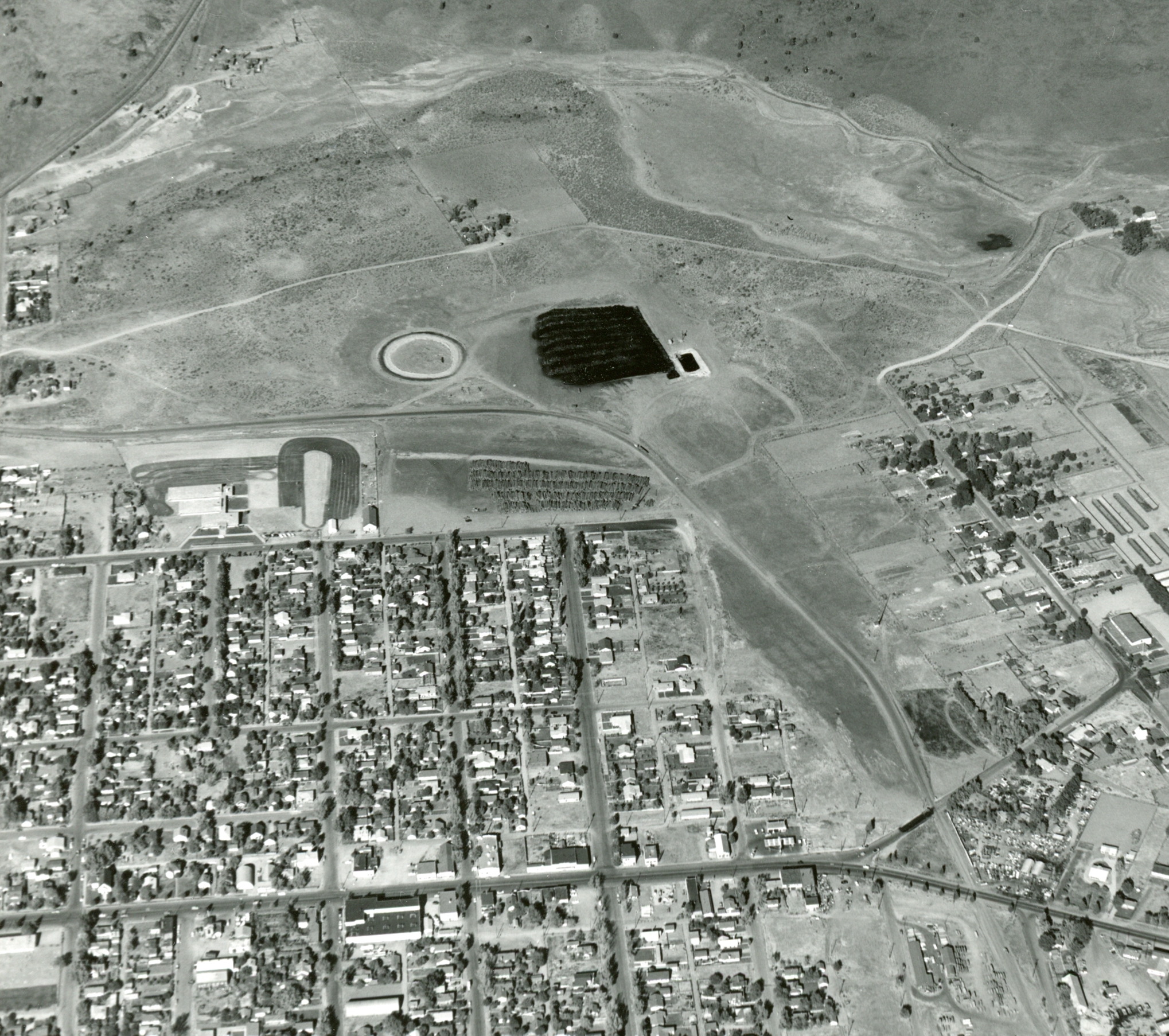
Northeast view of Susanville, circa 1950–Fred Lendman

Sometimes a picture is worth a thousand words, and other times ask a thousand words. This one falls under the latter. One person is sharing documents to enlighten all of us. Stay tuned.

Tim

Exploring Lassen County's Past