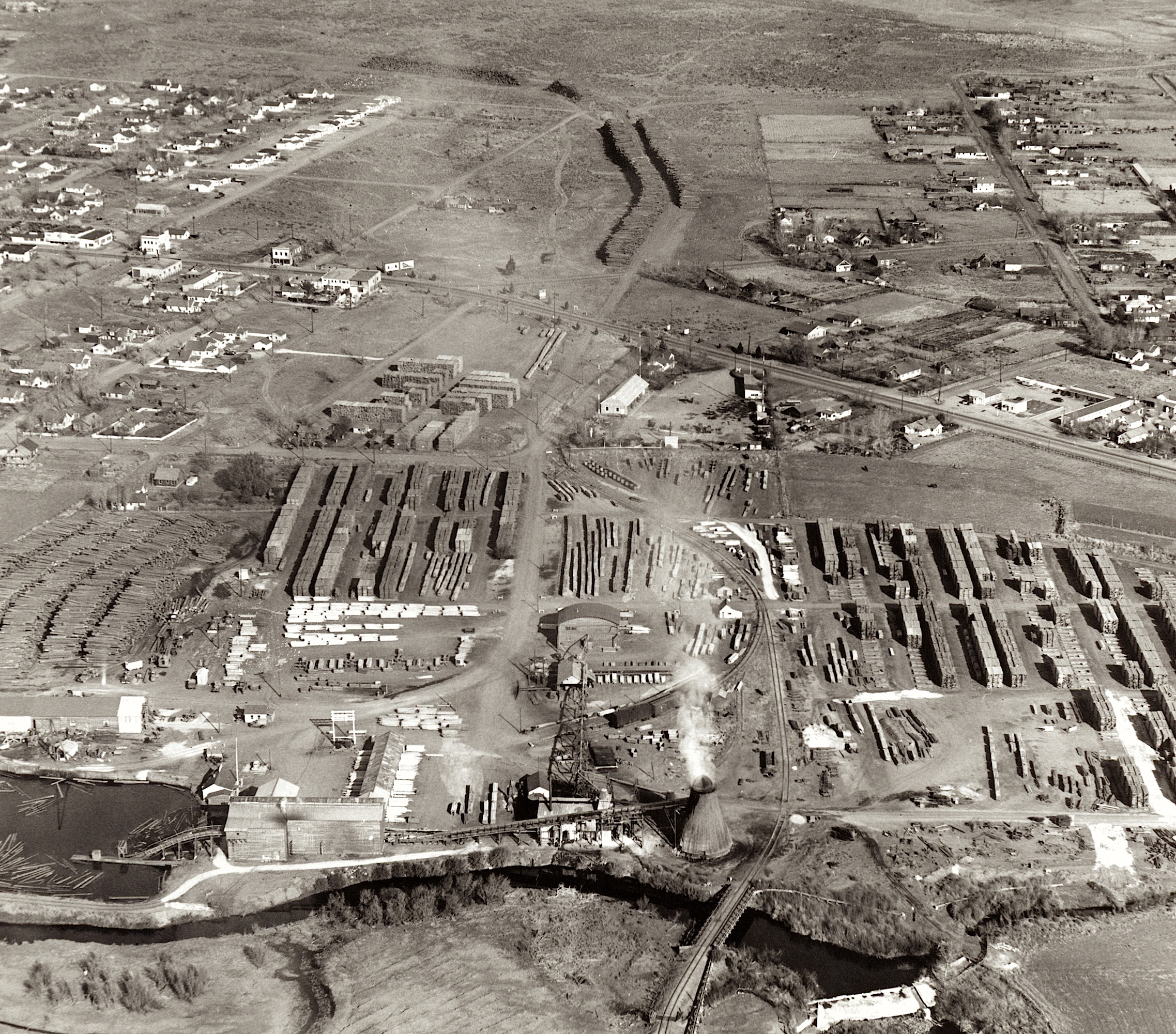
Paul Bunyan Mill is now the location of a shopping district and more on the eastern edge of Susanville.
The Paul Bunyan Lumber Company was formed in 1945/46 as part of the break up of the Red River Lumber Company. Kenneth Walker wanted to remain in the family business and took over the company’s “Cedar Mill” in Susanville. This mill was closed in Susanville in 1967, but the lumber company continued with another mill in Anderson, Shasta County.
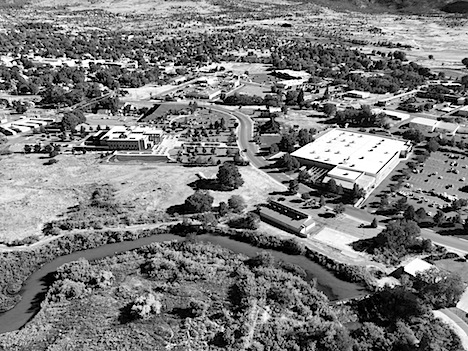
Thanks to Dave Bricker, he took this picture overlooking the same area in June 2022. Times have changed.
The east send of Susanville, June 20,2022–David Bricker
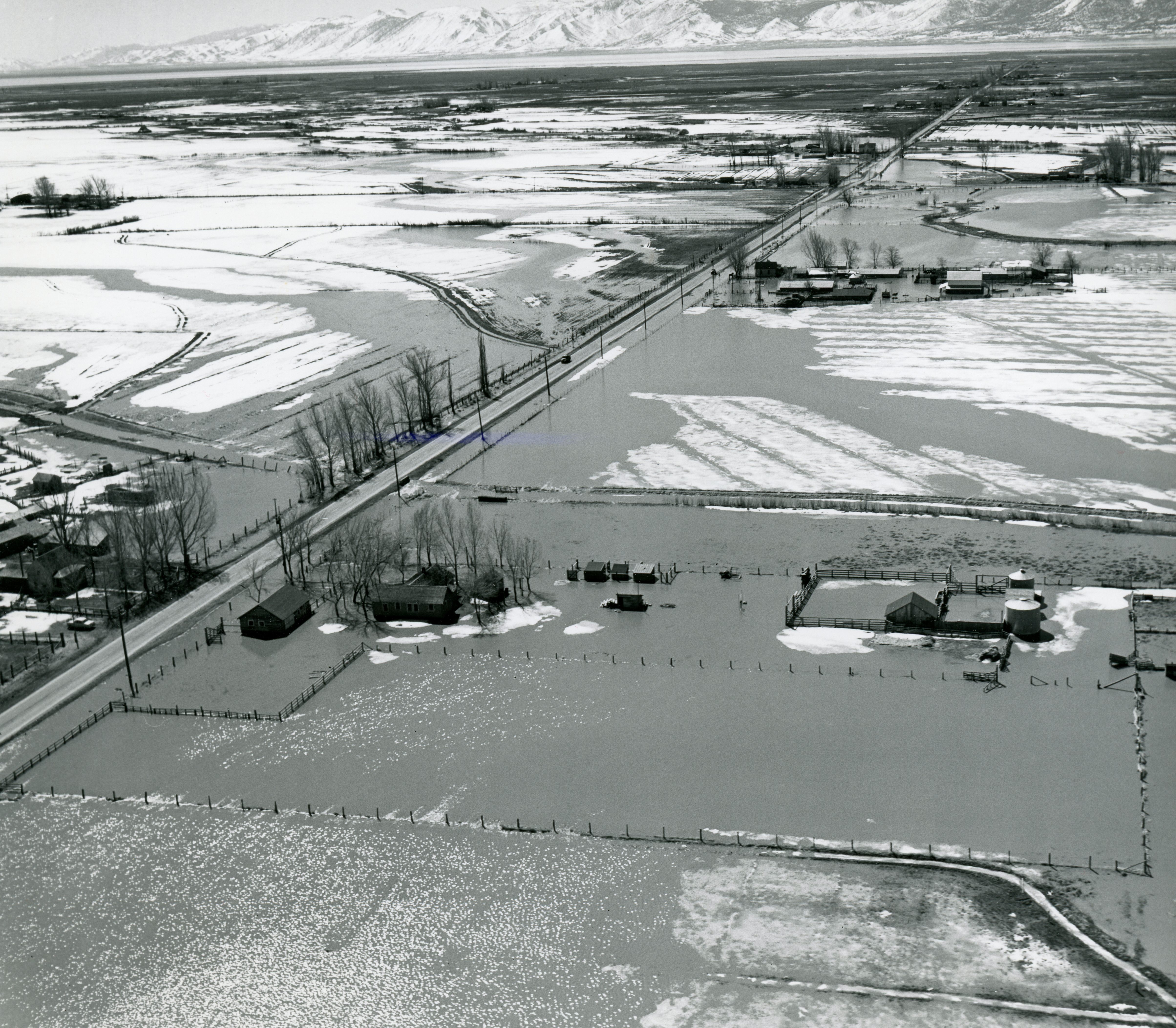
Flooding near Standish, 1952. Courtesy of Betty Barry Deal
If anyone has resided in California for any length of time, it is known for its extreme weather patterns. The winter of 1861-62, is one for the record books, which some in meteorological circles refer it to “The Ark”. There is a reason why, as California has not experienced anything like it since. It was reported that the Sacramento/San Joaquin Valleys were transferred into a vast lake. It should be noted that the floods of March 1907 did the same thing to the the Sacramento Valley.
As to the winter of 1861-62, locally we are thankful, for the A.L. Tunison diaries to provide a glimpse of what happened and also regionally.
By the end of November 1861 there was a foot of snow in the Honey Lake Valley. Then on December 8 and 9, heavy rains occurred. On December 18, 1861 Tunison receives news of flood damage elsewhere and writes, “Good flood in Sacramento Valley. Water 15 feet deep in Sacramento City. Boats run on Main Street in Marysville. Great many cattle lost. Slide on Sierra Nevada Mountain at Washoe covered up a quartz mill, injured two men, killed another. Two bridges gone on the Truckee River.”Continue reading How Wet Will It Get?→
Many visitors to Susanville when it was a frontier outpost during the 1850s and 1860s had positive comments about the community. One aspect in common, was its natural setting at the base of the mountains and two flowing streams. Well, there was one particular visitor, Major Gorham Gates Kimball of Red Bluff, California who was not impressed with Susanville when he passed through there on his way to Idaho. Kimball wrote in his diary on June 15, 1865: “This is a small town and a darn poor one—Indians ought to come in and kill the white man that would live there—it was made for Indians.”
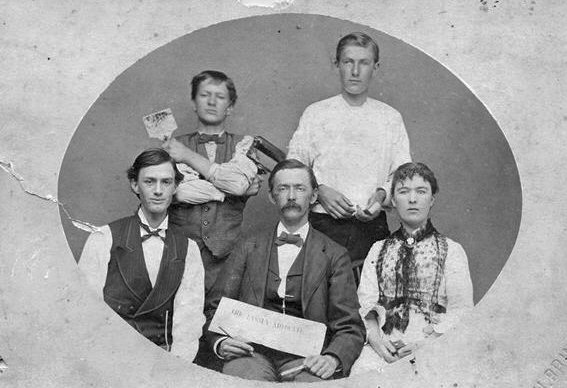
The 1878 staff of the Lassen Advocate
It is interesting note, while Kimball in his opinion it was a poor town, three major businesses were established in Susanville. that year. David Knoch established his general merchandise store, to become one of the leading merchants of Susanville. It would last for three generations, later as Alexander & Knoch and finally Feher & Worley’s Big Store and it shuttered its doors in 1942. A.C. Neale and Zetus Spalding founded Spalding Drug, an institution that lasted 102 years. Lastly, was the town’s first bonafide newspaper the Sage Brush. It would evolve into the Lassen Advocate and chronicled the region’s news until 1987 when forced into bankruptcy.
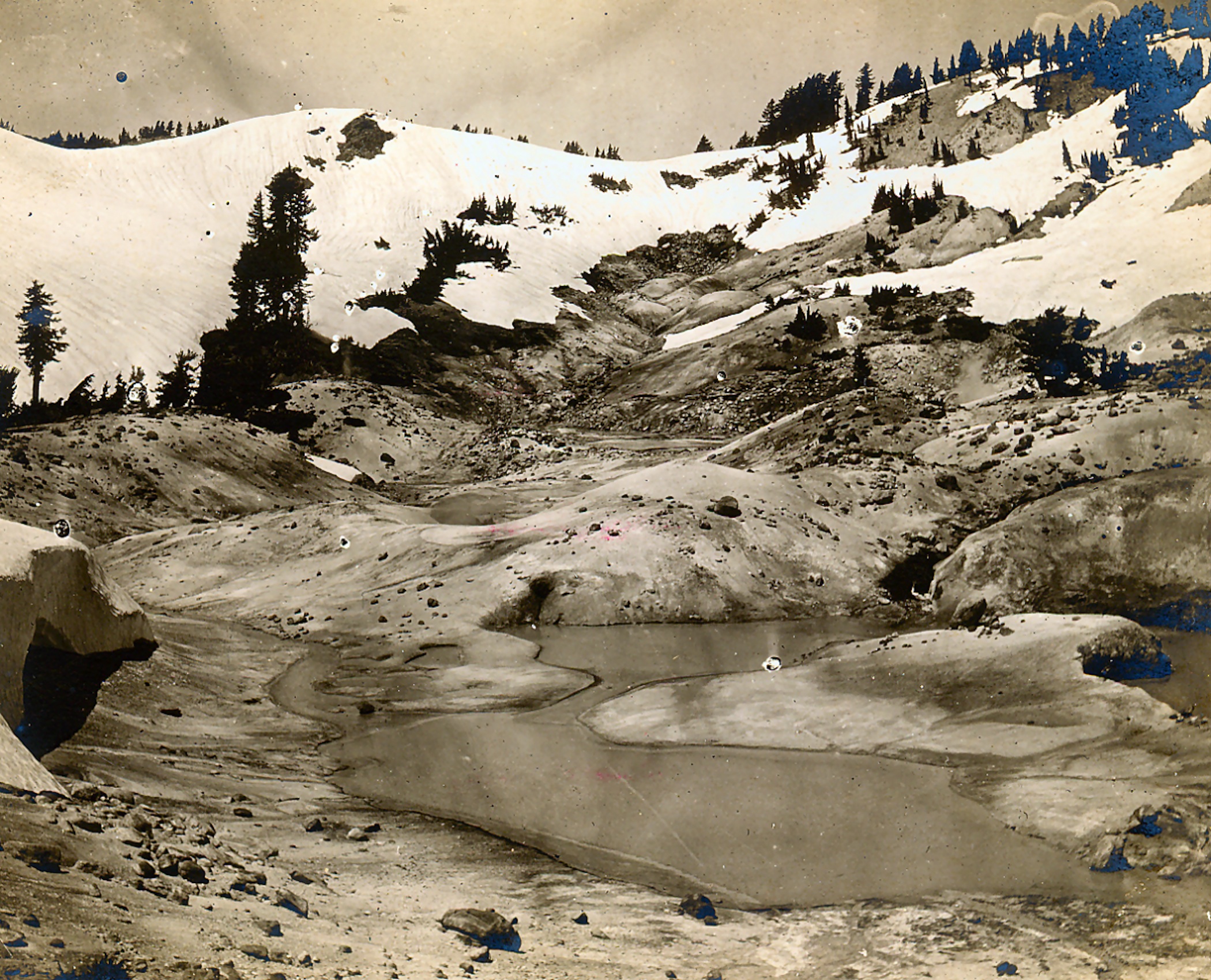
Bumpass Hell, 1908, Courtesy of the Sifford Collection
On September 10, 1864, Pierson Reading and Kendall Vanderhook Bumpass filed a claim there for “all the minerals there for mining purposes.” Their claim became known as Bumpass Hell, a year prior to another event that some have attributed to the origin name.
In September 1865, Bumpass acted as a tour guide for Watson Chalmers, publisher of the Red Bluff Independent. Upon arriving at Bumpass’ mining claim, Chalmers wrote, “On turning the ridge all the wonders of hell were suddenly before us and the descent into hell was easy.” Bumpass warned Chalmers to be cautious while walking around the boiling mud pots, for the ground was not as stable as it appeared. Alas, that was exactly what happened to Bumpass on this visit, as one leg broke through the crust into the boiling mud. For relief, there was a nearby snowbank wherein Bumpass, using a handkerchief, wrapped his leg with the snow.
Over the years, others would fail to heed the warnings at Bumpass Hell, as well as Devils Kitchen, and receive severe burns from falling through the soft ground adjacent to the mud pots. The worst of these instances occurred in August 1930. Harley Pinson, age sixteen, was visiting the park with his parents. They were at Bumpass Hell where the tragic event occurred. Harley walked over to a mound to have his picture taken. At that point, the ground gave way and nearly “swallowed” him, for he was submerged nearly to his neck in the boiling mud. Heroic efforts were made to rescue him, and he was taken to Red Bluff for medical treatment. The burns were so severe that Pinson died four days later.
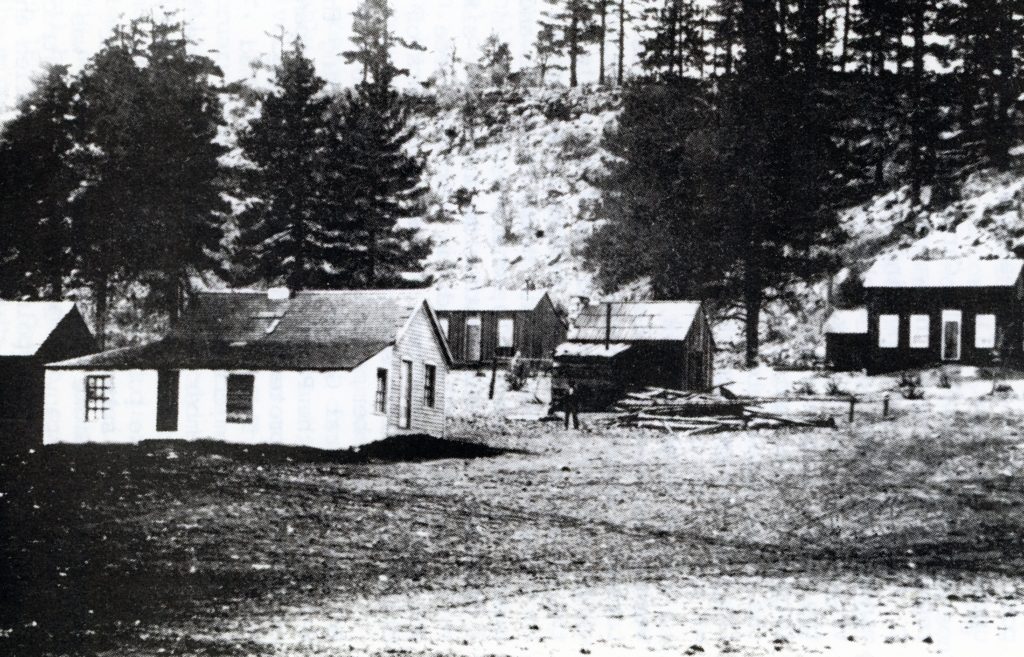
I have no idea where this circa 1915 postcard was taken at.
Personally, I am glad to see 2022 in the rear view mirror. The first half of the year did not start at well beginning with a broken wrist and then web host server woes.
The latter half there were some bright aspects. No major fires or the accompanying smoke. There was the completion of the highway construction over Fredonyer, which seemed like an eternity.
The road over Fredonyer as it appeared in 1914.
On a final note, is there anything you would like to see or do in 2023? I am alays open to suggestions.
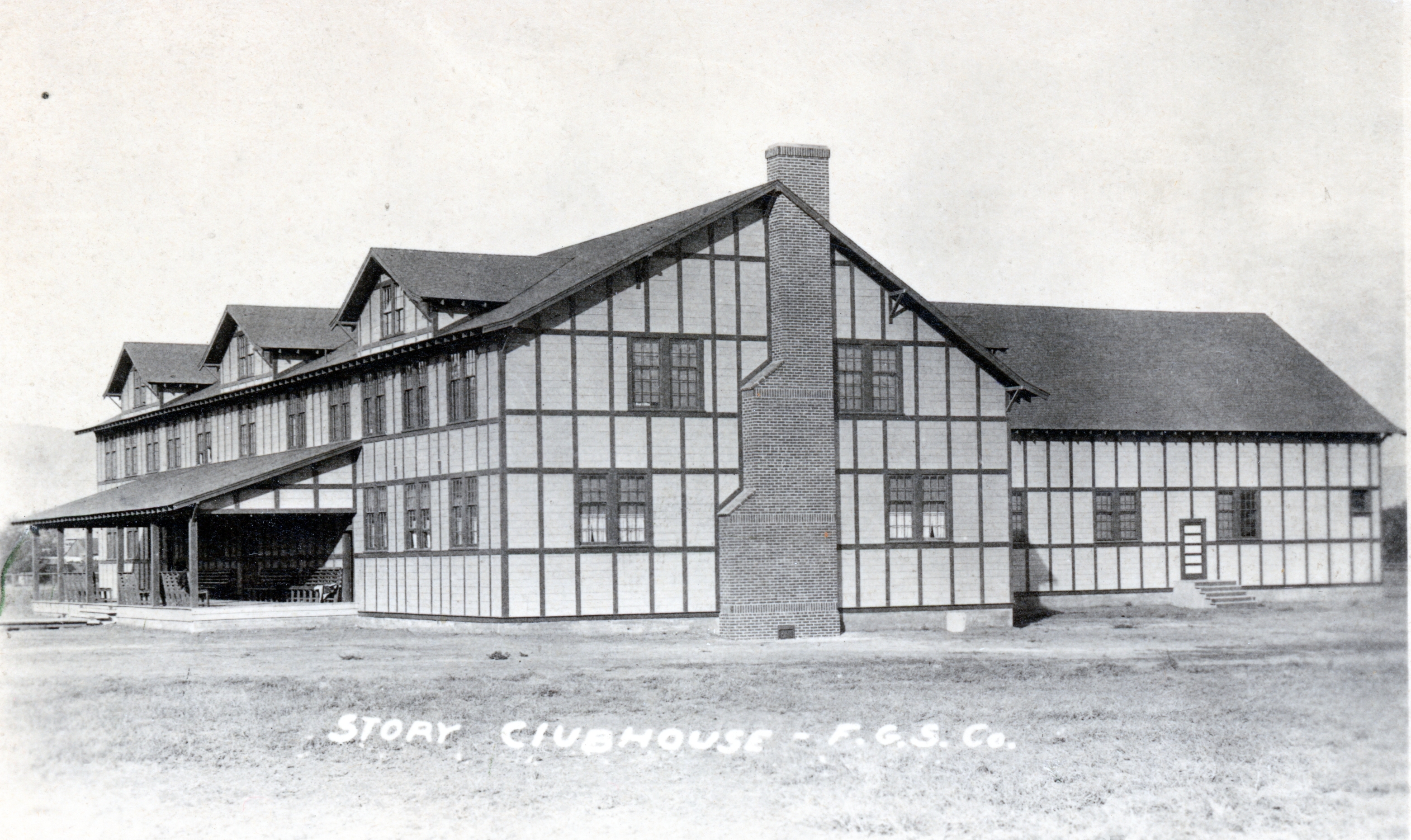
The following is an account from the Lassen Mail about the local festivities. It included a dance held at Standish, at the Cindercone, which is still standing. The reference to the Story Club, is now the site of Susanville’s Riverside Park.
”Local residents ‘painted the town red’ here Monday evening to usher in the New Year with all the fitting and time honored customs and ceremonies.
”Three dances held, at Standish, the Commercial Hotel and the Story Club furnished ample entertainment to many while many private parties and ‘functions’ were organized to aid in the general whoopee. The public dances at Standish and the Commercial were well attended as was the more formal event of the Elks Ball at the Story Club.
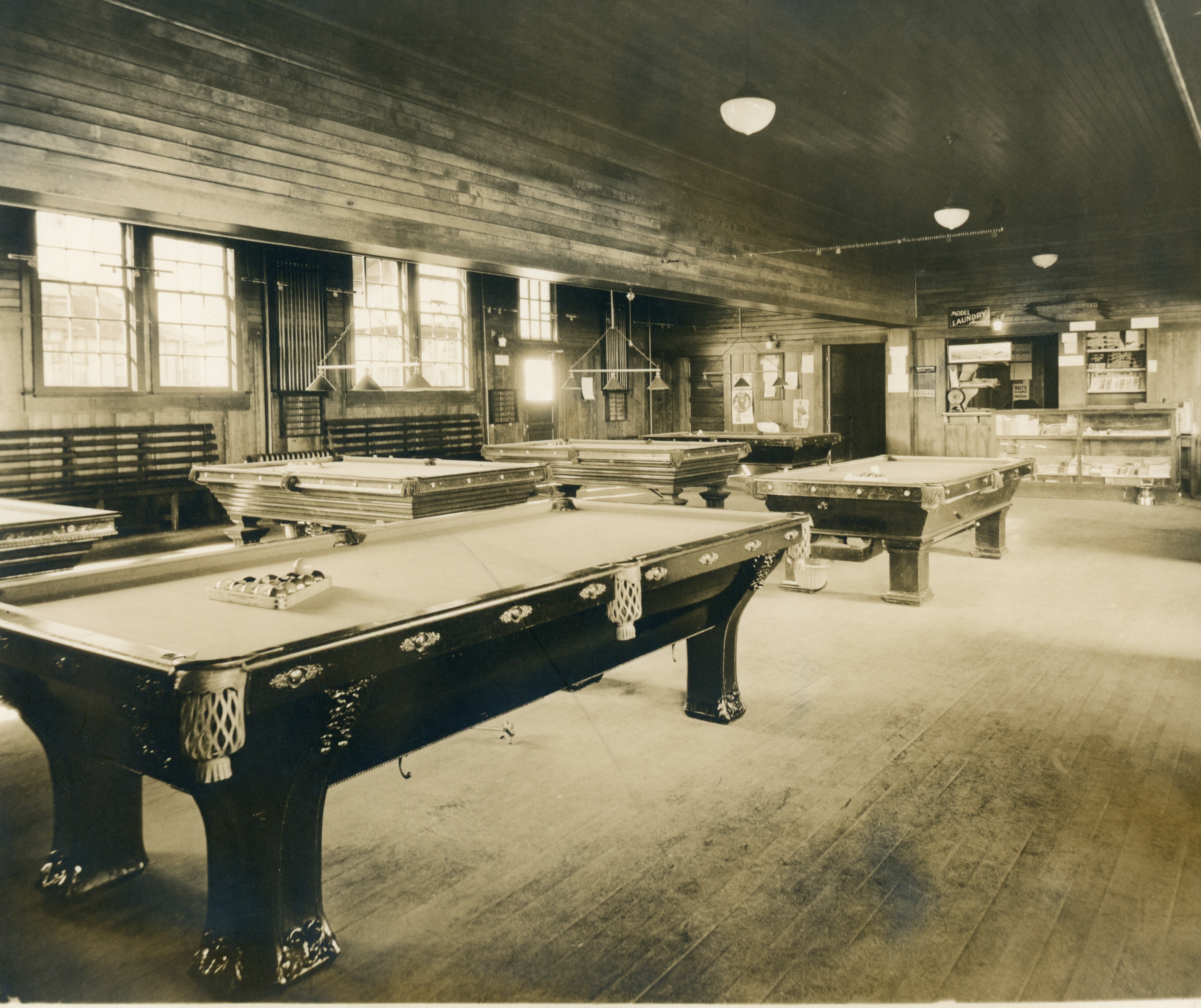
The billiard room, Story Club, Susanville, 1923. Courtesy of the Fruit Growers Supply Company
Revelers were still wandering the streets at six or seven o’clock New Year’s Day but belied the general impression by hanging up a perfect record for sobriety and safety as traffic records can testify.
“A number of ‘prominent citizens’ were overheard in expressions of relief now that the annual celebration is over with, now its time to go back to work.”
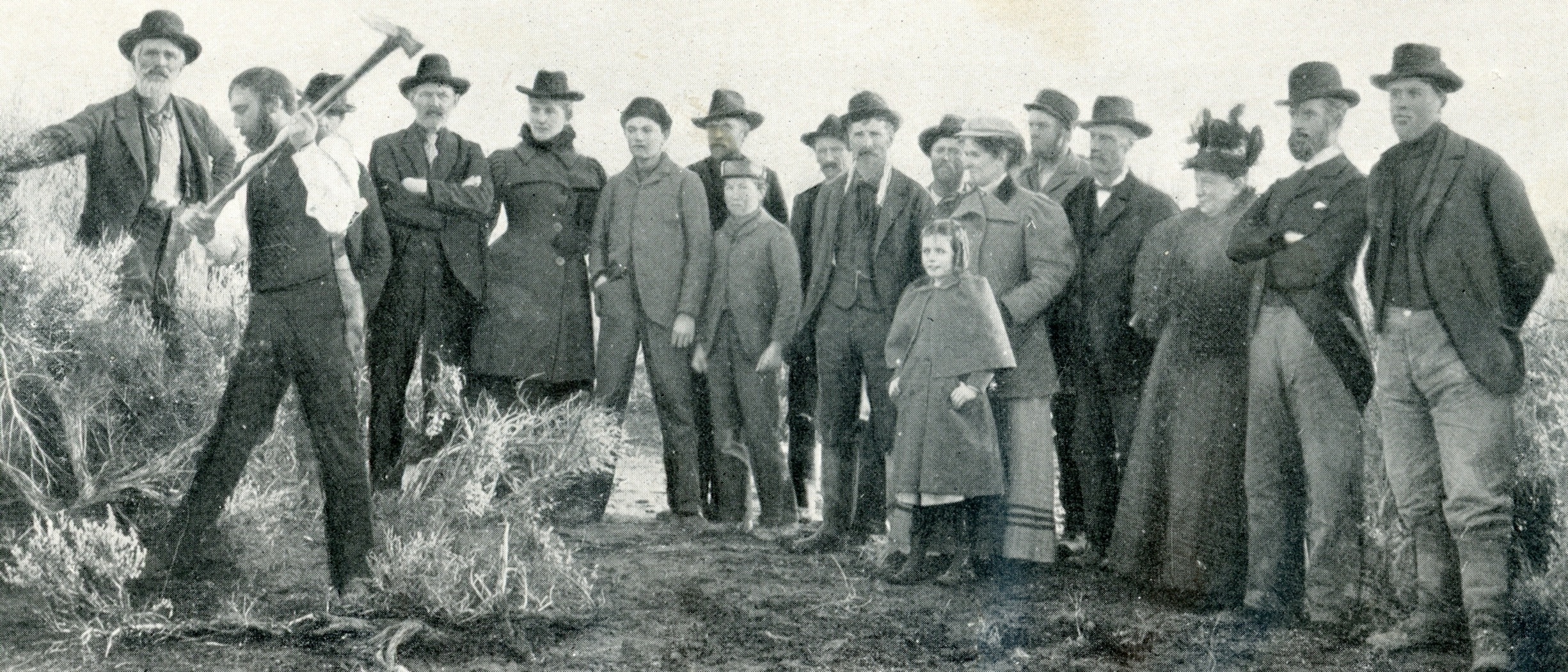
It being the second to the last day of the year, I little “housekeeping” is in order. While earlier in the year I wrote about the Standish townsite dedication held on February 5, 1898. It was my intent to use the above photograph. Nancy Johnston Chappuis was able to identify nearly everyone of the ceremonial cutting of sagebrush at Standish. So for historical posterity here is that information.
Cutting the sagebrush is William E. Smythe. Standing behind left to right Ben Leavitt, Hi McClellan, Gertrude McClellan, unknown, Jim Elledge, Homer McClellan, A.E. Torrey, Harriet Torrey, unknown, unknown, Mrs. Dunn, H.R.T. Coffin, and Robert Barham.
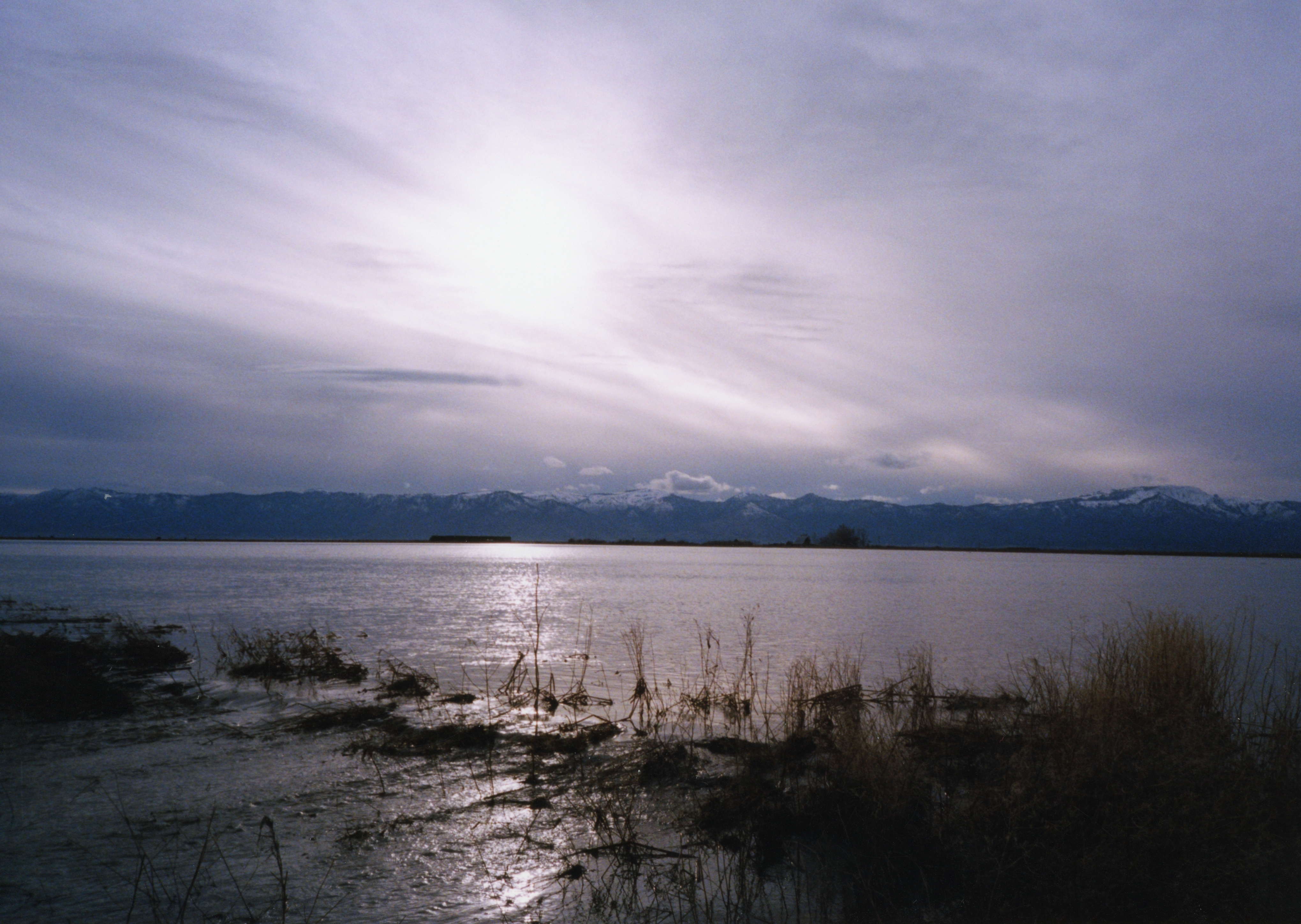
One of the perennial questions concerning Honey Lake, when it has water, is its depth. It is a relatively shallow lake, known to go dry for extended periods. There are a number of variables about the depth, due to the fluctuation of the level of the lake. The east side of the lake is the shallowest. Carl Caudle a civil engineer who resided near the lake’s eastern shore from 1909 to 1942 monitored the lake level there. On an average he recorded a depth of two feet. However, in the spring of 1914 and 1938, both years of record breaking precipitation, the east shore had a depth of six feet. The west side of the lake has the deepest points up to twenty-five feet during years of heavy precipitation.
Honey Lake, 1997.
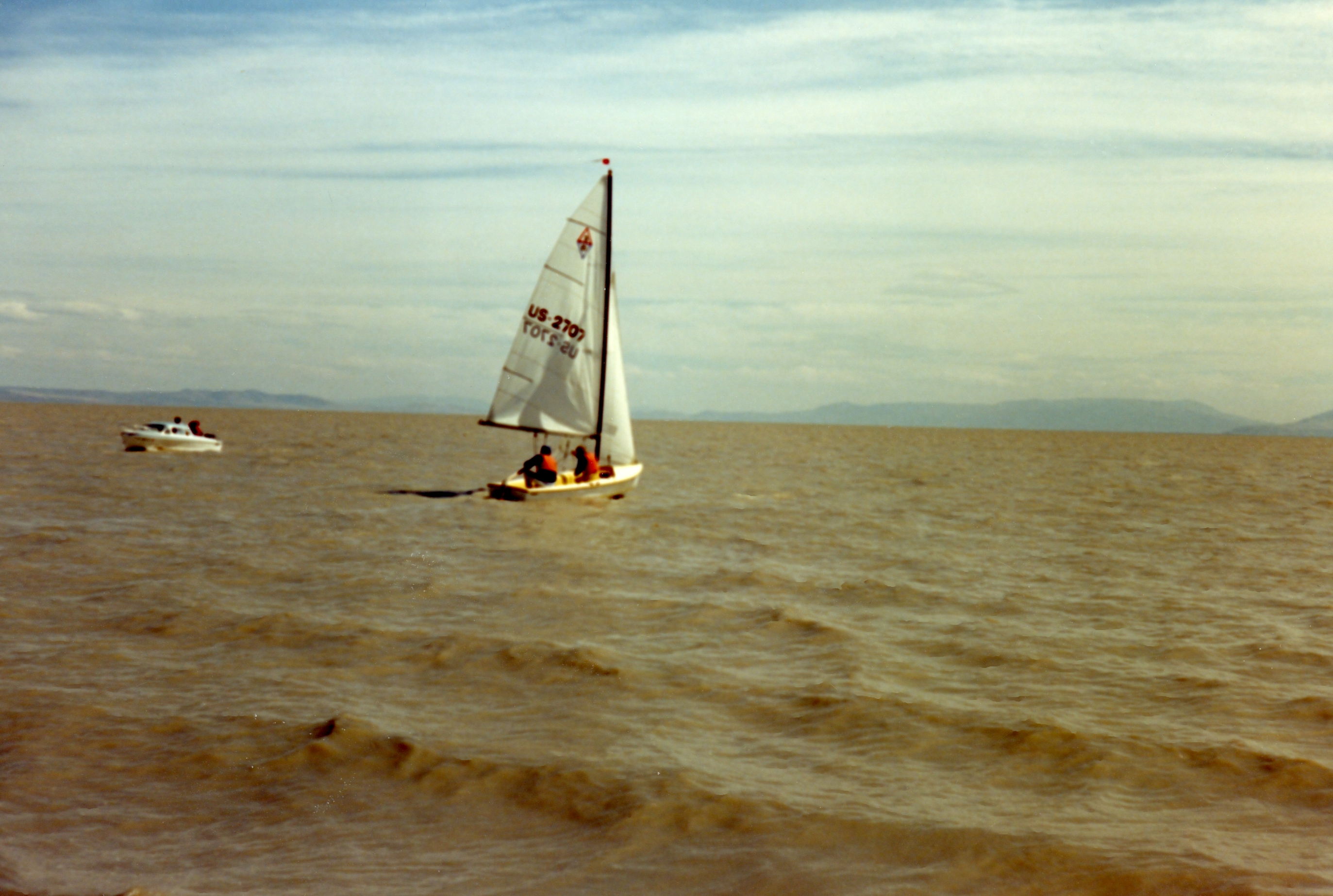
In late December, 1940 Asa Brown and Jack Sawyer, state fish and game employees conducted a sounding of the lake. They started at the northwest corner, using a measuring pole took measurements every 300 to 400 yards. They recorded a maximum depth of 10.8 feet, and the shallowest at two feet. The lake on the average varied between four and ten feet. In the spring of 1987, Mark Totten and several others participated in an informal sailboat regatta on the lake. Using a depth finder, the areas traversed on the lake averaged seven feet.
Belfast area of the Honey Lake Valley, 1987–Bernard McCallister
William Smythe, who in the mid-1890s, was a key figure to develop a utopian community of Standish in the Honey Lake Valley, had numerous observations of the territory.. The region left an impression on him. He dubbed the Lassen, Modoc and Plumas area as the California Highlands. In his opinion the Sacramento and San Joaquin Valleys were the California Lowlands.
Smythe noted some of the quirkiness of the residents of the Honey Lake Valley. One particular item that caught his attention was the local vernacular. Smythe wrote “When a Honey Laker contemplates a journey to San Francisco, or any other point on the other side of the great range, he says ‘I am going down below.’” Smythe continued “These peculiarities of local speech plainly reveal the physical geography of the country.”
The phrase going down below remained in the local lexicon for many decades. When I was growing up, it was still widely used, though it has since gone by the wayside.

 It being the second to the last day of the year, I little “housekeeping” is in order. While earlier in the year I wrote about the Standish townsite dedication held on February 5, 1898. It was my intent to use the above photograph. Nancy Johnston Chappuis was able to identify nearly everyone of the ceremonial cutting of sagebrush at Standish. So for historical posterity here is that information.