Lassen Mail, April 30, 1926 – Newly-Weds Elececikicked. Andrew H. Stahl, a saw filer at the Fruit Growers plant and Miss Daisy Fitzgerald of Sonora were married in Reno last Saturday morning and at once came to Susanville where they will make their home. Their “friends” had skillfully wired the furniture in their apartment in such a way that when they sat down they immediately arose again. A big Klaxon horn announced the fact that they had retired to their apartment and it was not until they had bribed the gang that the wires cut and the disturbance ceased.
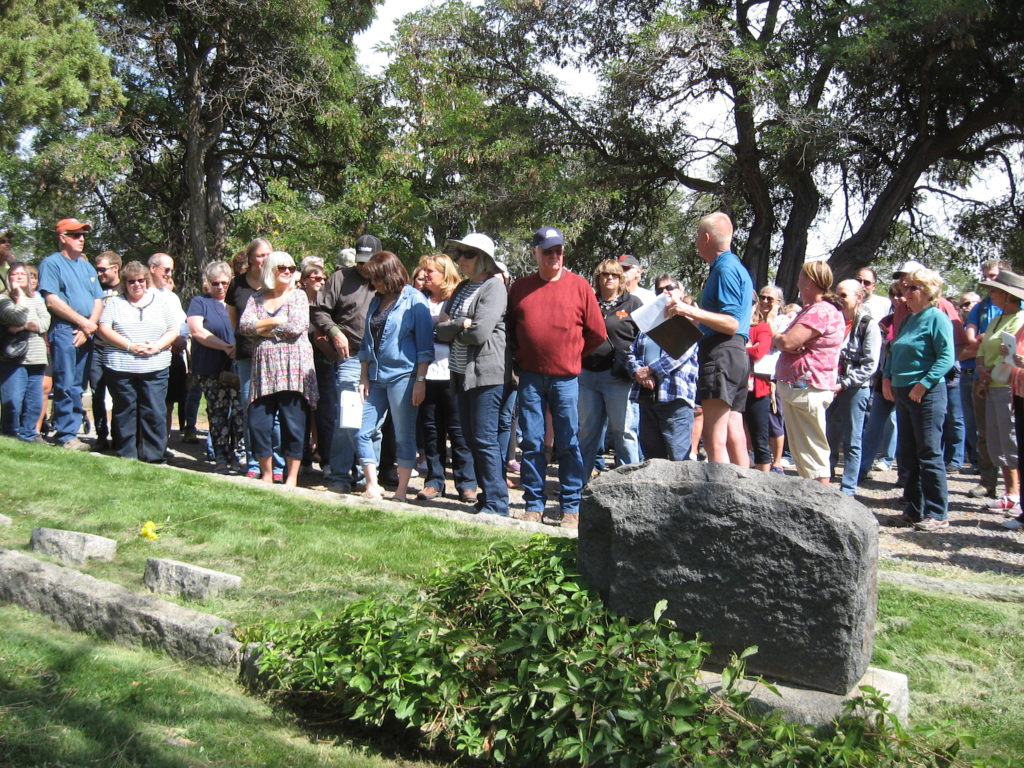
The Thomas Newton Long family plot, September 16, 2017.
One of things I do enjoy about doing tours, which I have been lapsed in doing, is the interesting interaction among attendees. During the St. Patrick’s Cemetery Tour something was relayed to me that I was unaware of and never had given any thought. In many instances, the graves face to the east. That is certainly the case in most Lassen County cemeteries. Traditionally, the husband is usually buried to the left. In addition, some churches make it a point for the altar to face to the east. I just never know what I will learn next.
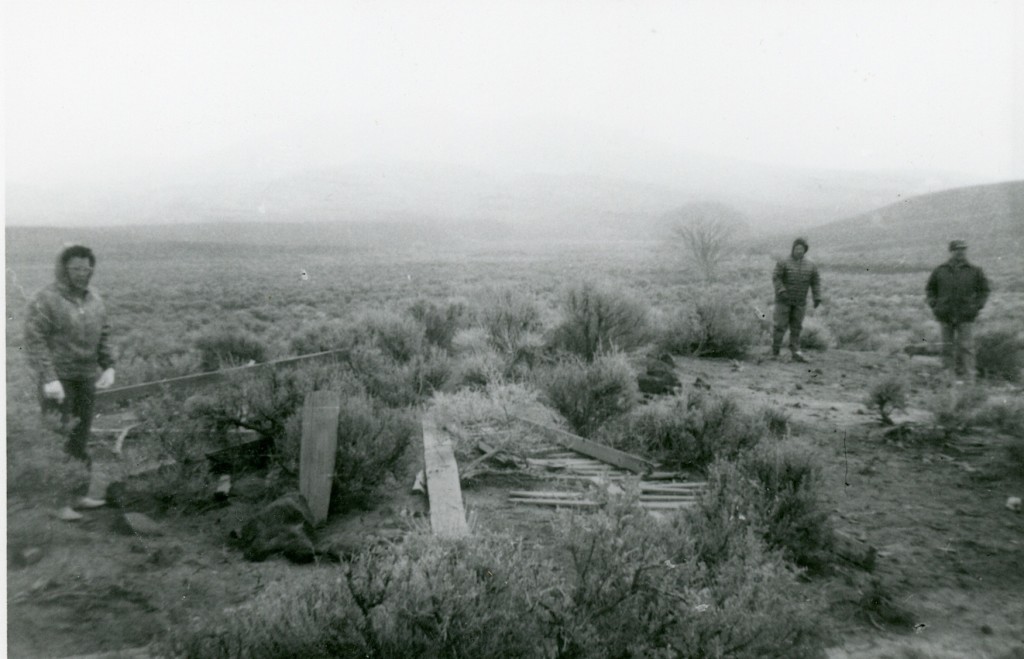
Soldier’s graves at Smoke Creek, March 15, 1964. Left to Right: Frances Amesbury, Mary Morrill and Gil Morrill. Courtesy of Gil Morrill
One of the interesting endeavors undertaken by the then newly formed Lassen County Historical Society was to locate the soldier graves at the military encampment known as Smoke Creek, just across the Nevada stateline. In 1964, on their first excursion they located it. Over time they decided that something needed to be done as a memorial. In June 1968, they ventured again, this time erecting a large cross on the hillside.
Phil Lord and Bob Amesbury at work putting up the cross, June 1968. Courtesy of Gil Morrill
The small cemetery was established on the hillside across the creek from the camp for the four soldiers who died there while in service. On January 18, 1863, Pvt. John Smith Co C2 Calif Cav died from gunshots at Deep Hole, Nevada, over an argument with his commanding officer Second Lt Henry W. Williams. On November 9, 1863, Pvt. Gustavus W. Platt Co. C2 Calif Cav died of typhoid fever at Smoke Creek. On July 3, 1864, Sergeant William McCoy, age 28, died from an unknown illness. On November 17, 1865, Pvt. David O’Connell Co. B2 Calif. Cav was killed in action at the Pine Forest battle near Black Rock.
The camp was located near the cottonwood trees seen in the distance. It is located on private property and is now fenced off.
During the 1860s, the United States Military had a major presence in the region, with numerous military camps scattered around the Honey Lake Valley and Northwestern Nevada—one of which was Camp Smoke Creek just over the stateline in Nevada.
Its origins began on November 9, 1862, when Nevada Territorial Governor James W. Nye wrote to Brigadier General George Wright, Commander of the Department of the Pacific, and requested a Company of troops to protects the emigrants from the Indians along the Honey Lake-Humboldt Road. On November 14, 1862, the troops were dispatched. On December 15, 1862, Second Lt. Henry W. Williams arrived at Smoke Creek with twenty-five men and forty days of rations. On March 28, 1864, First Lt. Oscar Jewett, then in command, received orders from Fort Churchill to abandon the camp and to remove all valuable property from the camp as was possible. Continue reading Camp Smoke Creek→
When traveling the back country around these parts. Google maps and GPS not the best move. Use some common sense. Though it should be noted that AAA maps indicated Shinn Ranch Road was maintained. May be it was back in the 1870s when the Shinns lived there.
There are a handful posts that I repeat each year, and for good reason. With summer weather upon us, it is an ideal time to check out the many wonders that surround the residents of the Lassen Region.
In 1929, the Lassen Advocate published an editorial “Know Your Country.” The gist of it, encouraged residents to get out and see all the various and interesting natural surroundings we have. I am always ready to get out and about to explore. I never know where that might be, but I do have a few obscure historical sites that I want to check out.
Hopefully, this summer we will be spared of fires, heat and smoke.
For those headed out to Eagle Lake for Memorial Day Wekend, don’t forget about Camp Ronald McDonald’s Annual Memorial Day Pancake Breakfast. From 7 to 11 a.m. Saturday May 28, and Sunday May 29, the public can enjoy an all you can eat breakfast; including pancakes, sausage and hot and cold beverages! The camp located at the south shore and adjacent to the Gallatin House.
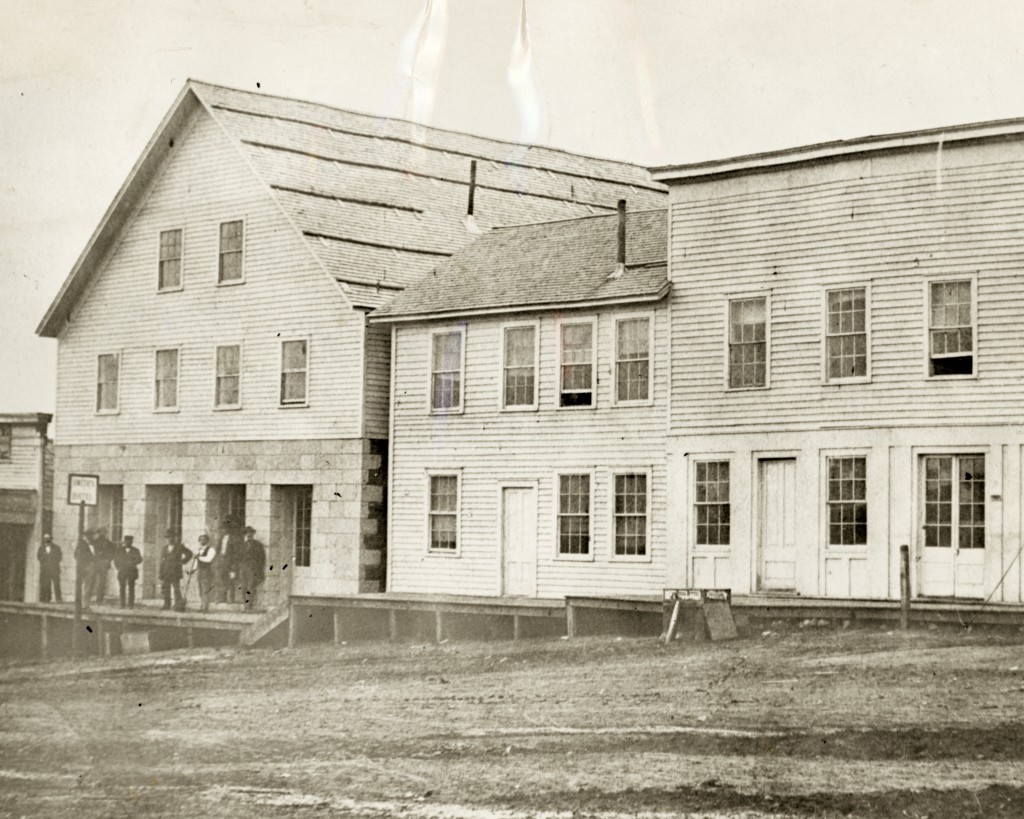
Smith Hotel, circa 1880. Courtesy of Verna M. Wood
During the late 1800s, Susanville had anywhere between one to four breweries at any given time. In the fall of 1864, German immigrant Jacob “Jake” Smith* opened his first of many breweries in Susanville. When he opened a particular brewery on May 27, 1879, he was met with some resistance. At that time, a group of women formed a “temperance society” to educate the young people of the area the “evils of alcohol.” At this same time, Smith along with his wife Sophia, operated a hotel on Main Street, that was destroyed by fire in 1882.
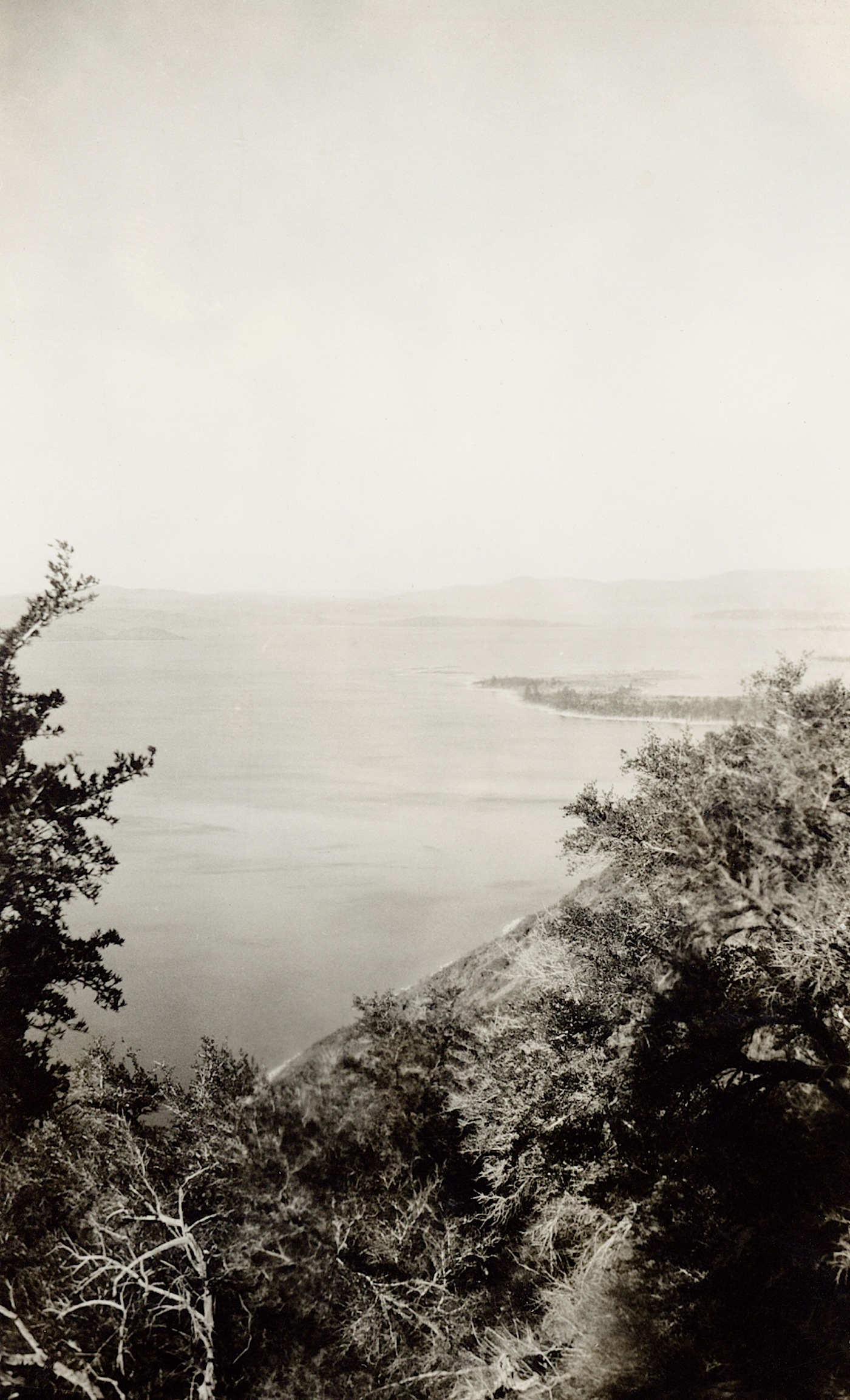
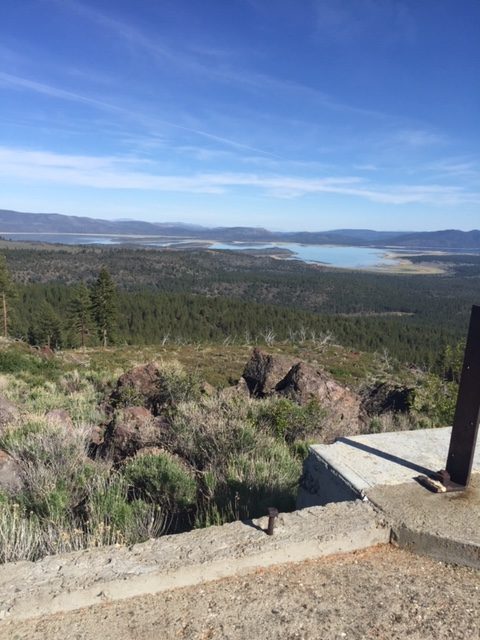
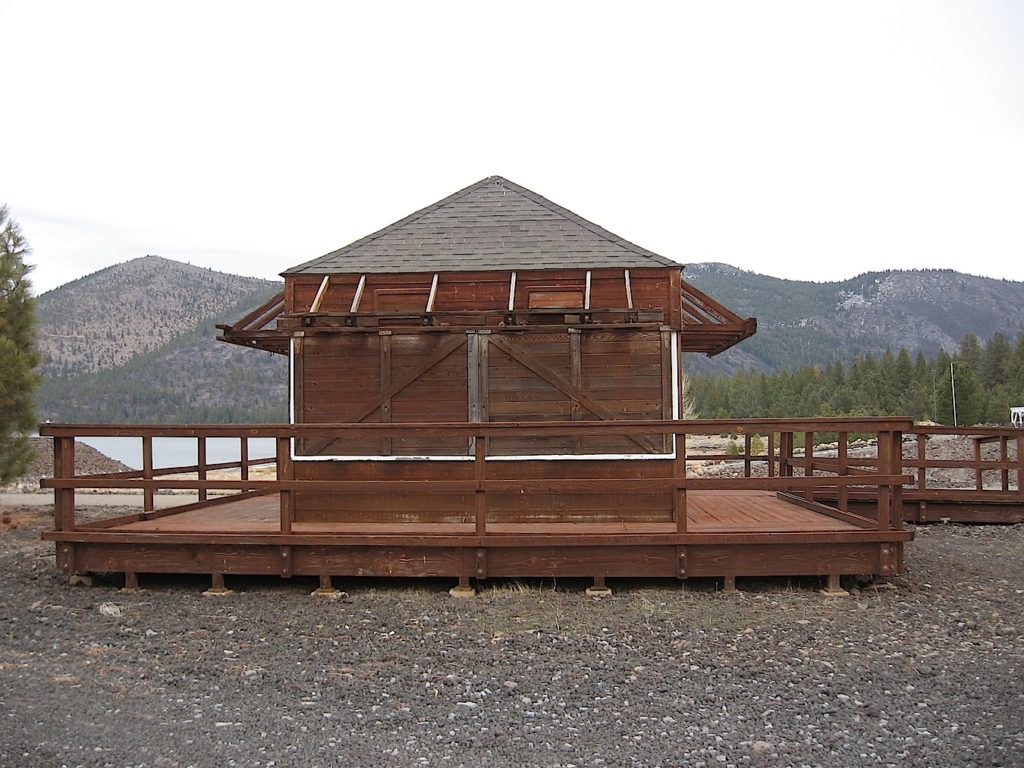
This a view of Eagle Lake from Dow Butte that is located northwest of Spalding Tract. A forest service lookout was constructed there in 1939. It was removed in 1994, and can viewed at the Eagle Lake Marina.
The relocated Dow Lookout at the Eagle Lake Marina—December 11, 2021
William Dow first settled near present day Spalding Tract in 1875. Shortly, thereafter his nephew, John Spalding also located there. Dow sold out to Albert Gallatin 1886.
There are a handful of subscribers who will recognize this instantly. On the other spectrum there will be others proverbially “scratching their noggin.”