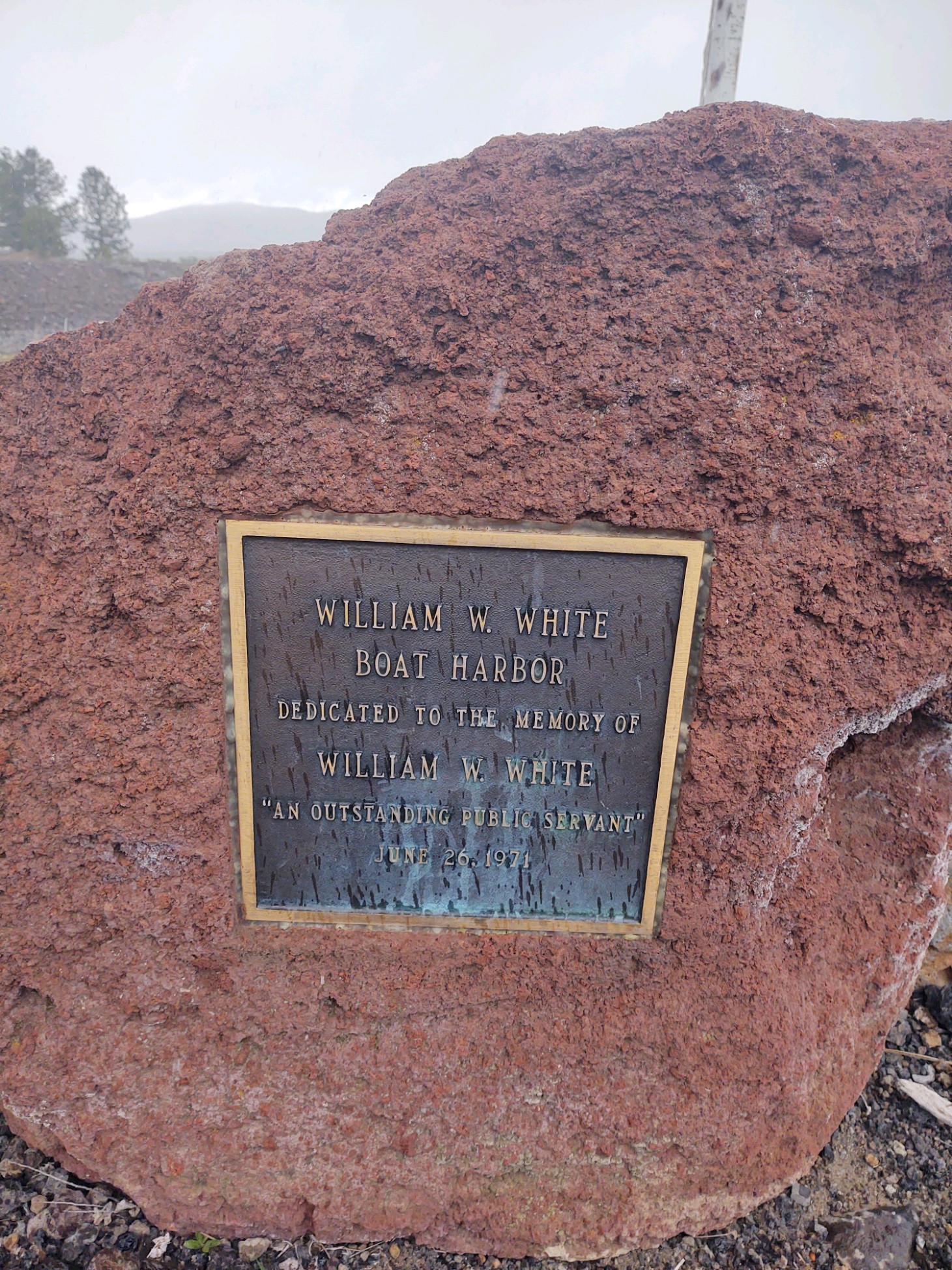
Far from a household name to Lassenites, William W. White (1919-1970) has an interesting legacy in the annals of Lassen County history. A native of Montana, he came to Susanville in 1953. In 1959, he was hired as Lassen County Planning Director. He saw the potential at Eagle Lake and was committed to the development of the marina and campgrounds. He resigned his position as planning director effective June 30, 1967 to take a new position as the Planning Director for Tehama County. He died suddenly on September 20, 1970 at the age of 51. At the December 28, 1970 meeting of the Lassen County Board of Supervisors, they passed Resolution 1961 to name harbor at Eagle Lake after White. On June 26, 1971 a plaque dedication at the harbor was held.
The other day while looking at real estate listing with Lands of America I came across some interesting properties available in Lassen County. One of which is the old Westwood Hospital. There have been a lot of proposals over the years, but nothing has ever materialized. The asking price is $175,000. Anyhow, I thought some might enjoy the agent’s property description.
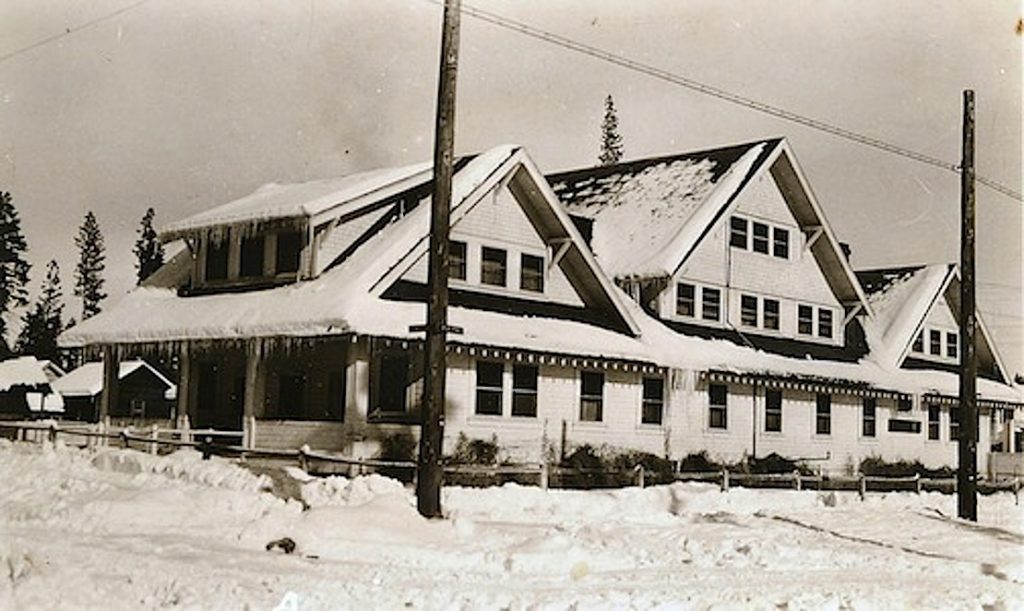
“Don’t miss your chance to own a piece of history! The Historic Westwood Hospital was built in 1914 by the same Red River Logging Company that brought us the stories of Paul Bunyan and Babe the big blue ox. The Hospital features multiple wings of patient rooms, an elevator, a giant kitchen, multiple waiting rooms, large fireplace, a spacious third story apartment, and so many other fascinating features just waiting to be discovered. The hospital operated clear through the 1970s, and is a treasure trove of rich American and logging history. With possible funding available for the restoration of this once glorious building there is so much potential for just about anything you can imagine here. This incredible diamond in the ruff is located in the small town of Westwood California.”
Via CA-44 E to LassenContinue to Old StationContinue on CA-44 E to Lassen County48Turn right onto CA-36 W/Volcanic Legacy Scenic BywayContinue on Delwood St. Drive to Elm St.
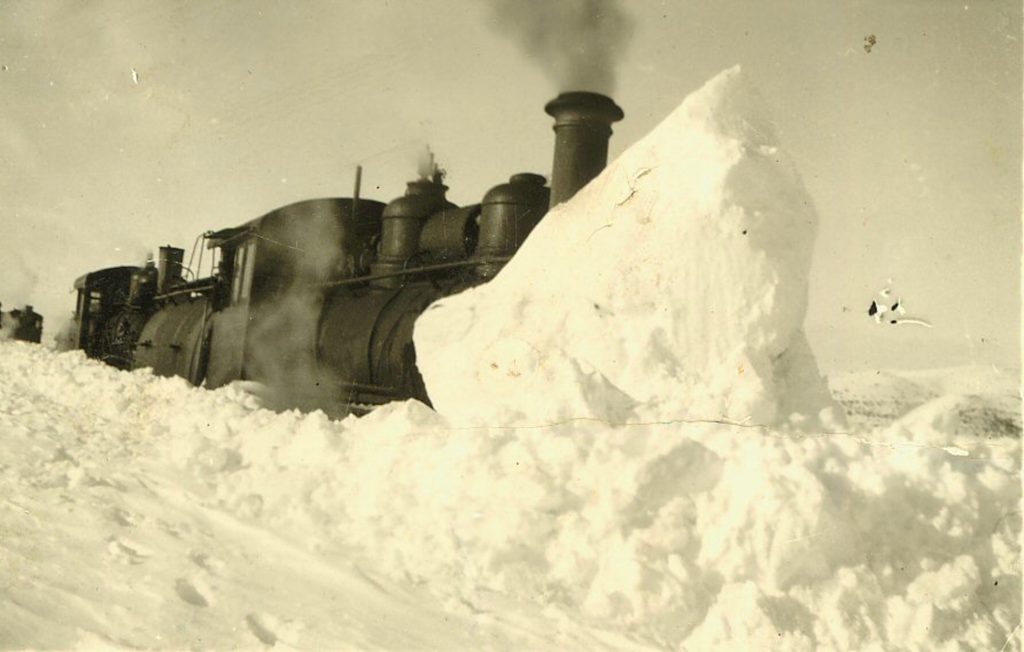
An NCO train stuck on the Madeline Plains, January 1911—Dorothy Capezzoli
The Nevada-California-Oregon Railroad is a fascinating narrow gauge line that went from Reno, Nevada to Lakeview, Oregon. Its original intent was to The Dalles, Oregon on the Columbia River. The NCO would make a good case study on how not to operate a railroad.
Since its inception in 1879, it was plagued with financial troubles. In 1884, a New York banking firm, the Moran Brothers took over the ownership. The following year it was renamed the Nevada & California. In 1888, it became the Nevada-California-Oregon. These initials NCO became a target of criticism for its poor service. The NCO received such dreadful titles as the Narrow-Crooked & Ornery, the Northern California Outrage, Never Comes Over and the Nevada-California-Ocasional. The newspapers were quick to report any operating problems. In 1893, J.M. Tremain editor of Susanville’s Lassen Weekly Mail called the NCO a tri-weekly. “It goes to Reno one week and tries to return the next.”
There were times, however, it would have a reason for being slow and at times non-existent. Along Long Valley Creek, the tracks would receive damage from flooding. Snowstorms were another culprit. In January 1916, the snow was so deep, it would take nearly three weeks for trains started running again.
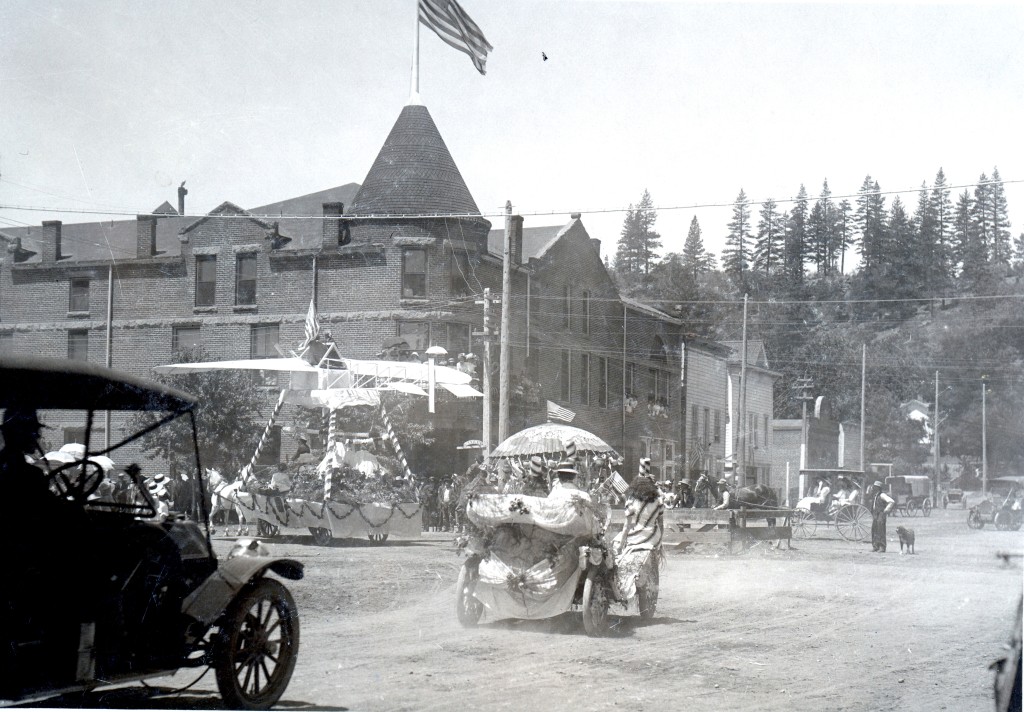
4th of July 1907, Susanville. Courtesy of Lola L. Tanner
Note: This is a perennial post, because in a rare instant, it is a viewpoint that has merit. After all, in the last two years between the Dixie and Sheep Fires portions of Susanville have experienced evacuation warnings.
In Susanville’s early years as an incorporated city, it was remarkable what the council did. One of their actions, I still support today, and that is the prohibition of fireworks. The first time they banned fireworks was in 1906, following the aftermath of the San Francisco earthquake and fire. It was also a nod to the insurance companies who suffered tremendous loss from that event. It was their belief, as well as many other communities, that this preventive measure would reduce the risk of fires.
In 1912, the City once again banned fireworks. The Lassen Advocate applauded the city and wrote: 21 June 1912 – “No Fireworks on the Fourth. We desire to congratulate our Board of Town Trustees on their action in placing the ban on all kinds of fireworks on July 2, 3, and 4. This action has been taken by large and progressive cities for years past, and we are greatly pleased to note that the smaller places are falling into line. Fireworks do no good and may do a world of harm. Fires may be started that will blot out blocks of cities or towns; little boys and girls all over the United States have lost fingers, hands eyes and in many instances, their lives from the dangerous pinwheel and firecrackers. Let them yell all they will, let them spend their money for ice cream, candy—anything on earth but the fireworks.”
In 1916, the Monticola Club appeared before the Susanville City Council asking for a ban of fireworks for the 4th of July. Their answer was no. The council assured that the utmost care would be done, but they were not going to deprive children of the festivities. In 1926, due to the tinder dry conditions, the City banned fireworks for fire, health and safety reasons.
Spread the word, and encourage a friend to subscribe
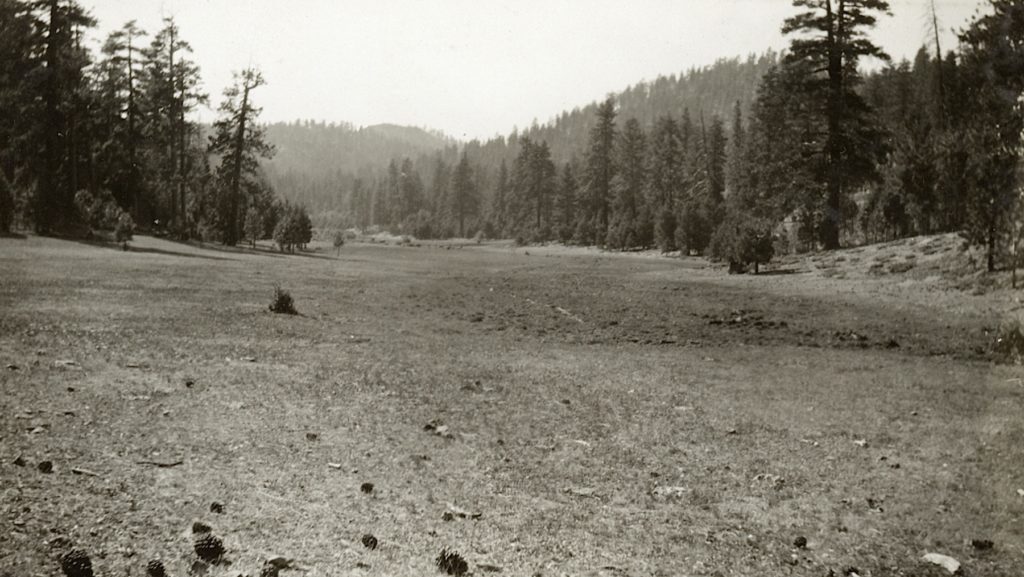
This is a short narrow canyon between Eagle Lake and Willow Creek Valley. The meadow is not visible from the top sides of the canyon, so it is hidden and rarely frequented. It is also a rough steep descent to the bottom of the canyon.
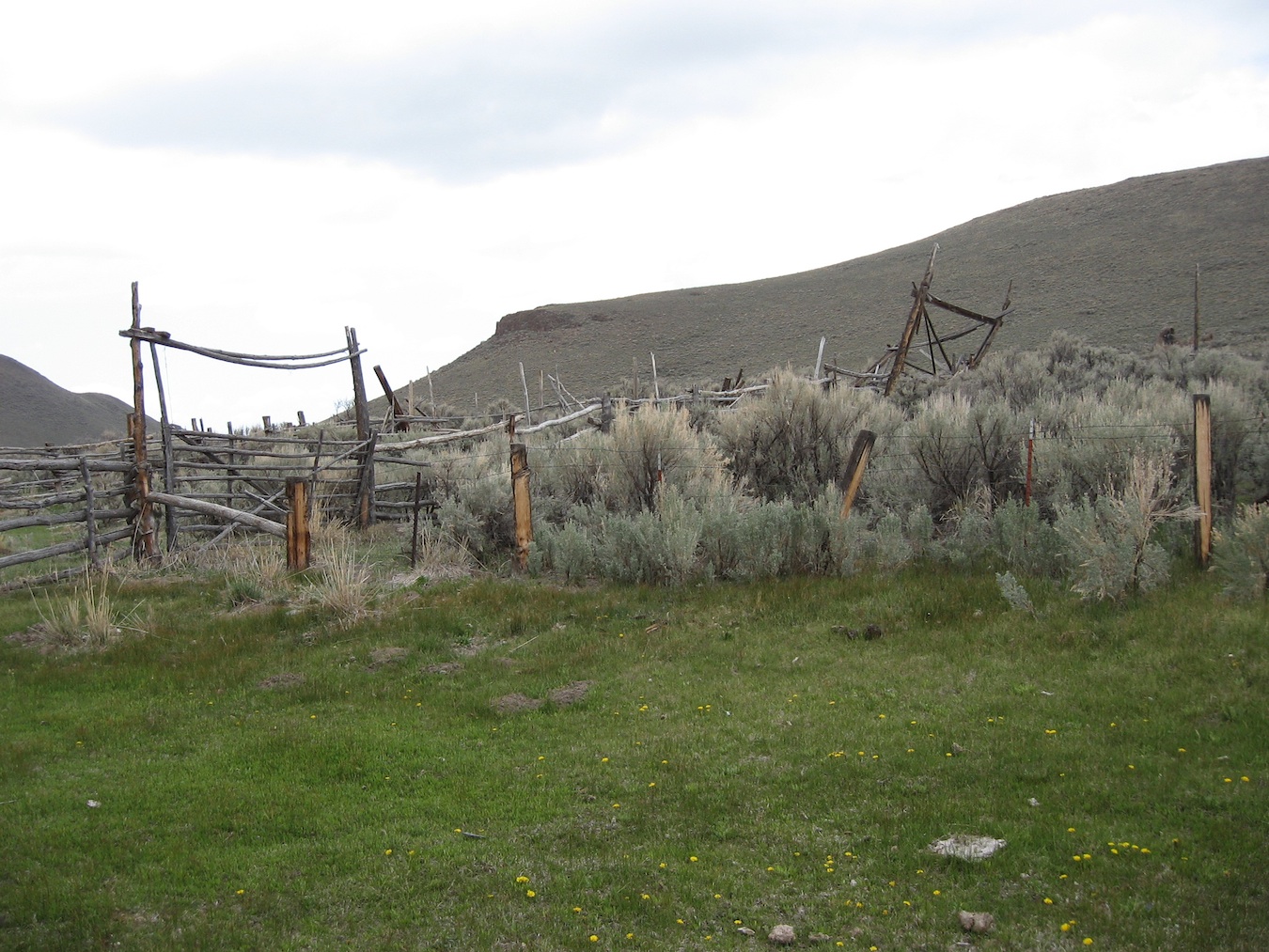
In the 1890s, Joseph Rongstock had a 200-acre homestead there. In 1899, Charles E. Emerson, Lassen County Assessor, appraised it for $620. Rongstock objected and stated it was only worth $420 and requested his taxes be reduced. The County rejected his claim. Rongstock’s taxes for that year were $10.92. On May 2, 1907, Rongstock, then residing at Lake County, Oregon, sold his property to Adam Jakobs for $300.
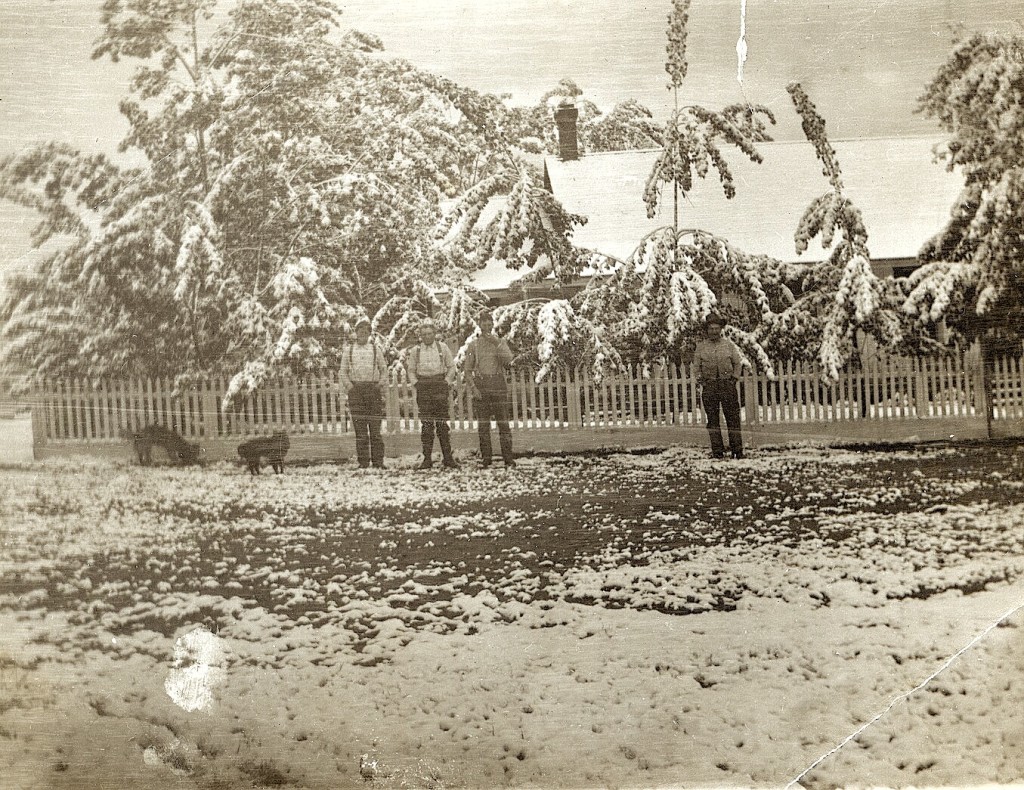
With the first day of summer approaching, I thought I would share this picture of Constantia taken on June 21, 1907. Unfortunately, I do not possess any other documentation and no reference made in the newspaper, other that it was unseasonably cold. I went through my various notes of Phil Hall, who provided me with the photograph, I failed to take note.. His parents at that time resided at Constantia. However, anyone who has resided around these parts for any length of time, have experienced numerous strange weather events. In a related matter, Claude Wemple told me in a 1978 interview that Milford received four inches of snow on July 4, 1902.
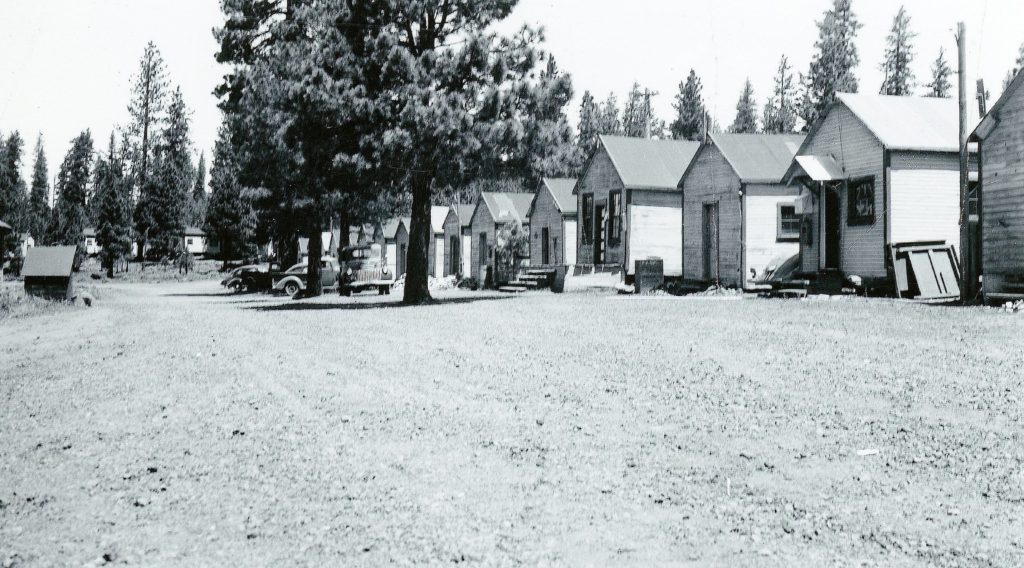
Camp 10, 1950. The family cabins can be barely seen in the background.
Not all logging camps were created equal. Each lumber company had its own policy—some allowed families to stay in logging camps. Both Fruit Growers Supply Company and Lassen Lumber & Box Company allowed families in their respective logging camps.
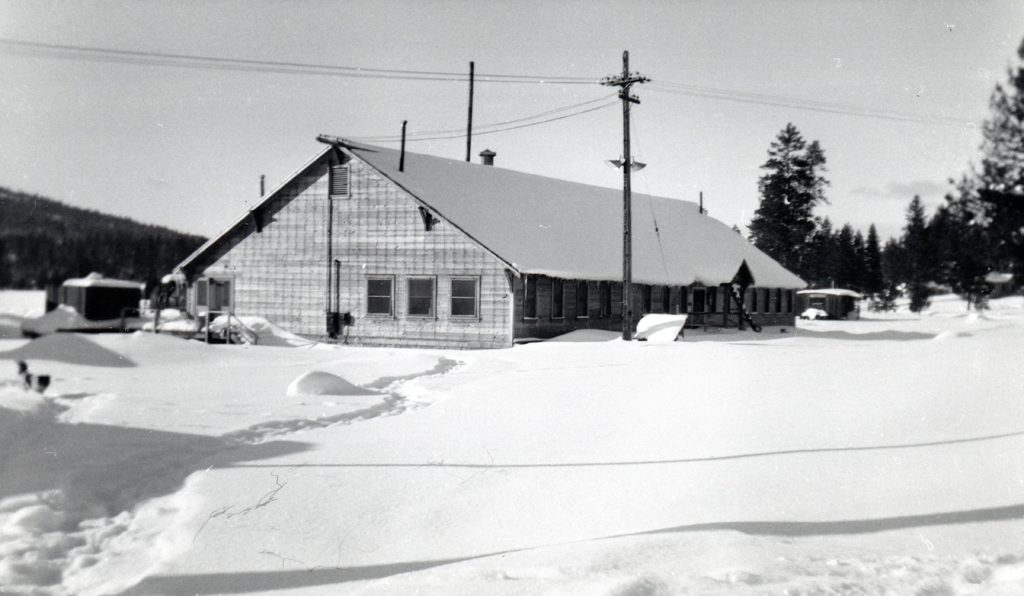
What was referred to as “family row” at Camp 10 consisted of about ten cabins. As Leonard Uhl who, with his wife Irene and son Richard, lived there in 1943 recalled: “The family cabins were quite a bit larger than the single men’s cabins, and had two rooms. They were equipped with a wood cook stove, a kitchen table, chairs, double bed and a screen and gunny sack evaporation cooler.” The cooler served as a primitive refrigerator. The families cooked their own meals. Except for rare occasions, only employees were allowed to eat in the cookhouse. Employees with families had the choice of eating at home or at the cookhouse.
Camp 10, Cookhouse, December 15, 1950.
Since the families were not allowed to eat the in cookhouse, Fruit Growers made accommodations for them to obtain groceries and such. As Marilyn Denton Holmes recalls from her childhood at Camp 10 during the 1930s; “There was no store at Camp, but a commissary where we could get our mail and supplies that a daily Company owned bus, would bring back to Camp. My Mother would send a list with the driver and he would do the shopping and bring the order back to Camp.”