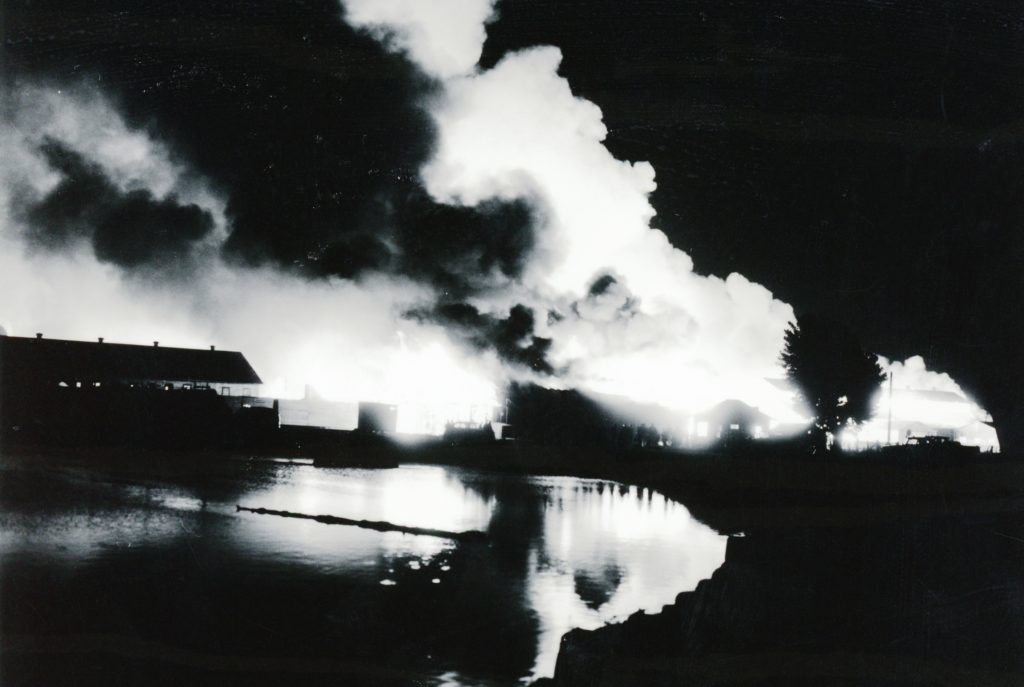
Eagle Lake Lumber Company Fire

June 13, 1965 – Hank Martinez

After Fruit Growers Supply Company closed their Susanville mill,it initially appeared that it would be sold to a liquidation firm. Fruit Growers had been in negotiations with Crook & Emmerson to sale them the mill, but negotiations stalled. Finally on June 12, 1963 they reached an agreement and the mill and adjoining residential section was sold to Crook & Emmerson for $875,000.
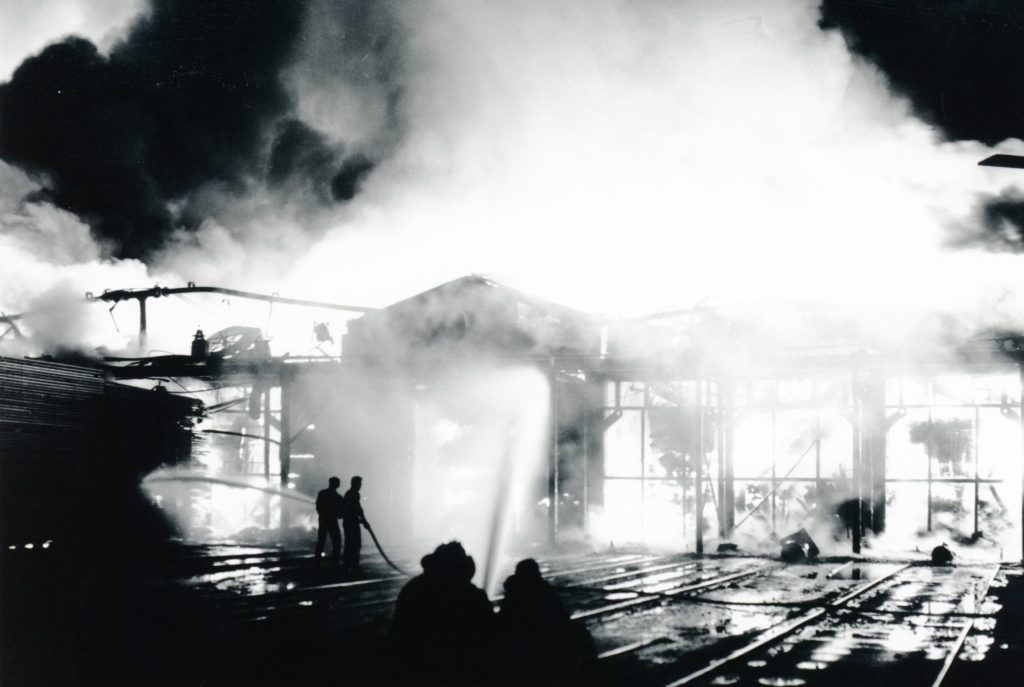
June 13, 1965 —Hank Martinez

Crook & Emmerson’s new enterprise was known as the Eagle Lake Lumber Company. All went well until the early morning hours of June 13, 1965 when a fire broke out in the planing mill. The sprinkler system there was inoperable as the structure was being renovated. By the time the fire department arrived, it was too late, as a large portion of the plant was engulfed in flames. After three hours, the fire destroyed the planing mill, the dry kilns, the abandoned box factory and an estimated five to six million board feet of finished lumber. The estimated loss was between $5 to $6 million.
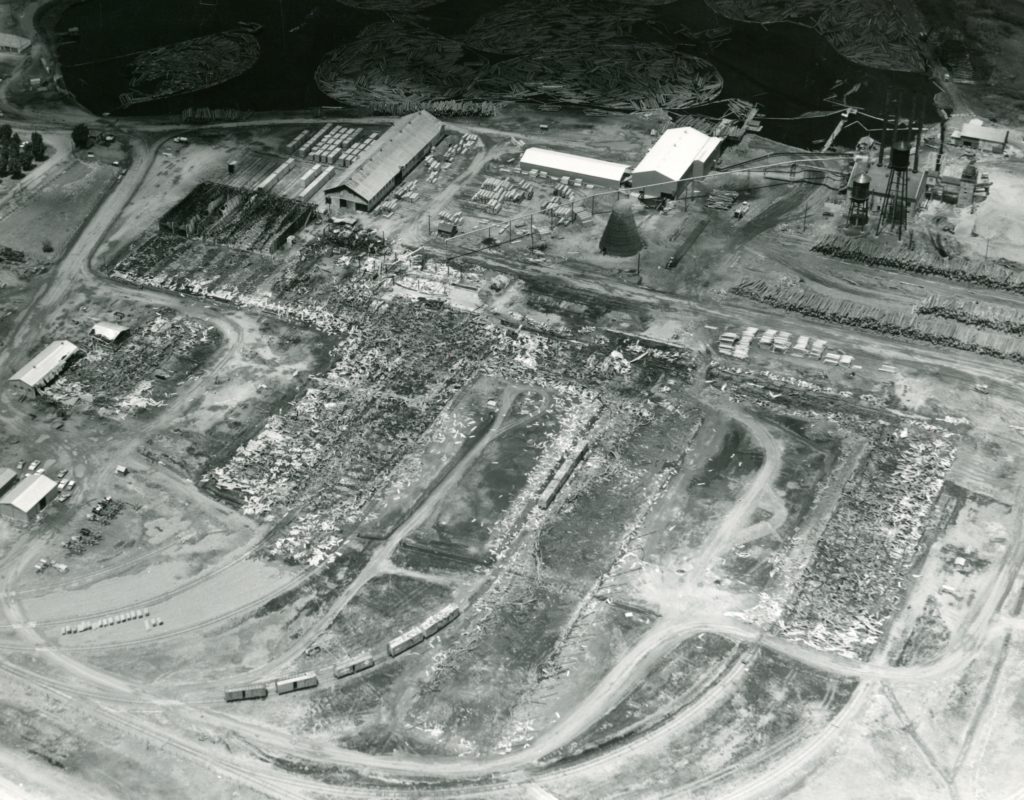
The aftermath—FGSCo.

It should be noted that Eagle Lake Lumber Company evolved into Sierra Pacific Industries.
Support

Washoe-Lassen Mining Company

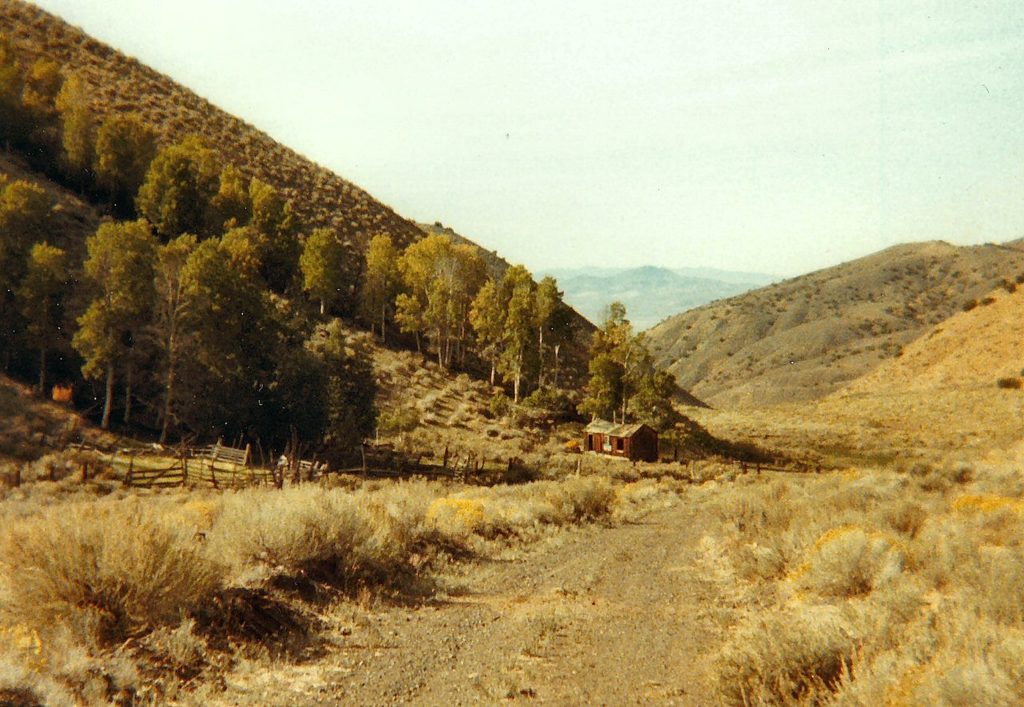
Wild Horse Canyon, September 27, 1984

A few years back, I wrote about the mining activity at Rosebud on the eastern edge of the Black Rock Desert. Yet, there was also considerable mining activity much closer to the Honey Lake Valley in the nearby Smoke Creek Desert. In 1882, the Cottonwood Mining District was established on the Fox Mountains on the east side of the Smoke Creek Desert. Due to its remoteness and lack of any substantial high grade ore, little mining was developed.. Continue reading Washoe-Lassen Mining Company

Odometer Day

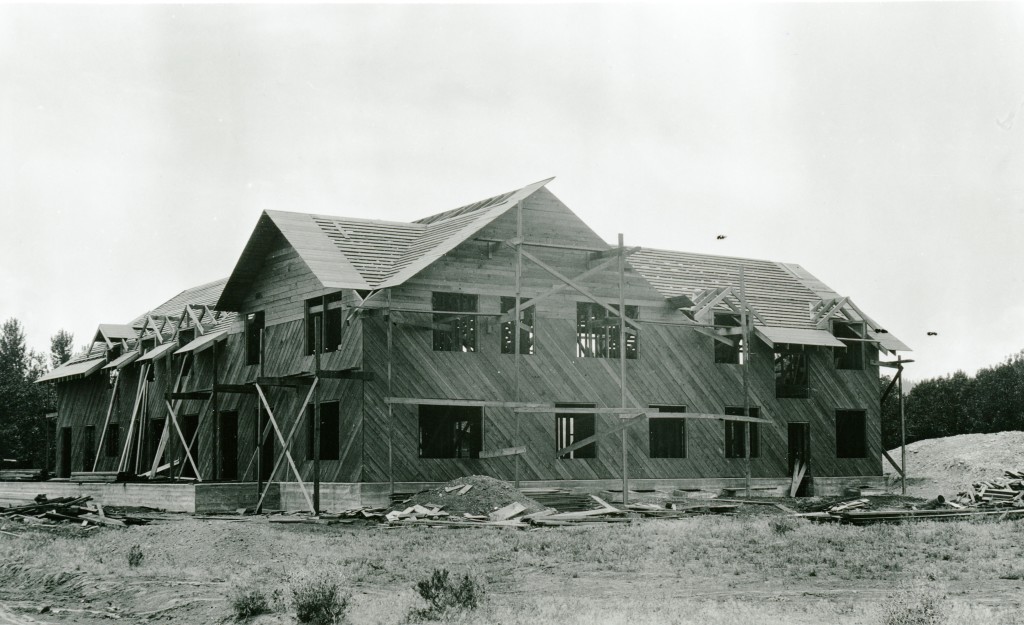
Construction of Riverside Hospital, 1920. Courtesy of Ed Standard

Well, it is that time of year again, when a few years back I made my debut at Susanville’s now defunct Riverside Hospital. As is customary, this one day I take the day off from regular duties. For the record the hospital operated from 1921 to 1969.

Riverside Hospital, courtesy of Betty Barry Deal

Tim


Richmond Road, 1912

Richmond Road, 1912

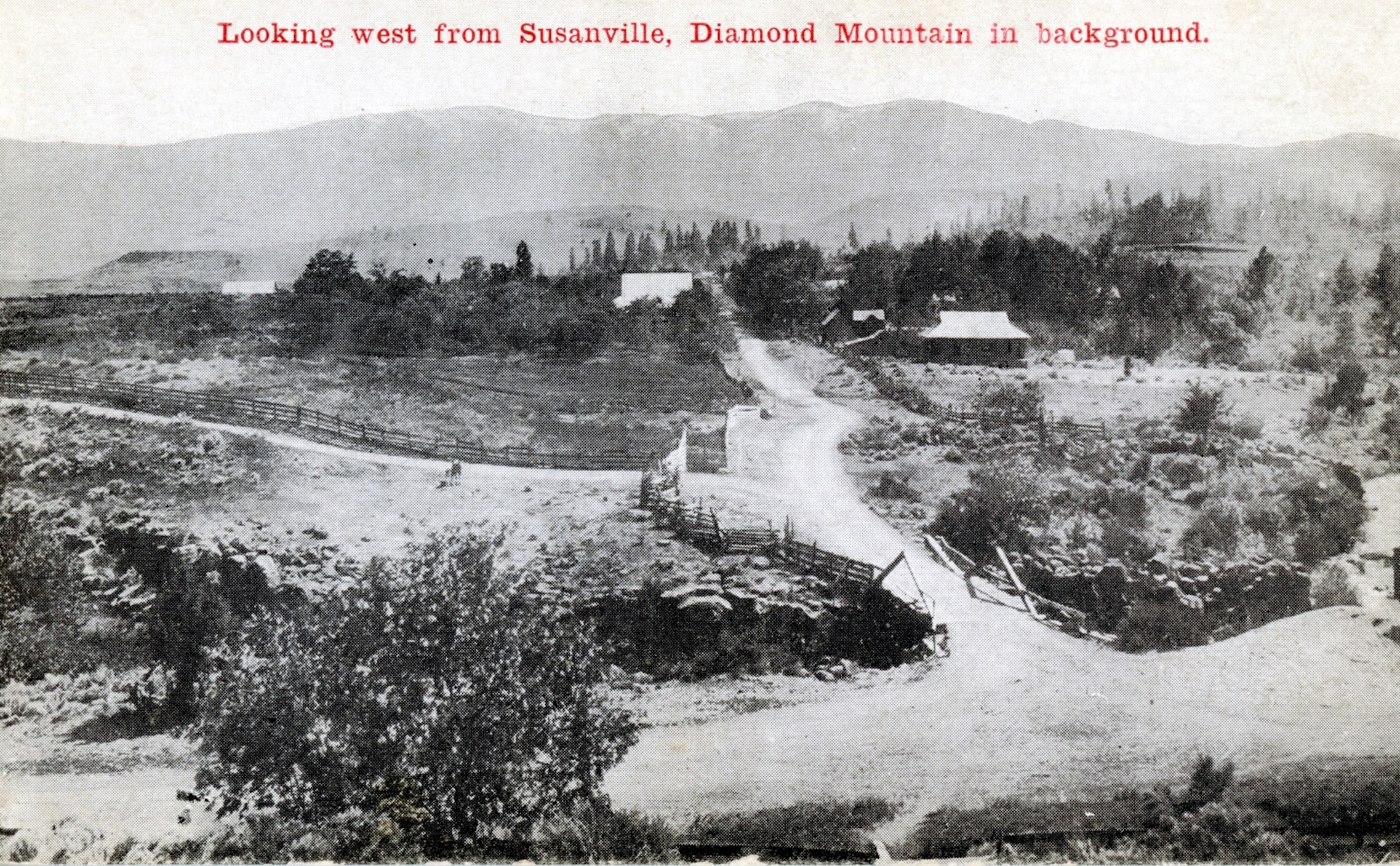
This is one of those interesting Ebay finds, that I could not resist. With the railroad quickly approaching Susanville to its south, major improvements were made to Richmond Road. To the left, the Lassen Townsite began development of its huge subdivision, starting with the construction of Riverside Drive. If you examine just beyond the intersection of Richmond and Riverside, one can see some disturbed ground. That was the original location of the Sacred Heart Catholic Church, which was moved in 1909 to Nevada and South Union Street.

Richmond Road, Susanville, 1905

Tim

The Standish Utopia

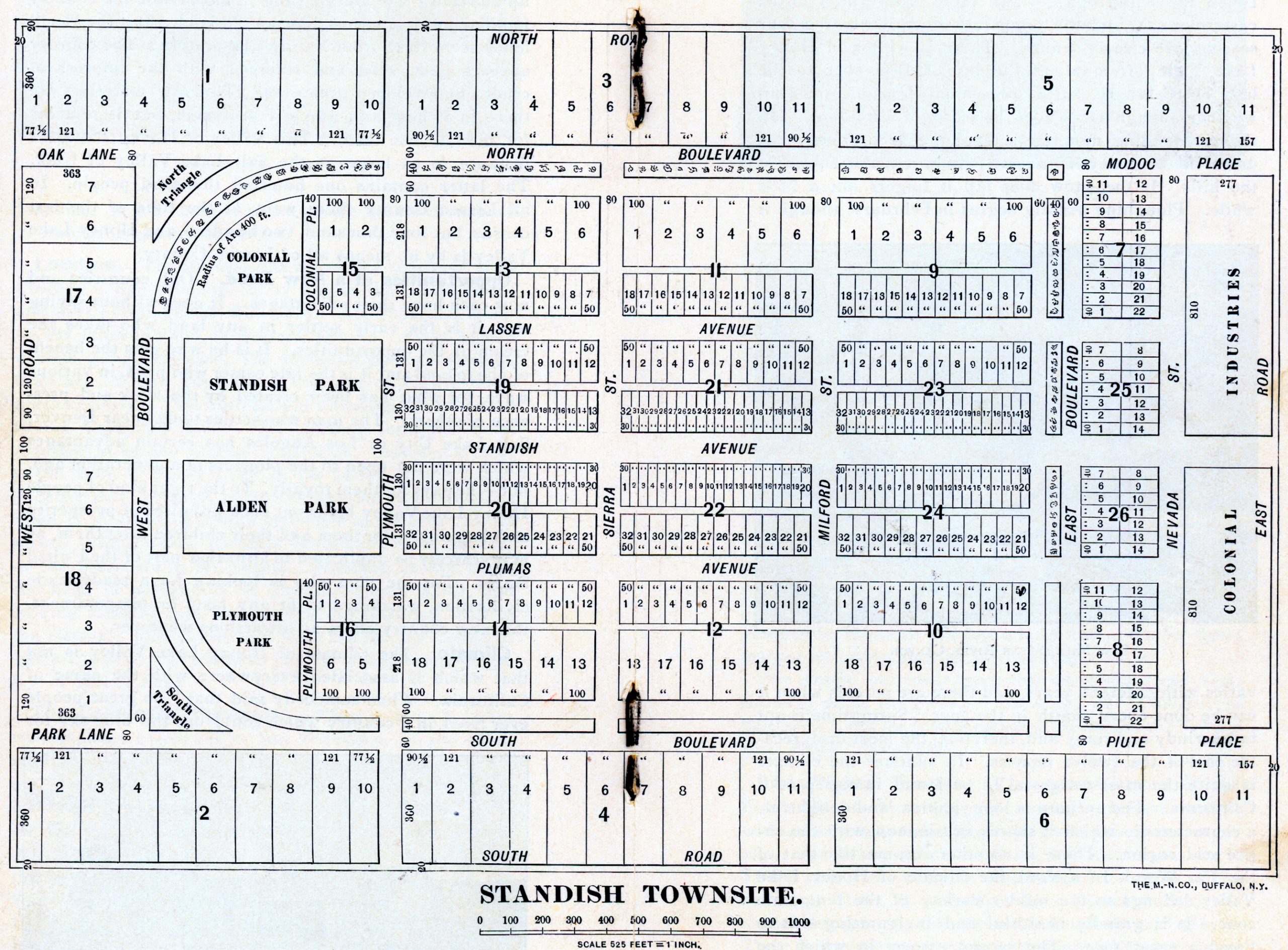
The Standish Townsite Map

The nation’s  colony movement of the 1890s gained great momentum with experimental communities—Greeley, Colorado is a prime example. The target audience to attract settlers were people who lived in the urban centers east of the Mississippi and the enticement of living in a healthier environment.

Associated Colonies of New York planned for Standish to be centered around what they referred to as the Farm Village. It was the concept of agricultural European communities, where everyone resided in a village and during the day ventured out to work their farm property. This is what the Associated Colonies referred to as the Blessing of Neighbors. Instead of living on an isolated homestead, far from a another soul, they believed in the immense benefit of the social interaction that a farm village would provide. In turn, with the village, this would create a school, library, social activities and so forth. Unfortunately, there were difficulties at Standish from its earliest years, which forced Associated Colonies to abandon this endeavor.

Tim

Recycled Schools

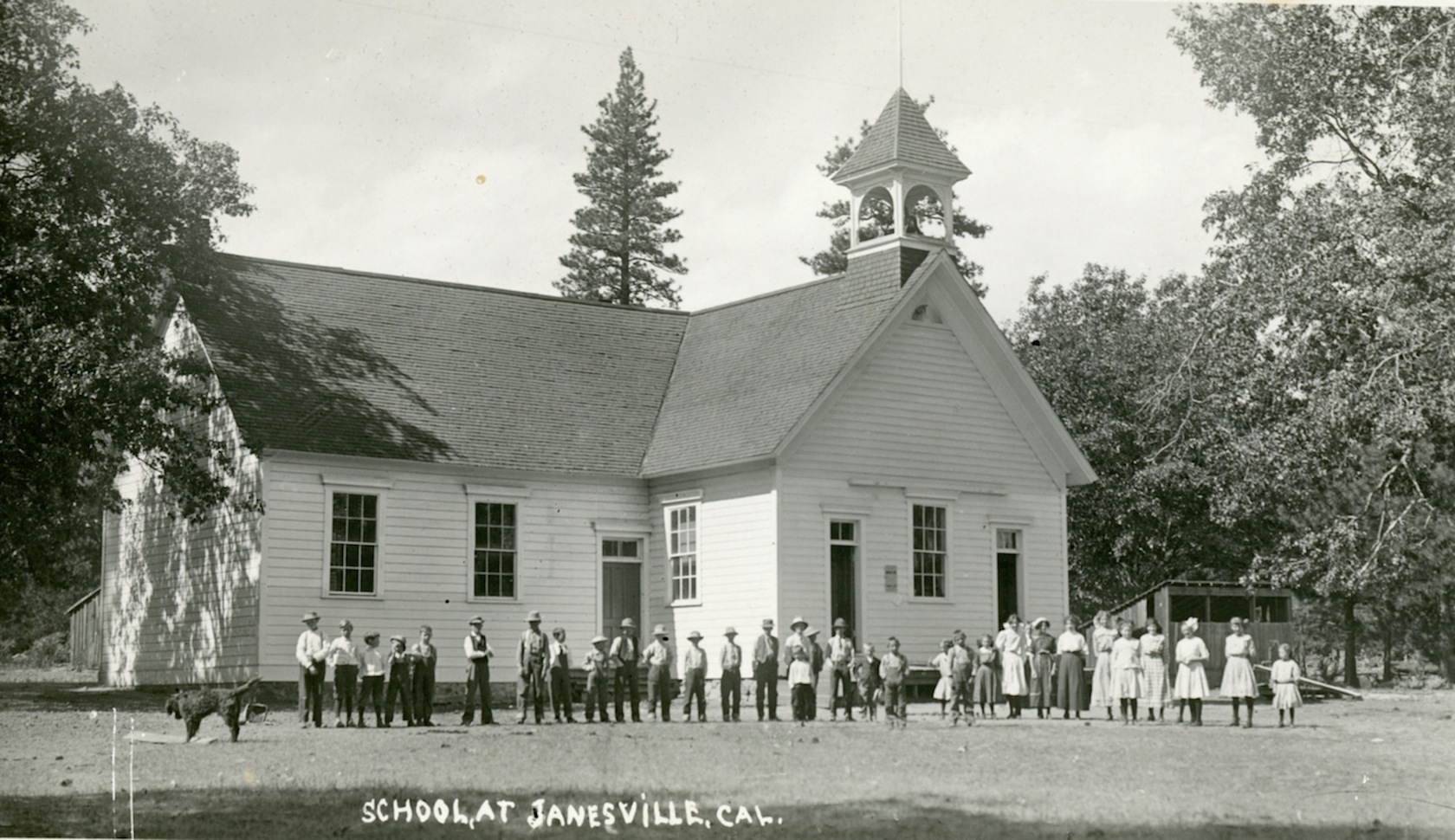
Janesville School, circa 1911.

On November 3, 1951 the Janesville School Board sold its old schoolhouse to Al Row for $350. Row then moved the structure to his property. It should be noted that in 1948, the Janesville voters had approved a bond measure to build a new school.

The sale of old schools was common back in the day. In 1901, Fred Hall purchased the old Susanville school, dismantled it and then used the lumber to build his ranch house near Standish. When Poplar School located on Mapes Lane, near present day Dakin Unit of Fish & Game, closed in 1935, Orlo Bailey purchased it and moved it the family ranch and it was used as a bunkhouse. In 1971, the old Bonham School at Flanigan was purchased by Standish resident Ed Bass and he moved it to his property. Then in other instances old schools become converted into residences such as Bird Flat, Honey Lake,  Johnstonville, Lake, Milford, and Richmond.

Tim


The Story Behind the 2023 Calendar

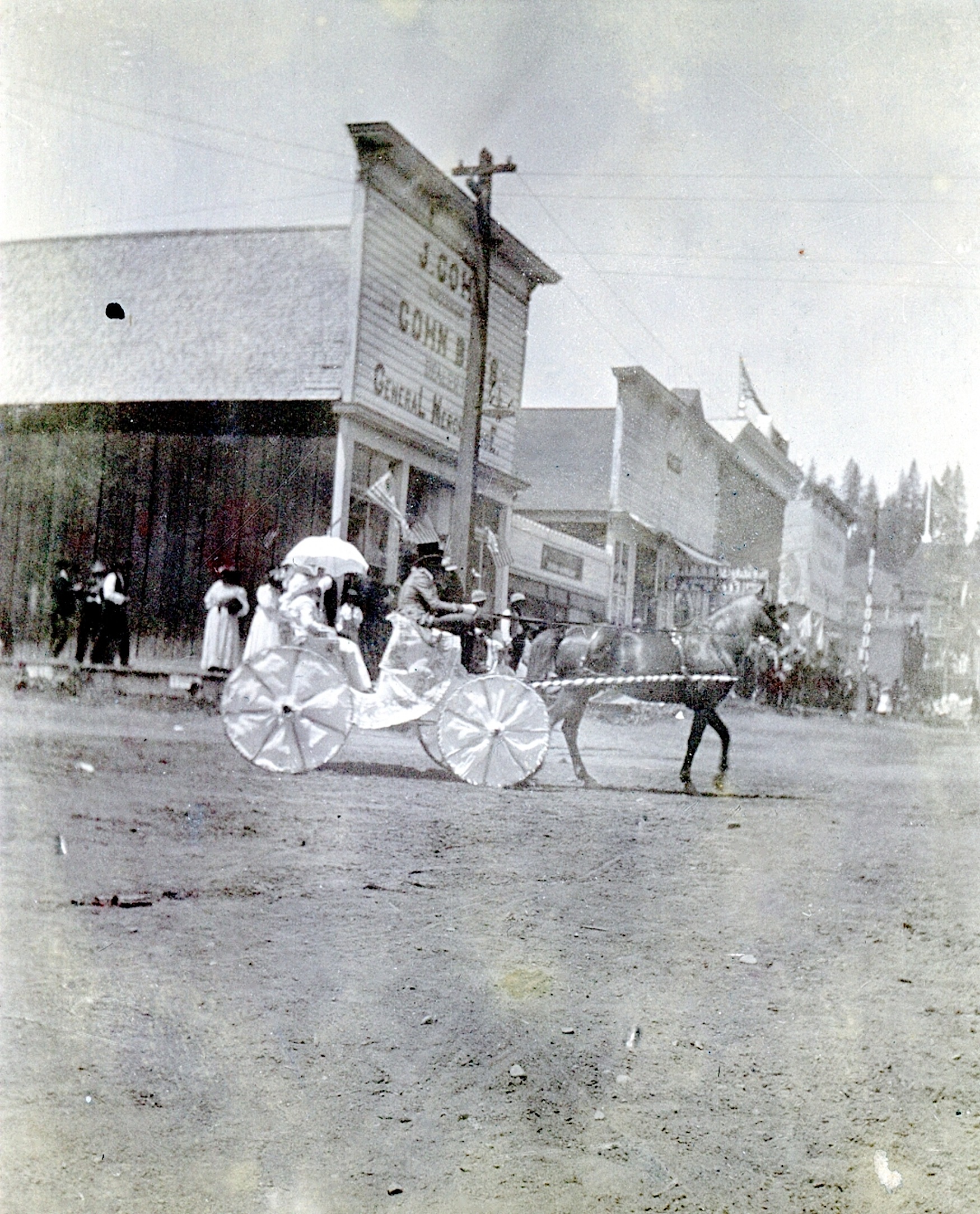
July 4, 1905, South Gay & Main Street, Susanville—Lola Tanner

Here is a Tuesday tid-bit for you. On September 1, I had assembled the calendar. Then, the weather turned brutally hot, so outdoor activities over the Labor Day Weekend was not really an option. In an attempt to be somewhat productive, I thought I would get a head start on the 2024 calendar. Then I reviewed the 2023 calendar layout, and it really was not to my liking. Back to square one. Seven of the originally planned photographs for the 2023 calendar were tossed aside and replaced.

The above photograph of the 4th of July parade in Susanville taken in 1905, was one that was scrapped. Back in the late 1800s and early 1900s there were occasions when the town did not acknowledge the 4th of July. Other times, the community would put on a grandiose celebration.

Tim

The Susan River Fish Ladder

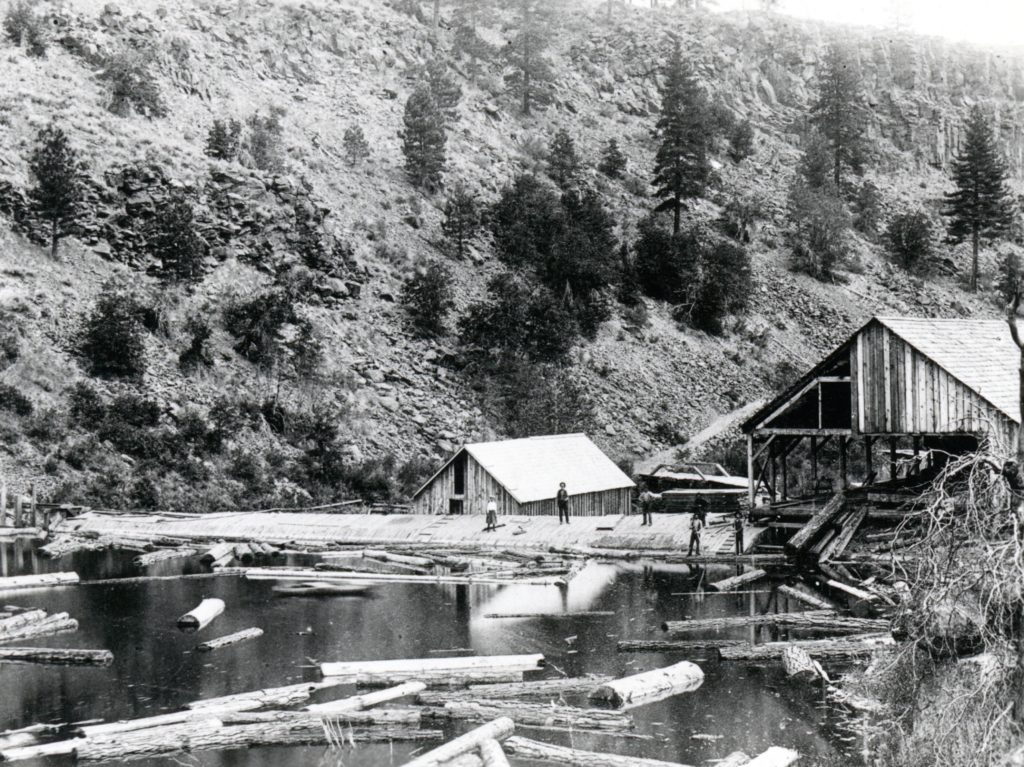
Bremner sawmill, Susan River Canyon, 1891. Courtesy of Betty Barry Deal

When the Bremner sawmill and dam was constructed on the Susan River, a short distance above today’s well known Hobo Camp, not much thought then was given how it would affect the river’s fishery.  It took a little while before the local anglers noticed the trout population below the dam was greatly diminished.

On June 15, 1892, Bud Heap and Ben Hunsinger went on a fishing expedition, traveling by wagon going up the grade west of Susanville for several miles. The ambitious men, then hiked down from the canyon rim and found the fishing par excellent, returning with some twenty pounds of trout. It was from that episode, that had been an ongoing discussion, for the need of a fish ladder at Bremner Dam, gained traction. In the fall of 1892, a fish ladder was installed.

An interesting footnote about that fish ladder. The Bremner mill was destroyed by fire in 1894, along with a major portion of the dam. The fish ladder remained intact until it was damaged  by spring floodwaters in 1915.

Donate

Charles League and his Unfortunate Journey

Roop Street
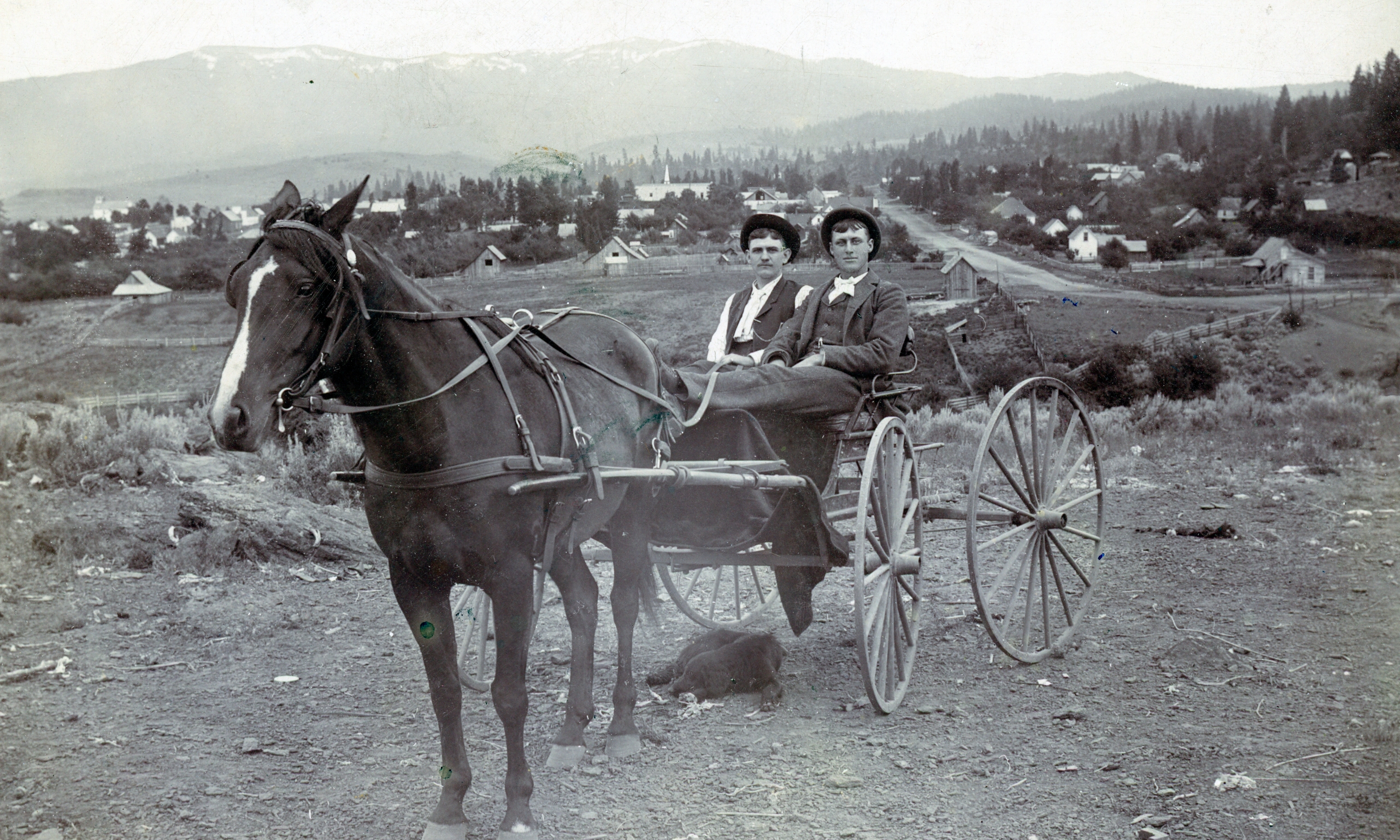
Susanville’’s Roop Street in the background from Rooster Hill. Seated, Frank League, Charle’s only son and Tom Long, circa 1895.

To be a teamster in the region during the 1850s and 1860s one encounter many hazards. While poor road conditions was one item one of worst was the conflicts between the Indians and the Anglo settlers. In Fairfield’s Pioneer History of Lassen County e devotes nearly a quarter of its content about these conflicts.

In October 1867, Susanville merchants Griffin and Williams hired Charles League to take a load of merchandise to Summit Lake is far northwestern Nevada. After League unloaded his wagon, he began to make the journey back to Susanville. He stopped at Flowing Springs Station for the night operated by two Honey Lakers, L.M. Crill and C.P. McClelland. During the night the dogs barked continuously, a good indicator that Indians were around.  With that in mind, Crill and McClelland tried to convince League that he should stay as a matter to safety precaution. It did not work, and League hitched up his team and wagon and started for Honey Lake Valley. It was not too long after, Crill and McClelland spotted smoke on the horizon. Crill and McClelland mounted their horses to follow League. They had only travelled a little over a mile, when they spotted some Indians going up the hillside with League’s horses. Near the wagon they found League’s dead body. The authorities at Camp McGarry were notified and a crude coffin was made, and League’s body brought back to Susanville for burial. This would be one of the last conflicts in the region.

Support

The Bonds That Built Westwood

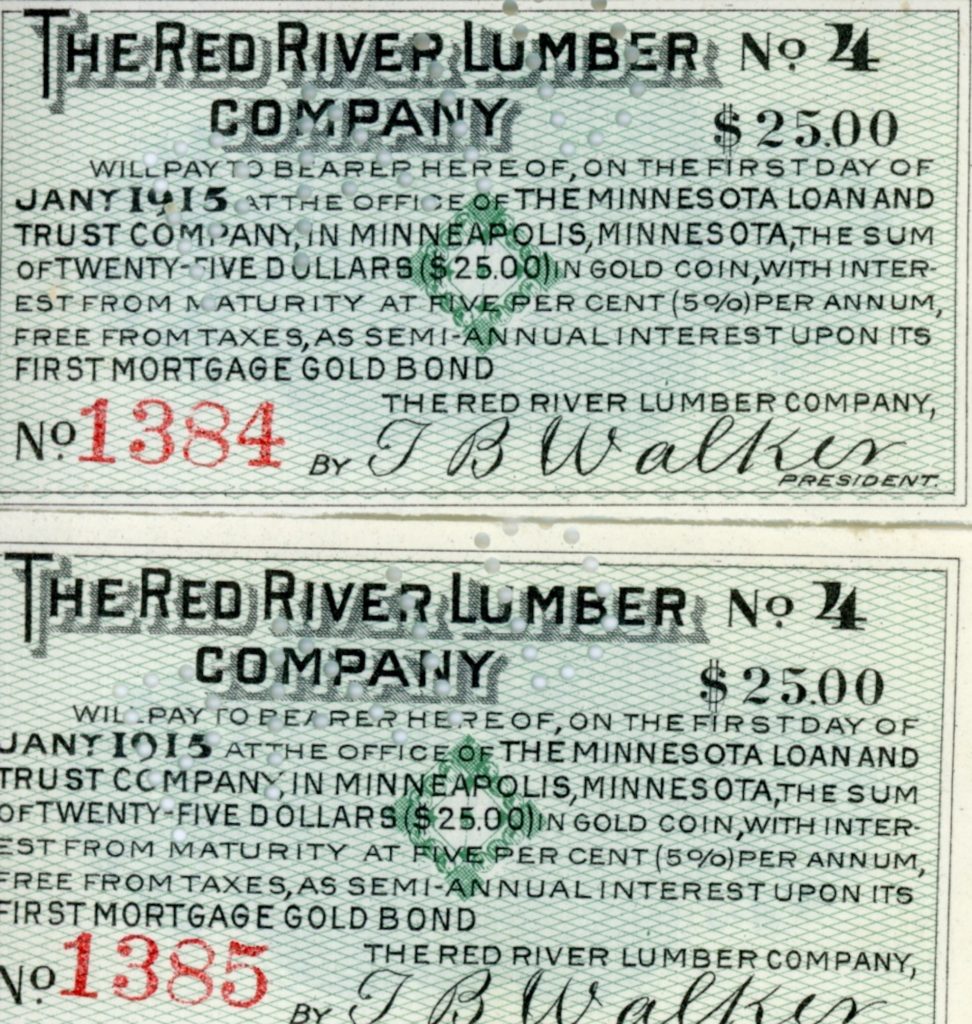
Coupons from Red River’s Akeley, Minnesota Bonds—C. Derek Anderson

Red River Lumber Company’s California expansion was a very costly endeavor. While its founderT.B. Walker had amassed a great fortune, like many successful businessmen, he was constantly investing his profits in new enterprises, some good and others not. To purchase the California timberland  conservative estimates place the cost at $3.7 million. However, not all of this came out of Walker’s pocket. To finance his cause, he enlisted the aid of a New York investor, Doctor John E. Andrus. Together, the two men formed the Waland Lumber Company—its name a derivative combining the names of Walker and Andrus. When Red River made the  final decision to build its first California  mill at Mountain Meadows, the Waland property was used as a collateral for bond issuance.

The initial cost to build Westwood was $3,528,300, nearly equal
as to what was spent on timberland acquisition. This only covered the costs incurred in 1913 and 1914, and the town and mill plant were far from being complete.

In 1913, Red River sold two million dollars in bonds to help pay for Westwood. The bonds were secured with a mortgage on 90,000 acres of Waland timber in Tehama and Shasta counties and experts placed a value on that timber at $6,100,000. The first payment of $50,000 was due on January 1,1916. The bonds had a life span of fifteen-years, but in 1928 a balloon payment of $950,000 was due! That obligation that would not be met, that was one of the dominoes of the downfall of Red River.

Support

Exploring Lassen County's Past