Recently, I received this comment: “Reading this from Australia, doing family history. Thank you for remembering what went on in these places. Kindest regards Pauline”
This is a two-fold commentary. This is a prime example, and there are many more, why there is no paywall on this site. A UNR fishery biologist was impressed that on this site, was the only photograph he was able to find of High Rock Springs near the border of California and Nevada in eastern Honey Lake Valley. Another came from an elderly woman battling cancer, wanted to use a image of the Westwood Hospital where she was born, as her grandchildren urged her to write her memoirs.
This is where I want to thank you the subscribers that makes this all possible.
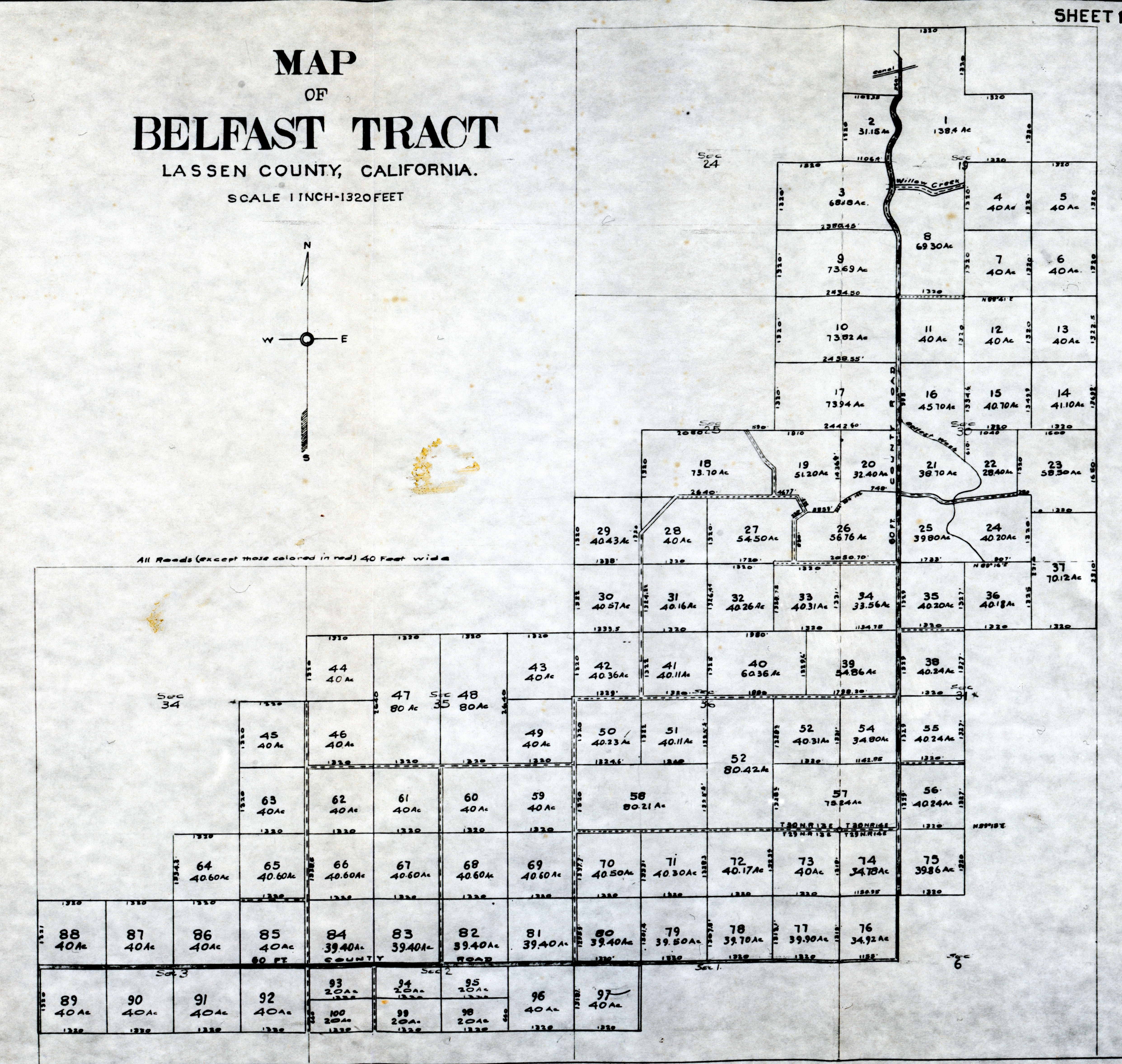
In the spring of 1922, with the anticipation of the completion of the Bly Tunnel brought Belfast back to the forefront. Captain C.A. Merrill one of the original instigators of the tapping of Eagle Lake spent twenty-five years on the project that in hopes one day it would be transformed into a major agricultural center. So nearly fifty years later, Charles Emerson and D.G. Beale planned to resurrect Merrill’s dream by acquiring 4,360 acres at Belfast from the B.F. Porter Estate. It was their intention to form a “colony” and sell 40-acre tracts. The two men formed the Belfast Land Company to orchestrate their goal. The major obstacle, of course, was financing. The Porter Estate wanted $100,000 for the property and the Belfast Land Company could not arrange financial backing. Thus, another land development project went bust.
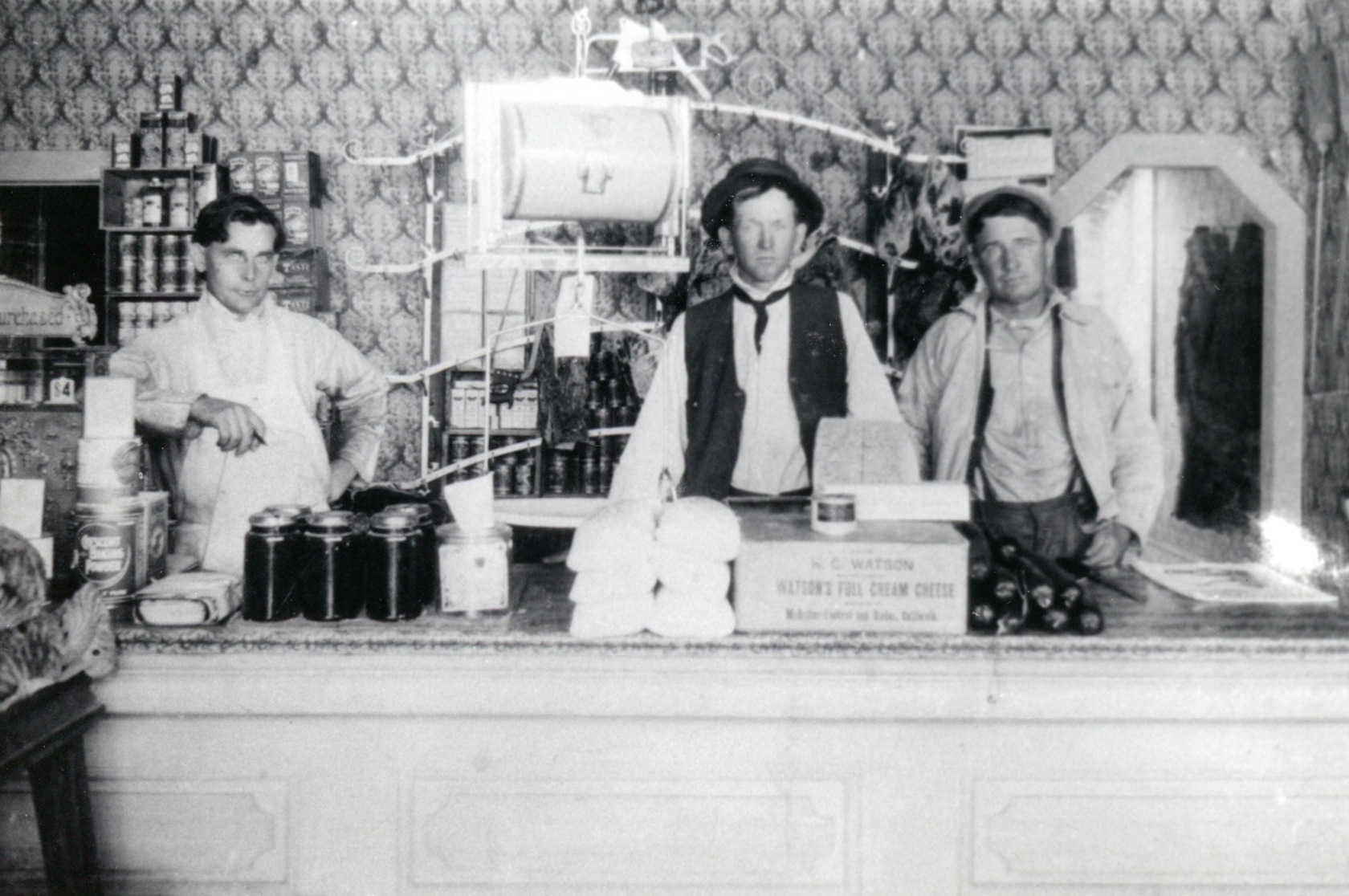
Emerson’s Store, Left to Right, Bill Lewis, Jim Mapes, Todd Hemler, 1916. Courtesy of Prentice Holmes
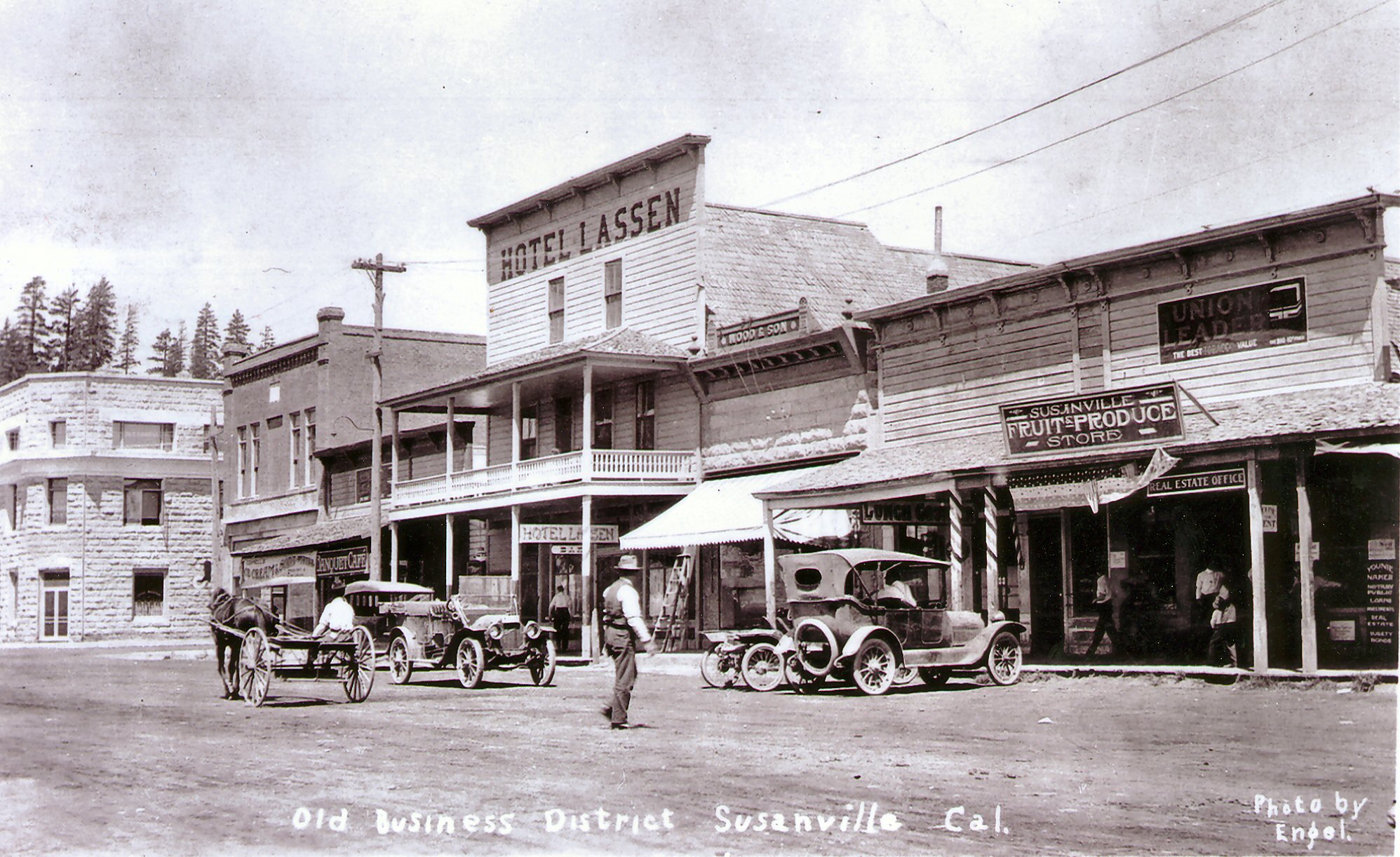
This is a bit different, I came across an interesting display advertisement in the Lassen Advocate for Charles Emerson’s store. The store’s motto by the way “We Are Here to Stay.” By 1907, Emerson’s enterprise included his hotel and store in Susanville, as well as a store and creamery in Standish. Below is the ad copy, I found it amusing, may be its a personal taste.
”The mummy aint had no fun fer more’n than five thousand years.” Moral: Don’t be a mummy.
Probably what you need right now is a pleasurable vehicle. We have lots of them and want to get vid of ‘m all. (Old Man Studebaker told us confidentiality we could have a few more when we paid for these.)
Your best girl or your mother-in-law may be pining for fresh air. Our mission in life is to separate you from your wherewithwall so if you want anything with wheels we can make a quick trade—Emerson.
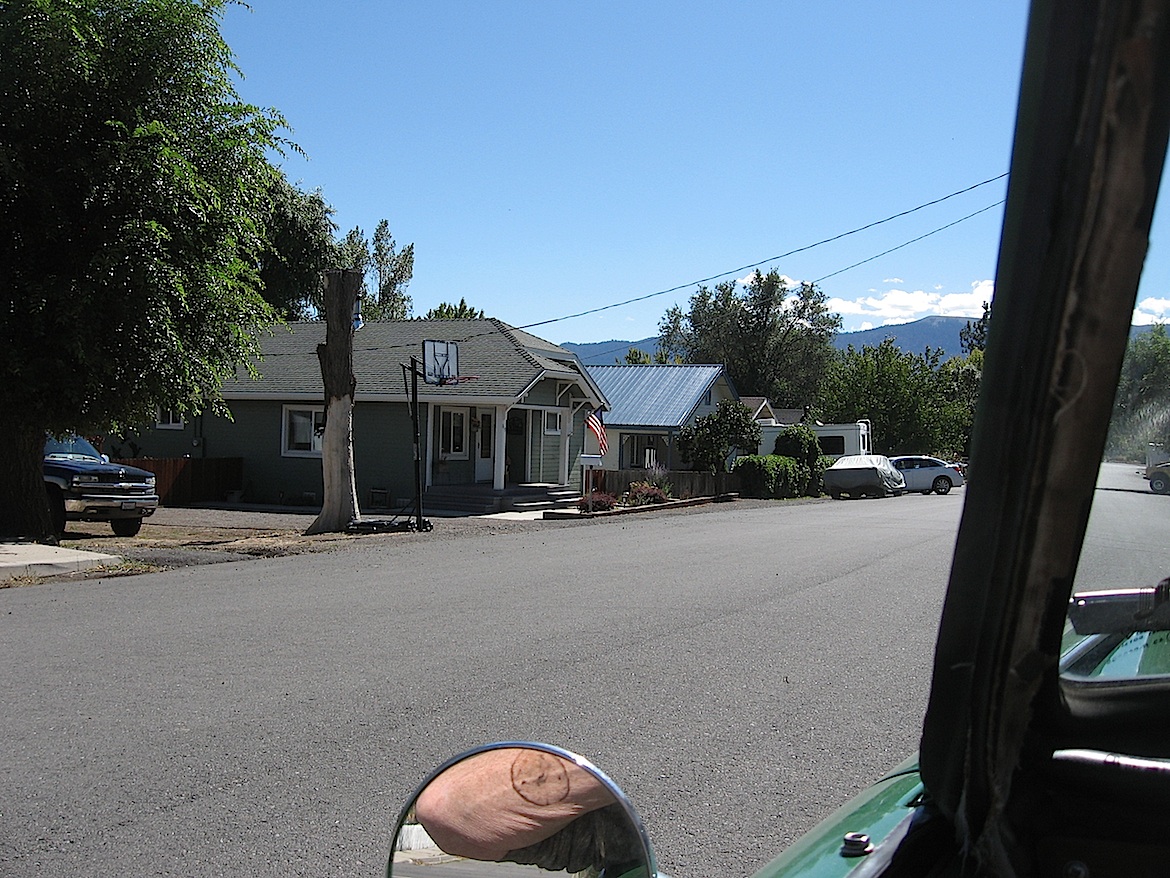
The area south of Railroad Avenue to Modoc Street was a housing development of the Lassen Lumber & Box Company for its employees. The above photograph I received from someone back East who found the photograph in a book at a garage sale. One never knows where a piece of history will show up.
Shasta Street, Susanville, September 22, 2022
It should be noted that the Lassen Lumber & Box Company designated this particular area as its “Italian Quarters.” Both Lassen Lumber & Fruit Growers Supply Company hired numerous immigrants, at one time there was a large Filipino population.
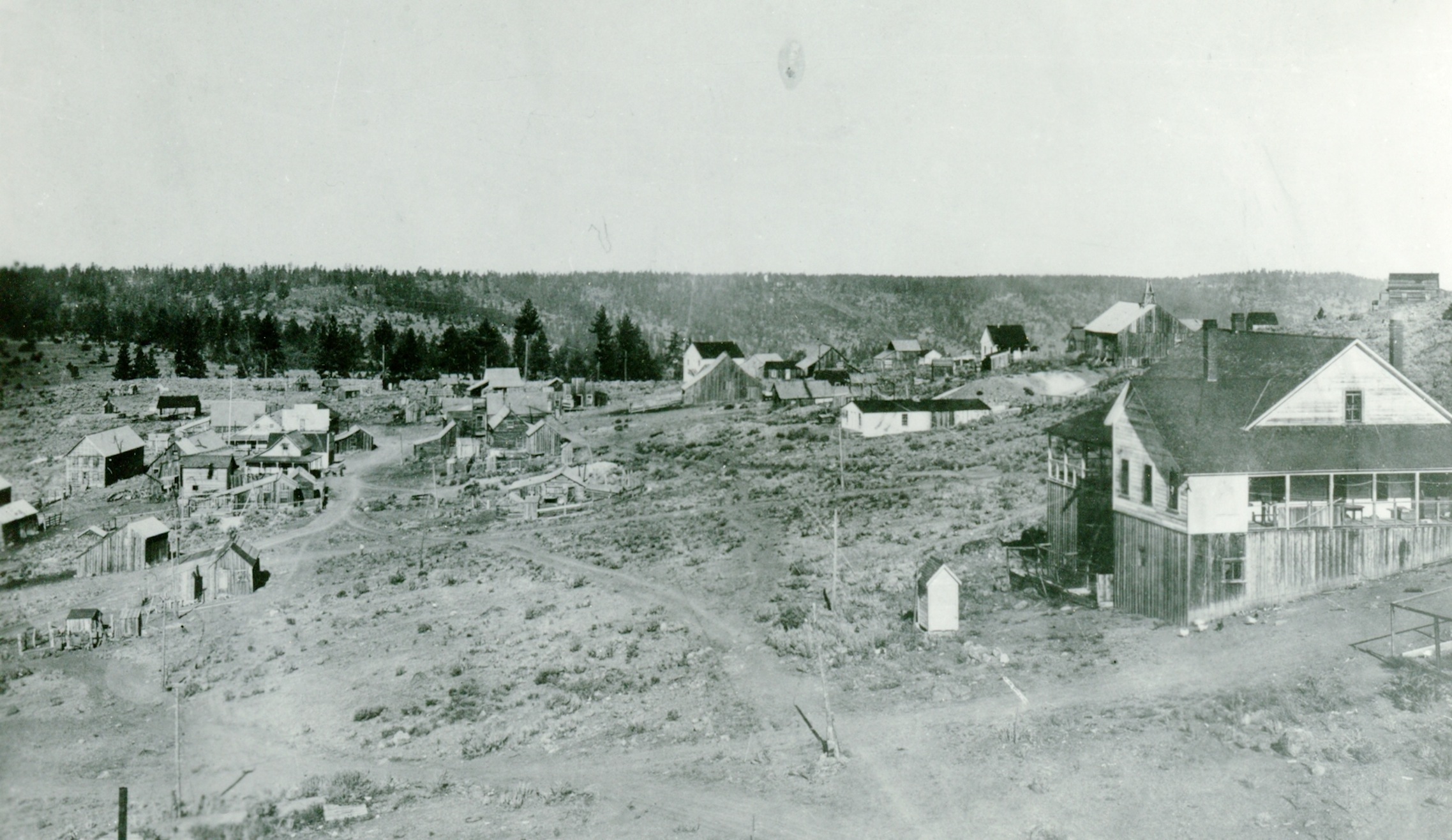
A view of the western portion of Hayden Hill, 1909—Dallas & Joyce Snider
In 1908, a new vein of gold was discovered at Hayden Hill and another resurgence was on its way. The Golden Eagle, the Hill’s largest mine, hired 100 men for the initial operation and more were added to the payroll. In addition, the Lassen Mining Company’s Juniper Mine enjoyed good fortune and they had over 100 men on the payroll.
It was one of the brightest moments in the town’s history, followed by one of its worst disasters. On September 11, 1910, a fire originated at the Lassen Mining Company’s boarding house, which erupted into an inferno. The town had always had an inadequate water supply and there was not much anyone could to do fight the fire, and just watched the majority of the businesses and residential sections on the west side of the Hill go up in flames. The fire resulted in layoffs and over 150 miners left since there was no housing. The town would never fully recover.
On a rather peculiar note, the fire devastated the town’s cemetery. All the markers in the cemetery, including Joseph Hayden’s the town’s namesake, were all made of wood and the fire wiped those out.
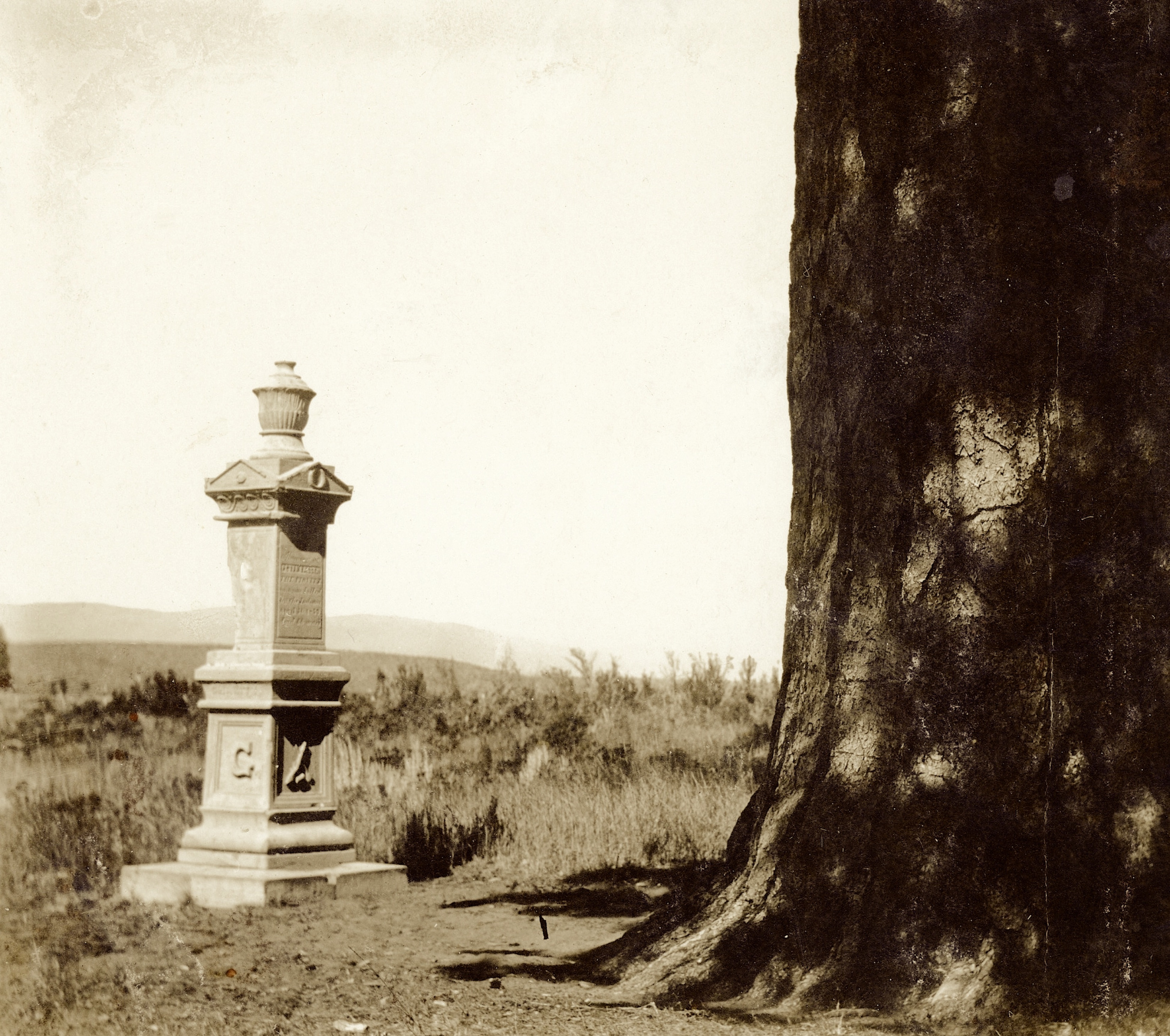
Lassen’s Monument, 1905. Courtesy of Philip S. Hall
There are some, past and present, that have strong opinions of these two men of the pioneer era. Yet, they both shared something in common when they passed away—neither one had a tombstone for some time.
Peter Lassen died on April 25, 1859 while on a mining expedition in the Black Rock Desert. His remains were later brought back and he was buried near a majestic Ponderosa pine tree, where it was stated it was the first place he camped at in the Honey Lake Valley. However, it should be noted, Lassen a bachelor had no family, who would normally be responsible in marking the grave.. However, Lassen did belong to the fraternal order of Masons. On June 24, 1862 that organization placed a ten-foot tall monument made of native volcanic ash at Lassen’s grave.
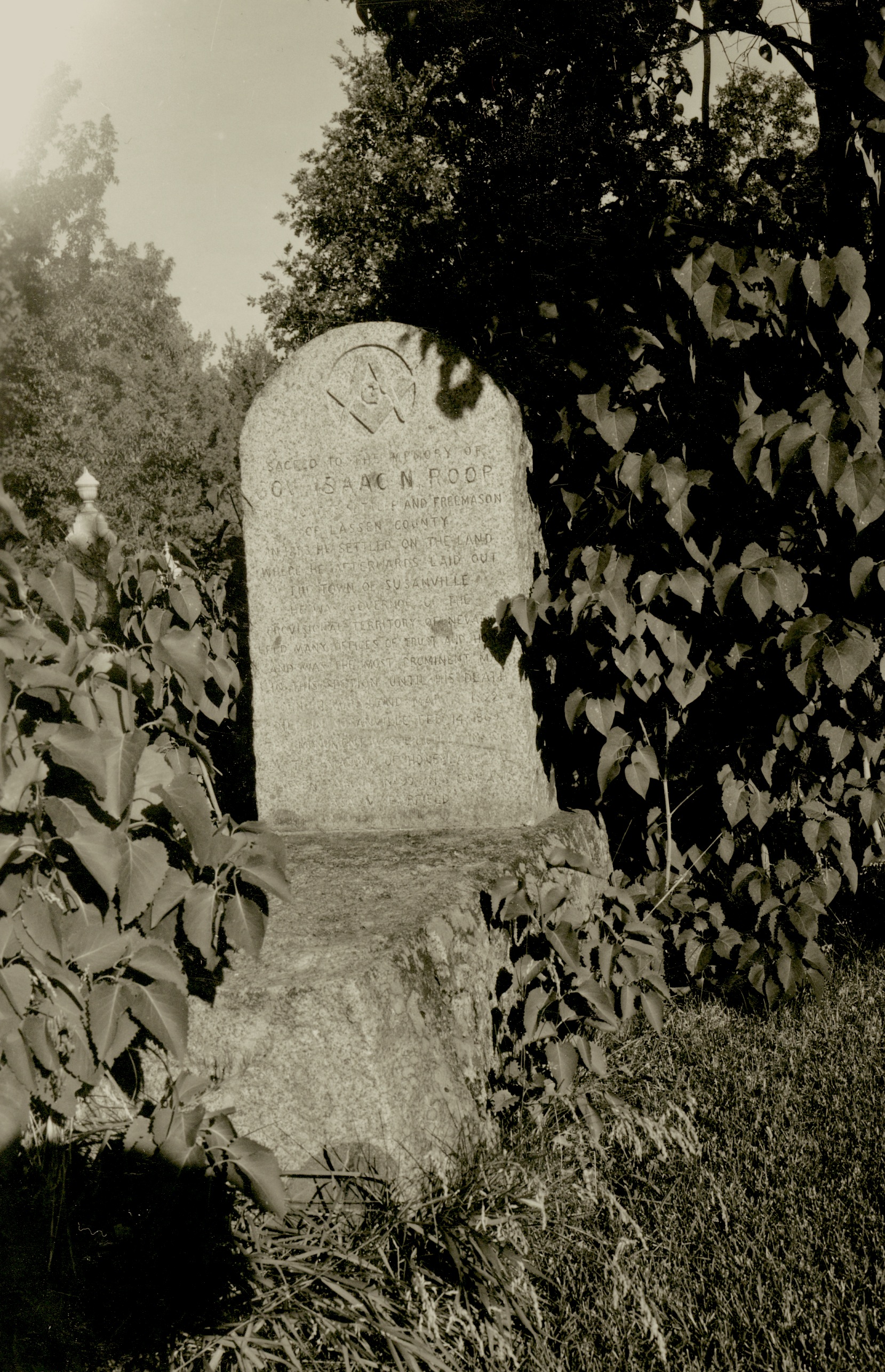
The grave of Isaac N. Roop, Susanville Cemetery, circa 1966.
Isaac Roop who died on February 14, 1869, had three children, though though one son died in the Civil War. However, his daughter, Susan, the town’s namesake resided. there. According to Asa Fairfield, his daughter purchased a tombstone, which ws a destroyed in a fire. This I always found peculiar, a piece of stone demolished by fire. Was this just a ploy by Fairfield to cover for the family, when other factors, such as the family did not have financial means for a tombstone. Considering Roop’s status, and his daughter was expected to have not just a gravestone, but a fitting monument as the founder of Susanville?
Whatever the case may be, nearly five decades after Roop’s death, it bothered Lassen County historian, Asa M. Fairfield, that his grave remained unmarked. Fairfield recruited the Masonic lodges of Janesville and Susanville and the Lassen Parlor of the Native Sons of the Golden West to rectify the situation. A large granite monument was placed at Roop’s grave. On California’s Admission Day, 1914 witnessed the unveiling of the Roop Monument. Fairfield was disappointed that only about 70 people attended the ceremony.
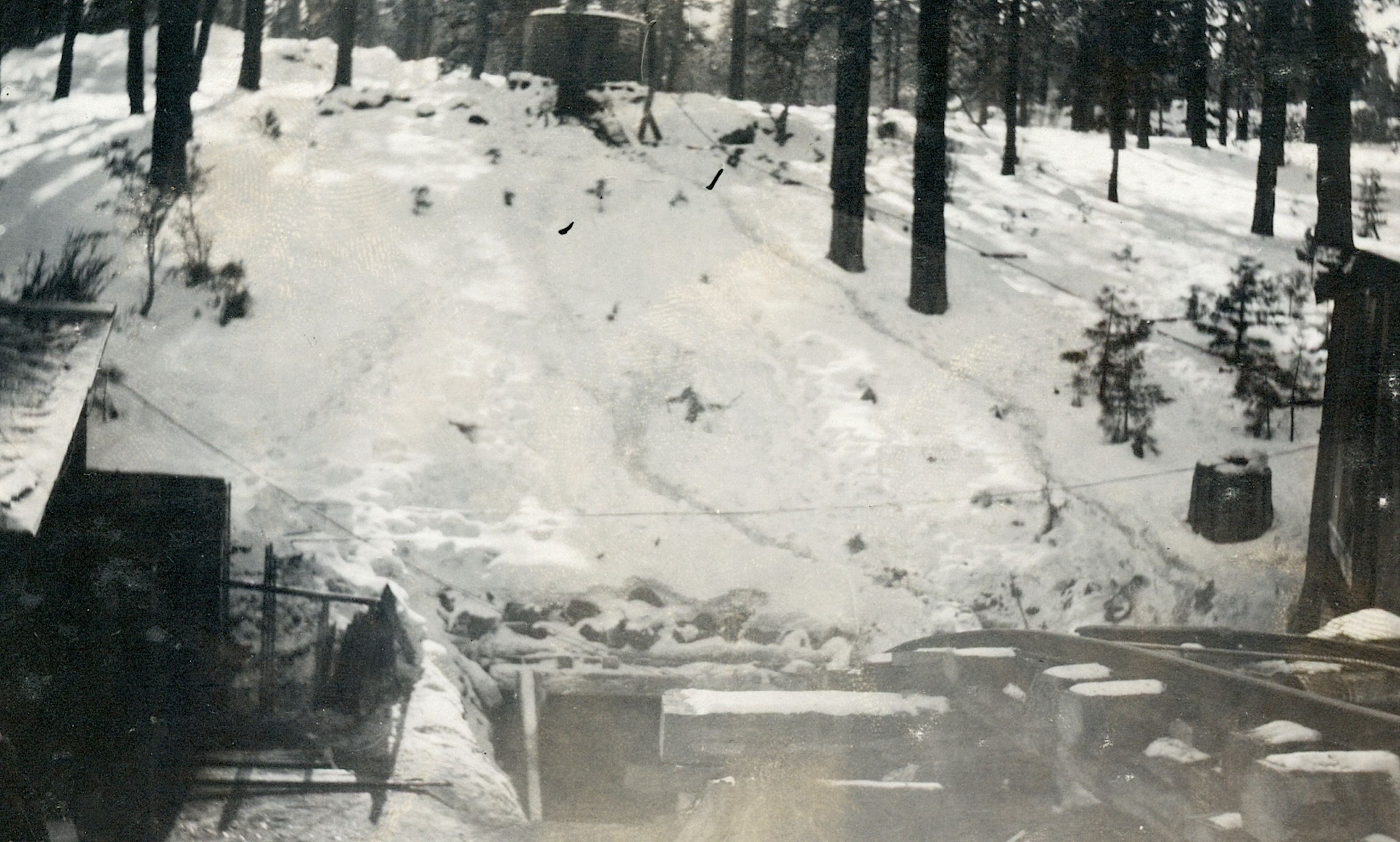
The incline works Bly Tunnel, December 1921–Lola L.Tanner
While sorting through some of my grandmother Lola Murrer Tanner’s photographs, she labeled “Incline Works.” At first, the photograph did not look like much. Then upon further examination, I realized this was the initial work at Bly Tunnel. The tunnel construction began from the outlet side, burrowing its way to the lake. Lola took several photographs at this time, showing the camps at this location and one at the inlet location, which I will scan post in the future.
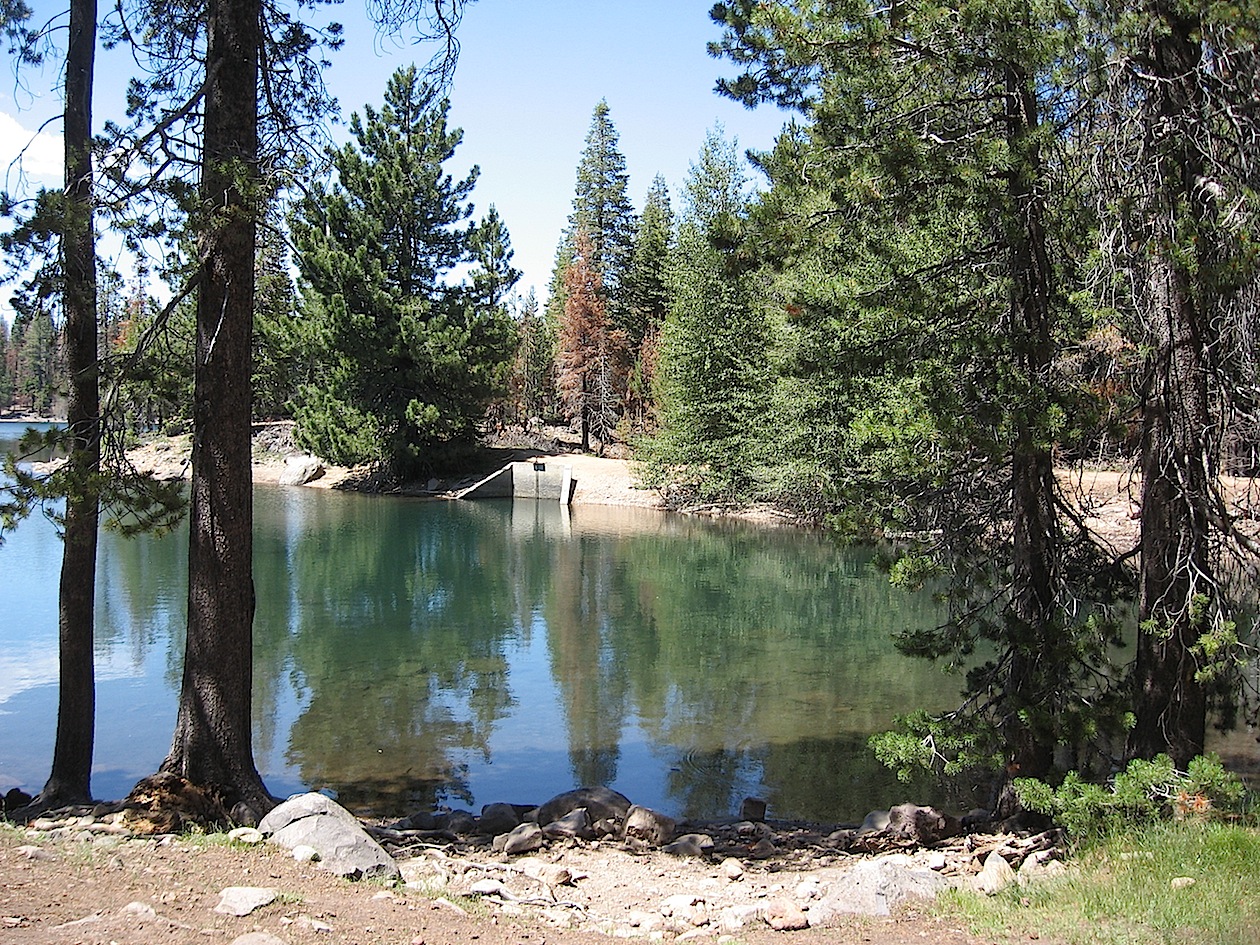
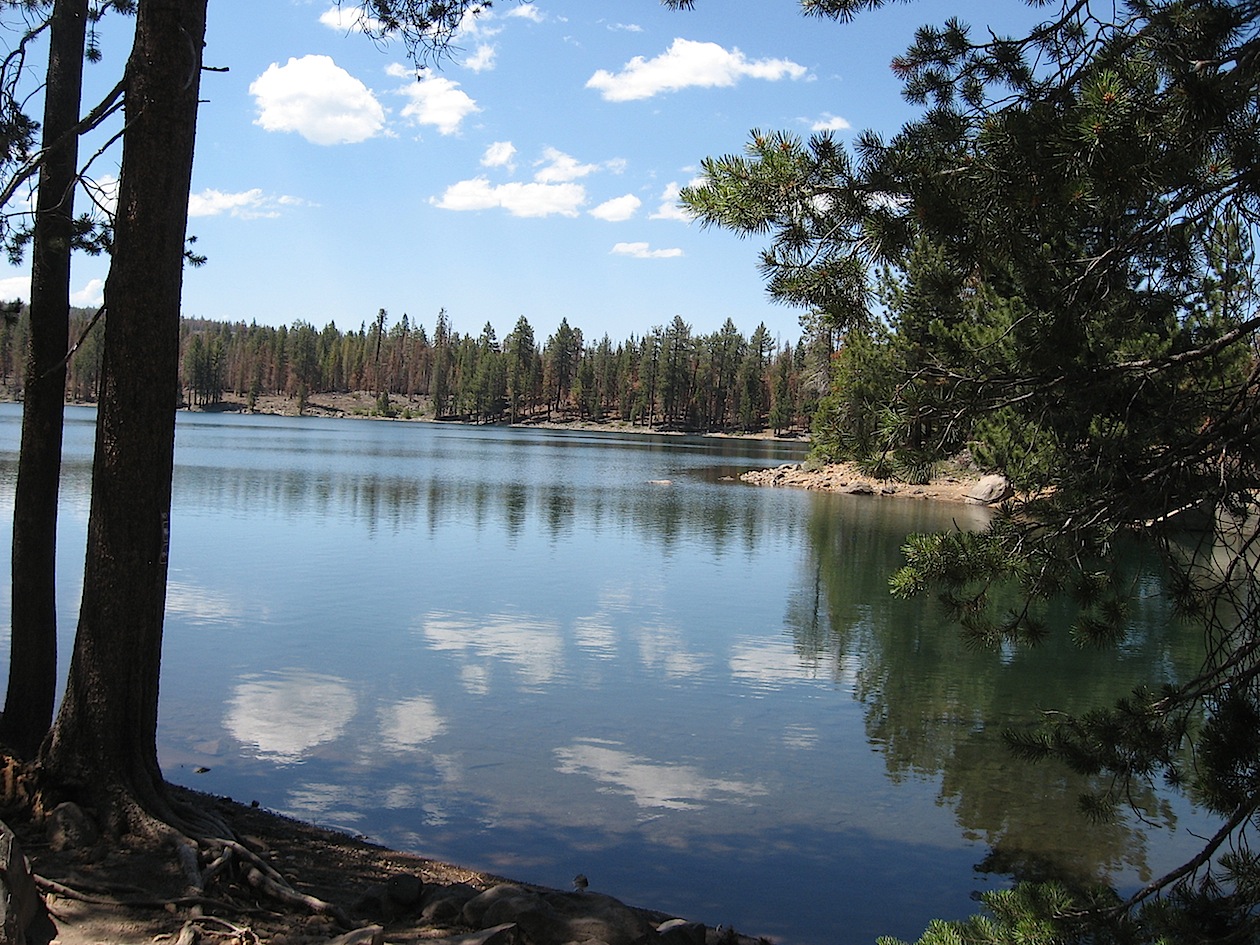
Caribou Lake, and nearby Silver Lake is the upper watershed of the Susan River. The lake is also a jumping off point for the Caribou Wilderness Area. When gold was discovered in British Columbia in 1858, a number of miners, including some Honey Lakers, rushed there. It was known as the Cariboo. It should be noted that early records spelled lake’s name the same. One of the mining enterprises there was named the Neversweat.
On August 11, 1883, J.H. Slater filed for the water rights to both Caribou and Silver Lakes, along with the right to install dams and gates. In September 1883, Slater hired 12 men working at Caribou Lake to install the first headgate. It should be noted Slater owned what is today the Fleming Unit, of Honey Lake Wildlife Refuge, and was a civil engineer.
As to the Stella Stiles divorce she was married to Harry Cain. While many may not be familiar with the Stiles name, there are several Stiles descendants who subscribe to this site. Where Monsignor Moran Hall is located in Susanville was purchased from the Stiles family. Willard Hill and the Willards are part of the Stiles clan. One of my favorite Stiles descendants was Philip Hall.
Anyhow back to Harry Cain, Stella’s ex. In the summer 1905, Harry Cain, along with James Wallin and Hi Skadan went on their annual summer excursion to camp and fish at Silver Lake. A couple days out, things went wrong. On the morning of July 7, Cain went over to fish Caribou Lake. He had a small folding canvass boat. Wallin and Skadan remained at Silver. That evening Wallin began to prepare dinner, but Cain was not there. The two men went over to Caribou, and found Cain’s boat adrift, but no sight of him. Since it was nearly dark, Wallin and Skadan returned to camp. The next morning, they were back to Caribou, where they found Cain’s body at the bottom of the lake, about twenty feet from shore. The body was retrieved taken to Susanville for an Coroner’s Inquest, and later interred in the Susanville Cemetery.
In the 1920s, Prohibition may have been the law of the land, enforcing it in Susanville or in Lassen County—as in most other places was quite a different matter. There was, of course, that local authorities had no arresting powers—bootlegging was a federal offense. To compound matters the region was in an economic boom time, where in less than twenty years the population had tripled.
To understand just how widespread the problem with bootleg joints was, it was summed up by one observer in 1923. Using the nickname “Friendly George” he wrote: “This man’s town has become a beautiful city and as to bootleggers, I just over there a stranger on the Fourth of July. I asked a taxi driver to take me to one. Well, he said, I know 34 places but I don’t known ‘em all. Quite an improvement from four saloons. Yes, it is Prohibition, but hard to convince me it is Temperance.”
The lake was named after mining activity in British Columbia of the late 1850s. It was first tapped for irrigation in 1883. In 1905, Harry Cain, well-known Susanville resident drowned there. Cain was best known as a co-owner of the Susanville WaterWorks and his messy divorce with the former Stella Stiles.