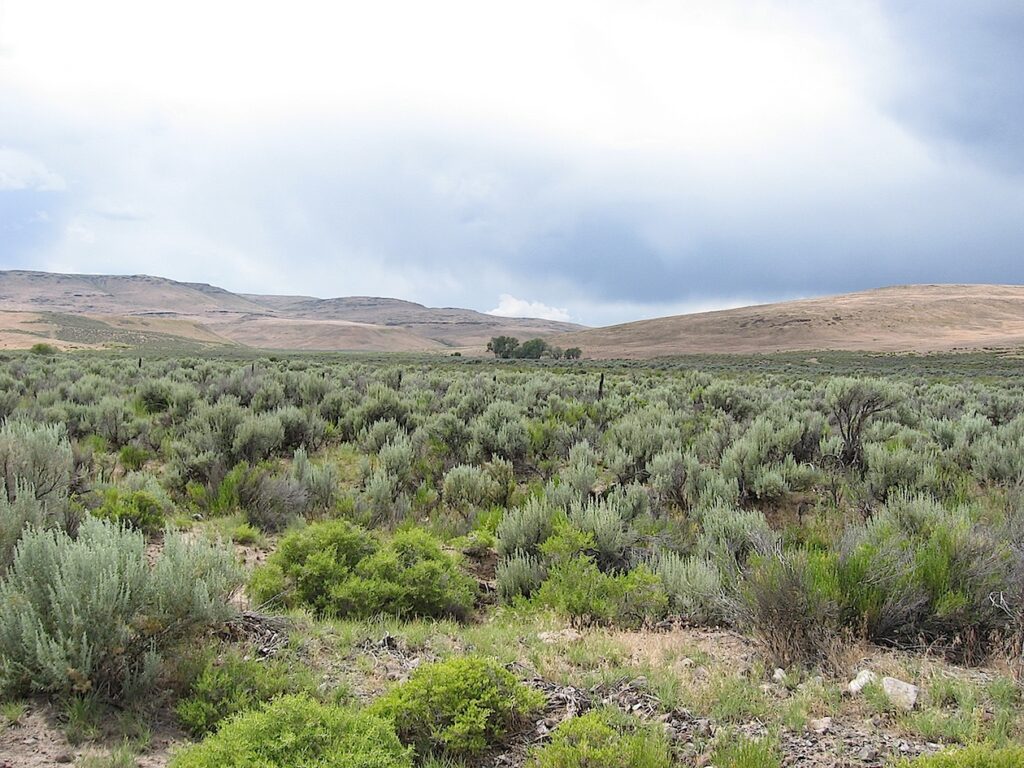
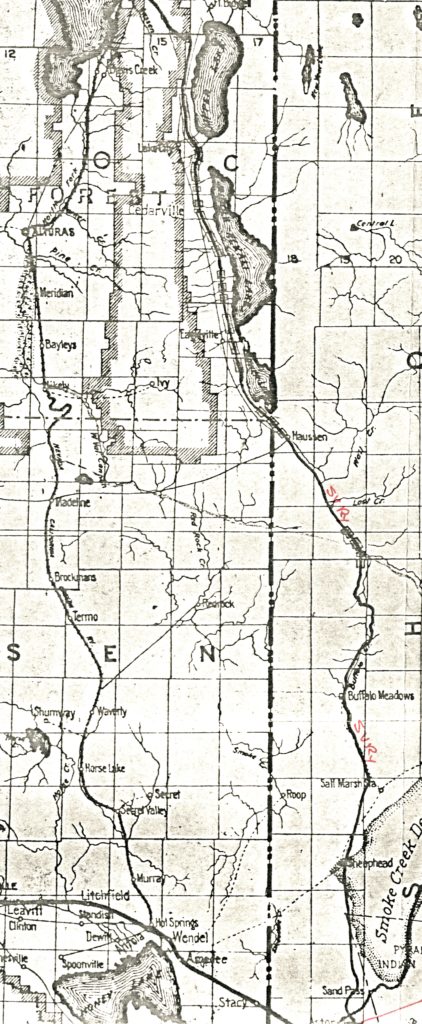
This stream is tributary to Smoke Creek near the California/Nevada border. The name dates back to the 1850s, referred to by travelers along the Noble Emigrant Trail. The name may have had its origin from attacks by Indians and the ermigrants along the trail. In 1863, during the Kidder & Ives state boundary line suervey, their report made reference to this locale after a skirmish with Indians and note, “The Indians rushed to the rocks to give us a warm reception.”
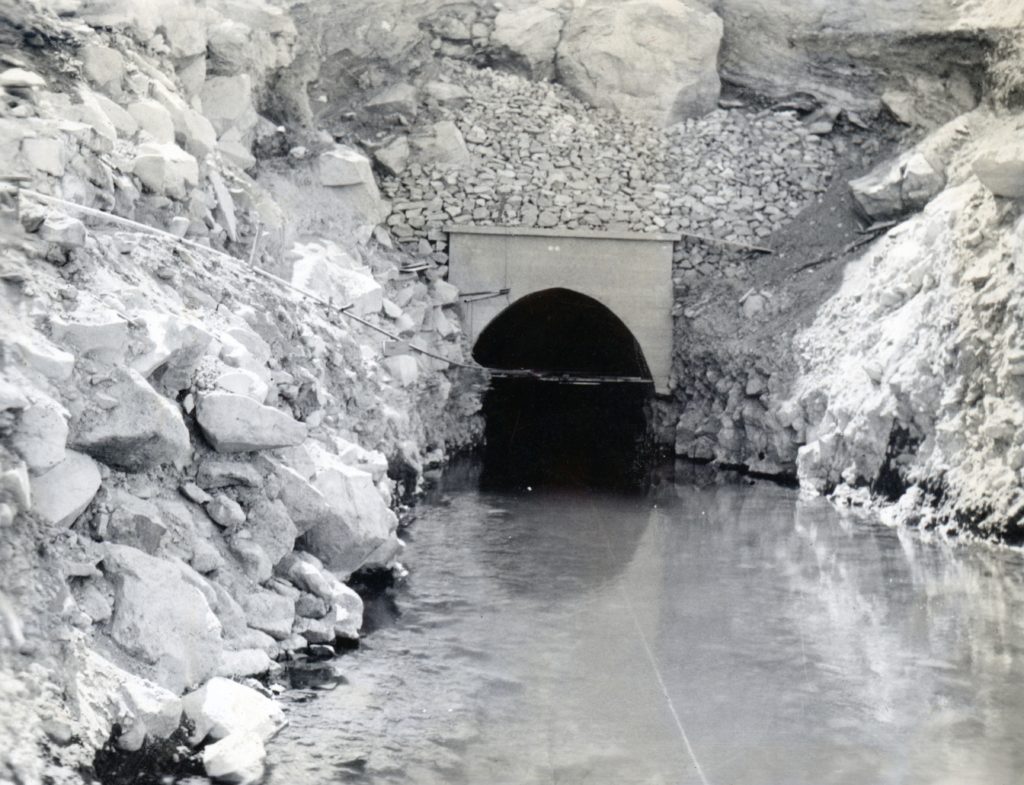
Bly tunnel inlet, July 1924. Courtesy of Wyn Wachhorst
It was 100 years ago today, with no fan fare, that 50 cubic feet per second of water was released through the Bly Tunnel at Eagle Lake. The $1.25 million project conclusion was bittersweet. Earlier, in May, some 5,000 people gathered at Litchfield for a grand barbecue to celebrate the completion of the tunnel. What the public was not aware was Grant Smith Company, the contractor to build the tunnel, only built three foot below the lake level at the inlet, versus the eight feet agreed upon with the irrigation districts. The company refused to allow water through the tunnel,, until an agreement was reached. The legal wrangling went on all summer until a settlement was made. In the short and long term the Baxter Creek and Tule Irrigation District were big losers. First, they lost the 1923 irrigation season. They would spend a decade trying to correct the inlet problem, and finally gave up.
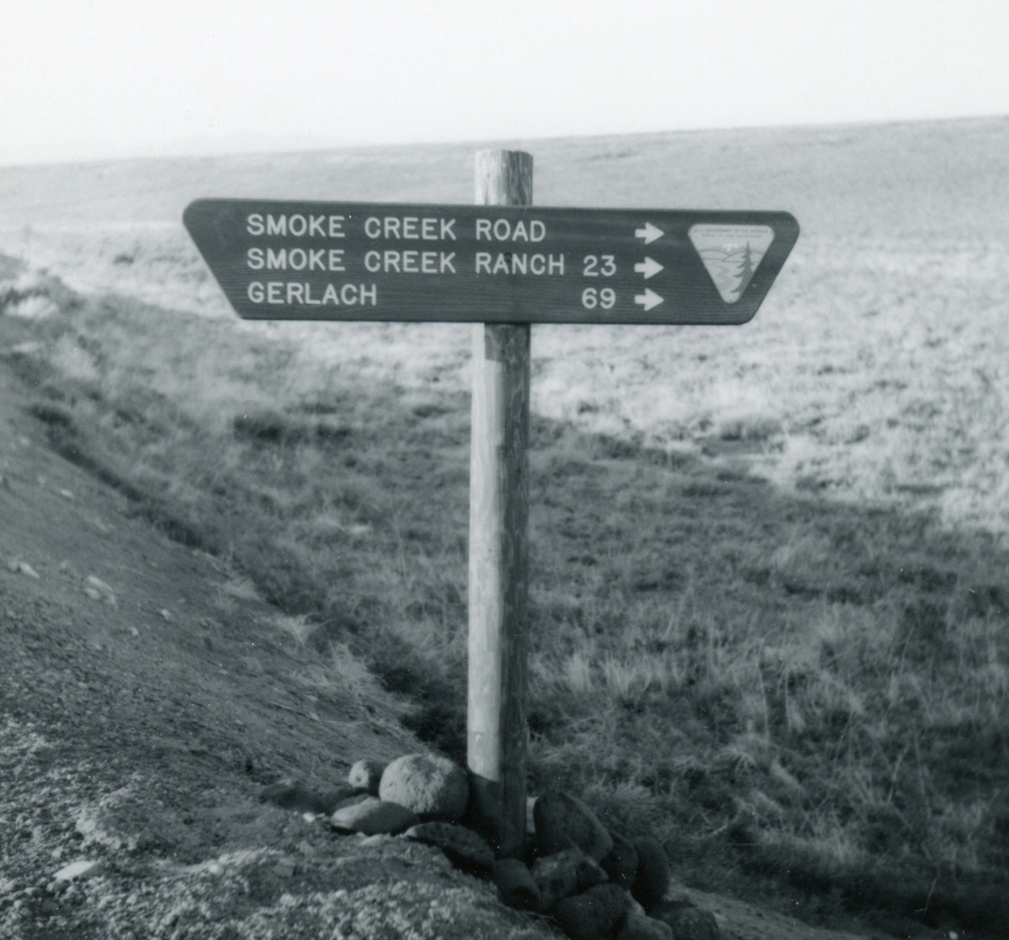
Viewland, 1974. Photograph by and courtesy of D.B. Martin
The turn off for this road, for those not acquainted, is a right turn off Highway 395 north between Viewland and Mud Flat. The first road in that section going to Nevada was Noble’s Emigrant Trail of the 1850s. Over the years, the route was slowly modified. The road we know today was constructed by the Secret Valley CCC camp in 1937. These men also did significant work on the road across Mud Flat, as well as road work between Ash Valley and Madeline.
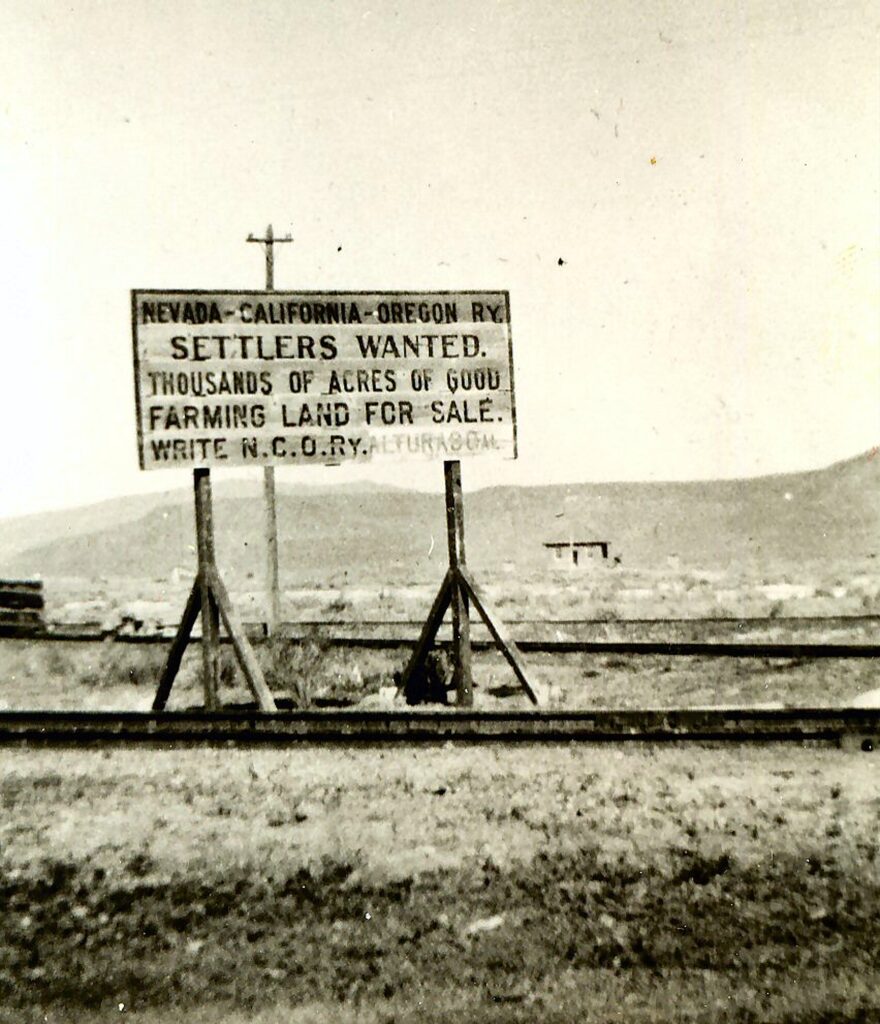
An interesting NCO billboard, with the Caloreta School in the background, 1920–Lenala Martin
You probably have never heard it, because it was a short lived designation that would later become Wendel. When the Fernley & Lassen Railroad was being constructed to Westwood, when it crossed the NCO railroad’s tracks, north of Amedee it created a dilemma to name its new station at that point, due to the fact the. NCO kept changing their station’s name for that location. While today, many might not think it was a big deal—but it was—so much of the nation’s mail traveled by rail.
The Fernley & Lassen decide to name the crossing Caloreta, it being a combination of names that stands for the California and Oregon Transfer. In 1914, Manuel Jose of Alameda County, California had the Caloreta Townsite laid out at the present site of Wendel. On June 6, 1914, Jose leased a lot that was adjacent to the Fernley & Lassen to Gail H.V. James for $10 a year, which was the site of the Purser Post Office. On February 10, 1915 the post office name was changed to Wendel and Caloreta went out of existence.
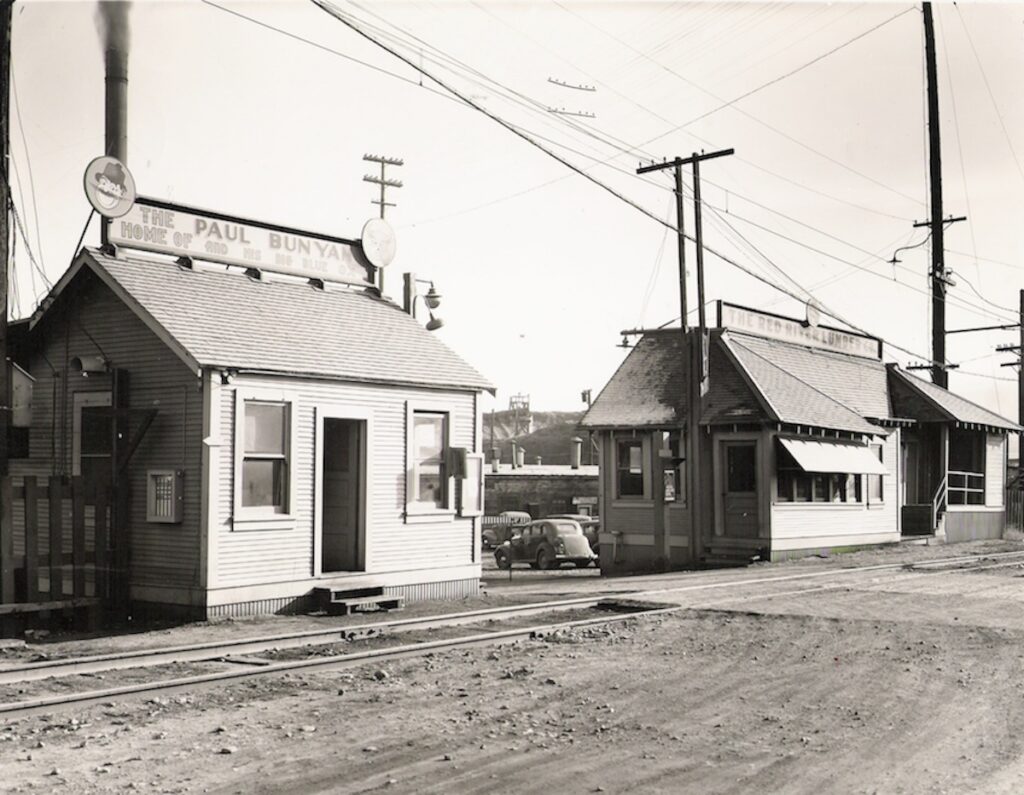
Employee entrance at Red River Lumber Company’s mill, Westwood
Since it is Labor Day, it is only fitting to have a topic about the labor movement. With the events leading up to World War I, demand for lumber soared. It was in the Pacific Northwest that two labor organizations—the Industrial Workers of the World (IWW) and the American Federation of Labor (AFL)—gained momentum in union organizing in the lumber industry.
The IWW had an image problem. It was considered radical in its
thinking for the time. Some considered it a communist organization. It gained notoriety for its strikes that were marred with violence. It
was from these and other factors, and with the emergence of the Loyal Legion of Loggers and Lumberman that hindered its movement.
After World War I the lumber market plummeted. This weakened labor’s leverage to organize unions. Yet, by the early 1920s, Fruit Growers Supply Company and the Lassen Lumber & Box Company established sawmills at Susanville. So these operations combined with Red River Lumber Company at Westwood, the IWW saw a lot of potential in Lassen County. IWW members worked very hard to recruit there, but with little success. It could be perilous duty and arrests and convictions of suspected organizers occurred. Case in point is the story of Charles Griswold, alias Thomas B. Miller. A Red River employee, Griswold worked the green chain at the mill. He was arrested and charged with the violation of the Busick Injunction for recruiting members for the IWW—the Busick Injunction deemed the IWW was a part of a communist syndicate. On March 25, 1925 Griswold was taken to Susanville and a short jury trial was held. The jury deliberated for ten minutes before they came back with a guilty verdict. Griswold was sentenced to six months in the Lassen County Jail. He could consider himself fortunate for many who were charged with the same offense never had a trial and were automatically sent to prison.
The biggest problem IWW faced in Lassen County was that all three
lumber companies paid the prevailing wage, if not above, and provided better housing than found in other regions on the west coast. The employees had few grievances, so there was no incentive to be a part of the labor movement. It was because of these conditions that Lassen County sawmills remained union free during the 1920s.
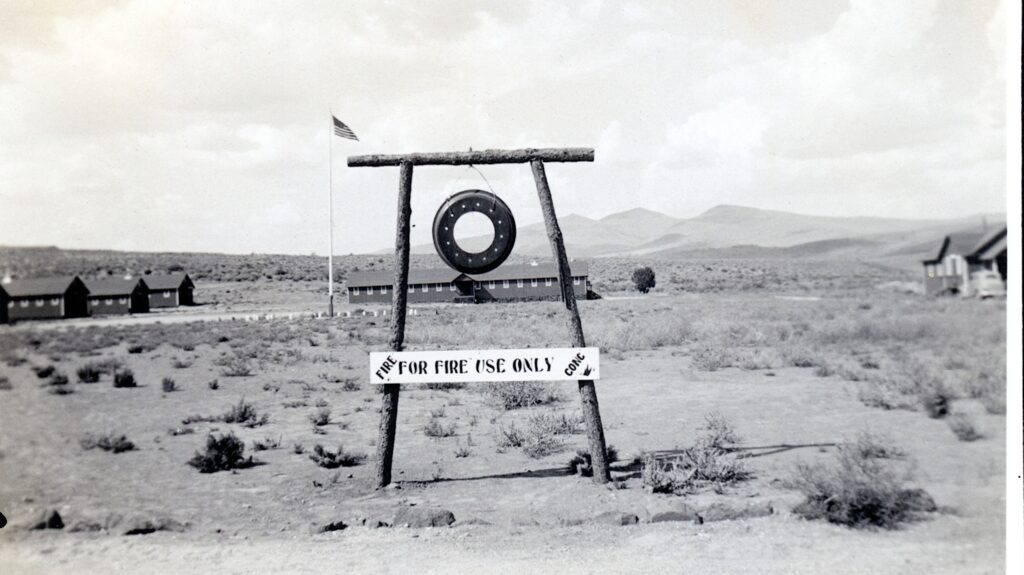
The Fire Gong at the Secret Valley CCC Camp—-C.H. Bennett Collection
There was a fire gong at the Secret Valley CCC camp. This is new territory for me and until I saw this photograph, I did not even know a fire gong existed. Fires, at that time, were not that common in eastern Lassen County, so it probably did not receive that much use. If anyone can shed more light on the fire gong, it would be welcomed.
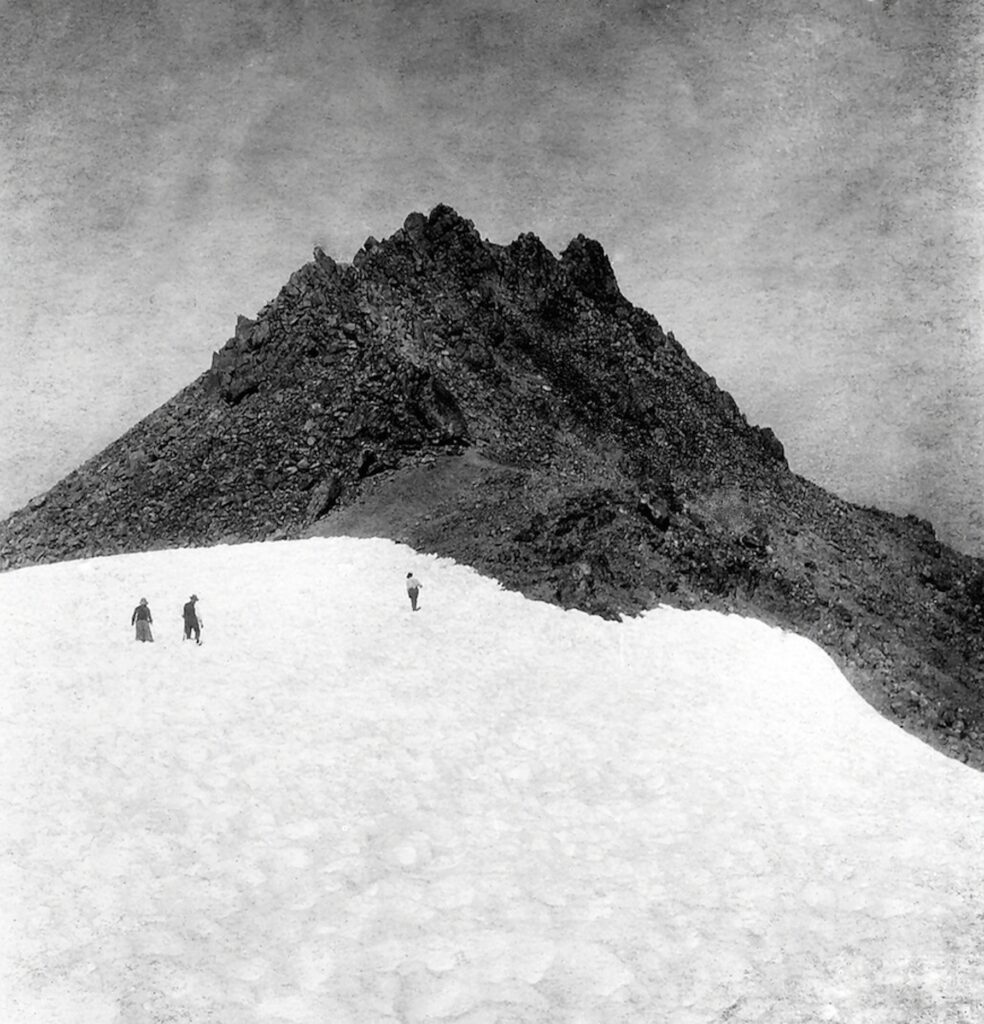
For those who have hiked to the top of Lassen Peak, it can be a spectacular view. Personally, however, the first time I made the ascent it was disappointing. This was, and showing my age, was in the fall when they used to burn the rice fields in the Sacramento Valley, so when I made that initial ascent there was layer of brown smoke over the Sacramento Valley. Enough of that.
Who the first Anglo to climb Lassen Peak, we may never know. There is a dispute. However, we do know that in the summer of 1851, a prospecting party of ten men headed north from Onion Valley, Plumas County, in search of another fabled gold tale, the “lone cabin mine.” Once they reached Big Meadows (now Lake Almanor), they decided to forge ahead and climb Lassen Peak—-possibly the first to do so. One of those men, Grover K. Godfrey, a twenty-six year old New Yorker, observed from his vantage point at the top, “The sight is unrivaled in beauty and magnificence. It is like the vision of some dream land. I fancied I could see all the kingdoms of this world at one glance.”
The next group to climb the peak did so on official business. In the fall of 1863, as part of the geological reconnaissance survey of Northern California, Josiah D. Whitney of the California State Geological Survey sent four men to conduct field work—William H. Brewer, Clarence King, James T. Gardiner and Richard Cotter. It took the party two attempts to climb the mountain. On September 26, when King reached the summit, the wind was so fierce that he had to retreat. Beside the wind, another problem was encountered in the form of cloudy weather that obscured the view. This condition would not allow the men to make observations of lava flows and other remnants of volcanic activity. The windy weather brought snow, so they had to wait a few extra days to make the second attempt.
On September 29, at 1 a.m. with the aid of moonlight they began their second climb. King was again the first to reach the summit. The four men watched the sun rise from their perch. Brewer, like Godfrey, was in awe of the view. Years later he exclaimed, “Although I have often reached greater altitudes, that days stand out in my memory as one of the most impressive in my life.”
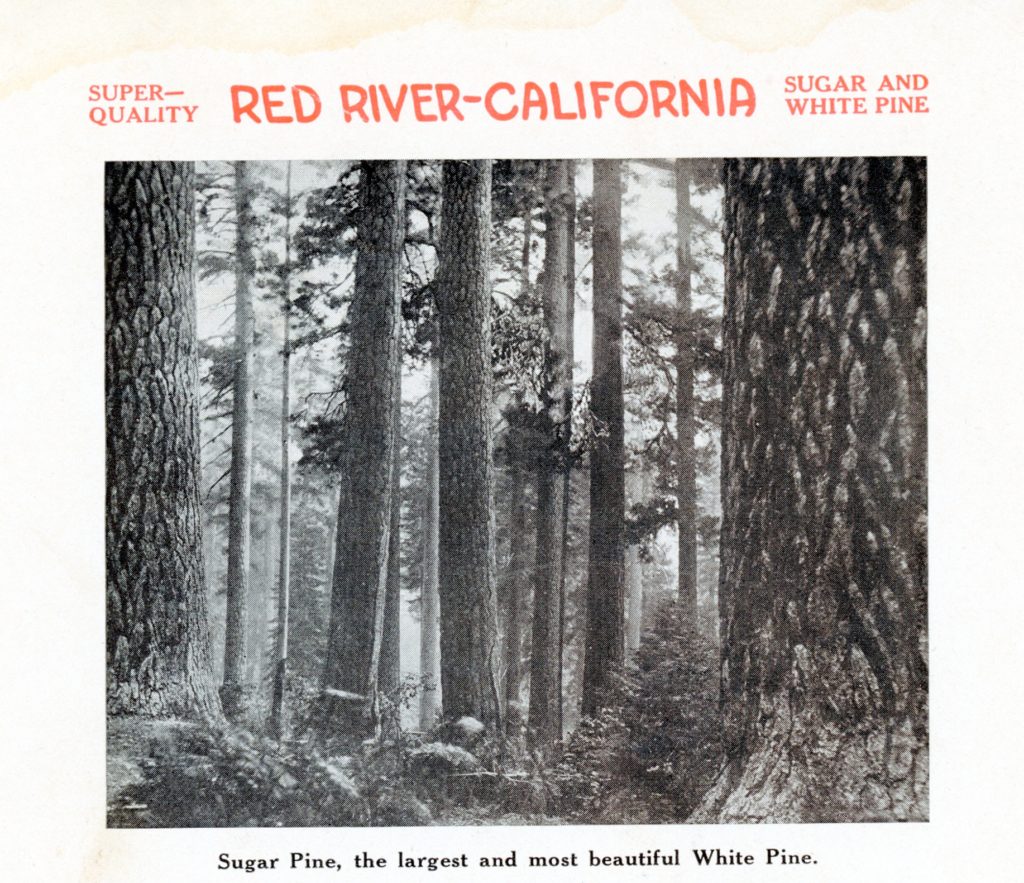
An early promotional brochure of the Red River Lumber Company
The sugar pine was highly sought by lumbermen, and especially for the manufacture of wooden boxes. The pine is noted for its straight grain and another feature was manufacture into lumber has no odor. The latter was desired by fruit and vegetable growers.
The sugar pine was so named for its surgary pitch. Noted naturalist, John Muir wrote: “The sugar, from which the common name is derived, is to my taste the best of sweets, better than maple sugar. It exudes from the heartwood, where wounds have been made, either by forest fires or the ax, in the shape. of irregular, crisp, candy-like kernels, which are crowded together in masses of considerable size, like cluster of resin beads . . . Indians are fond of it, but on account of its laxative properties only small quantities may be eaten.”
In the fall of 1915, Robert Strahorn brought new life to the project. Strahorn had a reputation for developing these type of projects. One of the biggest changes was the line would start at Flanigan, Nevada, on the eastern edge of the Honey Lake Valley and its terminus at Cedarville, California. By the spring of 1916, it appeared real progress had been made with right-of-ways secured from the Department of Interior and many of the landowners. In addition, it was announced that Lakeview, Oregon would be the new terminus. For those familiar with the country the railroad now had the daunting task to to cross the Warner Mountains at Fandango Pass. First a grandiose three-mile tunnel was proposed, but was reduced to a 4,820-foot tunnel, which still alleviated 700 difference from the top of the summit. Continue reading Surprise Valley Railway, Part II→