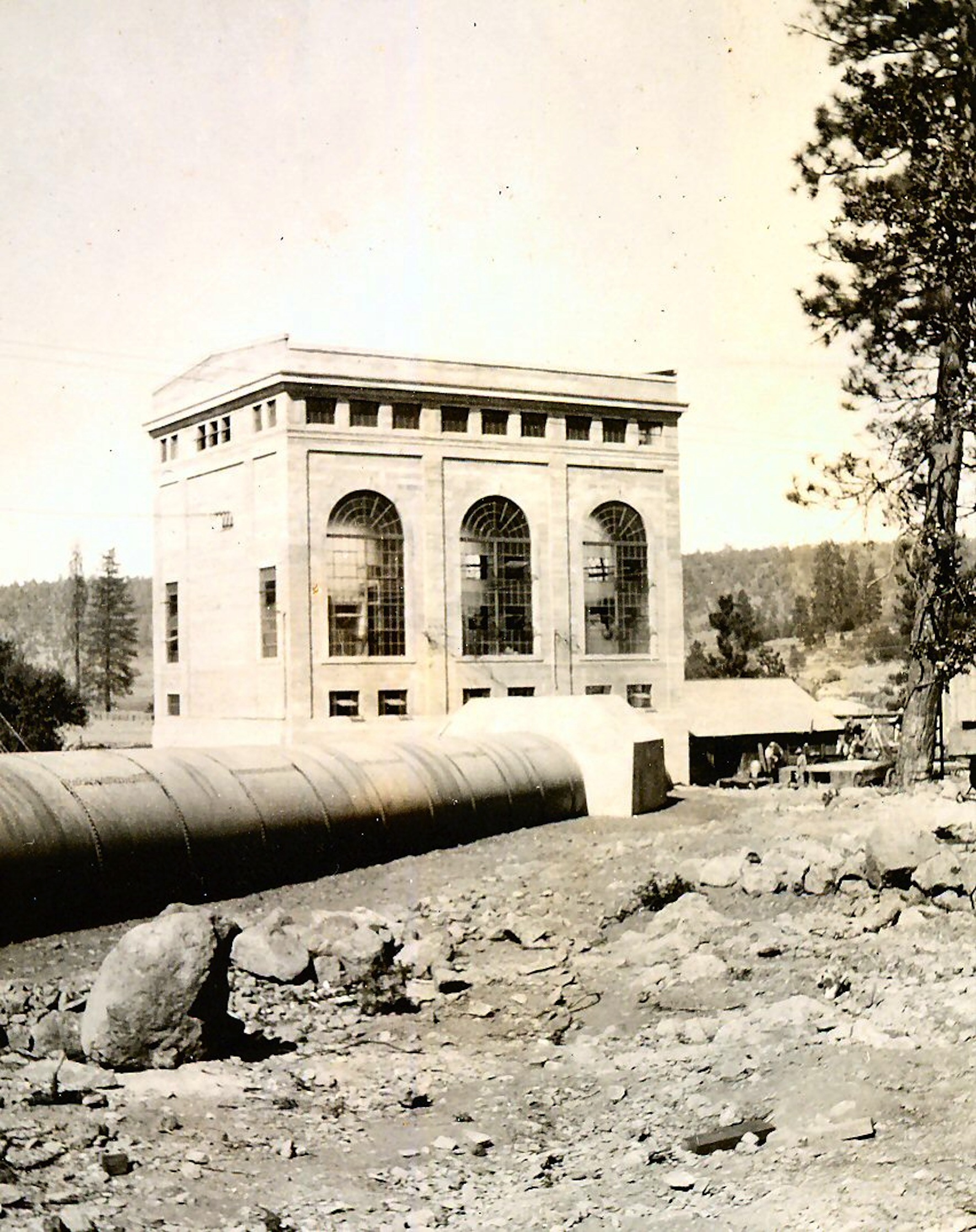
Hat Creek Powerhouse No. 1, 1921. Courtesy of Lola L. Tanner
The Red River Lumber Company operated many enterprises and it still as an influence concerning electricity to many residents of the region. From time to time when the Susanville area has a power outage, many times there will be a reference to the Hat Creek line. So you may ponder how did Hat Creek come to be? Continue reading Hat Creek Power→
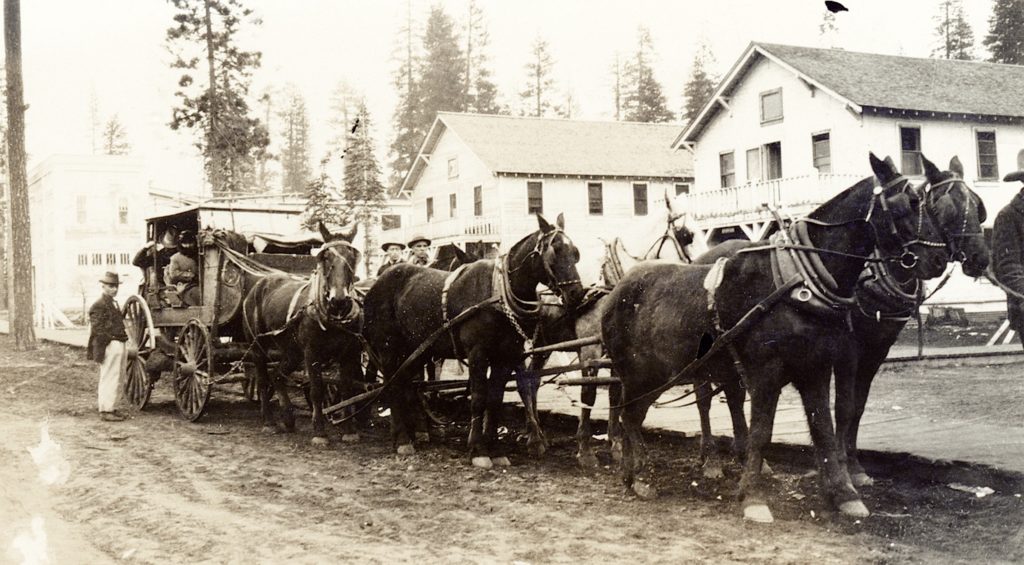
The old fashioned iconic symbol of the American West, the stagecoach would soon suddenly disappear during the time Red River constructed its company town of Westwood, that took an initial two year to build from 1912-14. It was truly a remarkable era with the automobile overtaking the horse and buggy era. Westwood evoked the modern era. A new town with electricity, sewer system and a department store, that would take decades for the neighboring communities to implement such “modern day conveniences.”
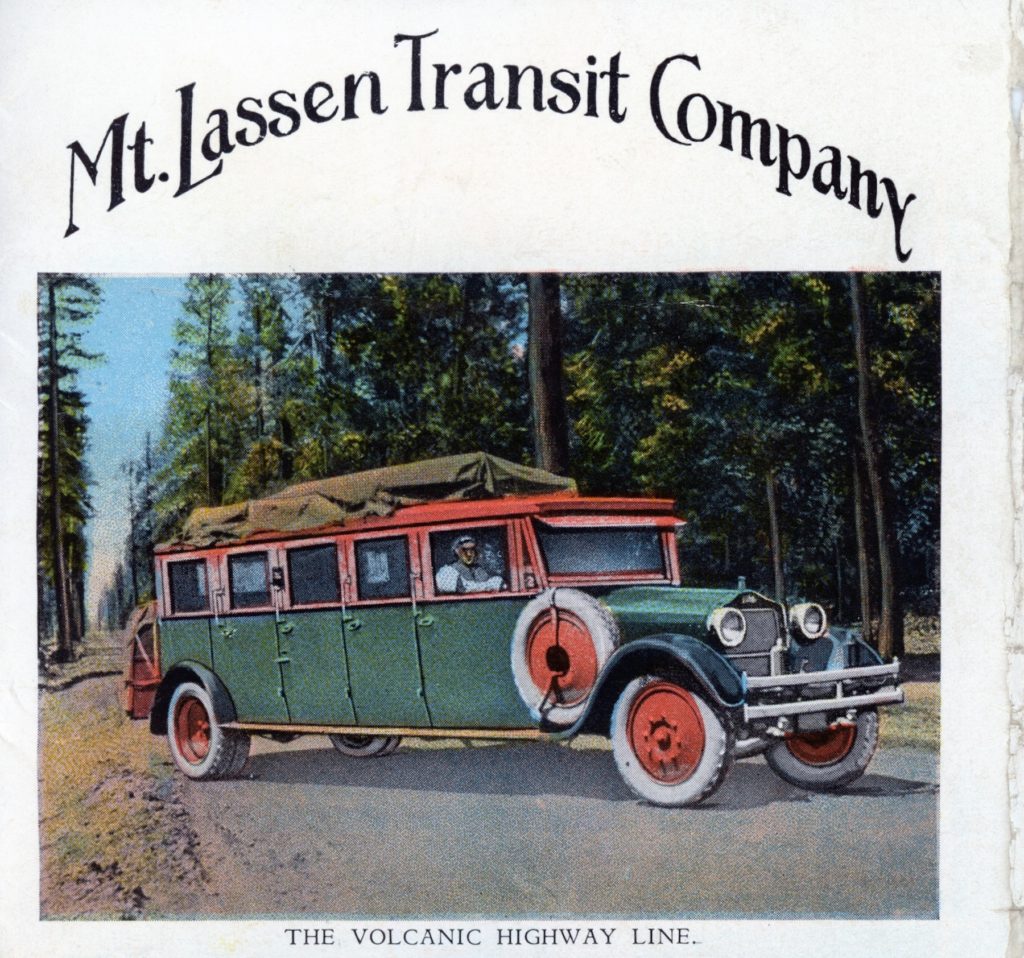
A year after the above photograph was taken, the horse drawn stagecoach was replaced with the “auto-stage” a large touring car. In 1916, the voters of California passed a $16 million bond measure to begin the construction of a state highway system.
Brochure of the Mt. Lassen Transit Company, Red Bluff, circa 1920. Courtesy of Margaret A. Purdy
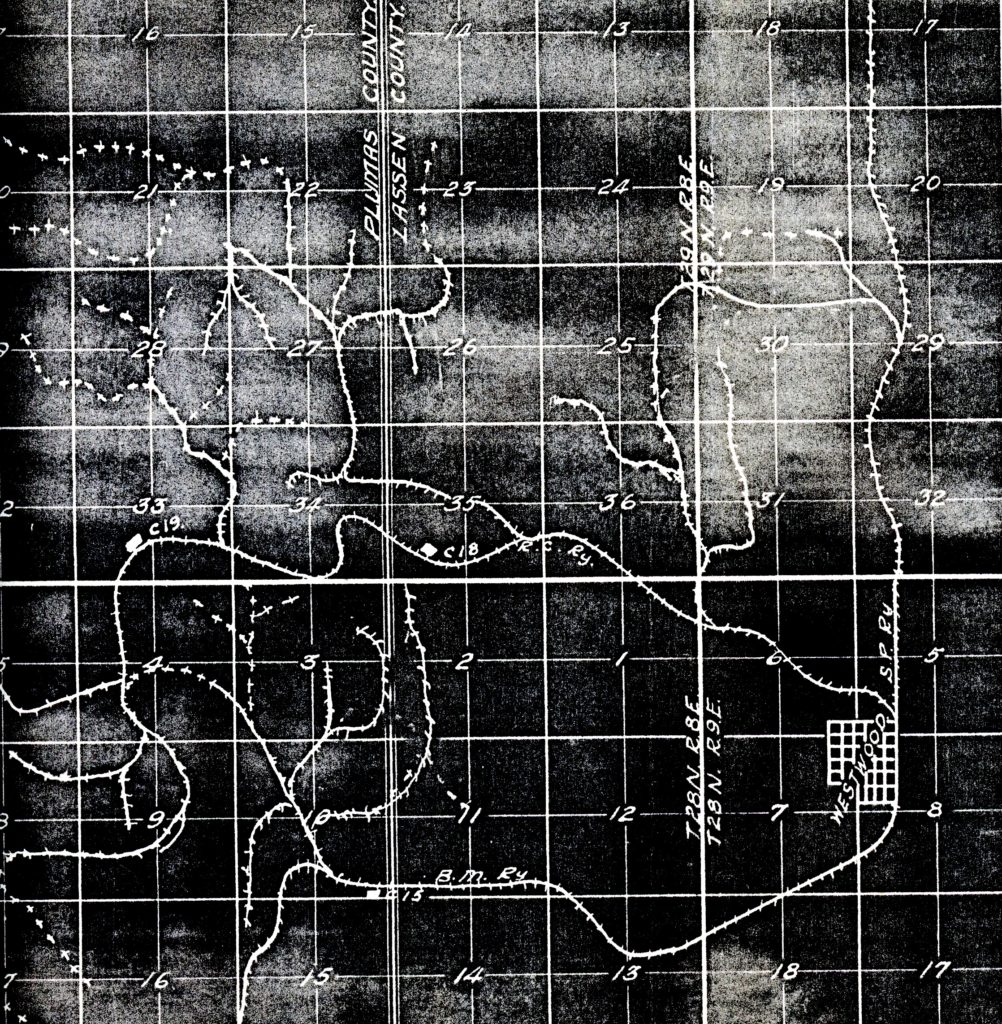
This map was recorded in official records of Lassen County indicating where Red River would log in 1917.
The 1917 logging season for the Red River Lumber Company was somewhat different than previous years. After all, it should be duly noted the majority of its logging was focused on its contract with the Great Western Power Company to log and clear Big Meadows of timber to make way for its new reservoir Lake Almanor.
Now with that obligation out of the way, Red River began logging its timber just adjacent to Westwood. Red River planned to increase its output by logging 150 million board feet in 1917 versus that of 137 million the previous year. This, of course, reflected the demand for lumber with wars ravaging Europe and elsewhere. This undertaking required operating five logging camps and building some twenty-five miles of railroad spur lines.
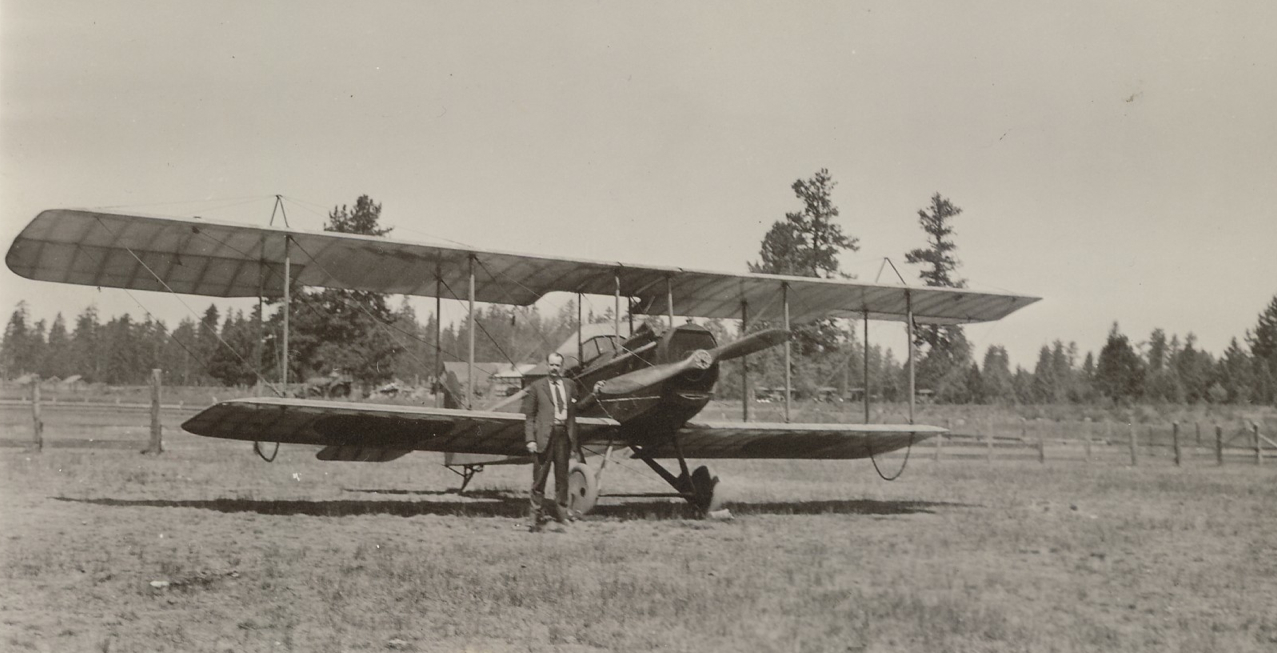
Westwood’s aviation history is an obscure topic. A crude landing field was established in the late 1910s on Mountain Meadows, about a mile south of the Goodrich Ranch. Initially, its use was nominal, due to its poor condition. In one instance, Joe Hunter received a call from a pilot in Red Bluff about the current condition who replied that it is a mud bog and unfit for landing.
In the 1920s, Red River’s Resident Manager, Fletcher Walker’s two sons—Fletcher Jr., better known as “Cub” and Kenneth—developed a strong interest in airplanes and became pilots. This interest in flying gained momentum in the area, so that in June 1928 the Westwood Auto Club spent $100 to clear the landing field of brush and fill in holes to make two 2,200 foot runways, thus the formal Westwood Airport was created—a first in Lassen County.
This caught the attention of Ted Campbell of San Francisco manager of Beacon Airway to examine the aviation field. He made an inspection to examine the possibility of establishing regular air service to Reno and other points on the Transcontinental Airway route. Yet, the prospect that Westwood residents would have nearby access to regular air service never materialized.
Yet, the Walker boys, as they were commonly referred to, were an adventurous lot. In 1928, They accompanied Dr. Thomas A Arbuthnot of the Pittsburg Medical College on a 10,000 mile African expedition from Cairo to Tanganyika, which they filmed their experiences. It was made into a film, The Wild Heart of Africa which made its debut in May 1929 in New York City. After that expedition they returned to their other passion, flying. In December 1928 they purchased a Travelair Bi-Plane, equipped with a 225 horsepower Wright Whirlwind motor. Cub spent a lot of time and energy in helping many Northern California communities in establishing airports.
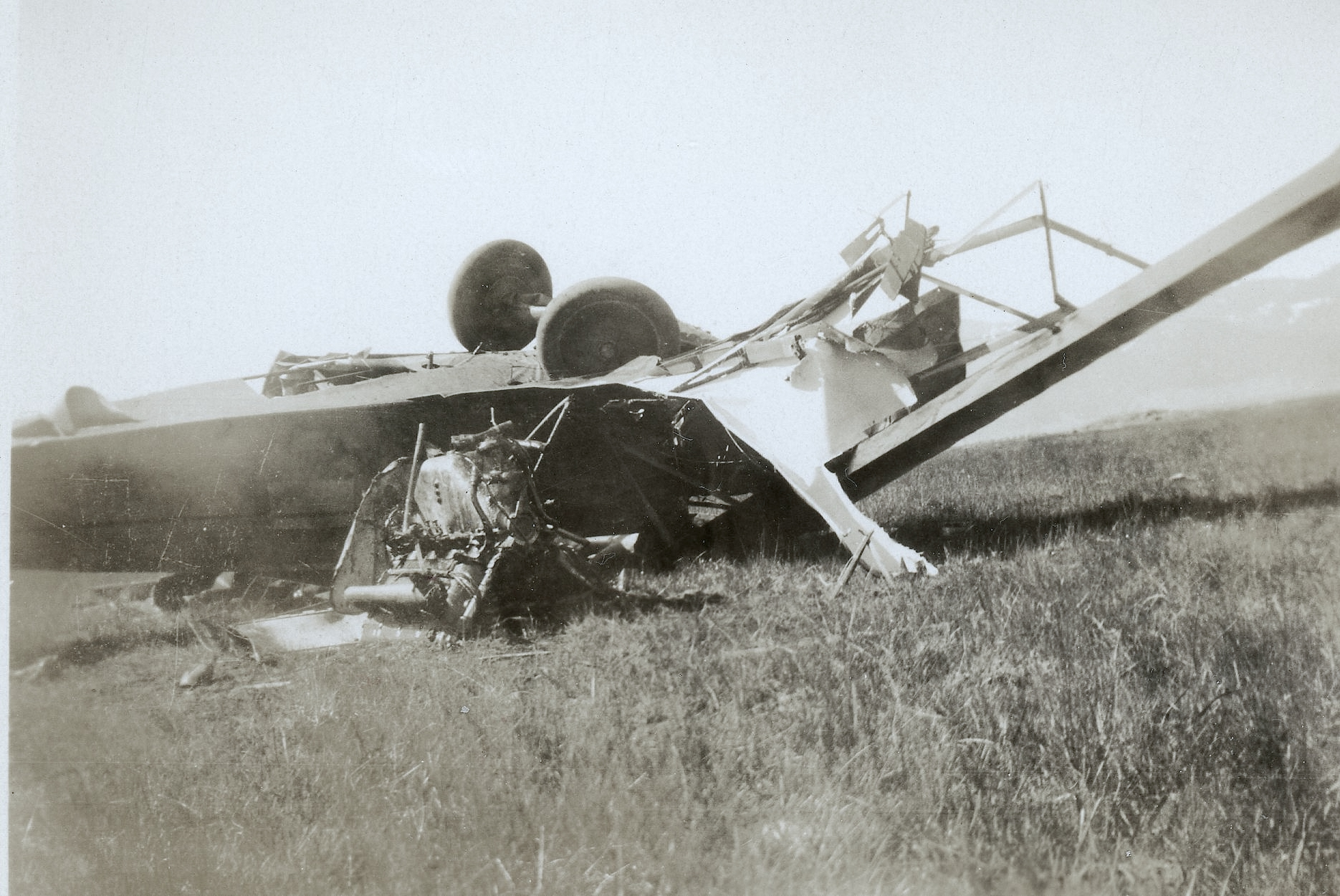
The wrecked Walker plane.
On August 23, 1929, the worst aviation disaster occurred at the Westwood Airport’s brief history. Cub and Kenneth routinely flew over Red River lands to photograph them. In this particular instance they were returning from such an expedition. At approximately 6:00 p.m. they were approaching the landing field when suddenly the plane malfunction and plunged crashing on impact. Frank Stevenson and Mike Pappas witnessed the crash from afar as they were placing duck blinds on the far shore of Walker Lake. The two men rushed to Westwood to inform the family and gather a party to go out to crash site. Cub was instantly killed from a broken neck and the rescue party on their arrival found Kenneth regaining conscious and attempting to get out of the cockpit and later fully recovered.
The airport continued to see use in the early 1930s, but by the end of that decade, it had become a footnote in Westwood’s history.
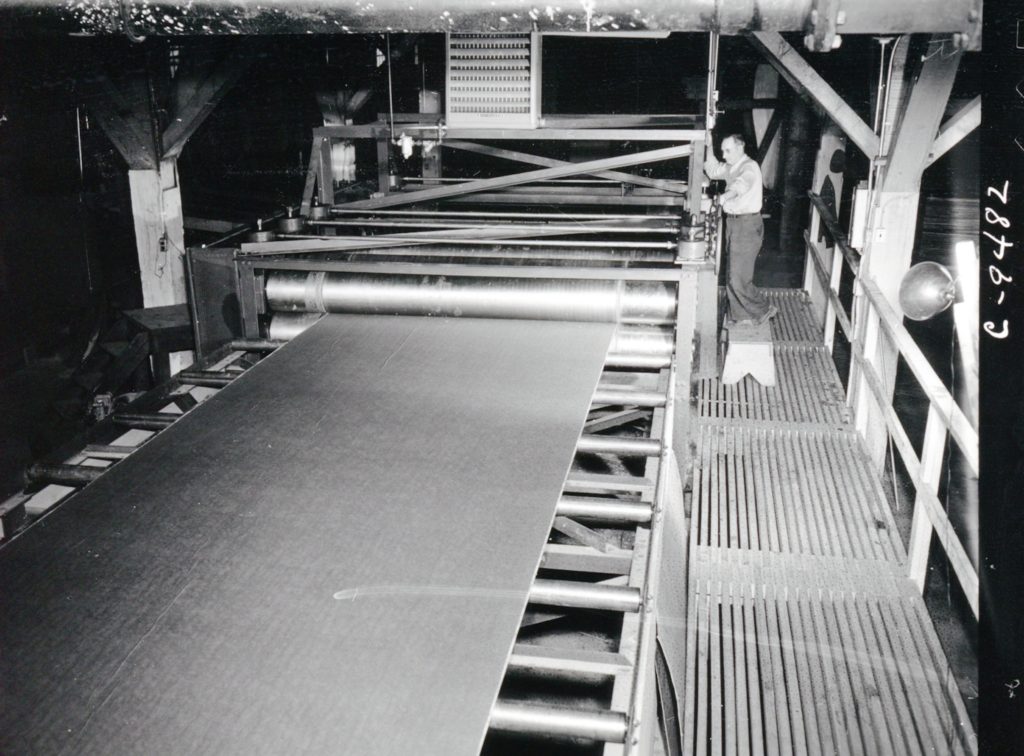
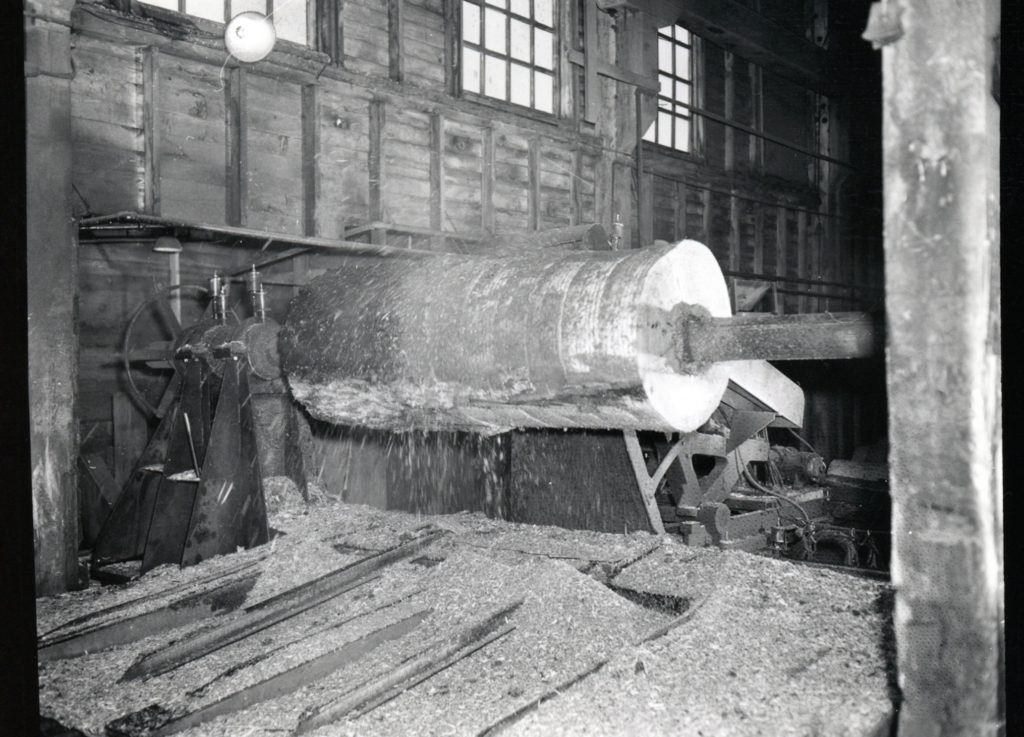
Craveneer moving through the lamination process—-Hank Martinez
When it was announced that Fruit Grower’s Westwood facility would become its Craveneer plant it came as a great relief to the employees there that the operations would continue. It was after all a $200,000 investment.
Machinery installation was expected to take four to six months and production to start by July 1954. Unexpected problems caused delays, however, and it was not until November that the first shipments of Craveneer were sent. It is interesting Fruit Growers box factories at Hilt and Westwood continued to operate . In addition, Fruit Growers even contracted for a supply of cardboard cartons. The growers now had their choice—wood, cardboard or Craveneer.
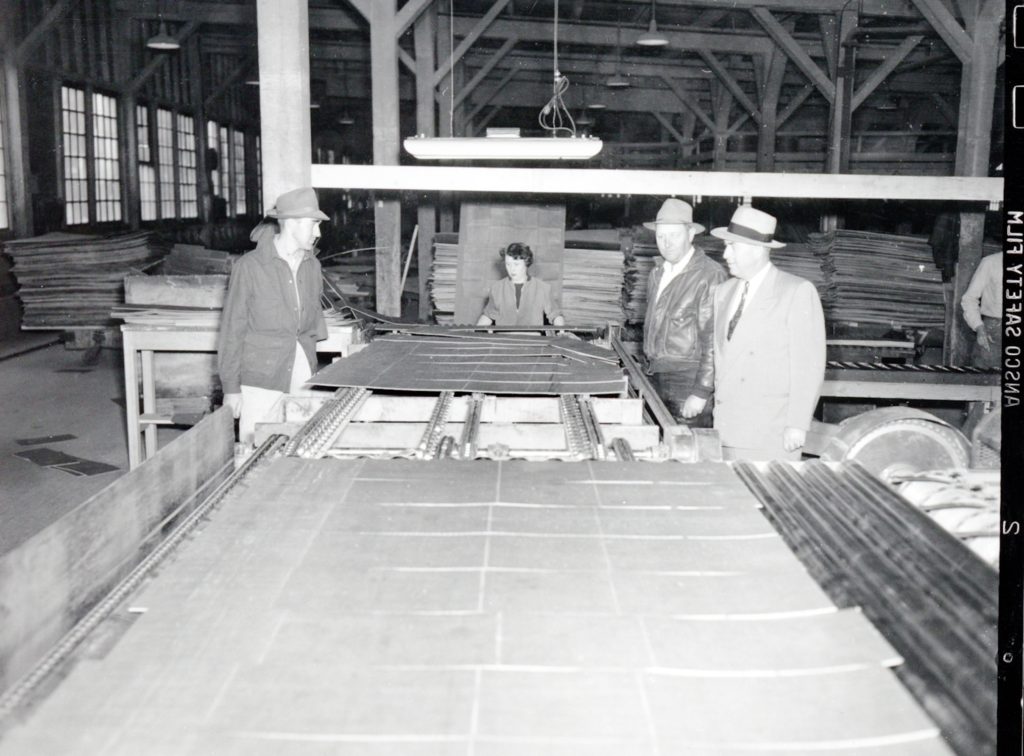
Cutting machine clipping the finished Craveneer into sheets—-Hank Martinez
In the meantime, Fruit Growers had not ruled out a Burney plant. In early 1955 they began to budget a new plant there that would cost $9,450,000. To make the Burney plant flexible besides a Craveneer plant, it would also have a plywood plant.
Changes on the horizon were swift. In the summer of 1955, it was announced by Sunkist that the cardboard box, was the container of choice. Thus, no longer a need for wooden boxes or Craveneer. On June 18, 1955 the Westwood box factory closed. On August 25, 1955 the Craveneer plant was closed and liquidated, which the California Barrel Company of Arcata purchased the Craveneer machinery. It should be noted that the box factory at Hilt remained in operation to manufacture picking boxes.
In the early 1930s, professional ski jumping events were all the rage. Westwood’s Paul Bunyan Ski Club built a ski jump on Fredonyer and held several contests. In November 1937, Bert Bain operator of the popular road house The Meadows built an amateur ski jump across the highway from his establishment. In time it evolved into today’s Coppervale Ski Area operated by Lassen Community College.
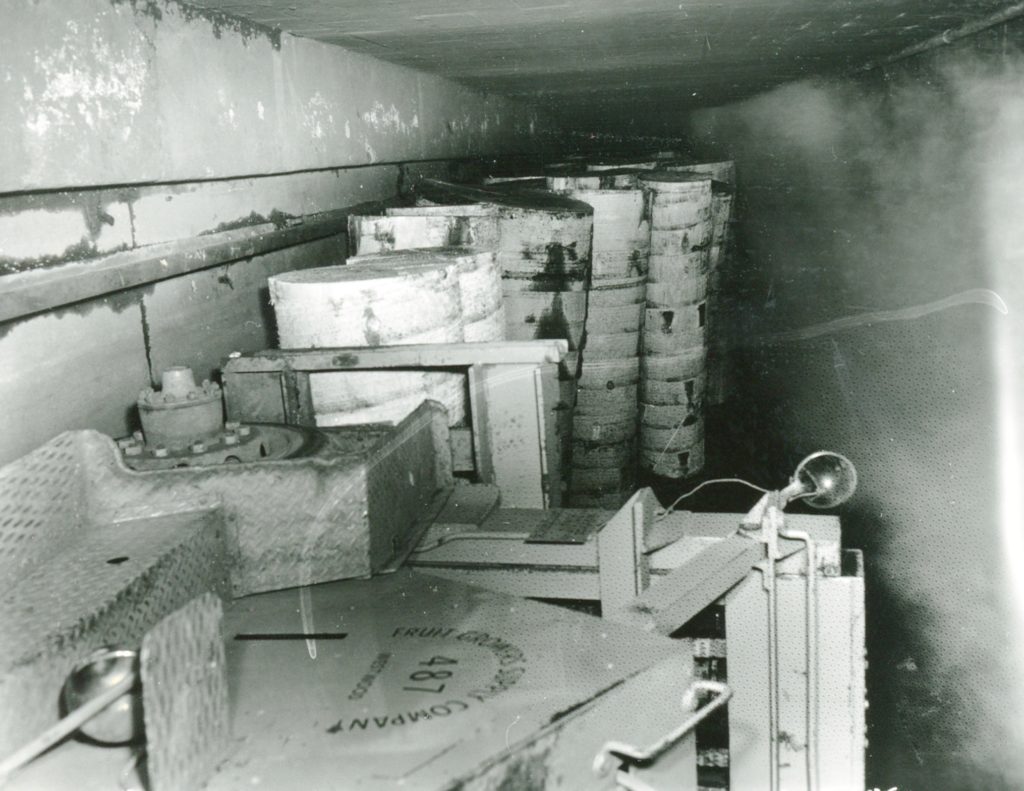
Steaming logs in preparation for peeling into Craveneer—-Hank Martinez
The Chicago Mill & Lumber Company developed the Craveneer process during World War II in their Tallulah, Louisiana laboratory. Experimenting with Mississippi delta oaks, which had no commercial value, Chicago Mill & Lumber Company discovered an adhesive that would glue 42 pound Kraft paper to the green veneer wood with a continuous roller process. One advantage of the process was the small amount of shrinkage when it dried. Conventional rotary cut veneer shrank up to 10 percent; Craveneer shrank only 1 1/2 percent. The Kraft paper also hid defects such as knots. And the exterior could be treated with a wax emulsion that acted as a mold inhibitor, a real plus in a citrus packinghouse.
The Globe DeBarker preparing logs for peeling into Craveneer—-Hank Martinez
In 1953, Fruit Growers Supply Company purchased the necessary machinery from Chicago Mill & Lumber Company and became the sole licensed manufacturer of Craveneer for the West Coast.
The big question facing Fruit Growers was where to install the plant—convert the box factory at Hilt or build a new sawmill and Craveneer plant at Burney? On November 9, 1953 it was decided to convert the veneer plant at Westwood into a Craveneer plant, yet Burney was still a future option.
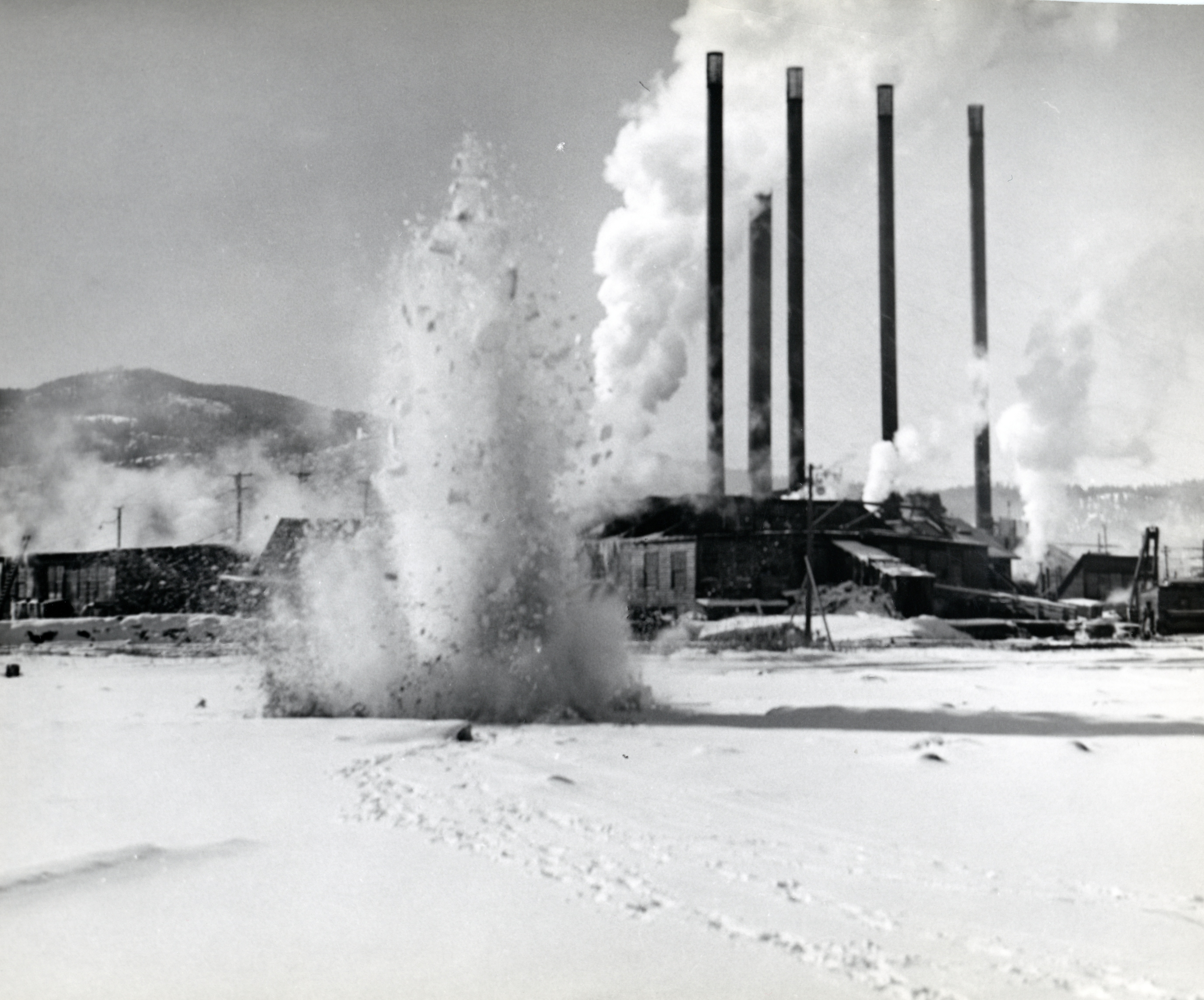
Dynamiting the Westwood millpond, January 27, 1949. Courtesy of Fruit Growers Supply Company
It has been some time since this region has experienced prolonged sub zero temperatures, which is fine with me. When it does get that cold things happen. In January 1949, the temperatures plummeted to nearly thirty degrees below zero at Westwood. The millpond froze. When the Red River Lumber Company designed the facility, they placed piping from the powerhouse that forced steam air directly into the millpond near the sawmill. This system was no match for Mother Nature. To keep the mill operating it was necessary to use dynamite to blast loose the logs in the millpond. Continue reading How Cold?→
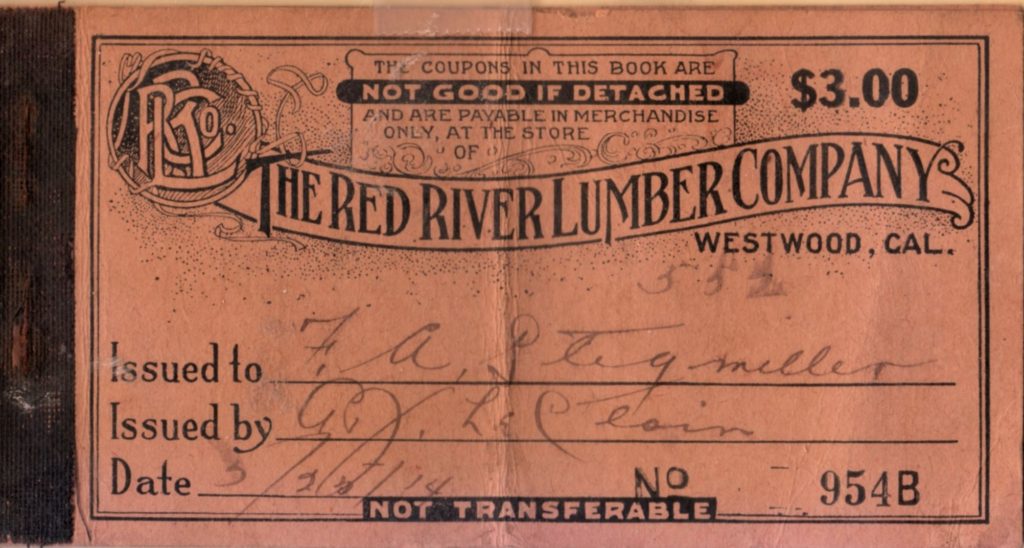
Red River Lumber Company like so many other company towns issued scrip—a form of company currency utilized when an employee received an advance on wages. When an employee received scrip, the amount was deducted from his wages. It was basically worthless as it could only be redeemed in company stores. The usage of scrip declined when employees were issued badges. With an employee badge number, the employee or a member of his family could charge anything they wanted from the company store using that number. Those charges were then deducted from the employee’s paycheck.
In November 1923, John Thomas of the Oakland Tribune wrote a complete description of Red River’s operations at Westwood. As to the company scrip he noted, “The company runs a general merchandise and department store, covering a whole block. Here you can buy anything from a paper of pins to a threshing machine.
“All the employees of the big mill trade here, also dad, grandma, auntie and the kids related to the employees. This is the only store in town. The strange part of it is you don’t need money in this store. You use scrip or paper money—not Uncle Sam’s brand of currency, the kind the banks hand out. You procure books of scrip tickets from the office. These scrip books contain five, ten, twenty-five and fifty cent checks, or tickets, and are good in the big store, also the movie show, newsstands and clubroom. I never tried putting scrip in the plate of the church, as I did not attend.
“These scrip books are transferable to members of the immediate family, that is to pa, ma and the kiddies. Grandma buys her darning cotton, uncle buys his chewing and smoking, sis buys her new slippers and the kiddies their candy and chewing gum all with scrip.”
Spread the word, and encourage a friend to subscribe
In 1912, when Red River Lumber Company began construction of its company town of Westwood, Lassen County officials did not know what quite to expect. Lassen County had experience with planned communities, such as Standish, but none of these proposals ever came to full frutition that the promoters envisioned. Westwood was entirely a different proposition. County officials were relieved that all of this development would not only cost the county any money, but its tax base mushroomed beyond their wildest dreams. The county was spared every expense, even the deputy sheriff, Red River paid that salary.
The good times would not last forever. By the early 1930s Red River was in a serious financial crisis. The days of a company town would soon only exist as a memory. Red River’s company owned businesses would be no more, those enterprises leased to outsiders. In the fall of 1934, Red River and Lassen County began working on the transition wherein the county would be responsible in maintaining the streets of Westwood. On November 10, 1934 Red River deeded over the streets of Westwood to the County of Lassen, however for reasons unknown the county did not accept the deed until September 1935.
Spread the word, and encourage a friend to subscribe