Tag Archives: Westwood

The Westwood Auditorium

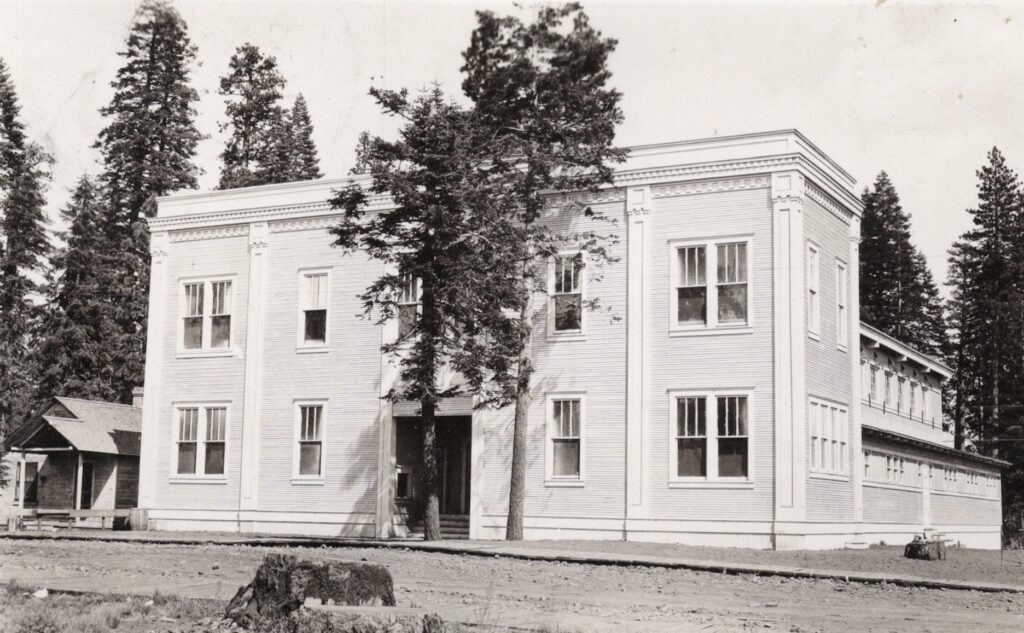
Westwood Auditorium, 1920

One  of Red River Lumber Company’s  early public buildings in Westwood was the auditorium located at northeast corner of Birch and Fourth Streets. It was in December 1917 when Red River unveiled the plans for a multi-purpose building. This much needed facility would house a fully equipped gymnasium, lodge rooms to accommodate its growing fraternal organizations, Billiard rooms and other spaces devoted for readings and meetings. The goal was have it completed by the spring of 1918, but Red River noted it could be delayed for a number of reasons due to the impacts created to meet the needs associated with World War I.

The Auditorium was put on hold, much to dismay of the residents. In January 1920, Garfield Oates, Red River’s resident engineer, announced that the plans for the Auditorium were being modified and construction would begin shortly. On May 29, 1920, the highly anticipated opening of the $30,000 Auditorium was held–by far the most expensive public building built in Westwood to date.

On the first floor was its most notable feature being a large dance floor measuring 48 by 96 feet. In the Auditorium’s later years the dance floor was converted into roller staking rink. By the early 1970s, the building was its showing its age. In 1973 the Lassen County Assessor deemed to building of no value. By the late 1970s the building was demolished. Many Westwood residents could not remember a year, but it has been gone by 1980, when the shuttered nearby Westwood Theater re-opened as the Red River Pub.

Support
 

Lassen Electric Company

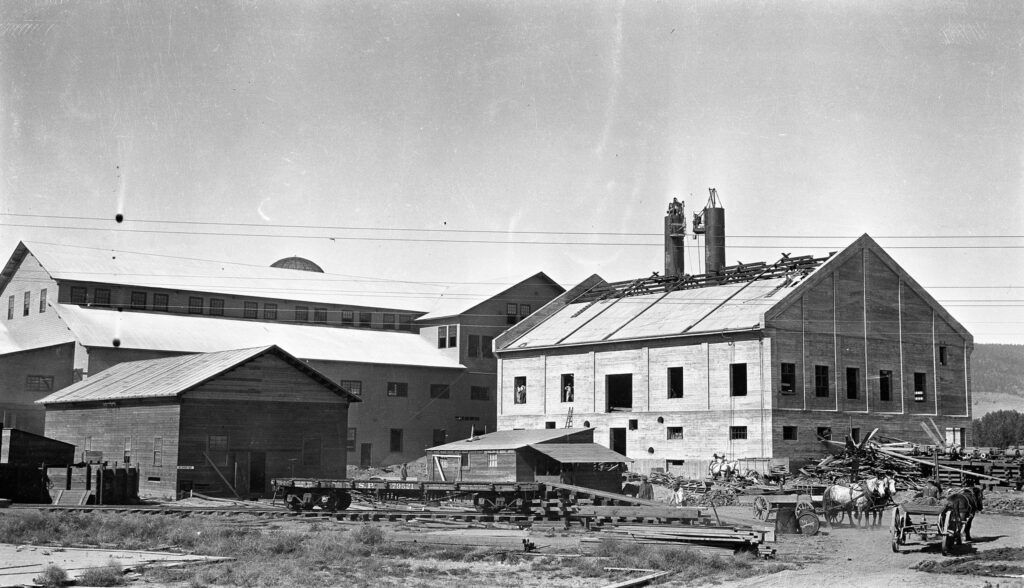
Fruit Growers Powerhouse under construction, 1920 – Courtesy of Ed Standard

In 1910, a partnership was formed between Abel Bunnell, L.R. Cady and J.E. Pardee known as the Lassen Electric Company. It should be noted, in 1901, electrical service were offered to Susanville residents. The anticipated growth with the imminent arrival of the railroad meant a larger more reliable electric plant was needed. A solution was found at Bunnell Springs, six miles west of Susanville The springs could provide sufficient hydro power. A plant was constructed at Bunnell Ranch and placed into operation on June 11, 1910. It had a capacity of 150 kilowatts, twice the capacity of the old system. In 1920, the Lassen Electric was sold to the Red River Lumber Company. This was done to meet the demands of the fast growing community. Red River, after all, had its own  extra power to supply Susanville. In the summer of 1920, Red River spent $100,000 to build the transmission lines from Westwood to Susanville. In 1924, Lassen Electric reached an agreement for Fruit Growers and Lassen Lumber Box to provide for back up power.

Tim.

Red River’s Livestock Brand

Red River’s Brand

In today’s marketing world one of the most used terms is “brand.” However, the agricultural community, brands are more than a marketing gimmick.

One would not think a lumber company would have a brand for livestock. When Red River first set up shop in Mountain Meadows, Fletcher Walker’s goal that the entire operation would be self sufficient, as possible with certain limitations. It was an admirable goal.

Initially, Red River needed horses for logging, which they did not completely phase out until the late 1920s. Red River had its own dairy herd to provide for milk, etc which all was produced in its own dairy. Since Red River owned a sizeable portion of Mountain Meadows, they initially raised their own cattle. Due to the winter weather conditions there, the cattle had to be moved elsewhere. My grandfather, John Tanner, routinely during the 1920s would pasture a portion of Red River’s herd for the winter in the Honey Lake Valley.

It was only fitting that Red River’s used the initials of TB for its brand. For those not familiar with the company, the initials are of its founder, Thomas Barlow Walker, who routinely used his initials, “TB.”

Never miss a story, click here.

A Fond Memory of Tunison’s Roadhouse

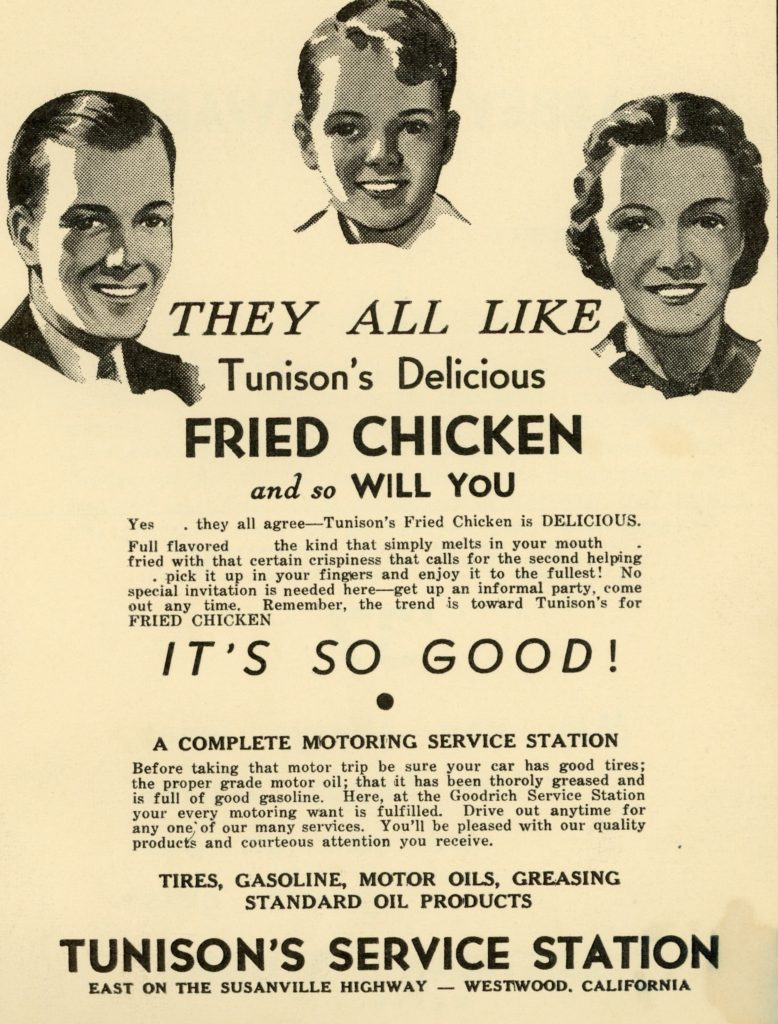
Tunison’s advertisement in the 1937 Westwood Chipmunk

In the mid-1930s, Bill and Jeanette Tunison established very popular bar, restaurant and gas station five miles east of Westwood near Goodrich Creek.* Tunison, it should be noted had been a Westwood resident since 1916. The establishment became very popular in a short order, known for its good food and hospitality. As Marian Hull Herrick recalled, “People would call ahead to see if they serving were Jeanette’s Rum pie that night. People raved about the fried chicken and biscuits. Jeanette confided in me that they were made with Bisquick.”

*The free standing chimney  along Highway 36, is the sole remnant of Tunison’s

Never miss a story, click here to subscribe.

Dyer Mountain Voter Initiative

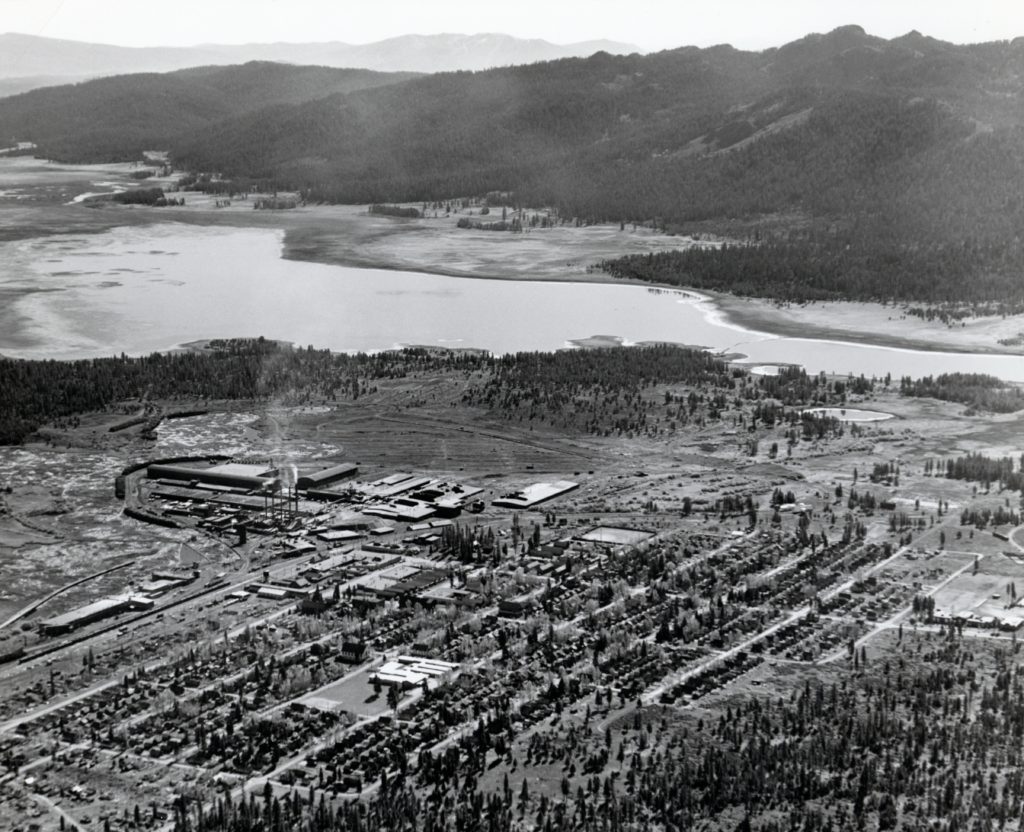
A view of Westwood with Keddie Ridge in the background,, Dyer Mountain is northern post on Keddie Ridge. It is also where to Sierra Nevada ends and the Southern Cascades begins. 1955.

On November 7, 2000 the Lassen County voters approved a contentious ballot initiative to amend the county’s General Plan, Zoning Ordinance and the Westwood Area Plan to allow the development of a four-season resort near Westwood known as Dyer Mountain. It was proposed to build three golf courses, ski runs, along with thousands of houses, condos along with commercial retail projects. It became a heated issue fought by environmental groups. Plagued with financial and legal issues the project was derailed.

Tim

A Mystery Solved

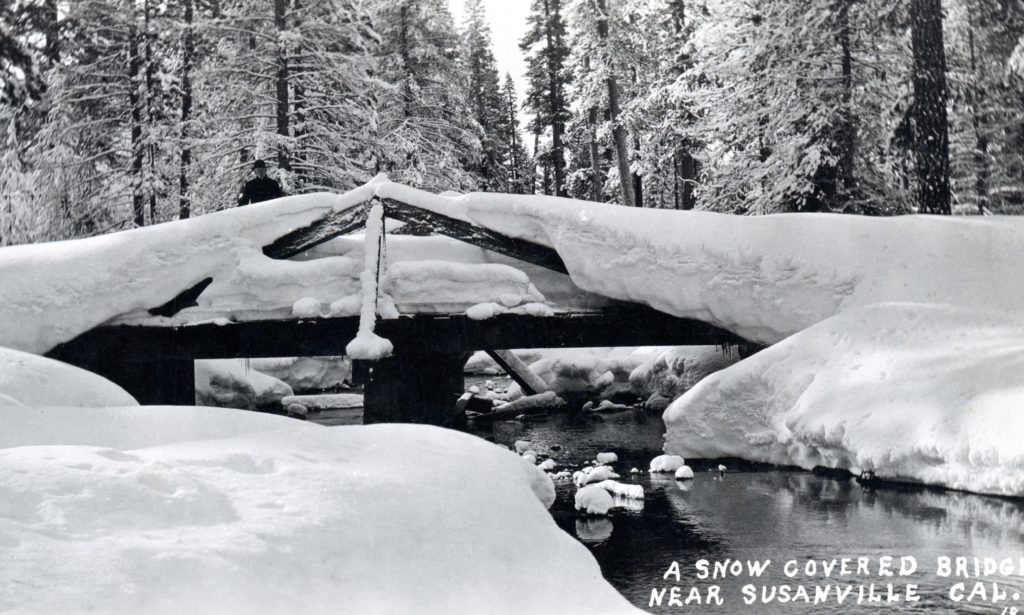
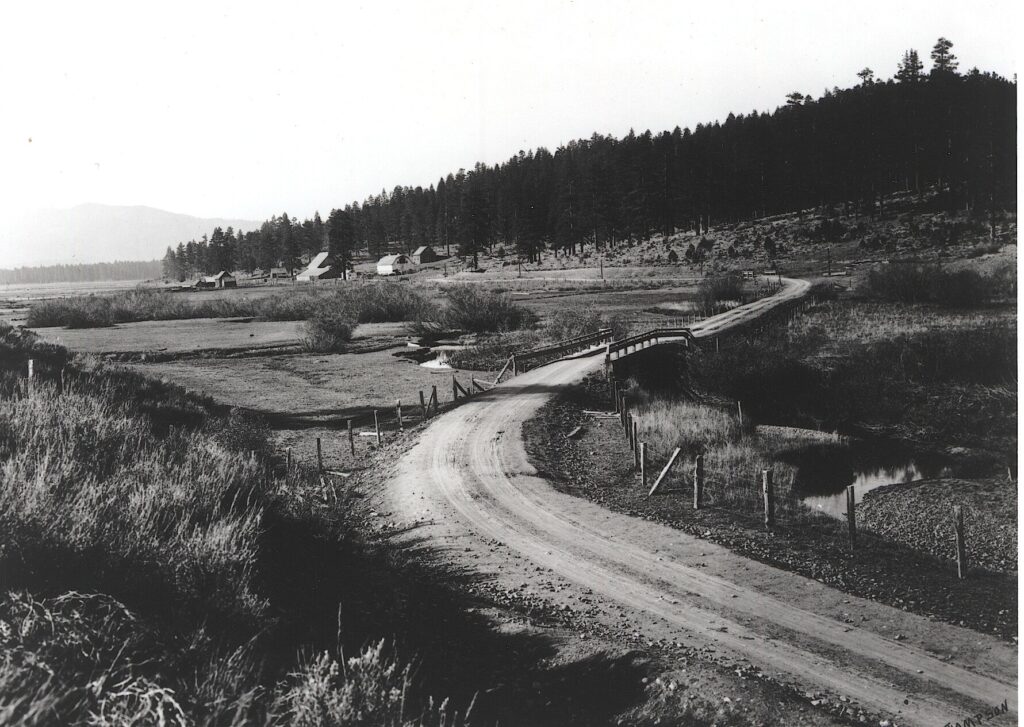
Robbers Creek, 1918, I do not think its near Susanville.

A few years back, I published this photograph. However, I could never figure out the location. Now, I know. It is crossing of Robbers Creek to the north of Westwood. Since this is some twenty miles away from Susanville, in my opinion, I do not consider that near. The photographer named Engel, who I admire his work. took some winter scenes at Westwood in1918, and instead of giving the location of that lumber town, Engel, as he did in the above photograph affixed the label “near Susanville.”  I will be including a Westwood photograph by Engel in the 2025 Calendar.

Main Street, Susanville, 1918.

Here is a Engel photograph of Susanville.

Tim

T.B. Walker Visits Westwood

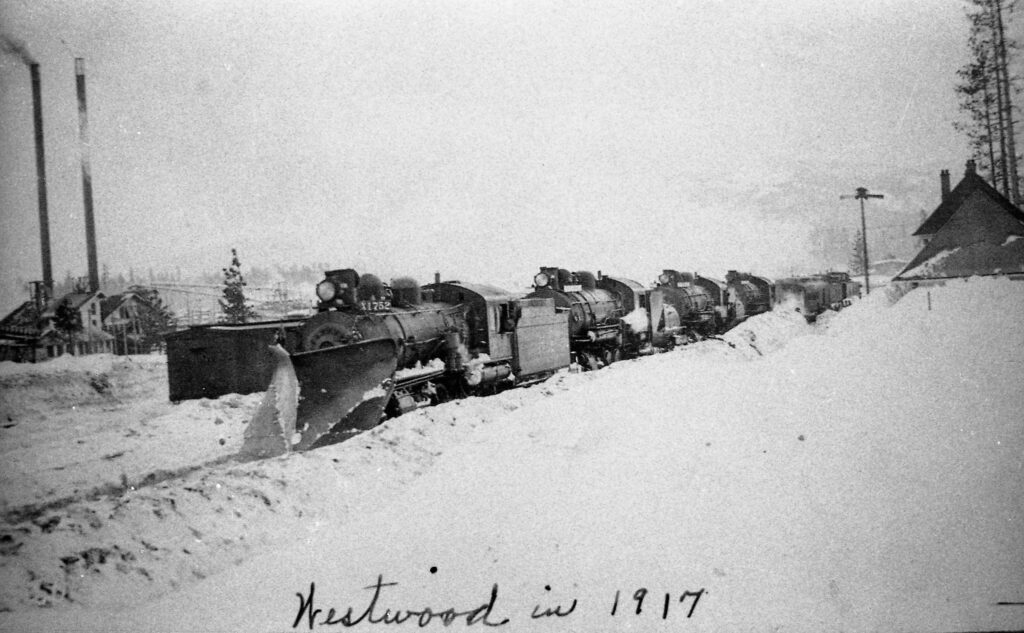
Westwood, 1917–Marge C. Foster

T.B. Walker spent the winter and early spring of 1913 at San Francisco to monitor the progress of the construction of the mill and the future company town of Westwood. Not all was going well. Not only his son Clinton was adamant that Mountain Meadows was not the right place for the mill,  contractor in charge agreed as well.

In the spring T.B. Walker was ready to return home to Minneapolis. He wanted to visit Westwood, but had to decline. He could not travel there via Susanville, since there was a movement on foot to relocate the mill. The other option was take the Western Pacific train via the Feather River Canyon. Walker had a fear of that canyon,  that he could get caught in a rock slide.

It was not until the summer of 1917 that Walker made the trip. He had a special guest, John Andrus. Andrus was a New York investor who help finance T.B.’s acquisition of Northern California timberland. They formed the Waland Lumber Company with the intent to build a sawmill in their holdings.  Andrus had never seen these holdings, thus Walker’s invite. On July 7, the entourage arrived in Westwood. It was a low key affair and most the time was spent touring the Northern California properties.

Subscribe


Early History of Mountain Meadows, Lassen County

Goodrich Creek, Mountain Meadows, 1914-Minnesota Historical Society

Mountain Meadows located in the western section of Lassen County comprises some 12,000 acres.  Prior to the establishment of Westwood in 1912, its hub of activity was at Coppervale. More about that in a minute.

In 1860, Dr. Atlas Fredonyer became the first settler. He remained there for two years and William B. Long briefly settled on his claim. In the early 1860s copper was discovered in the vicinity. When Carlton C. Goodrich petitioned for a post office he suggested the name of Coppervale. It was granted and the Coppervale Post Office opened for business on May 24, 1864 with Goodrich as first postmaster.

In 1885, L.M. McKenney’s Directory of Northern California provided the following description of Coppervale: “A small town with a post office situated midway between Prattville and Susanville. sixteen miles from the latter place. It has a try-weekly stage route each way between these two points. Mountain Meadows, in which the town is located, has an area of 12,000 acres, principally devoted to stock raising and dairying.”

In 1886, Goodrich passed away. He owned 7,650 acres there. He had put up on the market in 1885, but it was not until 1909 his estate sold it to John Crouch. Crouch would later sell it to the Red River Lumber Company where that Company established the town of Westwood.

In 1888, the Mountain Meadows School District was organized. A school house was built in 1892. In 1902 the school was closed for a lack of students.

A primary reason the region did fully develop in the late 1800s was the weather. Mountain Meadows is susceptible to heavy winter snows. A number of the ranchers who located there wintered at Red Bluff.

To Support, Please Donate or Subscribe 

A Fruit Growers Relic

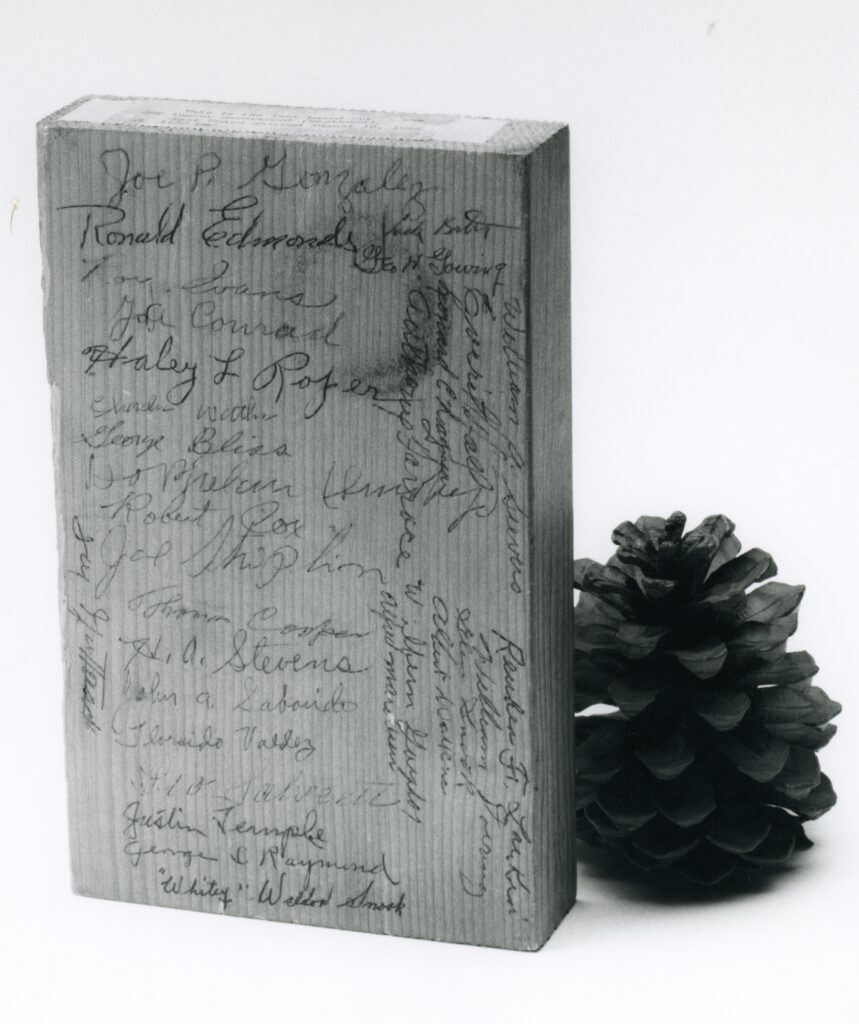
The last board milled at Westwood and signed by those last workers.

In January 1999, a relic of Westwood’s past was found in the old Community Center at Hilt. It was a piece of vertical grain Douglas Fir 5 1/2 inches wide, 9 inches high and 1 1/2 inches thick. It was the last board cut in the dry lumber department at Westwood in 1956, signed by the last workers. The board was put on display at Fruit Growers headquarters, then located at Sherman Oaks. Since Fruit Growers has moved from location there is not telling as what became of it.

The board was signed by Joe P. Gonzalez, Ronald Edmonds, Roy Evans, J.A. Conrad, Haley L. Roper, Charlie Watkins, George Bliss, D.O. “Smokey” Phelan, Robert Cox, Joe Stripling, Thomas Cooper, H.A. Stevens, John A. Saborido, Florida Valdez, Tio Salveltti, Justin Temple, George C. Raymond, “Whitey” Weldon Snook, Jack Bates, Geo. H. Gowing, Reuben F. Larkin, William Doeering, Glen Snook, Albert Watkins, Wilbern Taylor, Alfred Mardesen, Jay Guttered, William A. Sievers, Everett Hall, Leonard F. Lagnear and Anthony Farrace.

Tim

Red River’s Great Purge

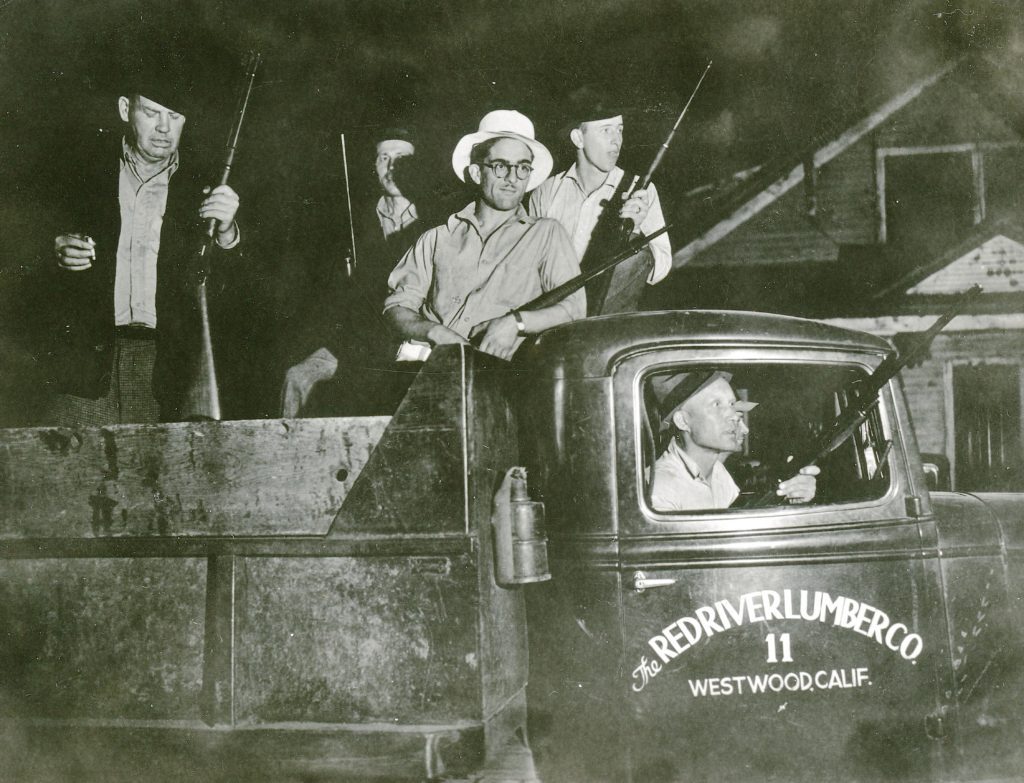
Purge Nite. Courtesy of Frank W. Davis

Red River Lumber Company’s labor problems in Westwood during the 1930s is a perfect case study on how to do everything wrong. There was, of course the great purge of in which nearly 400 men, women and children were forced out of their homes in Westwood on July 13, 1938 over a labor dispute. By the end of that historic day the California Highway Patrol, with the National Guard on standby placed a blockade on the community, sealing it from the outside world until things could stabilize.

I do not think we will encounter anything like this. Yes, it was a scary time during the strike of 1938 at Westwood.

According to historian Gerald Rose about the historical significance of the Red River purge he wrote, “Not until the 1941 deportation of Japanese-Americans was there a larger forced migration of United States citizens.” 

Tim