Tag Archives: Susanville

That Darn Boulevard Stop Sign

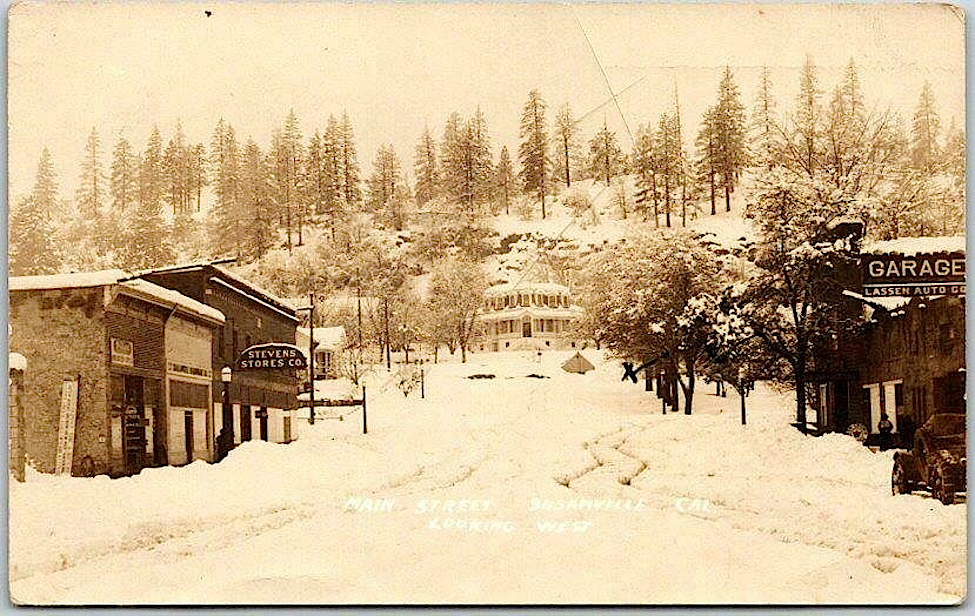
Main Street looking west towards the intersection of Weatherlow, 1937–Margaret Purdy

In the fall of 1926, Susanville installed stop signs at the intersection of Main and Weatherlow Streets, citing safety concerns and to control speeding somewhat. It was by and large ignored. That was going to change. City Police Chief, Lannie Long made it known that  beginning on November 21, it would be enforced and tickets issued.

Motorists for the most part obliged and those who did not yield to a full stop were initially given a warning. However old habits are hard to break, and soon motorists started going back to their old ways and and breezing through the stop signs. A crack down had begun and tickets issued.  During the week of December 16, 1926 nineteen  tickets were issued for failure to stop, including well known local attorney Hardin “Finn” Barry. The fine $5.00. By spring motorists were generally in compliance, and tickets became less frequent.

Support

The Arrival of Father Patrick J. Moran

Sacred Heart Church
Sacred Heart Church, 1910

On December 2, 1938, Father Patrick J. Moran became the fourth priest at Susanville’s Sacred Heart Church.  A dynamic figure, he would leave an indelible mark over the next twenty-eight years.

Father Moran’s first crusade would be a vigorous campaign to raise funds to build a new church to replace the existing church that had been built in 1892. The existing church could no longer accommodate a flourishing parish.

Another problem with the old church it was cold and drafty in the winter months—with its only source of heat and ornate pot-belly wood stove.

The original altar at Sacred Heart, circa 1910. Courtesy of Milton Mallery

After Moran’s first winter, enough was enough. Father Moran had the following notice published in the Lassen Advocate on November 26, 1940:  “That weekday Masses will be celebrated each morning at the parish house during the cold months as it is impractical and unnecessary to heat the church each morning for the services. However, Sunday services would be held in the church.”

It would not be until 1949, when the new church was completed.

Subscribe

Will It Be A Blue Snow Winter?

Red River’s snow roller in action. Courtesy of Calvin Sharp

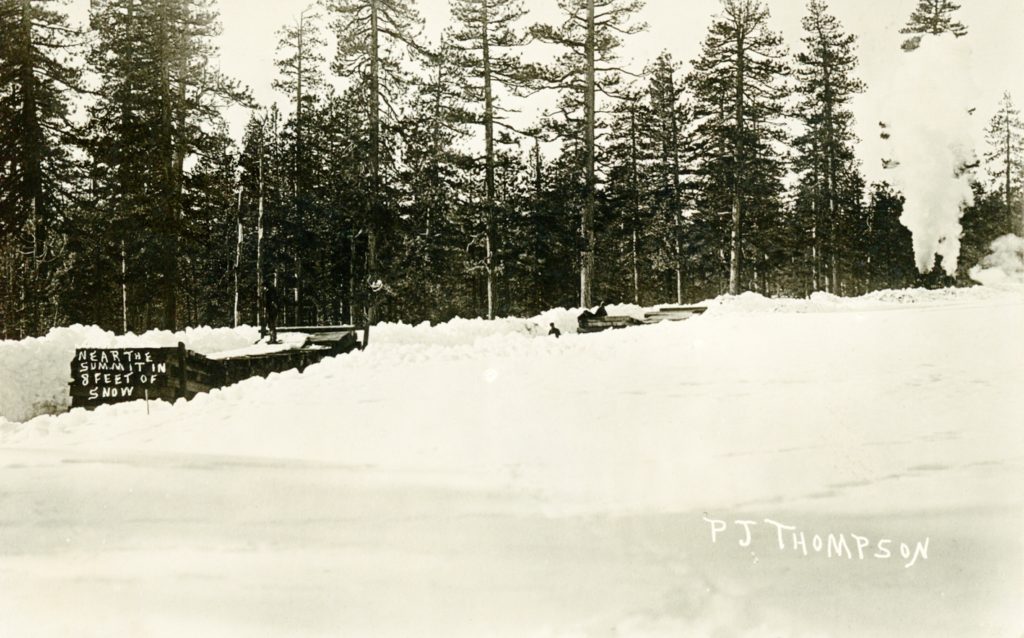
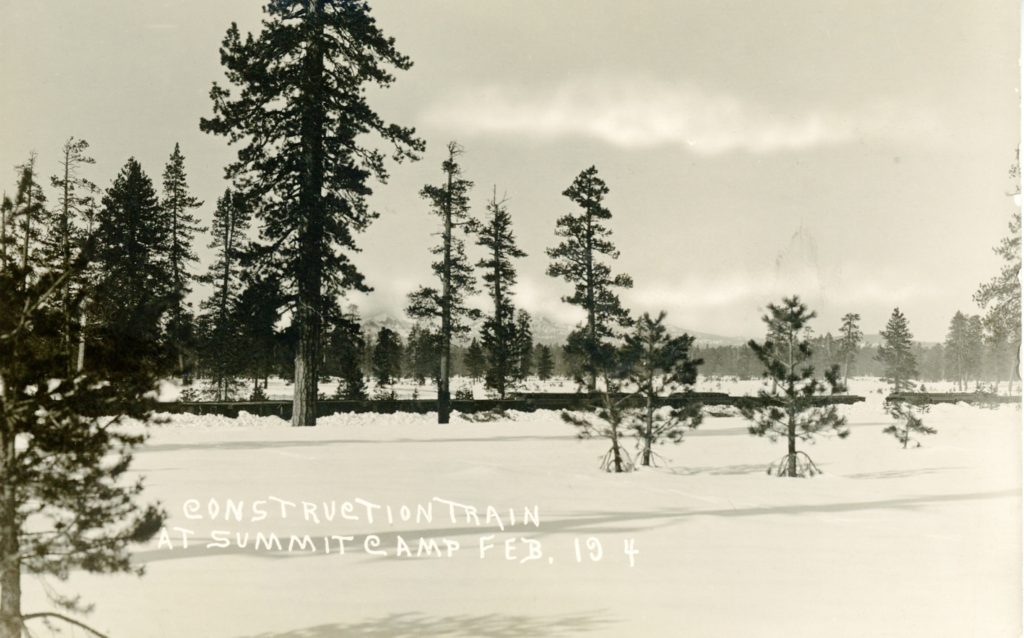
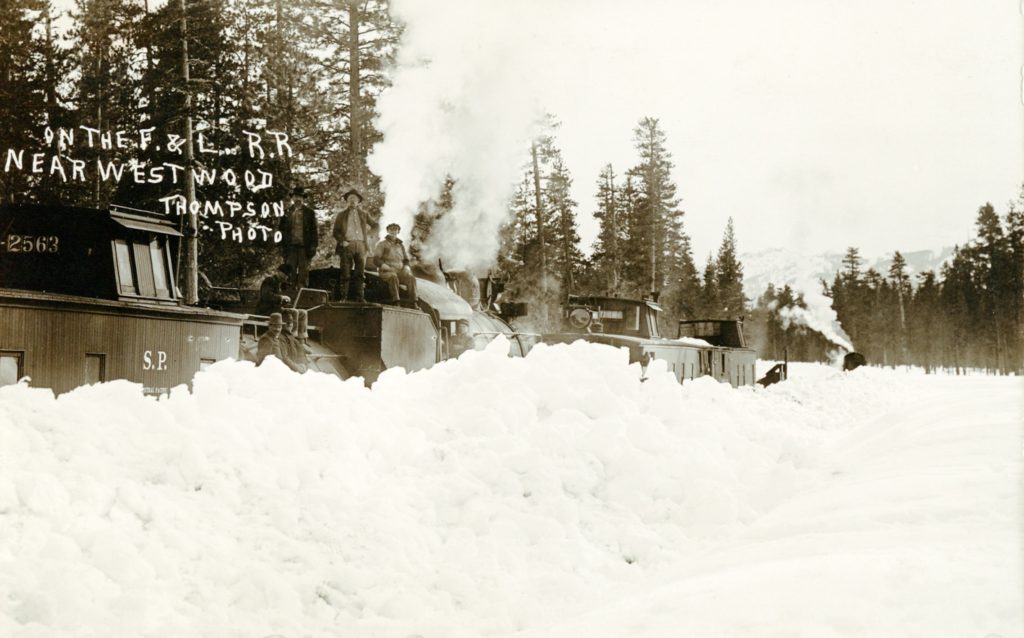
Any weather prognosticators out there? Meteorologically speaking December 1 marks the first day of winter. The winter of 1915-16 was brutal. Snowfall was heavy throughout the region, and it was unusually wet. One storm in January dumped over four feet in Susanville. It was necessary for the Southern Pacific Railroad to bring in a rotary snow plow to keep the rail line open between Susanville and Westwood. In Westwood, Red River came up with a contraption they called a snow roller to compress the snow. Once all the snowstorms subsided in early January, it turned bitter cold with long periods of below zero temperatures. Because of the water content in snow, Red River officials dubbed the condition as “Blue Snow.”

Support

The Military Outposts of the 1860s

Smoke Creek Desert
Smoke Creek Desert looking towards Sheepshead, fall, 1977

First of all, I want to acknowledge the late J.S. Thompson, who was not only a good friend, but one of his main interests was early Nevada military history that he graciously shared with me.

United States military presence in the Honey Lake Valley was sporadic during the Indian conflicts of the 1860s.  Initially, Fort Crook, now Fall River Mills, during the 1850s was the nearest military outpost. In 1858, Fort Crook soldiers had an encounter with Pit River Indians at the northwest corner of Eagle Lake, but never ventured to the Honey Lake Valley.

Relations between the Native Americans and the Anglo settlers had deteriorated by1859. The murder of Edward Clapper and Peter Lassen in the spring of that year in the Black Rock Desert, did not help matters—the Indians rightfully/wrongfully were accused. Between that episode and increased traffic on the Nobles Emigrant Trail, the military made an appearance. During the summer of 1859,  a military outpost known as Dragoon Bridge or Willow Creek Station was established along the Nobles Trail where it crosses Willow Creek in the Honey Lake Valley. These troops came from the San Francisco Presidio.

Tensions between the Anglos and the Indians did not improve. On January 13,1860 Dexter Demming was murdered by the Indians in Willow Creek Valley, north of Susanville. It was like a slow burning fuse that would ignite into the Pyramid Lake War of 1860. After Demming’s death the Honey Lakers petitioned California Governor Milton Lathom for military assistance. By the time their letter was received in Sacramento, Lathrom was out of office, he only served five days as governor!

Not all was a loss. In the summer of 1860 the San Francisco Presidio sent troops to the Honey Lake Valley and established Soldiers Bridge along the Susan River near present day Litchfield.

Susan River, near the Soldier Bridge military site. November 19, 2015

In 1861, the area had no military presence. Things changed quickly with the mining discoveries of the Humboldt in Nevada and the quickest route was via the Nobles Emigrant Trail. This prompted military officials to establish a permanent military outpost at Smoke Creek near the California/Nevada border. The troops, it should be noted came from Fort Churchill, Nevada.

For whatever reasons a mobile military unit named Camp Johns established a base camp near Susanville in June 1864. They did a reconnaissance of the  area to Modoc and Northwestern Nevada. The troops came from Fort Churchill and returned there in August. They were replaced with a new set of soldiers with the same mission, and the camp was renamed Susan. It lasted briefly, and the soldiers returned to Fort Churchill in October.

That was the end of actual physical military presence of the region until the establishment of the Sierra Army Depot in 1942. However, there were Camp McGarry and Fort aka Camp Sage that I will write about in future posts.

Donate


It Was Just A Matter of Time

Susanville Depot, 1970.

In December 1955, the Southern Pacific Railroad track between Susanville and Westwood experienced severe damage from unusual winter flooding in the Susan River Canyon. Earlier that year, Fruit Growers Supply Company announced it was closing the sawmill at Westwood. With the closure of the mill, freight traffic from Westwood would be minimal, so the Southern Pacific decided it was not worth the cost to make the repairs and closed down that segment of the line between Westwood and Susanville.

Two decades later, witnessed the slow decline of lumber shipments by rail with Susanville’s two remaining sawmills, Coin Lumber and Sierra Pacific Industries. It was just a matter of time when the railroad would shutter the Susanville Depot. That day came on October 12, 1979.

Depot 78
Susanville Depot, September 1978.

Subscribe and support this site for as little as five dollars a month.


A Different Kind of Party

This 1931 gathering was held at the home of Blanche & Ike Knoch, frequent hosts of such events. Courtesy of Hank Martinez
This 1931 gathering was held at the home of Blanche & Ike Knoch, frequent hosts of such events. Be sure to click on the photograph for a larger image. Courtesy of Hank Martinez

Back in the 1920s and 1930s certain segments of Susanville’s Society entertained in a variety of formats. While there were numerous card groups to pass the time, others craved something a bit more exciting. These, of course, were costume parties and the themes as varied as the host/hostess.

It is interesting to note that these “freak parties,” as they were called, were quite popular during prohibition and less so afterwards. Whether alcohol refreshments were served, is anyone’s guess, but Susanville residents enjoyed their libations during prohibition.

Who knows if we experience a roaring 2020’s, may be there will be a resurgence of some form of freak parties.

It is never too late, subscribe today and enjoy tomorrow with daily notifications.

The Prison Debate Continues

CCC & High Desert State Prisons

Earlier this year, the State of California announced plans to close the California Correctional Center at Susanville by June 30, 2022.

In the early 1950s discussions were being held among the progressives in the community that the lumber industry, that had such a profound economic impact, was now fading. The big question was what to replace with it. A state prison sounded like a worthy option that would also be stable. On October 13, 1953, the first public hearing was held in Susanville to discuss the merits. Earlier in the year, California Lt. Governor Goodwin Knight, toured the region and thought that Susanville was a favorable site for a future state prison. Not everyone was in agreement. There were some in the community who gave it tremendous support, while an equal number who were dead set against. As is customary, there was also a large segment in the community that had no opinion. Ten years later, a dedication ceremony was held for the nine million dollar California Correctional Center.

Subscribe

Another Mobile Home

Neuhaus home
50 North Gay Street as it appeared in 1919. Courtesy of Leona F. Byars

This home built in the mid-1880s at the southwest corner of Nevada and Gay Streets, had numerous owners, my great great grandmother Franceska Murrer Neuhuas, was one of them. In 1978 the property was purchased by Bank of America where they would build a new Susanville Branch office. The house, fortunately was not demolished but moved a few blocks away to 330 North Roop Street.

330 North Roop Street, Susanville—April 30, 2021.

Tim

California County High School Act

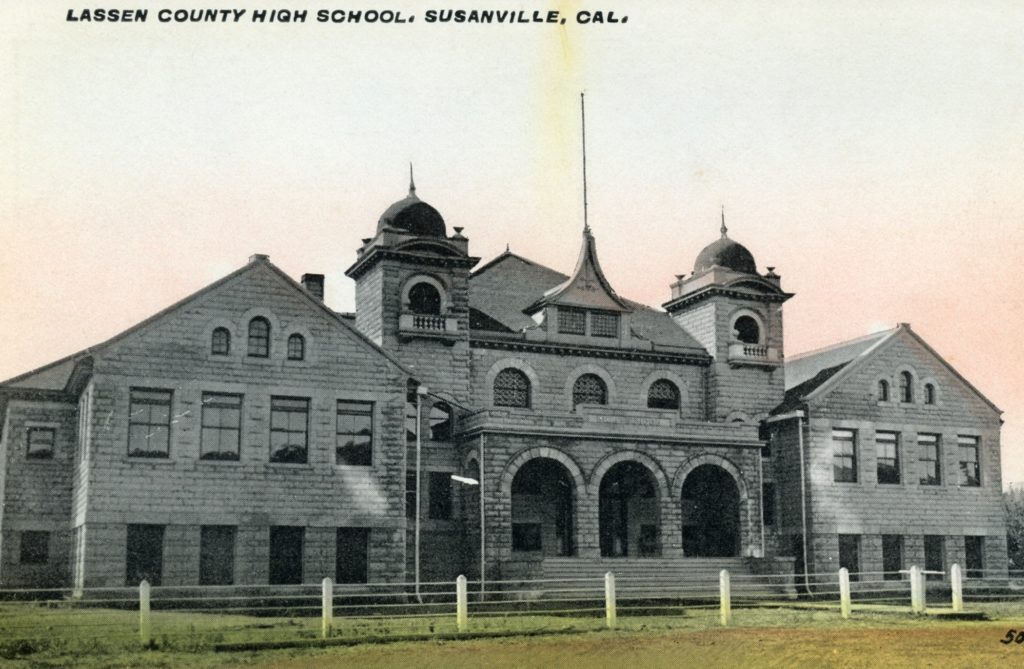
W.H. Weeks architectural rendering for the Lassen County High School. .

In 1892, California passed a progressive piece of education legislation enabling counties to establish public high schools.  Many California counties, while embraced the concept, were slow to implement due to the financial crisis of 1893, which certain regions took decades to recover.

In the spring of 1902, Lassen County Superintendent of Schools, O.M. Doyle embarked on an ambitious campaign to form a Lassen County High School. He succeeded. On November 4, 1902 the voters approved the measure—637 Yes and 295 Opposed. The opposition came mainly from Big Valley, Madeline Plains and Long Valley, since there was no doubt the high school would be located in   Susanville, and they resided such a great distance from there, it would not be beneficial in their opinion.

On September 14, 1903, the first session of the Lassen County High School was held. In attendance were approximately forty students, with two instructors, George Barton and F.C. Schofield, the latter also served as principal. In the summer of 1905, construction began on a high school, at a cost of sum $30,000. That iconic building on Main Street was torn down in 1968 and replaced with the current structures.

Subscribe

Those Annoying Bank Fees

Note how the bank featured the eruption of Lassen Peak on their checks.

Believe it or not, bank fees have been around for a long time. In 1926, the Lassen Industrial Bank introduced a “service charge” on checking accounts. The bank’s reasoning that it was meant to provide better service. The bank stated: “For the past decade the cost of conducting the banking business with higher wages, higher taxes and higher cost of check books, stationery and supplies has increased greatly. The rate of income realized by the bank has not advanced with the increasing cost of doing business.”

Of course this did not go over well with its customers in the greater Susanville area. It should be noted that the bank also had branches in Bieber and Fall River Mills, and those folks registered their dissatisfaction.

Tim