Tag Archives: Susanville

Roop’s Fort Anecdote

Roop’s Fort and Trading Post, 1965

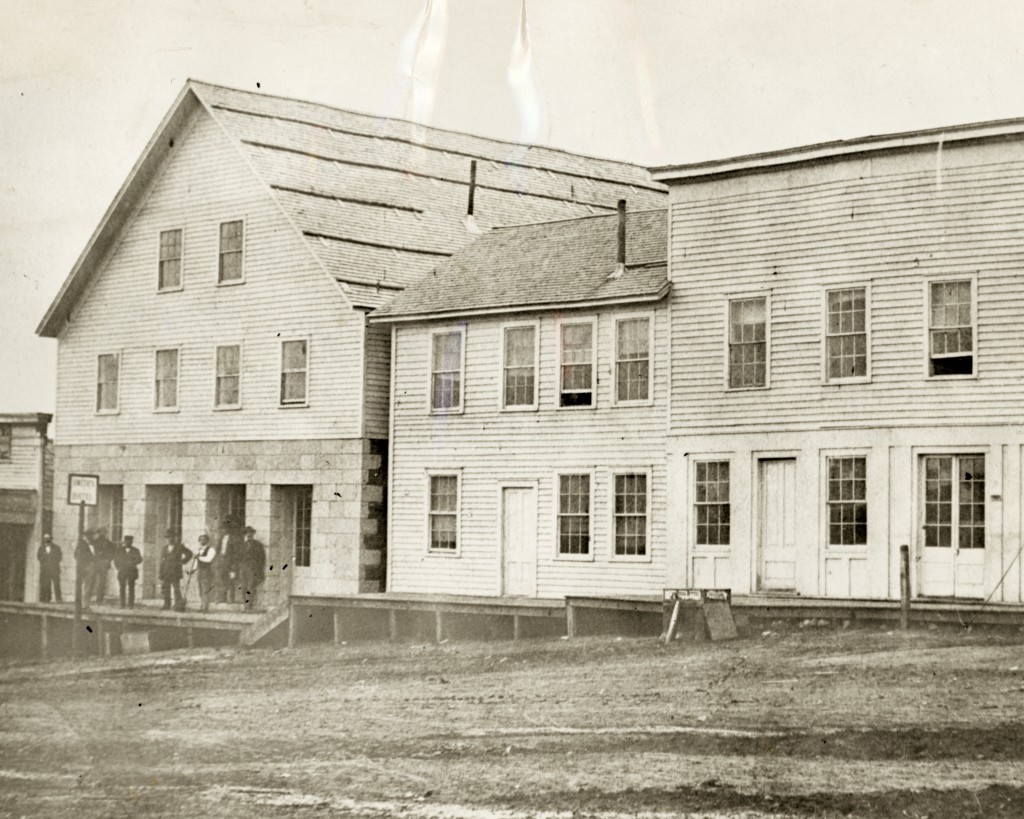
This Susanville landmark, which is more a less a replica of the original structure built by the Roop Brothers in 1854 was never intended to be a fortress. Its purpose was that as a trading post along the Nobles Emigrant Trail. It was in 1863, the abandoned trading post was were Honey Lakers barricaded themselves in a conflict with Plumas County officials dubbed the Sagebrush War. That is another story. Thus, the appellation of fort was added to the structure. It has also been known as Fort Defiance.

In May 1974, Northern California Congressman Harold T. (Bizz) Johnson announced that Roop’s Fort and Trading Post had been entered into the National Register of Historic Places.

Support

Diamond Mountain

A view of Diamond Mountain from Antelope Grade, January 1975

Exactly who and when mountain was named, is not clear. By the early 1860s it was referred to Diamond Mountain. There are pockets of crystal quartz that can be found along the range, hence “diamond.”

In February 1910, Lassen County historian and retired school teacher, Asa M. Fairfield wanted to name the highest point on Diamond, Mount Roop. It went over like the proverbial “lead balloon.” Fairfield’s quest to have a feature named for Isaac Roop did not end. Fairfield consider Roop the father of Lassen County, while Peter Lassen received all the name recognition.

In 1921, Fairfield petitioned the United States Board of Geographical Names to rename Worley Mountain, to the west of Susanville. In 1922, the Board agreed and changed the name from Worley to Roop Mountain.

Susanville  Peak, 1947. Courtesy of Fred Lendman

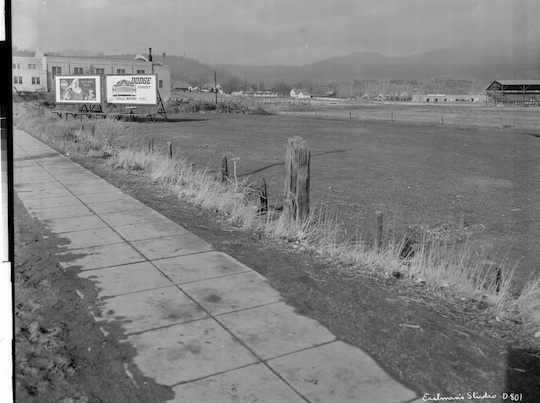
Personally, Susanville Peak would have been more fitting to the name designation. In Susanville’s historic core, one cannot see Roop/Worley Mountain. Yet, Susanville Peak is highly visible throughout the community. I still refer to Worley by its given name because when I was growing up that is what everyone referred to it as.

Support

The Knoch Building’s Various Occupants

Knoch Building, circa 1900. Courtesy of Philip S. Hall

One of Susanville’s oldest commercial buildings, located at the intersection of Main and North Lassen Streets, has had a wide variety of occupants since it was built in 1893. Among the early occupants was the Susanville Post Office, Bank of Lassen County and the Government Land Office.

Susanville’s Knoch Building.

In 1913 and 1914 two major changes transpired. One was the addition of a third floor. On the Lassen Street side a smaller one story building was constructed to be known as the Knoch Annex.

One of the occupants on the second floor of the Knoch, was well known local attorney, Hardin “Finn” Barry. In 1921, Finn passed the California Bar and opened his office in the Knoch. He may have been the longest tenant. Finn remained there at that location until his passing in 1969. Once his office was vacated, another attorney Dawson Arnold rented that space, only to eventually relinquish it when he closed his practice and went to work full time as Lassen County Counsel.

Finn Barry’s rent check

Of course, it should be noted that on the ground floor was another long term tenant—Fred’s Barber Shop. Fred Borghi’s establishment was an old fashioned barber shop with a loyal clientele who would drop in to visit in between haircuts, to “shoot the breeze.”

Support

Memorial Park Flooded Again

Piute Creek at Grand Avenue, April 1938–Betty B. Deal

On March 13, 1983, Susanville’s Memorial Park was once again flooded, transforming it into a lake. It was the third consecutive winter in which the event transpired. The perennial flooding of Piute Creek was due to an inadequate culvert under Main Street, which allowed the water to back up and flood the park. It was not until 1998, that the problem was rectified.

Tim

Susanville Bottling Works

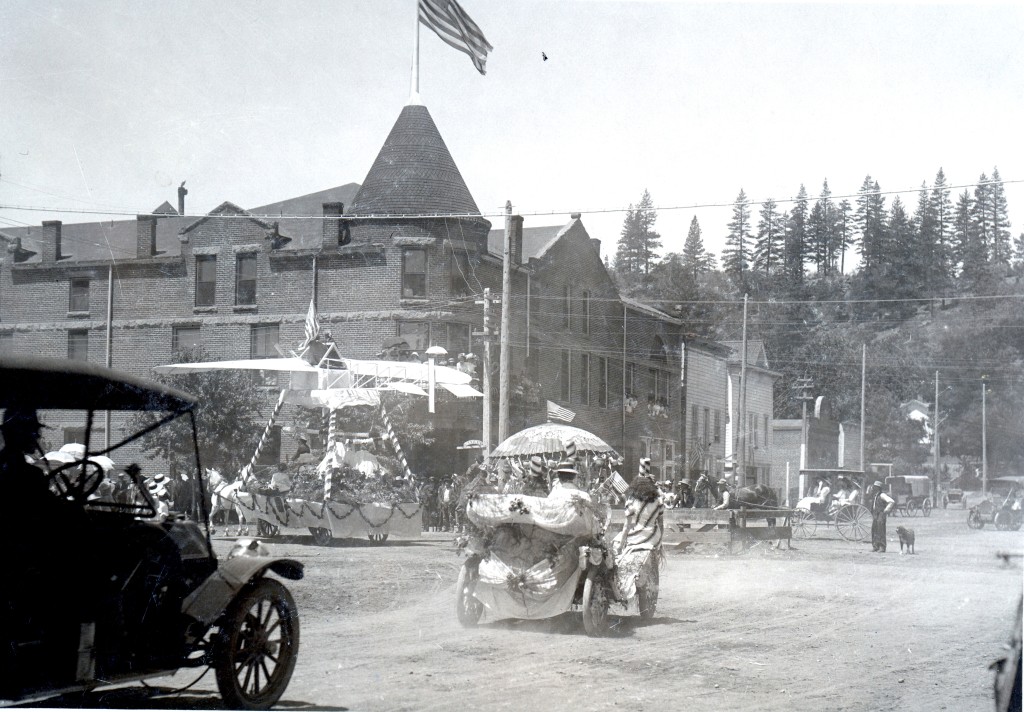
The Susanville Coca Cola Plant as it appeared in the 1950s, during the Lassen County Fair Parade. Courtesy of Margaret A. Purdy

Season residents may recall there was a time that Susanville had its very own Coca Cola Plant. The original bottling works was established around 1914 by H.W. “Pop” Wharton. It was located at 906 South Alley between South Weatherlow and Union Streets. The building, painted a chocolate brown, is still there and converted into apartments.

In 1923, Howard L. McMurphy took over the complete operation. It was an interesting and lucrative time to be in soda business  with Prohibition. It saw not only the local production of Coca Cola, but a local line of the Mt. Lassen brand of sodas.

Sometime in the late 1920s a new plant was constructed at Main and S. Sacramento Streets. For many the star attraction was the large picture window on Main Street, where people on the street could watch the assembly line of the sodas being bottled.

In 1967, Phyllis McMurphy Beard dissolved the Susanville Coca Cola Plant and the local production of sodas ceased.

Donate


The Saga of the Sagebrush War Cannon

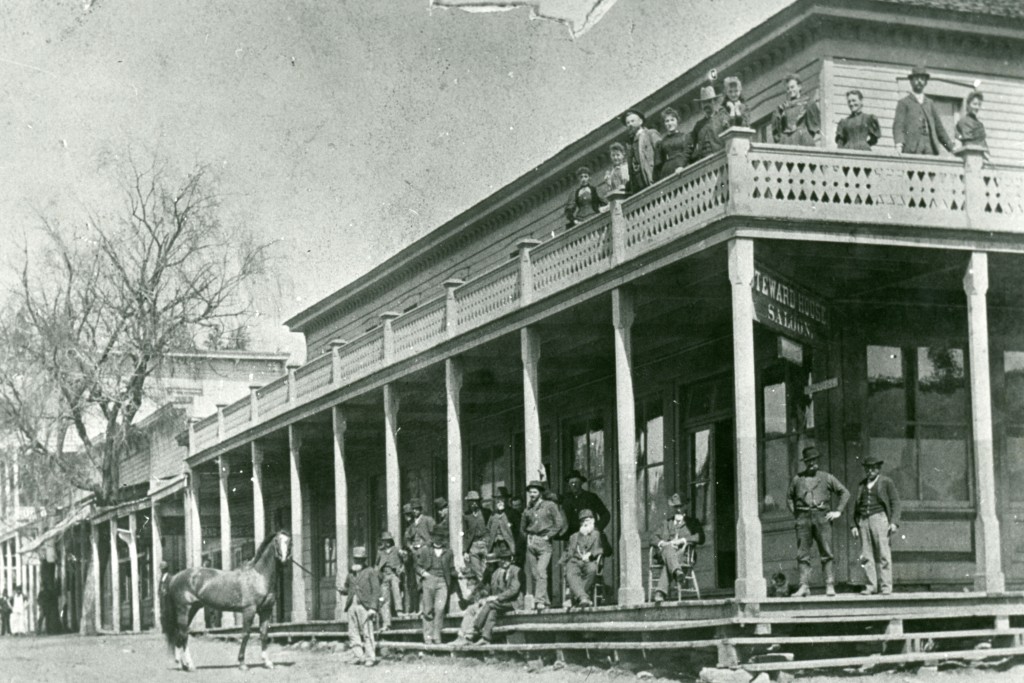
Steward House
Steward House, date unknown

In July 1892 George and Socrates Harrison, Susanville contractors were rebuilding the porch steps  of the Steward House Hotel located on the northwest corner of Main and Gay Streets. They discovered the remnants of a historic relic—a small cannon.

According to Adam D. Elledge (1827-1924) the Plumas County officials brought the weapon with them in 1863 during the episode that became known as the Sagebrush War. It was never used. After a truce was held, it appears someone “liberated” the cannon and hid  it the corner of the foundation of the Steward House which was under construction. A year later, it was removed, and it was noted it  was fully loaded. So it was discharged, but not in a good way. The muzzle was plugged and sent shrapnel of the cannon into the area, a piece that struck and tore a big hole in the Susanville School a few blocks of way. At least no one was injured. The remains of the cannon were put back in its original hiding place, until it was unearthed in 1892 and given to Elledge.

Subscribe


Fruit Growers Departs from Northern California

Burney, circa 1940

Since 1907, Fruit Growers Supply Company has had a presence in Northern California. It first began at Hilt in Siskiyou County. In 1919, it expanded to Susanville. In 1944, another expansion of the purchase of Westwood and equally important the Burney Tract in Shasta County. After the closure of Hilt in 1972, Fruit Growers was no longer operating any sawmills, the company owned some 400,000 acres of timberland in Northern California. In 2019, Fruit Growers began to liquidate, the first to go was the Burney Tract which was sold to Sierra Pacific Industries.

The water carnival at the Sunkist Lodge, Eagle Lake, 1921. Courtesy of Ed Standard

The next to go was the Lassen Tract. In 2020, it was also sold  Sierra Pacific Industries.

Fruit Growers Mill at Hilt, 1919

Hilt, was of course, Fruit Growers first acquisition and it would be the last sold, which occurred in 2021. It was purchased by a firm known as New Forest based out of Sydney, Australia.  Fruit Growers has focused on purchasing timberland in Oregon and Washington.

Support

Susanville’s Wacky Population Figures

Susanville, circa 1936

With the establishment of the Lassen Lumber & Box Company in 1918 and three years later Fruit Growers Supply Company on the outskirts of Susanville the region experienced a huge influx of population. Yet, if one examines the census records it reveals a different story. Susanville’s population in 1930 was 1,358. In 1940 it rose to 1,565.  However, that does not tell the whole story.  Susanville’s eastern boundary ended at Weatherlow Street. In 1940, the area east of Susanville proper, which the census designated as Milwood Farms had a population of 3,672. In 1947, after numerous attempts to annex that region into the City of Susanville, it finally happened. Guess what? In 1950, the census reported that Susanville’s population had a dramatic increase with a population of 5,338. Nearly 3,000 more than in 1940.

Tim

February Snowstorms

Upper Main Street, Susanville, 1922

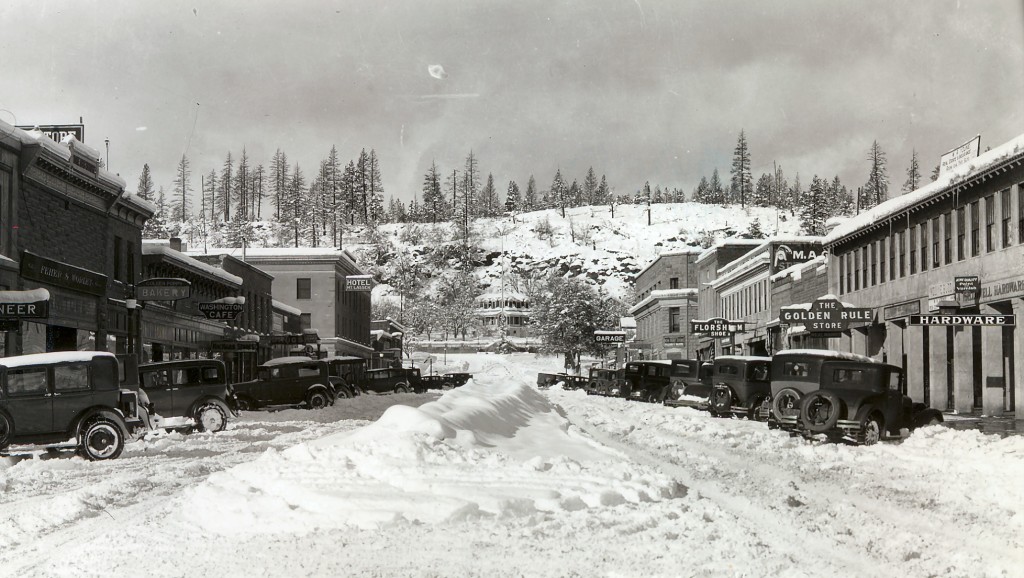
While January usually witnesses some of the largest snowstorms of the season,  February can pack a wallop. In mid-February 1922 was a classic example. A snowstorm hit region dumping seven feet of snow at Westwood Junction, five feet at Westwood and four feet at  Susanville. It was a heavy wet snow that caused numerous problems, especially with power outages and travel.

Main Street, Susanville, 1922.

Tim

Lassen High School’s First Fence

Lassen County High School

In 1908, the trustees of Lassen County High School ordered to have a fence built in front of the school. Its primary function was to keep stray livestock off the school grounds.

It should be noted that in Susanville during its early years had a problem with stray livestock roaming the community. It was so bad, that in 1870 the California Legislature passed “Barnes Hog Law”which prohibited free roaming pigs in Susanville. This was a major concern after all, since the town’s water supply came from Piute Creek and was distributed by open ditches.

Support