Tag Archives: Susanville

The Saga of the Sagebrush War Cannon

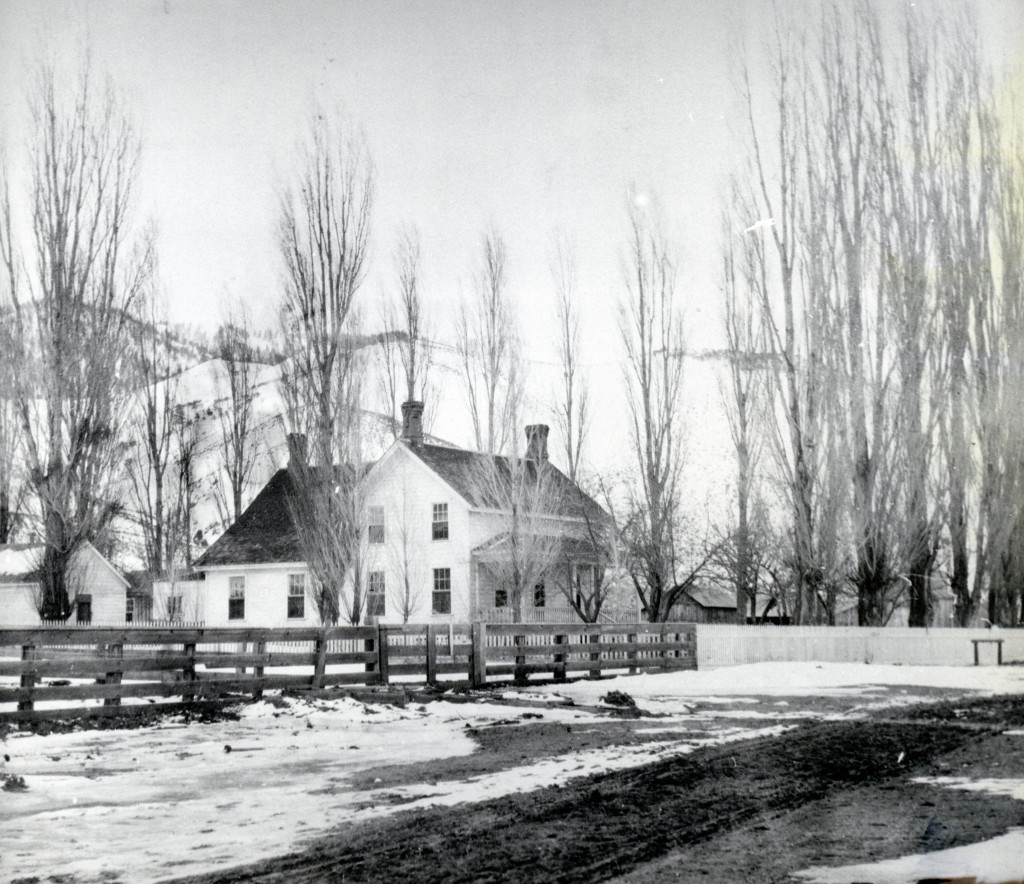
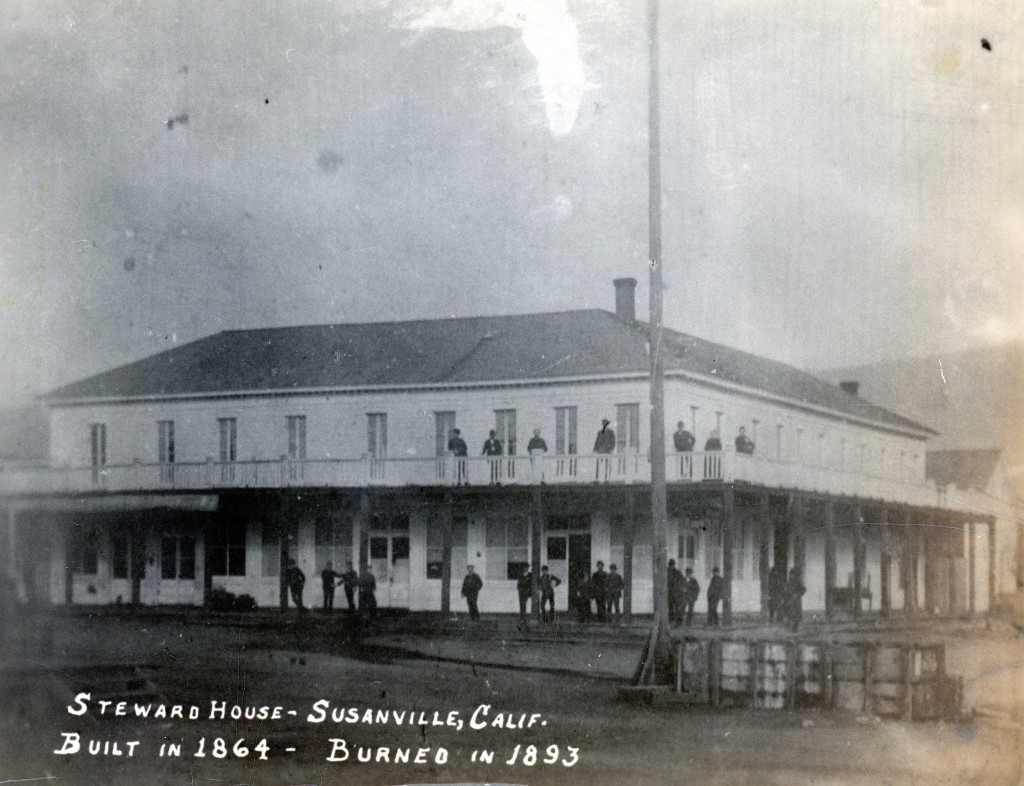
Steward House
Steward House, date unknown

In July 1892 George and Socrates Harrison, Susanville contractors were rebuilding the porch steps  of the Steward House Hotel located on the northwest corner of Main and Gay Streets. They discovered the remnants of a historic relic—a small cannon.

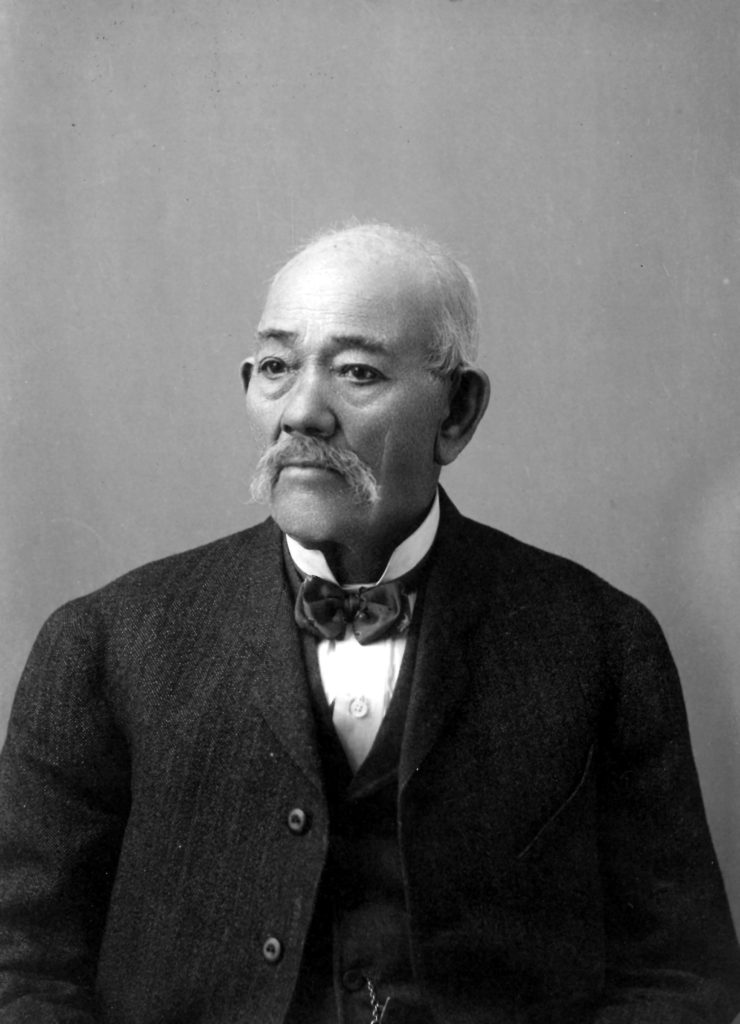
According to Adam D. Elledge (1827-1924) the Plumas County officials brought the weapon with them in 1863 during the episode that became known as the Sagebrush War. It was never used. After a truce was held, it appears someone “liberated” the cannon and hid  it the corner of the foundation of the Steward House which was under construction. A year later, it was removed, and it was noted it  was fully loaded. So it was discharged, but not in a good way. The muzzle was plugged and sent shrapnel of the cannon into the area, a piece that struck and tore a big hole in the Susanville School a few blocks of way. At least no one was injured. The remains of the cannon were put back in its original hiding place, until it was unearthed in 1892 and given to Elledge.

Subscribe


Fruit Growers Departs from Northern California

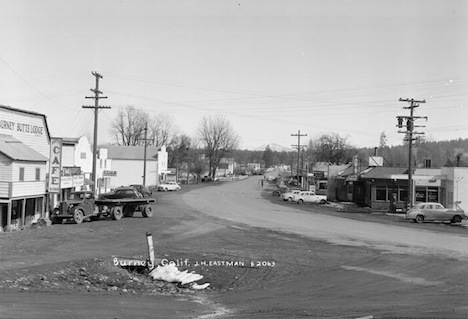
Burney, circa 1940

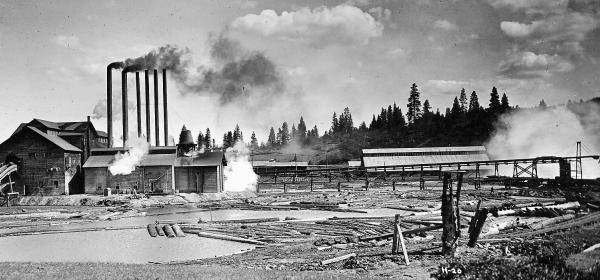
Since 1907, Fruit Growers Supply Company has had a presence in Northern California. It first began at Hilt in Siskiyou County. In 1919, it expanded to Susanville. In 1944, another expansion of the purchase of Westwood and equally important the Burney Tract in Shasta County. After the closure of Hilt in 1972, Fruit Growers was no longer operating any sawmills, the company owned some 400,000 acres of timberland in Northern California. In 2019, Fruit Growers began to liquidate, the first to go was the Burney Tract which was sold to Sierra Pacific Industries.

The water carnival at the Sunkist Lodge, Eagle Lake, 1921. Courtesy of Ed Standard

The next to go was the Lassen Tract. In 2020, it was also sold  Sierra Pacific Industries.

Fruit Growers Mill at Hilt, 1919

Hilt, was of course, Fruit Growers first acquisition and it would be the last sold, which occurred in 2021. It was purchased by a firm known as New Forest based out of Sydney, Australia.  Fruit Growers has focused on purchasing timberland in Oregon and Washington.

Support

Susanville’s Wacky Population Figures

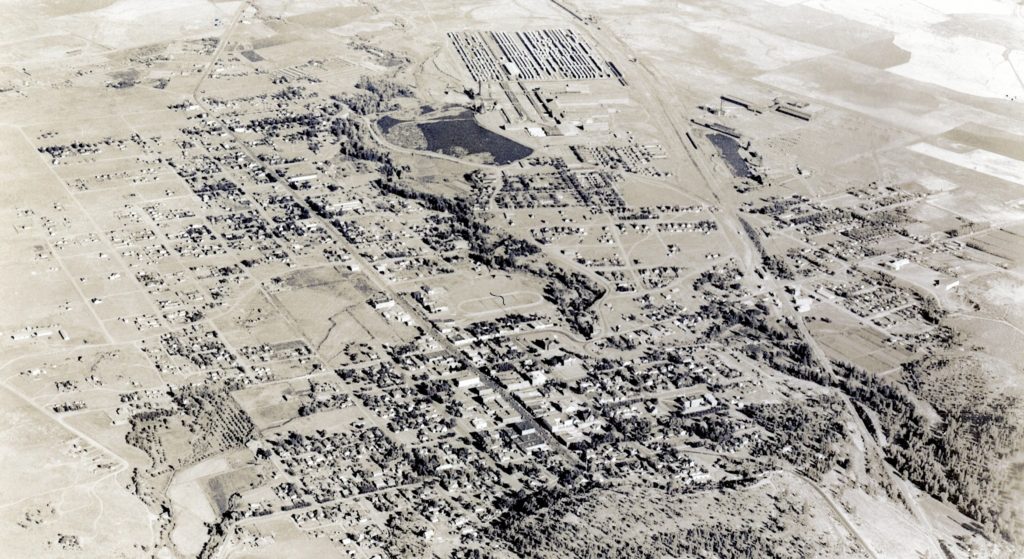
Susanville, circa 1936

With the establishment of the Lassen Lumber & Box Company in 1918 and three years later Fruit Growers Supply Company on the outskirts of Susanville the region experienced a huge influx of population. Yet, if one examines the census records it reveals a different story. Susanville’s population in 1930 was 1,358. In 1940 it rose to 1,565.  However, that does not tell the whole story.  Susanville’s eastern boundary ended at Weatherlow Street. In 1940, the area east of Susanville proper, which the census designated as Milwood Farms had a population of 3,672. In 1947, after numerous attempts to annex that region into the City of Susanville, it finally happened. Guess what? In 1950, the census reported that Susanville’s population had a dramatic increase with a population of 5,338. Nearly 3,000 more than in 1940.

Tim

February Snowstorms

Upper Main Street, Susanville, 1922

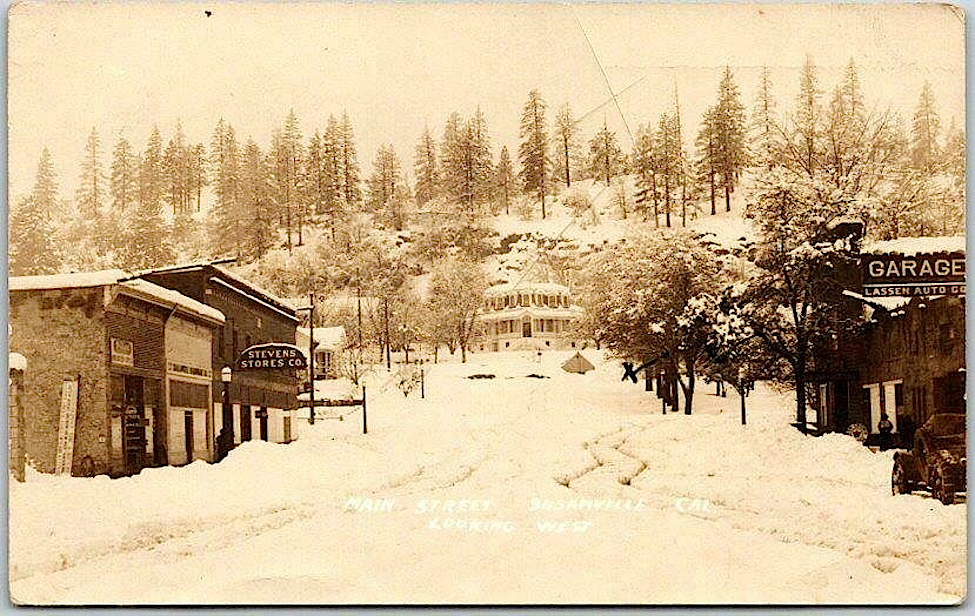
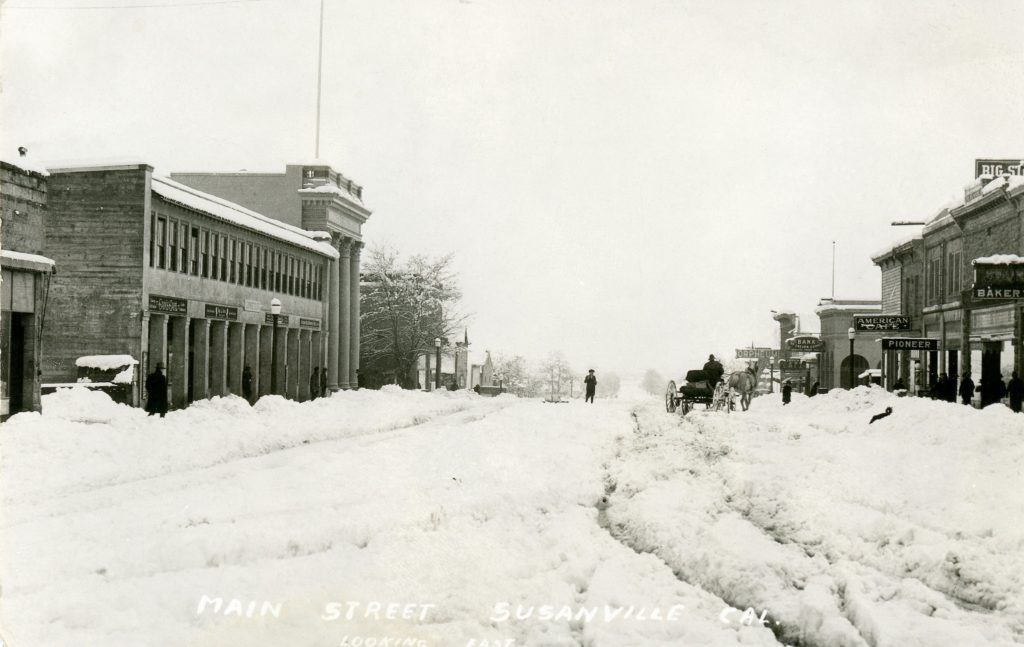
While January usually witnesses some of the largest snowstorms of the season,  February can pack a wallop. In mid-February 1922 was a classic example. A snowstorm hit region dumping seven feet of snow at Westwood Junction, five feet at Westwood and four feet at  Susanville. It was a heavy wet snow that caused numerous problems, especially with power outages and travel.

Main Street, Susanville, 1922.

Tim

Lassen High School’s First Fence

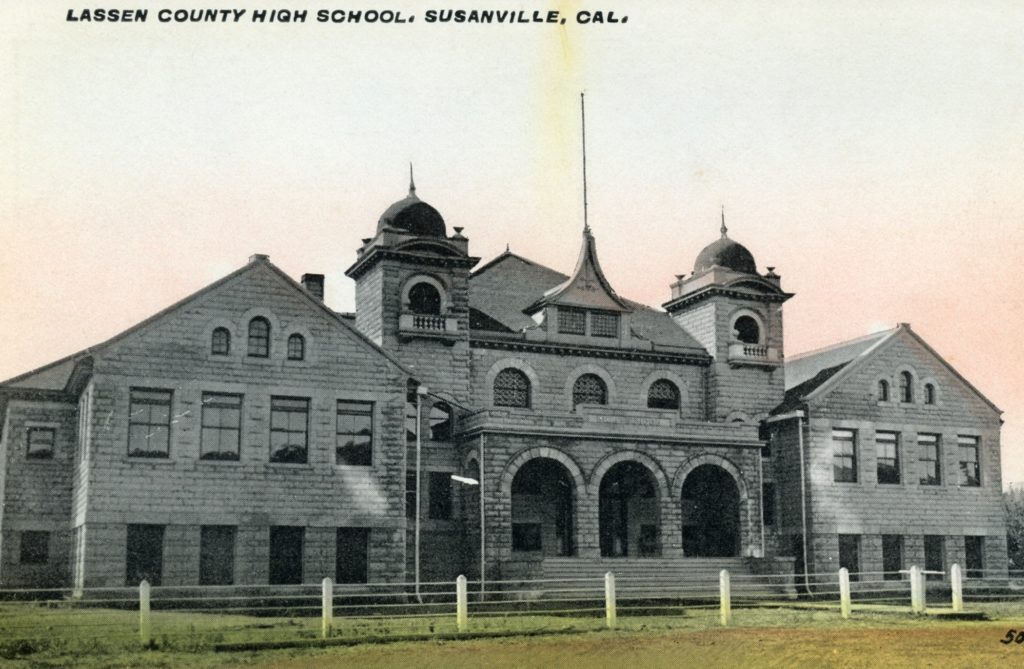
Lassen County High School

In 1908, the trustees of Lassen County High School ordered to have a fence built in front of the school. Its primary function was to keep stray livestock off the school grounds.

It should be noted that in Susanville during its early years had a problem with stray livestock roaming the community. It was so bad, that in 1870 the California Legislature passed “Barnes Hog Law”which prohibited free roaming pigs in Susanville. This was a major concern after all, since the town’s water supply came from Piute Creek and was distributed by open ditches.

Support

Chinese New Years in Susanville

Susanville’s Gay Street, looking north, 1864. Courtesy of Gilbert Morrill

By the mid-1860s, Susanville had its very own Chinatown. It was located in the area of Main and Union Streets. It is interesting to note, where the current Elk’s Lodge is, it was owned by Chinese in 1864. Anyhow, this being Chinese New Year, the following is the earliest account of that event being held in Susanville.

Lassen Advocate – February 13, 1869 – “The celestial portion of our community have had a good time enjoying their New Year feast. It was ushered in by burning three bunches of fire crackers—superior size—at Main Street, much to the annoyance of our peaceable and quiet citizens. Rice, hog, gin, chickens and red paper are in great demand.”

Subscribe

No Ground Hog in 1914, in these parts!

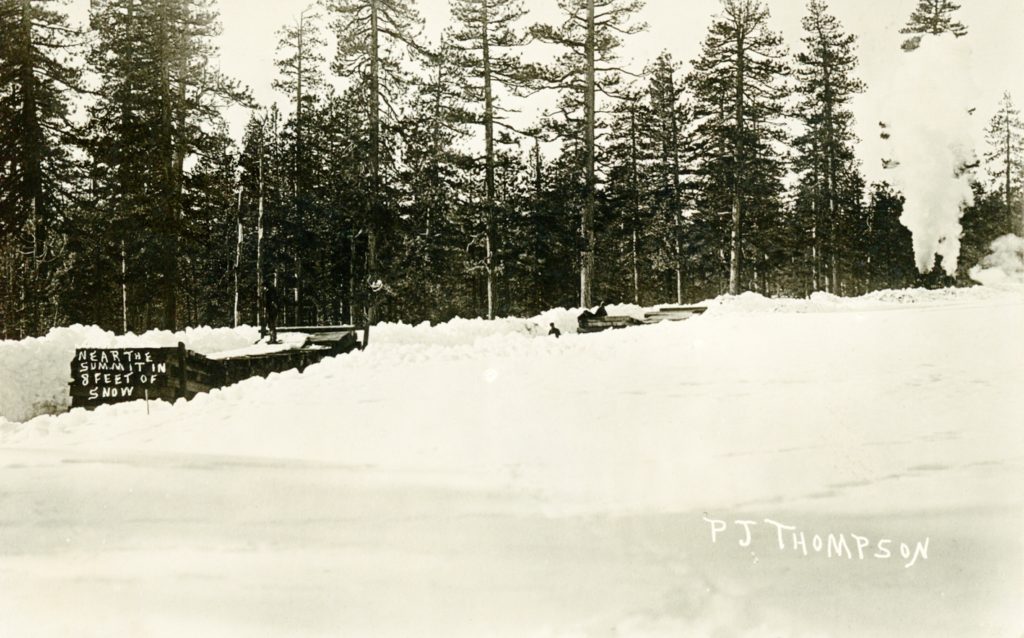
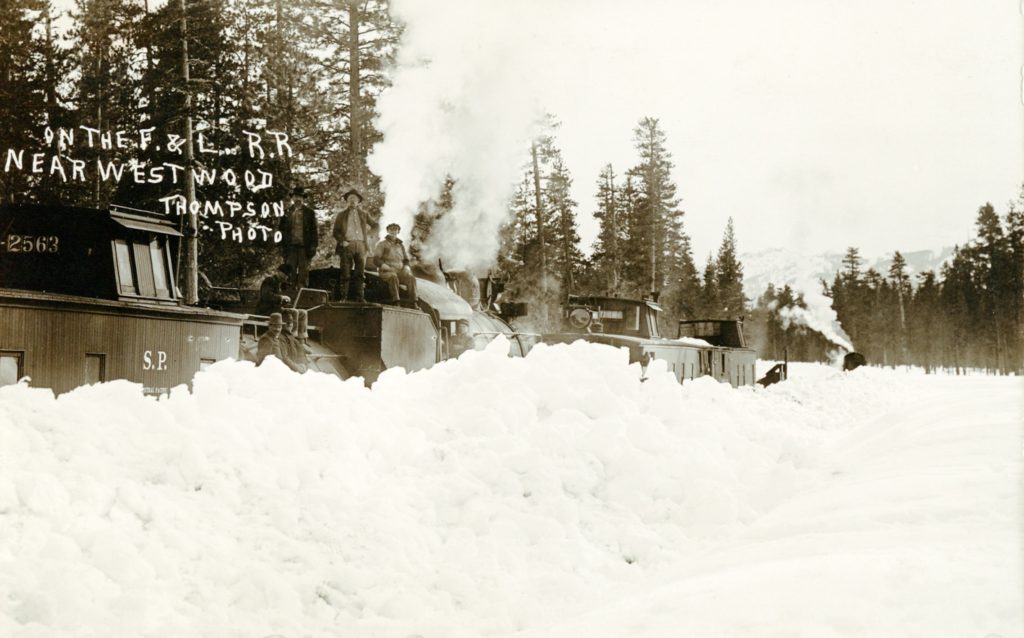
Approaching the summit of the Fernley & Lassen Railroad in 8 feet of snow, February, 1914—B.R. Zimmerman Collection

It was a very wet and snowy January 1914 in the Lassen region. There was so much snow on the ground, the ground hog, could not even make it to the surface, even if it wanted to see his shadow or not.

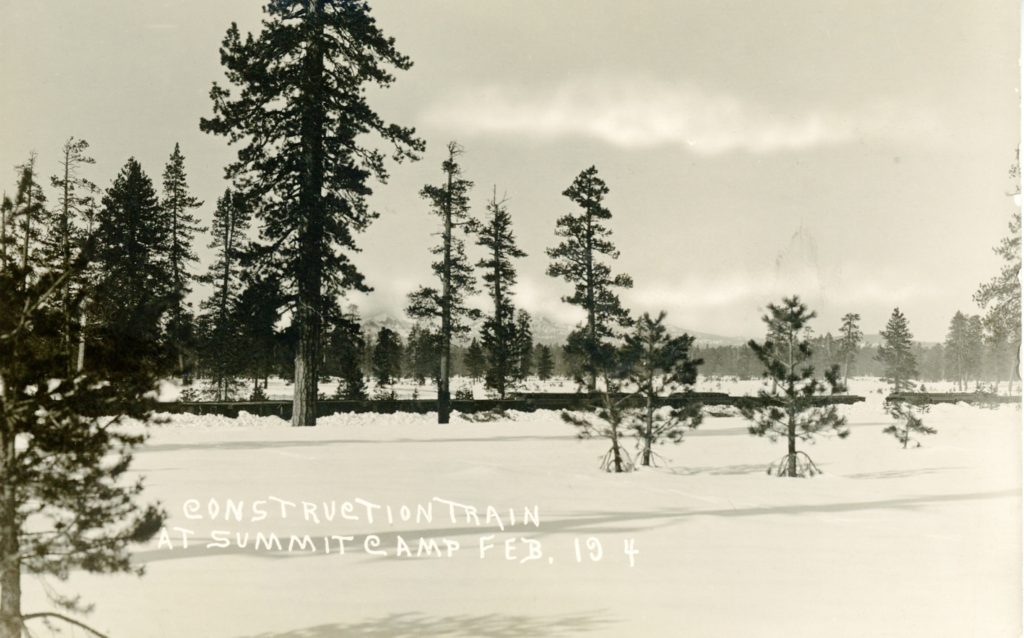
Summit, Fernley & Lassen Railroad, February1914—B.R. Zimmerman Collection

In January 1914 Susanville had received nine inches of rain, along with 93 inches of snow. The total precipitation for the month was 18.27 inches.

Approaching Westwood, the final destination, February 1914–B.R. Zimmerman Collection

This is a good day as any to showcase these photographs of the construction of the Fernley & Lassen Railroad between Susanville and Westwood during that time. The snow depths in early February 1914,  ranged from 8 to 10 feet.

In February 2012, a classified ad appeared in the Lassen County Times that a person had a small trunk of old photographs of the region. I called the number and it took several attempts. An elderly gentleman answered and said the trunk was found in an old barn in Richmond, Contra Costa County. It took several months before the trunk was shipped to me. It was twice the size, I was told, and when I examined the contents, which were photographs of the B.R. Zimmerman family, long time Susanville residents, I was thrilled. I did end up paying about $70 for the cost of sipping and it was worth every penny.

Tim

Congressman Raker’s Funeral


John Edward Raker was born in Illinois in 1863, at the age of 10, came to Lassen County with his parents. In 1885, he passed the bar examine, and moved to Alturas to practice law.  He eventually went into partnership with his father-in-law, E.V. Spencer. Raker went on to being elected Modoc County District Attorney and then Modoc County Superior Court Judge. In 1910 he decided to run for the California’s First  Congressional District seat  and won by a slim margin of 141 votes. Raker continued to serve as Congressman until his death in 1926.

Raker was buried in the Spencer family plot in Susanville. The services were held on Sunday, January 31, 1926–an impressive. affair. The body arrived by train at noon at Susanville, which also consisted of a number of Congressmen, along with a contingent of forty-seven people from Alturas.

As the Lassen Mail noted: “The procession was an imposing one, as it slowly and solemnly wended its way along the slush covered streets. When the first automobile reached the Methodist Church, the line was still moving at the depot. The line of march was along Richmond Road to Weatherlow, north on Weatherlow to Main, up Main to Lassen and thence to the church.”

The night before the region was hit with a heavy snowstorm, making the roads a big slushy mess. Twenty-five members of McKea Post, American Legion, attended but it took them two and half hours to make the trip from Westwood. Had the weather been more favorable there would have been an even larger turnout.

Tim

The Sagebrush Aristocrats

David Knoch. Courtesy of Lassen Lodge #149 F&AM

A long time ago I had a research request from the Huntington Library. It had to do with wealth, and they wanted to know everyone in Lassen County who had assessed value of assets of over $20,000 in 1880.  So off to the Assessor’s Office I go to examine the Assessment Roll for Lassen County for 1880.

There were six individuals. At the top of the list was Susanville merchant David Knoch at $30, 167. Knoch who came there in 1864, was not only a successful at his store, he found another lucrative venture—loaning money. It should be noted, there were no banks in the area, so it did not take long for people to learn who had money to lend. Knoch made sure there was collateral involved, usually in the form of a mortgage to real property.  Another Susanville merchant on the list was William Greehn, who operated in the same manner as Knoch.

The other big players were the ranching community. These consisted of James Byers of the Honey Lake Valley, Andrew Reavis of Big/Dixie Valleys and Jacob McKissick of Long Valley.

McKissick Ranch, Long Valley,1903. Courtesy of PhilipS. Hall

McKissick’s wealth was much larger than reported for Lassen County. McKissick had extensive land holdings not only throughout Lassen County, but Washoe County. McKissick’s owned such places in the latter as an obscure place in far northern Washoe such as Hole in the Ground, to well known Reno landmark known today as Rancho San Rafael Park.

Support

Susanville Street Signs & Mail Delivery

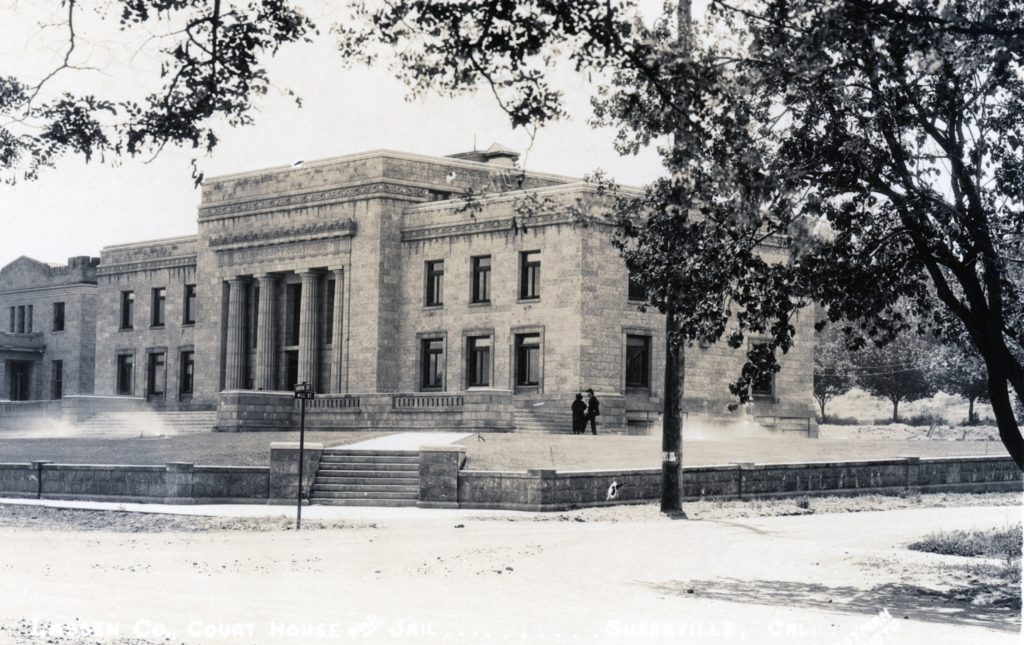
Lassen County Courthouse, 1926

While I have addressed this topic before, it will be new to others. However, I recently acquired the above photograph and this earliest dated photograph where a street sign appears at the intersection of Lassen and Mill Streets.

By the early 1920s, with a tremendous increase in population, the Susanville Post Office had a lot of work to do. There being no home delivery of mail, the post office would get swamped for people picking up their mail. To institute home mail delivery was not as simple as it seemed.

On April 16, 1923 the Susanville City Council passed an ordinance for the numbering of houses and businesses, too. This was the first step towards residential mail delivery. It was a slow process, that took two years. In November 1925, Postmaster C.D. Mathews ordered street signs to be installed to assist the mail carriers. For many residents it was not only a novelty, but not everyone knew of the name of the street they resided on.

On December 1, 1925, residential mail delivery was instituted with three carriers for the greater Susanville area.

Subscribe