Tag Archives: Susanville

Susanville Propoganda, 1956

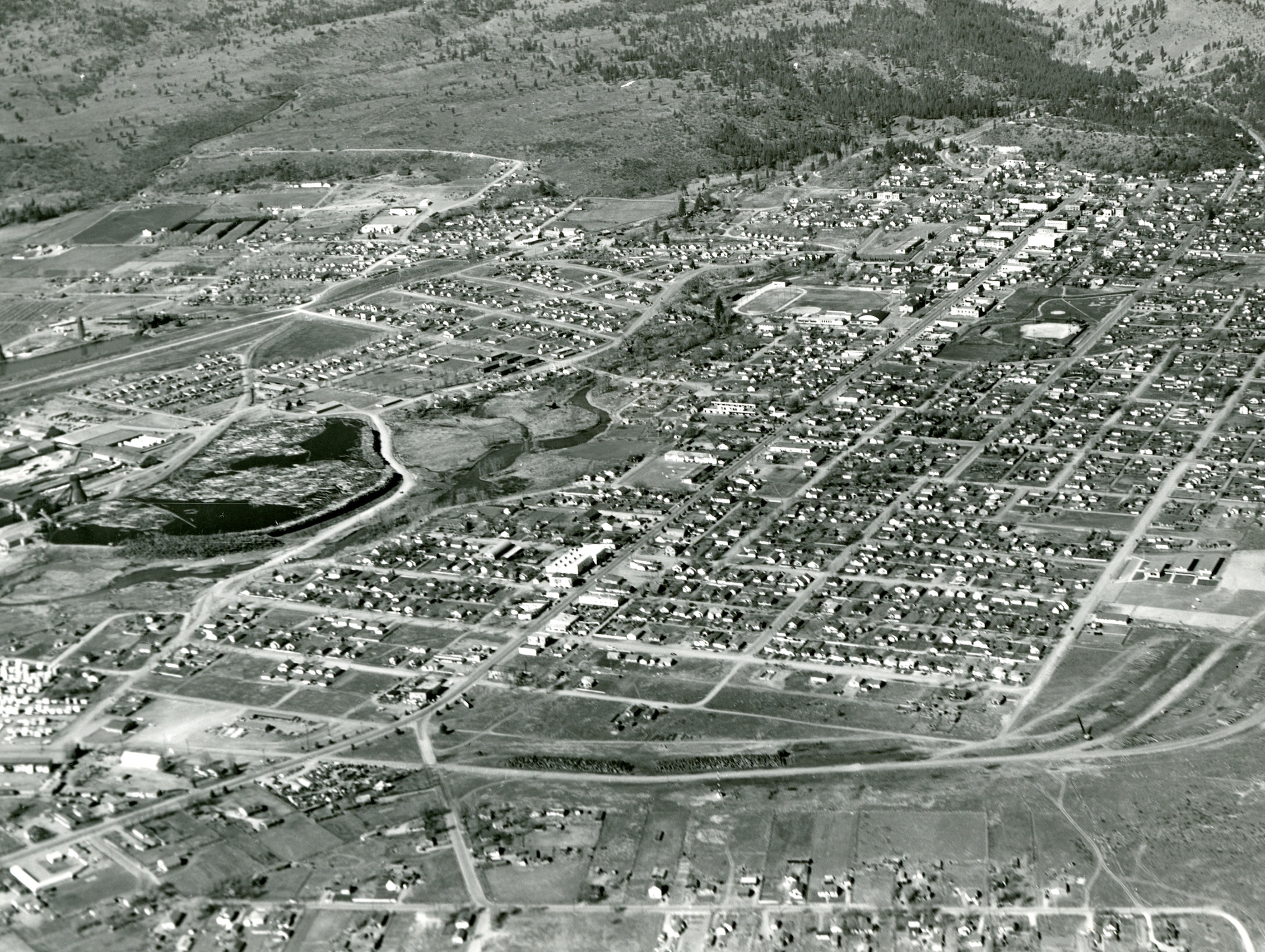
Susanville, circa 1950

The following is an interesting description Susanville that appeared in its 1956 business directory. Thought some might enjoy.

Welcome to Susanville—A City of Uncomplicated Living. A beautiful. modern little town nestling under the bluffs of Inspiration Point, surrounded on three sides by towering snow clad peaks, is bisected by the clear bubbling waters of the Susan River. Located on State Highway 36 at the intersection of U.S. Highway 395, 35 air miles west of the Nevada border and equidistant from the Oregon border and the elbow bend in California.

To the north, south and west of the city is the land that traveled Californians love. All the mystery, legend and folk lore of the romantic, the startling and the beautiful lies just over the hill from Susanville. You don’t have to wait to reach Lassen Volcanic National Park, nor the Feather River Canyon; as the fabulous wealth of breath-taking beauty that abounds in the myriad lakes, streams and timber bordered meadows start practically at our city limits.

To the southwest we have Honey Lake with its miles of green plain, beyond which lies the sage brush country Zane Grey loved to describe. We are doubly blessed with the wide open plains, and wide open mountain roads where we can pull off the road of any favored scenic spot.

Join us in this country where the water tastes like water and not like liquid from the test tube of a disgruntled chemist; a land where your nerves get a chance to breathe, and where your only road reads “Watch for Deer on the Highway.” That’s Susanville, California.

Tim
A Unique Financing Strategy

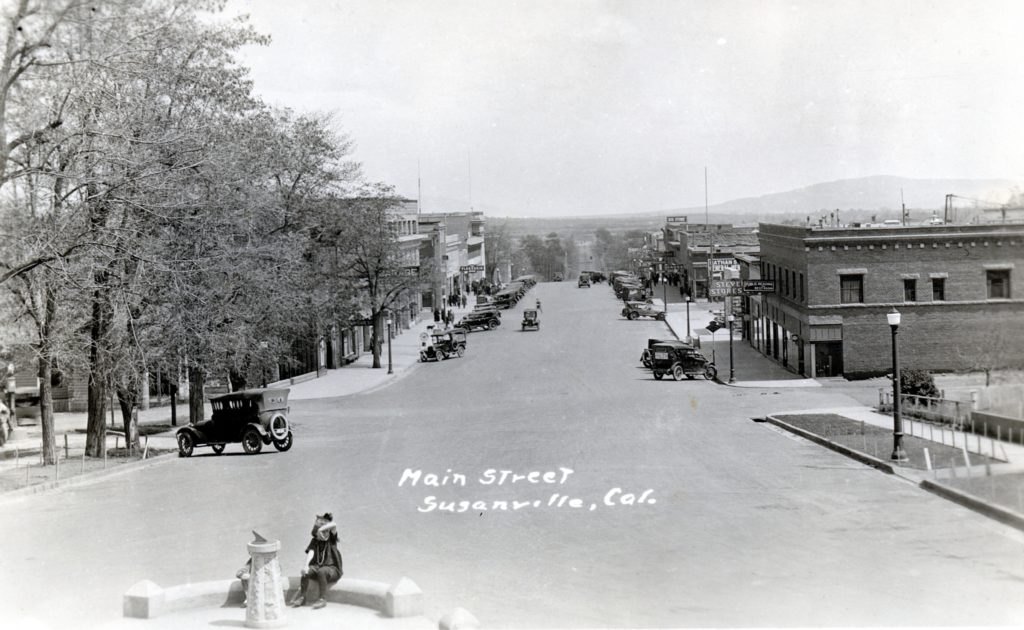
Main Street looking east, 1922—Jere Baker

Today, something on a lighter note, though the issue was a serious one. A century ago, the City leaders were a progressive lot. One item they sought was to have paved streets and sidewalks. This was an expensive proposition, and would be paid by a special tax assessment on the property owners. Of course, not every one was thrilled. However, one clever resident suggested that Susanville adopt the City of Redding’s policy of imposing heavy fines on speeders. A speeding ticket in that City cost $10. Since speeding was a problem in Susanville, the collection of hefty fines could easily pay for the sidewalks!

Tim

An Early Day Dentist Bill

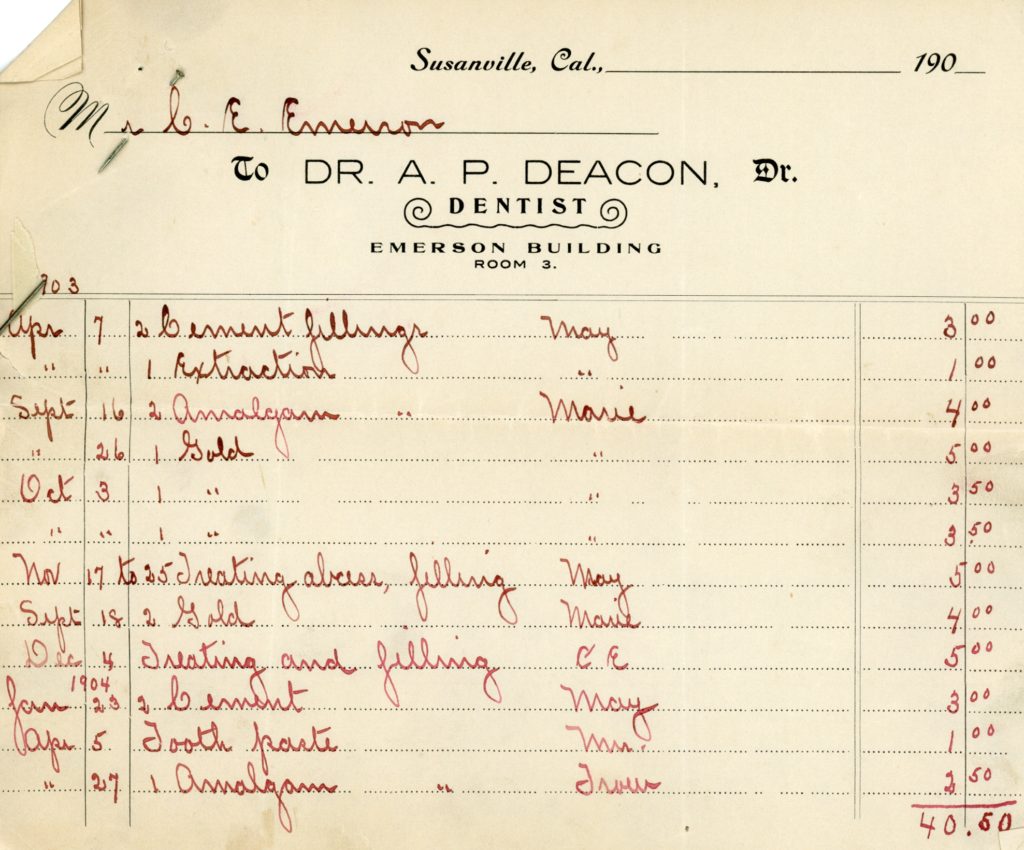
Doctor Deacon’s dentist bill for the Emerson family 1903-04

Believe it or not, over a century ago many professional occupations such as dentist, doctors and lawyers struggled financially. While compiling the history of the northern California operations of Fruit Growers Supply Company, I met Tom Gilfoy who illustrated that aspect, In 1950-51, Tom attended Lassen Junior College. He would spend the next two summers working in woods for Fruit Growers Supply Company. He said he made more money during those summers, than he did his first few years as an attorney.

Anyhow, when I had request for information on the Emerson Ditch, I knew it would require sorting through the Emerson files in my archive. While I did locate information on the ditch, I found an assortment of interesting documents.

Dr. A.P. Deacon was a Susanville dentist in the early 1900s. His office was located on the first floor of the Lassen Street side in the Emerson Hotel. Like his fellow predecessor, Dr.J.G. Leonard, whose home would later become the Elks Lodge struggled with patients for payment of services rendered. This had a ripple effect wherein Deacon fell behind on his rent payments with C.E. Emerson. In 1904, he moved his practice to Willows, California and the prospects there were not any better. Unable to make a payment to Emerson, on August 31, 1905, Deacon wrote this letter;

”Friend Charley – Tomorrow is the date that the first of my notes [promissory] is due, but I am very sorry to say that I am unable to pay it at present. I will, however, send you whatever amount I can spare each month, until I am out of your debt. Thank you very much for your opinion of me, if some of the people up there would make an effort to pay me that I do to pay my bills, we would all get along much better. I have the highest regard for Dr. Dozier as a man could be, of course he had his faults, but then none of us are perfect, and I sincerely hope that he has cut out the booze and his former type of companions, and is doing well. Everything is quiet here, but the prospects are good. “

Support

C.T. Emerson, An Early Day Vagabond

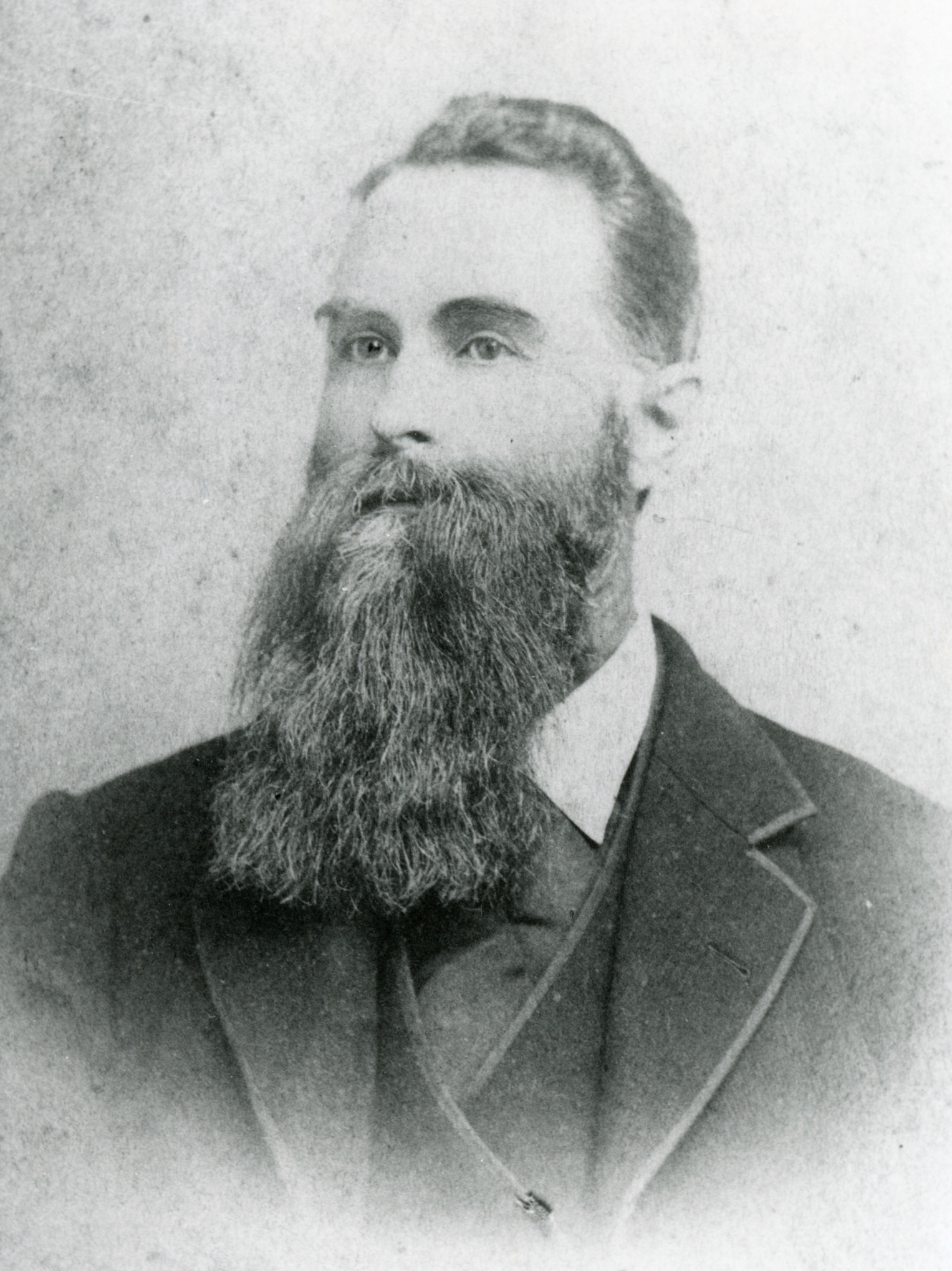
Charles T. Emerson—Hayden Emerson

Charles Thomas Emerson (1836-1917) led a colorful life. In 1859, the Missouri native, along with Colburn Brown arrived in the Honey Lake Valley and claimed some 1200 acres in what was known as the Tule District. While residing there, he earned the nickname “Tule”.  1862 was a pivotal year for him. His partner, Brown, returned East to fight in the Civil War, who would become a casualty the following year. Emerson that year purchased a combine mower and thrasher one of the first in the Honey Lake Valley. He named his place the Eureka Ranch, but seasoned residents will know it as the former Gibson/Haley Ranch east of Litchfield. On March 29, 1865, Emerson filed for water rights and easement for an eight mile irrigation ditch, that he constructed that year.

Things change. The bachelor married divorcee Mrs. Sarah Laird on January 1, 1867. The following year, he mortgaged the ranch and built a hotel in Susanville on the northeast corner of Main and Lassen Streets (701 Main Street). In 1869, Emerson threw caution to the wind and set out for the booming mining camp of Pioche, Nevada, leaving behind his wife, and infant namesake son, Charles. It was a bust for him, but instead returning to his family in Susanville, he set his sights on Mexico. Of course, there were consequences for his actions. His wife was granted a divorce on the grounds of desertion, and he lost his ranch by default for non-payment of the mortgage.

After Mexico, he was off to South America. Then he would spend an additional twenty years exploring the South Pacific. It is interesting to note, he never forgot about his son, whom he deserted as an infant. From time to time he would send boxes of sea shells and other trinkets from his travels. In 1902, Emerson had gathered such a notoriety that that the San Francisco Examiner devoted a full page about his exploits.

Time takes its toll and Emerson was no exception. In 1913, he returned to Susanville to spend his twilight years with his son, whom he only met twice as an adult.

Support

The Controversial Fire Truck Ban

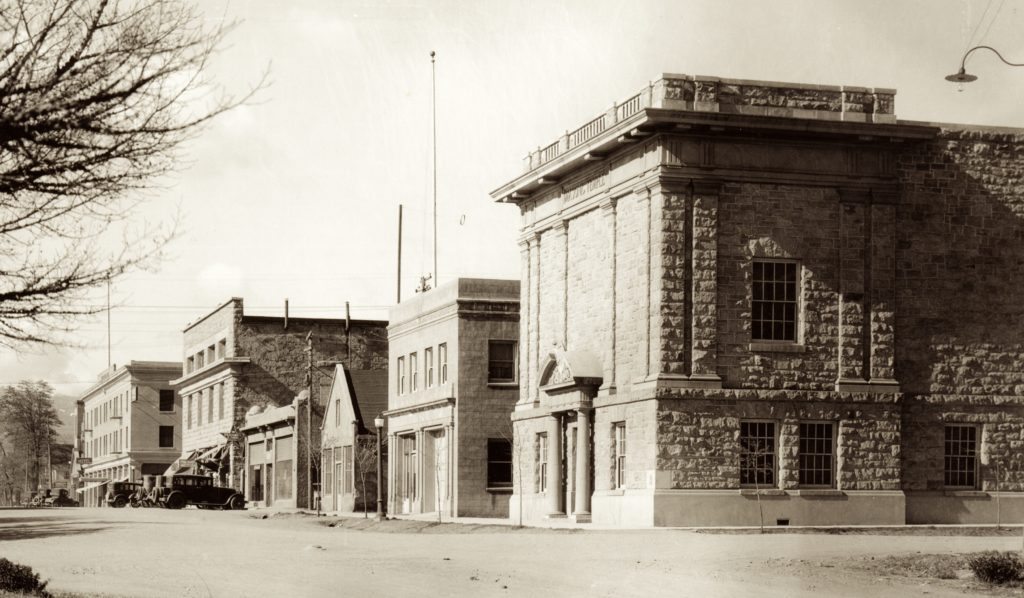
North Lassen Street, Susanville, showing City Fire & Hall, circa 1930

In 1922, saw the City of Susanville’s reorganized fire department, complete with a new fire engine. Initially, they would respond to fires outside the city limits. That changed on November 30, 1926 and the City prohibited the fire department from leaving the city  limits. There were a few exceptions. The City would provide fire suppression for the lumber mills, the county hospital and the two public schools in the unincorporated areas. The reason for aiding the  mills was not that they were the largest employers, but they had their own fire departments. Those mills could reciprocate with fire assistance inside the City if needed.

The reason for the City’s abrupt decisions not to provide fire assistance outside its boundaries came from fire underwriters, who informed the City that they would have to raise fire premium rates for the City if they continued to provide aid outside the City limits. It was their contention that the City did not have sufficient equipment to protect the property outside the City, and a fire then occurred inside the City; there would be no means to fight it. The City informed its neighbors in unincorporated areas that once they equipped themselves, the City would provide mutual aid.

Support

A Susan River Tragedy

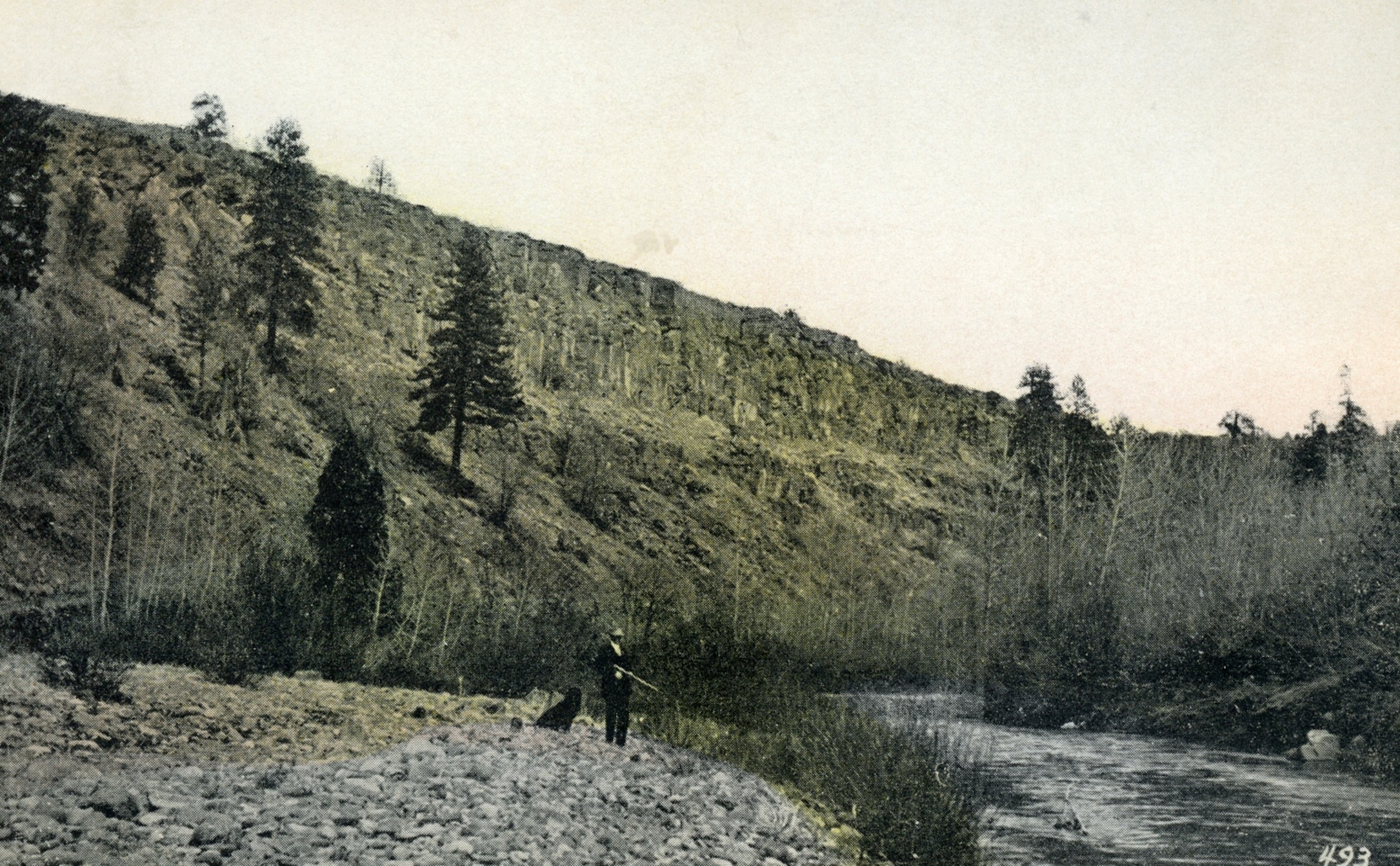
Susan River, circa 1914

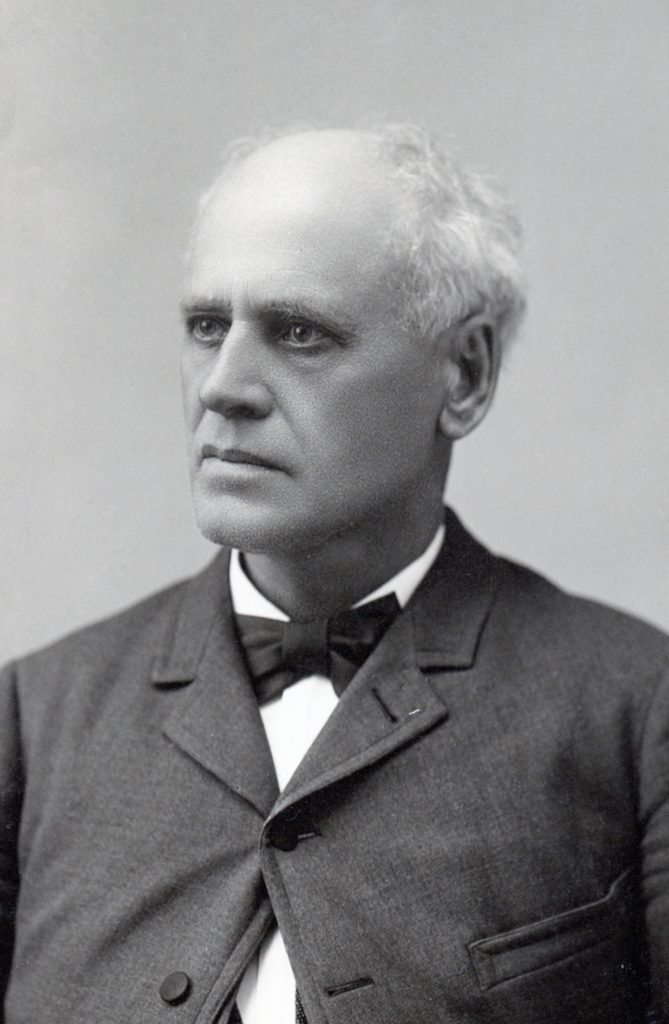
Dr. Zetus N. Spalding (1819-1898) was a Civil War physician and was best known to generations of Lassen County residents of being the founder of the iconic Spalding Drug Store, that institution had spanned a little over 100 years. He served as Lassen County Superintendent of Schools from 1871 to 1879. In the late 1860s, he was elected twice as County Coroner. For many years, he also held a non-elected position as County Physician, who provided aid to the indigent and incarcerated.

His favorite pastime was that of fishing the Susan River. One Tuesday morning in May 1898, he went fishing as usual, left in the morning and but this time failed to return home in the afternoon.  By evening, a group of some thirty men assembled and went in search of him along the banks of the Susan River where they found his body near the old Bremner dam about a quarter mile upstream from Hobo Camp.

His, John B. Spalding took over Spalding Drug. He was an avid outdoorsman. Many may not be aware, but the store up until World War II carried a full line of fishing poles, tackle, along guns and ammunition.

Support

The Demise of the Paul Bunyan Lumber Company

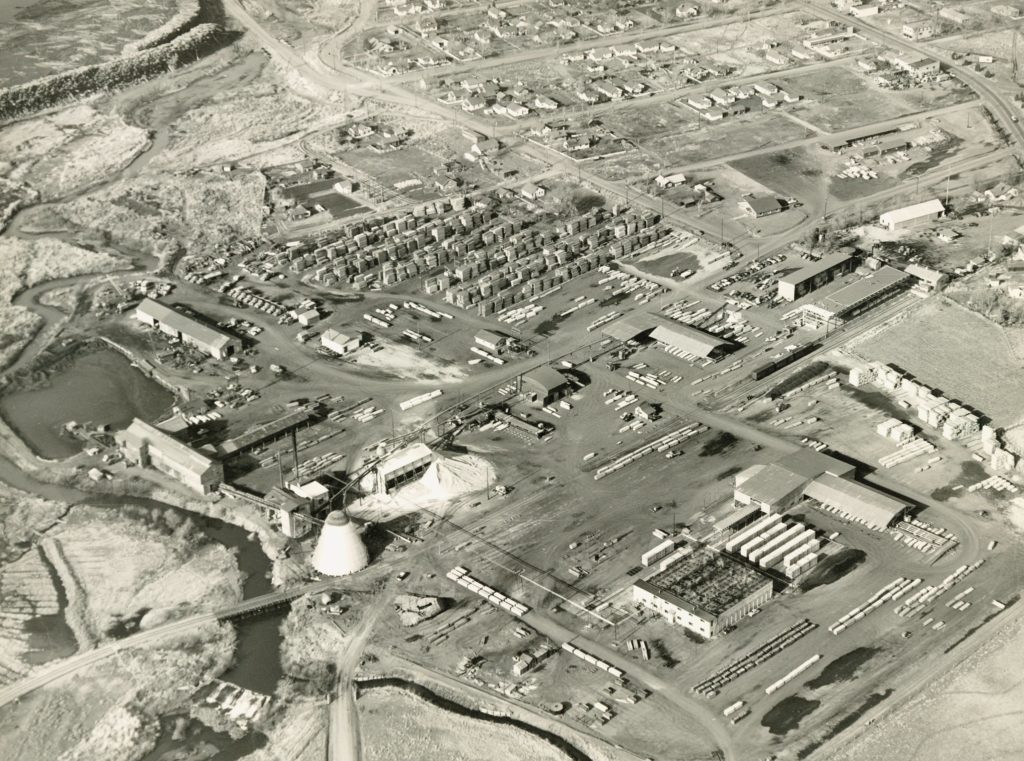
Paul Bunyan Lumber Company, 1953. Courtesy of Fred Lendman

On May 15, 1967, Kenneth R. Walker, president of the Paul Bunyan Lumber Company announced the pending closure of its Susanville mill. Walker cited the lack of available of timber for the closure. The mill closed in August and the liquidation process began.

In 1945, when Red River Lumber Company was in its initial dissolution process, Kenneth wanted to remain in the business. At that time, Red River owned what was referred to as the “Cedar Mill” in Susanville. Kenneth took over that mill and named his new venture the Paul Bunyan Lumber Company.

In conclusion, Walker provided two interesting facts about the mill. He stated that when the last board is shipped, the mill would have processed 650 million board feet of lumber during its operations. In addition, the company’s total payroll during that time amounted to $20 million.

Support

The Varied Bear Dance Locations

The final part of the Bear Dance ritual at Bass Hill, circa 1900.

The spring ritual of the Mountain Maidu Bear Dance, locally, has been held at a variety of locations. In the earliest times, it would be held near a stream, for water was an important element in the conclusion of the dance.

One of the earliest sites was near Baxter Creek at Bass Hill referred to as the village of Yoskopin, also known as Lone Pine. This would be the late 1890s, early 1900s. There is a citation that the dance was held along Paiute Creek, just north of Susanville, from 1910 into the 1920s. That location was near the present day intersection of Chestnut and Parkdale. What is odd with its close proximity to Susanville, a town. with two newspapers,  that they never chronicled it.

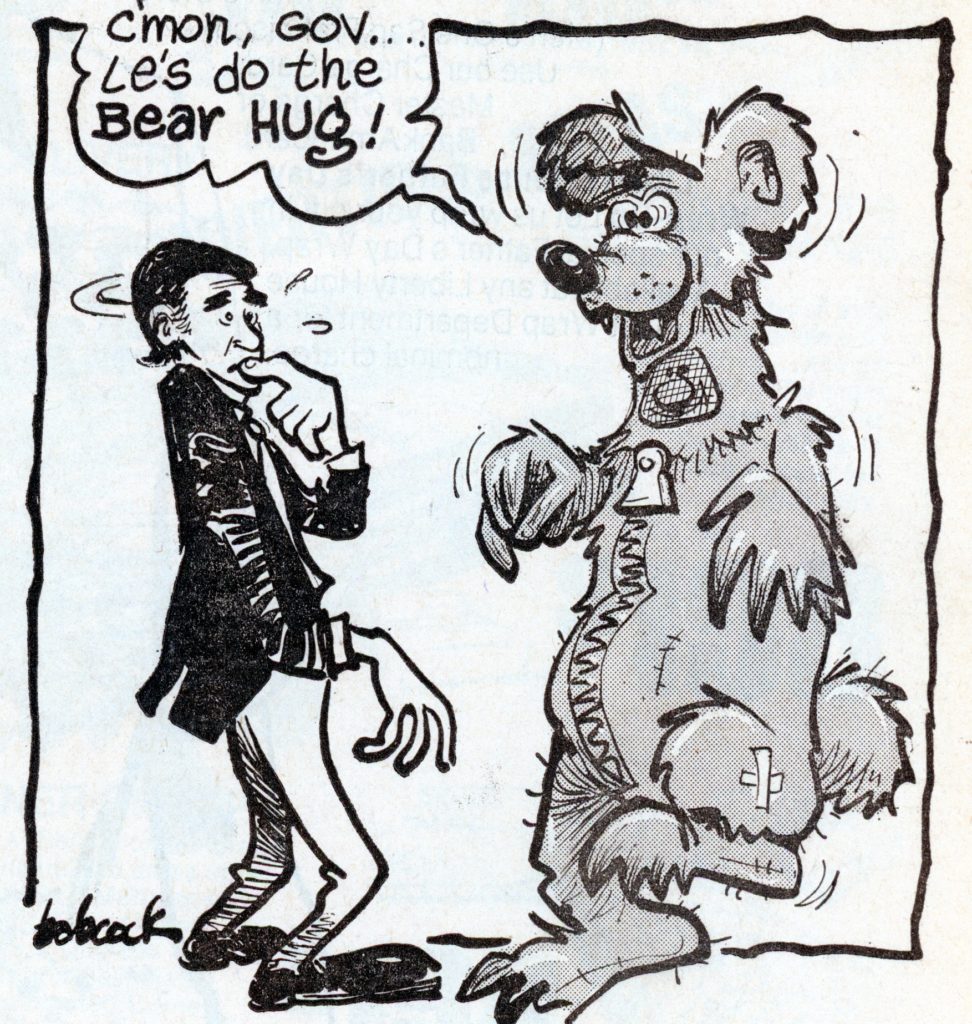
Sacramento Bee, June 9, 1975

In the late 1920s, Kitty Joaquin sponsored the event at her place near Janesville. She continued the same until 1953. There are accounts that in the 1940s and early 1950s that it was occasionally held at the Susanville Rancheria. By the late 1950s, it appeared the ceremony was on the brink of being abandoned. However, in 1962 Gladys Mankins sponsored the ceremony at her place on Janesville Grade. In 1975,  that event made headline news with the appearance of California Governor Jerry Brown. Mankins continued with the tradition up to 1986. In 1989, it was revived and has been held ever since on forest service property at Willard Creek.

Subscribe

Susanville’s Railroad Advocate—E.V. Spencer

E.V. Spencer—Ivajean Wheeler

Ephraim Van Buren Spencer (1836 -1904) was a staunch advocate to have Susanville serviced by a railroad. Without one, the town in his opinion would be just another “Sleepy Hollow.”

The first glimmer of hope came in 1880 with the establishment of the Nevada & Oregon Railroad at Reno. The fledging railroad struggled in its early years. A dramatic change occurred in 1884 when the railroad was acquired by the Moran Brothers—New York bankers. The following year the railroad went through a name change first as the Nevada & California and eventually the Nevada-California-Oregon.

With Morans at the helm, Spencer saw hope and the residents of Susanville raised $500 to send Spencer to New York to meet with the Morans. The meeting went well, but the Morans stated they had no funds to extend the line. Spencer felt confident that the Morans would eventually build north to Susanville,

In March 1887, Spencer and the community of Susanville were blindsided when the railroad announced it would build a 47 mile extension from Junction (Hallelujah) House to Brubeck’s on the east shore of Honey Lake. Spencer hastily arranged a meeting with Daniel Moran and Edgar Heriot, the latter the railroad’s general manager. Spencer urged them to reconsider, and a route through Susanville would be more profitable. One of the railroad’s concerns was a route out of Susanville to the north. In June concerned Susanville residents met to come up with a plan to convince the railroad to change its mind. Not only did they offer to survey the route, but obtain the necessary rights-of-way, a donation of a depot site in Susanville and more. It was all in vain, due to an unusual circumstance. The NCO fired Heriot, and was replaced a temperamental Erasmus Gest. Gest could care less about the Susanville proposal. He was determined to build the railroad line with the most direct route to Oregon, thus the railroad built on the east side of Honey Lake.

Not be undaunted, Spencer would make one last final attempt with the railroad. In 1899, when the NCO extended its line northward, as construction was stalled during the 1890s, Spencer proposed a feeder line from Hot Springs Station (Wendel) to Susanville. When he contacted the Morans the answer was no. However, Susanville residents could construct the feeder line at an estimated cost of $100,000. That was not going to happen, since community could not even raise $450 to build a public hall.

Nearly eight years after Spencer’s death in 1913, the Fernley & Lassen Railroad arrived in Susanville. The town went through a major transformation and it was no longer a Sleepy Hollow.

Donate

An interesting fire protection method

Fruit Growers Sheep

The old English proverb necessity is the mother invention was widely adopted locally. For years Fruit Growers searched for an effective way to reduce grass around its millsite for fire protection. During the 1920s, Fruit Growers planted potatoes.  In 1937, someone came up with the brilliant idea to bring in a band sheep to graze the mill property. Problem solved and they called the new addition to their workforce “Lassen Lawnmowers.”

Support this site and Subscribe today!