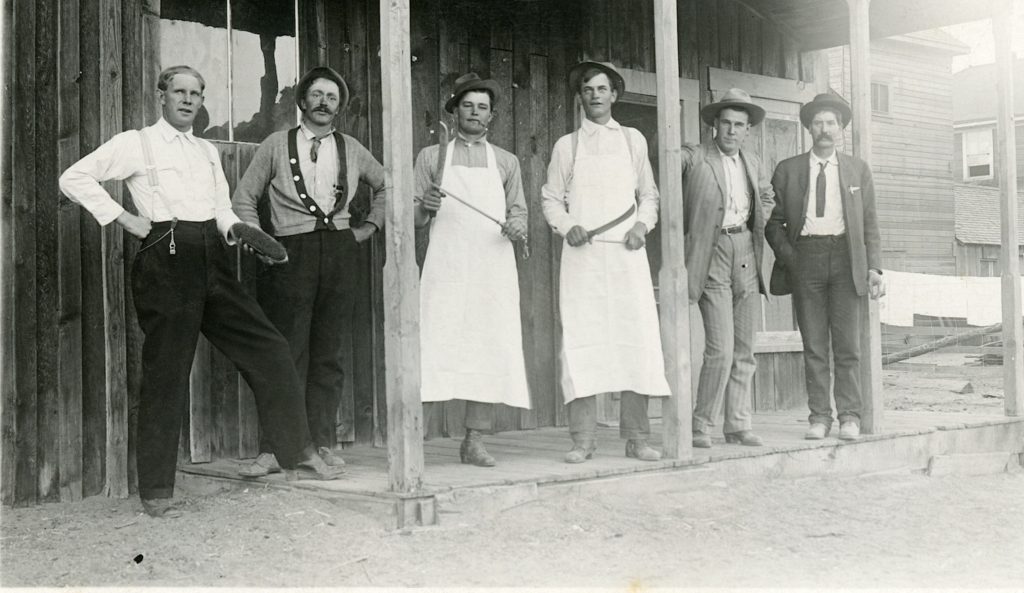
Left to Right: Garfield Vogt, Les Cottingham, Orrin Myers, Fred Hansen, Roy Hopkins, Unknown—Vivian Hansen
The Standish Meat Market was an early day enterprise of Fred Hansen. When it first opened it was located on the north side of Todd Hemler’s Standish Livery Stable. What a peculiar arrangement to the say least. As business increased Hansen moved to a second location and branched out in carrying groceries. One of his newspaper advertisements caught my attention with the statement “Local-killed Meats.”
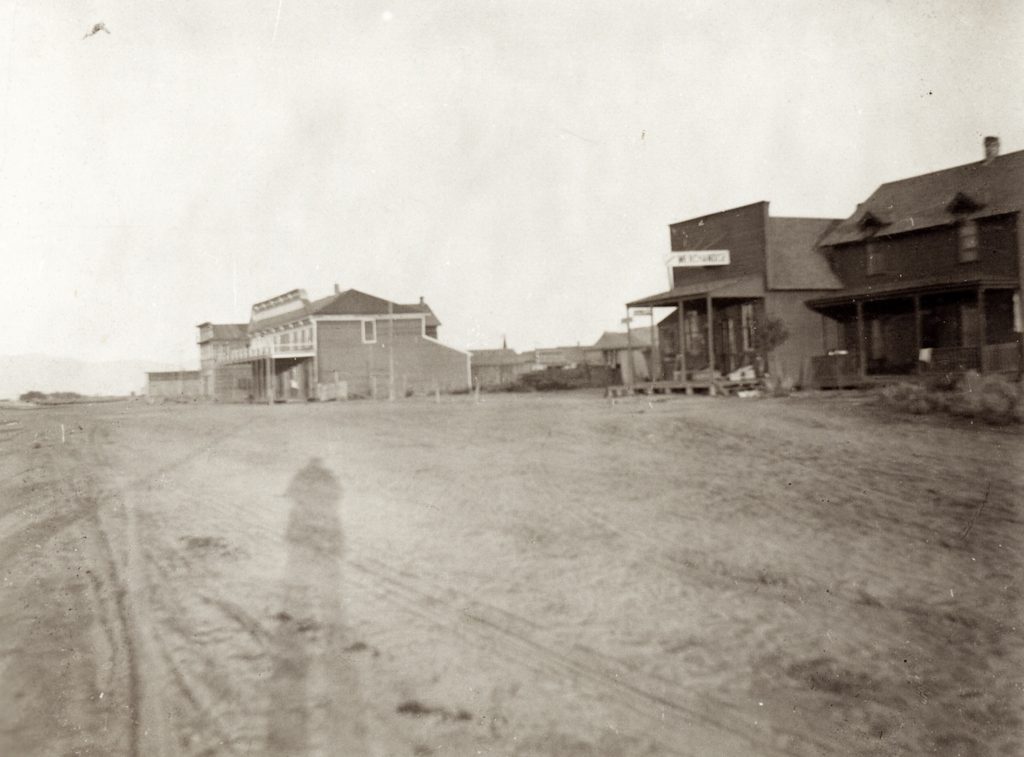
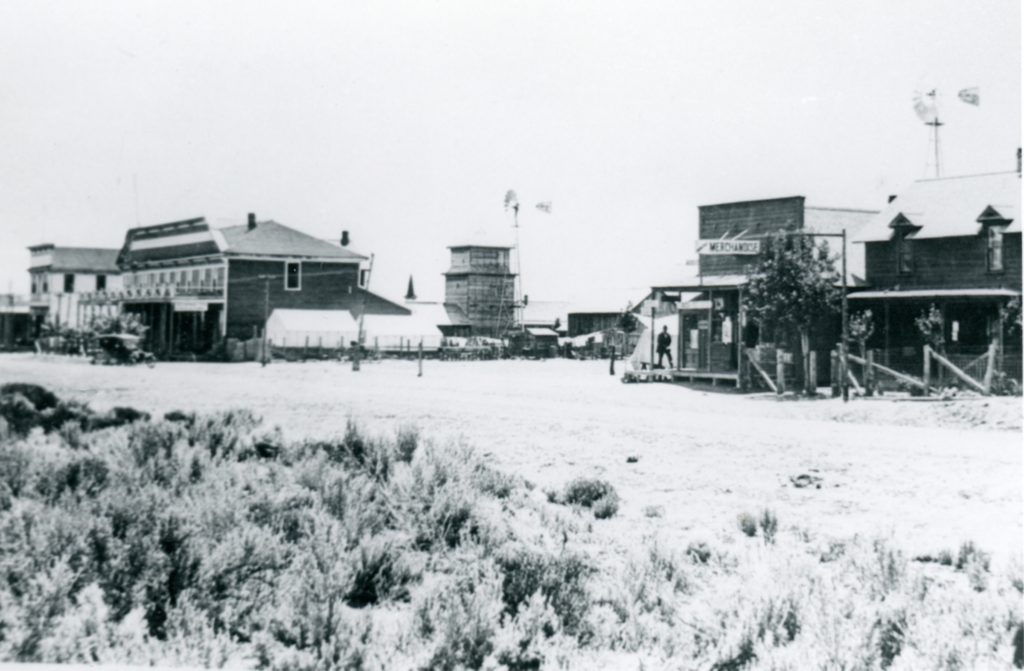
Since no one replied to the recent Ask Tim post, Standish will be a topic. This is due in part while searching for a photograph of the water flume in the Susan River Canyon, I came across a portion of my manuscript on the early history of Standish. After reviewing the same, I can attest that my early writing skills were rough around the edges. At least the historical documentation was there!
The May 1907 meeting of the Lassen County Board of Supervisors was a lively one. The hot topic was a new county jail and courthouse. The board received numerous petitions from throughout the county. One common thread that residents was for better roads. Many thought the county should be investing in a rock crusher and replacing wooden bridges with steel. There was, of course, resentment from the public who resided far Susanville over the cost of the newly established Lassen County High School.
The petitions from Bieber and Standish had another odd twist. Both petitions urged the board that the county seat be relocated. It was their opinion that Standish be made the county seat on the grounds it was more centrally located. The board took no action on these topics. In addition, it would be some time before the board would even bring up the topic of a new jail and courthouse.
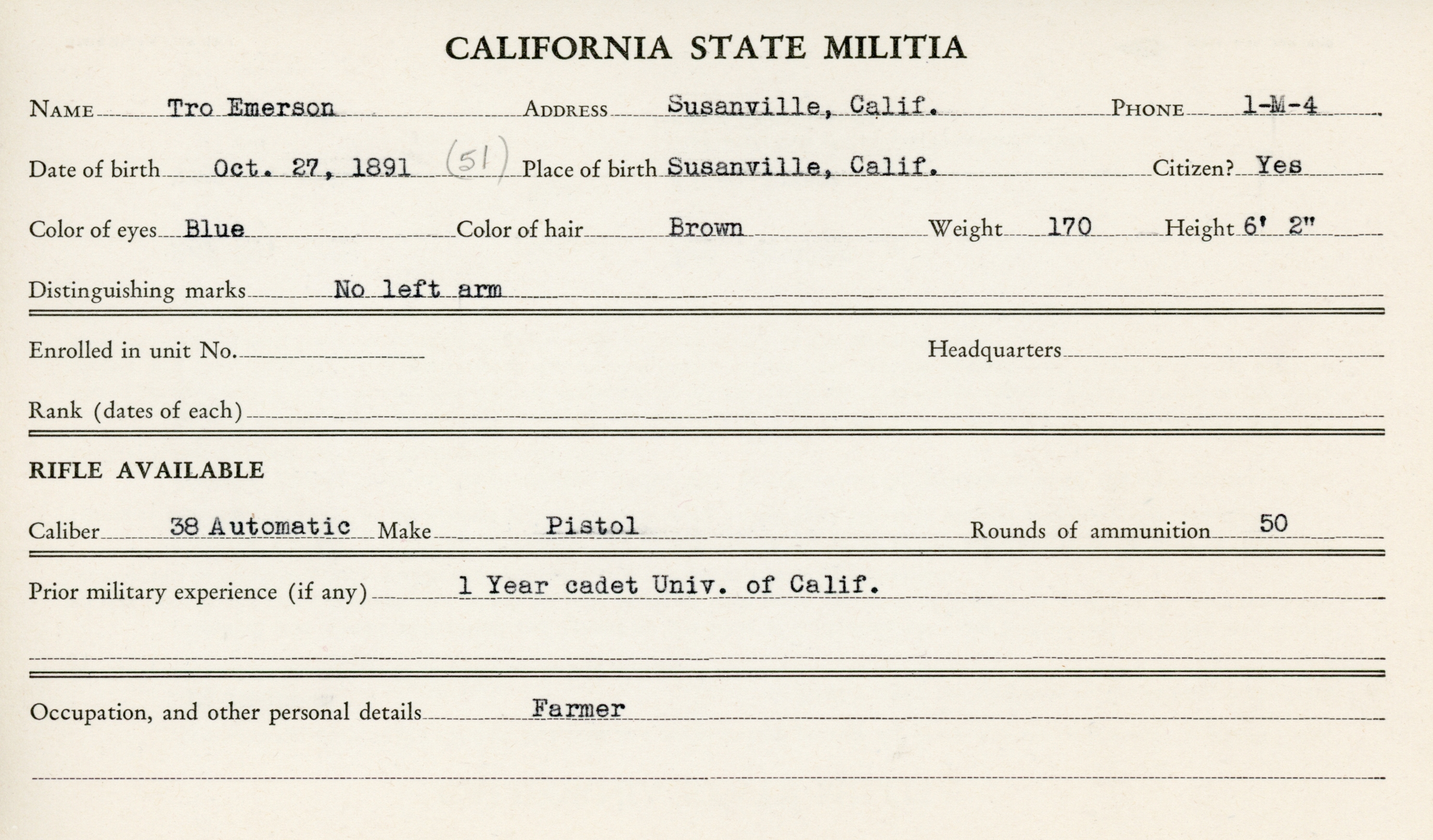
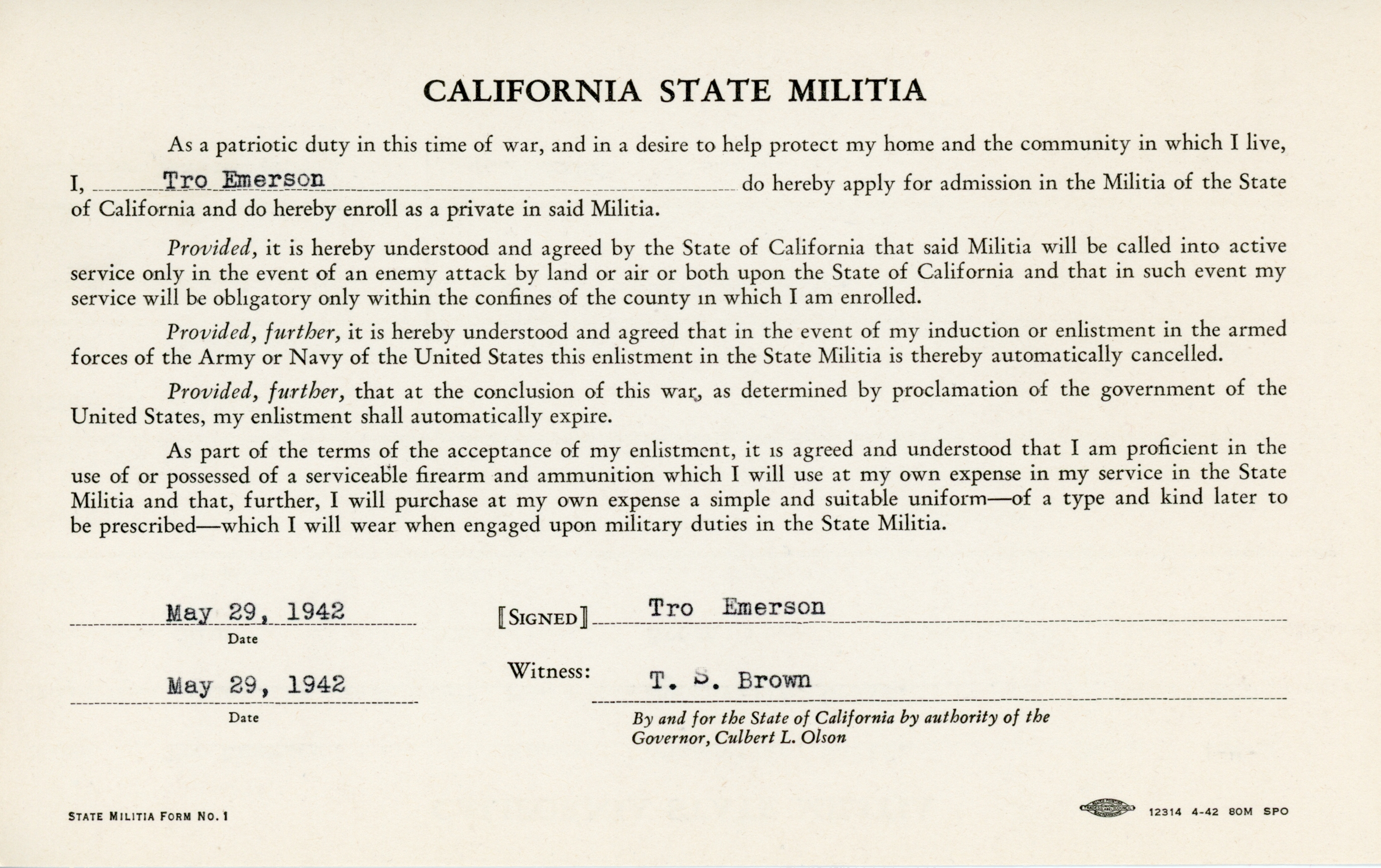
Twice in Lassen County’s history there have been local militia units of the California National Guard. The first was the Honey Lake Rangers of the 1860s. The last time was during World War II. Initially, there was to be one large unit for Lassen and Modoc counties. That plan was neither feasible or practical and was dropped.
A new strategy was drafted. Inside each county, especially in large rural counties like Lassen, several local militia units would be formed. There duties were to protect the area in case of enemy invasion. Their involvement was confined to the boundaries of the county. Uniforms, guns and ammunition would be provided to each unit. They would also be trained in guerilla warfare. In Lassen County it fell upon the Farm Advisor (T.S. Brown) to organize these units.
On May 20 1942, the first organization meeting was held in Susanville. Local units were created for Susanville, Bieber, Doyle, Janesville and Standish. By the first of June, the Susanville Militia had 70 members. It became known as Thomas Tucker Militia—named after Thomas Tucker the first casualty from Susanville in World War I. Fortunately, this volunteer force never had to be activated. At the conclusion of the war, each individual’s enrollment in the militia was automatically cancelled.
In the early morning hours of July 17, 1929, the largest fire in the history of Standish occurred. At that time, a next door neighbor to the Standish Creamery saw the roof of that building on fire. Quickly, a volunteer farmer-firemen bucket brigade assembled to combat the blaze. It became readily apparent early on that the creamery could not be saved. All efforts focused on containing the fire and to prevent it from spreading to nearby residences and stores. By the time the sun rose, the creamery was a pile of smoldering rubble. Approximately, $1,500 worth of butter and cream went up in the flames. The total loss was valued at $20,000 and was only partially insured. It was owned by the C.E. Emerson Company of Susanville. Cause of the fire, a defective flue.
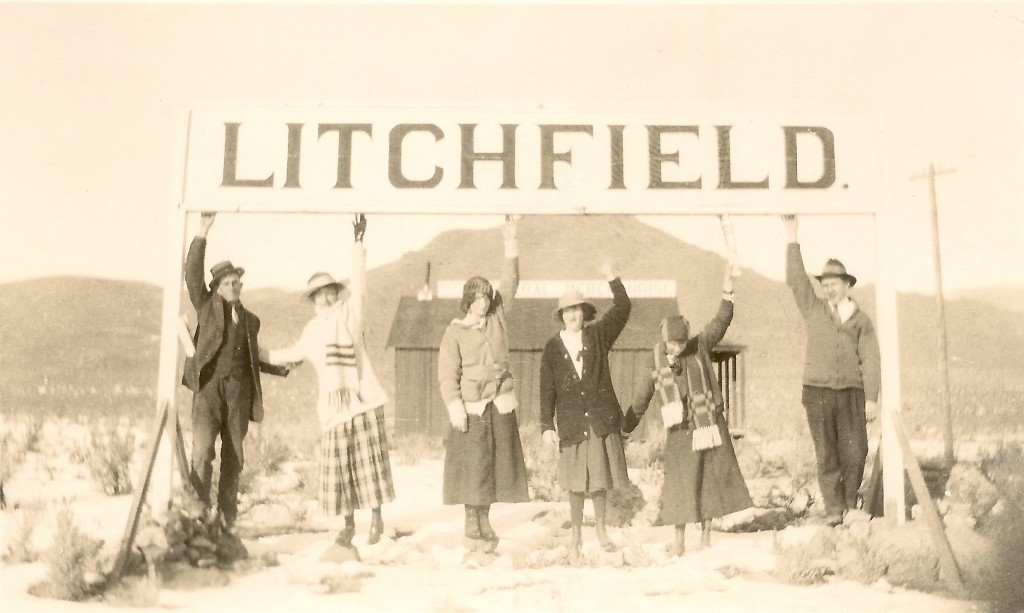
A town is born, Litchfield. Courtesy of John M. Gibson
In early 1912, when the news, survey and construction began on the Fernley & Lassen Railroad that would traverse the Honey Lake Valley with its ultimate destination of the new lumber town of Westwood, spread like wildfire through the investment community. Land speculation was rampant. It was none other than the DeWitt Postmaster, W.B. DeWitt, of the Standish-Tule District became a tour guide of bankers from Southern California willing to invest in the region. It was this particular district that had an appeal that could be a major agricultural shipping point. The established community of Standish had been ruled out, it being three miles from the railroad. Two sites were in the running—the B.F. Gibson ranch and the Purser ranch, the latter a few miles west of Wendel. It was the Gibson ranch that appealed to the investors, and thus the foundation was laid for a new town Litchfield—named in honor of Gibson’s father-in-law, Andrew Litch.
Spread the word, and encourage a friend to subscribe
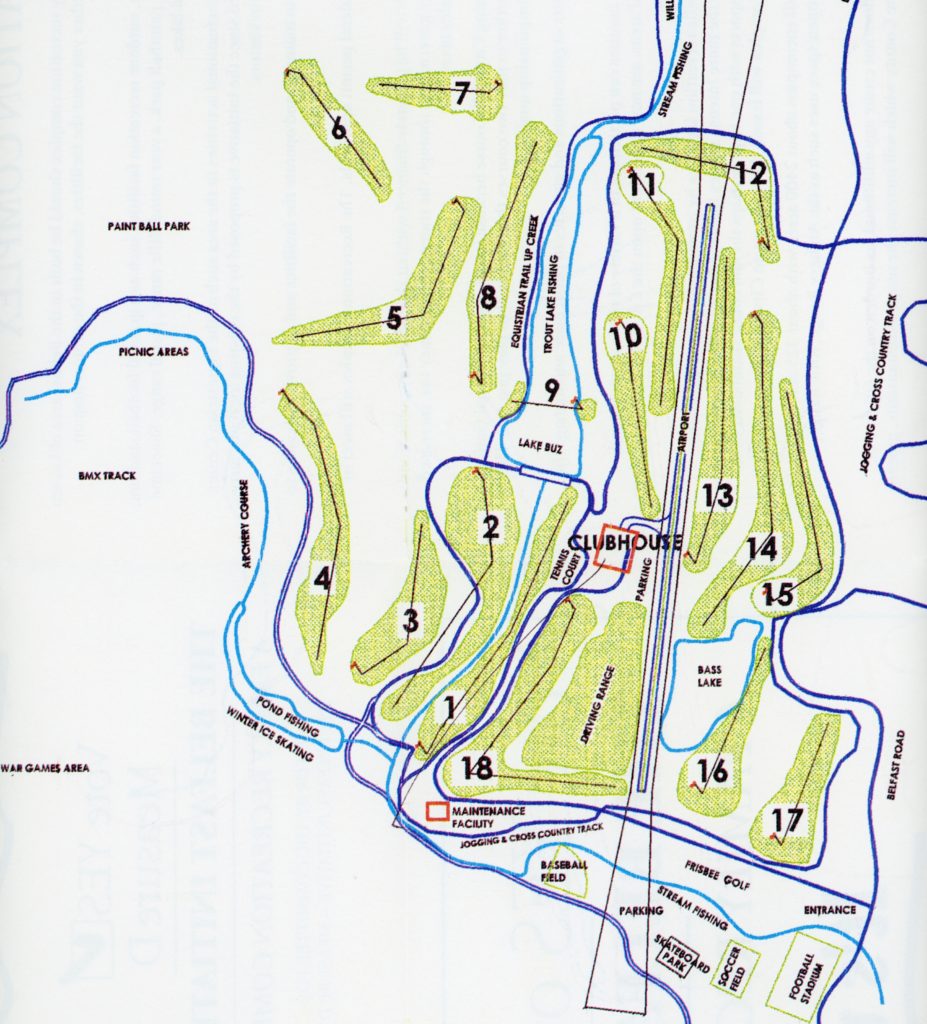
This was an interesting Lassen County measure presented to the voters in the 2002 General Election. Simply put it asked the voters to rezone 2400 acres in the Belfast area of the Honey Lake Valley to “Mountain Resort.” Like so many grandiose plans for Belfast, this envisioned a wide range of recreational amenities. Top on list was a 18 hole golf course along with such outdoor recreational facilities such as a grassed football stadium, soccer field, baseball field, skateboard park, frisbee gold course, paintball park, a year round rifle range, pistol range, Skeet and Trap range, BMX track, fishing ponds and lakes. All this done without taxpayer dollars. The final vote Yes=3910 (52.90%) to NO=3481 (47.10%).
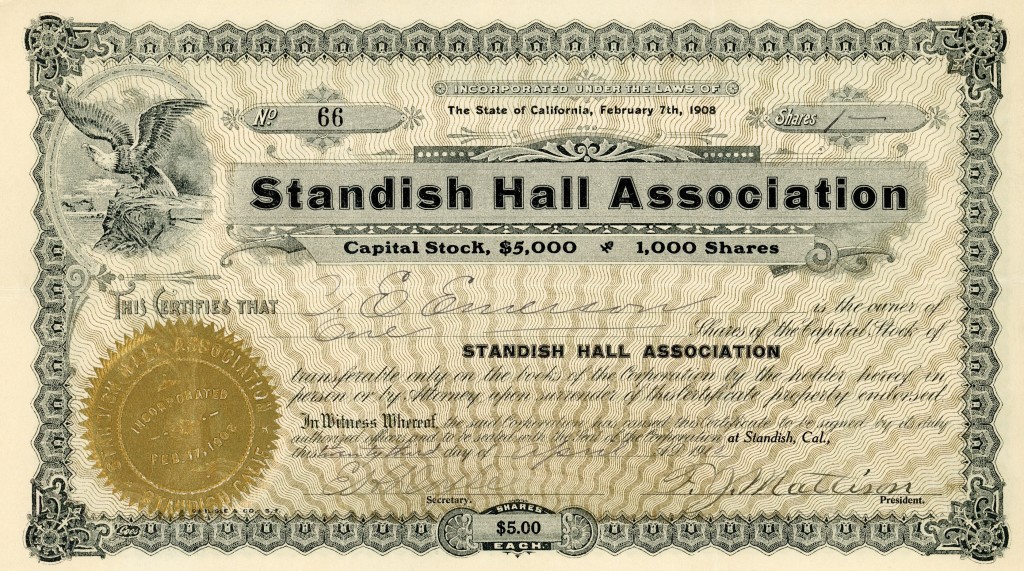
Stock certificate courtesy of Dick and Helen Harrison
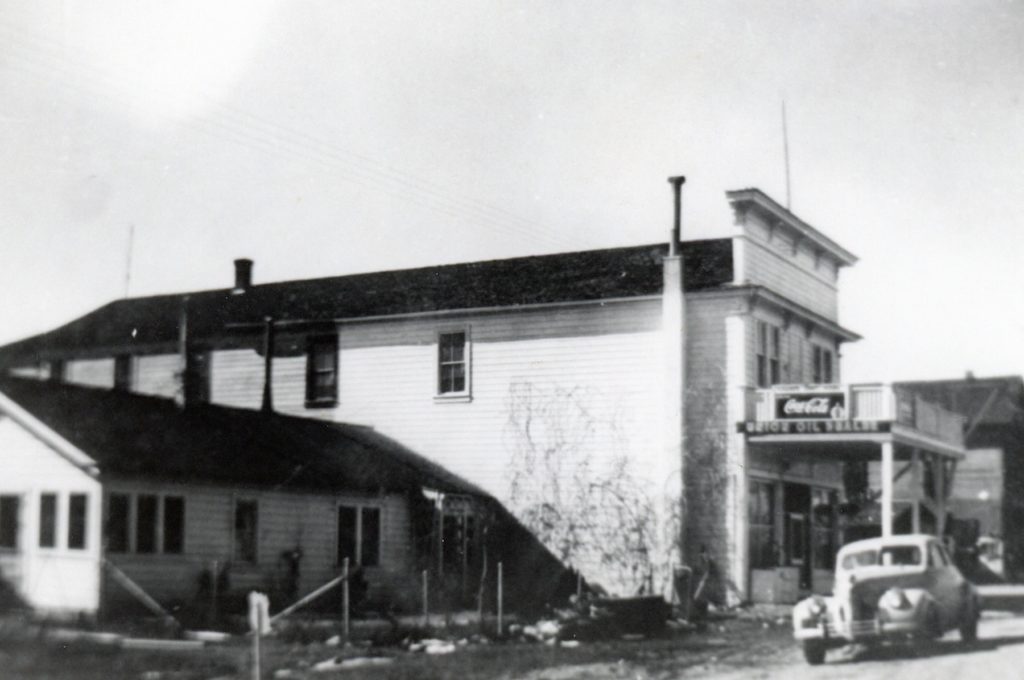
In 1906, the fraternal organization Foresters of America built a two-story hall in Standish. As was customary of the day, the first floor was rented to a commercial enterprise, which in turn the rent money used to pay off the construction debt, plus for maintenance of the property. The second floor, of course, was a hall used for various functions. However, the Foresters’ struggled with the building and they found a solution. They turned to the community to form the Standish Hall Association. The Association needed to raise $5,000 to purchase the building, sold stock to raise the funds and were successful.
One of the first tenants was Susanville merchant, Charles Emerson, who expanded his operations to have a second store at Standish. For nearly a decade, all went well. Whenever, Emerson asked for improvements, the Association refused. Emerson’s solution, by members stock to gain a controlling interest. In 1920, Emerson wrote to L.C. Stephenson to purchase his stock and wrote, “The building is practically run by an old man named Wrede. I am a rentor of the store, lower floor and pay monthly rent. The cellar is wet and small and they will not fix it. The front lets in sand and dirt when the wind blows and they will not fix it. Now I am trying to get enough stock to be able to vote and have some say.”
Emerson used the old fashioned barter system. He would give store credit to owners of shares, in exchange for their stock. Emerson was successful and eventually purchased the building.
The Standish store, no date. Courtesy of Camilla Moody.
Seasoned residents will know the building as Neil’s Mercantile, though its doors have been shuttered for decades. There have been plans for the structure, but nothing has ever materialized.
Spread the word, and encourage a friend to subscribe.
Standish was a well designed utopian community. Yet, it shared a trait with many other communities that having a cemetery was an after thought. Those who initially passed away there were interred in the Janesville or Susanville Cemeteries. This changed in 1901 with the passing of Mary Pringle. Her husband, James and her were one of the first people to take up residence at Standish. She was buried in a field approximately 300 yards west of the Standish Bible Church on property at that time owned by Jim Elledge. Over the course of years only a handful people were buried there. As Jessie McKay Lowe who lived in Standish during the early 1900s noted the cemetery was abandoned because it would become completely under water at irrigation time. In 1909, the graves of Minnie Winslow and Bruce Ganyon were disinterred and moved to the Janesville Cemetery. The last burial to occur there was in 1918 for Mary Ann Penman.
A volunteer opportunity. If someone with a drone could take a picture of the site, it would be greatly appreciated.
Spread the word, and encourage a friend to subscribe.
This is a topic that I plead total ignorance. By the early 1900s, Lassen County had small jails in outlying communities. Whether they were just temporary holding facilities, I do not know. The jails at Hayden Hill and Standish were nearly identical. They were not your typical structure. Instead of having vertical boards, they were placed horizontal, making for a very stout structure. The jail at Hayden Hill remained intact until 1991 when Lassen Gold Mining began mining operations there and what few remnants were demolished. The Standish Jail was converted into a storage shed for the Lassen County Road Department.
Enough said, since I got sidetracked from my original topic. In a letter dated from March 1, 1909, Standish resident, J.B. Leavitt, (I am not sure of his official capacity), wrote to the Lassen County Clerk, George Bassett: “Dear Sir: I am in need of some old quilts for the jail at Standish.” What is noteworthy, its the only documented reference I have for the Standish Jail.
Spread the word, and encourage a friend to subscribe.