Tag Archives: Standish

Honey Lake’s Sugar Beet Experiment

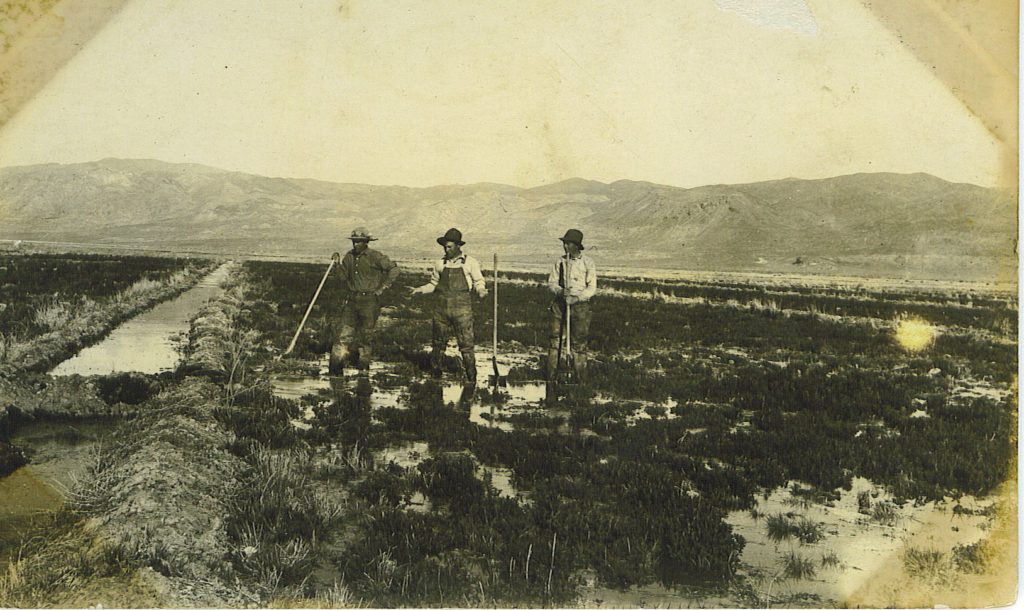
The Zarbock Brothers on their desert homestead near Stacy. Courtesy of Pam Zarbock Bell

In 1910, the Nevada Sugar Company of Fallon, Nevada came courting Honey Lake Valley farmers in the Standish district, as well those homesteaders on the east side of Honey Lake to plant sugar beets. One of the reasons, was the Nevada Sugar Company was in the midst of constructing a $600,000 factory at Fallon.

As an enticement the company stated it would build a second factory at Standish if production was successful and needed transportation facilities. In 1912, with the announcement of Fernley & Lassen Railroad to be constructed through this section of the Honey Lake Valley solved that transportation issue.

It should be noted that in 1911 was the first irrigation season of the Standish Water Company’s pumping plant on Honey Lake’s eastern shore.  In that year they provided water for 1,000 acres that was planted in sugar beets, with the Nevada Sugar Company providing the seed. No  one locally knew anything about growing sugar beets, but they learned quickly. One of the biggest problems encountered  with beet production was the amount of labor required. The problem was compounded as there was a local labor shortage, and then there were those who did not want to work in beet fields. To alleviate the problem 25 Japanese laborers were brought in to assist. Their tenure was brief, even though it was reported they worked twice as fast at a cheaper price.

There were two other problems that ended the experiment. First there was not an adequate water supply and the beets were substandard. It was not only a problem locally, but in Fallon as well for in 1917 the beet factory there closed.

Never miss a story, click here to subscribe.

Bank of Lassen County – Standish Branch

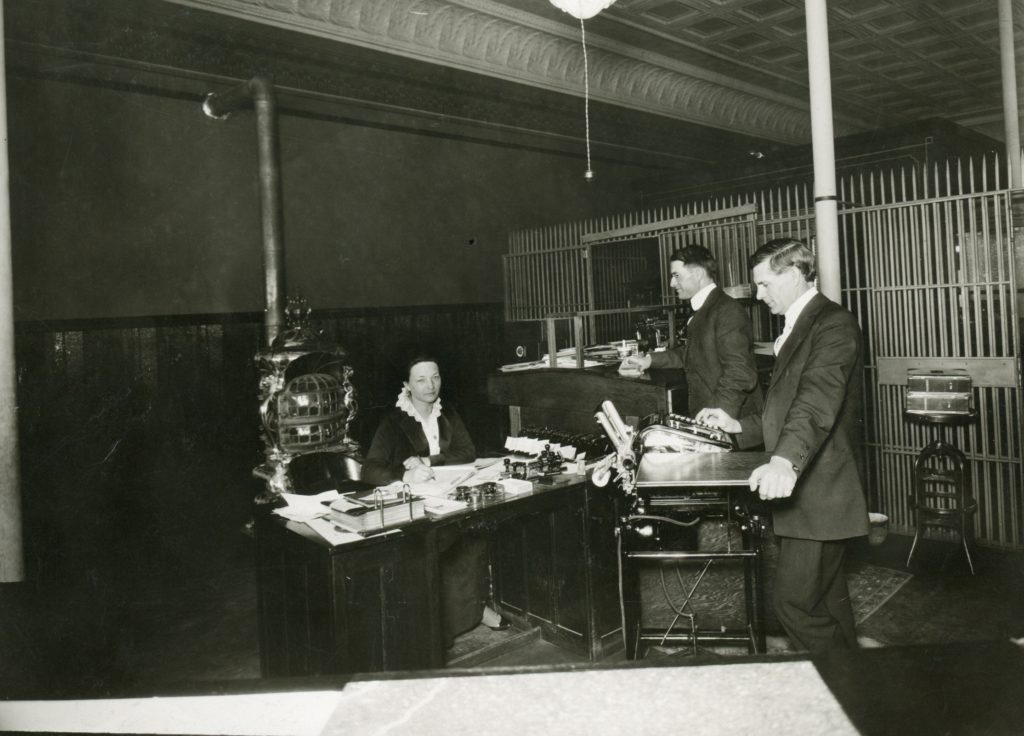
Standish Branch of the Bank of Lassen County inside the Wrede Hotel

For a time, Standish was a very prosperous community in the Honey Lake Valley. Not only did it have numerous businesses, but a hotel, and a creamery, too. Everything was so good, in fact, that it even had its own financial institution.

In 1892, the Bank of Lassen County was established in Susanville, the first of its kind in Lassen County. In the spring of 1915, the bank announced it was going to open its first branch in Standish.  However, it encountered some delays, especially with the installation of big safe, inside the Wrede Hotel, where the branch office would be located. On August 30, 1915, the branch opened with W.H. “Wally” Fulton, as the manager. Fulton had a long association with the financial institution, and equally important was well-known in the Standish region, having been married to Kathryn Mapes. The Standish Branch operated for ten years, closing its doors on December 31, 1925.

Wally Fulton later moved to Susanville and in 1933 became the City’s Treasurer. He remained in that position until his untimely death in 1941 by suicide. He used a gun in the city vault, and waited until the noon whistle from the Fruit Growers mill to mute the sound of the gun shot.

Never miss a story, click here to support and subscribe.

Standish – Then & Now

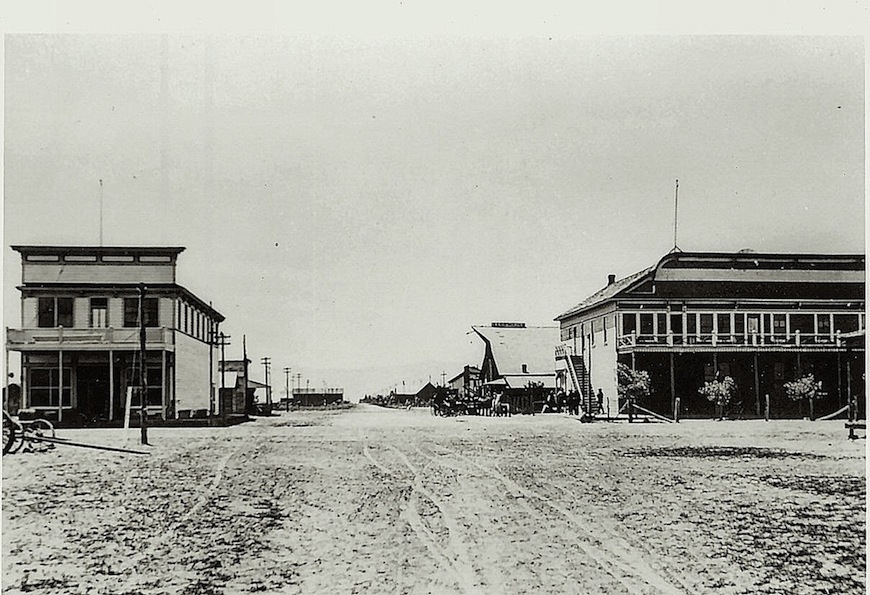
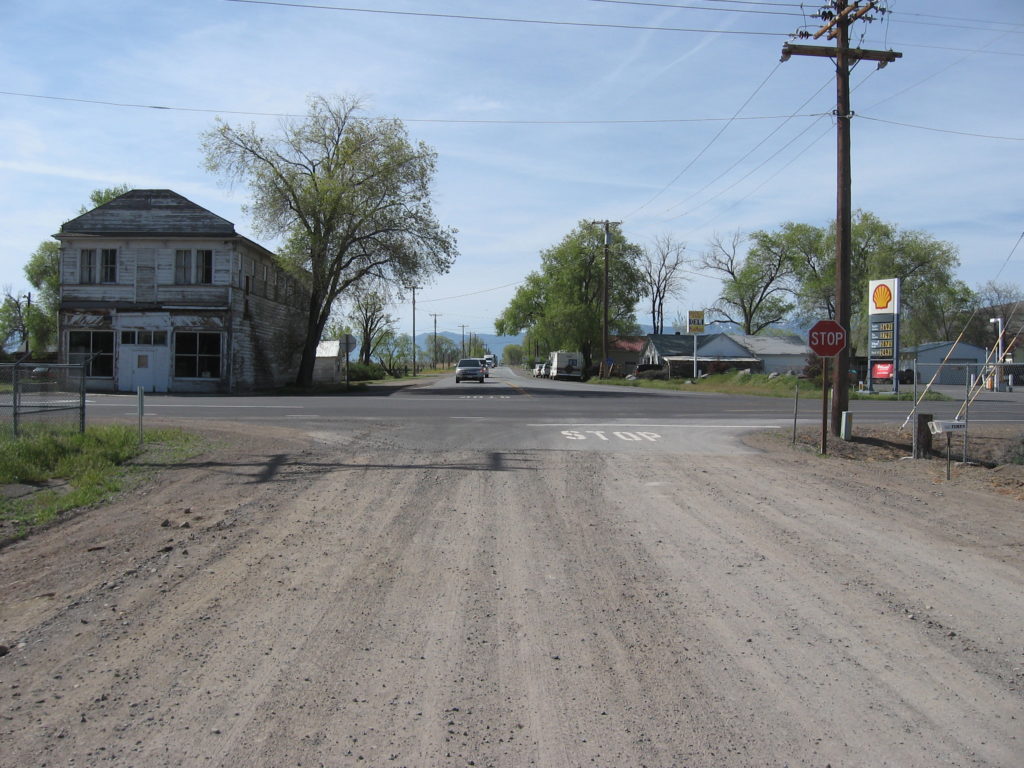
Milford Street, Standish, 1908. Courtesy of Prentice Holmes

In the 1890s, the Associated Colonies of New York was established to create utopian communities in the West, Standish would be there second development. It was their belief that people living in the East wanted to escape from large industrialized cities where corporations were in control. Those same people, they concurred, sought independence, would work for themselves and own their own homes. Each “colony” was designed using the philosophical beliefs of Myles Standish and the economic structure promoted by LDS leader, Brigham Young. In 1897, the Standish townsite was laid out, and its founders stated growth would be slow, not a boom and bust cycle.  Things did not work out well, and it went bankrupt in 1901. After that the town really started to grow.

Milford Street, Standish, April 19, 2016

Never miss a story, click to here to support and subscribe.

Standish School

Standish School, 1911. Courtesy of Esther McClelland

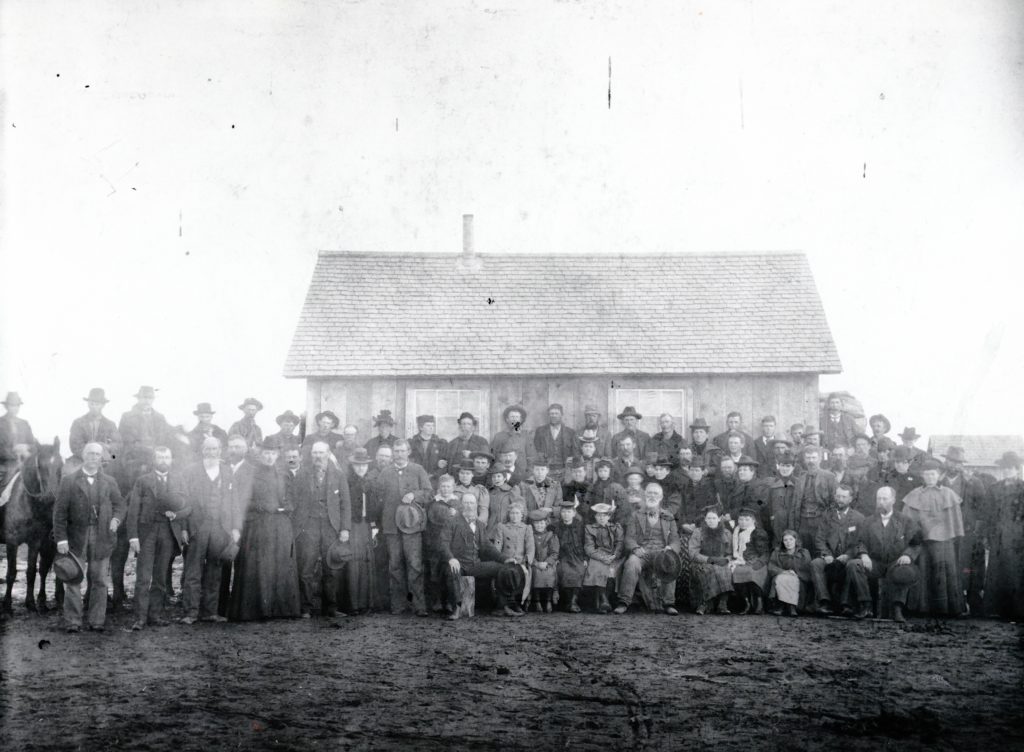
The school district was created on January 5, 1906. That summer the Wilbur Brothers constructed a $1,300 schoolhouse. On July 1, 1951, the residents of the Bridgeport, Soldier Bridge and Standish School Districts agreed to consolidate and form the Shaffer Union School District. The Standish School was subsequently closed.

It should be noted the Wilbur Brothers also built the Honey Lake and Missouri Bend schools, and all three are similar in design. Honey Lake school has been converted into a residence and no longer recognizable. Missouri Bend is still intact, and for awhile it has been used as a private school.

Never miss a story, click here.

Halloween Tour

Belfast
According to one person, Belfast, was going to be a city paved in gold. That prediction was made in 1881.

While it is nearly a month away, mark your calendar for a brief, but exhilarating early afternoon tour to get you into the spirit of things.

You will be introduced to some of Lassen’s eccentric permanent residents. Of course, one has to pay a pilgrimage to the one and only “Count” who died in 1662. That is not a typo and the marker was placed by unknown parties back in the 1930s.

Stay tuned for the details.

For five dollars a month by subscribing, you can receive a daily email on that day’s topic, and in doing so, help preserve a bit of history.

New Standish

Litchfield
A town is born, Litchfield. Courtesy of John M. Gibson

Even before the first rails were laid on the Fernley & Lassen Railroad, those along the right of way knew exactly where it would be located.  B.F. Gibson and his associate, Los Angeles promoter, B.F. Jackson had an initial plan for a new townsite, not too far from Standish. The new railroad was going through Gibson’s Ranch and its location in that part of the Honey Lake Valley made it a ideal place for a  combination townsite and railroad shipping point.

As Standish was less than three miles away, Gibson offered that community free lots for those willing to relocate, which he dubbed his enterprise, New Standish. However, his offer was not well received, so Gibson named is his new town, Litchfield, in honor of pioneer settler and his father-in-law, Andrew Litch.

Subscribe and support this site for as little as $4.17 a month.

Dunham Photography

Willow Creek School
Willow Creek Valley School, 1886 is a Orley Dunham photograph

Orley and Murry Dunham were photographers in the region during the 1880s and 1890s. They both started in Plumas County. Orley married Maggie Ford, a member of a Indian Valley pioneer family. In 1886, Orley opened his studio in Susanville. During that year, he took a number of photographs of the Lassen County Schools. He left Susanville in 1891,to work for a large photography studio in San Francisco. Continue reading Dunham Photography

Feed Back

Mattison House
Mattison House, near Standish, circa 1900. It was located to the east of the town, at “four corners.”

It has now been two months since the site was launched, and over a month since the daily blog began.

Of course, since I started this new venue, it is important to me receive feedback, as to what some like or do not like, and then again something you would like to see. After all, I do not possess any psychic abilities.

However, it would be tremendous for me to hear from you. You can either do a reply post below. Please take note, your email address is safe and secure, and it is never displayed publicly or exchanged. If you are on the shy side, you can always send me an email at tim@tipurdy.org

Hope to hear from you soon. Tomorrow, regular postings resume.