Tag Archives: Standish

The Delayed Standish School

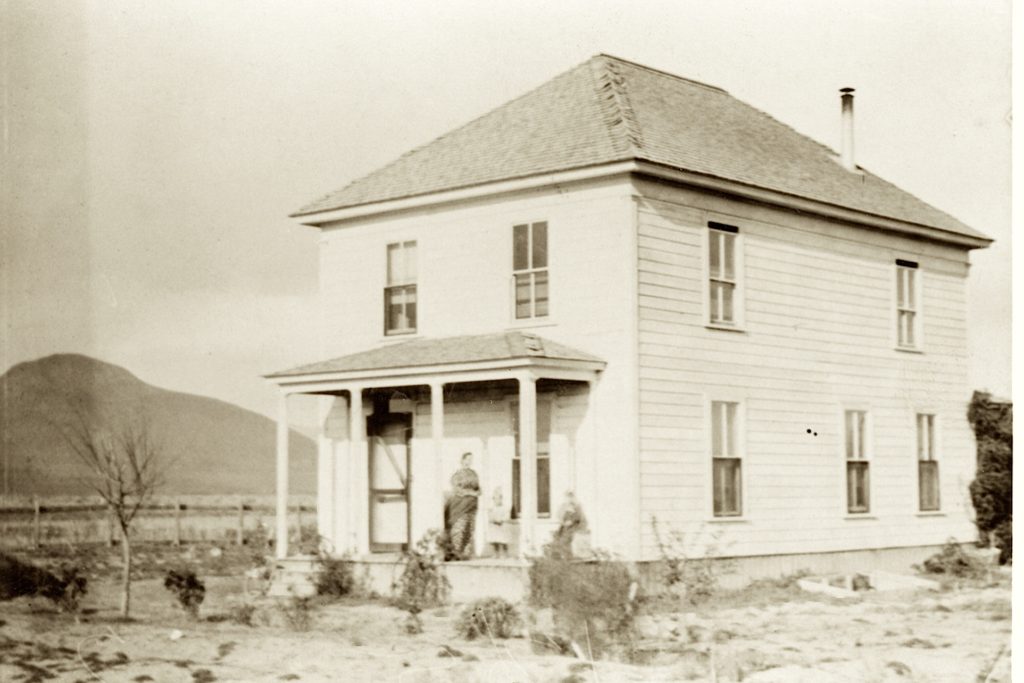
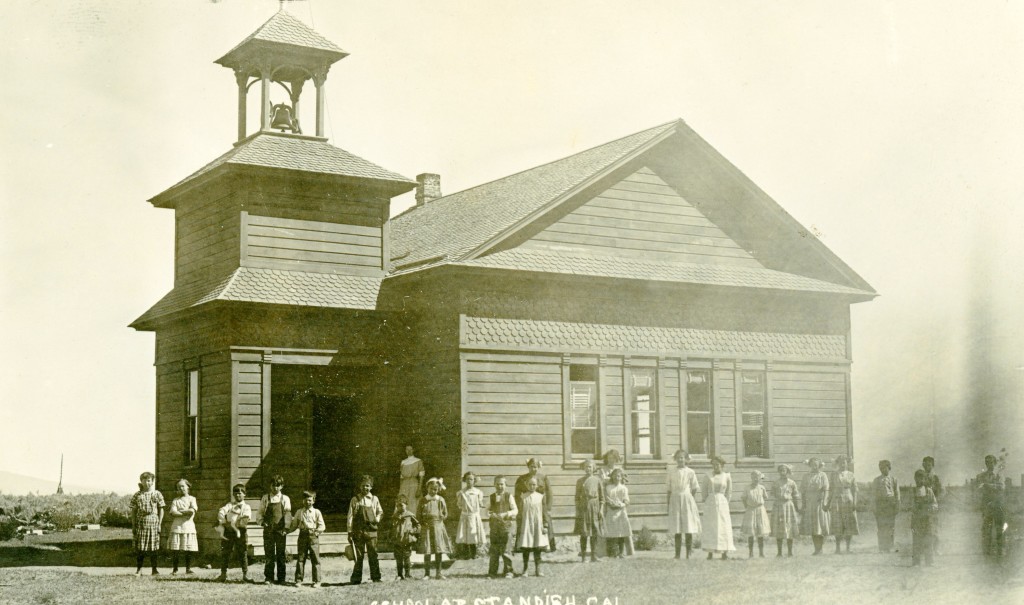
Standish School, 1911. Courtesy of Esther McClelland

Yesterday, we explored how Westwood was slow in building a church. Over the mountain at  Standish it had a church early on, but did not have a school. However, there were two nearby schools—Bridgeport on Chappuis Lane and Honey Lake at the intersection of Alexander and Lambert Lanes. On December 30, 1905, eleven Standish residents, who had a combined total of 22 school age children petitioned to form a new school district from territory served by Honey Lake School. It was granted.

Standish School, to the far left, teacher Miss Esther Pierce, 1911—Esther McClelland

On Saturday, June 2, 1906 a school bond election for $1,300 was held. All ten voters approved it. That summer the Wilbur Brothers constructed the school. The brothers also built Honey Lake and Missouri Bend schools, each with a distinctive bell tower. In 1950, Honey Lake School was annexed to Standish, due to a lack of students. On July 1, 1951 the residents of Bridgeport, Soldier Bridge and Standish School Districts approved to consolidate and form the Shaffer Unified School District. The Standish School was subsequently closed and torn down in 1967.
Support

Standish Promotion Bureau

Standish, 1910–Prentice Holmes

In August of 1911, fourteen men in the Standish area gathered to form the Standish Promotion Bureau. It was a very short lived organization. Their one and only goal was to convince the Southern Pacific officials to have their Fernely & Lassen Branch line be built through Standish. This was an uphill battle since the railroad line had already been surveyed to the north of Standish. The bureau had a slate of officers towit: E.F. Koken, President; B.F. Gibson, Vice President; E.H. Doyle, Treasurer and J.H. Elledge, Treasurer.

Things did not go well and in the spring of 1912, things unraveled. Instead of convincing railroad officials to change their mind, Gibson suggested to the bureau that they should move Standish to his ranch where the rail line would be built. Needless to say it was not a pleasant meeting. Gibson resigned. Add insult to injury, when word emerged that Gibson was working with Los Angeles promoter, B.E. Jackson on a proposed townsite on the Gibson property, when the bureau organized. There was no reason to continue with their mission, the bureau disbanded.

Tim

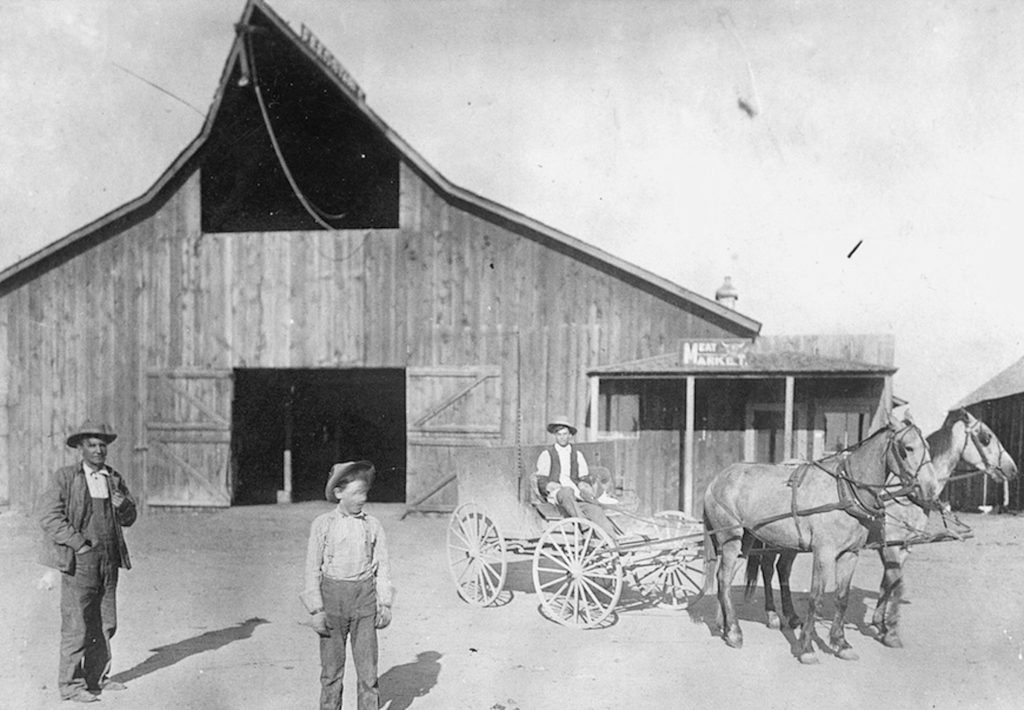
Standish Livery Stable

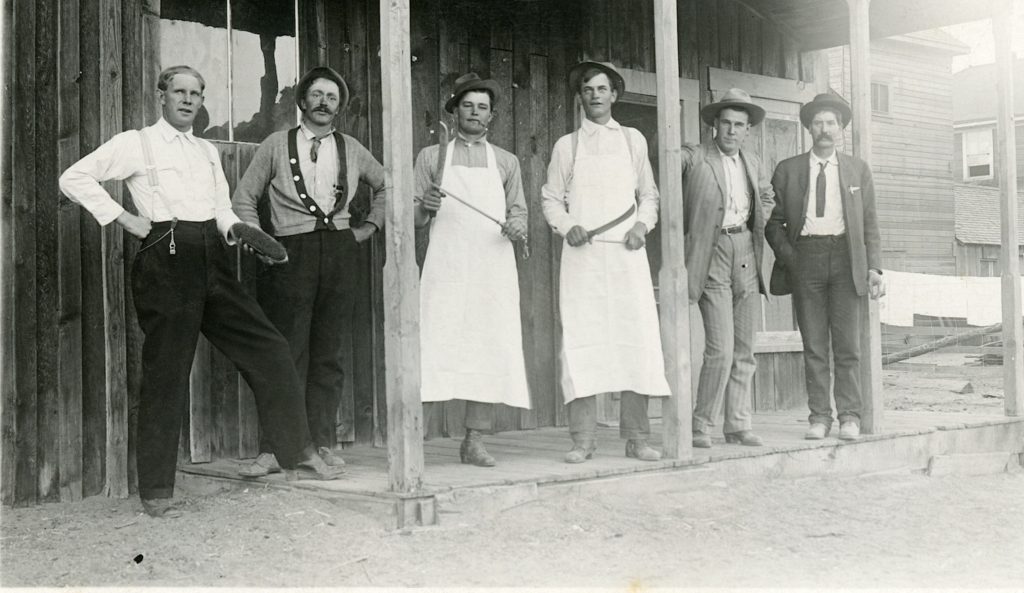
Standish Livery Stable and Meat Market, 1909. Left to Right: Todd Hemler, Bill Kennedy and Fred Hansen. Courtesy of Vivian Hansen.

In 1904, George Short (brother-in-law to James Mapes) established the Standish Livery Stable on Milford Street (A-3). In 1906, he built an addition which became the home of the Standish Meat Market. Both the livery stable and meat market were leased to various individuals such as Fred Hansen, Todd Hemler and Floyd Bass. In 1912, Fred Hansen moved the meat market to a new location. In 1913, Louis A. Kline purchased the livery stable. Kline at the same time leased the Wrede Hotel located to the north of the stable.

On November 18, 1913 the Standish Livery Stable was destroyed by fire, and for a time threatened the entire town. The fire started in the harness shop, the former site of the meat market. It was later learned the harness maker, went on a drunken spree, returned to the shop knocked over an oil stove, and passed out. When the building was engulfed in flames, it was discovered the nameless harness maker was inside and volunteers dragged him out.

Most of the contents of the livery stable was saved except for forty tons to hay. The harness shop and its contents was a total loss. Kline only had partial insurance on the building in the amount of $400 and did not rebuild.

Tim

A House Makeover

Ranker Residence—Ardell Torrey

Architecture is one of my many interests. Personally, much of today’s building designs are rather bland, whether commercial or residential. Today, we examine the Mattison house, which originally was not a stand out.

In 1879, Otto Ranker came to Susanville from Oroville to operate a blacksmith shop. In 1884, he located what was referred to as four corners, about two miles east of present day Standish. Like many homesteaders before and after him, he first lived in a small three room cabin. As needed, another room would be added, and so forth. In the early 1890s, he had a second story built that consisted of four bedrooms. In 1900, he moved to Chico for health reasons, but rented his ranch..

Mattison House
Mattison House, near Standish

In 1906, Ranker sold the property to Fred Mattison. Shortly afterwards Mattison had the house remodeled. Mattison died in 1926, but his wife’s family continued to occupy the property. In the early 1950s, during a cold winter the pipes froze. Hal Story crawled underneath the house with a blow torch to thaw the pipes. Instead, of thawing the pipes, he caught the house on fire and the residence destroyed.

Tim

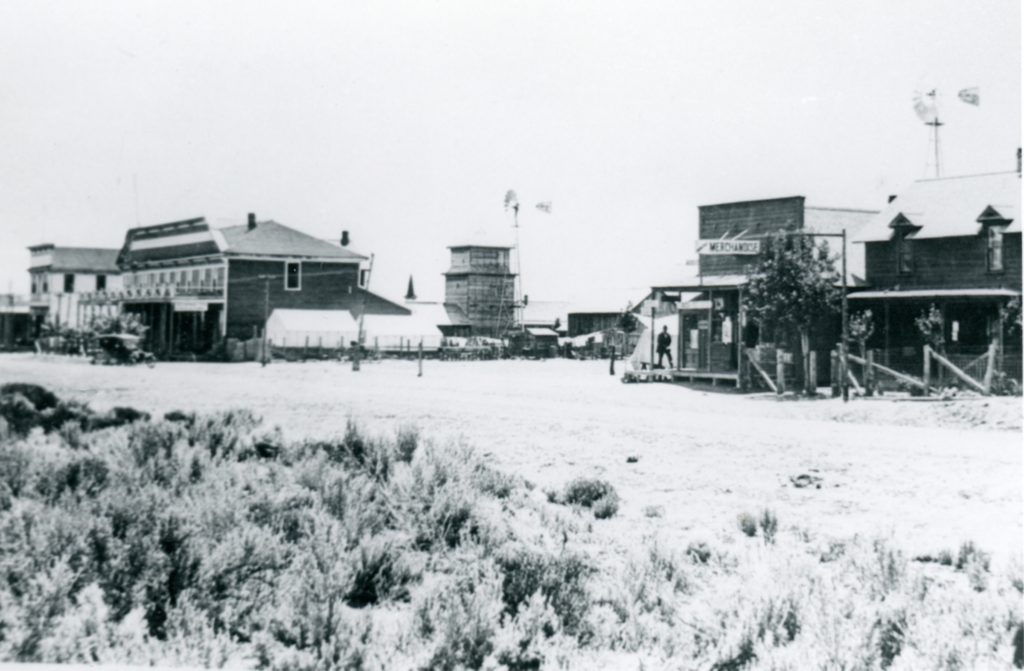
Milford Street, Standish

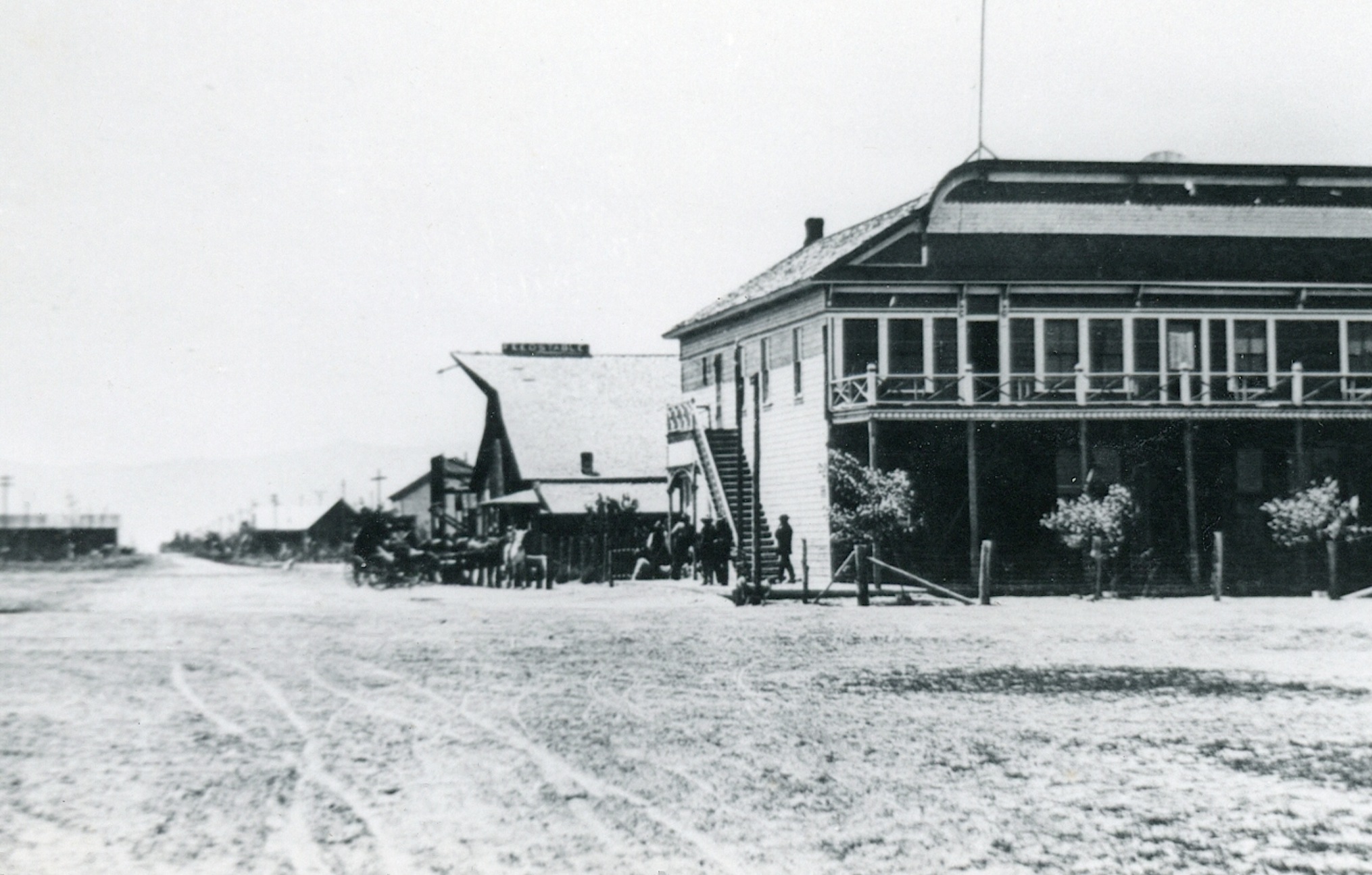
Milford Street, Standish, 1908—Prentice Holmes

Tuesday’s are a wild card day, some times there is a post and some times not. For newer readers, when I started this site back in 2015, I did a daily post seven days a week. After five years, I scaled back to six days. However, I wanted to make sure something went on this Tuesday, to monitor the issue with the host sever.

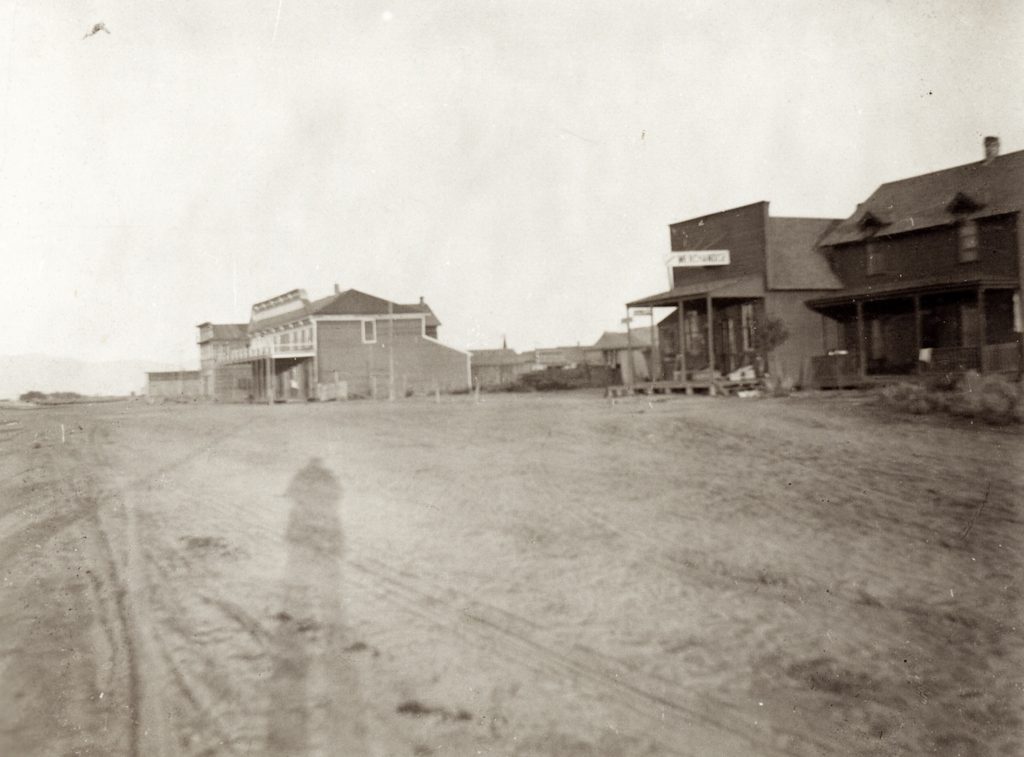
The above photograph is Milford Street, Standish looking west, known today at the Standish-Buntingville Road or County Road A-3. The building to the right was the Wrede Hotel. It is now replaced with gas pumps at the Wayside.

Tim

Lake Almanor Cloud Seeding

Lake Almanor

Note: This originally appeared on January 8, 2018, so it might be familiar to some. For some odd reason in August 2021 it garnered a lot of attention from first an internet search and then spread on social media. While seasoned subscribers may recall it, there are new ones who may find it of interest.

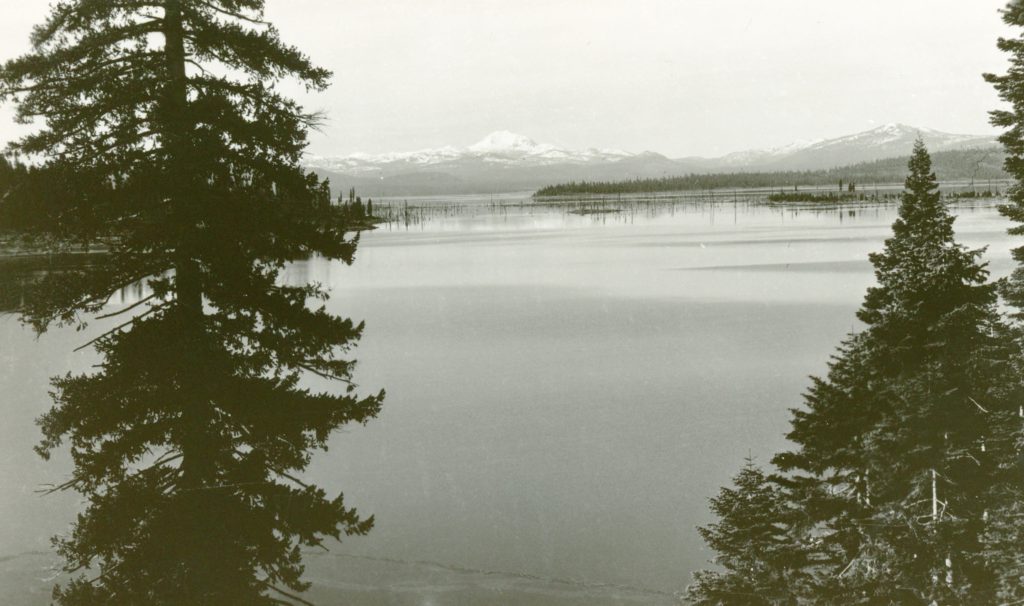
From time to time discussions have been held whether the cloud seeding in the Lake Almanor Basin area by Pacific Gas & Electric Company affects the areas to the east. In 1979, Lassen County officials thought the cloud seeding was part of the drought problem in southern Lassen County. In October 1979, Henry LaPlante of PG&E stated that the company has been treating selected storm systems for more than 25 years. He said the intent of the seeding was to increase the high elevation snowpack. Furthermore, LaPlante wrote, “There is no scientific evidence which indicates that cloud seeding activities in our Almanor area reduces the amount of precipitation in any other area.” 

Tim


Standish Meat Market

Left to Right: Garfield Vogt, Les Cottingham, Orrin Myers, Fred Hansen, Roy Hopkins, Unknown—Vivian Hansen

The Standish Meat Market was an early day enterprise of Fred Hansen. When it first opened it was located on the north side of Todd Hemler’s Standish Livery Stable. What a peculiar arrangement to the say least. As business increased Hansen moved to a second location and branched out in carrying groceries. One of his newspaper advertisements caught my attention with the statement “Local-killed Meats.”

Tim


Tuesday Tidbit-Standish

Standish, 1908. Courtesy of Betty Gorbet

Since no one replied to the recent Ask Tim post, Standish will be a topic. This is due in part while searching for a photograph of the water flume in the Susan River Canyon, I came across a portion of my manuscript on the early history of Standish. After reviewing the same, I can attest that my early writing skills were rough around the edges. At least the historical documentation was there!

Tim

A County Seat Proposal

Standish, 1910–Prentice Holmes

The May 1907 meeting of the Lassen County Board of Supervisors was a lively one. The hot topic was a new county jail and courthouse. The board received numerous petitions from throughout the county. One common thread that residents was for better roads. Many thought the county should be investing in a rock crusher and replacing wooden bridges with steel. There was, of course, resentment from the public who resided far Susanville over the cost of the newly established Lassen County High School.

The petitions from Bieber and Standish had another odd twist. Both petitions urged the board that the county seat be relocated. It was their opinion that Standish be made the county seat on the grounds it was more centrally located. The board took no action on these topics. In addition, it would be some time before the board would even bring up the topic of a new jail and courthouse.

Support

Lassen County Militia

Militia Card
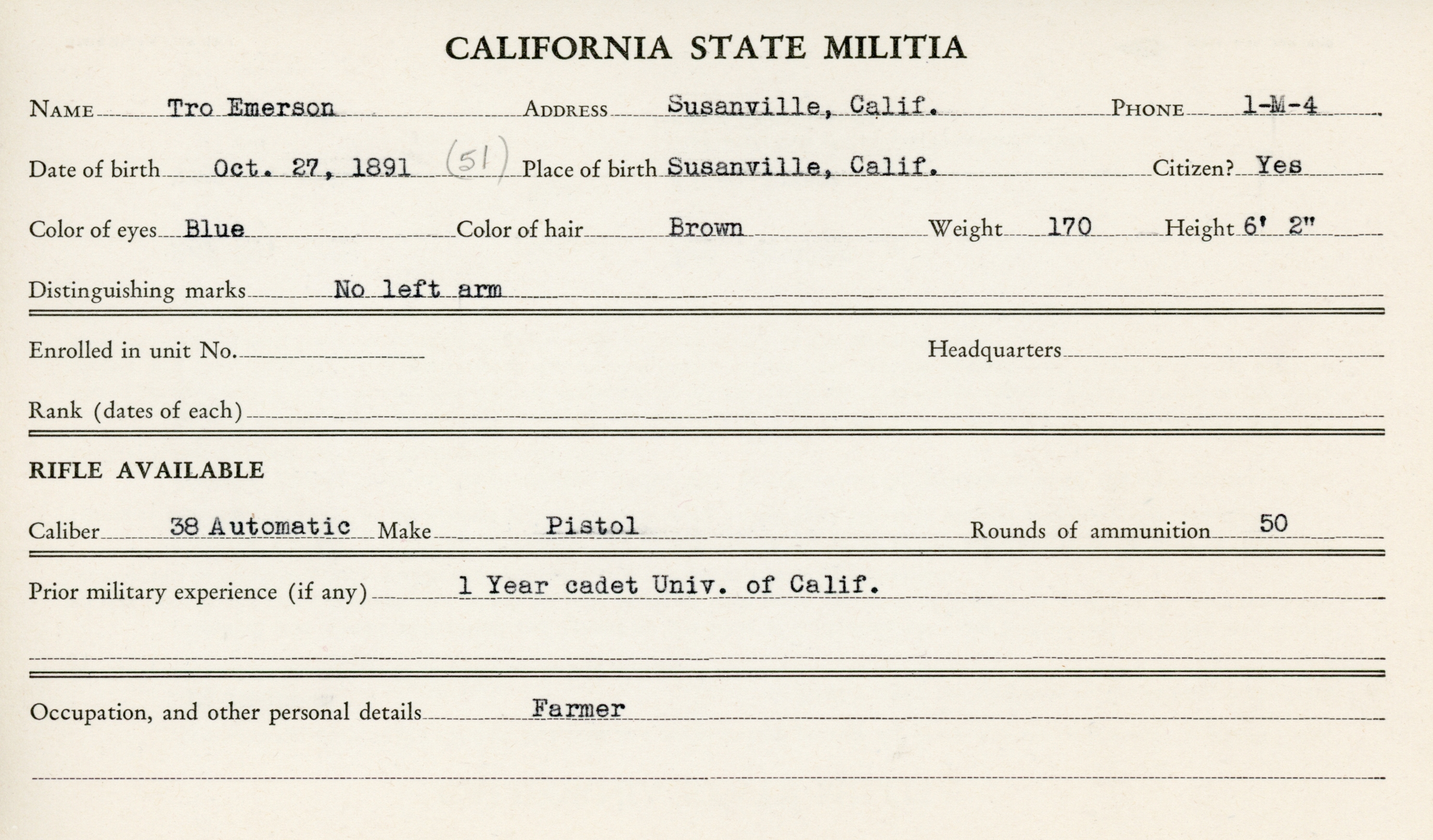
Tro Emerson’s Militia Card

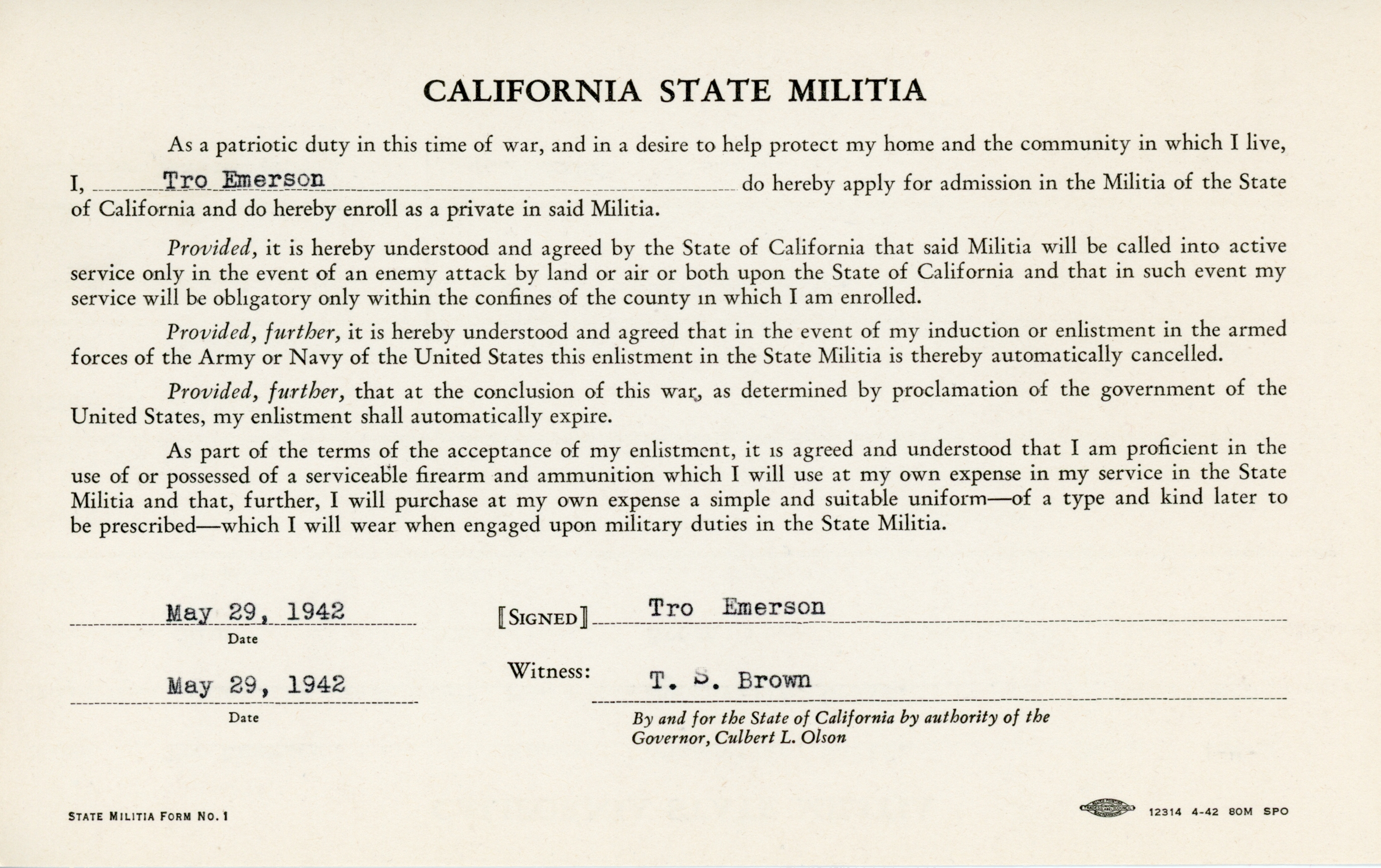
Twice in Lassen County’s history there have been local militia units of the California National Guard. The first was the Honey Lake Rangers of the 1860s. The last time was during World War II. Initially, there was to be one large unit for Lassen and Modoc counties. That plan was neither feasible or practical and was dropped.

A new strategy was drafted. Inside each county, especially in large rural counties like Lassen, several local militia units would be formed. There duties were to protect the area in case of enemy invasion. Their involvement was confined to the boundaries of the county. Uniforms, guns and ammunition would be provided to each unit. They would also be trained in guerilla warfare. In Lassen County it fell upon the Farm Advisor (T.S. Brown) to organize these units.

On May 20 1942, the first organization meeting was held in Susanville. Local units were created for Susanville, Bieber, Doyle, Janesville and Standish. By the first of June, the Susanville Militia had 70 members. It became known as Thomas Tucker Militia—named after Thomas Tucker the first casualty from Susanville in World War I. Fortunately, this volunteer force never had to be activated. At the conclusion of the war, each individual’s enrollment in the militia was automatically cancelled.

Militoa card

Don’t forget to look at the Subscribe feature.