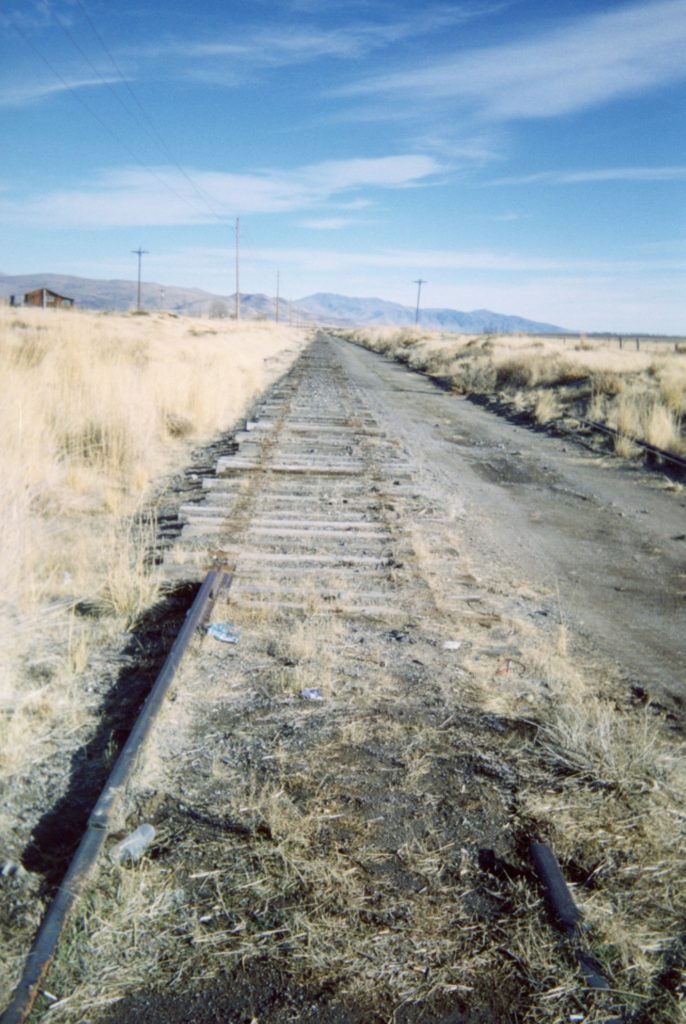
There is a bitter irony with ripping up this railroad line. The 124 mile railroad was built in a span of two years. To dismantle it took decades. In the fall of 2006, without any fanfare the segment of the railroad between Susanville and Wendel was ripped up.
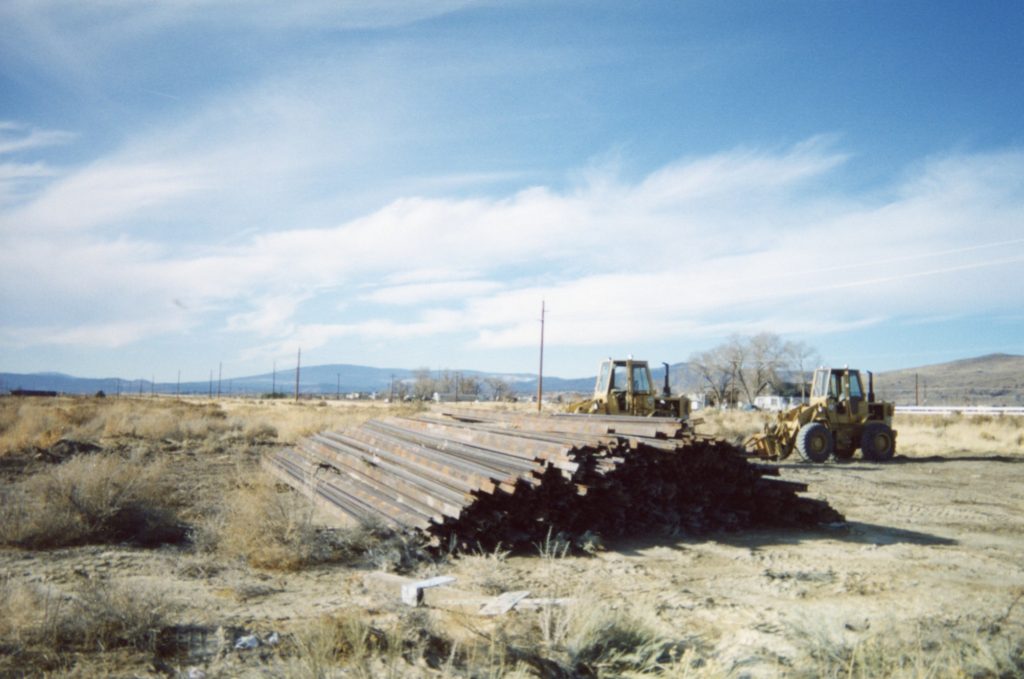
Rails piled up at the defunct Leavitt Station, November 24, 2006
Since it is the holiday season and a portion of it focus on food, I thought some might find this story of interest.
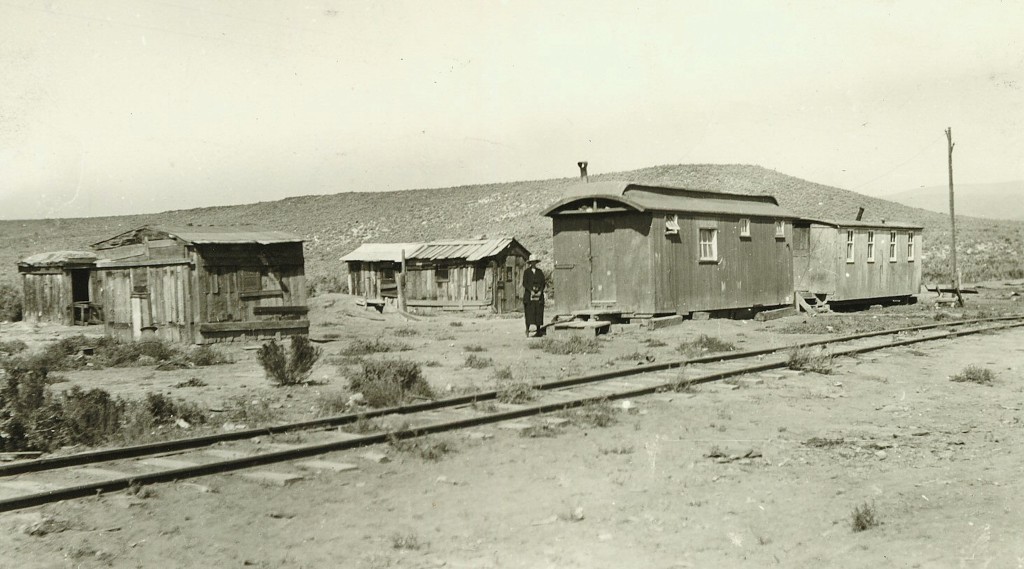
Now, let us venture to the tiny railroad outpost of Karlo in Secret Valley. In 1929, a scrappy ten-year-old by the name of Ed Allison arrived on the scene. Ed, in a sense, was an accidental visitor. He was originally living with his family in Sacramento. The family doctor thought he might have rheumatic fever and suggested Ed should live in a higher and drier climate. A family friend was Gilbert Menichetti who worked for the Southern Pacific Railroad at Karlo. It seemed an ideal location for Ed and off he went.
Upon his arrival the first order of business was to rent Ed a horse for him to attend the Secret Valley school several miles away. Of course this allowed him to explore the surroundings of his new home. For some reason, old time Secret Valley resident, Pete Biscar, of Biscar reservoir fame, took Ed under his tutelage. Biscar showed him many places, such as the petroglyphs in the canyon above the reservoir. Another feature that fascinated Ed was a particular lava cone. When one puts their ear down to it, one can hear a roaring noise—an underground river. Ed recalled that Gilbert Menichetti’s wife, Luella, was an excellent cook. Of course, Biscar was aware of that fact. Ed stated, “Biscar would bring sage hens that he shot in Secret Valley and bring them to her, because he knew she would process them to make ravioli. With that special ingredient, Biscar was always there at dinner time, for sage hen ravioli. He would be grinning ear to ear. They turned out to be very good. I don’t think really that sage hen ravioli was not that uncommon, but it was really good. At that time, when I was there the sage hen were plentiful.”
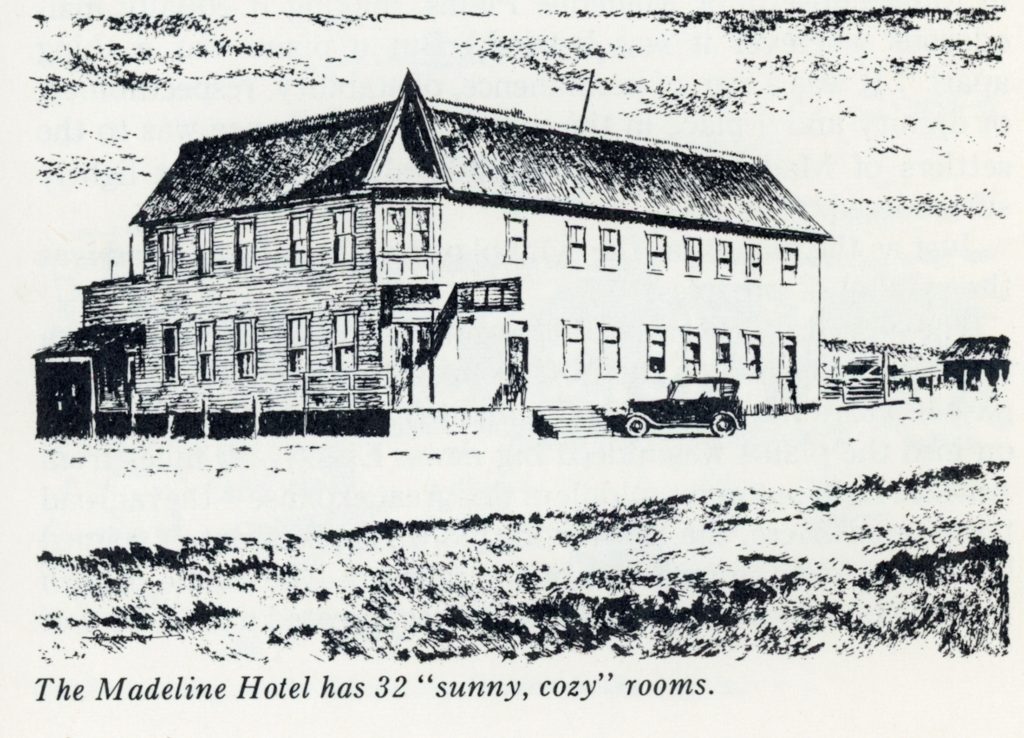
Today, while traveling Highway 395 one passes through the hamlet of Madeline, one of three communities to dot the Madeline Plains. A long time ago, it did experience its glory days. By the 1880s it was known as Van Loans stage stop and the Madeline Post Office was moved there in 1887 from its previous location in the Grasshopper Valley.
In 1902, the Nevada-California-Oregon Railroad (NCO) arrived at Van Loans and it became a hub of activity. No time was wasted in plotting out the Madeline townsite. Before the ink was dry on the Madeline subdivision map, Van Loan & Spargur built a two-story “L” shaped hotel to accommodate all the travelers arriving to check out the territory. The good times were short-lived and within fifteen years the town Madeline began to decline.
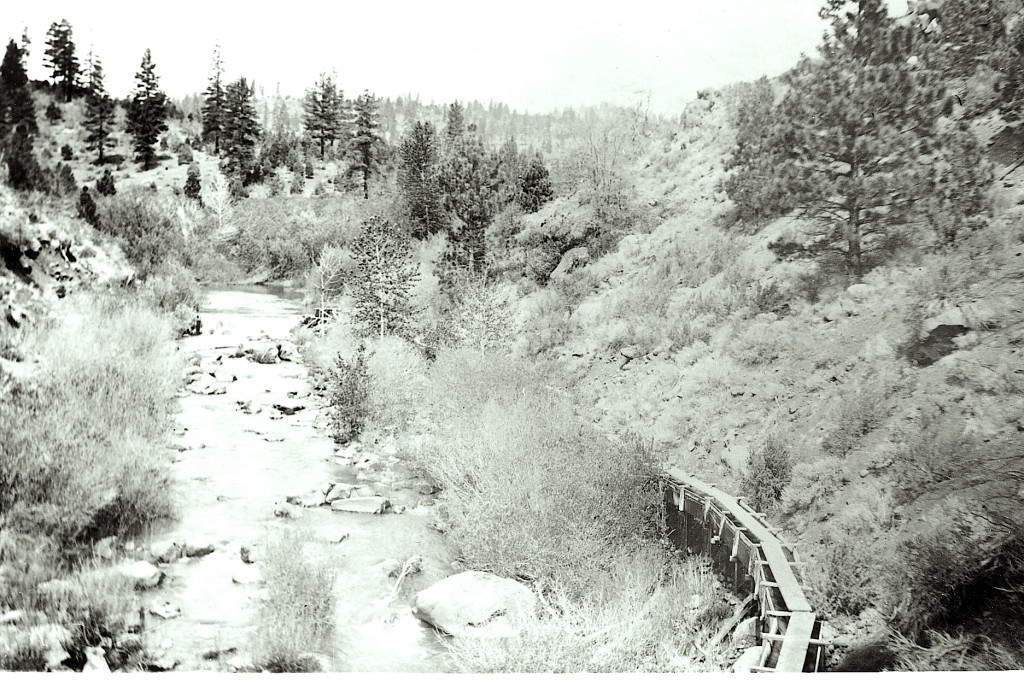
Susan River, 1899 just below Hobo Camp and prior to the construction of the railroad. Courtesy of Mary Dale Folsom
Hobo Camp is a popular recreational area on the Susan River, just a short distance west of Susanville. In 1913, it was referred to as the jungles or Jungletown when the Fernley & Lassen Railroad constructed its line through the area. It was a popular place for migrant workers to camp, and these homeless encampments back then were referred to as the “jungles.” For many years it was also known as Folsom Park, after M.O. Folsom, who owned the property at one time. In the 1950s, it was also referred to as Swedes Flat.
Lunch time at Dow Butte, August 21, 1953. Courtesy of Hank Martinez
In April 1938 the Piute Railroad logging line sustained major damage from Desmond Meadows to Susanville. The Red River Lumber Company decided to abandon the line.
In 1945 a portion of the abandoned railroad line was resurrected as a log truck road. Red River was going through a dissolution process and Ken Walker took over the company’s Susanville mill, he renamed the Paul Bunyan Lumber Company. Days of railroad logging were on the wane. The abandoned Piute line provided the foundation for a truck logging road. One of the major benefits of a private road, one could bypass the weight limits imposed on county roads and state highways. On September 20, 1945 the first logging trucks made the inaugural voyage.
It should be noted this delighted Susanville’s Main Street merchants since they no longer had to contend with logging trucks interfering with their commerce.
For the casual observer who decides to make a detour off Highway 44, near Poison Lake in western Lassen County, to travel the dirt road north to Pittville, one will see a variety of sights along the way. One of the first encounters is that of Halls Flat, a small non-descript sagebrush covered flat surrounded by pine trees. Nothing to get excited about. In the late 1910s, Tehama County rancher, Walter Hall used this area for summer grazing—hence the name Halls Flat. Little did he know, that not too far in the distant future, this spot would be an amazing hub of activity.
It first began, in 1930, when the Interstate Commerce Commission approved the Highline or Inside Gateway that connected the Western Pacific Railroad from Keddie, California with the Great Northern Railroad at Klamath Falls, Oregon. This happen to coincide with the development of Lassen Volcanic National Park. The railroad would come close to the park’s eastern boundary. Lassen Park and Western Pacific had a courtship—the park was seeking a concessionaire, while the railroad hopefully would see increased passenger service.
Halls Flat could have played a pivotal role. Western Pacific would develop a resort at Manzanita Lake in the park. At Halls Flat a railroad station would be built. At this point, passengers would disembark and be shuttled by bus through the northern section of the park to their destination at Manzanita Lake to spend days recreating. To build the lodge at Manzanita along with other amenities was estimated at $275,000. Due to outside legal issues, the Western Pacific had to suddenly withdraw from the proposal.
While the proposed Lassen Park/Western Pacific Railroad deal did not pan out, the Western Pacific did not abandon Halls Flat. In 1931, when the Western Pacific constructed its Highline route they constructed a depot at Halls Flat. This was rather peculiar since not a single person resided for miles in the vicinity. Little did any one know that this would suddenly change and that in a few years there would be dramatic changes.
During the Great Depression of the 1930s, Lassen County would have two Civilian Conservation Camps, better known as the CCC. One was located at Halls Flat. The other was Secret Valley, northeast of Susanville. The Halls Flat CCC camp was established in 1933 and shut down in 1942. The camp provided a lot of manpower for the Lassen National Forest. Among the work done was grazing studies, range habitat improvement and some logging of pine beetle infested trees in the nearby Blacks Mountain Experimental Forest.
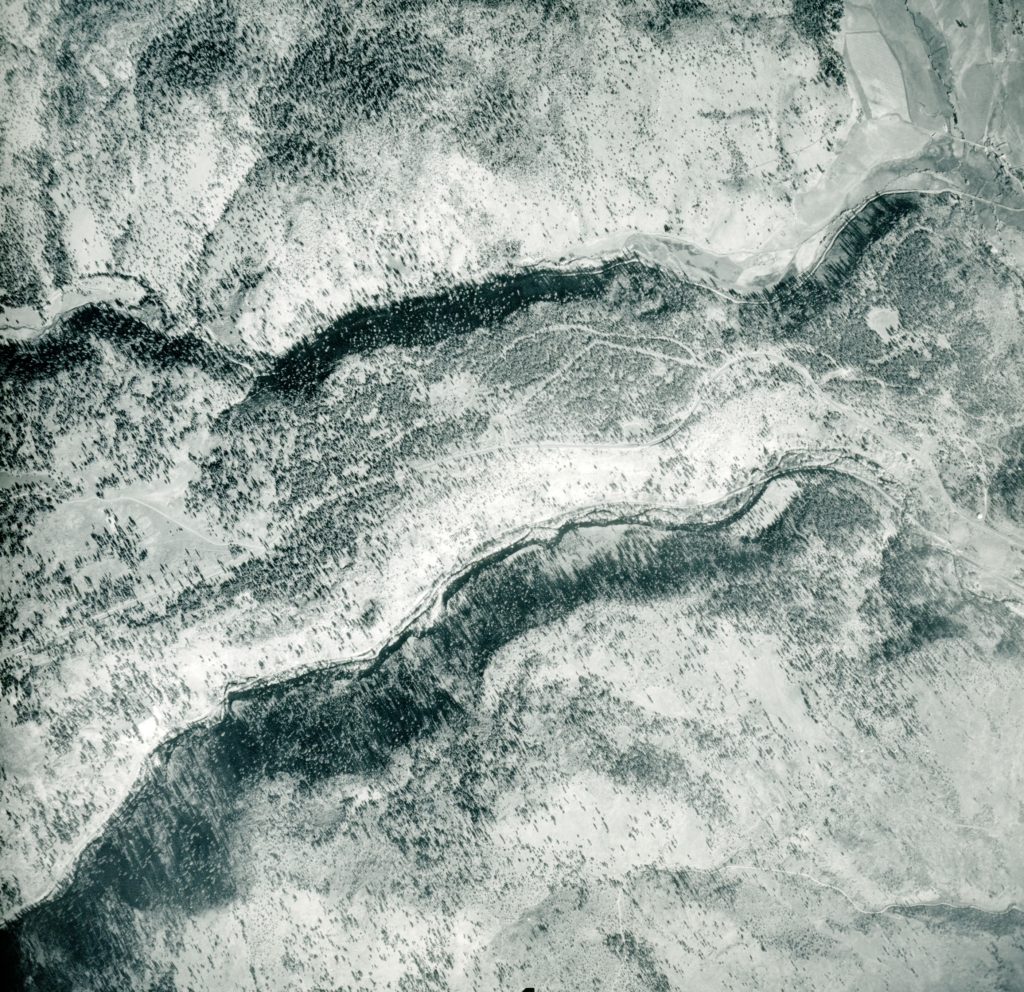
Piute Creek, upper, and Susan River, lower, just prior where the streams enter Susanville. Both canyon corridors had a railroad line at one time, though the Piute line was very brief. Personally, to me, it would have made better sense for the Southern Pacific Railroad to have selected to build its line to Westwood via Piute Creek. After all this would have eliminated the numerous trestles across the Susan River, plus two tunnels and would not had added any significant mileage increase.
Whatever the case may be, the two corridors today are popular with those who enjoy the scenery—whether by walking, running, biking, and horseback, or whatever means to explore nature.
View of Richmond Road January 1916 from Winchester Hill. Susanville looking towards McClellands.
Many may not realize that at one time there was a large commercial apple crop being produced in the Honey Lake Valley. Locally, the apple growers benefited when the Nevada-California-Oregon Railroad extended its line into the Honey Lake Valley, thus providing a better access to markets. One of those growers was W.M. McClelland. He estimated that during the 1891 season that 20,000 boxes of Honey Lake apples had been shipped to markets in Los Angeles, Sacramento and San Francisco. McClelland noted that the price received was one dollar for a fifty-pound box. In his opinion, the grower received one-half of that amount. That made for a nice tidy sum back then.
On a final note, in 1882 McClelland purchased sixty-five acres on the south side of the Susan River that was dissected by Richmond Road, the majority of which he planted an apple orchard.
More changes were on the horizon. Amedee was receiving a great deal of press in the numerous west coast newspapers. Besides the railroad, Amedee became the focal point of numerous reclamation projects to reclaim the vast sagebrush plain of the eastern Honey Lake Valley into a major agricultural hub. The railroad, of course, saw the potential. In January 1892, the railroad’s general manager, Erasmus Gest made a deal with developer Silas N. Griffith. In the contract it was stipulated, that not only a town plot be subdivided, but a grand hotel be built within six months. Gest had only purchased the proposed townsite from Brubeck, a few days before meeting Griffith for a bargain price of $150. On June 3, 1892 a grand opening celebration of three-story Hotel Amedee was held. Once Griffith was relieved from his contract, he began his search for potential buyers of the hotel. He did have to look far, and in September 1892, Brubeck purchased the hotel that had many amenities including twenty-seven guest rooms. While the 1893 national financial crisis did put a damper on things at Amedee, it was the most important rail shipping point for Northeastern California.
The good times would not last forever. In 1898, the railroad made it known that it would extend its line north to the Madeline Plains. When that occurred Amedee would lose its prominence as the terminus and there would be an exodus. In June 1900 the extension was completed. During the town’s hey day in the early 1890s it boasted a population of between 300 to 400 inhabitants. The population of the town at the dawn of the new century had dwindled to 49. To back up a little. In 1898, Brubeck placed the hotel for sale, with an asking price of $2,000 cash. For the longest time there were no takers. In the fall of November 1900 Brubeck purchased a 1,700 acre ranch in Contra Costa County and moved his family there. It was not until April 1901 that Brubeck finally found a buyer, namely Arthur P. Holland of Oakland, California. The transaction included the entire Brubeck holdings of the Hotel Amedee, bath house, rights to the hot springs, and approximately 100 acres. Holland planned to make the place into health resort and for Brubeck, a chapter closed and a new one had begun.
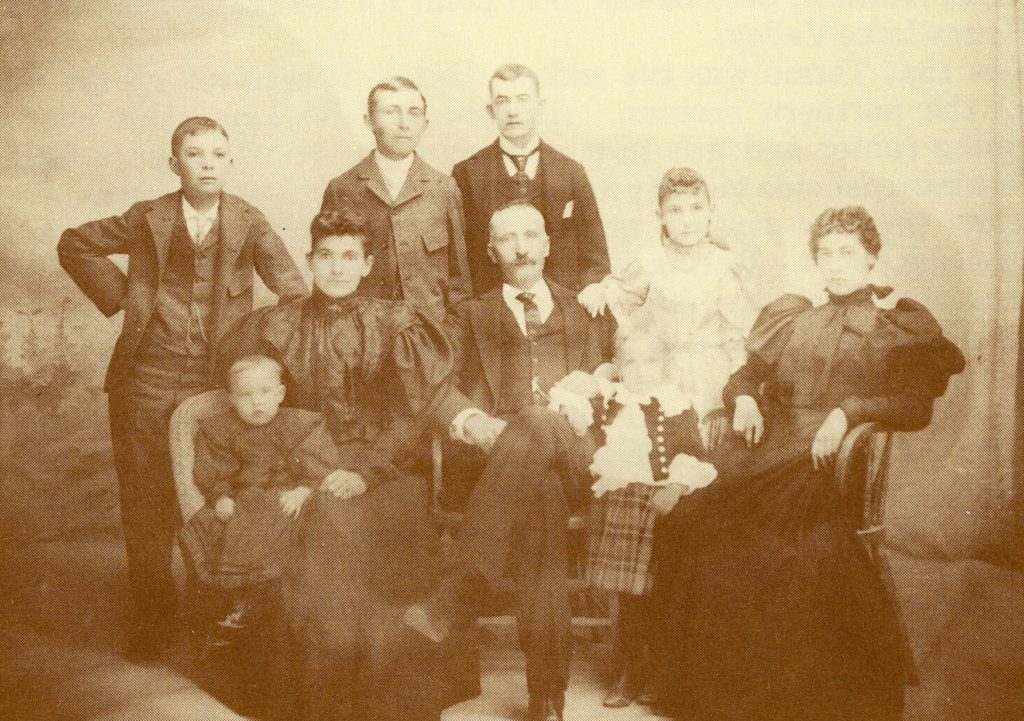
Lewis W. Brubeck Family. Standing (left to right) Pete, Phil and Will. Front Row (left to right) Edwin, Louisa, Lewis, Mabel and Edna. Courtesy of Leslie R. Brubeck
In 1873, at the age of twenty-one Philip Brubeck gave his son, Lewis a horse. Shortly afterwards, Lewis left his native Indiana and headed to California. His first stop was the Honey Lake Valley. He decided to stay for awhile and took up a homestead near the Mapes Ranch east of present day Litchfield. He became acquainted with his neighbors, especially the Grass household. On February 4, 1877 at Janesville Lewis married Louisa Grass, who was also a native of Indiana.
Like so many, Lewis was thinking the grass must be greener on the other side of the fence. In 1881, he purchased 151 acres from E.C. McKenney of Reno for $350. The property was located on the east shore of Honey Lake, and consisted what was designated at the time as Lower Hot Springs. No one had resided there since the Pearson Massacre of 1868. The first order of business was lumber for a house and fence posts for property improvements. This presented a challenge as the nearest sawmills were located a considerable distance away on the west side of the Honey Lake Valley. At Milford he had a raft constructed to float the lumber across Honey Lake to his new home.
Life was fairly uneventful there during the 1880s, though by the end of the decade Lewis and Louisa now had five children—William Andrew, Edna, Philip, Peter Howard and Mabel. In August 1890 the Brubeck family experienced a dramatic change in their lives. Located ten miles to the south was Leigan the terminus of the Nevada and California Railroad. Within a matter of months, the railroad extended its line north to Brubeck’s to become the new terminus named Amedee.
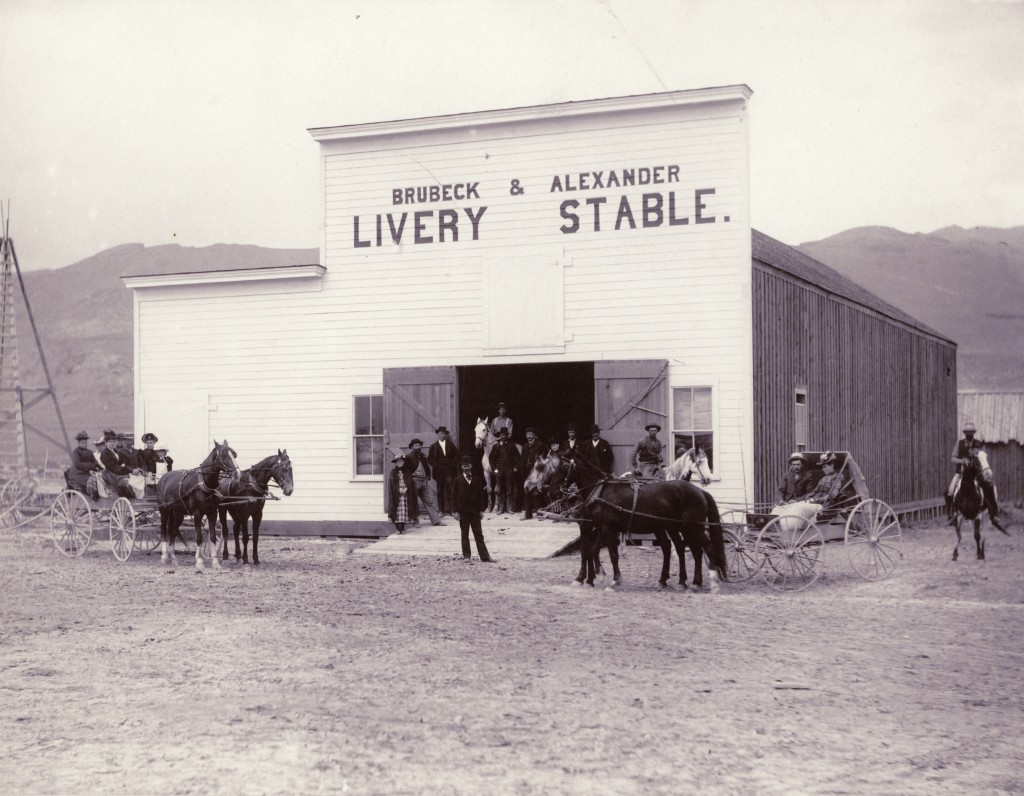
The first item of business for Brubeck was to move his house next to the railroad. Thus, he began the transition from rancher to an innkeeper. He was overwhelmed with business. In December 1890, Brubeck’s new Pioneer Hotel opened for business. The second floor contained eight guest rooms. On the first floor, there was a ladies parlor, two dining rooms, bar and the kitchen to feed the guests. He took advantage of the hot springs, and built a small bath house. Business was brisk. Brubeck expanded his horizons by opening a livery stable. Amedee was on the verge of becoming a “boom town.” Brubeck’s dining rooms were serving over 200 people day. He ended up using his livery stable as an overflow to his hotel.
This Amedee business partnership lasted less than a month. Courtesy of Tom Armstrong