Tag Archives: Politics

Susanville, Nevada – 1952

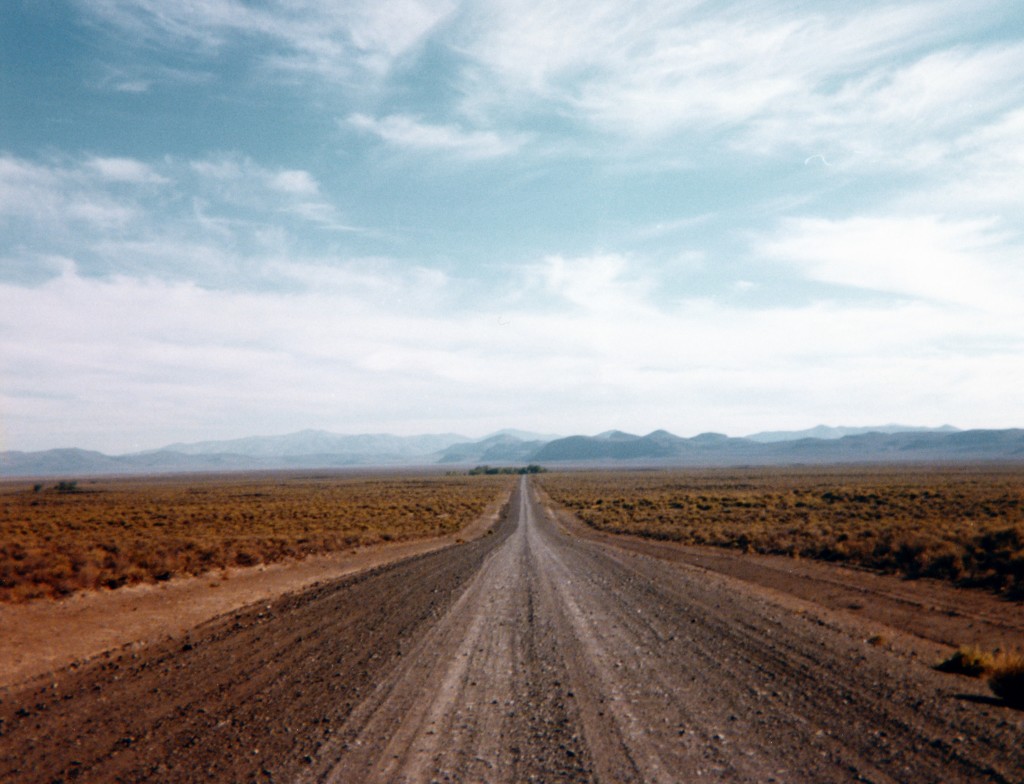
Smoke Creek Desert
Smoke Creek Desert looking towards Sheepshead, fall, 1977

In the spring of 1952, another Nevada annexation movement sprung to life. In this particular instant it involved annexing Lassen, Modoc and Plumas counties to the Battle Born state.

An intrepid reporter of Susanville’s Lassen Advocate did an informal survey of talking to people one day to get a feeling. Interesting the responses were divided. Here is a sampling of a few:

Opal Proffitt, “I don’t I’d like be in Nevada. I don’t like the idea of gambling. Mrs. James Hodges stated that it feels like we are a part of Nevada and had no objections. George Lovell “I’d like to belong to Nevada myself. They have no debt and think we’d all be benefitted.”. Norman Vornado “I would be against it. I am a teacher and the pay in that field is far below California’s rate.” William Blackmer “I think we’re a part of California and we’d better stay there. Finally, J.F. McGrath “We need to protect Lassen’s virtue, with annexation there would be wide open gambling.”

So it goes, just another failed annexation movement.
Don’t forget to look at the Subscribe feature.

Speeder’s Rejoice

Childs
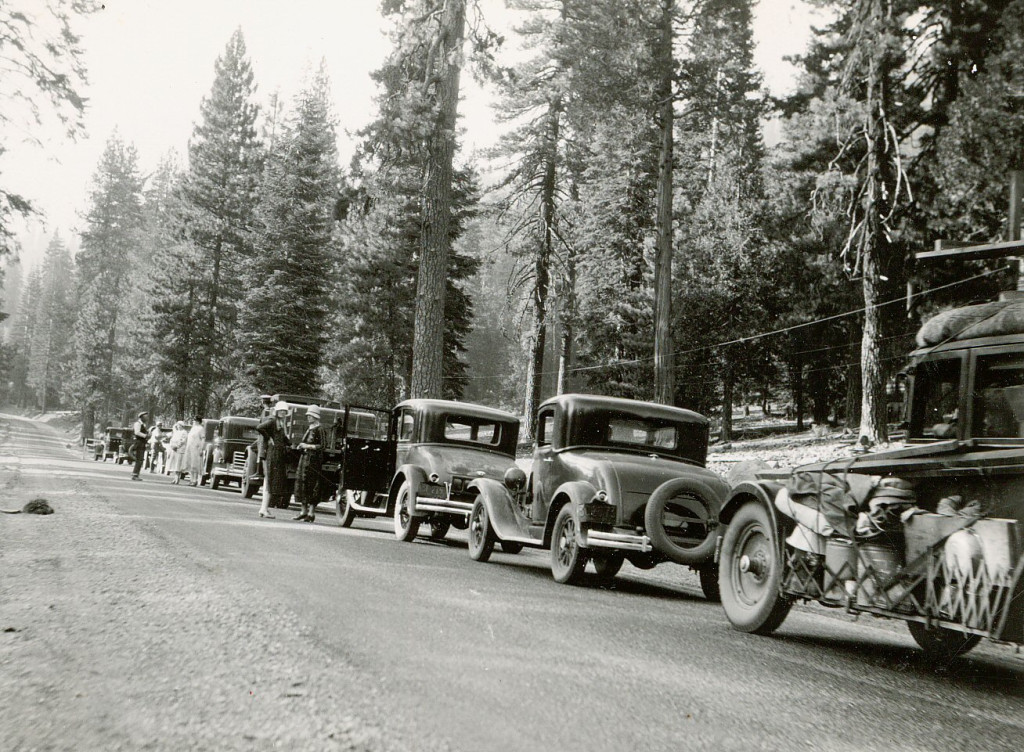
A 1931 car caravan at Child’s Meadows on the way to the Lassen Park dedication. B.R. Zimmerman collection

On August 14, 1931, California raised the speed limit on state highways from 40 to 45 miles per hour. How quaint. Driving in residential districts also changed from 20 mph to 25 mph. School zones still remained the same at 15 mph. One other interesting change was that of the minimum age to obtain a driver’s license. It went from 14 years of age to 16.

Spread the word, and encourage a friend to subscribe

A Different Era

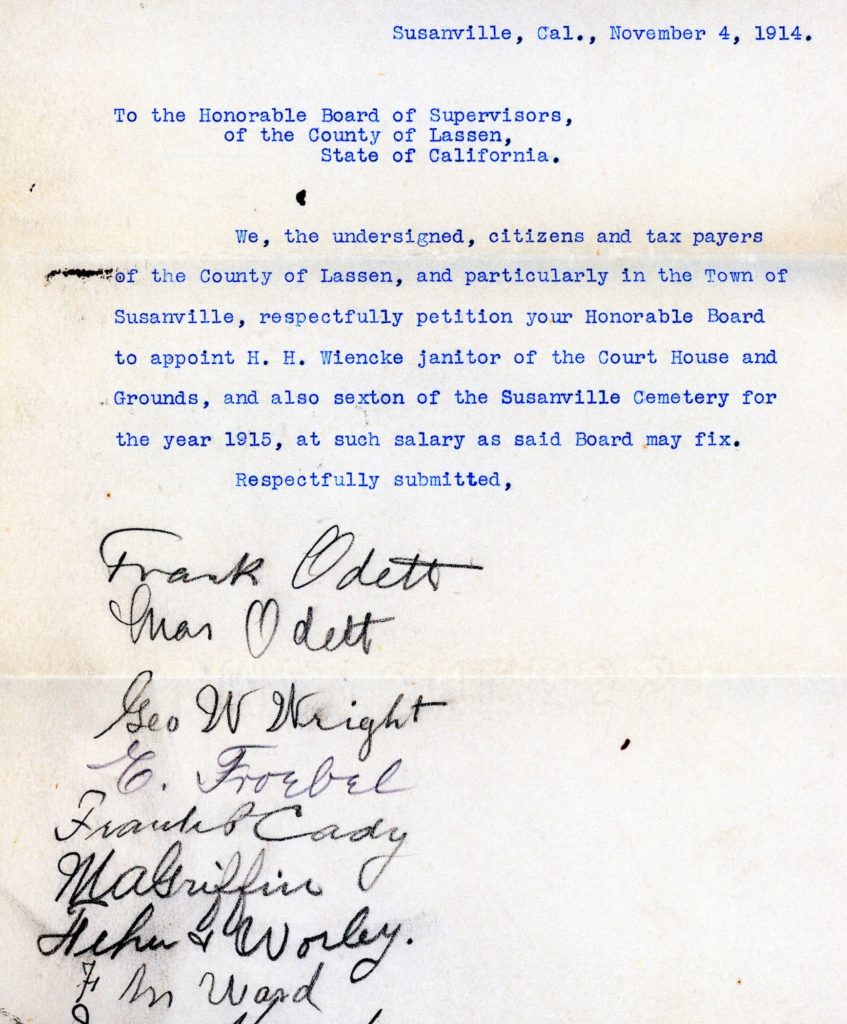
Wiencke’s petition for the courthouse janitors job.

There was a time, albeit, a long time ago, when many county jobs were appointed by the Lassen County Board of Supervisors.* One of the “plum” county appointed jobs was that of the courthouse janitor and with it sexton of the nearby Susanville Cemetery..

*One of the more interesting political appointment positions on a national scale that effected the local level was that of postmaster. Postmasters changed whenever there was change of United States Presidents party affiliation. Not much for job security if you were local postmaster appointed by a Democratic President, you were out of a job when a Republican was elected, or vice versa not implying a specific political preference.

Spread the word, and encourage a friend to subscribe

It’s Election Day

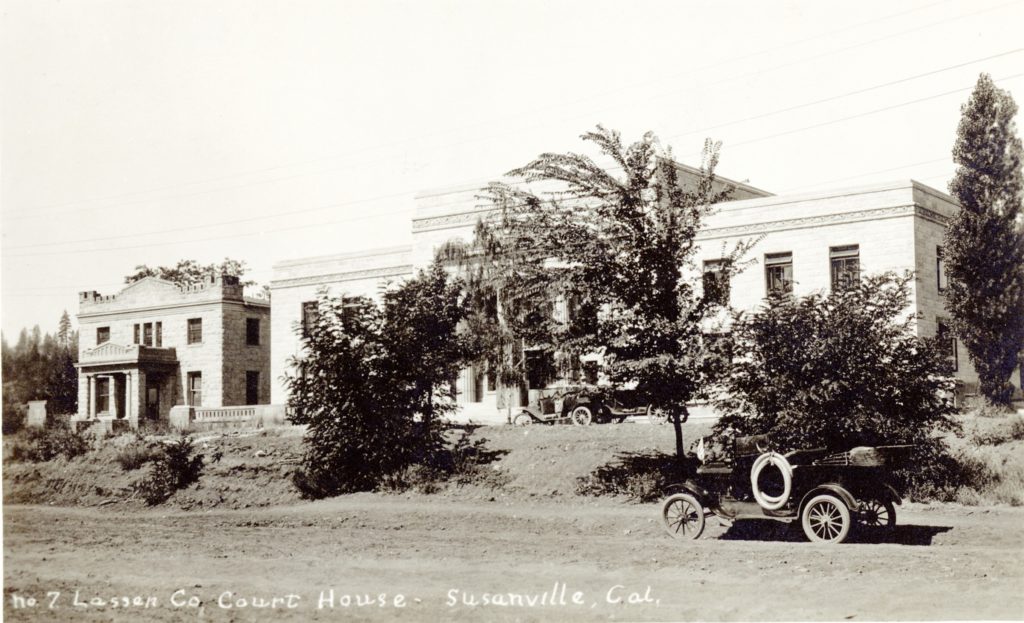
Lassen County Courthouse, October 1924–Boyd Benham/Connie Boomer

It is Election Day so hope every one votes. Having been a former election official, I can attest there is a great deal of work that goes on behind the scene  to put on election.

Anyhow, something a little off topic for those political junkies. In December 1938, Senator Edmund R. Burke, of Nebraska introduced a constitutional amendment wherein it would limit future presidents of the United States to one six-year term. It was not a new idea. Burke cited that the Democratic national convention in 1912 placed a plank in its platform calling for a single term. Burke stated, “Six years would be sufficient for a president to place his program into operation. Such a term would remove the president, immediately upon his induction into office from consideration of a second term and could concentrate this energies.” In conclusion, Burke noted, it would remove the president from a dual responsibility—as the head of the nation and as head of the party which elected him.

Tim

A Carnegie Library?

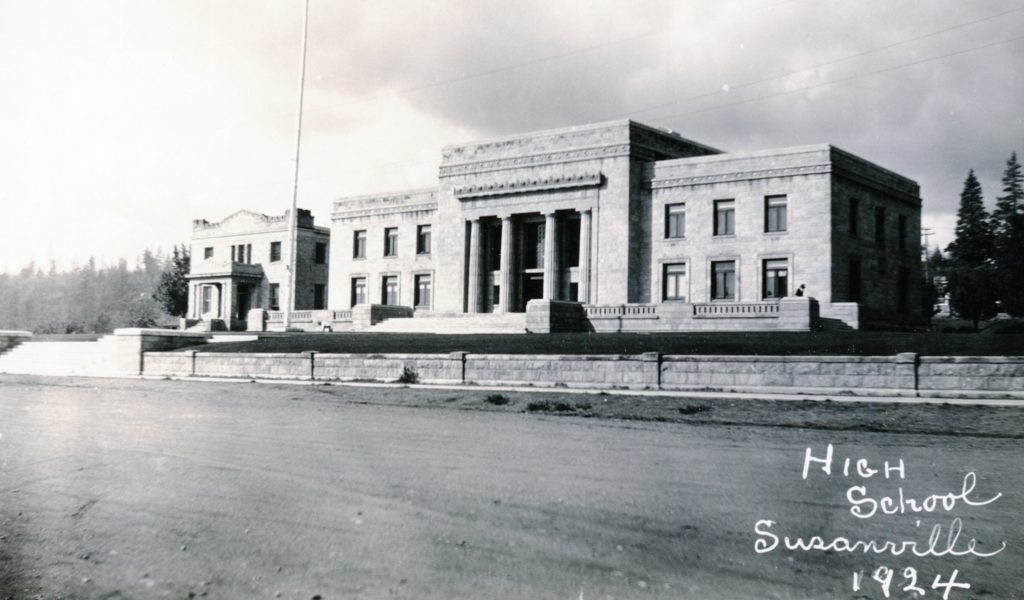
Lassen County Courthouse, spring 1917. Courtesy of Elberta M. Fraley

Lassen County turned down an offer to have a free Carnegie Library built. At the August 1916, Lassen County Board of Supervisor’s meeting, Charlotte Cahlan, Attaway McKinsey, Alberta Dozier and Lassen County Librarian Miriam Colcord approached the board. They had been approved funding to build a Carnegie Library, as long as the County would provide a building site. The women requested a lot on the north side of the courthouse, which at that time was under construction. The board informed the women they would take it under advisement, which was the polite way to say no. More then a century later, the board still uses that lingo.

Support

Susanville’s Apathetic Voters

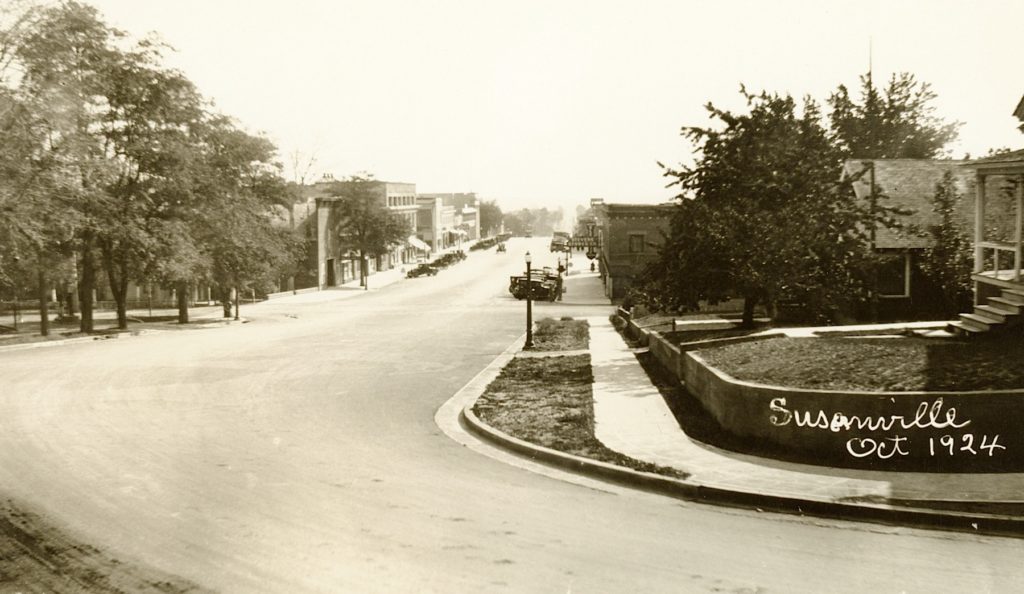
Main Street, Susanville, October 1924—Boyd Benham/Connie Boomer

With Election Day just around the corner, its only fitting to have a local history story. There was a time, and not that long ago, the City of Susanville elections were a stand alone proposition, not consolidated with Lassen County Elections.

The 1924 the City had 604 eligible voters for the upcoming City Council, with three seats up for election. Only 80 went to the polls. A rather dismal figure to say the least. It got worse. In 1930, only eighteen voters cast their vote in that City Council Election. Those poll workers had a very long and enduring day. If there was a bright side to that election, it only took one minute and three seconds to canvass the election!

Spread the word, encourage a friend to subscribe.

Susanville, Idaho?

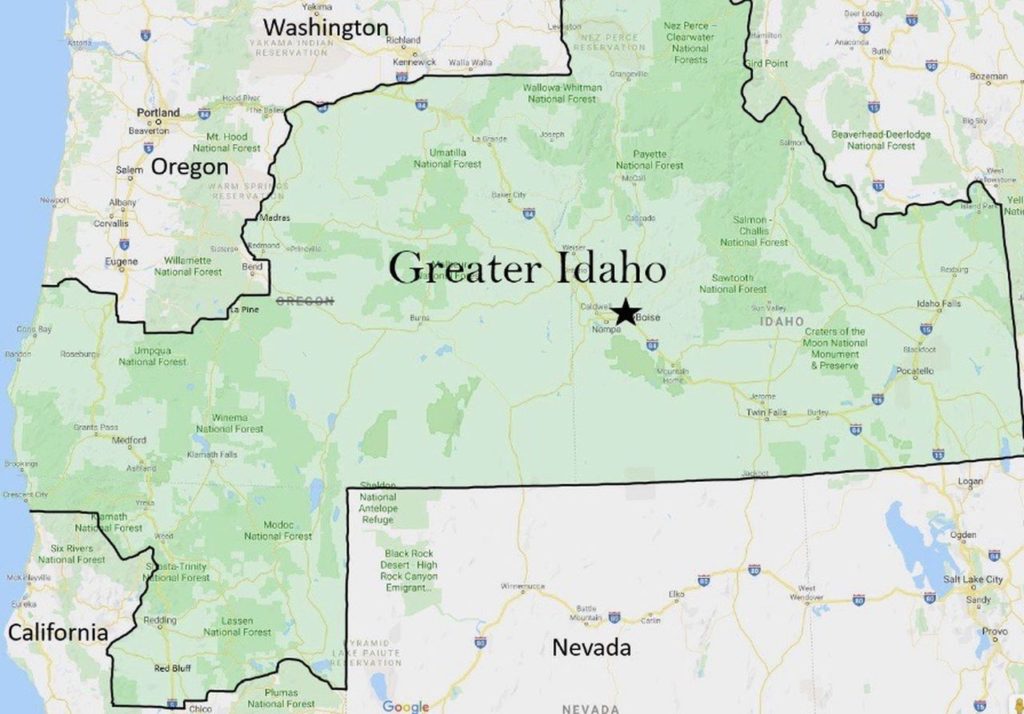
This movement is different than many secession movements. Instead of forming a new state, like the proposed Jefferson movement, this would change the state boundaries. In this particular instant expanding the boundaries of Idaho. The group called Move Oregon’s Border initially focused on southeastern Oregon counties of Klamath, Lake, Harney and Malheur. Upon greater consideration it was decided to make Greater Idaho’s to extend to the Pacific Ocean to include Jackson and Curry Counties. Finally, why stop there? In their latest proposal includes the California counties of Siskiyou, Modoc, Shasta, Trinity, Tehama and parts of Lassen and Plumas.

Support

A Company Town in Transition

Birch Street, Westwood. Courtesy of Hank Martinez

In 1912, when Red River Lumber Company began construction of its company town of Westwood, Lassen County officials did not know what quite to expect. Lassen County had experience with planned communities, such as Standish, but none of these proposals ever came to full frutition that the promoters envisioned. Westwood was entirely a different proposition. County officials were relieved that all of this development would not only cost the county any money, but its tax base mushroomed beyond their wildest dreams. The county was spared every expense, even the deputy sheriff, Red River paid that salary.

The good times would not last forever. By the early 1930s Red River was in a serious financial crisis. The days of a company town would soon only exist as a memory. Red River’s company owned businesses would be no more, those enterprises leased to outsiders. In the fall of 1934, Red River and Lassen County began working on the transition wherein the county would be responsible in maintaining the streets of Westwood. On November 10, 1934 Red River deeded over the streets of Westwood to the County of Lassen, however for reasons unknown the county did not accept the deed until September 1935.

Spread the word, and encourage a friend to subscribe

The Fritter Funeral Bill

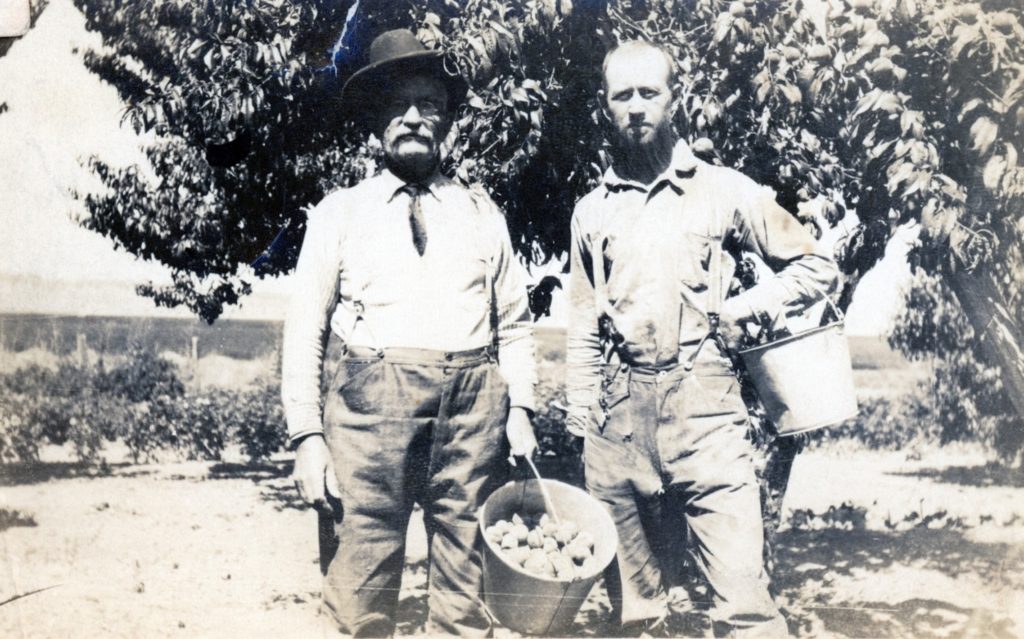
J.W. Fritter (left) and John Hamilton (right) at Fritter’s peach orchard, Eagle Lake—-Rev. C.R. Fritter

One never knows what I stumble across in my research. While reviewing the Lassen County Board of Supervisor’s minutes in regards to a topic on Westwood, I came across a rather unusual bill submitted to the county. Shortly after the death of her father, J.W. Fritter, Mrs. S. Pinola of 130 18th Street, Pacific Grove submitted a bill to the county to help defray her father’s funeral expenses. It should be noted that Fritter resided at Eagle Lake from 1884 to 1932, at which time he moved to Pacific Grove. Fritter did serve a term as a Lassen County Board of Supervisor from 1902-1906. The Board of Supervisors at their September 3, 1935 obliged and instructed the County Auditor to issue a warrant to Mrs. Pinola for $40. I have never come across a particular incident like this. What makes it even more bizarre was the Fritter and his daughter were not even Lassen County residents!

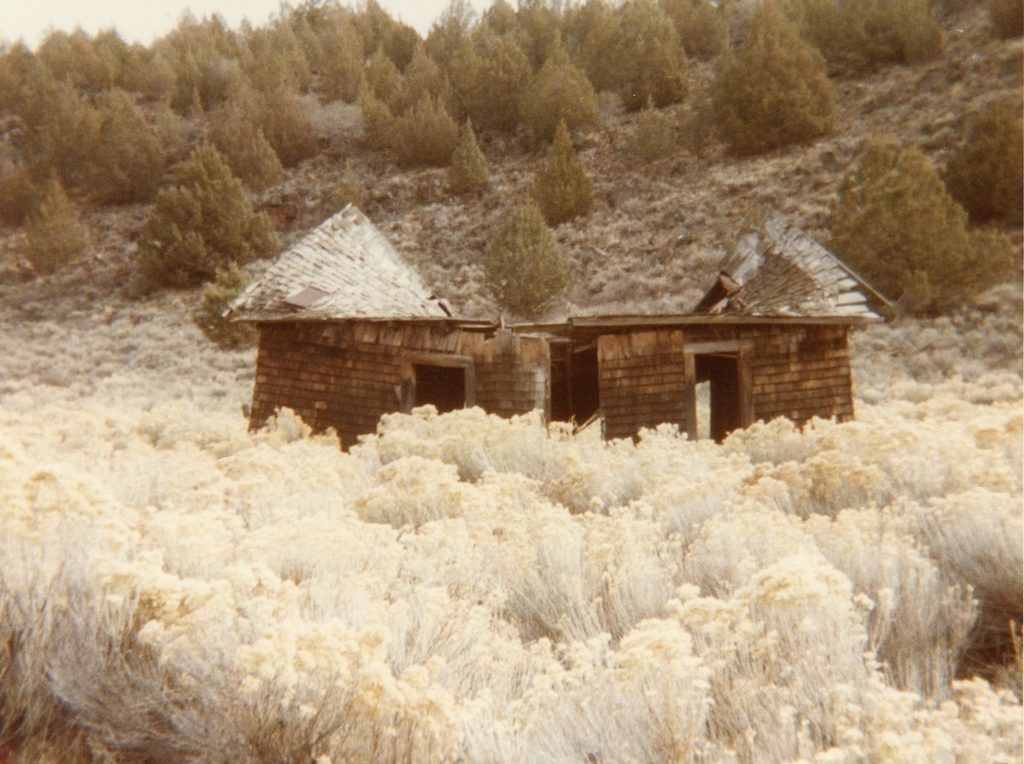
Remains of the Fritter ranch house at Eagle Lake, 1984

Spread the word, and encourage a friend to subscribe

Early Day Fish & Game Wardens

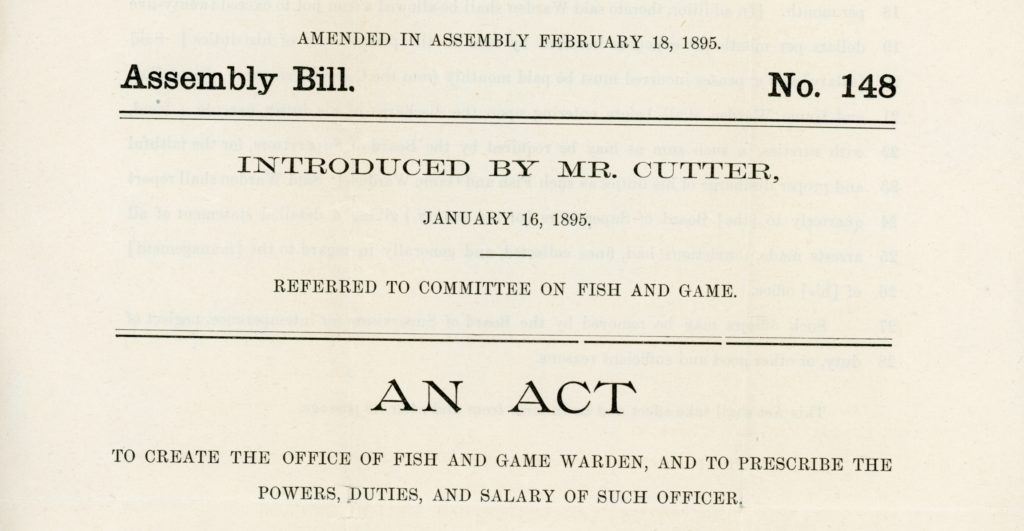
We are now in prime time hunting season, so I thought this would be a appropriate topic. Many may not realize there was a time when Fish & Game Wardens were a appointed county employee. In 1895, California Assembly Bill. No. 148 was passed that the Board of Supervisors of each county may appoint a Fish & Game Warden, to serve a two-year term. Depending on the county’s classification determined the salary. For most of the state the salary was fifty dollars a month. One of the requirements is that the game warden provide quarterly reports to the Board of Supervisors giving a detailed statement of all arrests made, convictions had, fines collected and any other matters. Frank P. Cady served as the Lassen County Fish & Game Warden for many years. However, I have never come across the quarterly reports. Yet, on the other hand I have located County Horticultural Reports, Medical Officers Report. After World War I Assembly Bill 148 was repealed, wherein the local game warden was done through the State.

Spread the word, and encourage a friend to subscribe