Tag Archives: Natural History

The Antelope Fire, 1926

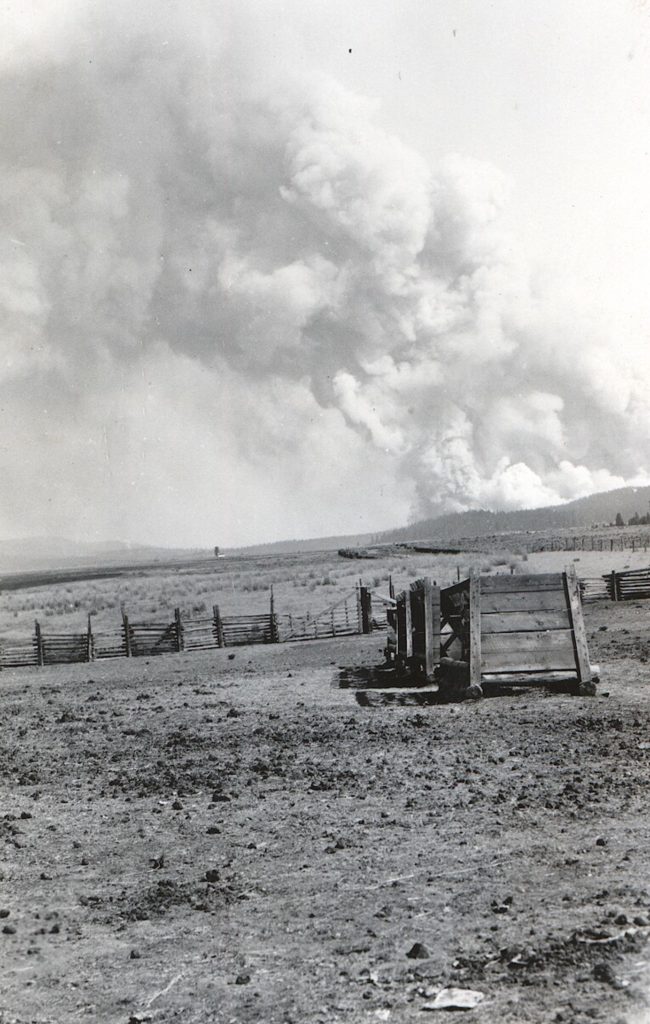
The fire as seen from Willow Creek Valley. Courtesy of Lola L. Tanner

On Sunday, August 26, 1926, Charles Hurlbut, a Lassen County Road department employee had made a working camp on Rice Canyon Road. In the afternoon, he built a campfire, and left it unattended to gather more wood.  In the interim, an erratic gust a wind blew threw, sending embers from the campfire onto nearby dry bronco grass. A wildfire quickly erupted. There was nothing Hurlbut could do, but to drive frantically to Susanville to enlist aid. Some sixty men were recruited to fight the fire. Half of the fire crew consisted of employees of the Red River Lumber Company, as the company owned a tremendous amount of timber in the district. From Susanville the fire was a spectacular sight for its residents, as most of the Antelope Mountain went up in flames. One interesting facet in battling the fire was the use of backfiring. Charley Carpenter, a prospector, had a cabin at Miner’s Spring on Antelope Grade. Carpenter seeing the fire raging towards his place, lit a fire in the approaching direction, and it was enough to divert it from destroying his home. In all, some 22,000 acres were burned, making it one of the largest fires of the era.
The firefighters were able to keep the fire away from the ranches at the lower end of the valley. However, one ranch, belonging to Bob Wilson was not so fortunate. Wilson lost his house, his barn containing seventy-five tons of hay and some two hundred chickens. For the Red River Lumber Company their loss was substantial too, an estimated fifteen million board feet of timber, and to the lesser extent the former Conklin holdings at Jacks Valley.

Subscribe
 

Lake Lahontan Levels

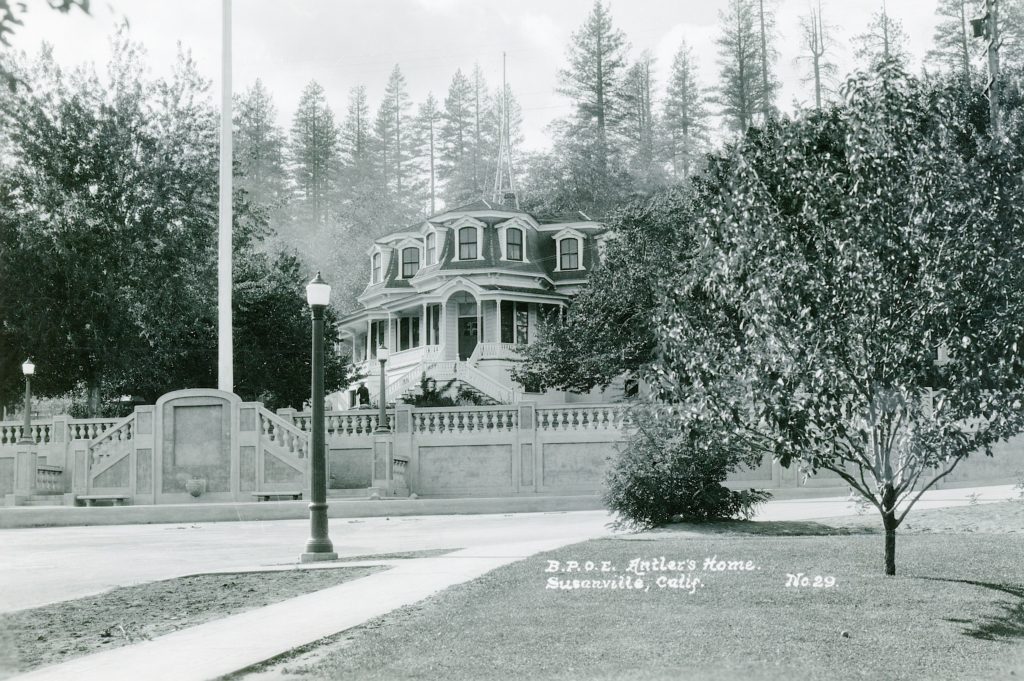
Susanville’s Antler’s Club, later Elk’s, 1923

Back in April, quite a few readers responded about items they wanted to learn more about. One topic was Lake Lahontan.  Now, you are probably wondering why today’s featured photograph has anything to do with an ancient inland sea. Some 10,000 years ago, the lake was at its peak, then slowly began to recede leaving such remnant lakes as Honey and Pyramid. Had Susanville’s Elk Lodge existed back then, it would have been lakefront property.

Donate or Subscribe

Volcano Climbers

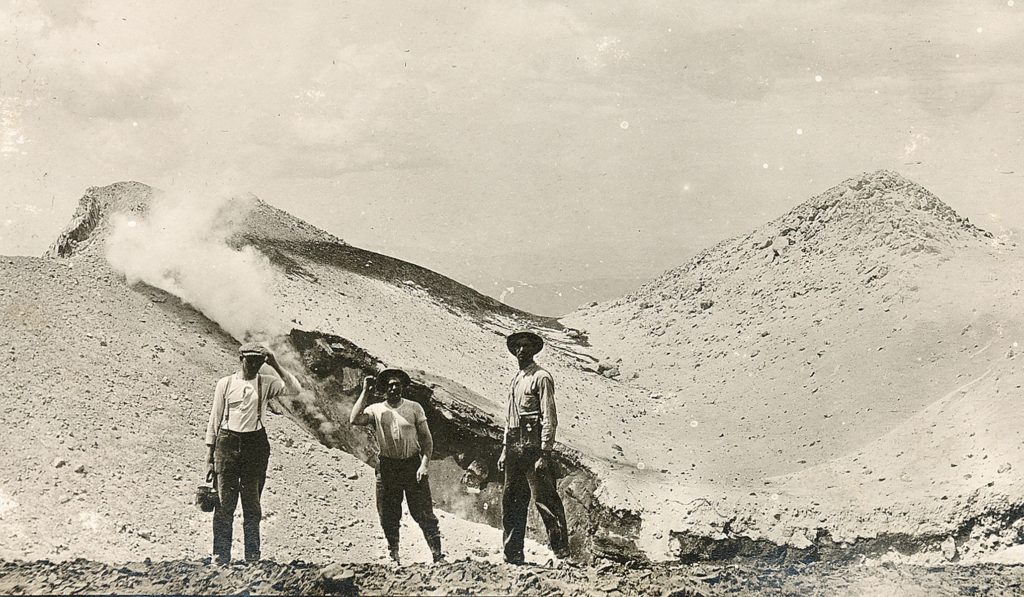
The new crater, June 1914.

When Lassen Peak came to life as an active volcano in the spring of 1914, it brought an avalanche of curisoity seekers to examine the mountain. At this time, the peak fell under the jurisdiction of the forest service. Attempts to discourage climbers were fruitless, after all there was only one ranger for the vast territory. What was rather remarkable there was one serious injury from a climber during a volcanic blast.

Subscribe

The 1924 Fire Season

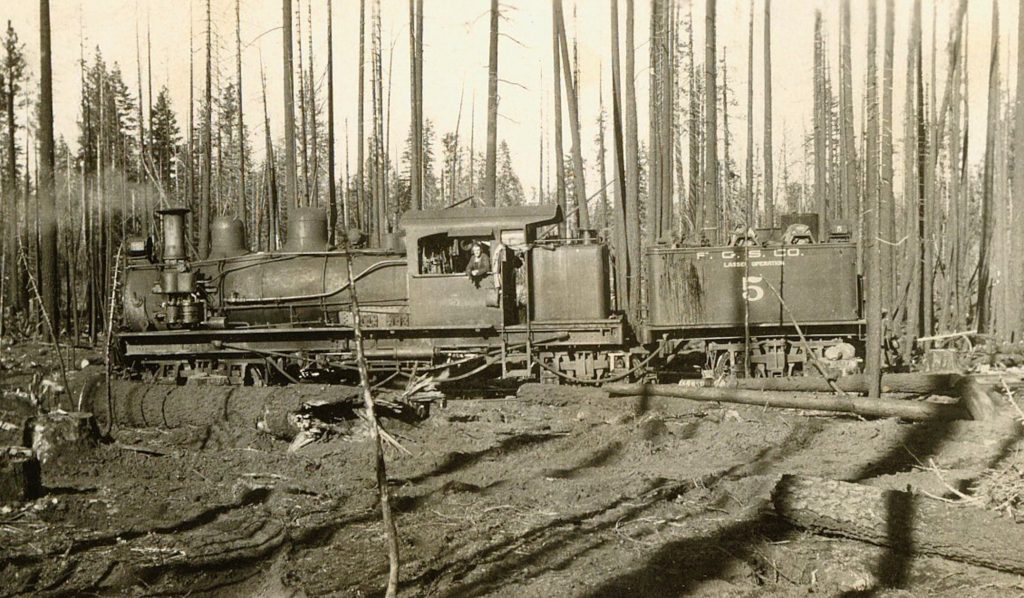
The.aftermath of the fire at Camp D

The winter of 1923-24 was one of the driest on record for the State of California. Springs that had always flowed, dried up. With the tinder dry conditions of the summer of 1924, it became a volatile fire year, and the Lassen region was of no exception.

On Monday, July 28, 1924, sparks from a steam donkey engine operating near Fruit Growers Camp D, just west of Eagle Lake. In less than a hour the blaze turned into a firestorm, spreading over four miles and destroying three steam donkey engines, eight railroad flat cars, one water tank car and about three miles of railroad track. Nearly one thousand men fought the fire that destroyed over 7,000 acres. It cost Fruit Growers $34,378.20 in suppression cost.

Donate

Eagle Lake, Pelican Island

L
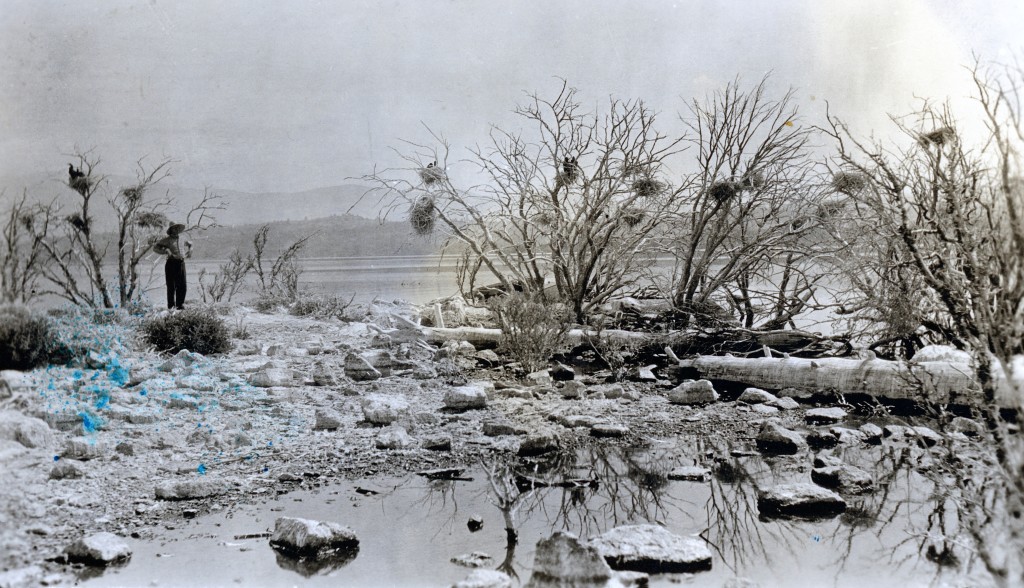
Pelican Island, 1916, D.M. Durst

This is a follow up of last week’s post of Ada Gerking York’s memoirs.  She also observed: “Eagle Lake contains two islands, Shag and Pelican, both of which are gradually being submerged by the rising of the water. These islands are the meeting places of various water birds; in early summer, one can imagine one’s dreams of gathering eggs, as there are so many lying there on the ground. The lake is very deep near Shag Island, the bottom has not been fathomed yet. The northern wing is not so deep and according to the account of a very old Indian, this part of the lake was dry many years ago, and he with a party of Indians crossed it while hunting deer, the ground being level as a floor.”

Subscribe.

Boiling Springs Lake

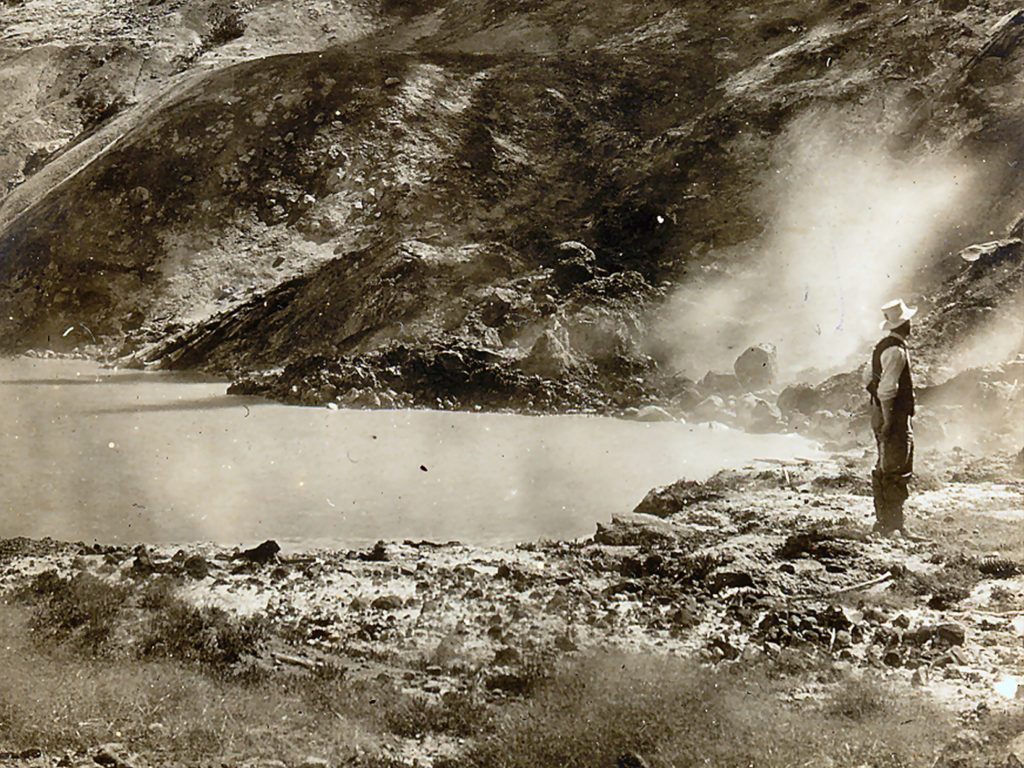
Boiling Springs Lake, 1908. Courtesy of the Sifford Collection

Well, here we are in the middle of July. Hopefully, many of you have gone exploring as there is just so much to see and do. Just in case, someone needs and idea to do some thing different, I recommend Boiling Springs Lake in Lassen Volcanic National Park. It is one of the largest hot lakes in North America. To make a day, contact Drakesbad Guest Ranch in advance to place a lunch reservation. From the lodge it is little over a mile hike to the lake, and you also have options. One can continue on and hike to Terminal Geyser or return back to the lodge and visit Devil’s Kitchen.

Subscribe!

Eagle Lake Ice Caves

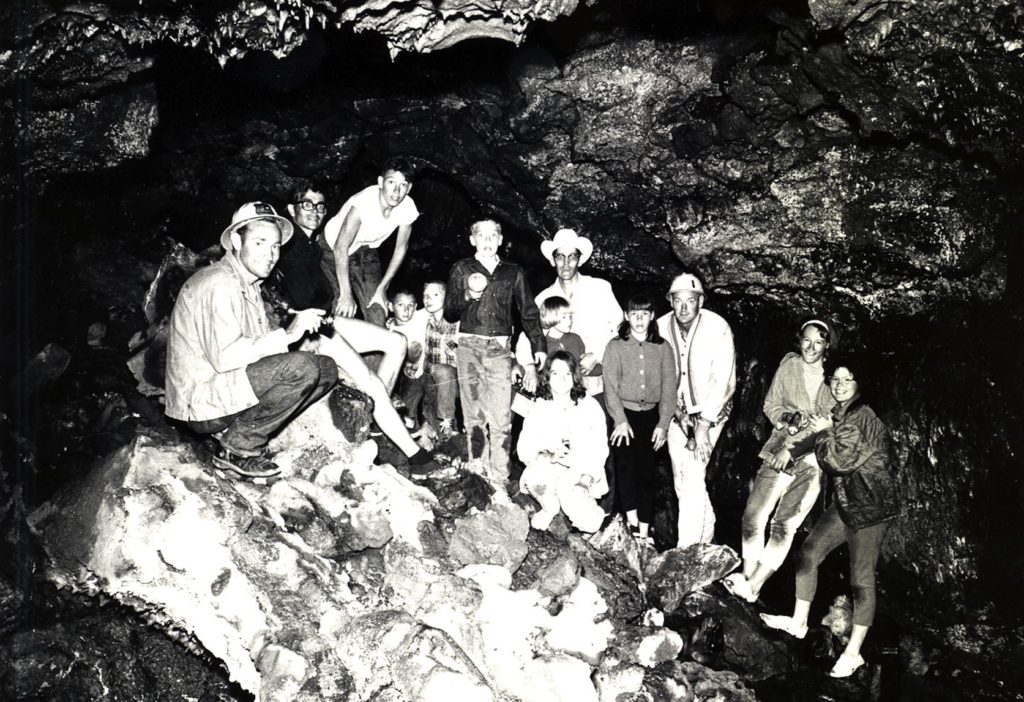
An Eagle Lake ice cave, 1965.

It is a rarity to come across early day descriptions of the various ice caves on the west side of Eagle Lake. The following account was a part of Ada Gerking York’s memoirs (1877-1936). She was raised in Willow Creek Valley and spent most of her married life in Grasshopper Valley.

”Eagle Lake is surrounded by many wonders, especially on the west side, great lava beds of which little is known.  A great volcanic crack extends for ten miles; some places 10 to 15 feet deep, others bridged and so on. The place where I visited had a bridge upon which I went; I found a small hole in the ground and dropped a rock down. It struck far below then rolled, clattering among other rocks, fell again, and was some moments before all was quiet again. One of the party went into the crack and found an entrance to the cave under the bridge, but cannot be explored on account of its depth. Another time I visited the caves, how many I forgotten, and I think there are many yet unexplored; some of them had monstrous holes as openings, and in entering I found large rooms, some of which were exquisitely shaped. One known as “The Grottos” had many stalactites and stalagmites; some have more than one opening and some several apartments. One contains ice and is known as the Ice Cave and ice may be had any time of the year.”

Donate.


Pit or Pitt?

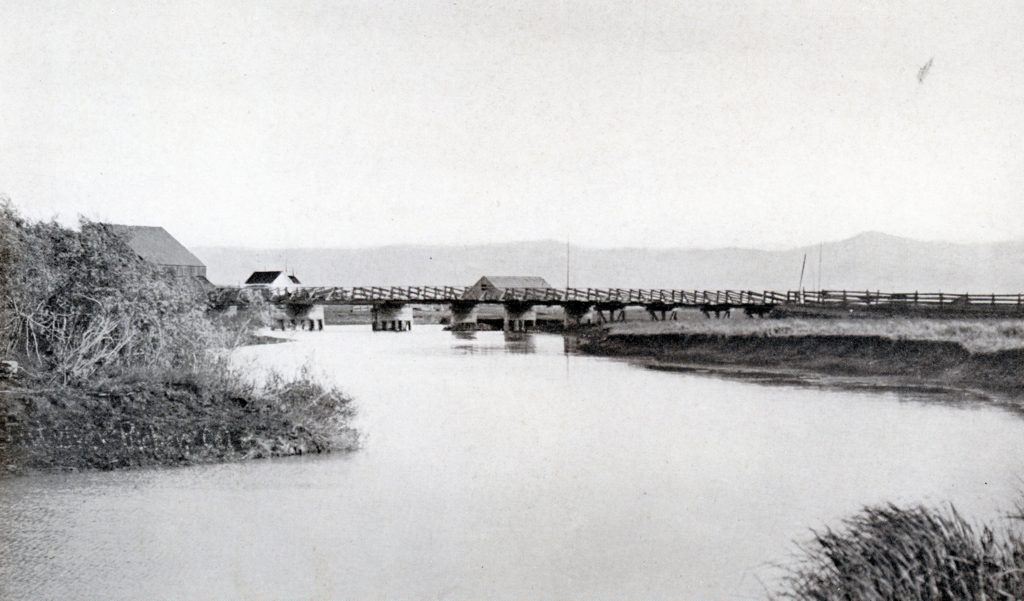
Pit River, near Bieber, 1910.

In 1843, Pierson B. Redding gave the river and the Native American tribe located there, the name Pit. Reading noted there were numerous “pits” along the river, and some could be hazardous to your health.

Then there is the small community of Pittville that is on the Lassen and Shasta county line. As to the spelling with the double “t” the Shasta Courier noted in 1900 that the only folks who spell Pit with a double “t” are the ones who do not know the history of the naming.

Subscribe

Pine Creek, Lassen County

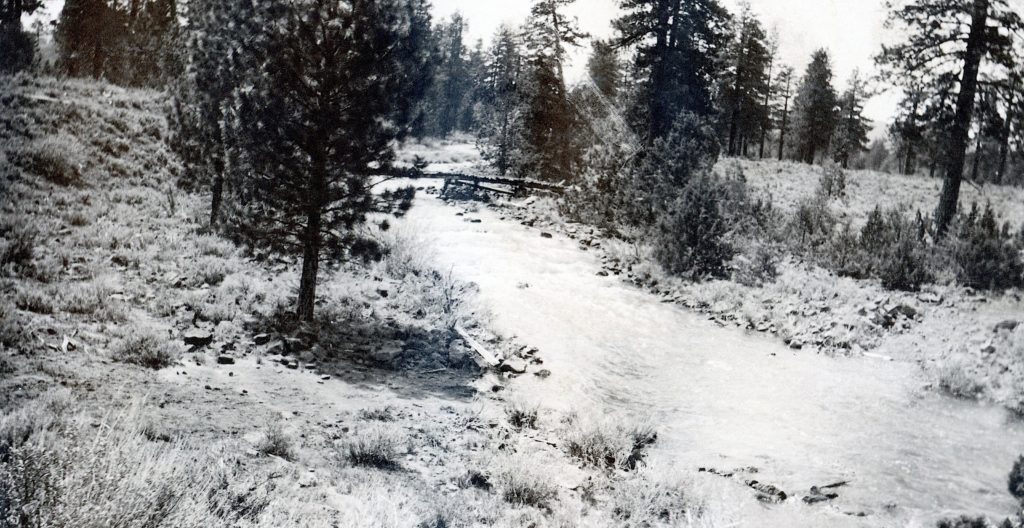
Pine Creek, 1921. Courtesy of Lola L. Tanner

In 1938, Ernst Antevs research on the Rainfall and Tree Growth in the Great Basin was published. A segment concerns Lassen and Modoc Counties. The following is an interesting footnote from that study:  “The sources of Pine Creek, the only large tributary of Eagle Lake, are less than a mile from those of the Susan River, the main feeder of Honey Lake. The seasonal runoff in these streams may therefore undergo similar fluctuations, and with undisturbed conditions, the lakes should do the same. Actually, Honey Lake has fluctuated  in harmony with the known precipitation of the region, but this has not been the case with Eagle Lake. The moistest times since 1850 have been 1868, 1890-93 and 1904-07, and since 1907 the measured rainfall and runoff have on the whole decreased, while the highest recent stand in Eagle Lake was recorded in 1917. The fact that from 1801 to 1821 a thicker wood mantle was formed in the Susanville trees than during any two later decades prevents us from concluding from the stump at the 82 foot level that the precipitation from 1760 to 1860 was continuously light and much smaller than it has been since 1860. In short, the levels of Eagle Lake cannot be used as a basis for conclusions about the rainfall before 1850. A reasonable explanation of this controversial problem was given the writer in 1931 by Mr. G.N. McDow, president of Lassen County Abstract Co., Susanville, who expressed the opinion that the rise of Eagle Lake was due to a closing of its subterranean outlet about 1890 by an earthquake.”

Subscribe!