Tag Archives: Native American

Camp McGarry, Nevada

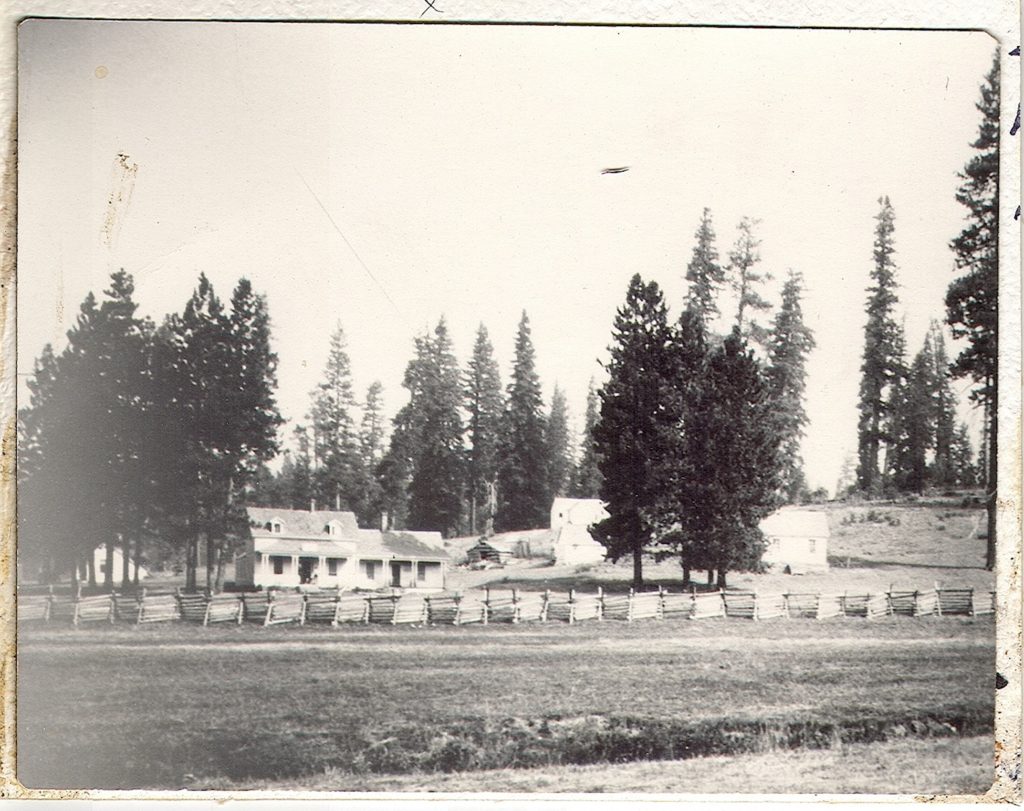
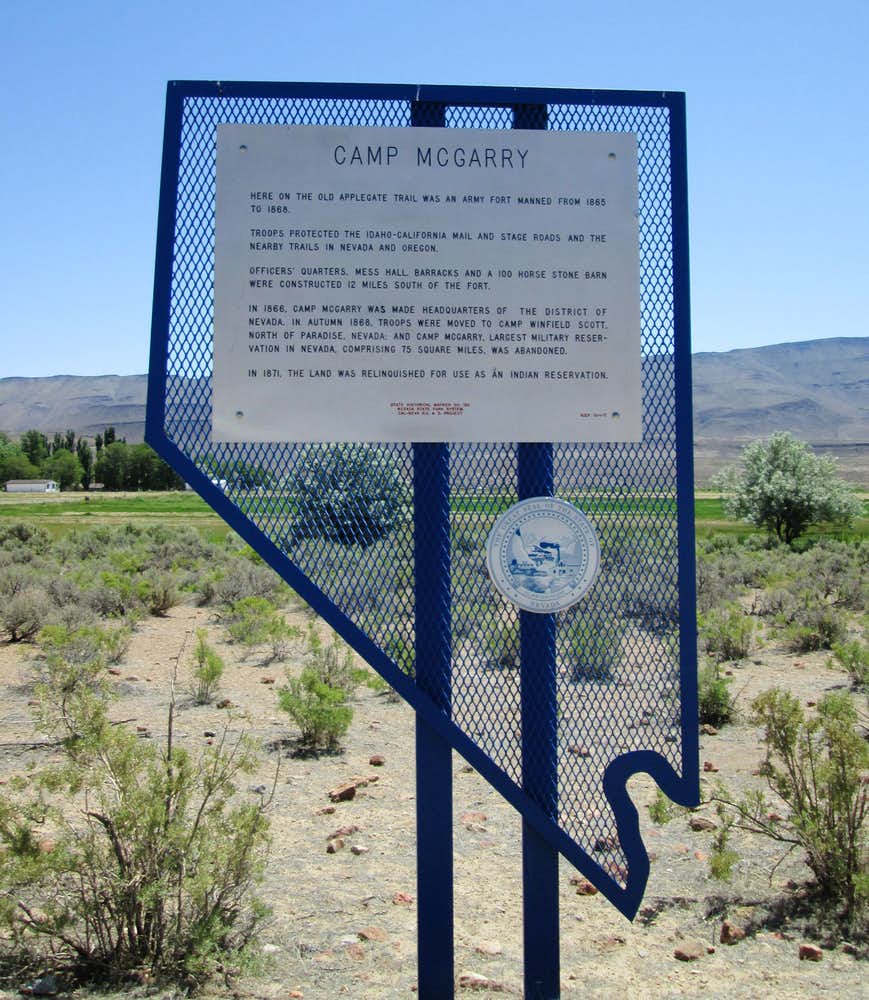
Nevada State Landmark, Camp McGarry at Soldier Meadows

Camp McGarry was a military outpost in remote far northwestern Nevada at Summit Lake. It was established on November 23, 1865 by the California Calvary. It has some unique attributes. It was named for Civil War hero, Brevet Brigadier General Edward
McGarry.

Contrary to popular belief that it was established for the protection emigrants of Lassen-Appelgate Trail, that was not the case at all. Its location was far removed from the Trail. It was for the protection of the mail route. The fastest way from San Francisco to the Idaho mines, was via Susanville, to Smoke Creek and Black Rock Deserts, then headed north via Summit Lake. On October 14, 1865, the Idaho-California Stage and Fast Freight was incorporated with its headquarters in Susanville. The incorporation papers states that the sole purpose was “to operate stage and fast freight from Chico, California via Puebla Valley to Ruby City and Boise, Idaho.” The Company was able to obtain the government’s lucrative tri-weekly mail route contract from Chico to Ruby City at $45,000 a year. The initial 427-mile trip from Chico to Idaho took three and a half days. It would be a short-lived operation. In 1868 the Central Pacific Railroad tracks were laid into Nevada reaching Winnemucca, and that reduced travel by half.  On December 18, 1868 Camp McGarry was abandoned, the troops transferred to Camp Winfield Scott, at Paradise Valley, Nevada. On March 25, 1871 the military relinquished the Summit Lake territory and it was transferred to the U.S. Department of Interior. Today, a portion of it, is part of the Summit Lake Indian Reservation.

Camp McGarry was the largest Nevada military reserve with land comprising seventy-five square miles. An unusual feature there was the use of underground passages connecting the barn, mess hall, and barracks .

Another unusual trait, it had a summer and winter location. The harsh winter conditions at Summit Lake forced the camp to move to what become known as Soldier Meadows, just north of the Black Rock Desert. Remnants exist at both locations. However, Summit Lake site  is not accessible to the public it being a part of the Summit Lake Indian Reservation. The southern encampment is now the headquarters of the Soldier Meadows Guest Ranch.
Support

A Missouri Bend Scholar—Francis A. Riddell

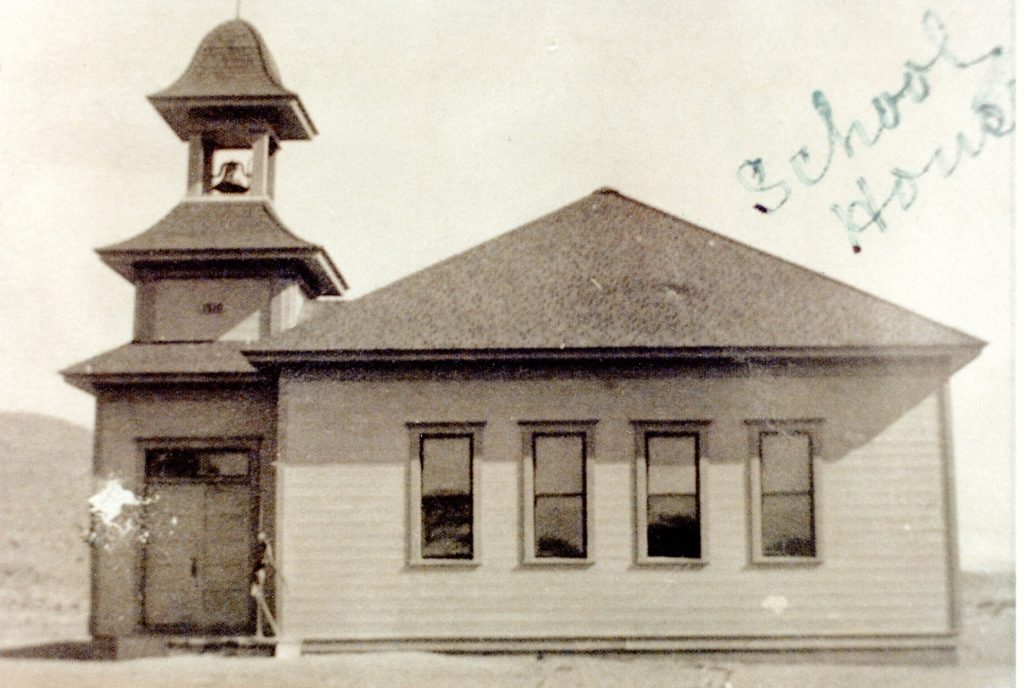
Missouri Bend School, circa 1912—M.E.Mulroney

An acquaintenance of mine was surprised to learn that famed modern art painter, Jackson Pollock attended school at Janesville. The other day, I was thinking about a well known archaeologist who attended school at Missouri Bend, some three miles from Janesville. There the similarities stop.

In 1926, Harry S. Riddell moved his family to a small farm north and east of Janesville. Riddell, an engineer, was hired by the Baxter Creek & Tule Irrigation Districts to see if he could come up with a solution with the problems surrounding the Bly Tunnel at Eagle Lake. His two sons, only barely a year apart, Harry and Francis attended the Missouri Bend School. The two boys started noticing arrowheads on the school grounds. They were fascinated by this other finds of Native American artifacts. In 1936, the family moved to Sacramento. Both Harry and Francis studied and became archeologists. Harry was the low-key of the two. Before I go any farther, Francis was best to known to his colleagues and friends as Fritz. However, he was always Francis to me.

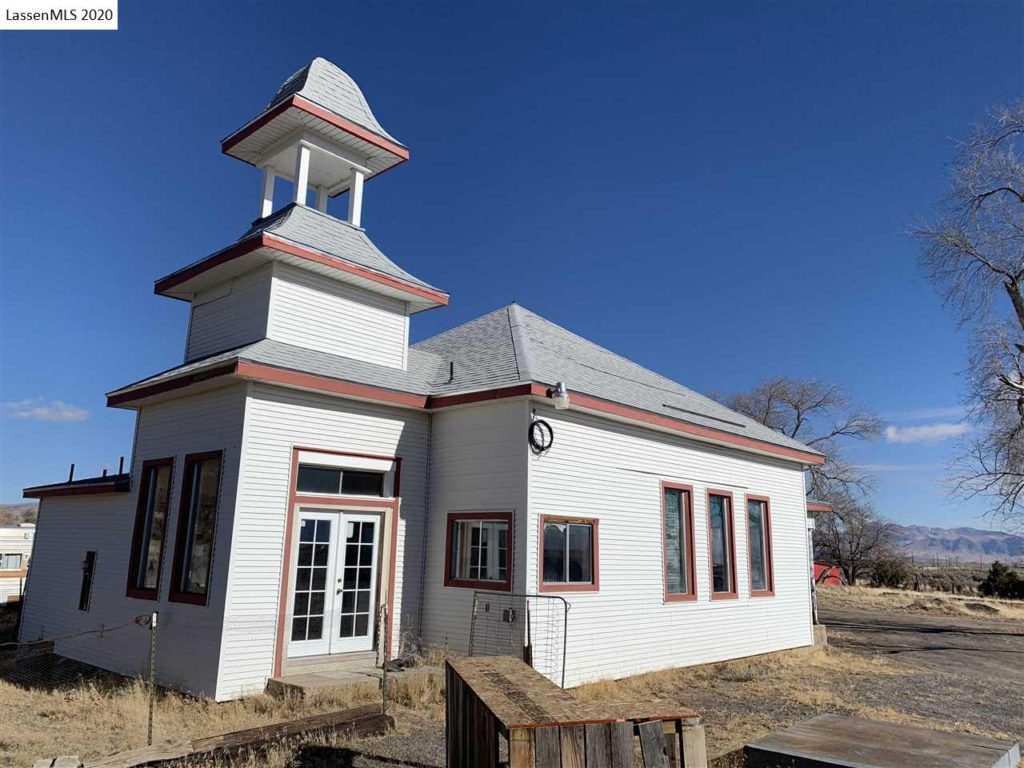
The old Missouri Bend School, December 2020–Smith Properties

Francis became the first archeologist to be hired by the State of California, first as a curator of the California State Indian Museum. Later, he went to work in the Department of Parks & Recreation. In 1948, he began to participate in archaeological surveys throughout the state, using a standardize form, something unheard at the time.

Francis had a special fondness for the Honey Lake Valley and the Indians there. He was involved with the archaeological excavations of Karlo and Tommy Tucker Cave. Francis did not stop there. He had a passion for Indian Ethnography to better understand his work. As Francis commented, “I could not separate the past from the present.”  During the late 1940s and 1950s, Riddell, along with colleague Bill Evans would compile the Ethnographic History of the Honey Lake Maidu and the Honey Lake Paiute. A very valuable document, indeed.

Not only was Riddell was highly regarded in California archaeology, but for his work in Peru. Riddell even invited me to partake in one of his Peruvian expeditions. Alas, I had to decline due to a lack of funds.

Subscribe

The Perils of Research

Longville, Humbug Valley—Plumas County Museum

January has been an interesting month, especially research wise. While working on a story about noted archaeologist Francis Riddell, I came across something he compiled that escaped my attention. It was account of the Papoose Massacre of 1866 that was relayed to him by Kitty Joaquin. There are three versions, which will be explored in the future.

While doing some research on Marion May Hapgood, born 1902 at Likely (her parents owned the South Fork Hotel), I came across an article about how Stover Mountain was in eruption at the same time as Lassen Peak. Then I was re-reading Marion’s grandfather Eber Bangham’s 1906 biography. This has the earliest history of Granite Creek Station. Then, in turn, I remembered that Thomas Bare who owned the nearby Deep Hole Station, also owned the meadow at Granite Creek. More about that in the future.

In the course of all of this, the Milford Cemetery pops up. According to Asa Fairfield, Mrs. Mary Harris was the first person buried there in 1867. However, in that cemetery is a marker for Philip Wales who died on June 6, 1864. Both Wales and Jacob Boody were found dead in proximity of each other, and case was never solved., Again more on that in the future.

One topic, has a way of mushrooming into several, and its an interesting journey.

Tim

Heiogliphic Creek

Triangle Rock

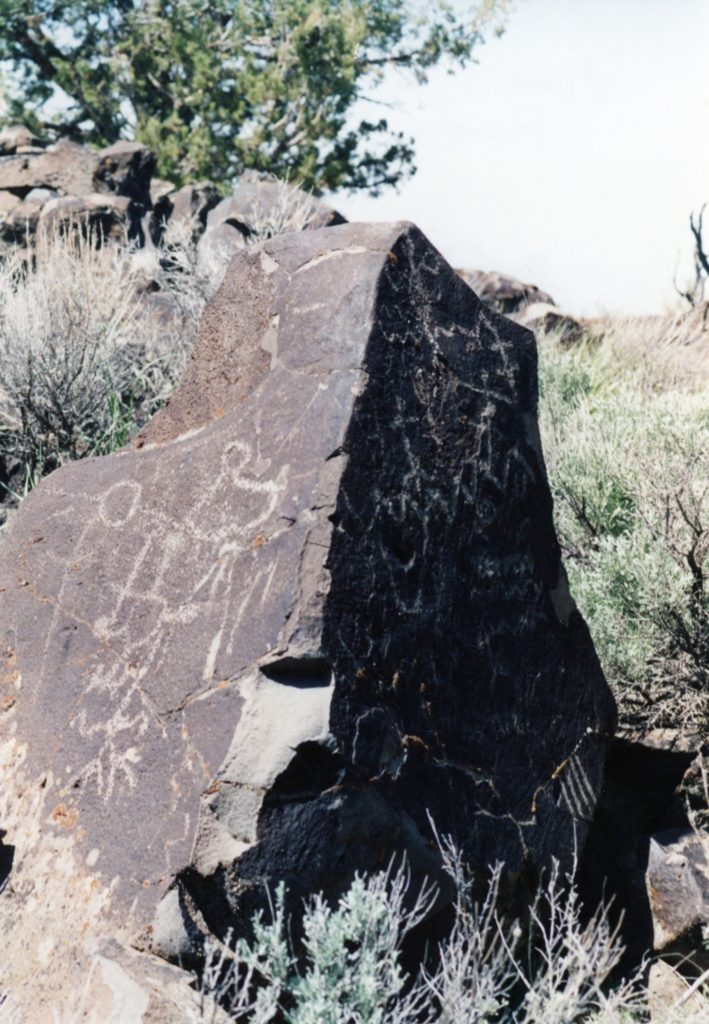
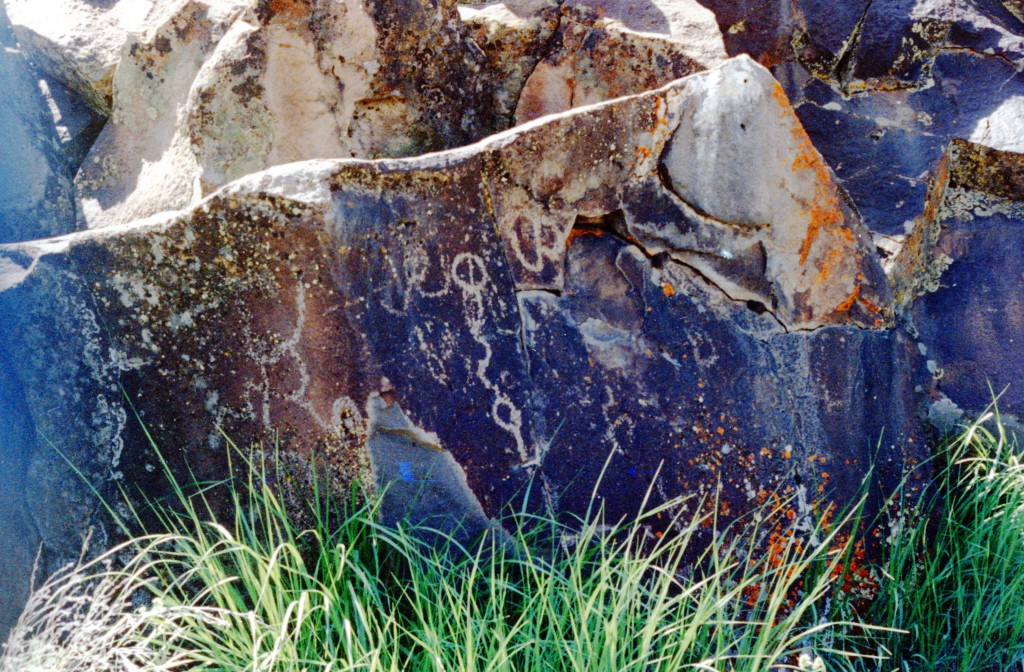
On October 1, 1850, J. Goldsborough Bruff and his companions traveled the region as part of their journey in search of the fabled Gold Lake. Bruff was impressed by the petroglyphs in the canyon and he named the creek Heiogliphic Creek. Bruff was captivated by a large triangle shaped boulder with unique drawings and sketched it in his journal.

One year, I spent a lot of time hiking this canyon looking for the fabled Triangle Rock. There is a two-mile or more stretch where the canyon walls are adorned with glyphs. It was later included in one of the numerous BLM tours that I was involved with and later Trails West offered an expedition there.

It should be noted that on this same expedition Bruff came across  Honey Lake, which Lassen gave it that name, but Bruff named it Derby Lake after his friend Captain George Derby, a United States topographical engineer.

Subscribe!

It’s Pogonip Season

fog
A pogonip as seen from Antelope Grade

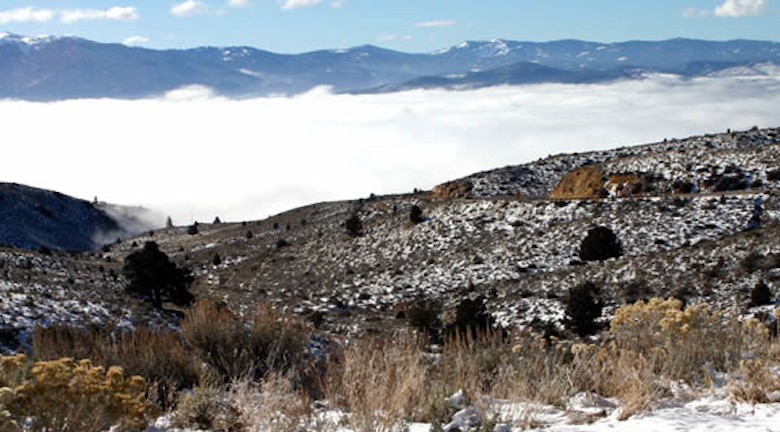
The latest storms residual moisture and lack of wind is the perfect combination for a pogonip, also known as a freezing fog. . A true pogonip is when the fog freezes coating everything with ice crystals. The name is from the Native American community when translated means white death, due to the number of Indians who would contract pneumonia from this weather condition.

There are varying types of pogonips. The most common form is when the high pressure holds down the cloud inversion. Thus, in many instances, one only has to travel a few hundred feet above the valley floor to bask in the sunshine. The pogonip season usually runs through December and January. The longest recorded duration, locally, lasted for six weeks in the winter of 1859-60.

On a final note, the National Weather Service states that there is a storm front headed our way tomorrow. There should be enough winds to break up the inversion, and may be we will see a little sun shine in the afternoon.

Subscribe

A Honey Lake Story

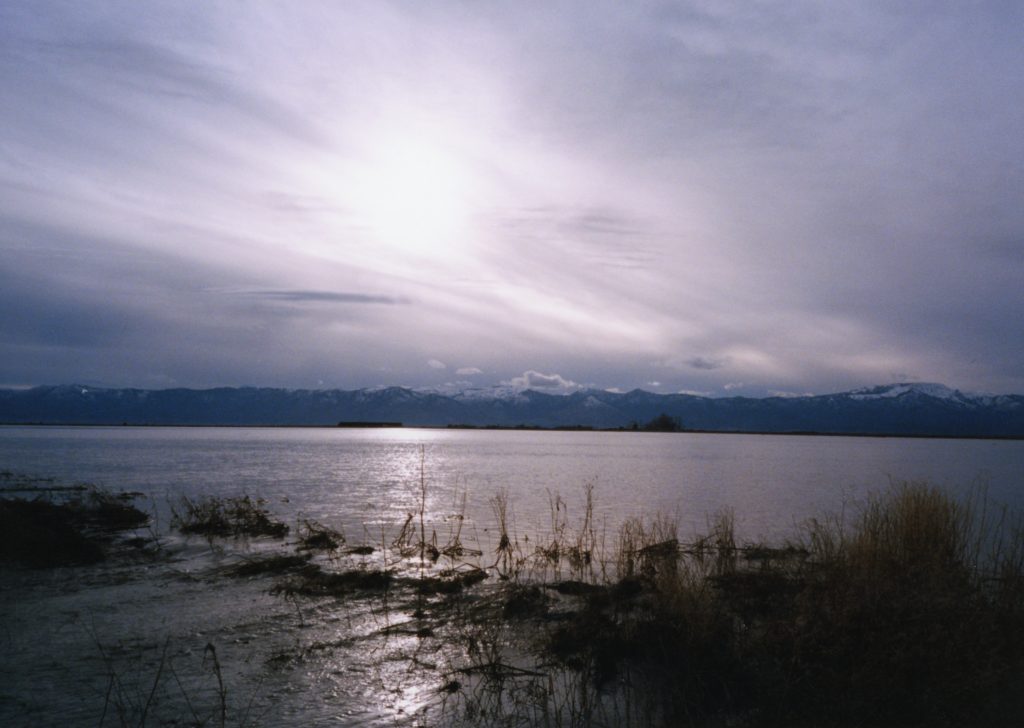
Honey Lake, 1997.

While researching Granite Creek Station, I came across some correspondence with Jesse Horn. He was a grandnephew of Andrew Litch, one of the proprietors of the Station. Horn was born at Milford on May 25, 1912. On February 25, 1980 Jesse Horn, wrote:  “An old Piute Indian from Nevada told me a story you might be interested in. At the time I was quite a small boy and as our custom was with the Indians, a sort of variation of a peace pipe. We cut a watermelon and ate it with him. This served two purposes for us; they didn’t steal our watermelons and they gave us their business.

This is what he said as he pointed across the lake to the Skedaddle Mountains. “See high water marks on mountain? Old Chiefs say many, many moons ago, no one can count. Great spirit get mad. Honey Lake that time, she big like many waters cover all valley, make Tahoe look like a pond. There was great big earthquake, thunder, lightning. Whole world shake mountains fall apart. Honey Lake break loose and make Pyramid Lake. All big fish go there.’”

Support

The Indian Ruins of Eagle Lake

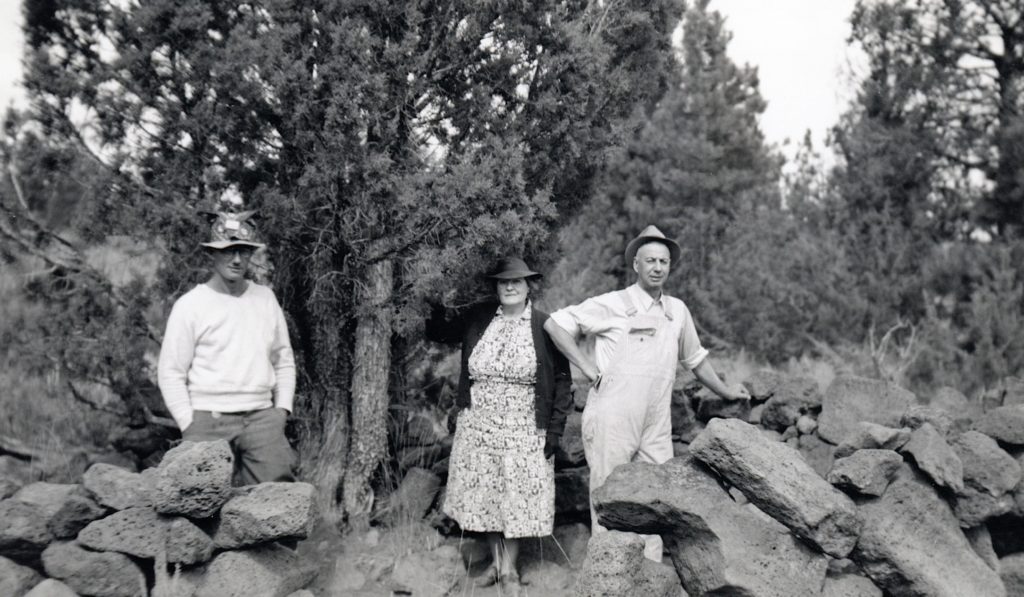
Indian ruins along Pine Creek, near Eagle Lake, 1938

While sifting through photographs for the coming years’ calendar I came across the above photograph. It is interesting that in the formal studies of the various Native American tribes of the region this encampment, probably only seasonal in nature, is never recognized. Most peculiar indeed. During the 1950s and 1960s the forest service noted it as an attraction at Eagle Lake, and even appeared on their maps. Ditto, as they did the same with the Eagle Lake ice caves, showing several different locations. Back to the Indian ruins. Not many people are aware of a little known fact that the Eagle Lake basin contains petroglyphs, which is rather unusual as well.

Tim

The Naming of the Madeline Plains

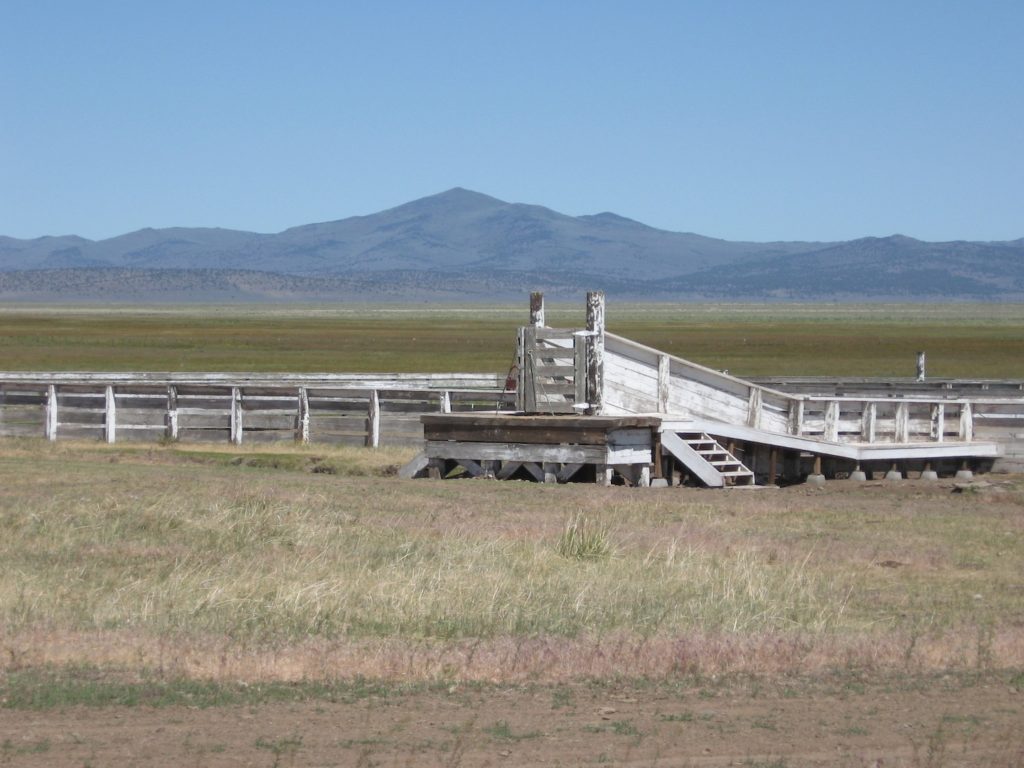
The site of the original McKissick Ranch on the Madeline Plains. It was the first place settled on the plains.

The Madeline Plains in northeastern Lassen County was one of the earliest places named in the county.  In 1853 Congress passed the first Act concerning exploration and surveys for a transcontinental railroad route. Lt. E.G. Beckwith of the Third Artillery was in charge of one of these explorations. Beckwith surveyed Northern California and Western Nevada region in search of a pass over the Sierra Nevada Mountains. In late June 1854, Beckwith entered the Madeline Plains via Smoke Creek Canyon and the east side of Observation Mountain. He named this the Madeline Pass for his daughter Madeline Julia, born January 25, 1853 at New London, Connecticut.  It should also be noted a week later Beckwith named Eagle Lake.

According to folklore attributed the name to an emigrant girl, named Madeline, who was murdered by the Indians in the 1850s. H.T. Risdon who established a sawmill on Bayley Creek in 1912 is credited for that tale.

Finally, it should be noted the Paiute name was Musitzi, though the meaning has been lost through the years. In addition, the Paiute’s territory was for the eastern portion of the Madeline Plains and the western half was the domain of the Pit River.

Become a supporter for just $5 a month to ensure quality history continues. Click here.

Granite Creek Station, Nevada

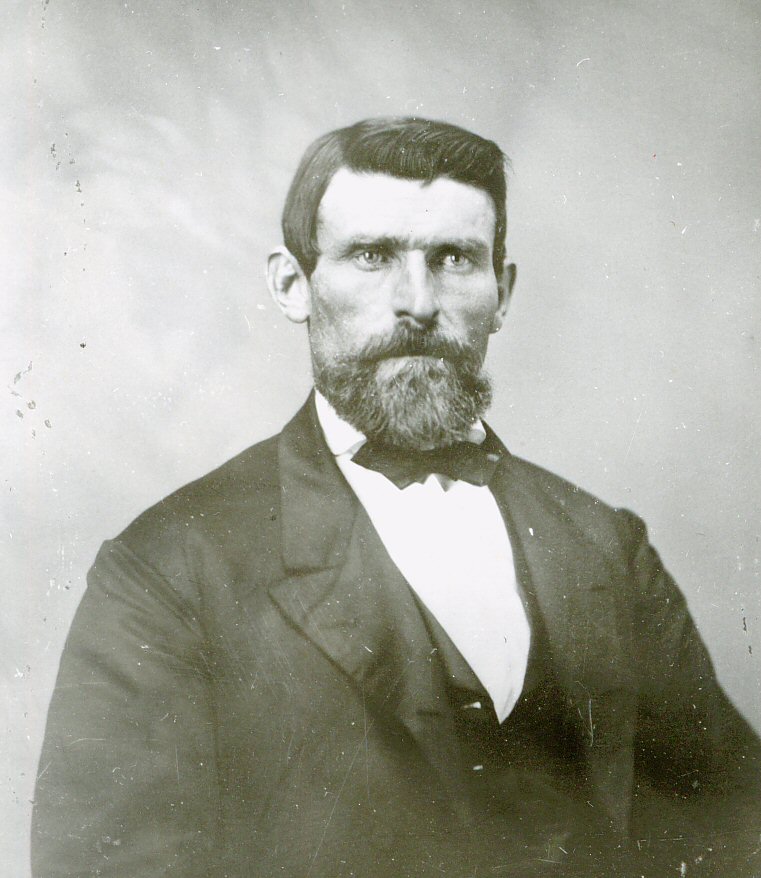
Andrew Litch—Erma Haley

This was a short-lived station on the Nobles Emigrant Trail. It was located a few miles east of present day Gerlach, Nevada. During the 1850s, stations/trading post along Nobles were few and far between. This was particularly the case through the Smoke Creek and Black Rock Deserts. A lot of this was attributed to hostilities between the Indians and Anglos, which culminated into the Pyramid Lake War of 1860.

This changed in the early 1860s with the discovery of the Humboldt mines that created such towns as Star City and Unionville. With the increased traffic on the route, Lucius Arcularius and Andrew Litch saw a lucrative opportunity to establish an outpost at Granite Creek in 1862.

In early March 1865, Arcularius left Granite Creek for a trip to Susanville.  He did not make it very far, being ambushed by Indians only several miles to west of Granite Creek. When he was a no show in Susanville, a posse went in search and found his body covered by brush, his clothing removed. Arcularius’ body was brought back to Susanville for burial.

A few weeks later, Litch needed to leave the Granite Creek Station to handle some of his late partner’s affairs. Litch recruited A.J. Curry, Cyrus Creele and Al Simmons. Some time around April 1, 1865 witnessed what was referred to as the “Granite Creek Butchery”.  All three men stationed at Granite Creek were slain by the Indians and the station burned down.  A complete account can be found in Asa Fairfield’s Pioneer History of Lassen County.  Litch would relocate in the Honey Lake Valley, where he remained until 1883, when he moved to Reno, though he retained his ranch, where his daughter and son-in-law Clara and B.F. Gibson would reside.

Support

Old Lucy

Old Lucy
Old Lucy

On September 29, 1929 Old Lucy a colorful character on the streets of Susanville passed away, purportedly at the age of 125. While she best known as Old Lucy, she also had another Anglo name, Sally Norman. Dubbed a “picturesque” Native American of the era, she was a familiar sight as she ambled about Susanville, bundled up in numerous clothes, walking with the aid of a stick. People who knew her back in the 1870s considered her old back then. While her age was exaggerated when she died, documents placed her age at around 100.

She had a son Billy. Billy Norman who died in 1948 and there is a spring on the Susanville Indian Rancheria known as Billy Norman Spring.

Support