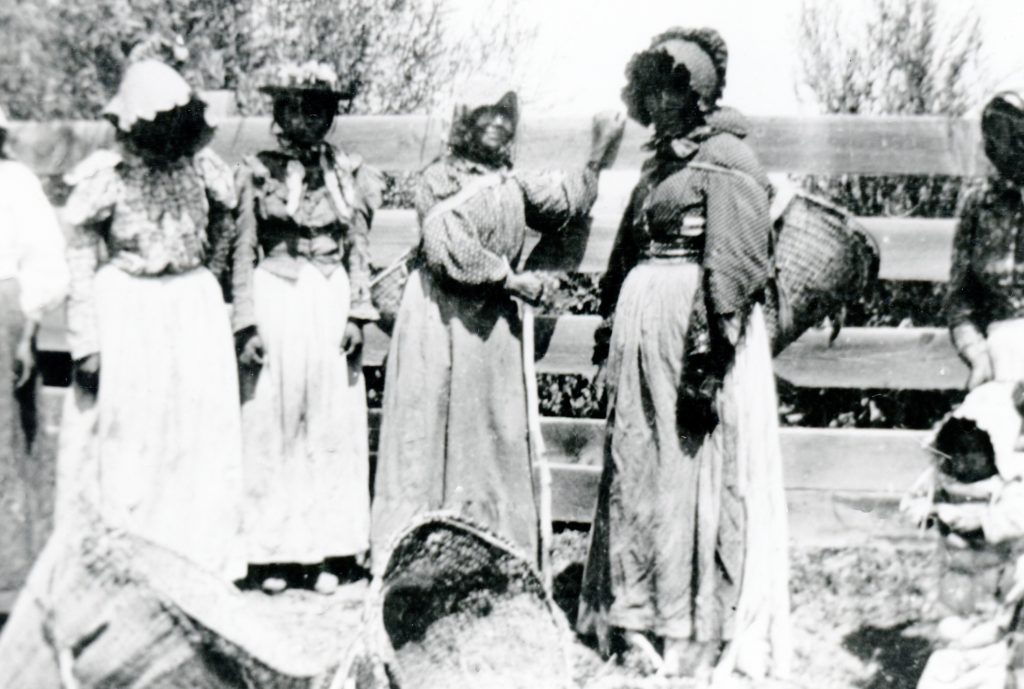
Big Meadows Maidu Camp, 1887. Courtesy of the National Park Service
As I slowly compile a list of books pertaining to regional Native Americans this is my first recommendation. The Northern Maidu by Marie Potts. Marie (1895-1978) was born at Big Meadows, now Lake Almanor, Plumas County. She recounts her childhood and the ways of the Northern Maidu. I highly recommend this slim volume.
In 2022, KQED published an article about Marie’s life. You can read it here
While the Northern Maidu is out of print, it is widely available at used book outlets. Personally, I use Bookbinder.com.
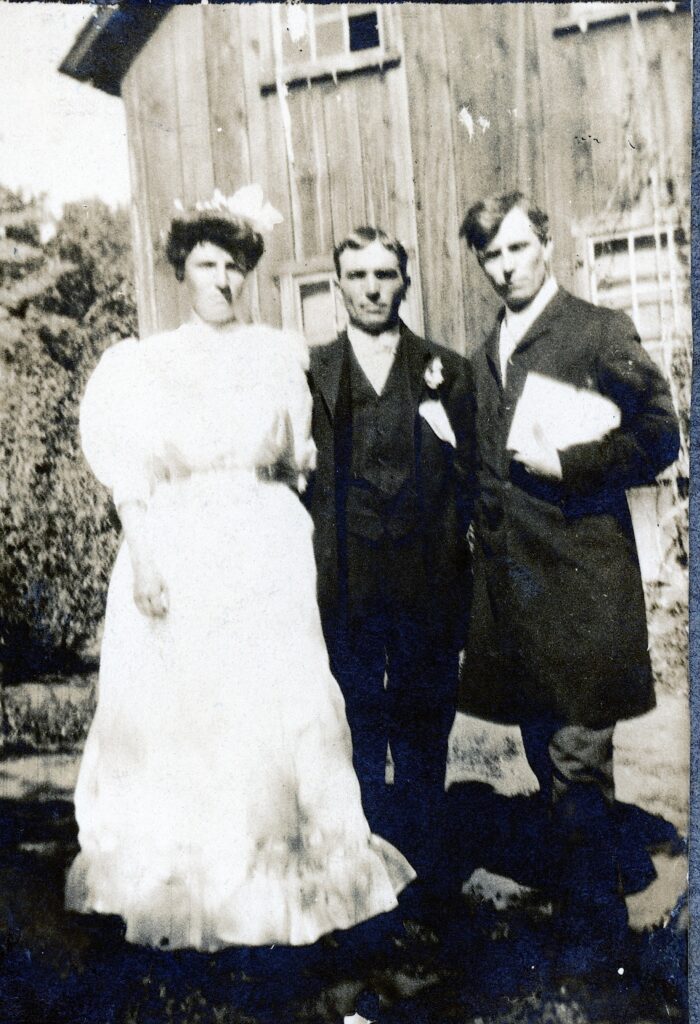
David and Theda (Williams) Fritter wedding portrait 1906.
Some years back, I received an unexpected call from the Eagle Lake Ranger District, Lassen National Forest. There are petroglyphs on the west side of Eagle Lake that are on the forest service land. Over century ago, two Eagle Lake residents, Dave Fritter and Charles Spalding etched their names along side of the petroglyphs. The forest service wanted who those two individuals were. I obliged.
There are petroglyphs on the east side of Eagle Lake. Personally, I have not observed them, but I have never done due diligence to locate them.
Closer to home, i.e. Susanville there are a handful of petroglyphs. Most on private property, but one site is owned by the City of Susanville.
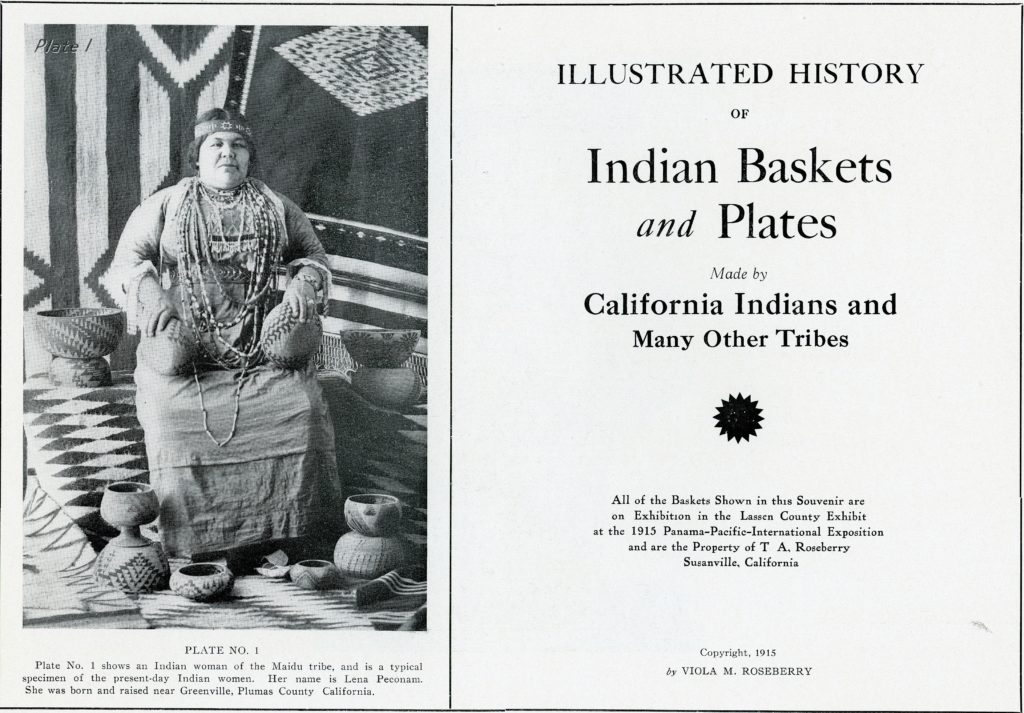
Viola Roseberry published an illustrated history of California Indian Baskets for the Exposition
Susanville resident Viola Roseberry (1860-1936) had a special fondness of Native American heritage and that of their basketry. She possessed a large basket collection. In 1915, the collection was displayed at the Panama-Pacific International Exposition held in San Francisco. To coincide with the exhibit she published a book, Illustrated History of Indian Baskets and Plates made by California Indians and Many Other Tribes. Book had a price of 50 cents.
The cover picture is of Lena Peconum who has numerous descendants in this area. Viola wrote stories behind the baskets, such as one Maidu woman Comanche, who at the time was believed to be the oldest Maidu weaver, approaching 100 years of age, and residing in Genesee Valley, Plumas County.
Many of the Indian baskets on display at the Lassen Historical Museum, 115 N. Weatherlow St., Susanville, was a part of the Roseberry Collection.
On April 26, 1856, twenty settlers in the Honey Lake Valley gathered at Isaac Roop’s Trading Post and held a “mass convention” to establish a territory of their own. They named their new republic Nataqua. It was purported that the name was a Paiute word for woman. That claim is rather dubious. Nataqua Territory was a short lived affair, and it was soon replaced with the Sierra Nevada Territory.
Locally, the Anglos used term Mahala for designation of Native American women. A number of these women worked as domestics such cleaning and washing. Willow Creek Valley resident Abe Tunison for instance wrote in his diary on May 28, 1877 “A Mahala was here and washed.”
During the late 1800s’ the term squaw was used infrequently and usually derogatory manner, i.e, there are many newspaper citations of a “drunken squaw.”
There was a sliver truth in yesterday’s article about the town’s infamous hangman’s tree.
On April 17, 1868, Thomas Pearson, his wife, daughter Hattie and Samuel Cooper were massacred by the Indians on the eastern shore of Honey Lake. This episode created a great deal of tension between the settlers and the Indians. Expedition parties were organized to find the guilty parties. who were believed to be members of the Pit River tribe. The Indians who did dastardly deed, however could not be found.
Proximity of the Pearson Massacre Site—-Larry Plaster
In September 1868, Captain Munson of Fort Bidwell still conducted expeditions, but like the previous ones, found no clues. That changed when he arrived in Big Valley, where we met with the Pit River tribe. The tribe turned over to Munson’s custody three suspected Indians.
Later that month, Munson. arrived in Susanville with the three Indians for civil authorities to conduct a trial. The hearing was held at night. The Indians were acquitted and they were released from custody. The Sage Brush newspaper reported “. . . that no evidence of appearing to establish their guilt.” Yet, a number of citizens who had gathered outside the courtroom believed the Indians were guilty. They became a vigilante mob. They escorted the Indians up Main Street to North Pine Street, where they were hanged “. . . from the limbs of a patriarchal oak.”
The saga of the Hangman’s tree was born. As folklore would have it, the tree was used for other occasions, but actually it was not. Again, it has been written the tree was cut down as recently as the 1960s, when in fact it was cut down in January 1892.
In January 1860, Dexter Demming was brutally murder at his cabin at Willow Creek Valley by a band of renegade Indians. A posse was formed to search for the Paiutes. The posse encountered them at Snowstorm Canyon. A skirmish occurred, but it was in vain, for the Indians had the upper hand due to the rugged terrain. The posse’s efforts was not a total loss, for they did recover some of Demming’s belongings.
Back in Susanville a meeting was held to determine what the next course of action should be. Some where of the opinion they should go en masse to Pyramid Lake to confront Chief Winnemucca. about Demming’s murder. Cooler heads prevailed and two men, Captain William Weatherlow and Thomas J. Harvey, were designated to make the diplomatic visit with Chief Winnemucca.
The two men met with Winnemucca and prevailed upon him to turn over the tribal members that committed the murder. During the course of conversation Winnemucca was evasive. In conclusion, and by surprise, Winnemucca informed them, the settlers could purchase Honey Lake Valley for $16,000. Upon payment Winnemucca stated there would be no livestock theft, murder or mayhem. This revelation left the two men bewildered.
From a historical standpoint, Winnemucca’s offer is a complete surprise. It has never been revealed who advised the sale of Honey Lake Valley and equally important how the price was determined. Weatherlow and others felt the offer was nothing more than blackmail. Whatever the case may be, tensions became intense and finally that spring escalated into the Pyramid Lake War of 1860.
Since we have had a taste of fog lately, is there more to come? Late December can be notorious, partially. due to short. daylight hours and valley inversions.
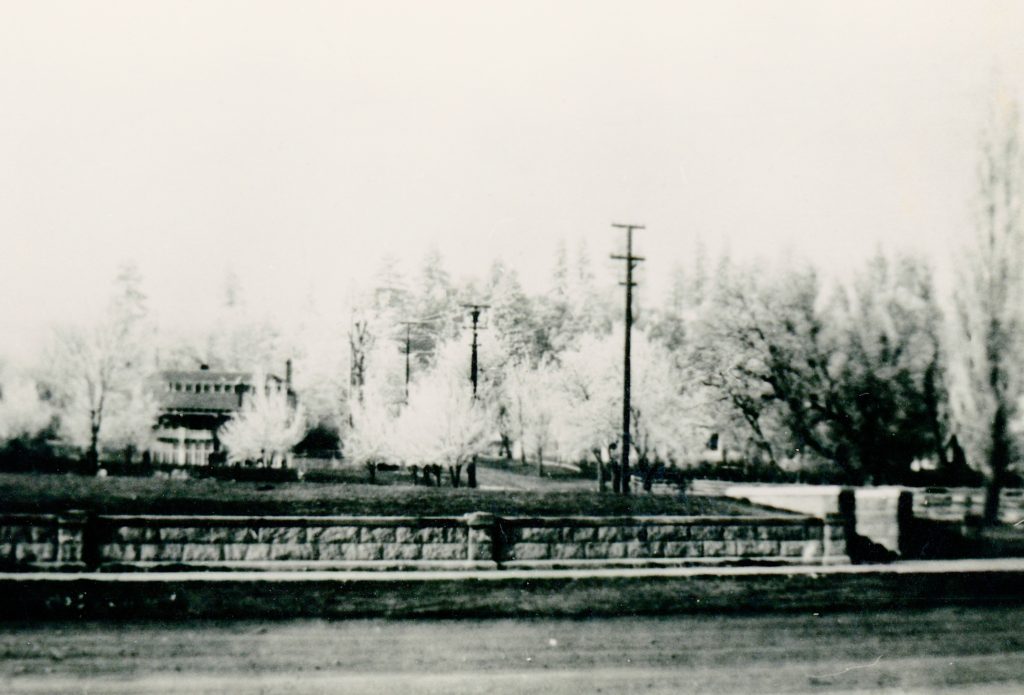
In 1859 residents of the Honey Lake Valley experienced one of the most dreaded winter weather conditions, a pogonip—the Indians term for an ice fog. The term loosely translates into “white death,” for many Indians caught pneumonia and died. This fog settles in the mountain valleys. One can ascend a few hundred feet above the valley floor, bask in sunny temperatures and overlook a sea of clouds. Pogonips vary in severity. A mild one will consist of persistent endless fog with sub-freezing temperatures. The worst variety is when it turns into a literal ice fog, coating everything. The first day can be spectacular with ice crystal formations on everything. After several successive days of those bone chilling temperatures, it quickly loses its appeal. The pogonip of 1859 was one of severest on record. The heavy cold fog lasted six weeks. So much frost accumulated on the grasses that cattle could not eat it. In addition, since the first settlers had been accustomed to mild winters, very little hay was put up, and a great many cattle starved to death that winter.
A 1920 pogonip scene on the north side of the Lassen County Courthouse.
Some people might find this of interest. Chico State has transferred its interest in the Eagle Lake Biological Field Station on the east shore of the lake to the Susanville Indian Rancheria. Not sure what the Rancheria’s intent is. In the past, according to Bureau of Land Management policy it must be used for educational purposes, whether this applies to the Rancheria, I do not know.. When I was on the Lassen College board, I had brought up that the college should look into it, but that went nowhere.
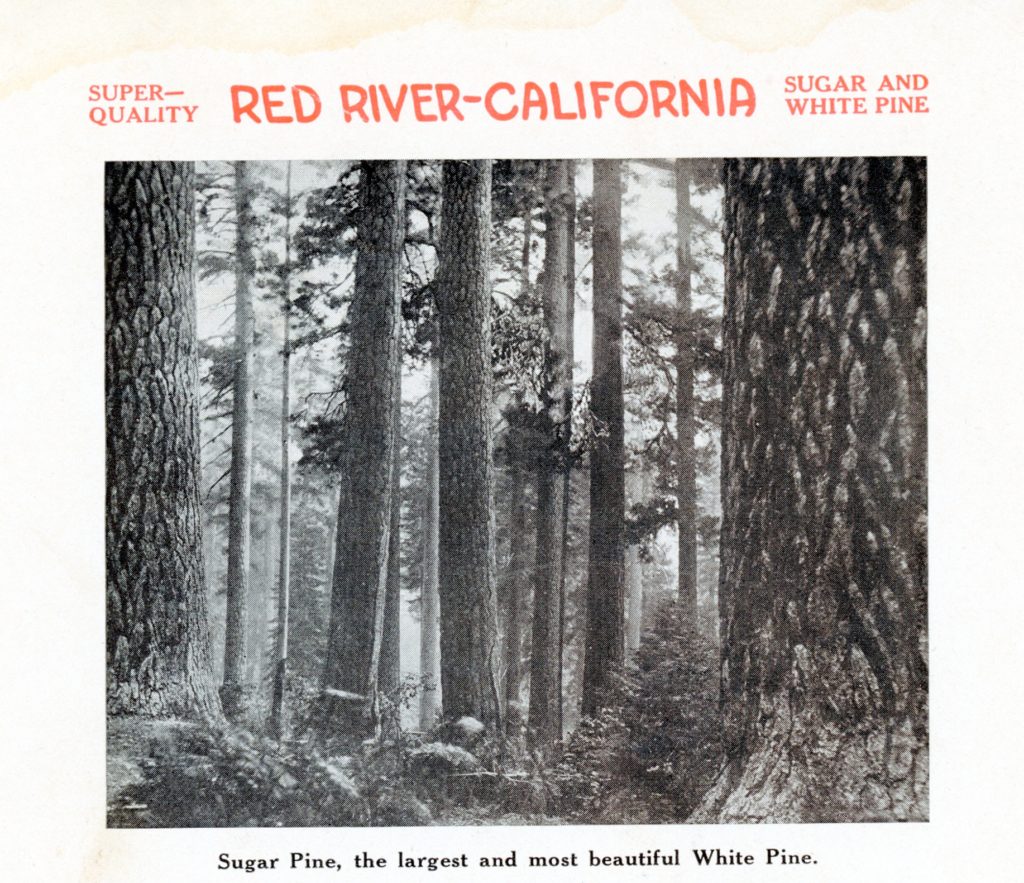
An early promotional brochure of the Red River Lumber Company
The sugar pine was highly sought by lumbermen, and especially for the manufacture of wooden boxes. The pine is noted for its straight grain and another feature was manufacture into lumber has no odor. The latter was desired by fruit and vegetable growers.
The sugar pine was so named for its surgary pitch. Noted naturalist, John Muir wrote: “The sugar, from which the common name is derived, is to my taste the best of sweets, better than maple sugar. It exudes from the heartwood, where wounds have been made, either by forest fires or the ax, in the shape. of irregular, crisp, candy-like kernels, which are crowded together in masses of considerable size, like cluster of resin beads . . . Indians are fond of it, but on account of its laxative properties only small quantities may be eaten.”
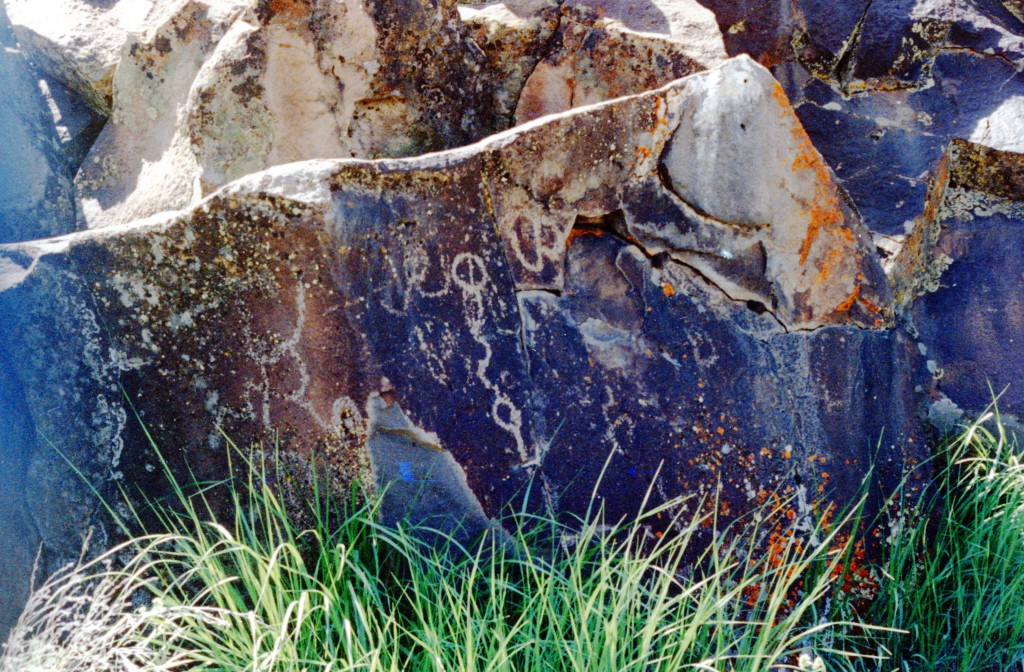
One of many glyphs to be seen along Upper Smoke Creek.
In the Happy Days CCC newspaper of September 11, 1937 carried a brief article of the Secret Valley CCC’s discovery of nearby petroglyphs. The following was a brief description: “What looks like childish scrawls are the latest known discoveries in petroglyphs, ancient rock drawings, found by the men of Co. 740, Litchfield, Calif., and now attracting the attention of scientists in this and other countries.”
This was not the first reported discovery of petroglyphs by the Secret Valley CCC’s. The Lassen Mail of March 13, 1936 reported:
”CCC workers in the Secret Valley camp are wondering this week if they have discovered ancient Indian inscriptions or merely run across the work of some amateur cartoonist who was whiling away his time with little stone hatchet.
Sunrise Chamber, 2015, Belfast
”An aged Indian revealed several inscriptions to camp workers, carved in rocks in the vicinity of the CCC camp claiming that said marks are relics of the dim and distant past. Photographs were taken of the inscriptions and are now in the possession of the foreman of the camp.“
On a final note, neither article gave the location, however, it should be noted that there two petroglyph sites near the Secret Valley CCC that being Petes Creek and Stoney Creek.