Tag Archives: Janesville

The Varied Bear Dance Locations

The final part of the Bear Dance ritual at Bass Hill, circa 1900.

The spring ritual of the Mountain Maidu Bear Dance, locally, has been held at a variety of locations. In the earliest times, it would be held near a stream, for water was an important element in the conclusion of the dance.

One of the earliest sites was near Baxter Creek at Bass Hill referred to as the village of Yoskopin, also known as Lone Pine. This would be the late 1890s, early 1900s. There is a citation that the dance was held along Paiute Creek, just north of Susanville, from 1910 into the 1920s. That location was near the present day intersection of Chestnut and Parkdale. What is odd with its close proximity to Susanville, a town. with two newspapers,  that they never chronicled it.
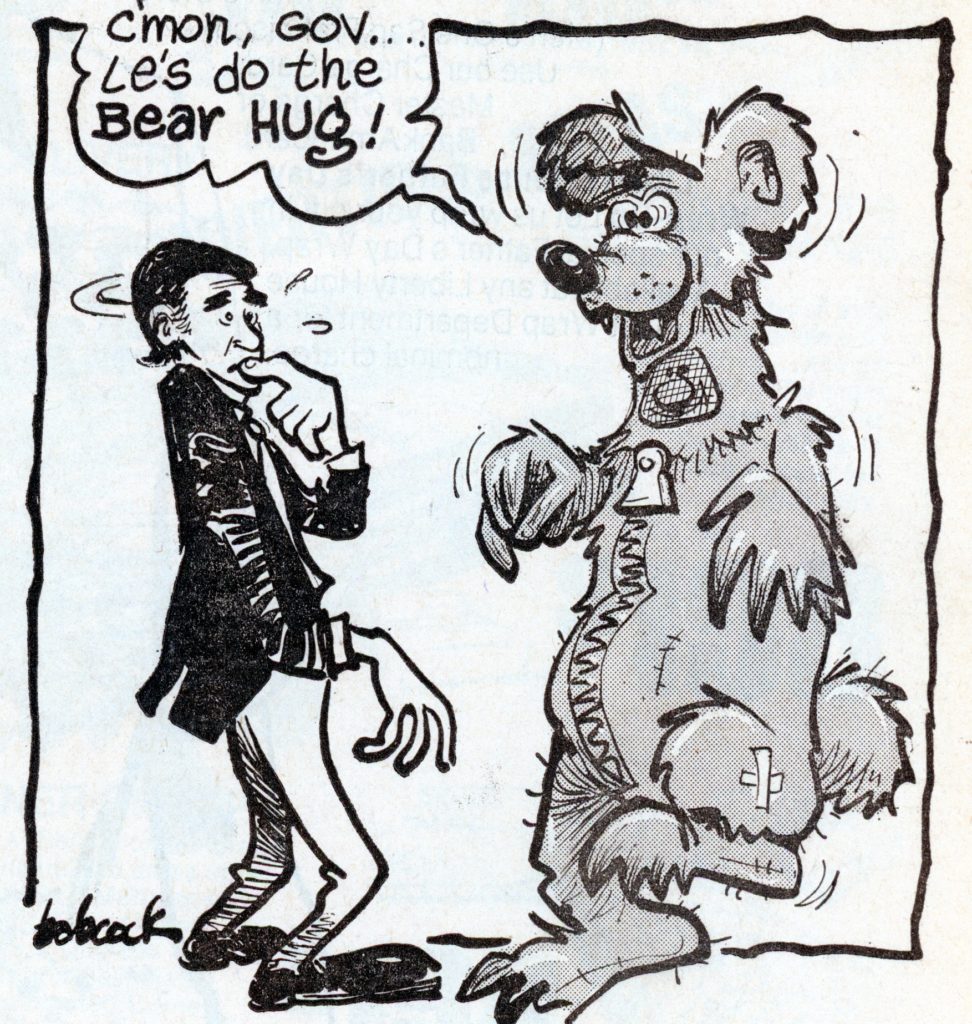
Sacramento Bee, June 9, 1975

In the late 1920s, Kitty Joaquin sponsored the event at her place near Janesville. She continued the same until 1953. There are accounts that in the 1940s and early 1950s that it was occasionally held at the Susanville Rancheria. By the late 1950s, it appeared the ceremony was on the brink of being abandoned. However, in 1962 Gladys Mankins sponsored the ceremony at her place on Janesville Grade. In 1975,  that event made headline news with the appearance of California Governor Jerry Brown. Mankins continued with the tradition up to 1986. In 1989, it was revived and has been held ever since on forest service property at Willard Creek.

Subscribe

Lassen County’s First Musem

Pullen Museum
The Pullen Museum, May 3, 2015

Granville Pullen first came to Lassen County in 1870 and worked at various jobs. In the 1880s he located to Sonoma County, but made frequent visits to Lassen County to see his sister, Susan Goumaz. In 1901, he moved back to Lassen County and bought a ranch near Janesville. In 1914, at the age of 76, he retired from ranching and bought a house in Janesville.

Pullen had been collecting various artifacts and curios for over forty years. Not to be idle he opened a small museum in Janesville to display his collection after he had sold his ranch. People fascinated by his collection began donating items to him. In 1920, Granville and his wife Mary, moved to Susanville and bought a home on South Roop Street. Next to his new home, he had a small concrete building built to house his museum. On June 18, 1921, he opened the museum to the public.  When he passed away in 1926,  his wife kept the museum open for awhile, but she did not have the same passion as her husband. Over the years, she donated a portion of the collection to Lassen County. The items were displayed for a number of years in the Veteran’s building, and over time slowly disappeared.

Support this site and Subscribe today!

Honey Lake Baptisms

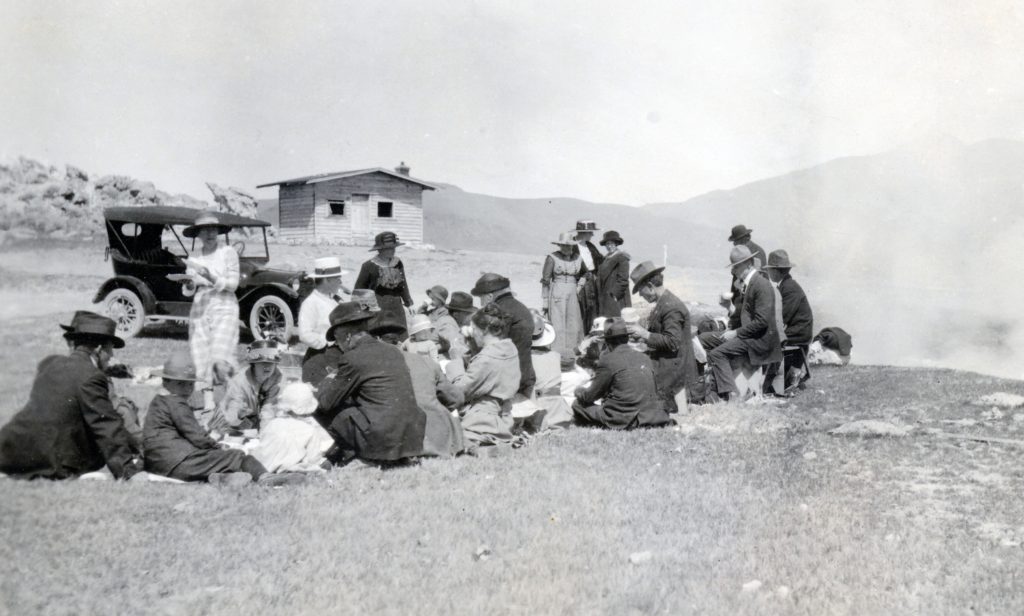
A picnic at Wendel Hot Springs—Betty Barry Deal

When Honey Lake is full, it has found many uses such as boating, fishing and ice-skating to name a few. One of the more unusual usages of the lake was baptisms. On Sunday, March 8, 1914 the Janesville Baptist Church held services at the Lakeview School. After the services, the congregation went to the shores of Honey Lake, where the Rev. L.D. Howard baptized several new candidates into the flock. Unfortunately, I have not been able to find a record as to who they were.

In 1919, Honey Lake went dry and would remain so until the winter of 1937-38. So baptisms as the lake was no longer an option. On April 2, 1932, the Rev. Bond of the Seventh Day Adventist Church o Susanville found an alternative—the Wendel Hot Springs—which thirteen members were baptized there.

Subscribe

Janesville, 1970

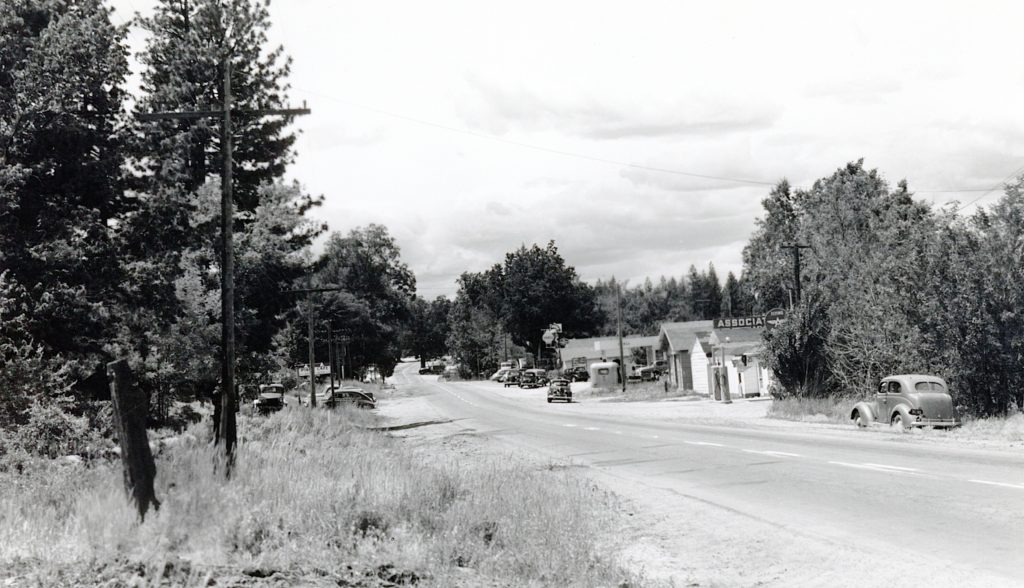
Janesville, circa 1940

While assorting through old brochures, I came across one published in 1970 by the Susanville Junior Chamber of Commerce. Some might be interested in the description of Janesville.

“One of the fastest growing communities within the Honey Lake Valley, Janesville is a historic pioneer town twelve miles southeast of Susanville. Many new homes are appearing on the scene as this picturesque little town with its beautiful mountain background and bountiful forests attract more and more people to its bounds. A great abundance of ranches and meadow land lie in the foothills of this area. Plans are being made to make use of these natural facilities for recreational and community living. Janesville is easily accessible  to main highways. Small agricultural, cattle and poultry raising are part of the Janesville scene.”

Tim

A Missouri Bend Scholar—Francis A. Riddell

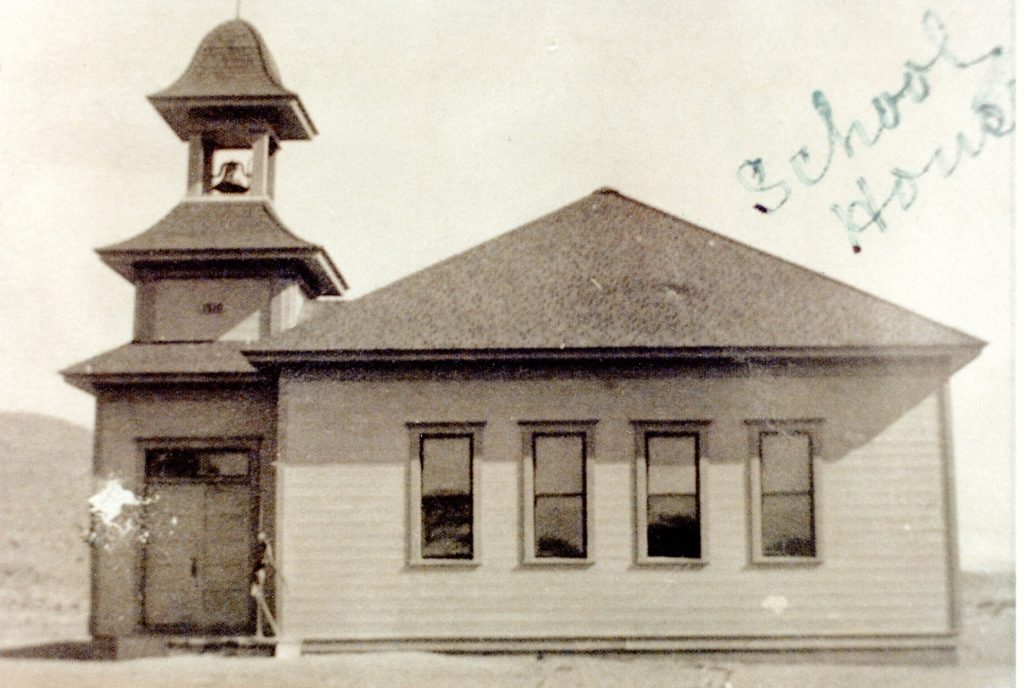
Missouri Bend School, circa 1912—M.E.Mulroney

An acquaintenance of mine was surprised to learn that famed modern art painter, Jackson Pollock attended school at Janesville. The other day, I was thinking about a well known archaeologist who attended school at Missouri Bend, some three miles from Janesville. There the similarities stop.

In 1926, Harry S. Riddell moved his family to a small farm north and east of Janesville. Riddell, an engineer, was hired by the Baxter Creek & Tule Irrigation Districts to see if he could come up with a solution with the problems surrounding the Bly Tunnel at Eagle Lake. His two sons, only barely a year apart, Harry and Francis attended the Missouri Bend School. The two boys started noticing arrowheads on the school grounds. They were fascinated by this other finds of Native American artifacts. In 1936, the family moved to Sacramento. Both Harry and Francis studied and became archeologists. Harry was the low-key of the two. Before I go any farther, Francis was best to known to his colleagues and friends as Fritz. However, he was always Francis to me.

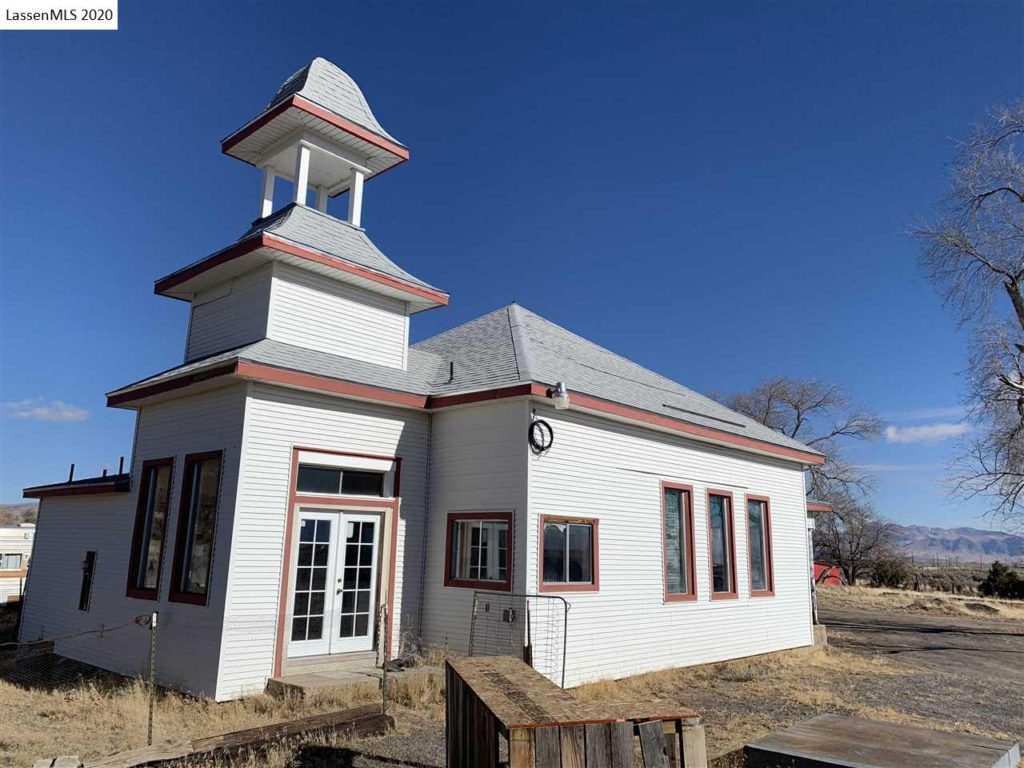
The old Missouri Bend School, December 2020–Smith Properties

Francis became the first archeologist to be hired by the State of California, first as a curator of the California State Indian Museum. Later, he went to work in the Department of Parks & Recreation. In 1948, he began to participate in archaeological surveys throughout the state, using a standardize form, something unheard at the time.

Francis had a special fondness for the Honey Lake Valley and the Indians there. He was involved with the archaeological excavations of Karlo and Tommy Tucker Cave. Francis did not stop there. He had a passion for Indian Ethnography to better understand his work. As Francis commented, “I could not separate the past from the present.”  During the late 1940s and 1950s, Riddell, along with colleague Bill Evans would compile the Ethnographic History of the Honey Lake Maidu and the Honey Lake Paiute. A very valuable document, indeed.

Not only was Riddell was highly regarded in California archaeology, but for his work in Peru. Riddell even invited me to partake in one of his Peruvian expeditions. Alas, I had to decline due to a lack of funds.

Subscribe

Honey Lake Defenses

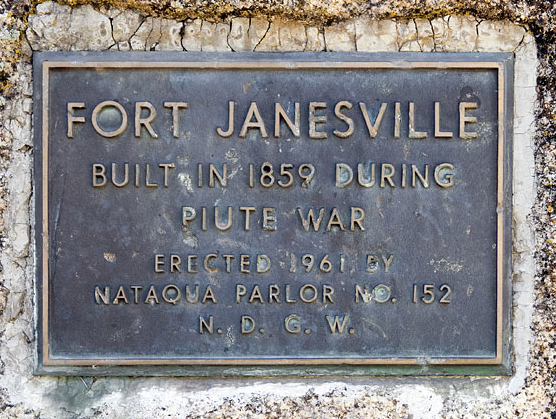
Native Daughter’s plaque for Fort Janesville site.It was actually built in 1860.

Yesterday, I wrote about the military presence in the region during the 1860s. There is a little follow up about how the locals took matters into their own hands so to speak. Those early day Honey Lakers were an independent lot. They had to. Their numbers so small, and far removed from the gold fields, they had no choice but to be resourceful and make do the best they could with their own resources.

Since military assistance was not reliable, Honey Lakers took matters into their own hands. Captain William Weatherlow usually was the one to form a posse when needed during the conflicts of the Indians and settlers. During the Pyramid Lake Indian War of 1860 the residents of Janesville built their own stockade for protection known as Fort Janesville. In 1864, a local militia was formed known as the Honey Lake Rangers which functioned similar to a National Guard Unit.

Tim

For Sale – A Used Church

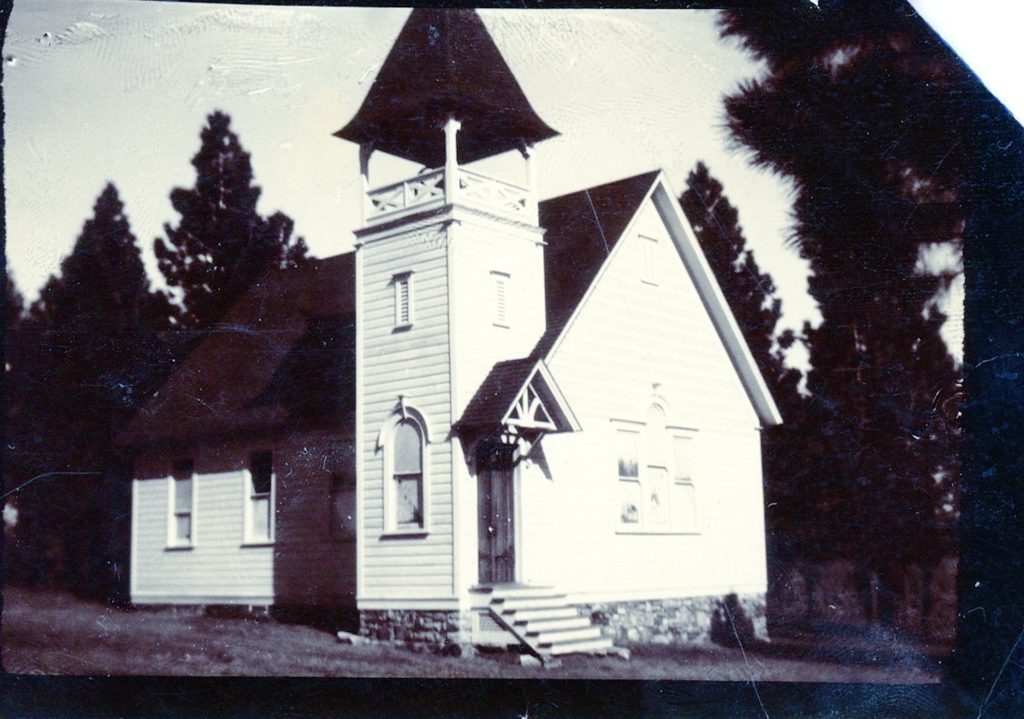
Janesville Methodist Church, 1905–Prentice Holmes

The Janesville Methodist Church had a very short time span, of just thirty years. By 1928, it had been abandoned. In January 1946, the Trustees of the Susanville Methodist Church, who had inherited the old church put it up for sale. The demand for buildings in the region was  extremely high due to the conclusion of World War II. The trustees asked for bids to be submitted by February 4, 1946. Unfortunately, I have not been able to ascertain what transpired since then.

Tim

Janesville Methodist Church Dedication

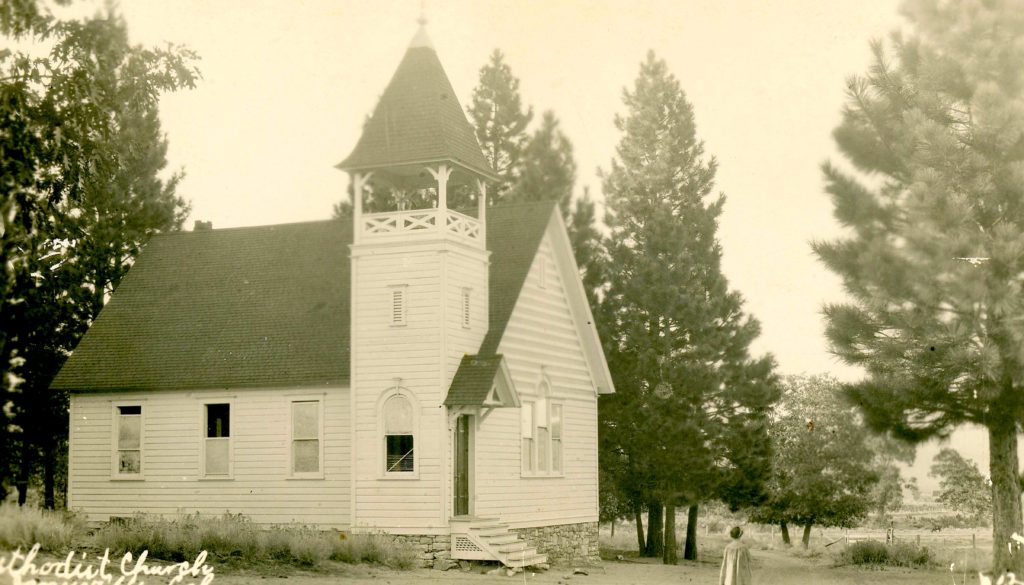
Janesvlle Methodist Church, 1911. Courtesy of Marge Foster

On Sunday, August 29, 1897 was a joyous day with the dedication of the new Janesville Methodist Church. Dr. E.W. VanDeventer presided over the services, with a standing room crowd in attendance. The church measured 28’x40’ feet was built by Susanville contractors, Enhorning and Harrison for $1,500. Frank Rowland donated the land for the church. Trustees for the church were: G.W. Meylert, Wm. Dow, E. Winchester, George Riddle, W.T. Masten, J.T. Masten and Charles Cramer.

Support

A Thompson Peak Adventurer

Thompson Peak
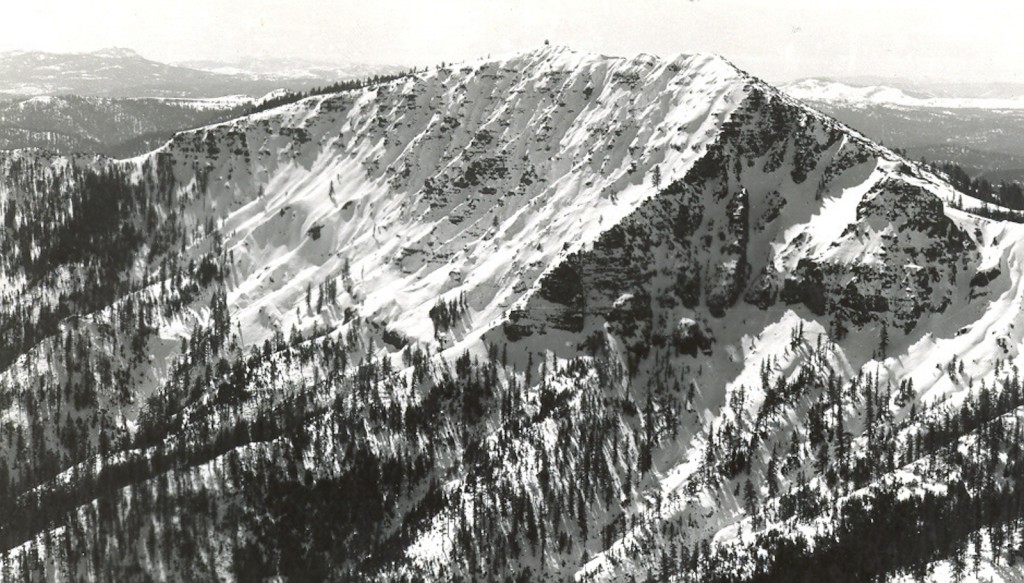
Thompson Peak, 1952

On Saturday morning, August 12, 1978, 23-year-old Marc Doener of Monterey had a very memorable experience at Thompson Peak, that rises above Janesville. Doener attempted to hang glide off the top of peak. It did not go as intended. He lost control as he started to jump, the glider flipped plunging him into a 3,000 foot descent. Amazing when the Search and Rescue team found him he only sustained minor injuries, including a sprained ankle, cuts and scratches.

Tim


Lassen County Militia

Militia Card
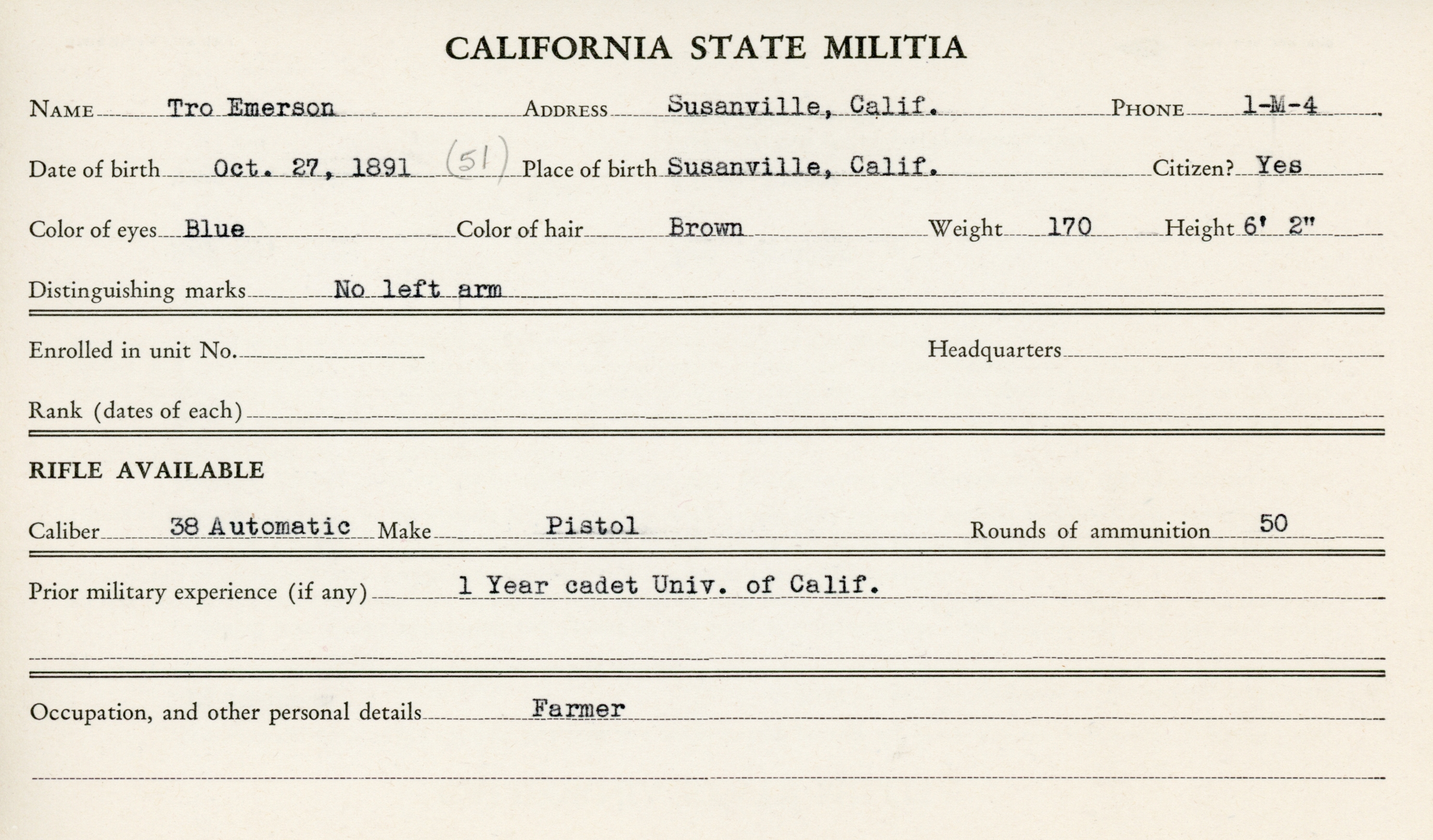
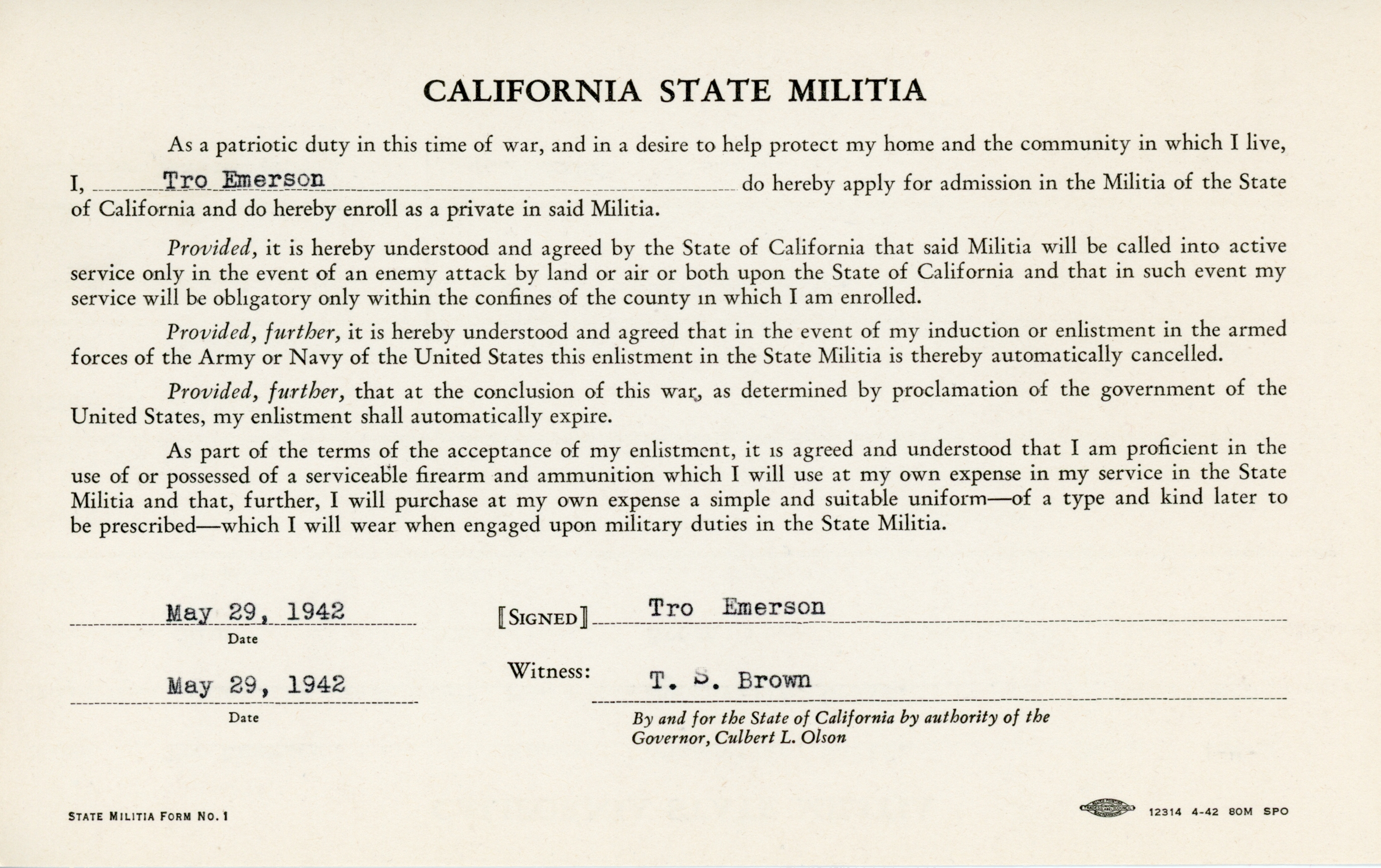
Tro Emerson’s Militia Card

Twice in Lassen County’s history there have been local militia units of the California National Guard. The first was the Honey Lake Rangers of the 1860s. The last time was during World War II. Initially, there was to be one large unit for Lassen and Modoc counties. That plan was neither feasible or practical and was dropped.

A new strategy was drafted. Inside each county, especially in large rural counties like Lassen, several local militia units would be formed. There duties were to protect the area in case of enemy invasion. Their involvement was confined to the boundaries of the county. Uniforms, guns and ammunition would be provided to each unit. They would also be trained in guerilla warfare. In Lassen County it fell upon the Farm Advisor (T.S. Brown) to organize these units.

On May 20 1942, the first organization meeting was held in Susanville. Local units were created for Susanville, Bieber, Doyle, Janesville and Standish. By the first of June, the Susanville Militia had 70 members. It became known as Thomas Tucker Militia—named after Thomas Tucker the first casualty from Susanville in World War I. Fortunately, this volunteer force never had to be activated. At the conclusion of the war, each individual’s enrollment in the militia was automatically cancelled.

Militoa card

Don’t forget to look at the Subscribe feature.