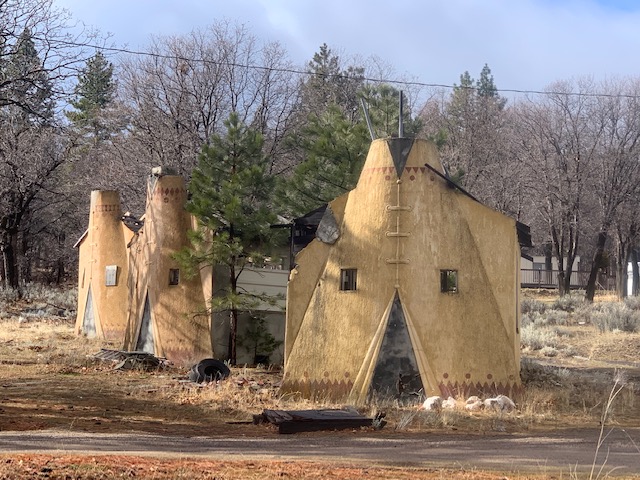
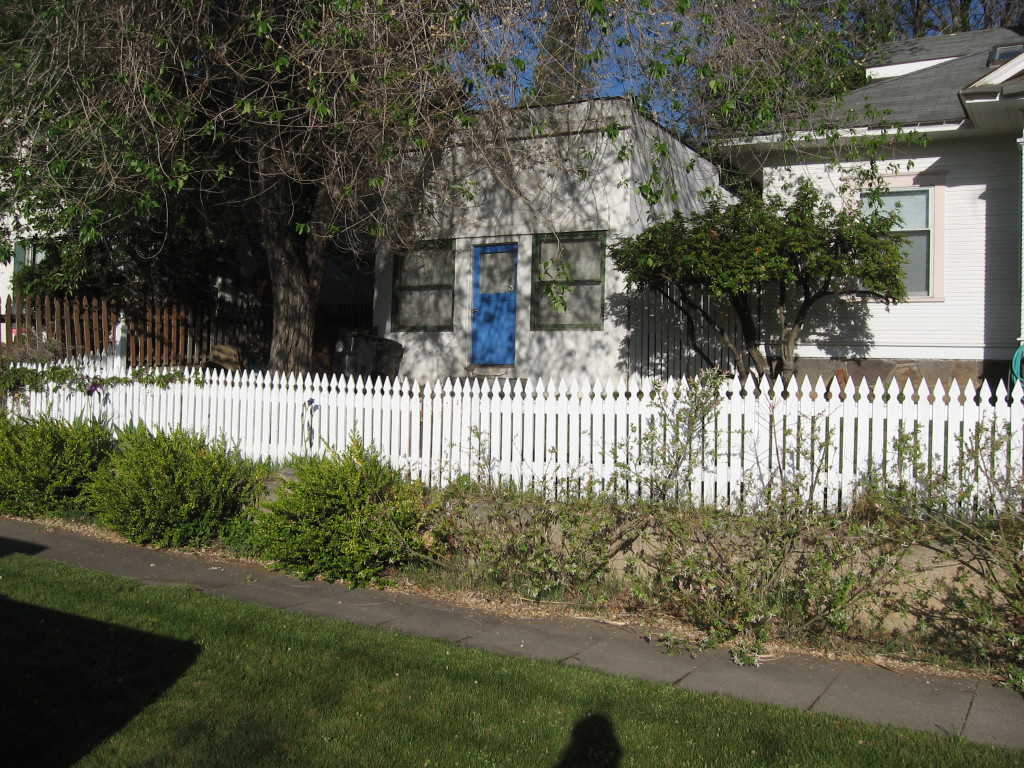
In case you missed it, an alert subscriber, Jane Hail, provided a bit of additional insight. After all, she has a family connection. Her husband, Roger Hail, is a nephew to the late Clyde Knox. According to the information Jane provided, it was a project of Clyde’s, though he never did get around to finishing them.
Now, my next Janesville research involves the demise of the town’s Methodist Church. I came across some of old notes of mine, that it was put up for sale in 1946. Stay tuned.
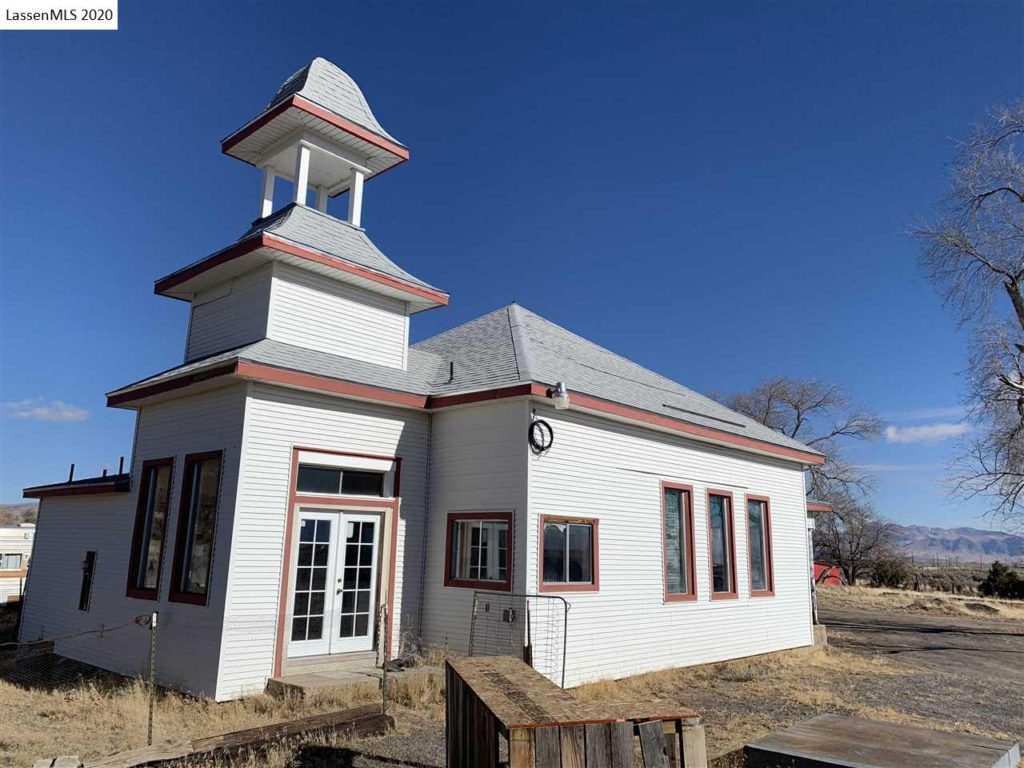
Smith Properties has the old Missouri Bend School house for sale at $109,000. The school was built in 1909 for $1,500. In 1954, Missouri Bend was annexed to Janesville Unified School District
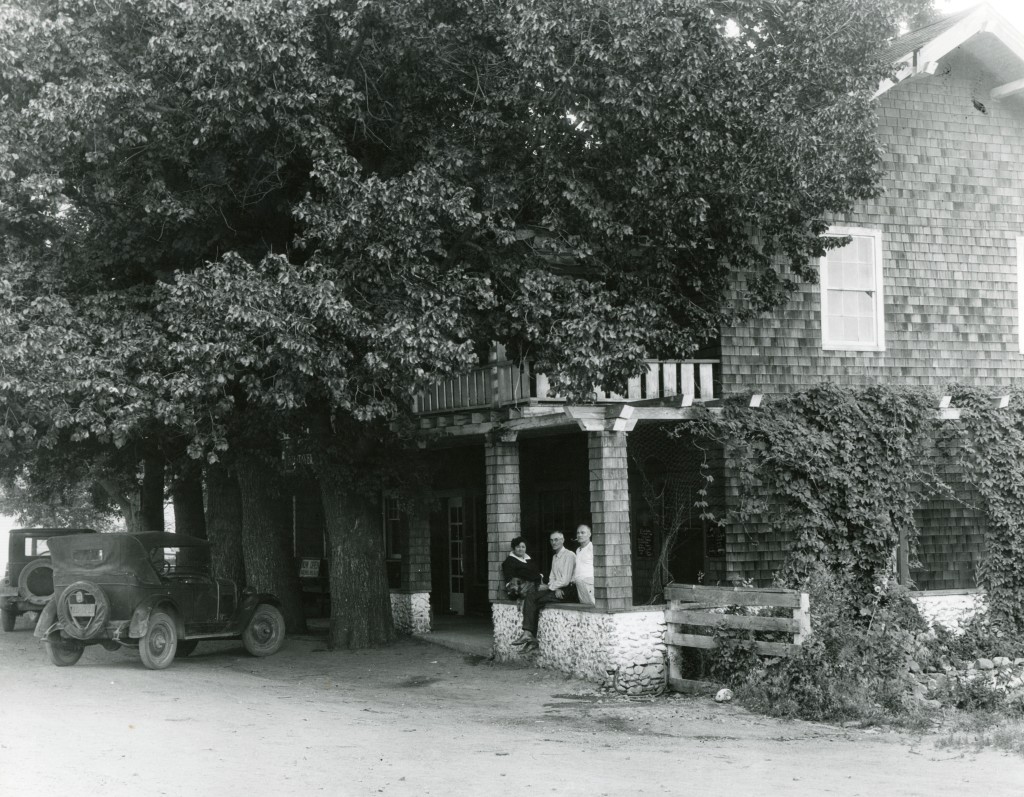
Diamond Mountain Inn as it appeared in the 1920s and was located next to the Masonic Hall. It was destroyed by a fire in 1931.
The Diamond Mountain Inn was originally known as the Janesville Hotel. The two-story wooden structure contained twenty-two rooms and was built by Dennis Tanner in 1872.
In 1913, B.R. Holmes acquired the hotel. It was in need of substantial upgrades. He named his new enterprise the Diamond Mountain Inn—the named remained until its demise.
Holmes operated the hotel for a brief period. It would change numerous ownerships over the years. In 1920, LeRoy Pollock was one of them, whose son Jackson Pollock would become well known in the modern art world.
On the night of December 6, 1931, J.C. Moore, the current owner, was awakened by the crackling sound of fire. He hastily escaped the burning building. A bucket brigade was quickly assembled, with all efforts to prevent the fire from spreading. The hotel was a total loss, and only partially covered by insurance. The origin was a defective flue in the dining room.
Spread the word, and encourage a friend to subscribe
This post was a long time in the making. Research during a pandemic, along with the courthouse renovation project, just added challenging layers.
While this is not complete as I would like, but it is a start. Who knows, some one might see this, who has first hand knowledge. During the 1950s kitchsy roadside motels were quite the rage. The particular one is Janesville is still somewhat of a mystery. According to the Assessor’s Office, there was never a permit issued, nor were they ever completed. All I remember was in the 1970s Clyde Knox owned the structures.
If anyone has additional information, that would shed more light on this, I would like to hear from you.
Spread the word, and encourage a friend to subscribe
There was a time, not long ago, when it was customary to through a celebration to burn a mortgage. After all, it was an important milestone to own the property outright.
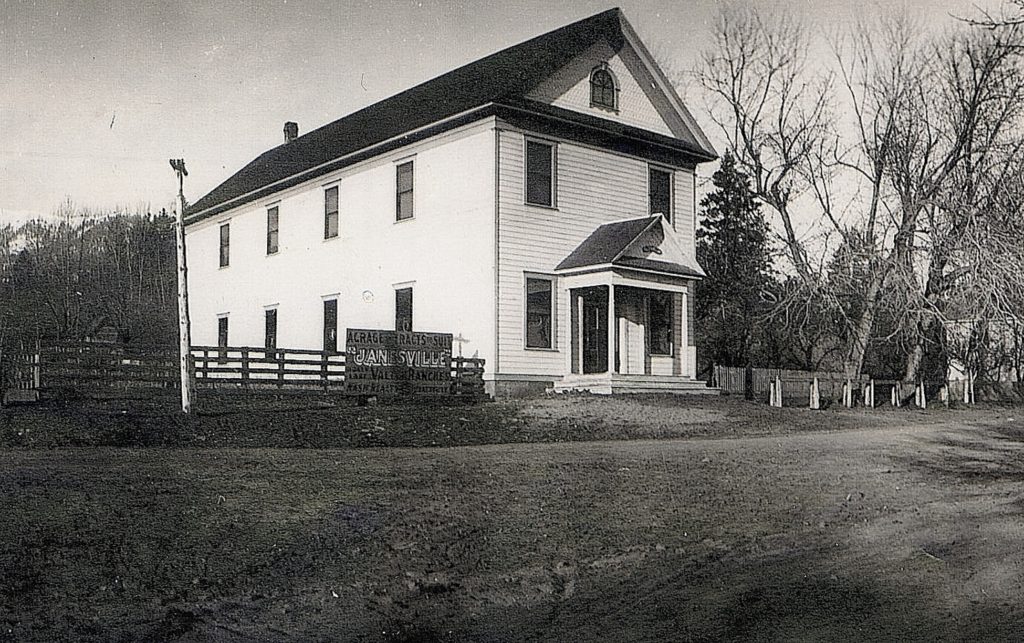
On October 16, 1935 the Janesville Masons celebrated two events the first being it was the lodge’s sixty-first anniversary. The other they had just paid off the mortgage.
It was a festive occasion with Masons from Susanville and Westwood partaking. Superior Court Judge H.D. Burroughs of Susanville provided a history of the lodge. The Westwood Masons furnished the music. Len Dozier who served two roles one as master of ceremonies and the other to keep watchful eye on Steve Bass to make sure the only thing he burned was the mortgage.
In 1992 the Janesville Lodge consolidated with Lassen Lodge. A few years the Janesville Lodge building was sold.
Spread the word, and encourage a friend to subscribe
The Janesville Hotel when it was owned by Justus R. Bailey, circa 1880.
This actually a tale of two Janes. In May 1857, Malcolm Bankhead bought the claim of Thomas Mitchell. He built a two-story log-house and offered public lodging. It remained until 1872, when Dennis Tanner tore it down and constructed the two-story wooden frame building known for many years as the Janesville Hotel.
Malcolm was soon joined by his wife, Jane and four children. I 1858, Smith Hill built a house nearby. In 1861, Henry Lomas established a blacksmith shop there at the same time, Smith Hill opened a combination saloon and shoe-shop. The village was initially known as Bankhead’s. Some accounts have it that at that time it became known as Janesville, in honor of Jane Bankhead. It should be duly noted that Malcolm and Jane’s daughter, Susan, married Smith Hill on June 13, 1859. On May 17, 1862, the Hill’s daughter, Jane Agnes was born, a first in the village. Some state the town was named for her, being the first child born there. On June 15, 1864, the name Janesville was official with the establishment of the post office. Whatever the case may be, the naming of Janesville was a family affair.
Janesville Oddfellows Hall—Courtesyof Howard & Gladys Scott
For whatever unknown reason the residents of Janesville were reluctant to embrace electricity, unlike their Standish neighbors. In the fall of 1929 there were a handful of Janesville residents who campaigned the citizens to sign up for electricity so a power line could be constructed from Standish. By November 1929, sixteen people had signed up, but to make the project a reality required twenty sign ups. The organizers were stymied by the reluctance of the Janesville Masonic and Oddfellow Halls to sign up. After all, it was thought these two buildings held many public functions, and they would be better served with electricity. In 1930, a power line was extended to Janesville for the initial subscribers.
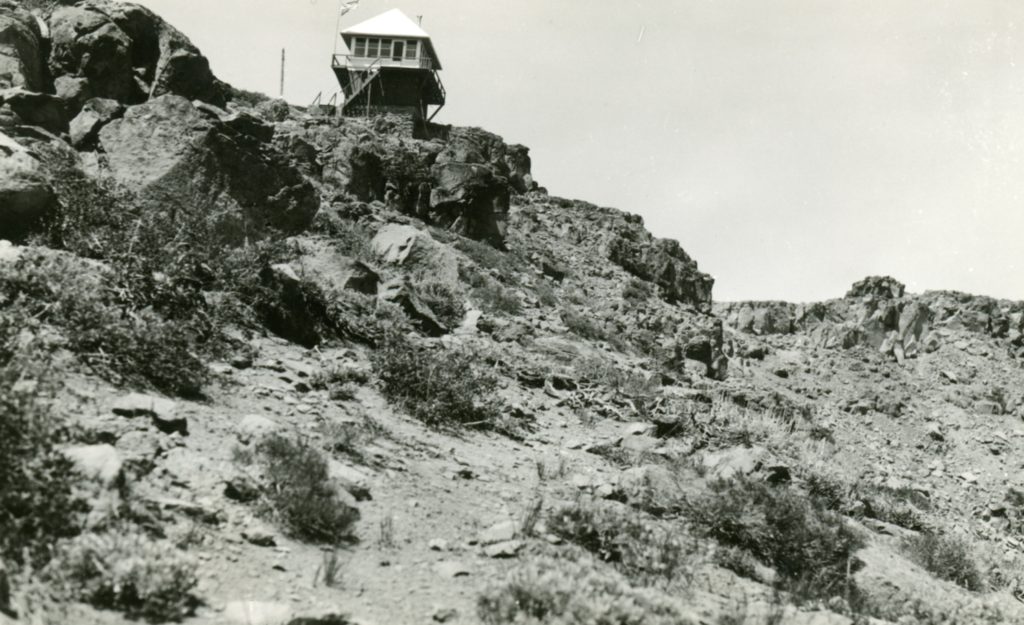
Thompson Peak Fire Lookout, circa 1950–Courtesy of Margaret Purdy
September is a wonderful time to go out and explore, with mild temperatures and in many cases most of the back roads you will have all to yourself. An interesting excursion is the Thompson Peak Fire Lookout that looms above Janesville at an elevation of 7795’. It was built in 1931, and it is still a manned lookout. The view of the Honey Lake Valley and the surrounding territory is magnificent. However, due to the Walker fire it may be awhile before one can access Thompson Peak.
In 1910, with no concrete substantial proof that a railroad would traverse the Honey Lake Valley, the Lassen County Chamber of Commerce remained positive that one day it would happen. In an attempt to be proactive, they approached the Susanville City Council to rename the town. It was their contention that the suffix “ville” carried on the conotation of a small village. They wanted something with a metropolitan flair. It was a sensitive issue, since the town’s namesake Susan Roop Arnold still resided in the community. The chamber wanted the matter placed on the ballet. The council said no, case closed.
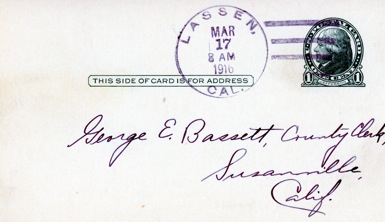
In 1912, with the Fernley & Lassen Railroad a reality, the real estate community was in full force to rid the Honey Lake Valley of town’s ending in “ville.” The first victim was Spoonville, which became Edgemont. The next one, Janesville, was controversial. well. On July 2, 1914, the Janesville Post Office was renamed Lassen. This did not set well with many of the town’s residents. A petition was sent to the Postmaster General to restore the name, but it was denied. It led to confusion since the town was known as Janesville, but its mail designation was Lassen. In 1923, the residents once again petition the postal authorities to restore the name. It was granted and on September 22, 1923, the Lassen postal designation was dropped.
A little background for those not familiar with the topic, that I wrote about in the spring of 2015. Granville Pullen first came to Lassen County in 1870. He moved around, and in 1901 he bought a ranch near Janesville. In 1914, at the age 76, he retired from the ranch and bought a home in Janesville. It should be noted that Pullen had been collecting various artifacts and curious for forty years. Upon his retirement he opened a small museum to display his collection. People were fascinated and donated items to him.
In 1920, Granville and his wife, Mary, bought a home on South Roop Street in Susanville. Next to his new home, he had a small concrete building constructed to house his museum and it opened to the public on June 18, 1921.
When Pullen passed away in 1926, his wife did not share her late husband’s possession for his artifacts. In early 1927, Mary donated the bulk of the collection to Lassen County and many items were put on display in the new Veteran’s Memorial Building. At the December 5, 1927 meeting of the Lassen County Board of Supervisors a discussion was held regarding the Pullen Museum. Mary Pullen offered the museum building on Roop Street to county on the condition it would be moved to another location. County Purchasing Agent E.F. Koken informed the board that it would be too difficult to move the building and the county declined the offer.